Your browser does not fully support modern features. Please upgrade for a smoother experience.

Encyclopedia Insights: Where Knowledge Meets the World
Ongoing
Highlights Video Abstracts (VAs) have evolved from experimental novelties into essential tools for research dissemination, significantly enhancing scholarly communication in a digital-first era, offering a repeatable model for maximizing impact in a competitive digital landscape. The MDPI Video Service produced 118 professional VAs in collaboration with 68 journals across 11 disciplines, serving 1,149 researchers and fostering a vibrant academic community. Video abstracts demonstrate exceptional multi-platform growth, with over 700% year-over-year viewer growth on some platforms and up to 99% new audience reach through social media amplification. VAs significantly boost article visibility, downloads, and citations, with case studies showing marked increases across journals such as Remote Sensing, Animals, Nutrients, and Entropy. 1. Introduction In 2011, quantum physicist Barry Sanders and his team at the University of Calgary broke new ground by publishing a video abstract (VA) alongside their pioneering research on qubits 1. This four-minute visual summary, shared on YouTube amid viral content of cats and pop music, demonstrated a transformative idea: complex science could be communicated dynamically, reaching audiences far beyond traditional academic circles. Over a decade later, video abstracts (VAs) have evolved from experimental novelties into essential tools for research dissemination. As digital platforms dominate how knowledge is consumed and shared, the question is no longer whether video abstracts will endure, but how they redefine scholarly impact. In 2025, MDPI launched its Academic Video Service, aiming to support scholars through the production of Video Abstracts, Short Takes, Scholar Interview and Profile Videos. MDPI Video Service has witnessed a remarkable surge in interest from researchers worldwide. A growing community of scholars has moved beyond merely discovering video abstracts to actively embracing their production, recognizing their power to transform specialized research into accessible knowledge. This report compiles and analyzes data from the first year of MDPI video service, with a focus on evaluating the role of VAs in enhancing scholarly communication. 2. Background and Market Context 2.1. The Visual Turn in Scholarly Communication The global video streaming market is projected to grow from USD 131.44 billion in 2024 to approximately USD 599.2 billion in 2033 2, and many findings have indicated that progressive use of social networking tools for informal scholarly communication 3, reflecting the increasing social reliance on video-based content. Within this context, scholarly communication is undergoing a “visual shift,” leading to the rise of VAs. The evolution of academic video publication—from early initiatives such as Screenworks (distributed alongside The Journal of Media Practice on DVD in 2006) to established platforms like JoVE (Journal of Visualized Experiments)—reflects the formal recognition of video as a legitimate form of scholarly output, now indexed in major academic databases 4. This institutional acceptance aligns with a broader shift in researcher practice, as scholars increasingly utilize social media as a professional platform to amplify the reach and impact of their work 5. 2.2. Core Value Proposition of VAs By combining dynamic visuals and narration, VAs distill and visualize the core concepts, methods, and contributions of academic papers. A growing body of research indicates that video content can contribute to an increase in various research metrics, such as citations and views 6. They fulfill key roles in several communication scenarios: For broader research audiences (e.g., policymakers, industry R&D personnel, advanced students): Expand the reach and social visibility of academic work. For domain experts: Provide a more intuitive and information-dense overview than textual abstracts, improving literature screening efficiency. For interdisciplinary scholars: Reduce comprehension barriers and foster cross-disciplinary innovation. Within this expanding ecosystem, a growing number of academic service providers—including established players such as Springer Nature’s Video Abstract services, Wiley’s Research Video initiatives, and Taylor & Francis’s multimedia publishing programs—have entered the field, recognizing the potential of video to enhance research communication. 3. VA Production and Dissemination Data from MDPI Academic Video Service, 2025 All data in this section, covering the period from October 31, 2024, to October 31, 2025, are derived from the platform’s internal database and public analytics from third-party services including YouTube, Facebook and LinkedIn. Where applicable, performance is compared to the previous annual period (from October 31, 2023 to October 31, 2024) to illustrate growth and trends. 3.1. Production Scale and Scholarly Coverage The inaugural year of MDPI's Academic Video Service has established a robust foundation for video abstract production and distribution. The service has successfully engaged a broad academic community while developing specialized content across multiple disciplines. The following data outlines the scope and reach achieved during the reporting period. Some of the partner journal series. The service produced 118 professional VAs and maintained 13 active VA-related video series. Collaborative partnerships with 68 leading academic journals span 11 major disciplines, including Medicine & Pharmacology, Biology & Life Sciences, Engineering, Environmental & Earth Sciences, Computer Science & Mathematics, Chemistry & Materials Science, Public Health & Healthcare, Social Sciences, Public Health & Healthcare, Business & Economics, Arts & Humanities. A total of 1,149 researchers have been served, including 60 scholars who participated in customized VA production, with all content distributed through social media channels (Figure 1). Figure 1. Researchers served. All data was obtained from Encyclopedia. 3.2. Multi-Platform Dissemination & Performance VAs demonstrated strong performance across multiple distribution channels, showing substantial growth in reach and engagement metrics during the reporting period. Across the Encyclopedia platform, Facebook, and YouTube (data from LinkedIn and X excluded), the produced VAs collectively accumulated 1,073,985 views and 51,285,055 impressions. A. VA Performance on Encyclopedia Platform As one of MDPI's key academic initiatives, Encyclopedia serves as the primary platform for delivering integrated academic services. All produced VAs were published through this platform. The year-over-year data reveals a story of validated success. The video content generated a monumental 45,553,063 total impressions, 52,515 total views, 13064 unique viewers. Unprecedented Audience Expansion: Unique viewers grew from 1,589 (2023-2024) to 13,064 (2024-2025), a 723% year-over-year increase, demonstrating the efficient capture of audience interest at scale. B. VA Performance on YouTube The VAs produced were simultaneously released on the YouTube channel. YouTube channel serves as a critical engine for global discoverability, showing strong year-over-year growth across all key metrics (Table 1). The following are the browsing-related data of VAs collected from the YouTube channel. Table 1. Year-over-Year (YoY) Performance - video abstract channel metrics. All data was obtained from YouTube. Given that the VAs produced and published are generally around 4 minutes long, a watch time of 2:58 is equivalent to viewing nearly 74% of a VA. 3.3. Disciplinary Distribution of VA Engagement By analyzing and structuring VA browsing data across disciplines and research fields, we identified pronounced variations in the level of interest in VA among scholars. These variations are evident in both the propensity to create VA and the degree of engagement in consuming VA content. As shown in Figure 1, life sciences domains demonstrate the strongest participation, with Medicine & Pharmacology achieving the highest view times (12,754) and Biology & Life Sciences attracting the largest viewer base (2,858) while leading in interaction metrics. Engineering and Chemistry & Materials Science maintain solid mid-tier performance with 6,478 and 5,184 view times respectively. Environmental & Earth Sciences (4,987 view times) and Social Sciences (4,674 view times) show established audience interest, while Computer Science & Mathematics (4,603 view times) demonstrates consistent engagement (Figure 2). The findings indicate that scholars in medical, biological, and engineering fields are most active in watching video abstracts. Figure 2. Distribution of page views by academic discipline. Medicine, Biology, and Engineering ranked among the top three. All data was obtained from Encyclopedia. The following chart (Figure 3, 4) reveals clear patterns in audience distribution across academic disciplines, providing insights into which fields show the strongest engagement (comments, likes, favourites) with video abstracts. Figure 3. Distribution of viewers by academic discipline. While the top three fields remained unchanged, Biology drew a larger audience despite having fewer videos. All data was obtained from Encyclopedia. Figure 4. Distribution of video engagements by academic discipline. Biology and Medicine showed noticeably higher engagement compared to other disciplines. All data was obtained from Encyclopedia. Biology & Life Sciences leads in audience reach with 2,858 viewers, closely followed by Medicine & Pharmacology with 2,720 viewers. These two disciplines together account for the largest share of VA viewership, reflecting strong scholarly interest in life science content. Based on the survey conducted by MDPI Video Service regarding user satisfaction (Figure 5), approximately 50% of VA users hold professorial positions, including full professor, associate professor, and assistant professor. PHD Student and PostDoctoral researcher comprise 8.3% and 16.7% of the user base, respectively. non-academic institution researcher account for 8.4%, while independent researchers represent 4.2%. The remainder consists of roles such as Consultant , visiting scientist , and retired researcher. Figure 5. Word cloud of user attributes. All data was obtained from the video service survey. Overall, the VA audience is predominantly composed of research professionals. The higher level of engagement observed among professors suggests that their interest in VA is likely driven by teaching and presentation requirements, stronger funding capacity, and sustained academic output. Furthermore, while the non-academic segment represents slightly more than 8% of users, it demonstrates tangible potential and should not be viewed as a market without opportunity. 3.4. Other Video Product Performance Throughout the reporting period, the MDPI Academic Video Service created 13 Scholar Interview videos, presenting conversations with prominent academics on their research and perspectives. This format holds particular appeal for audiences seeking direct insights from researchers. As shown in Table 2, the series recorded 2,284 view times. It gained prominent exposure via 632,006 main page impressions and secured extensive reach through 5,310,963 recommending impressions. Table 2. Performance of Scholar Interview series. All data was obtained from Encyclopedia. This finding indicates a broad acceptance among scholars of interview-based video formats as an effective medium for content delivery. The strong performance across discovery channels suggests the content aligns well with diverse audience preferences. 3.5. Academic Community Engagement Through VA Activities MDPI video service launched a ScholarVision Creations event on the Encyclopedia platform in 2024. The event was designed to introduce users to VAs and engage them in the VA production process. The event concluded with a vote to select the most popular VA created during the event period. The event drew considerable participation from scholars, generating notable momentum and interest in video abstracts (Table 3). Its strong reception reflects a clear interest among researchers in VAs as a format for academic communication. Table 3. Performance metrics of ScholarVision Creations Event and platform engagement. All data was obtained from Encyclopedia. The event yielded 40 videos and involved 204 participants. Four researchers garnered awards for outstanding contributions, while participants completed 2,669 engagements during the event (engagements include creating entries, submitting images, editing entries, and similar actions). Pageviews increased by ~930% and Visitors by ~690%, indicating highly effective audience reach. The exceptionally high conversion rate of new users into credit recipients directly reflects strong user interest in the campaign's core value and a clear intent to engage with VA creation. 4. Impact of Video Abstracts on Enhancing Research Visibility The effect of VA on article performance represents the primary area of concern among scholars. Accordingly, this section consolidates data collected from the VAs and articles, examining both VAs' impact on the corresponding original articles and the dissemination performance across online channels. 4.1. VA-Driven Changes in Article Reach and Metrics Over the past year, tracking the performance of the VA Series and comparing the data with that of the previous reporting cycle reveals a clear trend: VA viewership has grown exponentially. Sustained content output has driven increases ranging from fivefold to several dozen times in views. Equally notable is the substantial growth in platform-wide exposure, which has expanded into the millions. This marks a dramatic rise from the previous statistical period (2023–2024), when total exposure across all VA series remained below 400,000 (395,444).(Table 4). Table 4. VA series have achieved viewership growth ranging from fivefold to several dozen times. Exposure for individual series has now reached the million-level scale. All data was obtained from Encyclopedia. *The JCM VA series was established in 2025 and therefore does not have corresponding data for the previous statistical period (2023–2024). A comparative study was designed using articles published in the same journal during the same period, with the sample divided into two groups: one containing VAs and the other without. The selected journals include Journal of Clinical Medicine (JCM), Agronomy, Remote Sensing, and Nutrients, which have Impact Factors of 2.9, 3.4, 4.1, and 5.0, respectively. Cumulative data across the reporting cycle were collected, and mean values for views, downloads, and citations were calculated for each group. Comparison of these averages reveals the observable impact of VAs on key article dissemination metrics. (Figure 6, 7, 8). Figure 6. After implementing VA, the average view count of all journals significantly exceeded that of those without VA. All data was obtained from MDPI. Figure 7. Comparison of average article downloads with and without VA support across four journals, showing consistent increases in downloads for video-supported articles, with relative uplifts ranging from 3.94% to 47.19%. All data was obtained from MDPI. Figure 8. Comparison of average article impact metrics for articles published with and without MDPI Academic Video support across four journals, showing consistently higher values for video-supported articles. All data was obtained from MDPI. In terms of uplift magnitude, page views increase by as much as 112.25% for Remote Sensing, citation growth reaches a peak of 201.2% for JCM, and download growth spans a range of 3.94% to 47.19%. These results highlight clear differences in the strength of the VA service across dimensions of content dissemination and scholarly impact. Remote Sensing emerges as the journal benefiting most strongly from VA, recording a 112.25% surge in page views—the highest among all journals—alongside a 51% increase in citations and a 3.94% rise in downloads. This profile reflects an exposure-driven, burst-style growth pattern. For newly integrated JCM articles, VA demonstrates exceptional effectiveness in driving both academic impact (citations) and downstream conversion (downloads). This finding aligns with the earlier analysis, which indicates stronger audience engagement with biology & medicine content. By contrast, Agronomy exhibits a well-balanced response to VA , with no pronounced weaknesses and steady improvements across the entire dissemination-to-impact pipeline. Nutrients also records positive gains across all three indicators (citations +30.61%, downloads +12.35%, views +9.22%), though the overall uplift remains comparatively limited and weaker than that observed for the other three journals. Taken together, the results show that VA effectively enhances both dissemination efficiency (views to downloads) and academic impact (citations) across all four journals. However, its effectiveness is clearly shaped by disciplinary characteristics: technology-focused journals (e.g., Remote Sensing ) tend to realize rapid gains in visibility through VA , whereas medical journals (e.g., JCM ) demonstrate superior performance in translating enhanced exposure into deeper academic influence. 4.2. Impact of Video Abstracts on Research Dissemination The deployment of a VA serves as an effective catalyst for the associated research article, as evidenced by the Encyclopedia video dashboard and data from social media platforms. A. Article Visibility Amplified by VA Distribution Each VA prominently features the article’s DOI within the video content itself. This design ensures a direct navigational pathway from VA exposure to the original publication, providing a clear analytical rationale for attributing changes in article access (views) behavior to VA visibility. The impact of the VA on article visibility is assessed by continuously monitoring and comparing article access data before and after the VA is made available online. Case 1: Recent Advances in Crop Disease Detection Using UAV and Deep Learning Techniques This section presents a traffic trend assessment for an article published on May 6, 2023, with particular focus on the launch of its associated VA feature on September 3, 2024. During the pre-launch baseline period (June–August 2025), the article sustained a stable average of 737 monthly visits. A clear inflection point emerged in September 2024 following the VA rollout, as monthly traffic rose sharply to 1,050 visits (Figure 9), reflecting a 29.6% month-over-month increase. This level also exceeded the article’s first-month (May 2023) post-publication traffic (782 visits) by 34.3%, underscoring the incremental exposure generated by the VA feature. This uplift persisted over the next two months, with page views peaking at 1,248 in October and 1,242 in November 2024. Across this critical growth window (September–November 2024), the article recorded an average of 37.7 daily views. Relative to the full-lifecycle daily average of 29.0 views calculated up to October 31, 2025, performance during this peak period was approximately 30% higher, further validating the short-term amplification effect of VA on content dissemination. Figure 9. View Trend of Case 1 Before and After the VA Launch. All data was obtained from MDPI. Article traffic following the VA launch exhibited a distinct three-month pulse of accelerated growth, followed by a gradual normalization, forming a characteristic “launch-driven uplift followed by decay” trajectory. Case 2: A Survey of Object Detection for UAVs Based on Deep Learning The article examined in this analysis was initially published on December 29, 2023, with its associated VA content released on February 24, 2024. During the pre-launch organic growth phase (January–February 2024), the article exhibited stable and consistent performance. Average daily traffic remained at 17.7 views, while monthly views increased gradually from 535 to 639 (Figure 10), implying a normal early-stage growth pattern without external intervention. The deployment of VA marked a clear inflection point in the traffic trajectory. In the first full month following launch (March 2024), article views increased sharply by 62.4% to 1,038. Following a brief and modest correction in April 2024—likely attributable to natural fluctuation—traffic rebounded strongly, reaching a cycle peak of 1,415 views in May 2024. This period represents the concentrated realization of the synergistic impact generated by VA . Subsequent to the peak, beginning in June 2024, article traffic entered a gradual and anticipated normalization phase, ultimately stabilizing at a sustained level that remained structurally higher than the initial baseline. Figure 10. View Trend of Case 2 Before and After the VA Launch. All data was obtained from MDPI. Overall, this pattern aligns with a classic content re-amplification lifecycle, wherein the introduction of VA catalyzes short-term pulse growth, followed by convergence toward a new steady state. B. Expanding Reach to New Audiences via Social Platforms Case 3: Attitudes Toward Managing the Fish-Eating Great Cormorant The article analyzed here was published on April 23, 2025, with its associated VA content released on July 3, 2025, and concurrently distributed via the Facebook homepage. By the statistical cutoff date of October 31, 2025, the video had generated 409,879 cumulative views while reaching 9,209 unique users, yielding an exceptionally high views-to-reach ratio and indicating strong visibility amplification and repeated content consumption. Total viewership for this VA amounted to 12 days and 5 hours (293 hours in total), distributed as shown in the chart above. Besides, the watch time distribution (Figure 11) reveals a critical insight: the audience composition suggests that the vast majority of views originated from non-followers, highlighting the VA’s effectiveness in reaching new viewers and expanding content discoverability. Figure 11. Watch Time Distribution. This significant difference is largely due to the extensive exposure and the number of followers. All data was obtained from Facebook Insights. The data reveal a pronounced drop-off in viewing depth: while 78,947 instances of 3-second views suggest that the video initially captured attention. The Watch Time Trend (Figure 12) indicates effective initial audience engagement and successful early reach. Figure 12. The Watch Time Trend Chart illustrates a robust launch phase in late July, with watch time quickly reaching a significant initial level. All data was obtained from Facebook Insights. Throughout August and September, the watch time maintained consistently high performance, reflecting stable viewer interest and strong retention. The stability during this period suggests the content has lasting value and continues to attract views well beyond its release date. While a gradual decline is visible from October onwards—a common pattern for published content over time. Furthermore, the post for the VA achieved 819 impressions and an impressive 312 views on LinkedIn. In other words, the video achieved a view-through rate (VTR) of 39.2%, calculated by dividing views by impressions (321/819). This substantially exceeds typical industry benchmarks for academic and professional content, which generally range between 15-25%. The high VTR indicates significant content relevance and appeal to the target audience. Over the past year, the average VTR of all the VAs published on LinkedIn reached an impressive 62.4%, well above the general range mentioned earlier. 5. Conclusions and Outlook The evidence presented in this report leads to an unequivocal conclusion: in an increasingly crowded digital landscape, the VA has evolved from a novel supplement into a critical component of a modern research dissemination strategy. The data confirms that VAs deliver transformative value by directly addressing the core challenge of academic visibility. For Authors: VAs capture global attention and drive engagement, translating into increased article visibility and academic impact. For Journals: VAs significantly boost content consumption metrics and expand readership through algorithmic distribution, enhancing the journal's reach and influence. Looking forward, the integration of video into scholarly communication is not a passing trend but a fundamental shift. Many researchers feel that deepening understanding is a collaborative effort. Thus, extending an invitation for others to engage with their work is a natural and rewarding step. About MDPI Video Service MDPI Video Service was launched in 2025 to meet the growing demand for dynamic research dissemination. The service offers comprehensive video solutions including Video Abstracts, Short Takes, and Profile Videos. MDPI video service provides a one-stop service, including one-on-one video assistance, script writing, high-quality animation, a native speaker voice, quality assurance, and social media promotion. For video examples, Heat-Sealing Process for Chañar Brea Gum Films and ESG Reporting for Large US Airports. Reference [1] Spicer, S. Exploring Video Abstracts in Science Journals: An Overview and Case Study. J. Librariansh. Sch. Commun. 2014, 2, eP1110. [2] Video Streaming Market Trends, Shares, Competition and Growth Forecast 2025-2033 - Cloud Tech and Mobile Platforms Continue to Transform the Landscape, Fueling User Engagement and Market Expansion. Available online: https://www.globenewswire.com/news-release/2025/10/31/3178410/28124/en/Video-Streaming-Market-Trends-Shares-Competition-and-Growth-Forecast-2025-2033-Cloud-Tech-and-Mobile-Platforms-Continue-to-Transform-the-Landscape-Fueling-User-Engagement-and-Marke.html (accessed on 15 November 2025) [3] Al-Aufi, A; Fulton, C. Impact of social networking tools on scholarly communication: a cross-institutional study. Electron. Libr. 2015, 33, 224–241. [4] Laaser, W.; Eduardo, A,T. The changing role of the educational video in higher distance education. Int. Rev. Res. Open Distrib. Learn. 2017, 18, 2. [5] Gazi, Md. Abu; Rahaman, Md Atikur; Rabbi, Md. Fajle; Masum, Md; Nabi, Md. Nurun; Senathirajah, MAbdul. The Role of Social Media in Enhancing Communication among Individuals: Prospects and Problems. Environ. Soc. Psychol. 2024, 9, 11. [6] Bonnevie, T.; Repel, A.; Gravier, F.E.; Ladner, J.; Sibert, L.; Muir, J.F.; Cuvelier, A.; Fischer, M.O. Video abstracts are associated with an increase in research reports citations, views and social attention: a cross-sectional study. Scientometrics. 2023, 128, 3001–3015.
Announcement 22 Jan 2026
Ongoing
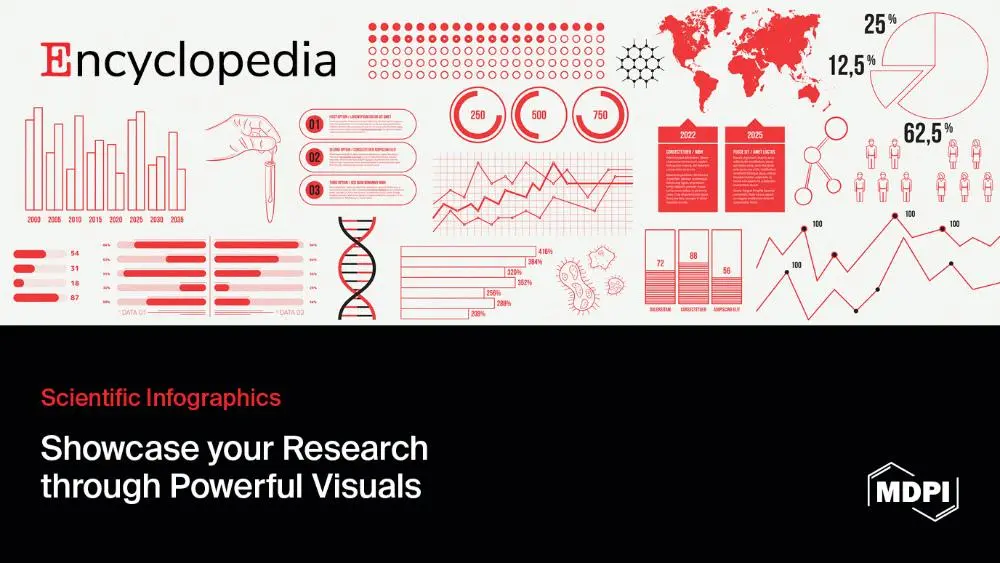
We are pleased to announce the launch of the Encyclopedia Scientific Infographic Service, created to help researchers transform complex scientific findings into clear, engaging, and professionally designed visual narratives. This service is entirely free of charge and aims to enhance the readability, visibility, and overall impact of your research. 1. What Are Academic Infographics? Academic infographics visually present key data, major findings, experimental workflows, and conceptual models in a structured, concise, and accessible format. Research shows that infographic articles generate significantly greater social media attention and achieve higher Altmetric scores than standard original research articles, underscoring their value in enhancing research visibility. High-quality infographics can: Communicate the core message of your research quickly and effectively. Improve presentation quality and visual appeal. Lower the barrier for interdisciplinary understanding. Facilitate broader dissemination across both academic and public audiences. 2. Who Can Benefit from This Service? This service is available to researchers across all academic disciplines.Typical use cases include: Post-publication promotion of journal articles. Conference presentations (oral sessions, posters, booth displays). Grant proposals, mid-term project reports, and research summaries. Teaching materials and public science communication. Social media dissemination and institutional outreach. 3. Why Choose Encyclopedia Infographic Service? Our service provides: Professional production by a dedicated academic design team. Native English editing to ensure accurate and polished content. Consistent visual standards using copyright-safe materials. One complimentary round of revisions. Designs optimized for journals, conferences, and social media platforms. 4. How to Apply To apply for the Encyclopedia Scientific Infographic Service, please visit https://encyclopedia.pub/user/image/infographics and submit the following information: Manuscript DOI/Link (Optional) Image Notes (Required) Upload Materials (Optional; supported formats: zip, rar; file size: 1 KB–300 MB) 5. Encyclopedia Scientific Infographics Example Neovascular eye diseases—can pharmacotherapy and nutraceuticals make a difference? From cutting-edge drug therapies to the potential of nutraceuticals, this infographic explores innovative approaches to tackling abnormal blood vessel growth in the eye. Experts Dario Rusciano and Paola Bagnoli break down the insights into treatment strategies. Source: Encyclopedia Scientific Infographic (https://encyclopedia.pub/image/3247) If you want to see more infographic examples, please visit: https://encyclopedia.pub/image_gallery/6. 6. Contact Email: office@encyclopedia.pub Homepage: https://encyclopedia.pub QR code:
Announcement 10 Dec 2025
Ongoing
The Encyclopedia Advisory Board (AB) serves as the key academic advisory body of the Encyclopedia platform (https://encyclopedia.pub). The Board is composed of distinguished experts and scholars who have significant influence in their respective fields. Advisory Board members provide strategic guidance and professional support to advance the platform's development and ensure the scholarly quality of its content. Eligibility and Requirements Holds a Doctoral degree or possesses extensive and verifiable research or professional experience in the relevant field. Passionate about science and committed to the open sharing of knowledge. Main Roles and Responsibilities Content Review and Quality Control: Provide expert evaluation of submitted entries to ensure academic accuracy, clarity, and integrity. Offer guidance on content quality, publishing policies, and the resolution of ethical issues. Development Strategy and Promotion: Contribute to the strategic development of the Encyclopedia platform by providing guidance on promotion, content innovation, and academic community building. Expand and leverage the Advisory Board to foster broader academic collaboration and interdisciplinary engagement. Compilation and Publication: Organize and coordinate the compilation of Encyclopedia Entry Collections and Encyclopedia books in relevant fields. Edit and curate high-quality entries into a series of published volumes. Benefits Enjoy a one-time free academic video service. Benefit from exclusive discounts on academic video services. Receive a 100 CHF voucher from the Encyclopedia platform, redeemable for MDPI paper publication. Encyclopedia Advisory Board members may be recommended to the Encyclopedia Journal. Upon becoming Editorial Board members of the journal, they are entitled to one free publication annually. Note: AB members who have been inactive for over a year will no longer be eligible for benefits. The standard term of service is two years, with the possibility of renewal. The Encyclopedia Advisory Board is committed to fostering the open sharing of scientific knowledge and to supporting the continued accumulation and dissemination of high-quality content. We warmly welcome experts with outstanding academic credentials to join us in elevating the platform to new heights.
Announcement 10 Nov 2025
Ongoing
We are pleased to announce that MDPI Video Service has entered into a strategic collaboration with Nutrients, an international, peer-reviewed, open access journal of human nutrition published semimonthly by MDPI. 1. MDPI Video Service and Nutrients With an Impact Factor of 5.0 and a CiteScore of 9.1, Nutrients is one of the most influential journals in human nutrition. To further extend its impact and reach, our collaboration began in August 2024. Since then, we have worked with Nutrients t authors to produce 17 academic video abstracts that complement their publications. These videos have attracted significant attention and received strong engagement. For example, the video abstract “Diet and Physical Activity in Breast Cancer Prevention and Treatment” gained over 1.3k views on the Encyclopedia platform, while its corresponding article attracted more than 10,000 visits. 2. From Text to Visual Knowledge Academic research contains valuable insights, yet long-form text often limits its accessibility to wider audiences. To bridge this gap, MDPI Video Service is transforming how science is shared. By visually summarizing studies, our video abstracts make research more accessible, enhance engagement, and simplify complex concepts, ultimately amplifying the impact of academic work. Video abstracts provide: Greater visibility for published studies. Clearer understanding of complex topics. Wider audience reach, engaging both experts and non-specialists. 3. Examples of Popular Video Abstracts Diet and Physical Activity in Breast Cancer Prevention and Treatment Author: Amr Khalifa, Ana Guijarro and Alessio Nencioni Video Introduction: The video discussed the biological rationale for utilizing these dietary interventions and physical activity in BC prevention and treatment. Researchers highlight published and ongoing clinical studies that have applied these lifestyle interventions to BC patients. This research offers valuable insights into the potential application of these dietary interventions and physical activity as complimentary therapies in BC management. Effectiveness of a Nine-Strain Synbiotic in IBS Patients Author: Henning Sommermeyer, Krzysztof Chmielowiec, Malgorzata Bernatek, Pawel Olszewski, Jaroslaw Kopczynski and Jacek Piątek Video Introduction: The video was to characterize effects of a multi-strain synbiotic in patients with moderate to severe irritable bowel syndrome (IBS) of all stool form types. A total of 202 adult IBS patients were randomized (1:1) and after a four-week treatment-free run-in phase and were treated either with the synbiotic or a placebo for 12 weeks. The primary endpoints were the assessment of the severity of IBS symptoms (IBS-SSS) and the improvement of IBS global symptoms (IBS-GIS). Secondary endpoints comprised adequate relief (IBS-AR scale), stool form type (Bristol Stool Form Scale), bowel movements, severity of abdominal pain and bloating, stool pressure, feeling of incomplete stool evacuation, and adverse events. Placebo and Nocebo Effects on Sports and Exercise Performance Author: Bhavya Chhabra and Attila Szabo Video Introduction: This video aimed to update the previous synthesis and evaluate the results of new studies emphasizing placebo or nocebo interventions in sports and exercise by determining the form and magnitude of their effect. 
Announcement 05 Sep 2025
Ended
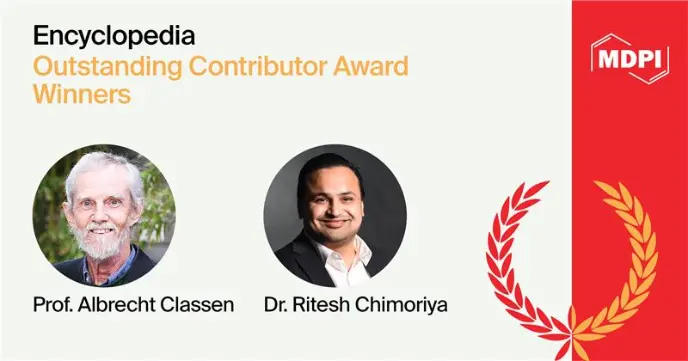
We are thrilled to announce the Encyclopedia 2024 Outstanding Contributor Award winners. The award has been granted to the following researchers: Name: Dr. Michele Filippo FontefrancescoAffiliations: 1 Catholic University of Sacred Hearth, Italy; 2 Durham University, UK Name: Dr. Ioannis PassasAffiliation: Hellenic Mediterranean University, Greece As awardees, they will each receive CHF 300 (Swiss francs), a certificate, and an opportunity to publish one paper free of charge in the Encyclopedia journal before 31 December 2025, following peer review. Testimonials from the winners: Dr. Michele Filippo Fontefrancesco: “I am honored to receive the Outstanding Contribution Award from Encyclopedia. This recognition holds special significance for me, both personally and professionally, as it expresses the recognition of the contribution given to the growth of a young international journal.Publishing with Encyclopedia has offered me a unique opportunity to communicate complex anthropological and social science topics in accessible ways and reach audiences far beyond my normal space in academia. As a researcher committed to bridging knowledge and action, I deeply appreciate the journal’s commitment to high-quality, open access publishing and its support in shaping content that resonates with scholars, practitioners, and policymakers alike.In my experience, the professionalism of the Encyclopedia’s editorial team, from peer review to publication and video production, is outstanding. As an Editorial Board Member and contributor, I see Encyclopedia as a platform where scientific rigor meets public engagement—an essential frontier for researchers today.This award strengthens my motivation to continue contributing, mentoring, and fostering a culture of inclusive and innovative science communication. Thank you for this meaningful acknowledgment.” Dr. Ioannis Passas: “Receiving the Encyclopedia Outstanding Contributor Award 2024 is a true honor. What makes this recognition particularly meaningful is the journal’s wide-reaching, interdisciplinary nature. Few academic platforms today manage to bring together so many diverse fields under one roof while maintaining high standards and clear editorial direction. Being part of such an ecosystem—where knowledge moves across disciplines and formats—is both intellectually fulfilling and professionally valuable.This award acknowledges more than a single contribution; it reflects a collaborative process involving editors, reviewers, and technical staff who treat each submission with care and respect. I’m especially grateful for the chance to share ideas in both written and audiovisual forms, as this has expanded the impact of my work far beyond traditional academic circles.I appreciate this recognition deeply and look forward to continuing my involvement with Encyclopedia, supporting its mission to foster open, informed, and inclusive scholarly dialogue.” We extend our sincere gratitude to all applicants for their outstanding contributions. The evaluation process and subsequent decision proved to be challenging. On behalf of the award evaluation committee, we congratulate the winners on their remarkable achievements. Encyclopedia Editorial Office
Announcement 21 Apr 2025
Ongoing
Encyclopedia MDPI is thrilled to announce significant enhancements to its Academic Video Service, which aim to improve its quality, accessibility, and functionality. Since its launch, our video service has enabled numerous scholars to present their research in a dynamic and visually engaging format, greatly enhancing its visibility and impact. Due to the overwhelmingly positive reception this service has received, we have reached a point where the number of orders we are receiving exceeds our current capacity. In order to maintain the quality of these videos and continue optimizing the service, we have made the decision to introduce a fee. However, to ensure that this service is still a cost-effective option, we have set our prices significantly below the market average. Highlights of the Upgrades to the Service Although the service will now be fee-based, we are committed to providing even more professional and comprehensive support, including the following: One-on-one video production guidance Personalized assistance to ensure your needs are fully met. Scriptwriting and English editing Expertly crafted narratives and professional English editing to ensure your research is presented clearly, accurately, and with impact. High-quality animations Visually engaging animations are created to simplify complex research and captivate your audience. Whiteboard Animations: Clean and minimalist, using hand-drawn illustrations to explain ideas step-by-step. Motion Graphics (MG) Animations: Cartoon Style: Bright, colorful, and approachable, ideal for making technical or scientific content more accessible and engaging. Hand-Drawn Style: Unique and artistic, adding a personal touch to your research while maintaining clarity and professionalism. Customized infographics (optional) We can also create tailored infographics to visually summarize key data or findings, enhancing the clarity and appeal of your video. Native voiceover Native speakers provide voiceovers to enhance the accessibility and reach of your research. Multiple rounds of revision To ensure your video accurately represents your work. Social media promotion Expanding your research's visibility and impact. Why Choose Us? The Proven Impact of Video Abstracts Research shows that a well-crafted video abstract can significantly enhance the visibility and impact of your work. It has been shown to do the following: Increase paper views by 120% (Source: 10.1007/ s11192-019-03108-w) Boost citations by 20% (Source: Wiley Online Library) Improve journal rankings by 33% (Source: Research Square) Raise Altmetrics scores by 140% (Source: Research Square) Our Expertise in Academic Research Backed by MDPI, our experienced production team combines deep academic knowledge with creative excellence. We understand the nuances of scholarly communication and ensure that every frame accurately conveys the value of your research, meeting the highest standards of quality and precision. Collaborations with SCI Journals We have partnered with many SCI journals to create exclusive video series, enhancing the dissemination and impact of published research. For example, our collaborations with Entropy, Remote Sensing, Nanomaterials , Animals , Nutrients, Foods , Sustainability, Encyclopedia, Cancers, etc., have helped authors achieve greater visibility and recognition for their work. Global visibility The videos are linked to your paper's DOI for maximum exposure. Available Video Services and Their Pricing Video Abstract (up to 5 minutes long): Summarizes the key findings, methodology, and significance of your research paper. Regular price: CHF 600 Discounted Price: CHF 400 Short Take (up to 2 minutes long): Uses original animations to explain the specific aspects of your research. Regular price: CHF 500 Discounted Price: CHF 300 Scholar Interview: A face-to-face discussion offering deeper insights into your publication. Regular price: CHF 400 Discounted Price: CHF 200 Video Production Service If you want to see some examples of our videos, please visit https://encyclopedia.pub/video. If you would like to apply for the video service, please click https://encyclopedia.pub/video_service. Others If you have any other questions, please contact office@encyclopedia.pub.
Announcement 07 Apr 2025
Ended
Announcement 04 Dec 2024
Ended
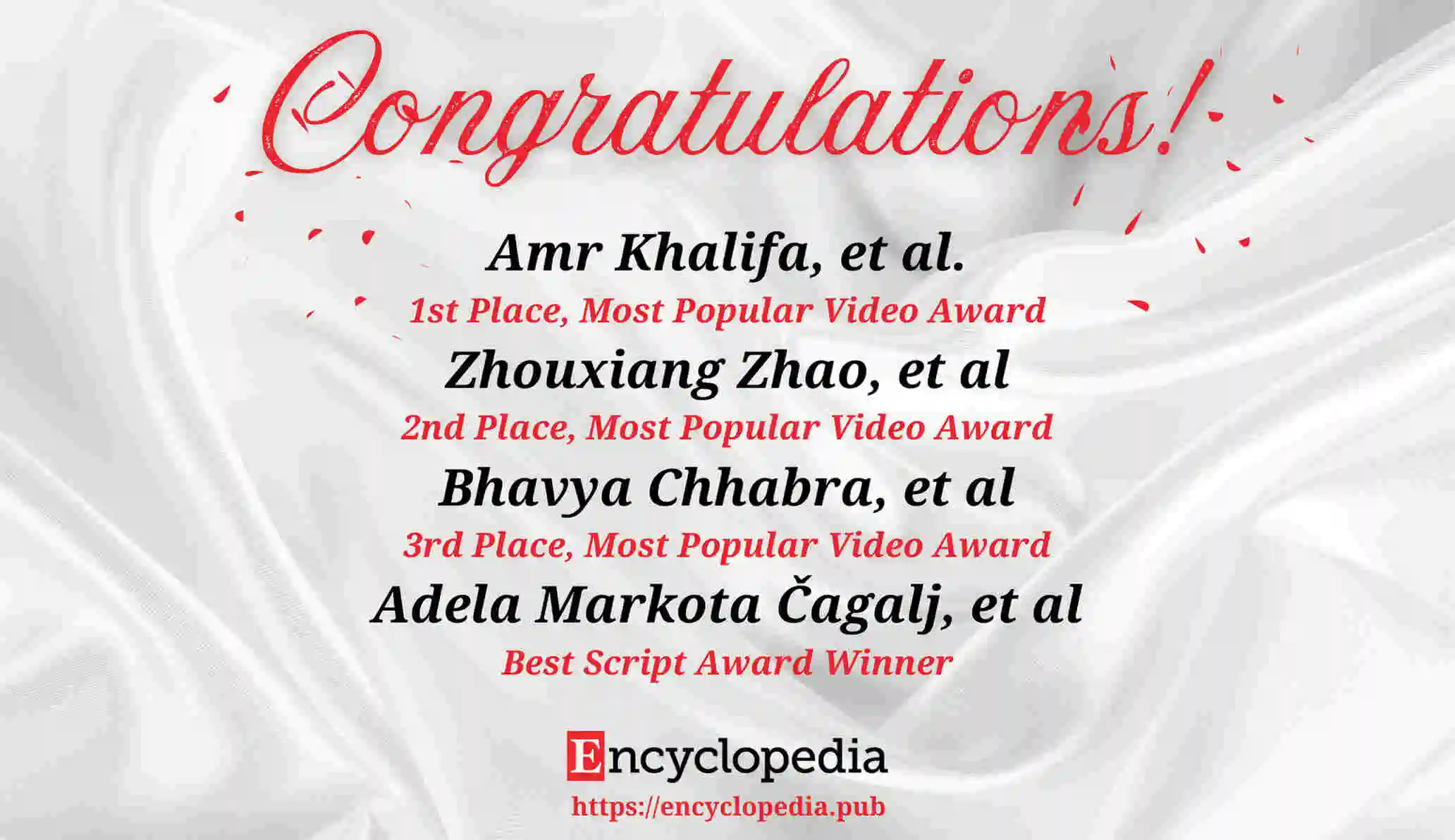
Today, the Encyclopedia platform officially launches a new event, ScholarVision Creation. This event aims to provide scholars with free academic visualization services, promote academic achievements, and share scientific knowledge. All users of our encyclopedia platform can participate, and other scholars can also participate by registering for an account with our platform. We will not only provide video services to participants, but we have also set up two special awards to recognize individuals who make outstanding contributions during the event. If you want to learn more information or directly participate in the event, please click on the following link: http://encyclopedia.pub/scholar_vision/index Event Duration August 7th 2024–September 26th 2024(UCT+8) Awards Most Popular Video Award: Any videos produced during the event will be eligible for selection, and the top three videos with the highest number of votes will be awarded the Most Popular Video. Best Script Award: Any video scripts submitted during the event will be eligible for selection, and the Best Script will be chosen by the Encyclopedia Editorial Committee. Prize Most Popular Video Award: Win 300 CHF, 200 CHF, or 100 CHF for the top three videos with most votes. Best Script Award: The winner will receive a cash prize of 200 CHF. Participation The event will be divided into three stages: Application Stage: All scholars can apply and participate in the event on the event homepage. The link for applying for video production and submitting video scripts follows. All users who submit video scripts will automatically enter the video production service queue and participate in the subsequent selection for the Most Popular Video Award, without the need for re-application. Please note that the video services for this event are completely free and no fees will be charged to participants. Apply for video production: https://encyclopedia.pub/video_material Submit your video script: https://encyclopedia.pub/user/video_material?inviter Note: Due to limited video production capacity, not all applicants will enter actual production. Videos that have not entered the production list by the end of the event will be considered invalid applications. However, users who actively promote the event and earn at least 1000 points will still have their videos produced even after the event ends. Therefore, if you want your video application to be prioritized, please actively promote our event and earn event points. All scholars' applications will enter the production queue in order of the number of points earned. The entire process will be transparent and fair. You can earn event points by inviting friends to participate, promoting event content, and browsing website content. For more details, please click on the event homepage. Voting Stage: Coming soon. Winner Annoucement: Coming soon. Others If you have any other questions, please contact office@encyclopedia.pub
Announcement 07 Aug 2024
Ended
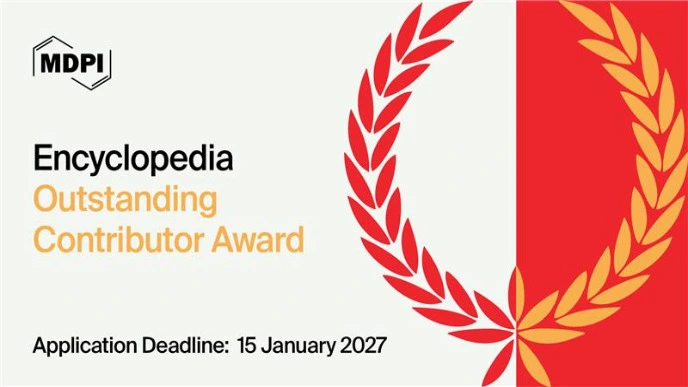
Dear Colleagues, We are pleased to announce that the “Encyclopedia 2024 Outstanding Contributor Award” is open for applications now. We will award two outstanding contributors for the Encyclopedia platform (https://encyclopedia.pub/) and Encyclopedia journal in 2024. All contributors will be selected after a thorough evaluation by the journal award committee, led by the Editor-in-Chief, Prof. Dr. Raffaele Barretta, and the winners will be announced in March 2025. Eligibility for the Award:To be eligible, applicants must meet at least one of the following criteria:– The applicants must have published at least one qualified entry/video/image on the Encyclopedia platform in 2024;– The applicants must have published at least one paper in the Encyclopedia journal in 2024. Selection Criteria:The award committee will evaluate applications based on a comprehensive consideration of the following criteria:– The quantity and quality of entries/videos/images and papers contributed;– Scientific merit and broad impact;– View, citation, and download rates in 2024. Document for Application:Curriculum vitae (please contact our office if you need a template of the form). The Prize:– CHF 300 (Swiss francs) for each winner;– An opportunity to publish one paper free of charge in the Encyclopedia journal before 31 December 2025 following peer review for each winner;– An electronic certificate for each winner. Application Deadline:15 January 2025. Please send your curriculum vitae to our office before the deadline (encyclopedia@mdpi.com). The winners will be announced on the journal website in March 2025. Kind regards,Encyclopedia Editorial Office
Announcement 01 Apr 2024
Ongoing
To help users better understand the basic information and functions of the Encyclopedia Platform Version 3.0, our website launched a Help Center function. Users can enter it by clicking on the “ ” icon on the right side of the website or clicking on the link: https://encyclopedia.pub/help/center. The Help Center consists of 6 items: Guideline, User Manual, Encyclopedia Credit System, Journal Processing Charges, Q&As and Tutorial Videos. Now the new functions of Help Center are announced as follows: 1. GuidelinesGuidelines can help you get to know the Encyclopedia initiative step by step. 2. User ManualUser manual is an A-Z guide on how to use this platform. It contains some tutorials on the general operation of the Encyclopedia platform, including registering and logging in to an account, creating and revising entries/videos, and multiple functionalities of a user profile. 3. Encyclopedia Credit SystemYou can discover more ways to engage with our platform so that you can earn and redeem your credits for rewards. 4. Journal Processing ChargesYou can understand Encyclopedia journal processing charges and related information. 5. Q&AsQ&As provide answers to the questions you have about Encyclopedia. 6. Tutorial VideosTutorial videos provide a visual guide to using products. You can get to know “Encyclopedia Introduction”, “How to Submit an Entry” and “How to Upload a Video Entry” through these videos. If you have any questions, please feel free to contact us at office@encyclopedia.pub.
Announcement 13 May 2022
Ongoing
All of our entry contributors are researchers, scientists, or experts in each field. Contributors will receive credits for their participation in Encyclopedia, such as creating new entries, editing existing entries or commenting on entries, etc. Meanwhile, credits can be redeemed for discount voucher(s) which can be used for related MDPI services. 1. How to Obtain Encyclopedia Credits You can obtain credits based on the following Rules: Type Credits Notes Limit Confirm your registration + 50 Verify your email to receive credits. First time registration Subscribing to Encyclopedia  + 20 You will earn credits after subscription Up to once for each account Publish an entry/video + 15 You will earn credits for each entry/video you publish. Credits will be rewarded to your account after the entry/video is confirmed online. Up to twice per day Invite connections to post an entry/video + 15 You can obtain credits when your friends post an entry/video via the invited link. Up to three times per day Invite connections to post an image + 5 You can obtain credits when your friends post an image via the invited link. Up to five times per day Edit an entry (qualified) + 5 You will receive credits if the entry's content is substantially modified or expanded with a minimum of 20 words. Up to twice per day Submit an image + 5 You will earn credits for each image you submit. Credits will be rewarded to your account after the image is approved online. Up to three times per day Comment + 3 Post a comment on an entry/video/ image. Up to three times per day Share an entry/video/image + 1 Share the link of an entry/video/image from the Encyclopedia platform to your connections. Up to three times per day Get a like + 1 You will receive credits for each like for your published entry/video/image. Up to five times per day Credits are automatically distributed by the system, but please note that they are not available for the first 48 hours. If your posts are withdrawn due to inappropriate conduct or content during this period, your credits will be withdrawn accordingly. 2. How to Use the Credits and Vouchers You can redeem credits for vouchers on your personal account. Exchange Rates: 100 Credits = 100 CHF; 200 Credits = 200 CHF (A maximum of 200 credits can be redeemed at a time) Voucher Terms and Conditions: Encyclopedia vouchers can be used for any MDPI journal Encyclopedia vouchers can not be used with other MDPI discounts together, except for IOAP discounts Encyclopedia vouchers can not be combined or stacked in the same manuscript. Only one Encyclopedia voucher applies per manuscript Each voucher will be valid for a single redemption only. Click here to submit your papers. 3. How to View Your Credit Balance To check your credit balance, please click here. 4. Other Terms Valid period of Credits: Credits will be valid for one calendar year. Credits that have been issued for more than one year will be cleared. Credits Ownership: Credits are not interchangeable between different people and different accounts. Valid period of Vouchers: Vouchers will be valid for two calendar years. Vouchers that have been issued for more than two years will be cleared. Voucher Ownership: Vouchers are not interchangeable between different people and different accounts. 5. Prohibition Cheating or obtaining credits by any means other than those outlined is not allowed. The administrator has the right to cancel the voucher code in this case. Additionally, Rewards credits may be forfeited. The Encyclopedia platform does not welcome any form of immature, illegal, violent, pornographic, or advertising content. The Encyclopedia platform reserves all the rights for the final explanation.
Announcement 22 Jun 2022
  • Page
  • of
  • 2
Academic Video Service