Your browser does not fully support modern features. Please upgrade for a smoother experience.
Submitted Successfully!
Thank you for your contribution! You can also upload a video entry or images related to this topic. For video creation, please contact our Academic Video Service.
Version Summary Created by Modification Content Size Created at Operation
1 Ved Prakash Giri -- 1748 2023-04-24 17:10:00 |
2 Format modification Alfred Zheng Meta information modification 1748 2023-04-26 06:22:26 |

Video Upload Options

We provide professional Academic Video Service to translate complex research into visually appealing presentations. Would you like to try it?
Cite
If you have any further questions, please contact Encyclopedia Editorial Office.
Giri, V.P.; Shukla, P.; Tripathi, A.; Verma, P.; Kumar, N.; Pandey, S.; Dimkpa, C.O.; Mishra, A. Biogenic Nanoscale Agro-Materials. Encyclopedia. Available online: https://encyclopedia.pub/entry/43404 (accessed on 29 March 2026).
Giri VP, Shukla P, Tripathi A, Verma P, Kumar N, Pandey S, et al. Biogenic Nanoscale Agro-Materials. Encyclopedia. Available at: https://encyclopedia.pub/entry/43404. Accessed March 29, 2026.
Giri, Ved Prakash, Pallavi Shukla, Ashutosh Tripathi, Priya Verma, Navinit Kumar, Shipra Pandey, Christian O. Dimkpa, Aradhana Mishra. "Biogenic Nanoscale Agro-Materials" Encyclopedia, https://encyclopedia.pub/entry/43404 (accessed March 29, 2026).
Giri, V.P., Shukla, P., Tripathi, A., Verma, P., Kumar, N., Pandey, S., Dimkpa, C.O., & Mishra, A. (2023, April 24). Biogenic Nanoscale Agro-Materials. In Encyclopedia. https://encyclopedia.pub/entry/43404
Giri, Ved Prakash, et al. "Biogenic Nanoscale Agro-Materials." Encyclopedia. Web. 24 April, 2023.
Biogenic Nanoscale Agro-Materials
Edit

Advancements in nanotechnology have provided new scopes in agricultural science and uplifted the agricultural system, where the unique properties of nanomaterials make them suitable tools for sustainable agricultural applications. In this regard, agro-materials can be developed into nanoscale materials to aid in fertilizer improvement, either themselves being the active ingredient or used to facilitate the bioactivity of nutrients. Such products are termed nanofertilizers or nano-enabled fertilizers.

agro-material Nutritional Value-Added Plants Stress Alleviation

1. Introduction

Nanotechnology refers to the reshaping of matter at the atomic or molecular level. Nanomaterials are measured in one billionth of a meter (nm) and have a size ranging from 1 to 100 nm [1]. Nanotechnology has evolved as an outcome of the advancement of chemistry, physics, pharmacology, engineering, and biology [2]. Nanomaterials are used in multiple applications, including nanosensors, biosensors, nanochips, biofuels, biolabeling, semiconductors, and antimicrobial agents [3]. Notably, advancements in nanotechnology have provided new scopes in agricultural science and uplifted the agricultural system [4], where the unique properties of nanomaterials make them suitable tools for sustainable agricultural applications [5].

2. Nutritional Value-Added Plants and Their Role in Human Health

2.1. Vegetables

Vegetables such as tomatoes, cucurbits, pumpkins, squashes, cucumber, gherkins, onions, shallots, garlic, and chilies contribute to the global food economy and have significant nutritional value. These vegetables and others are consumed in all countries. Therefore, governments need to boost investment in farm production, including providing improved crop varieties and sustainable alternatives to agrochemicals, such as pesticides and fertilizers. Good post-harvest management practices, food safety, and market access have to be facilitated to leverage the economic power of countries [6].

2.2. Fruits

Dietary habits are linked to the prevention or otherwise of chronic diseases such as cancer, diabetes, Alzheimer’s, and heart disease [7]. Numerous antioxidants are found in fruits and vegetables that also have been linked to their ability to protect against certain diseases and help neutralize free oxygen radicals. Low levels of antioxidants and vitamins in the blood can increase the risk of cancer mortality [8]. Besides, phytochemicals in fruits, particularly phenolic compounds, are responsible for several health benefits [9].

2.3. Grain Cereal Staples

Grain cereals are one of the most ancient foods on the planet and are the main component of the human diet. Cereals such as wheat, rice, barley, maize, rye, oats, and triticale, account for the majority of agricultural output. Together, these crops are the most important sources of food for human consumption, providing 50% of dietary protein and energy consumed [10]. In addition to carbohydrates and proteins, other nutrients, such as fat, phospholipids, vitamins, and minerals, are present in cereal grains. Cereals, in general, can reduce cancer and coronary heart diseases [11][12]. Wheat (Triticum) is one of the oldest cereal grain crops. The genus contains numerous species, three of which are widely grown worldwide: (Triticum aestivum L.), durum (Triticum durum Desf.), and spelta (Triticum spelta L.). On a global scale, common wheat (Triticum aestivum L.) is the most widespread species and the world’s second most extensively produced crop. The fundamental goal of modern wheat farming, especially common wheat (Triticum aestivum ssp. vulgare), is to produce high-yield cultivars with good baking and nutritional properties [13]. Wheat grain consumption accounts for 19% of all calories consumed by humans worldwide. Wheat is used to make bread, pasta, and other bakery items all over the world. As a result, one of the main goals of cereal farming is to produce varieties with increased protein content [14].

2.4. Ornamentals and Flowering Plants Used as Food Condiments

Some ornamental and flowering plants are used in food preparation because they provide flavor and aroma to food. For example, Viola odorata L. is used as a sugar source in syrups [15]. Flowers can be eaten both fresh (e.g., Marigold flower) and in savory dishes with meat and fish. They are also used in drinks (wine and beer), desserts, jellies, and spices [16]. Usually, some plants are known for the flavoring or nutritional potential of their fruits or leaves, while some flowers are also edible and rarely used in cooking, such as passion fruit, chive, and pumpkin [17]. Although the use of edible flowers is still in its infancy, flowers are a natural source of bioactive chemicals [18]. To this end, several species of ornamental plants have been extensively researched, such as Centaurea cyanus L. [19], Chrysanthemum morifolium Ramat [20], Hibiscus rosa-sinensis L. [21], Lavandula pedunculata Cav. [18], pansy [17], Calendula officinalis L. [22], and Rosa spp. [23]. Edible flowers supply antioxidants and essential oils when consumed in their natural form or when minimally processed [24]. The bioactive properties of edible flowers have been associated with the treatment of ulcerative colitis [25], anti-hyperglycemic, anti-cholinergic activity [18], oxidative effects in erythrocytes, and anti-cancerous activity.

3. Applications of Nanoscale Agro-Materials and Their Impact on Plants
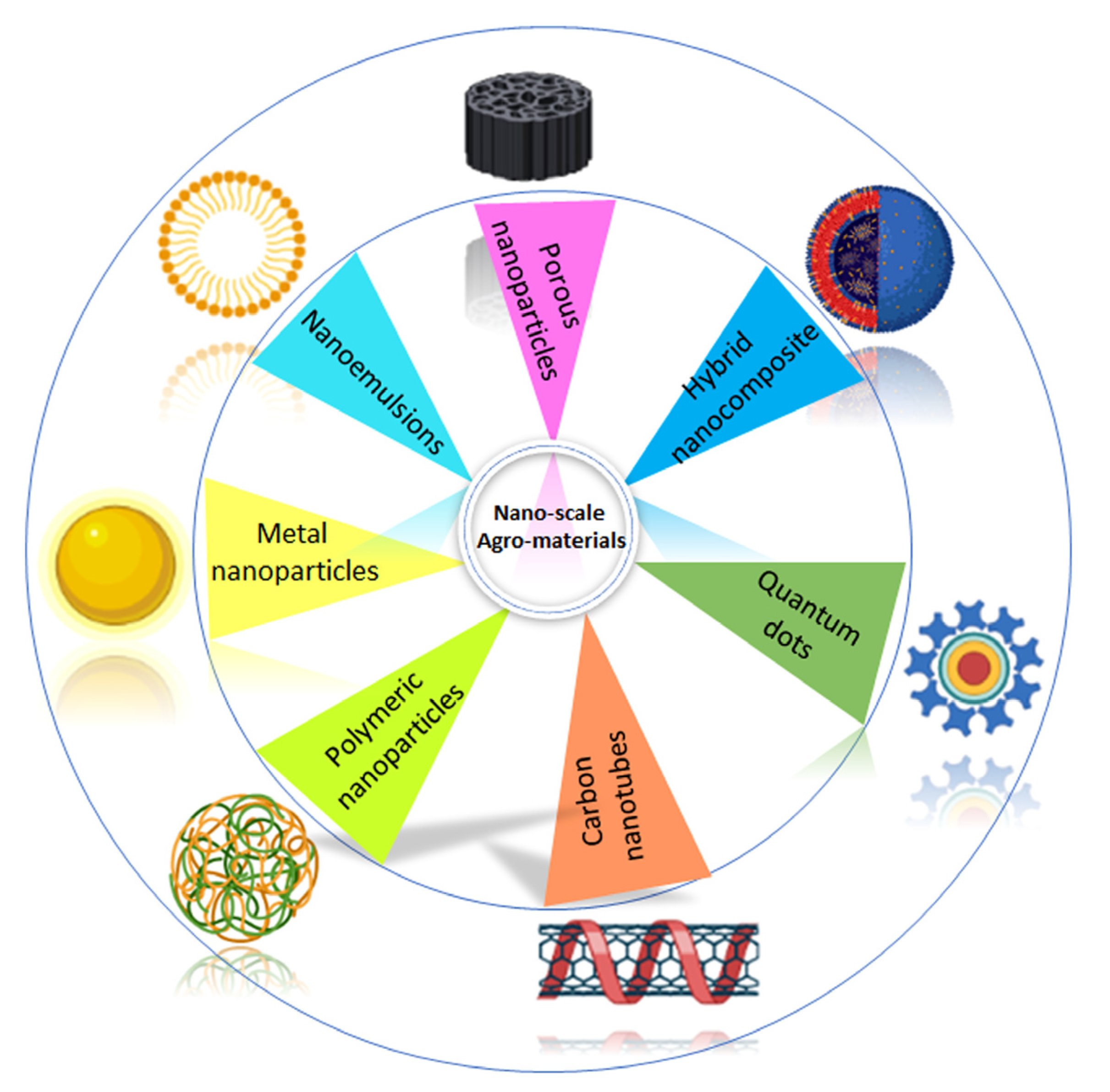
Chemical fertilizers have been used for centuries and have greatly increased crop yields. However, they cause soil mineral instabilities and destruction of soil structure and quality, as well as manipulate the overall ecosystem, all of which are serious long-term impediments. To overcome the problems, it is necessary to create advanced bioactive materials that can be tuned to release nutrients at specific times [26]. Agronomic biofortification is the action of increasing the nutrient content of food crops with an outcome targeted at the edible plant tissue. Biofortification can be implemented during the nascent stage of plant development [27], and hence, the term agronomic biofortification. According to recent research, nanotechnology has the potential to revolutionize the agricultural system, including by assisting conventional agronomy in fortifying food produce with nutrients [28][29] and facilitating the safe, target-bound delivery of agrochemicals. The properties of nanomaterials, such as the high surface area to volume ratio, may allow for efficient nutrient uptake by crops to maximize yield. The nano-size of nanofertilizers allows them to enter the nano-porous surfaces of the plant tissue, helping to improve fertilizer use efficiency, restore soil fertility, and effectively reduce agroecological degradation. Several nanoscale materials such as zinc oxide (ZnO), copper oxide (CuO), silica (Si), iron (Fe), titanium dioxide (TiO2), zinc sulfide/zinc cadmium selenide (ZnS/ZnCdSe), core-shell quantum dots (QDs), phosphorous/zinc sulphide (P/ZnS) core-shell QDs, manganese-doped zinc selenide (Mn/ZnSe) QDs, gold nanorods, aluminum oxide (Al2O3), cerium(IV) oxide (CeO2), and iron (II) oxide (FeO) are among those used as nanoscale agro-materials [4] (Figure 1).
/media/item_content/202304/64488b117e31bplants-12-00815-g001.png
Figure 1. Schematics of different types of nanoscale agro-materials used in agriculture. Image partially created with BioRender.com.

4. Role of Biogenic Nanoscale Agro-Materials in Nutritional Value-Added Plants

The occurrence of nutrient deficiency in food crops is drastically affecting human health. Several approaches are known that can improve the nutrient quality in food, such as dietary diversification, the use of medicines as a supplement, and industrial fortification during food processing. Due to lower affordability and sustainability, these processes have not yet successfully addressed the problem. Therefore, to fulfill the nutrient requirement, plants require mineral fertilizers that are balanced in both their elemental composition and the amount of each element. On the other hand, the overuse of chemical fertilizers and pesticides is toxic to the environment and leads to serious human and environmental health issues. Agrochemical overuse also exacerbates the high inefficiency of use by plants. The use of nano forms of N, P, K, Fe, Mn, Cu, Mo, and CNTs as fertilizers can improve the bioavailability and targeted delivery of these nutrients in the plant, thereby lending themselves to use under the current scenario. Similarly, nanopesticides such as Ag, Cu, SiO2, and ZnO, among others, have better broad-spectrum pest management efficiency as compared to traditional chemical pesticides [30][31].
Presently, considerable efforts by scientists and researchers are underway to advance techniques that could assist plants in enhancing their native functions. Several bioactive compounds (e.g., flavonoids, phenolic acids, alkaloids, and carotenoids) are commercially available as products, with a wide array of applications in the agriculture, food industry, medical, pharmacological, and cosmetic sectors. Researchers are studying the role of bio-inspired nanomaterials as novel elicitors for the biosynthesis of bioactive compounds and potentially promote the plant’s secondary metabolism. Recent studies have noted that the efficient applications of nanotechnology in crop production could enhance the nutritional quality of plants under stress conditions [32]. Particularly, metal oxide nanoscale materials can modulate the plant’s physiological processes to promote the growth of plants. As several of the metals are nutrients, metal oxide nanomaterials can be used as nutrient material and could increase the production of bioactive compounds. The biosynthesized nanomaterials are an appropriate choice due to their biocompatibility, stability, and non-toxic behavior. Some metal oxide NPs, such as titanium oxide, zinc oxide, iron oxide, and copper oxide, have been studied for the development and enhancement of secondary metabolite production in plants [33].

5. Biogenic Nanoscale Materials as a Nano-Enabled Tool for Stress Alleviation in Plants
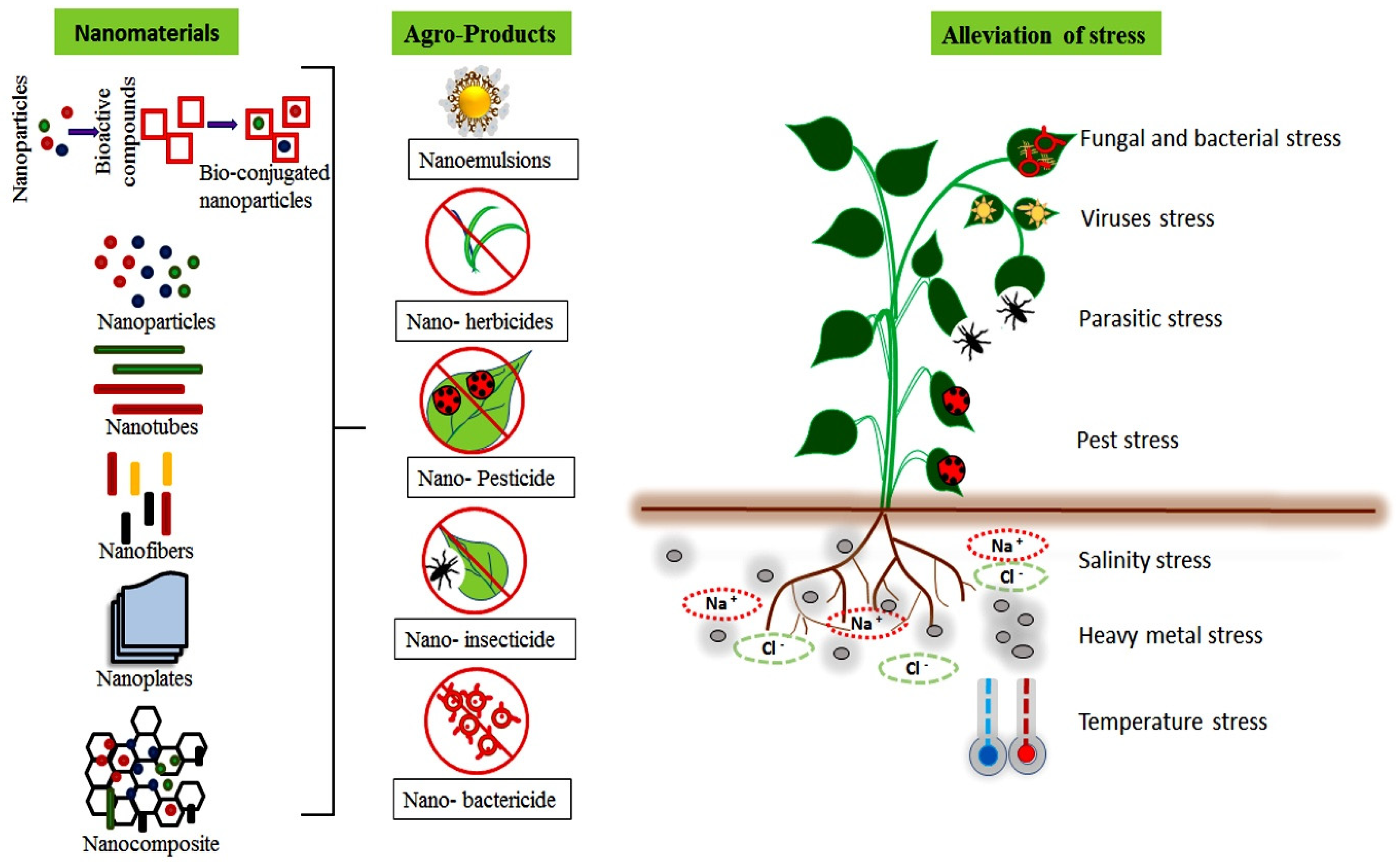
Global progress in agricultural crop production may be hampered because of the increased prevalence of environmental stresses [34]. Climatic stresses originate from rising temperatures, heat waves, drought, and the accumulation of heavy metals, while a variety of biotic stresses, such as fungal and bacterial diseases and insect infestation, put pressure on agriculture [35]. These stresses significantly affect crop yields and, for heavy metals, increase the accumulation of different toxic elements in plant tissues, rendering them unfit for consumption by animals and humans, with otherwise serious health problems [36]. Moreover, biotic and abiotic stresses negatively affect the growth and economic expansion of agricultural and horticultural crops [37]. Besides, climatic stress can cause pollen sterility, shriveled seeds, disrupted photosynthetic and respiratory enzyme activities, and an increase in the production of reactive oxygen species (ROS), with negative impacts on plants [38][39]. Notably, biogenic nanomaterials have recently been explored for use in counteracting the damaging effects of a variety of environmental stressors, including heavy metals, drought, salinity, high temperature, and bacterial and fungal pathogens [34]. Green synthesis of nanomaterials gained serious attention in recent years due to their sustainable application in the agricultural system [40]. Several biogenic metallic nanoparticles viz; AgNPs, AuNPs, CuNPs, FeNPs, FeS2NPs, TiO2NPs, ZnNPs, and ZnONPs, have been used to improve seed germination, plant growth, and stress tolerance in a variety of crop plants, as well as in the direct inhibition of plant pathogens, with a view to application in real plant pathosystems [41][42][43]. For instance, biosynthesized AgNPs enhanced plant growth and development by improving seed germination, growth parameters, water content, photosynthetic pigments, osmolytes, and antioxidant pigments [44]. Similarly, Noman et al. [45] reported biogenic CuNPs alleviated salt stress in maize by modulating cellular oxidative repair mechanisms. Del Buono et al. [46] also described biogenic ZnNPs synthesized from Lemna minor (duckweed) enhanced the physiochemical and biochemical traits in maize. An overview of nanomaterials-based agri-product and their role in the alleviation of biotic and abiotic stresses is provided in Figure 2.
Figure 2. Different bioactive nanoscale agri-products for the alleviation of biotic and abiotic stresses in plants.

References

  1. Ramsden, J.J. What is nanotechnology? Nanotechnol. Percept. 2005, 1, 3–17.
  2. Sahu, T.; Ratre, Y.K.; Chauhan, S.; Bhaskar, L.V.K.S.; Nair, M.P.; Verma, H.K. Nanotechnology based drug delivery system: Current strategies and emerging therapeutic potential for medical science. J. Drug Deliv. Sci. Technol. 2021, 63, 102487.
  3. Baker, S.; Volova, T.; Prudnikova, S.V.; Satish, S.; Prasad, M.N.N. Nanoagroparticles emerging trends and future prospect in modern agriculture system. Environ. Toxicol. Pharmacol. 2017, 53, 10–17.
  4. Prasad, R.; Bhattacharyya, A.; Nguyen, Q.D. Nanotechnology in sustainable agriculture: Recent developments, challenges, and perspectives. Front. Microbiol. 2017, 8, 1014.
  5. Dasgupta, N.; Ranjan, S.; Mundekkad, D.; Ramalingam, C.; Shanker, R.; Kumar, A. Nanotechnology in agro-food: From field to plate. Food Res. Int. 2015, 69, 381–400.
  6. Schreinemachers, P.; Simmons, E.B.; Wopereis, M.C.S. Tapping the economic and nutritional power of vegetables. Glob. Food Secur. 2018, 16, 36–45.
  7. Temple, N.J. Antioxidants and disease: More questions than answers. Nutr. Res. 2000, 20, 449–459.
  8. Willett, W.C. Micronutrients and cancer risk. Am. J. Clin. Nutr. 1994, 59, 1162S–1165S.
  9. Sun, J.; Chu, Y.F.; Wu, X.; Liu, R.H. Antioxidant and antiproliferative activities of common fruits. J. Agric. Food Chem. 2002, 50, 7449–7454.
  10. Daryanto, S.; Wang, L.; Jacinthe, P.A. Global synthesis of drought effects on maize and wheat production. PLoS ONE 2016, 11, e0156362.
  11. Bangar, S.P.; Kaushik, N. Functional cereals: Functional components and benefits. In Functional Cereals and Cereal Foods; Springer International Publishing: Cham, Switzerland, 2022; pp. 3–25.
  12. Flight, I.; Clifton, P. Cereal grains and legumes in the prevention of coronary heart disease and stroke: A review of the literature. Eur. J. Clin. Nutr. 2006, 60, 1145–1159.
  13. Biel, W.; Kazimierska, K.; Bashutska, U. Nutritional value of Wheat, Triticale, Barley and Oat Grains. Acta Sci. Pol. Zootech. 2020, 19, 19–28.
  14. Brestic, M.; Zivcak, M.; Hauptvogel, P.; Misheva, S.; Kocheva, K.; Yang, X.; Li, X.; Allakhverdiev, S.I. Wheat plant selection for high yields entailed improvement of leaf anatomical and biochemical traits including tolerance to non-optimal temperature conditions. Photosynth. Res. 2018, 136, 245–255.
  15. Mlcek, J.; Rop, O. Fresh edible flowers of ornamental plants-A new source of nutraceutical foods. Trends Food Sci. Technol. 2011, 22, 561–569.
  16. Chen, N.H.; Wei, S. Factors influencing consumers’ attitudes towards the consumption of edible flowers. Food Qual. Prefer. 2017, 56, 93–100.
  17. Fernandes, L.; Ramalhosa, E.; Baptista, P.; Pereira, J.A.; Saraiva, J.A.; Casal, S.I.P. Nutritional and nutraceutical composition of Pansies (Viola × wittrockiana) during flowering. J. Food Sci. 2019, 84, 490–498.
  18. Nowicka, P.; Wojdyło, A. Anti-hyperglycemic and anticholinergic effects of natural antioxidant contents in edible flowers. Antioxidants 2019, 8, 308.
  19. Lockowandt, L.; Pinela, J.; Roriz, C.L.; Pereira, C.; Abreu, R.M.V.; Calhelha, R.C.; Alves, M.J.; Barros, L.; Bredol, M.; Ferreira, I.C.F.R. Chemical features and bioactivities of cornflower (Centaurea cyanus L.) capitula: The blue flowers and the unexplored non-edible part. Ind. Crops Prod. 2019, 128, 496–503.
  20. Yang, P.F.; Yang, Y.N.; Feng, Z.M.; Jiang, J.S.; Zhang, P.C. Six new compounds from the flowers of Chrysanthemum morifolium and their biological activities. Bioorganic Chem. 2019, 82, 139–144.
  21. Antarkar, S.; Sharma, A.; Bhargava, A.; Gupta, H.; Tomar, R.; Srivastava, S. Physico-chemical and nutritional evaluation of cookies with different levels of Rosehip and Hibiscus powder substitution. Arch. Curr. Res. Int. 2019, 17, 1–10.
  22. Chitrakar, B.; Zhang, M.; Bhandari, B. Edible flowers with the common name “marigold”: Their therapeutic values and processing. Trends Food Sci. Technol. 2019, 89, 76–87.
  23. Qiu, L.; Zhang, M.; Ju, R.; Wang, Y.; Chitrakar, B.; Wang, B. Effect of different drying methods on the quality of restructured rose flower (Rosa rugosa) chips. Dry. Technol. 2020, 38, 1632–1643.
  24. Fernandes, L.; Saraiva, J.A.; Pereira, J.A.; Casal, S.; Ramalhosa, E. Post-harvest technologies applied to edible flowers: A review: Edible flowers preservation. Food Rev. Int. 2019, 35, 132–154.
  25. Meurer, M.C.; Mees, M.; Mariano, L.N.B.; Boeing, T.; Somensi, L.B.; Mariott, M.; da Silva, R.d.C.M.V.d.A.F.; dos Santos, A.C.; Longo, B.; Santos França, T.C.; et al. Hydroalcoholic extract of Tagetes erecta L. flowers, rich in the carotenoid lutein, attenuates inflammatory cytokine secretion and improves the oxidative stress in an animal model of ulcerative colitis. Nutr. Res. 2019, 66, 95–106.
  26. Kabiri, S.; Degryse, F.; Tran, D.N.H.; Da Silva, R.C.; McLaughlin, M.J.; Losic, D. Graphene Oxide: A new carrier for slow release of plant micronutrients. ACS Appl. Mater. Interfaces 2017, 9, 43325–43335.
  27. Bouis, H.E.; Hotz, C.; McClafferty, B.; Meenakshi, J.V.; Pfeiffer, W.H. Biofortification: A new tool to reduce micronutrient malnutrition. Food Nutr. Bull. 2011, 32, S31–S40.
  28. Sekhon, B.S.; Manjunatha, S.B.; Biradar, D.P.; Aladakatti, Y.R. Nanotechnology and its applications in agriculture: A review. J. Farm Sci. 2014, 29, 31–53.
  29. Dimkpa, C.O.; Bindraban, P.S. Fortification of micronutrients for efficient agronomic production: A review. Agron. Sustain. Dev. 2016, 36, 7.
  30. Elemike, E.E.; Uzoh, I.M.; Onwudiwe, D.C.; Babalola, O.O. The role of nanotechnology in the fortification of plant nutrients and improvement of crop production. Appl. Sci. 2019, 9, 499.
  31. Chhipa, H. Nanofertilizers and nanopesticides for agriculture. Environ. Chem. Lett. 2017, 15, 15–22.
  32. Rivero-Montejo, S.d.J.; Vargas-Hernandez, M.; Torres-Pacheco, I. Nanoparticles as novel elicitors to improve bioactive compounds in plants. Agriculture 2021, 11, 134.
  33. Marslin, G.; Sheeba, C.J.; Franklin, G. Nanoparticles alter secondary metabolism in plants via ROS burst. Front. Plant Sci. 2017, 8, 832.
  34. Zohra, E.; Ikram, M.; Omar, A.A.; Hussain, M.; Satti, S.H.; Raja, N.I.; Mashwani, Z.U.R.; Ehsan, M. Potential applications of biogenic selenium nanoparticles in alleviating biotic and abiotic stresses in plants: A comprehensive insight on the mechanistic approach and future perspectives. Green Process. Synth. 2021, 10, 456–475.
  35. Malhi, G.S.; Kaur, M.; Kaushik, P. Impact of climate change on agriculture and its mitigation strategies: A review. Sustainability 2021, 13, 1318.
  36. Oves, M.; Khan, M.S.; Zaidi, A.; Ahmad, E. Soil contamination, nutritive value, and human health risk assessment of heavy metals: An overview. In Toxicity of Heavy Metals to Legumes and Bioremediation; Springer: Vienna, Austria, 2012; Volume 9783709107, pp. 1–27.
  37. Goudarzi, A.; Banihashemi, Z.; Maftoun, M. Effect of salt and water stress on root infection by Macrophomina phaseolina and ion composition in shoot in sorghum. J. Plant Path. Iran. J. Plant Path 2011, 47, 69–83.
  38. Iqbal, M.; Raja, N.I.; Mashwani, Z.U.R.; Hussain, M.; Ejaz, M.; Yasmeen, F. Effect of silver nanoparticles on growth of wheat under heat stress. Iran. J. Sci. Technol. Trans. A Sci. 2019, 43, 387–395.
  39. Ikram, M.; Raja, N.I.; Javed, B.; Mashwani, Z.R.; Hussain, M.; Hussain, M.; Ehsan, M.; Rafique, N.; Malik, K.; Sultana, T.; et al. Foliar applications of bio-fabricated selenium nanoparticles to improve the growth of wheat plants under drought stress. Green Process. Synth. 2020, 9, 706–714.
  40. Chouhan, N. Silver nanoparticles: Synthesis, characterization and applications. In Silver Nanoparticles: Fabrication, Characterization and Applications; IntechOpen: London, UK, 2018.
  41. Latef, A.A.H.A.; Alhmad, M.F.A.; Abdelfattah, K.E. The Possible Roles of Priming with ZnO Nanoparticles in mitigation of salinity stress in Lupine (Lupinus termis) Plants. J. Plant Growth Regul. 2017, 36, 60–70.
  42. Taran, N.; Storozhenko, V.; Svietlova, N.; Batsmanova, L.; Shvartau, V.; Kovalenko, M. Effect of zinc and copper nanoparticles on drought resistance of wheat seedlings. Nanoscale Res. Lett. 2017, 12, 60.
  43. Karmous, I.; Taheur, F.B.; Zuverza-Mena, N.; Jebahi, S.; Vaidya, S.; Tlahig, S.; Mhadhbi, M.; Gorai, M.; Raouafi, A.; Debara, M.; et al. Phytosynthesis of zinc oxide nanoparticles using Ceratonia siliqua L. and evidence of antimicrobial activity. Plants 2022, 11, 3079.
  44. Alabdallah, N.M.; Hasan, M.M. Plant-based green synthesis of silver nanoparticles and its effective role in abiotic stress tolerance in crop plants. Saudi J. Biol. Sci. 2021, 28, 5631–5639.
  45. Noman, M.; Ahmed, T.; Shahid, M.; Niazi, M.B.K.; Qasim, M.; Kouadri, F.; Abdulmajeed, A.M.; Alghanem, S.M.; Ahmad, N.; Zafar, M.; et al. Biogenic copper nanoparticles produced by using the Klebsiella pneumoniae strain NST2 curtailed salt stress effects in maize by modulating the cellular oxidative repair mechanisms. Ecotoxicol. Environ. Saf. 2021, 217, 112264.
  46. Del Buono, D.; Di Michele, A.; Costantino, F.; Trevisan, M.; Lucini, L. Biogenic zno nanoparticles synthesized using a novel plant extract: Application to enhance physiological and biochemical traits in maize. Nanomaterials 2021, 11, 1270.

More
Upload a video for this entry
Information
Subjects: Plant Sciences
Contributors MDPI registered users' name will be linked to their SciProfiles pages. To register with us, please refer to https://encyclopedia.pub/register : Ved Prakash Giri , , Ashutosh Tripathi , Priya Verma , Navinit Kumar , Shipra Pandey , Christian O. Dimkpa , Aradhana Mishra
View Times: 708
Revisions: 2 times (View History)
Update Date: 26 Apr 2023
Notice
You are not a member of the advisory board for this topic. If you want to update advisory board member profile, please contact office@encyclopedia.pub.
OK
Confirm
Only members of the Encyclopedia advisory board for this topic are allowed to note entries. Would you like to become an advisory board member of the Encyclopedia?
Yes
No
${ textCharacter }/${ maxCharacter }
Submit
Cancel
There is no comment~
${ textCharacter }/${ maxCharacter }
Submit
Cancel
${ selectedItem.replyTextCharacter }/${ selectedItem.replyMaxCharacter }
Submit
Cancel
Confirm
Are you sure to Delete?
Yes No
Academic Video Service