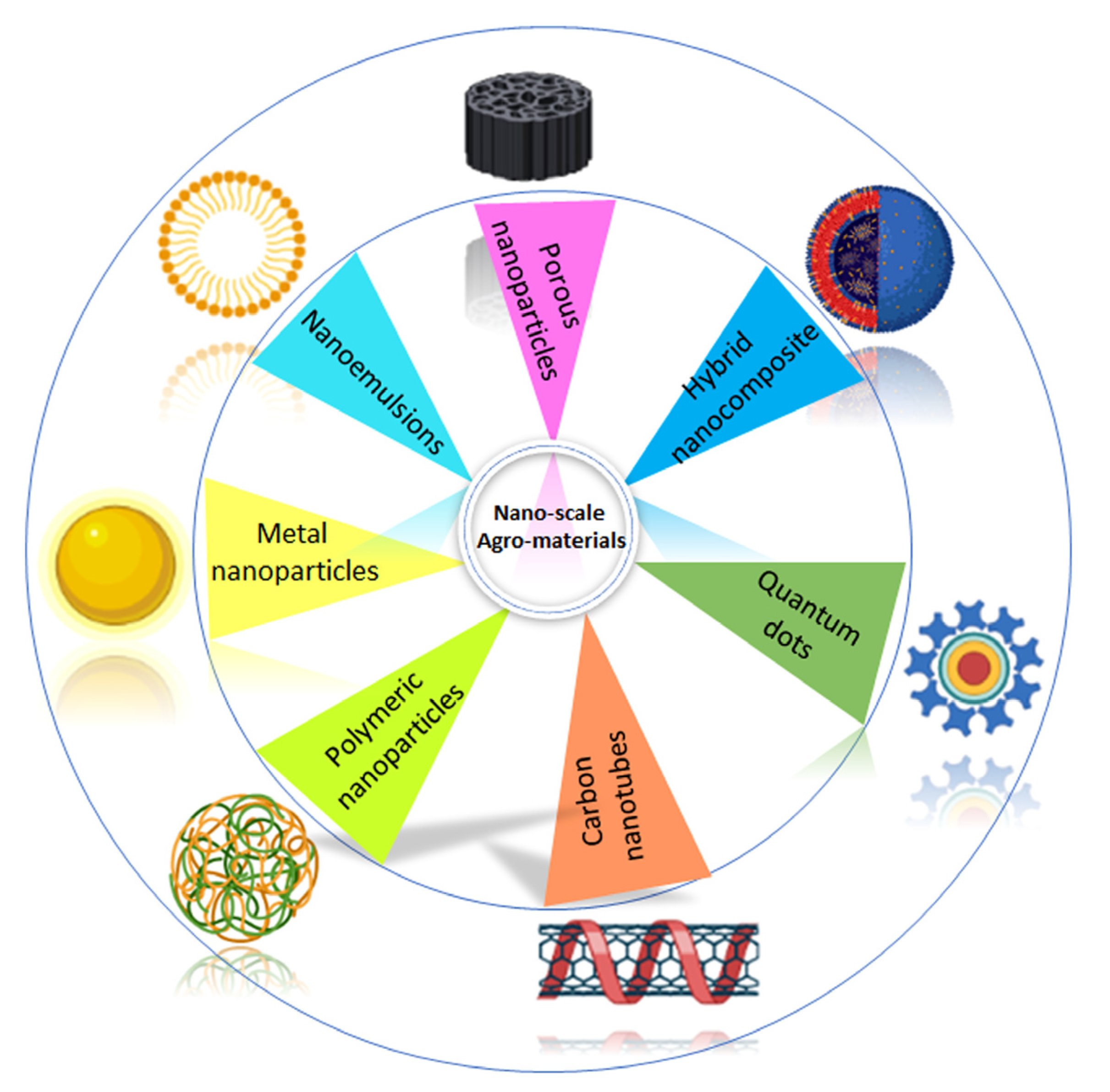
Advancements in nanotechnology have provided new scopes in agricultural science and uplifted the agricultural system, where the unique properties of nanomaterials make them suitable tools for sustainable agricultural applications. In this regard, agro-materials can be developed into nanoscale materials to aid in fertilizer improvement, either themselves being the active ingredient or used to facilitate the bioactivity of nutrients. Such products are termed nanofertilizers or nano-enabled fertilizers.
- agro-material
- Nutritional Value-Added Plants
- Stress Alleviation
1. Introduction
2. Nutritional Value-Added Plants and Their Role in Human Health
2.1. Vegetables
Vegetables such as tomatoes, cucurbits, pumpkins, squashes, cucumber, gherkins, onions, shallots, garlic, and chilies contribute to the global food economy and have significant nutritional value. These vegetables and others are consumed in all countries. Therefore, governments need to boost investment in farm production, including providing improved crop varieties and sustainable alternatives to agrochemicals, such as pesticides and fertilizers. Good post-harvest management practices, food safety, and market access have to be facilitated to leverage the economic power of countries [6][62].
2.2. Fruits
Dietary habits are linked to the prevention or otherwise of chronic diseases such as cancer, diabetes, Alzheimer’s, and heart disease [7][63]. Numerous antioxidants are found in fruits and vegetables that also have been linked to their ability to protect against certain diseases and help neutralize free oxygen radicals. Low levels of antioxidants and vitamins in the blood can increase the risk of cancer mortality [8][64]. Besides, phytochemicals in fruits, particularly phenolic compounds, are responsible for several health benefits [9][65].2.3. Grain Cereal Staples
Grain cereals are one of the most ancient foods on the planet and are the main component of the human diet. Cereals such as wheat, rice, barley, maize, rye, oats, and triticale, account for the majority of agricultural output. Together, these crops are the most important sources of food for human consumption, providing 50% of dietary protein and energy consumed [10][67]. In addition to carbohydrates and proteins, other nutrients, such as fat, phospholipids, vitamins, and minerals, are present in cereal grains. Cereals, in general, can reduce cancer and coronary heart diseases [11][12][68,69]. Wheat (Triticum) is one of the oldest cereal grain crops. The genus contains numerous species, three of which are widely grown worldwide: (Triticum aestivum L.), durum (Triticum durum Desf.), and spelta (Triticum spelta L.). On a global scale, common wheat (Triticum aestivum L.) is the most widespread species and the world’s second most extensively produced crop. The fundamental goal of modern wheat farming, especially common wheat (Triticum aestivum ssp. vulgare), is to produce high-yield cultivars with good baking and nutritional properties [13][70]. Wheat grain consumption accounts for 19% of all calories consumed by humans worldwide. Wheat is used to make bread, pasta, and other bakery items all over the world. As a result, one of the main goals of cereal farming is to produce varieties with increased protein content [14][71].2.4. Ornamentals and Flowering Plants Used as Food Condiments
Some ornamental and flowering plants are used in food preparation because they provide flavor and aroma to food. For example, Viola odorata L. is used as a sugar source in syrups [15][91]. Flowers can be eaten both fresh (e.g., Marigold flower) and in savory dishes with meat and fish. They are also used in drinks (wine and beer), desserts, jellies, and spices [16][92]. Usually, some plants are known for the flavoring or nutritional potential of their fruits or leaves, while some flowers are also edible and rarely used in cooking, such as passion fruit, chive, and pumpkin [17][93]. Although the use of edible flowers is still in its infancy, flowers are a natural source of bioactive chemicals [18][94]. To this end, several species of ornamental plants have been extensively researched, such as Centaurea cyanus L. [19][95], Chrysanthemum morifolium Ramat [20][96], Hibiscus rosa-sinensis L. [21][97], Lavandula pedunculata Cav. [18][94], pansy [17][93], Calendula officinalis L. [22][98], and Rosa spp. [23][99]. Edible flowers supply antioxidants and essential oils when consumed in their natural form or when minimally processed [24][100]. The bioactive properties of edible flowers have been associated with the treatment of ulcerative colitis [25][101], anti-hyperglycemic, anti-cholinergic activity [18][94], oxidative effects in erythrocytes, and anti-cancerous activity.3. Applications of Nanoscale Agro-Materials and Their Impact on Plants
4. Role of Biogenic Nanoscale Agro-Materials in Nutritional Value-Added Plants
5. Biogenic Nanoscale Materials as a Nano-Enabled Tool for Stress Alleviation in Plants
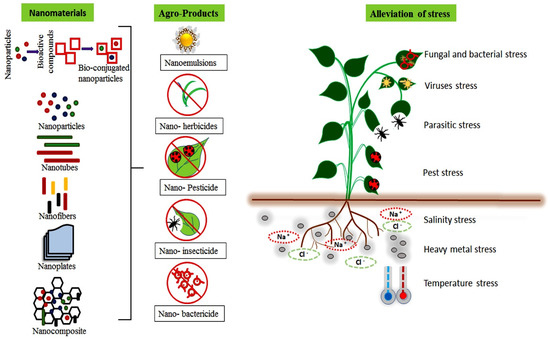
Global progress in agricultural crop production may be hampered because of the increased prevalence of environmental stresses [34][102]. Climatic stresses originate from rising temperatures, heat waves, drought, and the accumulation of heavy metals, while a variety of biotic stresses, such as fungal and bacterial diseases and insect infestation, put pressure on agriculture [35][103]. These stresses significantly affect crop yields and, for heavy metals, increase the accumulation of different toxic elements in plant tissues, rendering them unfit for consumption by animals and humans, with otherwise serious health problems [36][104]. Moreover, biotic and abiotic stresses negatively affect the growth and economic expansion of agricultural and horticultural crops [37][105]. Besides, climatic stress can cause pollen sterility, shriveled seeds, disrupted photosynthetic and respiratory enzyme activities, and an increase in the production of reactive oxygen species (ROS), with negative impacts on plants [38][39][106,107]. Notably, biogenic nanomaterials have recently been explored for use in counteracting the damaging effects of a variety of environmental stressors, including heavy metals, drought, salinity, high temperature, and bacterial and fungal pathogens [34][102]. Green synthesis of nanomaterials gained serious attention in recent years due to their sustainable application in the agricultural system [40][108]. Several biogenic metallic nanoparticles viz; AgNPs, AuNPs, CuNPs, FeNPs, FeS2NPs, TiO2NPs, ZnNPs, and ZnONPs, have been used to improve seed germination, plant growth, and stress tolerance in a variety of crop plants, as well as in the direct inhibition of plant pathogens, with a view to application in real plant pathosystems [41][42][43][109,110,111]. For instance, biosynthesized AgNPs enhanced plant growth and development by improving seed germination, growth parameters, water content, photosynthetic pigments, osmolytes, and antioxidant pigments [44][112]. Similarly, Noman et al. [45][113] reported biogenic CuNPs alleviated salt stress in maize by modulating cellular oxidative repair mechanisms. Del Buono et al. [46][44] also described biogenic ZnNPs synthesized from Lemna minor (duckweed) enhanced the physiochemical and biochemical traits in maize. An overview of nanomaterials-based agri-product and their role in the alleviation of biotic and abiotic stresses is provided in Figure 2.