You're using an outdated browser. Please upgrade to a modern browser for the best experience.
Submitted Successfully!
Thank you for your contribution! You can also upload a video entry or images related to this topic. For video creation, please contact our Academic Video Service.
Version Summary Created by Modification Content Size Created at Operation
1 Giulia Tarquini + 3172 word(s) 3172 2022-03-15 09:11:46 |
2 format correct Vivi Li -135 word(s) 3037 2022-03-25 03:42:49 | |
3 format correct Vivi Li Meta information modification 3037 2022-03-25 04:09:15 | |
4 format correct Vivi Li Meta information modification 3037 2022-03-25 04:10:15 | |
5 format correct Vivi Li Meta information modification 3037 2022-03-25 04:11:31 |

Video Upload Options

We provide professional Academic Video Service to translate complex research into visually appealing presentations. Would you like to try it?
Cite
If you have any further questions, please contact Encyclopedia Editorial Office.
Tarquini, G. Application of MinION-Sequencing to-investigate the virome of 'Lamon-Bean’. Encyclopedia. Available online: https://encyclopedia.pub/entry/20997 (accessed on 13 December 2025).
Tarquini G. Application of MinION-Sequencing to-investigate the virome of 'Lamon-Bean’. Encyclopedia. Available at: https://encyclopedia.pub/entry/20997. Accessed December 13, 2025.
Tarquini, Giulia. "Application of MinION-Sequencing to-investigate the virome of 'Lamon-Bean’" Encyclopedia, https://encyclopedia.pub/entry/20997 (accessed December 13, 2025).
Tarquini, G. (2022, March 24). Application of MinION-Sequencing to-investigate the virome of 'Lamon-Bean’. In Encyclopedia. https://encyclopedia.pub/entry/20997
Tarquini, Giulia. "Application of MinION-Sequencing to-investigate the virome of 'Lamon-Bean’." Encyclopedia. Web. 24 March, 2022.
Application of MinION-Sequencing to-investigate the virome of 'Lamon-Bean’
Edit

‘Lamon bean’ is a protected geographical indication (PGI) for a product of four varieties of bean (Phaseolus vulgaris L.) grown in a specific area of production, which is located in the Belluno district, Veneto region (N.E. of Italy). The ‘Lamon bean’ has been threatened by severe virus epidemics that have compromised its profitability. The full virome of seven bean samples showing different foliar symptoms was obtained by MinION sequencing. Evidence that emerged from sequencing was validated through RT-PCR and ELISA in a large number of plants, including different ecotypes of Lamon bean and wild herbaceous hosts that may represent a virus reservoir in the field. Results revealed the presence of bean common mosaic virus (BCMV), cucumber mosaic virus (CMV), peanut stunt virus (PSV), and bean yellow mosaic virus (BYMV), which often occurred as mixed infections. Moreover, both CMV and PSV were reported in association with strain-specific satellite RNAs (satRNAs).

plant disease virology bean common mosaic virus cucumber mosaic virus peanut stunt virus bean yellow mosaic virus

1. Introduction

Beans have been cultivated for more than 500 years in the province of Belluno (Veneto region, Northeast of Italy). The pole bean named Lamon bean (Phaseolus vulgaris L.) is an agricultural product with Protected Geographical Indication (PGI), obtained by growing four local varieties: Calonega, Canalino, Spagnol, and Spagnolet. Its qualities are specifically linked to the area of production, which is limited to 18 municipalities in the Belluno area. In 2012, and frequently also in subsequent years, the pole bean in the Lamon area has been subjected to epidemics caused by viruses that compromised its profitability. Viruses represent a serious threat to global food security and sustainability [1]. Virus infections cannot be fought directly, and their efficient control is difficult. The use of virus-free propagation material, severe phytosanitary measures, appropriate cultural practices, and, when available, the use of resistant cultivars represent the only strategies to contain viral disease in plants [2]. Breeding for virus resistance is often considered the most efficient and simplest way to avoid the losses caused by virus diseases [2]. However, classic breeding techniques seem inappropriate for breeding bean ecotypes grown in Lamon, due to the need to preserve the typical traits of an agri-food product subjected to certification. In recent years, field observations reported the presence of infected bean plants that exhibit mild symptoms, suggesting the existence of tolerant genotypes that may have spontaneously developed tolerance due to the strong pressure of virus infection (Ruggero Osler, personal communication). However, this assumption has been never experimentally assessed. In order to provide experimental evidence, which could confirm or deny the possible presence of tolerant genotypes within Lamon bean ecotypes, it was deemed necessary to lay the basis for the establishment of a reliable, fast, and accurate molecular diagnostic tool that allows the discrimination of viral species affecting bean plants in Lamon. To achieve this purpose, a deep characterization of the viral population associated with symptomatic Lamon beans had to be performed.

Considering the wide diversity of species and viral strains that could be detected in Lamon bean, a fully comprehensive and sensitive diagnostic tool, able to explore such a great variability, was highly needed.

For this reason, researchers took advantage of the advent of High Throughput Sequencing (HTS) approaches, which in the last two decades have allowed great advances and have promoted discovery, diagnostics, and evolutionary studies [3]. Plant virus research has been heavily impacted by the development of HTS techniques for the identification of emerging viruses, genome reconstruction, analysis of population structures, evolution of novel viral strain(s), and much more [4][5][6][7][8][9]. Single-molecule sequencing technologies, often called “third generation sequencing”, provide greater advantages over second-generation approaches, including the production of long read lengths that are easier to map to a reference sequence and that facilitate de novo assembly, short run times, small amounts of input nucleic acids (DNA or RNA), and low cost for a single run [3]. The consistent improvement in HTS technologies has occurred in parallel with the continuous development of suitable bioinformatic tools for data analysis and with the online availability of a wide range of biological data sets, which have allowed a deeper comprehension of HTS results [6][7].

In this entry, a third-generation sequencing platform, namely MinION, provided by Oxford Nanopore Technologies, was exploited to obtain the virome of seven bean samples that exhibited different foliar symptoms resembling those of virus disease. The picture that emerged from the sequencing results was consolidated through RT-PCR and ELISA assays in many samples, inclusive of different varieties of bean grown in the Lamon area and various families of herbaceous plants, which may represent a virus reservoir in the field.

2. Virome Determination
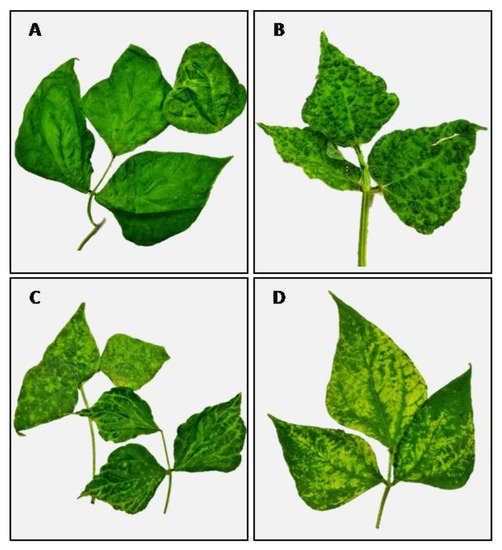
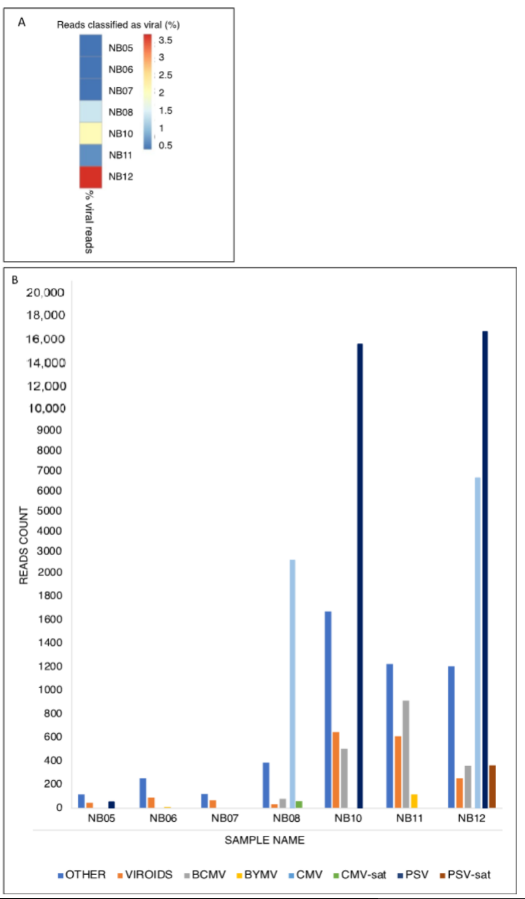
The virome of seven Lamon bean plants (varieties Calonega, Spagnolet, and Canalino) which showed either mild (Figure 1A) or severe (Figure 1B) leaf mottling and deformation, as well as mild (Figure 1C) or severe (Figure 1D) extended chlorosis, was obtained by MinION sequencing. MinION sequencing yielded a total of 6,911,238 reads. Of those, 3,918,774 (56.7%) reads were obtained after demultiplexing and quality filtering steps. The selected reads were aligned to a viral sequences database and 51,037 (1.3%) of them found a hit in the database (Figure 2A). The percentage of viral reads in researchers' samples ranged from 0.07% to 3.83%. Computational analyses of viral reads allowed the identification of multiple virus species occurring in single or mixed viral infections (Figure 2B). Two out of seven plants were infected by CMV (NB08 and NB12) and bean yellow mosaic virus (BYMV, NB06, and NB11), while BCMV was detected in four samples (NB08, NB10, NB11, and NB12). Interestingly, PSV was also reported for the first time in three samples of sequenced Lamon bean (NB05, NB10, and NB12), showing the highest abundance among detected viruses. CMV- and PSV-associated satellite RNAs (satRNAs) were detected in samples NB08 and NB12, respectively. The CMV satRNAs showed high sequence similarity with the T4 (X86415.1), T8A (X86408.1), and IR-WI (JF834526.1) strains, as well as with WL3-satRNAs (X51465.1), pBsat2 RNA (M30592.1), and E-satRNA (M20844.1). The PSV satRNAs showed sequence similarity with the satRNA strain P (P6-sat, Z98197.1).
Figure 1. Description of virus-like symptoms observed in Lamon beans. Mild (A) and severe (B) leaf mottling and deformation on Lamon bean ecotype Canalino and Calonega, respectively. Mild (C) and severe (D) yellow chlorosis on Lamon bean ecotype Spagnolet.
Figure 2. (A) Proportion of viral reads produced by HTS sequencing (Oxford Nanopore Technologies). For each sample, the proportion of reads with a hit in the viral database is reported; (B) Virome composition. Bars represent relative abundance of viral species for each sample. Only reads with a hit in the viral database are considered. BCMV = bean common mosaic virus; BYMV = bean yellow mosaic virus; CMV = cucumber mosaic virus; CMV sat. RNA = cucumber mosaic virus satellite RNA; PSV = peanut stunt virus; PSV sat. RNA = peanut stunt virus satellite RNA.
More in-depth analysis of reads of sample NB11 assigned to BYMV showed the presence of systematic differences compared to BYMV genome sequence available in NCBI (NC003492.1). This observation was confirmed also in a contig obtained by de novo assembling such reads. Blast analysis of the obtained contig had BYMV genome sequence as top hit, with 90.1% alignment identity.

3. RT-PCR and ELISA Detection

A total of 59 samples were tested by RT-PCR assays to confirm the presence of the viruses detected by MinION sequencing, BCMV, CMV, PSV and BYMV (Table 1). Three Lamon beans were negative to all tested viruses (9%). Single infections caused by BCMV, and PSV were detected in 39% and 13% of Lamon beans, respectively, while CMV was reported in 21% of bean samples, exclusively in co-presence with either BCMV (9%), PSV (3%), or both (9%). Mixed infection by BCMV and PSV was also reported in 12% of Lamon beans. BYMV was identified, exclusively by MinION sequencing, in two samples (6%) either as a single infection (LB-21, NB06) or in co-presence with BCMV (LB-4, NB11). All herbaceous hosts were negative for the presence of BCMV. CMV was exclusively reported in Trifolium pratense L. (Leguminosae), both as a single infection (4%) and in co-presence with PSV (8%). Single infection caused by PSV was detected in Trifolium pratense L. (8%), Chrysanthemum sp. (4%) and, for the first time, in Solanum tuberosum L. (8%). Members of the Amaranthaceae (Chenopodium album L., Amaranthus retroflexus L., and Achillea millefolium L.), Apiaceae (Daucus carota L.), and Asteraceae (Taraxacum officinale L.) were negative to all tested viruses (68%). The results of ELISA tests are reported in Table 2 and revealed BCMV presence in samples collected in all the surveyed municipalities, with an incidence ranging from 40% to 100%. CMV was serologically identified in 50% and 62% of the samples belonging to the two municipalities (Sovramonte and Belluno) with incidence of 25 and 30%, respectively.

4. BLAST Analysis of Sanger Sequences and Phylogenetic Investigation

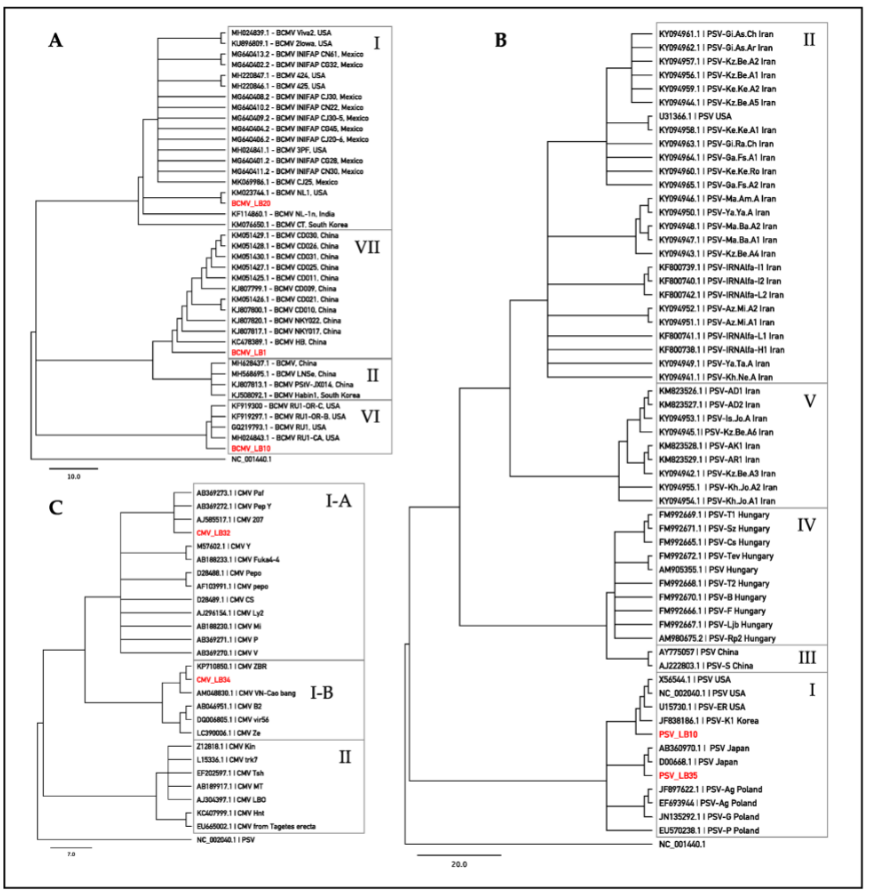
Sequences obtained by Sanger were used for assignment to pathotypes/subgroups according to recent comprehensive studies of BCMV [10], CMV [11], and PSV [12]. The results revealed that 79% of BCMV sequences fall into pathotype VII, sharing 97.7–99.2% identity with NL-4 strain (DQ666332) [13]. Three BCMV sequences (13%) were included in the pathotype I, exhibiting from 99.0% to 99.6% of sequence similarity to the NL-1 strain (KM023744) [14]. The remaining BCMV sequences (8%) fall into pathotype VI, sharing 95.6–99.2% identity with recombinant RU-1 (GQ219793) [15] and RU-1-CA (MH024843) [16] strains. All PSV sequences belonged to subgroup IA, showing a sequence similarity that ranged from 92.7% to 99.3% with the PSV-ER strain (U15730) [17]. CMV sequences can be assigned to the subgroups IA and IB, exhibiting 99.3% identity with Fny-CMV strain (D10538) and 95.3–96.4% sequence similarity with As-CMV strain (AF013291), respectively [18][19][20]. Results of BLAST analyses are summarized in Table 3. Phylogenetic analyses (Figure 3) assigned reference sequences of the isolates of BCMV, PSV and CMV detected in Lamon bean plants to the respective clusters congruently with the BLAST results outlined above. The phylogenetic analysis carried out with the introduction of other sequence variants found in the survey produced similar results (not shown).
5. Discussion

An all-encompassing description of the virome associated with a crop and the availability of high-throughput diagnostic tools are useful to improve viral disease control strategies. The continuous development of newer and even more robust and user-friendly High Throughput Sequencing (HTS) technologies for detecting and identifying viruses makes these new approaches suitable for routine use in testing laboratories, representing a powerful new high-throughput diagnostic tool [3][21].

In this entry, MinION sequencing by Oxford Nanopore Technologies was exploited as a diagnostic method for detection and identification of viruses infecting Lamon bean, an agricultural product with protected geographical indication.
MinION sequencing provides many advantages over the widely used RNA-seq approach. Minion platform produces long read lengths, which are easier to map to a reference genome, and facilitate de novo assembly. In addition, this approach significantly reduces run times, requires only a small amount of total RNA, and has low costs for a single run. The MinION approach was preferred to the commonly used RNA-seq, because it can be easily performed in every laboratory using the simple and small sequencer provided with the kit, and data analysis for diagnostic purposes does not necessitate deep knowledge of bioinformatics tools [3].
Overall, a single MinION sequencing run allowed a snapshot of the viromes of seven samples, enabling a high-throughput screening of their infection status. Moreover, since the samples were ligated without the use of PCR, the number of viral reads assigned to each sample can be directly linked to the viral load. Indeed, the percentage of viral reads in researchers' samples suggested a wide range of viral loads.
The virome analysis of seven bean samples, which exhibited different foliar symptoms, revealed the main presence of BCMV, CMV, PSV, and BYMV, which occurred both singly and in mixed infection [22][23][24][25].
RT-PCR assays detected BCMV in many bean samples (75%), whereas it was never reported in herbaceous hosts, thus excluding their possible roles as virus reservoirs in the field.
Sequence analyses and phylogenetic investigations performed on a 505-bp fragment of BCMV polyprotein revealed that the strains found in the Lamon area fall into pathotype I and VII, showing high similarity with the NL1 (KM023744.1) and NL4 (DQ666332.1) strains, respectively [13][14]. Two BCMV sequences have been included in pathotype VI, exhibiting significant sequence similarity to RU-1 (GQ219793) and RU-1-CA (MH024843), which have been reported as capable of overcoming bc−22, the most advanced resistance gene in the common bean [15][16][26].
Researchers' data revealed a wide intra-specific genetic variability in the BCMV population that led to a challenging visual assessment of symptoms in infected plants, thus complicating the identification of putative tolerant genotypes. The presence of BCMV isolates that showed high sequence identity with the RU-1 and RU-1-CA strains suggests that the phenomenon of overcoming resistance may also occur [15][16]. Moreover, the presence of mixed infections with different viral species further interferes with evaluation of the type and severity of disease symptoms.
Molecular diagnosis revealed the presence of the cucumovirus CMV, and its associated satellite RNAs (satRNAs) in 25% of the Lamon beans and 7% of the herbaceous hosts tested. The virus was often detected in co-presence with BCMV.
Sequence analysis and phylogenetic studies performed on a 584-bp fragment encoding for the coat protein (CP) gene of CMV demonstrated that viral isolates infecting bean in the Lamon area are genetically similar to the Fny and Cs strains, clustering into subgroups IA and IB, respectively [27]. The CMV-associated satRNAs identified in Lamon bean showed high sequence similarity to the T4, T8A and IR-WI classes, as well as the WL3-satRNAs, pBsat2 RNA, and E-satRNA.
In viral diseases, satRNAs play pivotal roles in symptom expression, by worsening, attenuating, or modifying symptoms in infected plants through different molecular mechanisms [28][29]. The common effect of satRNAs is the attenuation of CMV-related symptoms, which occurs often (but not always) through a noticeable decrease in accumulation of viral RNAs [30][31]. This effect is due to the competition between virus and satRNAs for shared replicase-related factors [31][32].
Different classes of CMV-satRNAs can produce distinct phenotypes on infected plants, depending on both the host and the helper virus [33]. Moreover, the presence of certain satRNAs may also affected the pathogenicity of CMV isolates, depending on whether the disease symptoms are unaffected, exacerbated, or attenuated by the presence of satRNA [34].
The classes of satRNAs detected in Lamon beans have been suggested to attenuate CMV-related symptoms [29][35][36][37], despite there still being a lack of experimental evidence.
The synergy between CMV and potyviruses, such as BCMV, has been well-characterized, mostly (but not exclusively) in cucurbit hosts [22]. Wang et al. demonstrated that in CMV-infected plants, symptom attenuation mediated by CMV-satRNAs was suppressed in the presence of potyviruses such as BCMV [22].
Thus, the co-presence of BCMV and CMV, which has been frequently reported in the Lamon area, could further interfere with symptom expression. Indeed, researchers can speculate that the presence of BCMV in CMV-infected bean could suppress the beneficial effect of CMV-satRNAs, determining an increase in the CMV concentration in infected tissues, and resulting in worse disease symptoms.
PSV was reported in 33% of the Lamon bean samples, representing the first report of the virus in Phaseolus vulgaris L. in Italy. The presence of this virus in Lamon bean was also confirmed by ELISA. PSV was also detected in 22% of samples from herbaceous hosts.
The viral strains detected in Lamon can be ascribed to subgroup I, showing high sequence identity with the PSV-J strain and PSV-ER strain. The PSV-associated satRNA showed significant sequence similarity with the P-satRNA strain, which was reported to be involved in worsening of disease symptoms in PSV-infected plants [38]. As demonstrated for CMV satRNAs, PSV satRNAs are also competitors for the same helper-virus replication machinery, thus determining a decrease in viral concentration in infected tissues [39]. Plant proteome changes in response to the presence of P-satRNA during PSV infection have been investigated, demonstrating that P-satRNA induces significant decrease in levels of proteins involved in carbohydrate metabolism, protein biosynthesis, and stress-related factors, including aminopeptidase protein, which is the satRNA-responsive factor [40].
Interestingly, for the first time PSV has been reported in two plants of Solanum tuberosum cultivated nearby a bean patch in the Lamon municipality. PSV isolates collected from S. tuberosum were sequenced by Sanger technology, revealing a significant sequence identity (>97.0%) with PSV-ER type strain, clustering into subgroup IA together with the isolate PSV_LB35 (accession OL875025) recovered from Lamon bean plants (data not shown). Further studies including a great number of samples need to be performed to evaluate genetic variability and viral pathogenesis on this novel host.
Researchers' analysis based on MinION sequencing showed that BYMV was detected in two of researchers' samples, but this result was not confirmed by RT-PCR. Two different primer pairs were employed in conventional PCR: the first primer pair was retrieved from the literature [41], while the second one was newly designed for this entry. However, neither of these primer pairs were able to detect BYMV in the Lamon beans analysed in this entry. Researchers investigated why this may have occurred and discovered that the sequenced strains shared only approximately 90% sequence identity with the BYMV reference sequence. This observation may suggest the appearance of new viral strain(s) [9][25], excluding high sequencing error rate, often ascribed to the MinION technology.
In the past, the high sequencing error rate has been frequently reported for MinION technology, representing a significant weakness of this strategy [42]. Recently, this drawback has been largely mitigated, thanks to the development of new sequencing chemistries and a new generation of highly accurate base-callers, such as Guppy [43].
Given the high proportion of MinION detected viruses validated with gold-standard methods, this novel protocol represents a reliable approach for the rapid and high-throughput detection of viruses in a large number of samples, including different ecotypes of Lamon bean and various herbaceous hosts.
This aspect was further corroborated by comparing Sanger sequences of BCMV, PSV, and CMV with the corresponding sequences obtained through HTS approach.
Overall, researchers' results suggested a wide inter- and intra-specific variability among viruses detected in Lamon beans, revealing the existence of mixed infections that may promote viral interactions, such as synergisms or antagonisms [44][45].
Moreover, the survey is also complicated by the presence of CMV- and PSV-satRNAs, for which confirmation of their involvement in plant responses and symptom expression needs to be done.
The results obtained in this entry represent a fundamental approach aimed at describing the viruses involved in the Lamon bean pathosystem. In a context of sustainable management of Lamon bean IGP production, a strategy of selection under epidemic pressure of individuals showing tolerance to viruses may be worthy of consideration. Moreover, the comprehensive knowledge of viruses affecting Lamon beans will help to improve the management strategies based on virus-free propagation material and on chemical control of aphid vectors.

References

  1. Rojas, M.R.; Gilbertson, R.L. Emerging plant viruses: A diversity of mechanisms and opportunities. In Plant Virus Evolution; Roossinck, M.J., Ed.; Springer: Berlin/Heidelberg, Germany, 2008; pp. 27–51. ISBN 978-3-540-75763-4.
  2. Lecoq, H.; Moury, B.; Desbiez, C.; Palloix, A.; Pitrat, M. Durable virus resistance in plants through conventional approaches: A challenge. Virus Res. 2004, 100, 31–39.
  3. Chalupowicz, L.; Dombrovsky, A.; Gaba, V.; Luria, N.; Reuven, M.; Beerman, A.; Lachman, O.; Dror, O.; Nissan, G.; Manulis-Sasson, S. Diagnosis of plant diseases using the Nanopore sequencing platform. Plant Pathol. 2018, 68, 229–238.
  4. Adams, I.P.; Glover, R.H.; Monger, W.A.; Mumford, R.; Jackeviciene, E.; Navalinskiene, M.; Samuitiene, M.; Boonham, N. Next-generation sequencing and metagenomic analysis: A universal diagnostic tool in plant virology. Mol. Plant Pathol. 2009, 10, 537–545.
  5. Al Rwahnih, M.; Daubert, S.; Golino, D.; Islas, C.; Rowhani, A. Comparison of Next-Generation Sequencing Versus Biological Indexing for the Optimal Detection of Viral Pathogens in Grapevine. Phytopathology 2015, 105, 758–763.
  6. Wu, Q.; Ding, S.-W.; Zhang, Y.; Zhu, S. Identification of Viruses and Viroids by Next-Generation Sequencing and Homology-Dependent and Homology-Independent Algorithms. Annu. Rev. Phytopathol. 2015, 53, 425–444.
  7. Roossinck, M.J. Deep sequencing for discovery and evolutionary analysis of plant viruses. Virus Res. 2017, 239, 82–86.
  8. Jo, Y.; Choi, H.; Kim, S.-M.; Kim, S.-L.; Lee, B.C.; Cho, W.K. The pepper virome: Natural co-infection of diverse viruses and their quasispecies. BMC Genom. 2017, 18, 453.
  9. Czotter, N.; Molnar, J.; Szabó, E.; Demian, E.; Kontra, L.; Baksa, I.; Szittya, G.; Kocsis, L.; Deák, T.; Bisztray, G.; et al. NGS of Virus-Derived Small RNAs as a Diagnostic Method Used to Determine Viromes of Hungarian Vineyards. Front. Microbiol. 2018, 9, 122.
  10. Abadkhah, M.; Hajizadeh, M.; Koolivand, D. Global population genetic structure ofBean common mosaic virus. Arch. Phytopathol. Plant Prot. 2020, 53, 266–281.
  11. Wang, D.F.; Wang, J.R.; Cui, L.Y.; Wang, S.T.; Niu, Y. Molecular identification and phylogeny of cucumber mosaic virus and zucchini yellow mosaic virus co-infecting Luffa cylindrica L. in Shanxi, China. J. Plant Pathol. 2020, 102, 477–487.
  12. Amid-Motlagh, M.H.; Massumi, H.; Heydarnejad, J.; Mehrvar, M.; Hajimorad, M.R. Nucleotide sequence analyses of coat protein gene of peanut stunt virus isolates from alfalfa and different hosts show a new tentative subgroup from Iran. Virus Dis. 2017, 28, 295–302.
  13. Bravo, E.; Calvert, L.A.; Morales, F.J. The complete nucleotide sequence of the genomic RNA of Bean common mosaic virus strain NL4. Genetica 2008, 32, 37–46.
  14. Martin, K.; Hill, J.H.; Cannon, S. Occurrence and Characterization of Bean common mosaic virus Strain NL1 in Iowa. Plant Dis. 2014, 98, 1593.
  15. Feng, X.; Poplawsky, A.R.; Nikolaeva, O.V.; Myers, J.R.; Karasev, A. Recombinants of Bean common mosaic virus (BCMV) and Genetic Determinants of BCMV Involved in Overcoming Resistance in Common Bean. Phytopathology 2014, 104, 786–793.
  16. Feng, X.; Orellana, G.E.; Myers, J.R.; Karasev, A.V. Recessive Resistance to Bean common mosaic virus Conferred by the bc-1 and bc-2 Genes in Common Bean (Phaseolus vulgaris) Affects Long-Distance Movement of the Virus. Phytopathology 2018, 108, 1011–1018.
  17. Hu, C.C.; Naidu, R.A.; Aboul-Ata, A.E.; Ghabrial, S.A. Evidence for the occurrence of two distinct subgroups of peanut stunt cucumovirus strains: Molecular characterization of RNA3. J. Gen. Virol. 1997, 78, 929–939.
  18. Roossinck, M.J.; Zhang, L.; Hellwald, K.-H. Rearrangements in the 5 J Nontranslated Region and Phylogenetic Analyses of Cucumber Mosaic Virus RNA 3 Indicate Radial Evolution of Three Subgroups. J. Virol. 1999, 73, 7.
  19. Fraile, A.; Alonso-Prados, J.L.; Aranda, M.A.; Bernal, J.J.; Malpica, J.M.; García-Arenal, F. Genetic exchange by recombination or reassortment is infrequent in natural populations of a tripartite RNA plant virus. J. Virol. 1997, 71, 934–940.
  20. Roossinck, M.J. Evolutionary History of Cucumber Mosaic Virus Deduced by Phylogenetic Analyses. J. Virol. 2002, 76, 3382–3387.
  21. Pooggin, M.M. Small RNA-Omics for Plant Virus Identification, Virome Reconstruction, and Antiviral Defense Characterization. Front. Microbiol. 2018, 9, 2779.
  22. Wang, Y.; Gaba, V.; Yang, J.; Palukaitis, P.; Gal-On, A. Characterization of Synergy Between Cucumber mosaic virus and Potyviruses in Cucurbit Hosts. Phytopathology 2002, 92, 51–58.
  23. Chiquito-Almanza, E.; Acosta-Gallegos, J.A.; García-Álvarez, N.C.; Garrido-Ramírez, E.R.; Montero-Tavera, V.; Guevara-Olvera, L.; Anaya-López, J.L. Simultaneous Detection of both RNA and DNA Viruses Infecting Dry Bean and Occurrence of Mixed Infections by BGYMV, BCMV and BCMNV in the Central-West Region of Mexico. Viruses 2017, 9, 63.
  24. Moreno, A.B.; Lopez-Moya, J.J. When viruses play team sports: Mixed infections in plants. Phytopathology 2020, 110, 29–48.
  25. Minicka, J.; Zarzyńska-Nowak, A.; Budzyńska, D.; Borodynko-Filas, N.; Hasiów-Jaroszewska, B. High-Throughput Sequencing Facilitates Discovery of New Plant Viruses in Poland. Plants 2020, 9, 820.
  26. Singh, S.P.; Schwartz, H.F. Breeding Common Bean for Resistance to Diseases: A Review. Crop Sci. 2010, 50, 2199–2223.
  27. Bonnet, J.; Fraile, A.; Sacristán, S.; Malpica, J.M.; García-Arenal, F. Role of recombination in the evolution of natural populations of Cucumber mosaic virus, a tripartite RNA plant virus. Virology 2005, 332, 359–368.
  28. Hu, C.-C.; Hsu, Y.-H.; Lin, N.-S. Satellite RNAs and Satellite Viruses of Plants. Viruses 2009, 1, 1325–1350.
  29. Collmer, C.W.; Howell, S.H. Role of Satellite RNA in the Expression of Symptoms Caused by Plant Viruses. Annu. Rev. Phytopathol. 1992, 30, 419–442.
  30. Kaper, J.; Tousignant, M. Cucumber Mosaic Virus-Associated RNA 5: I. Role of Host Plant and Helper Strain in Determining Amount of Associated RNA 5 with Virions. Virology 1977, 80, 186–195.
  31. Kaper, J.; Collmer, C. Modulation of Viral Plant Diseases by Secondary RNA Agents. In RNA Genetics; Volume III. Variability of RNA Genomes; CRC Press Inc.: Boca Raton, FL, USA, 1988; pp. 171–194.
  32. Kaper, J. Rapid synthesis of double-stranded cucumber mosaic virus-associated RNA 5: Mechanism controlling viral pathogenesis? Biochem. Biophys. Res. Commun. 1982, 105, 1014–1022.
  33. García-Arenal, F.; Palukaitis, P. Structure and Functional Relationships of Satellite RNAs of Cucumber Mosaic Virus. Protein Secret. Export. Bact. 1999, 239, 37–63.
  34. Kouadio, K.T.; De Clerck, C.; Agneroh, T.A.; Parisi, O.; Lepoivre, P.; Jijakli, H. Role of Satellite RNAs in Cucumber Mosaic Virus-Host Plant Interactions: A Review. Biotechnol. Agron. Soc. Environ. 2013, 17, 644–650.
  35. Garcia-Arenal, F.; Zaitlin, M.; Palukaitis, P. Nucleotide sequence analysis of six satellite RNAs of cucumber mosaic virus: Primary sequence and secondary structure alterations do not correlate with differences in pathogenicity. Virology 1987, 158, 339–347.
  36. Moriones, E.; Diaz, I.; Rodriguez-Cerezo, E.; Fraile, A.; Garcia-Arenal, F. Differential interactions among strains of tomato aspermy virus and satellite RNAs of cucumber mosaic virus. Virology 1992, 186, 475–480.
  37. Fisher, J.R. Identification of Three Distinct Classes of Satellite RNAs Associated with Two Cucumber mosaic virus Serotypes from the Ornamental Groundcover Vinca minor. Plant Health Prog. 2012, 13, 18.
  38. Ferreiro, C.; Ostrówka, K.; Lopez-Moya, J.J.; Díaz-Ruíz, J.R. Nucleotide sequence and symptom modulating analysis of a Peanut stunt virus-associated satellite RNA from Poland: High level of sequence identity with the American PSV satellites. Eur. J. Plant Pathol. 1996, 102, 779–786.
  39. Militão, V.; Rodríguez-Cerezo, E.; Moreno, I.; Garcia-Arenal, F. Differential interactions among isolates of peanut stunt cucumovirus and its satellite RNA. J. Gen. Virol. 1998, 79, 177–184.
  40. Obrępalska-Stęplowska, A.; Wieczorek, P.; Budziszewska, M.; Jeszke, A.; Renaut, J. How can plant virus satellite RNAs alter the effects of plant virus infection? A study of the changes in the Nicotiana benthamiana proteome after infection by Peanut stunt virus in the presence or absence of its satellite RNA. Proteomics 2013, 13, 2162–2175.
  41. Uga, H.; Tsuda, S. A One-Step Reverse Transcription-Polymerase Chain Reaction System for the Simultaneous Detection and Identification of Multiple Tospovirus Infections. Phytopathology 2005, 95, 166–171.
  42. Van Dijk, E.L.; Jaszczyszyn, Y.; Naquin, D.; Thermes, C. The Third Revolution in Sequencing Technology. Trends Genet. 2018, 34, 666–681.
  43. Wick, R.R.; Judd, L.M.; Holt, K.E. Performance of neural network basecalling tools for Oxford Nanopore sequencing. Genome Biol. 2019, 20, 1–10.
  44. Pruss, G.; Ge, X.; Shi, X.M.; Carrington, J.; Vance, V.B. Plant viral synergism: The potyviral genome encodes a broad-range pathogenicity enhancer that transactivates replication of heterologous viruses. Plant Cell 1997, 9, 859–868.
  45. Syller, J.; Grupa, A. Antagonistic within-host interactions between plant viruses: Molecular basis and impact on viral and host fitness: Antagonistic Interactions between Plant Viruses. Mol. Plant Pathol. 2016, 17, 769–782.

More
Upload a video for this entry
Information
Subjects: Plant Sciences
Contributor MDPI registered users' name will be linked to their SciProfiles pages. To register with us, please refer to https://encyclopedia.pub/register : Giulia Tarquini
View Times: 844
Revisions: 5 times (View History)
Update Date: 25 Mar 2022
Notice
You are not a member of the advisory board for this topic. If you want to update advisory board member profile, please contact office@encyclopedia.pub.
OK
Confirm
Only members of the Encyclopedia advisory board for this topic are allowed to note entries. Would you like to become an advisory board member of the Encyclopedia?
Yes
No
${ textCharacter }/${ maxCharacter }
Submit
Cancel
There is no comment~
${ textCharacter }/${ maxCharacter }
Submit
Cancel
${ selectedItem.replyTextCharacter }/${ selectedItem.replyMaxCharacter }
Submit
Cancel
Confirm
Are you sure to Delete?
Yes No
Academic Video Service