Your browser does not fully support modern features. Please upgrade for a smoother experience.

×
Scholarly Community
Encyclopedia
Entries
Videos
Images
Journal
Books
Insights
About
Sign in
Submit
Entry
Video
Image
Encyclopedia Insights: Where Knowledge Meets the World
Type:
All
Announcement
Blog
Most Viewed
Latest
>
Hot Topic
From Mosquito Bites to Nobel Breakthroughs: The Fight to End Malaria
Every year on April 25, the world observes World Malaria Day—a reminder that while progress has been made, malaria remains a global threat. In 2022, malaria infected 247 million people and claimed over 619,000 lives—mostly children under 5 in sub-Saharan Africa. It's a disease we can prevent, treat, and eliminate, but it still kills a child every minute. What Is Malaria? Malaria is caused by Plasmodium parasites, spread by the bite of an infected Anopheles mosquito. Its symptoms—fever, chills, vomiting—can quickly turn deadly without treatment. But we're not powerless. Over the past two decades, thanks to tools like: Insecticide-treated netsRapid diagnostic testsArtemisinin-based therapies (ACTs)The RTS,S malaria vaccine …millions of lives have been saved, and some countries have eliminated the disease entirely. Source: https://encyclopedia.pub/image/3486 The Game-Changer: Tu Youyou One of the biggest breakthroughs in malaria treatment came from Tu Youyou, a Chinese scientist who turned to traditional medicine for answers. In the 1970s, during China's Project 523, Tu discovered artemisinin from the sweet wormwood plant (Artemisia annua). This became the foundation for ACTs, now the world's most effective antimalarial drugs. In 2015, Tu became the first Chinese woman to win a Nobel Prize in Physiology or Medicine. Her discovery has saved millions of lives—a shining example of how ancient knowledge and modern science can work together. What We're Still Up Against Despite progress, the fight isn't over. We face: Drug and insecticide resistance Climate change expanding mosquito habitats Critical funding gaps And yet, the goal of ending malaria remains within reach—with continued innovation, investment, and global collaboration. For more information about Tu youyou, you can view our online video "Science Never Ends: Tu youyou".
Blog
25 Apr 2025
>
Hot Topic
Genetic Mystery of Sardinia’s Sarcidano Horse—Uncovered!
The Sarcidano Horse, an autochthonous breed from Sardinia, is gaining attention in conservation efforts due to its semi-feral lifestyle and genetic isolation. This breed offers important insights into the genetics of equine populations that have remained largely untouched by modern breeding practices. 1. Study Overview A recent study aimed to deepen the understanding of the Sarcidano Horse, specifically its coat color genetics. The focus was on two genes, MC1R and ASIP, which are responsible for determining the basic coat colors: bay, black, and chestnut. 70 horses were sampled for DNA analysis, and the study found the following: The chestnut coat color was the most prevalent. A smaller number of horses had black coats, with very few exhibiting bay coats. There was no evidence of color dilution or spotting, suggesting that the population has remained genetically isolated, with little to no crossbreeding with domestic breeds. Source: https://encyclopedia.pub/image/3410 2. Implications for Conservation The lack of coat variations commonly associated with domesticated horses further supports the hypothesis that the Sarcidano Horse has not been affected by human selection. The breed’s genetic isolation and lack of crossbreeding are vital for its conservation, as they help preserve its unique genetic makeup. Given the breed’s ancient origins and current genetic isolation, experts recommend a regional conservation plan. This plan would focus on: Regular health and genetic monitoring of the population. Collaboration with research centers and universities. The collection and management of DNA, sperm, and embryos to support long-term conservation efforts. 3. Conclusion The Sarcidano Horse represents an important genetic resource, offering valuable insights into the history and evolution of equine species. Continued efforts to preserve this breed, through both genetic research and conservation initiatives, are crucial to maintaining its genetic integrity and safeguarding it for future generations. For more information about the research, you can view the online video entitled "Unveiling the Genes Behind the Sarcidano Horse's Coat Colors".
Blog
24 Apr 2025
>
Hot Topic
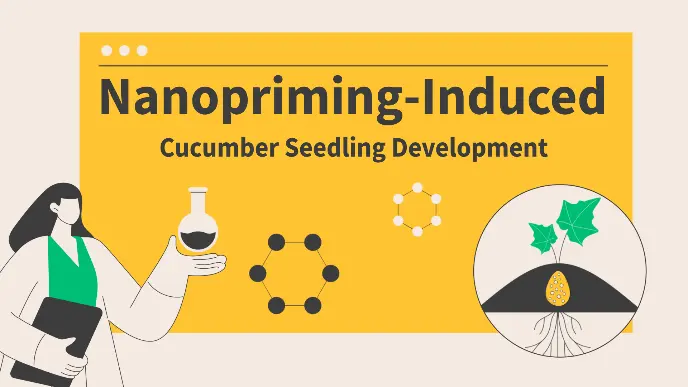
Cucumbers on Silver Steroids? The Power of Nanopriming
Nanopriming, the process of treating seeds with nanoparticles, is emerging as a promising strategy to improve seed germination and early plant growth. In a recent study, researchers investigated the impact of silver nanoparticles (AgNPs) on cucumber seedlings. These nanoparticles were synthesized using natural reducing agents—ascorbic acid, caffeic acid, and gallic acid—resulting in spherical particles with distinct optical properties. Source: https://encyclopedia.pub/image/3390 The findings revealed that AgNP treatments generally led to improved germination rates and enhanced shoot and root growth compared to untreated seeds. However, the effects varied depending on the type and concentration of the reducing agent used in the synthesis. Biochemical analyses showed that AgNP exposure influenced several physiological markers. Changes were observed in reactive oxygen species (ROS) levels, oxidative stress indicators, and concentrations of amino acids, phenolic compounds, flavonoids, and soluble sugars. Notably, some treatments helped reduce oxidative stress, while others increased oxidative damage, indicating that the response to AgNPs is complex and formulation-dependent. This study highlights the potential of nanopriming as an agricultural tool and points to the need for further research to fine-tune nanoparticle formulations for specific plant species and desired outcomes. For more information about the research, you can view the online video entitled "Nanopriming-Induced Enhancement of Cucumber Seedling Development".
Blog
16 Apr 2025
>
Hot Topic
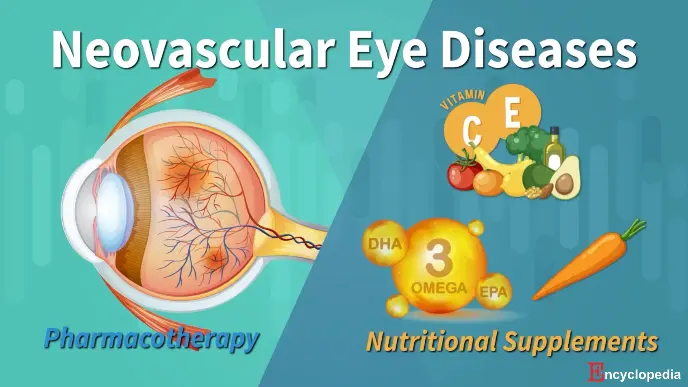
Blurry to Clear: Pharmacotherapy and Supplements for Neovascular Eye Diseases
Proliferative retinopathies, driven by abnormal retinal blood vessel growth, are a leading cause of irreversible vision loss. These conditions, including diabetic retinopathy and age-related macular degeneration (AMD), threaten millions globally. 1. Conventional Pharmacotherapy: Precision Strikes Against Disease Proliferative retinopathies, driven by abnormal retinal blood vessel growth, are a leading cause of irreversible vision loss. These conditions, including diabetic retinopathy and age-related macular degeneration (AMD), threaten millions globally. Frontline treatments like anti-VEGF agents (e.g., aflibercept) and corticosteroids target disease mechanisms with molecular precision. These rigorously validated therapies halt active progression but are rarely used preventively. 2. Nutraceuticals: The Preventative Powerhouses Dietary supplements, such as the AREDS2 formula (vitamins C/E, zinc, lutein) and omega-3 fatty acids, combat oxidative stress and inflammation. Emerging evidence suggests they reduce baseline risk and amplify treatment efficacy, offering long-term retinal protection. Pharmaceuticals act as urgent responders, while supplements build resilience. Studies highlight their combined potential to slow progression in AMD and diabetic retinopathy—but caution is key. Supplements lack the stringent oversight of drugs, and interactions (e.g., altered drug absorption) pose risks. Clinician guidance is critical to balance benefits and safety. High-risk patients may benefit from preventive nutraceuticals, while those on pharmacotherapy could see enhanced outcomes with adjunctive antioxidants. Collaboration between patients and providers ensures optimized, individualized strategies. Source: https://encyclopedia.pub/image/3247 3. The Future of Eye Care: Integration and Innovation As research evolves, merging pharmacotherapy and supplements promises to redefine standards of care—proactively preserving vision in an aging population through immediate action and sustained protection. For more details about neovascular eye diseases, you can view the online video entitled "Pharmacotherapy and Nutraceuticals for Neovascular Eye Diseases".
Blog
31 Mar 2025
>
Hot Topic
Space Tourism: A Dream or a Danger?
Space exploration represents the ultimate frontier of human curiosity, where each mission uncovers new mysteries and pushes the boundaries of what we thought was possible. 1. What's It Like to Live in Space? Imagine waking up to Earth's sunrise from orbit or floating effortlessly in zero gravity. Life Beyond Earth takes you inside the daily life of astronauts—where every moment is an adventure. 2. Life Without Gravity In space, the simplest tasks become challenges. Discover: How astronauts sleep while floating What space food actually tastes like The effects of zero gravity on the body How they exercise to stay strong Source: Life in Space Station 3. Pushing the Limits of Exploration Astronauts do more than survive—they innovate. From growing plants in space to testing new tech for Mars, they're shaping the future of exploration. For more details about astronauts in space, you can view the online entry Space Exploration, or the video entitled "Stuck in Space for 9 Months? NASA Astronauts Finally Return".
Blog
25 Mar 2025
>
Hot Topic
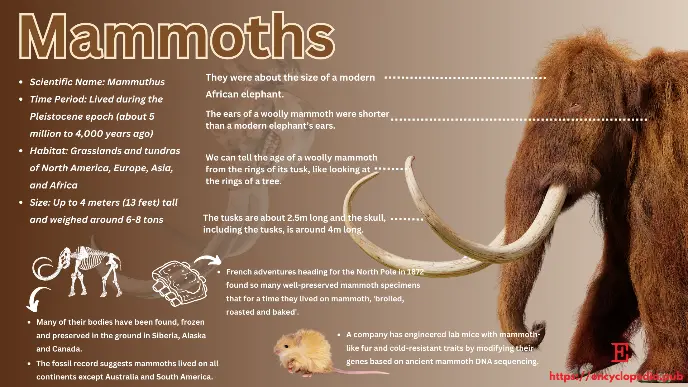
Extinct for 4000 Years? Scientists May Soon Revive the Woolly Mammoth
The woolly mammoth, one of the most iconic creatures of the Ice Age, once roamed the vast, frozen landscapes of Europe, North America, and Siberia. These colossal herbivores, covered in thick fur and equipped with long, curved tusks, thrived in icy climates for thousands of years. However, around 4,000 years ago, due to a combination of climate change and human hunting, they vanished from the Earth—leaving behind only their remains frozen in permafrost. Source: https://encyclopedia.pub/image/3141 Colossal has been working on this since 2021. Researchers retrieved and sequenced ancient mammoth DNA from preserved skin, bone and hair to learn which genes controlled traits such as coat color and cold tolerance. Then, using tools like CRISPR, they edited those genes into mouse embryos. The result? Mice with a little bit of mammoth magic! While de-extinction remains a controversial topic, the prospect of witnessing a woolly mammoth walk the Earth again is both thrilling and thought-provoking. Could science rewrite history and resurrect these Ice Age giants? Only time will tell. For more details, you can view the online entry Woolly Mammoth (Mammuthus primigenius), or the video entitled "Extinct for 4000 Years? Gene Editing Might Resurrect the Woolly Mammoth".
Blog
24 Mar 2025
>
Hot Topic
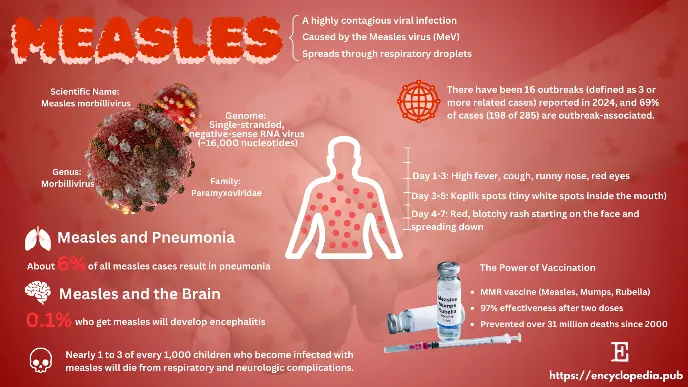
Measles: The Silent Threat You Can't Ignore
Measles is a highly contagious viral infection that has affected millions worldwide. Despite the availability of vaccines, outbreaks still occur, making awareness and prevention crucial. What is Measles? Measles is caused by the measles virus, which spreads through respiratory droplets when an infected person coughs or sneezes. It primarily affects children but can impact individuals of all ages who are not vaccinated. Source:https://encyclopedia.pub/image/3170 Symptoms of Measles The disease typically progresses through different stages, with symptoms appearing about 10-14 days after exposure. Common symptoms include: High fever Cough Runny nose Red, watery eyes Koplik spots (small white spots inside the mouth) A widespread red rash that starts on the face and spreads downward Prevention: The Importance of Vaccination The most effective way to prevent measles is through vaccination. The Measles, Mumps, and Rubella (MMR) vaccine is highly effective, providing lifelong immunity in most cases. Public health campaigns advocate for widespread immunization to achieve herd immunity, protecting those who cannot be vaccinated due to medical conditions. The Global Impact of Measles Despite significant progress in vaccination efforts, measles remains a concern in many regions, particularly in areas with low immunization rates. According to the World Health Organization (WHO), measles outbreaks still lead to thousands of deaths annually, mostly among young children. Efforts to eradicate measles continue, emphasizing the importance of global cooperation and vaccine accessibility. Conclusion Measles is a preventable yet persistent threat. Awareness, vaccination, and global health initiatives play crucial roles in reducing its spread. By ensuring high vaccination coverage, we can protect future generations from this potentially deadly disease. For more details, you can view the online entry Measles, or the online video Measles is Back Across the U.S..
Blog
19 Mar 2025
>
Hot Topic
Encyclopedia Featured Images
In today's visually-driven digital landscape, a featured image is crucial for capturing attention, boosting user engagement, and enhancing the overall appeal of your content. Each image is thoughtfully curated to clarify complex scientific concepts and showcase groundbreaking achievements across various fields. 1. Key Benefits of Featured Images Enhanced Visibility Featured Images are prominently displayed alongside your research in search results, journal platforms, and social media, increasing its discoverability and appeal. Improved Comprehension Complex ideas are distilled into clear, visually appealing graphics, making your research more accessible to a broader audience. Increased Engagement Eye-catching visuals attract more readers, encouraging clicks, shares, and citations, thereby amplifying the reach and impact of your work. 2. Image Types Included The following image types are included: Digrams of an experiment, laboratory setup, graphical abstract, or other areas of interest relevant to your research. A certain scientific research topic, a record of an experiment or surgical operation, and other interesting simulation images. A theory or social phenomenon. A scientific or informative object. A scientific inforgraphic. 3. Acceptable Image Format Supported file formats include JPG, JPEG, and The suggested size is 100k–6 M. The minimum dimension is 300*300 pixels. 4. How to Upload You can upload original images directly through the image page (https://encyclopedia.pub/user/image/upload). If you have multiple images to upload from the same category, consider creating your own image gallery to showcase them. 5. Image Check Upon submission, the image will not be displayed online directly until it has undergone approval by the Editorial Office. To safeguard your intellectual contributions, the image content will be securely locked during this process. 6. About Copyright Please ensure that all uploaded images are free from copyright issues. We encourage users to submit unpublished and original images. It is essential to obtain permission to reproduce any published material which does not fall into the public domain, or for which the uploader does not hold the copyright. Permission should be requested by the uploader from the copyright holder, typically the publisher. 7. Others If you have any questions, please feel free to contact office@encyclopedia.pub.
Blog
26 Feb 2025
Page
of
3
Entries
Videos
Images
Journal
Books
Insights
About
Sign in
New Entry
New Video
New Images
Academic Video Service
Feedback
Top
Feedback
×
Help Center
Browse our user manual, frequently asked questions, author guidelines, and more.
Rate Your Experience
Let us know your experience and what we could improve.
Report an Issue
Is something wrong? Please let us know!
Other Feedback
Other feedback you would like to report.
×
Did you find what you were looking for?
Love
Like
Neutral
Dislike
Hate
0
/500
Email
Do you agree to share your valuable feedback publicly on
Encyclopedia
’s homepage?
Yes, I agree. Encyclopedia can post it.
No, I do not agree. I would not like to post my testimonial.
Webpage
Upload a screenshot
(Max file size 2MB)
Submit
Back
Close
×