
As digital publishing technology continuously innovates and multimodal communication becomes the mainstream trend, the way research findings are presented is quietly transforming. For a long time, the text-based abstract has been the core component of a research paper, serving as the primary gateway for peers to understand a study's content. However, with the deepening of interdisciplinary integration and the growing demand for public science communication, the limitations of pure text in conveying complex scientific information are becoming increasingly apparent. Enter the Video Abstract—a "new language" for scientific communication that supplements textual expression with dynamic visuals. This format combines academic rigor with visual storytelling power and is playing a significant role in the international academic publishing landscape.

1. What Is a Video Abstract?
A video abstract is not a simple compilation of lab footage or promotional clips. It is a short video, typically crafted by researchers or professional teams based on formal research outputs, that distills the core information of a study. By leveraging visual language and multimodal presentation, it makes the complex logic, data, and structure within a paper "understandable and memorable," transforming research achievements from readable text into a visual communication medium.
 |
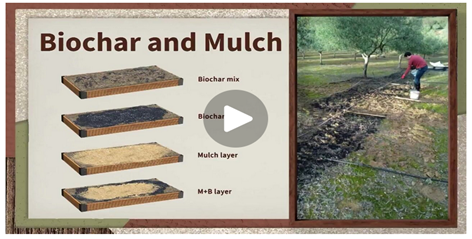 |
Figure 1: Biochar and Mulch: Hydrologic, Erosive, and Phytotoxic Responses Across Different Application Strategies and Agricultural Soils. Produced by MDPI Academic Video Service.
Video abstracts typically share several defining features:
- High Content Focus: Precisely refining he research question, methodology, key results, and academic value.
- Clear Logical Reconstruction: Organizing information according to a scientific narrative, such as "Problem → Methods → Key Findings," presenting the research logic visually.
- Diverse Expressive Forms: Combining various media such as live filming, animation, 3D modeling, data visualization, and voiceover narration to enhance information delivery efficiency.
- Academic Rigor Meets Accessibility: Presenting key academic details (methods, sample sizes, statistical approaches) while using dynamic charts, analogies, and other techniques to lower the barrier to understanding.
- Appropriate Length: Usually 2 to 5 minutes long, facilitating cross-platform dissemination and quick comprehension.
- Visual Extension of the Paper: Supplementing aspects that are difficult to convey in a text abstract, such as experimental procedures, structural changes, or model construction. Some journals now support bidirectional linking between the video abstract and the paper's DOI, creating a dissemination chain from quick video overview to in-depth paper reading.
2. Why Are Video Abstracts Needed?
While textual abstracts aim for precision and concision, their communicative capacity is restricted by format constraints, specialized terminology, and the cognitive effort required of readers. Video abstracts address these challenges by introducing richer expressive modalities that facilitate understanding, broaden audiences, and strengthen research visibility.
2.1. Expanding the Expressive Capacity of Text Abstracts
Static text is inherently limited in describing dynamic or multidimensional processes. Complex workflows, temporal patterns, or structural transitions are often only partially interpretable through language alone. Video abstracts overcome these constraints by presenting such elements directly through sequential imagery, animation, or live action footage, thereby providing audiences with a clearer and more comprehensive understanding of the research.
2.2. Supporting Layered and Cross Audience Dissemination
The specialized vocabulary characteristic of many textual abstracts can impede comprehension for non-specialist or interdisciplinary audiences. Video abstracts allow the level of explanation to be adapted for different viewers:
- For disciplinary peers: Focus on experimental design and analytical rigor.
- For interdisciplinary researchers: Use of visual analogies to clarify mechanisms.
- For broader audiences: Highlighting societal relevance and potential applications.
This layered communication model enables research to circulate more widely while maintaining accuracy and scholarly integrity.
2.3. Enhancing Efficiency in an Attention-Constrained Environment
In today’s information-saturated environment, even a short textual abstract demands concentrated reading. By contrast, a two-minute video abstract presents the core message—research question, methodology, and key results—through intuitive visuals and narration. This delivers high information density with reduced cognitive load, enabling audiences to quickly comprehend and retain essential findings. In this way, research becomes not only documented but genuinely communicative, overcoming traditional dissemination barriers.
2.4. Increasing Research Impact Through Multi-Platform Circulation
Video abstracts effectively bridge the gap between specialized and public audiences. They can be seamlessly integrated into academic ecosystems—such as journal websites, ResearchGate, and Figshare—while also being repurposed into concise science communication clips for platforms like YouTube, Bilibili, and TikTok. This enables a powerful dual-cycle model of internal academic dissemination and external public engagement.
3. Video Abstract: Advancing Scientific Expression
Video abstracts are not intended to replace textual summaries. Rather, they function as a complementary medium that broadens the communicative reach of scholarly work. They facilitate a transition
- From comprehension through text to comprehension through visual presentation;
- From being merely discoverable to leaving a lasting impression;
- From circulation within academic circles to engagement with broader audiences.
For researchers, a video abstract serves as a form of visual scholarly signature that enhances the visibility, traceability, and communicability of their work. As expectations for research impact and outreach continue to grow, video abstracts represent a significant step toward a more visual, accessible, and technologically enabled scholarly publishing environment.
The Academic Video Service offered by Encyclopedia, an MDPI initiative, provides comprehensive support for video abstract creation, including script development, animation, native voiceover, and multi-platform dissemination. The service establishes a bidirectional DOI linking system, enabling video abstracts to be embedded directly within journal article pages and thereby strengthening both discoverability and research impact.
For further information or collaboration inquiries, please visit https://encyclopedia.pub/video_service.
If you have any other questions, please contact office@encyclopedia.pub.