
When most people think of lizards, they imagine quick little reptiles basking in the sun or darting across desert sands. But the horned lizard, often nicknamed the“horny toad” (though it’s not a toad at all), is a creature that surprises at every turn. With its dragon-like appearance and one of the strangest defense tactics in the animal kingdom, this small reptile is a desert icon worth knowing.
1. A Living Desert Icon
Horned lizards belong to the genus Phrynosoma, a group of squat, flat-bodied lizards with spiky scales and crown-like horns on their heads. Found mainly in North and Central America, these reptiles have adapted beautifully to life in arid environments such as deserts, scrublands, and grasslands. Their body shape and sandy coloration provide excellent camouflage, helping them blend seamlessly with their surroundings.
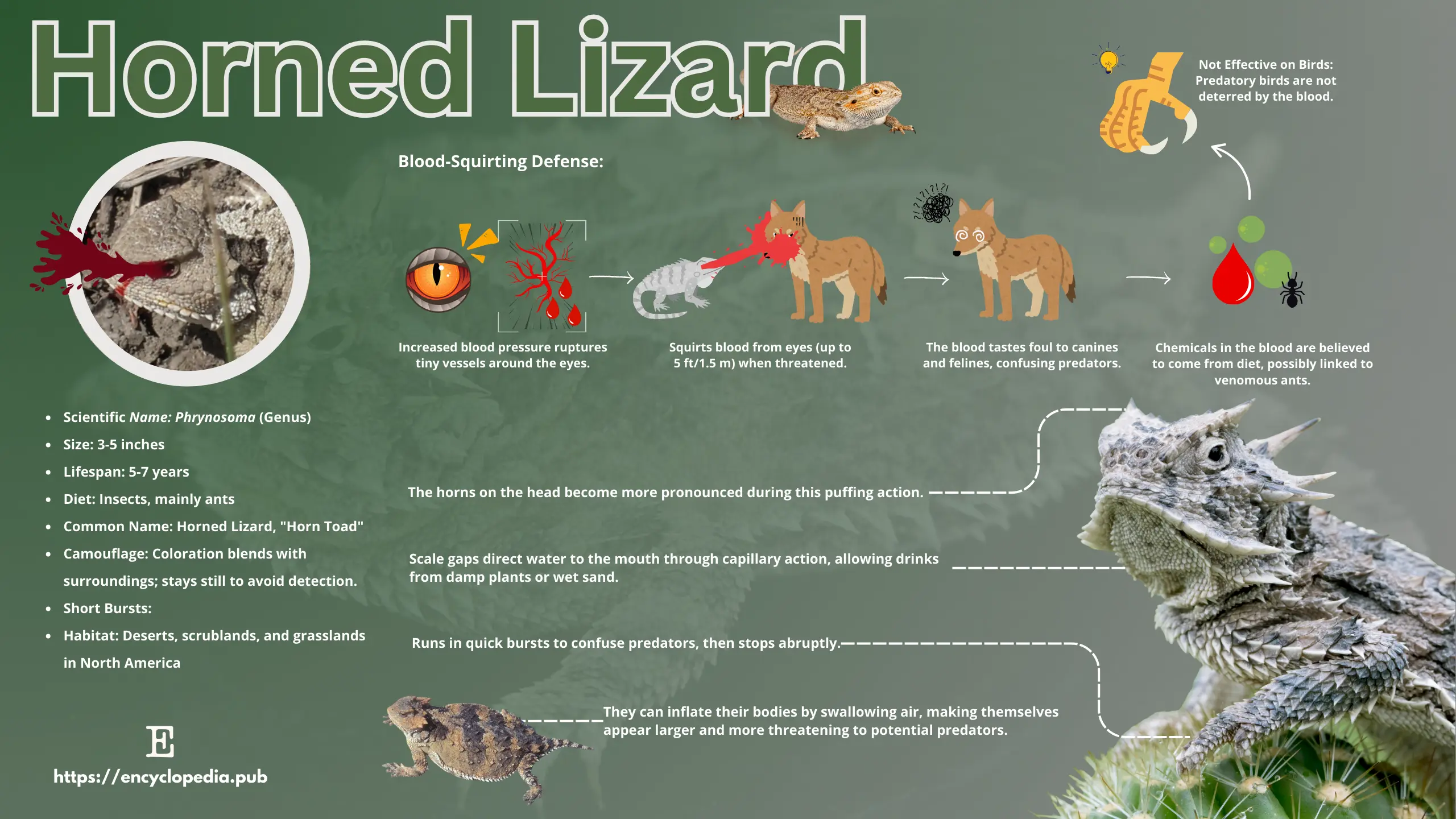
Source: Encyclopedia Infographic (https://encyclopedia.pub/image/3719).
2. Life on the Menu
One of the horned lizard’s favorite meals is ants—particularly harvester ants. Some species eat hundreds of ants in a single sitting, using their sticky tongue to scoop them up quickly. This specialized diet ties the horned lizard’s survival closely to the health of ant populations, which makes habitat conservation especially important.
3. Defenses of a Desert Warrior
What truly sets horned lizards apart is their extraordinary defense mechanisms. When threatened, they may:
-
Flatten their bodies to appear larger.
-
Puff up with air to discourage predators.
-
And most famously: squirt blood from their eyes. Yes, you read that right. By rupturing small blood vessels near the eyes, they can shoot a stream of blood up to several feet. This bizarre tactic not only startles predators but in some cases even tastes bad to would-be attackers like coyotes and foxes.
4. Conservation Concerns
Unfortunately, several horned lizard species face threats from habitat loss, invasive fire ants (which outcompete native ants), and climate change. Urban expansion has fragmented their ranges, while pesticides reduce their insect food sources. As a result, populations of some species, such as the Texas horned lizard (Phrynosoma cornutum), have significantly declined in parts of their historical range. Conservation efforts focus on restoring habitats, protecting native ant populations, and raising awareness about these unique reptiles.
5. Why They Matter
The horned lizard is more than just a desert oddity—it is a symbol of ecological balance. By keeping ant populations in check and serving as prey for larger animals, it plays a vital role in desert food webs. Its story is also a reminder of how delicate ecosystems can be, and how even small creatures can inspire awe and respect.
6. Conclusion
With its spiky armor, quirky diet, and dramatic defenses, the horned lizard is one of nature's most fascinating survivors. Protecting this desert dragon means safeguarding not just a single species, but the intricate web of life in arid landscapes.
For more information about this topic, you can view the online entry entitled "Horned Lizard".