

 +1 credit
| Version | Summary | Created by | Modification | Content Size | Created at | Operation |
|---|---|---|---|---|---|---|
| 1 | Prof. Dr. OOMMEN THARAKAN KUTTIYIL THOMAS | -- | 691 | 2026-04-28 12:15:28 | | | |
| 2 | Catherine Yang | -10 word(s) | 737 | 2026-07-09 05:10:27 | | | | |
| 3 | Catherine Yang | -1 word(s) | 737 | 2026-07-09 05:10:44 | | |
Video Upload Options
1. Brief Introduction
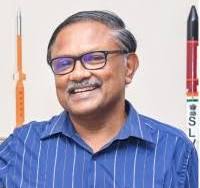
Prof. Dr. Oommen Tharakan Kuttiyil Thomas is a distinguished senior aerospace scientist and academic leader with a career spanning over four decades in high-reliability electronics and national space missions. Born on May 30, 1963, in Trivandrum, Kerala, his professional journey is defined by a commitment to the "Zero-Defect" engineering philosophy. Dr. Thomas holds a B.Tech in Electronics & Communication Engineering from the College of Engineering, Trivandrum (CET); a Master of Engineering from the Indian Institute of Science (IISc), Bangalore; and a Ph.D. in Microelectronics and VLSI Design from the Indian Institute of Technology (IIT) Bombay.
Following a 38-year tenure at the Vikram Sarabhai Space Centre (VSSC) of the Indian Space Research Organisation (ISRO), where he retired as a Scientist 'H' (Group Director), he transitioned to academia. He currently serves as the Professor, Dean of Research & Development, and Head of the Department of Electronics and Communication Engineering at Mar Baselios Christian College of Engineering and Technology (MBCET) in Peermade. His life’s work focuses on the democratization of technology, bridging the gap between elite aerospace engineering and grassroots rural empowerment.
2. Story about Notable Contributions
The trajectory of Dr. Thomas’s career mirrors the evolution of the Indian space program. Joining ISRO in 1985, he became a pivotal figure in the development of avionics and microelectronics for India's workhorse rockets, the PSLV and GSLV. His contribution was not merely technical but philosophical; he pioneered the "Zero-Defect" approach in electronics production, ensuring that complex systems remained resilient under the extreme conditions of space flight.
In 2023, after transitioning to the academic sector, Dr. Thomas sought to prove that high-level aerospace engineering could be replicated in rural educational settings. He mentored a group of undergraduate students to design, build, and successfully launch BASILIAN-01, a technology demonstrator rocket. This mission was a landmark event, proving that with expert mentorship, rural technical talent could achieve milestones previously reserved for national laboratories. Simultaneously, he applied his expertise in sensors to the agricultural sector, developing BEEMARK-I. This IoT-based system for precision apiculture was designed to monitor beehive health in real-time, providing rural farmers with data-driven insights to protect their livelihoods and local biodiversity.
3. Principal Publications/Works
Dr. Thomas's most significant technical contribution to the global scientific community is his technical monograph, Electronics Production Defects and Analysis[1] published by Springer Nature in 2022 (ISBN: 978-981-16-9823-1). This work is regarded as a comprehensive guide for quality control in high-reliability electronics, distilling decades of ISRO experience into a methodology for identifying and preventing manufacturing failures. This is also referred as the "Defect Bible" in High reliability electronics and avionics area.
His research portfolio is heavily focused on Microelectronics and VLSI Design, specifically the reliability of electronic components in harsh environments. His "Zero-Defect" manufacturing standards have been presented in various international forums and remain a benchmark for aerospace production quality. Beyond literature, his "living works" include the design of modular wind energy systems for rural application and the ongoing BEEMARK-II project, which integrates advanced AI-based health assessment for precision agriculture.
4. Implications for Sciences and Humanities
The work of Dr. Thomas has profound implications for both the scientific and social spheres. In the realm of science, his methodologies in High-Reliability Electronics have enhanced the safety and success rates of launch vehicle missions, contributing to the global body of knowledge regarding avionics endurance. His research effectively links theoretical microelectronics with the practical rigors of aerospace production.
In the humanities and social sciences, Dr. Thomas’s career represents a successful model for technological democratization. By moving from a Group Director role at ISRO to a Dean role at a rural college, he has facilitated a massive transfer of knowledge. The success of projects like BASILIAN-01[2][3][4] and BEEMARK-I[5][6] demonstrates that "Big Science" can have "Small-Scale" applications that improve rural economies and inspire the next generation of engineers. His legacy is one of technical excellence used as a tool for social equity, ensuring that the precision of space science serves the needs of the common man.
References
- Electronics Production Defects and Analysis. Springer Nature, Singapore. Retrieved 2026-4-28
- The Hindu (2025). Rocket built by students of Idukki engineering college to launch. https://www.thehindu.com/news/national/kerala/rocket-built-by-students-of-idukki-engineering-college-to-launch/article70403232.ece
- The Week, Kerala engineering students to launch indigenous rocket in Idukki https://www.theweek.in/wire-updates/national/2025/12/16/mes20-kl-college-rocket.html
- MBCET Peermade (Official Site), Launch of the rocket 'Basilian-01' – 2025 https://www.mbcpeermade.com/Co-Curricular/-Launch-of-the-rocket-'Basilian-01'----2025/94
- Global TV, Innovation in Idukki: BEEMARK – I, https://globaltv.in/beemark/
- The Hindu, Idukki college develops electronic system to enhance beehive monitoring https://www.thehindu.com/news/national/kerala/idukki-college-develops-electronic-system-to-enhance-beehive-monitoring/article70494695.ece
Location: Trivandrum, Kerala, India




