

 +1 credit
| Version | Summary | Created by | Modification | Content Size | Created at | Operation |
|---|---|---|---|---|---|---|
| 1 | Predrag Tekic | -- | 1015 | 2026-03-17 08:06:31 |
Video Upload Options
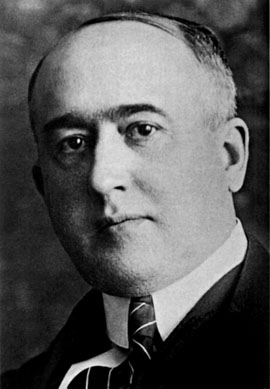
Milutin Milanković was one of the most influential scientists in the study of Earth’s climate and its long-term changes. Born on May 28, 1879, in Dalj, which was then part of the Austro-Hungarian Empire (now in Croatia), Milanković grew up in a well-educated Serbian family. From an early age, he showed exceptional talent in mathematics and engineering, disciplines that would later shape his groundbreaking scientific work.
Milanković pursued his higher education at the Vienna University of Technology, one of the most prestigious institutions in Europe at the time. There, he studied civil engineering and quickly distinguished himself as a brilliant student. After earning his doctorate, he worked as a structural engineer in Vienna, contributing to innovative construction projects and becoming one of the leading engineers of his era. Despite his success in engineering, his true passion lay in theoretical science, particularly in understanding Earth’s climate and its relationship with astronomical phenomena.
In 1909, Milanković accepted a position as a professor of applied mathematics at the University of Belgrade. This marked a turning point in his career, as he began dedicating himself fully to scientific research. His work would eventually bridge the gap between astronomy, mathematics, and climatology, creating a new interdisciplinary field that is still vital today. His lectures were known for their clarity and depth, inspiring generations of students who would go on to contribute to science and engineering.
One of Milanković’s most significant contributions is the theory now known as Milankovitch cycles. This theory explains how variations in Earth’s orbit and axial tilt influence long-term climate patterns, including the timing of ice ages. He identified three main factors: eccentricity (the shape of Earth’s orbit around the Sun), obliquity (the angle of Earth’s axial tilt), and precession (the wobble of Earth’s axis). These cycles operate over tens of thousands of years and alter the distribution of solar radiation reaching the Earth’s surface.
Milanković meticulously calculated how these orbital variations affect the amount of sunlight received at different latitudes and seasons. His work was incredibly complex, especially considering the limited computational tools available in the early 20th century. He relied on manual calculations, often working for years to produce precise results. His dedication culminated in his most famous work, the book “Canon of Insolation and the Ice-Age Problem,” published in 1941. In this monumental study, he presented a mathematical framework linking astronomical cycles to climate change, supported by extensive tables and formulas that are still referenced today.
Although his ideas were revolutionary, they were not immediately accepted by the scientific community. During his lifetime, many scientists lacked sufficient geological evidence to confirm his theory. It was not until the mid-20th century, decades after his initial publications, that advances in oceanography and paleoclimatology provided strong support for his predictions. Analysis of deep-sea sediment cores revealed patterns consistent with Milanković cycles, confirming that Earth’s climate history aligns closely with his calculations. This later validation elevated his work to a central place in Earth sciences.
Milanković’s life was also shaped by the turbulent events of the early 20th century. During World War I, he was interned as a prisoner of war due to his Serbian nationality while he was in Austria-Hungary. Despite these difficult circumstances, he continued his scientific work, even using his time in captivity to refine his theories and calculations. After the war, he returned to Belgrade and resumed his academic career, continuing to develop and expand his ideas.
In addition to his work on climate, Milanković made contributions to other areas of science. He studied the climates of other planets in the solar system, particularly Mars and Venus, applying his mathematical methods to estimate their surface conditions. This work demonstrated his ability to extend Earth-based theories to a broader cosmic context. He also worked on calendar reform, proposing a highly accurate version of the Gregorian calendar. His revised calendar, often referred to as the Milanković calendar, was adopted by some Eastern Orthodox churches, highlighting the practical applications of his scientific precision.
Milanković was also deeply involved in academic and cultural life. As a member of the Serbian Academy of Sciences and Arts, he contributed to the advancement of science in his country and collaborated with scholars across Europe. He wrote not only technical scientific works but also essays and memoirs, in which he reflected on his life, scientific philosophy, and the challenges he faced. His writing style was clear and engaging, making complex ideas accessible to a broader audience.
Another important aspect of his legacy is his influence on modern climate science. Today, Milanković cycles are a fundamental concept used by scientists studying Earth’s past and future climate. They help explain natural climate variability over geological timescales and provide a baseline against which human-induced climate change can be measured. His work is frequently used in climate models and remains essential for understanding long-term environmental changes.
Milanković passed away on December 12, 1958, in Belgrade. Though he did not live to see the full acceptance and global recognition of his theories, his legacy endures in the scientific community. Over time, numerous honors have been bestowed upon him. Craters on the Moon and Mars bear his name, as well as a minor planet, symbolizing his contributions to planetary science and astronomy.
In Serbia and beyond, Milanković is remembered as a pioneer who combined rigorous mathematics with visionary thinking. His life story is also a testament to perseverance, as he continued his work despite war, imprisonment, and initial skepticism from the scientific community. Today, his name is associated with one of the most important frameworks for understanding Earth’s climate system.
In conclusion, Milutin Milanković was far ahead of his time. His work laid the foundation for modern paleoclimatology and provided critical insights into the natural forces shaping Earth’s climate. Through determination, intellectual curiosity, and extraordinary analytical skill, he transformed our understanding of the relationship between Earth and the cosmos. His contributions continue to influence science today, ensuring that his legacy remains not only relevant but essential in the ongoing effort to understand our planet and its future.
Location: Dalj, Austria-Hungary




