

 +1 credit
| Version | Summary | Created by | Modification | Content Size | Created at | Operation |
|---|---|---|---|---|---|---|
| 1 | Predrag M. Tekic | -- | 856 | 2026-03-17 07:18:34 |
Video Upload Options
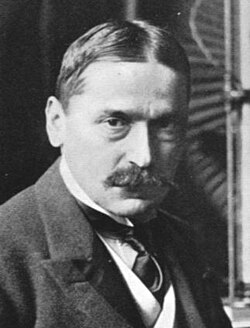
Mihajlo Idvorski Pupin (Serbian Cyrillic: Михајло Идворски Пупин]; October 4, 1858 – March 12, 1935), also known as Michael Pupin, was a Serbian-American electrical engineer, physicist and inventor.
Mihajlo Pupin was one of the most influential scientists and intellectuals of the late 19th and early 20th centuries, whose life story embodies perseverance, innovation, and cultural bridge-building. Born on October 9, 1858, in the village of Idvor, in what was then the Austrian Empire (today in Serbia), Pupin rose from humble beginnings to become a world-renowned physicist, inventor, and professor. His journey from a rural upbringing to the heights of academic and scientific achievement is both inspiring and historically significant.
Pupin grew up in a modest farming family, where education was not easily accessible. However, his mother, Olimpiada, played a crucial role in shaping his intellectual curiosity and ambition. She encouraged him to pursue learning despite the economic hardships the family faced. Pupin attended school in nearby towns and eventually moved to Prague for further education, where he became exposed to broader intellectual and political ideas. However, due to financial difficulties and political involvement, he left Europe in 1874 and emigrated to the United States.
Arriving in America as a poor immigrant, Pupin initially worked various labor-intensive jobs to survive. Despite these challenges, he remained committed to his education. He eventually enrolled at Columbia University in New York City, where he excelled academically. Pupin graduated with honors and continued his studies in Europe, earning a Ph.D. from the University of Berlin, one of the leading scientific institutions of the time. There, he studied under prominent scientists, including Hermann von Helmholtz, which significantly influenced his scientific development.
After completing his education, Pupin returned to Columbia University, where he spent most of his professional career as a professor of mathematical physics. His work focused on electromagnetism, telecommunication, and electrical engineering—fields that were rapidly evolving during his lifetime. Pupin made groundbreaking contributions, particularly in improving long-distance telephone communication. His invention of “pupinization,” a method of placing loading coils along telephone lines to reduce signal distortion, revolutionized telecommunications. This innovation enabled clearer and more reliable long-distance communication, playing a crucial role in the expansion of global telephony.
Pupin’s scientific achievements earned him numerous accolades and recognition. In 1924, he was awarded the Pulitzer Prize for Biography or Autobiography for his autobiography, From Immigrant to Inventor. In this work, Pupin detailed his life journey, offering insights into his struggles, successes, and philosophical reflections. The book not only highlighted his personal achievements but also served as an inspiring narrative for immigrants striving to build a better life in a new country.
Beyond his scientific contributions, Pupin was deeply engaged in social and political causes. He was a passionate advocate for the Serbian people and played a significant role in promoting Serbian interests in the United States during critical historical periods. During World War I, Pupin used his influence and connections to support Serbia, helping secure humanitarian aid and political backing. He maintained close relationships with key figures, including Woodrow Wilson, and worked tirelessly to strengthen ties between Serbia and the United States.
Pupin was also a founding member of several important organizations and contributed to the advancement of science and education beyond his own research. He was involved with the National Advisory Committee for Aeronautics, which later evolved into NASA, and he supported numerous educational initiatives. His philanthropic efforts extended to Serbia, where he funded schools, scholarships, and cultural institutions. Pupin believed strongly in the power of education to transform lives, reflecting his own experience as an immigrant who overcame adversity through learning.
Another remarkable aspect of Pupin’s life was his role as a cultural ambassador. He maintained a strong connection to his Serbian heritage while fully integrating into American society. Through his work and public engagement, he helped promote Serbian culture and history to a wider audience. His efforts contributed to a greater understanding and appreciation of Serbia in the United States, particularly during times of political tension and war.
Pupin’s legacy is multifaceted. Scientifically, he is remembered as a pioneer in telecommunications and electrical engineering. His inventions laid the groundwork for modern communication systems, influencing technologies that continue to shape the world today. Academically, he was a dedicated educator who mentored generations of students at Columbia University. Socially and politically, he was an advocate for his homeland and a supporter of international cooperation.
He passed away on March 12, 1935, in New York City, leaving behind a rich legacy of achievement and inspiration. Today, Mihajlo Pupin is celebrated both in Serbia and the United States as a symbol of intellectual excellence and perseverance. Numerous institutions, schools, and awards bear his name, honoring his contributions to science, education, and society.
In conclusion, Mihajlo Pupin’s life story is a testament to the transformative power of determination, education, and innovation. From a small village in Serbia to the forefront of scientific advancement in America, Pupin’s journey reflects the possibilities that arise when talent meets opportunity. His work not only advanced human knowledge but also strengthened cultural and political ties between nations. As such, Pupin remains an enduring figure whose influence continues to resonate in science, education, and international relations.
Location: Idvor




