

Your browser does not fully support modern features. Please upgrade for a smoother experience.
Submitted Successfully!
Thank you for your contribution! You can also upload a video entry or images related to this topic. For video creation, please contact our Academic Video Service.
Version Summary Created by Modification Content Size Created at Operation
1 Panagiota Xanthopoulou -- 1243 2026-02-27 09:52:48 |
2 formatted Perry Fu Meta information modification 1243 2026-02-28 03:39:21 |

Video Upload Options

We provide professional Academic Video Service to translate complex research into visually appealing presentations. Would you like to try it?
Cite
If you have any further questions, please contact Encyclopedia Editorial Office.
Zakopoulos, V.; Xanthopoulou, P. Mapping Qualitative Research in Social Sciences and Humanities: A Bibliometric Review. Encyclopedia. Available online: https://encyclopedia.pub/entry/59566 (accessed on 28 February 2026).
Zakopoulos V, Xanthopoulou P. Mapping Qualitative Research in Social Sciences and Humanities: A Bibliometric Review. Encyclopedia. Available at: https://encyclopedia.pub/entry/59566. Accessed February 28, 2026.
Zakopoulos, Vassilis, Panagiota Xanthopoulou. "Mapping Qualitative Research in Social Sciences and Humanities: A Bibliometric Review" Encyclopedia, https://encyclopedia.pub/entry/59566 (accessed February 28, 2026).
Zakopoulos, V., & Xanthopoulou, P. (2026, February 27). Mapping Qualitative Research in Social Sciences and Humanities: A Bibliometric Review. In Encyclopedia. https://encyclopedia.pub/entry/59566
Zakopoulos, Vassilis and Panagiota Xanthopoulou. "Mapping Qualitative Research in Social Sciences and Humanities: A Bibliometric Review." Encyclopedia. Web. 27 February, 2026.
Peer Reviewed
Mapping Qualitative Research in Social Sciences and Humanities: A Bibliometric Review

This study examines the evolution of qualitative research in the Social Sciences and Arts & Humanities over time through an extensive bibliometric analysis of 15,115 publications indexed in Scopus between 1985 and 2026. This research maps the scope of the field, the most prevalent methodologies, types of publications, linguistic distribution, and geographical origin of the works. Simultaneously, it correlates qualitative, quantitative, and mixed methodologies, highlighting the tensions, differences, and synergies between them. Using PRISMA-guided selection and bibliometric techniques, the analysis revealed a gradual and steady increase in qualitative research over the last decade. In the Arts and Humanities, there is a particular emphasis on narrative research, discourse analysis, and ethnography, while in the Social Sciences, qualitative, quantitative, and mixed methodologies coexist more evenly, with case studies and semi-structured interviews being used extremely frequently. Analysis of the document types revealed the predominance of scientific articles (over 85%), with English being the main language of publication. In terms of geographical distribution, the US and the UK are the strongest producers of qualitative knowledge, with Australia and Canada contributing significantly and a gradual strengthening of the participation of research communities from Latin America and Asia. The data show that publications referring to qualitative and mixed methodologies demonstrate comparatively higher citation visibility within the analyzed corpus, particularly in education, culture, and public policy. The findings indicate that the qualitative approach continues to play a key role in understanding the complex and lived dimensions of human experience, while opportunities for more integrated hybrid methodological frameworks will emerge in the future—both within individual scientific fields and in their interconnections. This study provides one of the largest bibliometric mappings of qualitative research internationally and systematically clarifies how the qualitative tradition differs between the Social Sciences and the Arts & Humanities. The findings can be used for evidence-based curriculum design, targeted development of research collaborations, and formulation of publication policies that enhance the visibility and influence of qualitative research.
qualitative research bibliometric analysis social sciences arts and humanities Scopus database
As analyzed by Immanuel Kant (1724–1804) in his work Critique of Pure Reason, natural sciences and natural phenomena obey fixed laws and rules, and their evolution follows a steady course with deterministic developments, independent of space and time. In contrast to the natural sciences, social sciences and humanities are not governed by fixed rules of general validity [1]. However, as pointed out by the German philosopher Wilhelm Dilthey (1833–1911), the fact that social phenomena and human behavior do not evolve according to fixed rules of general validity does not mean that these phenomena arise and function by chance. There is a set of conditions and phenomena that interact and determine each other, and through the way they are intertwined, they contribute to the formation of social phenomena and human behavior. This is what Dilthey calls “historical reason”, which he contrasts with Kant’s “pure reason.” [2]. Consequently, approaching social phenomena in a manner analogous to the natural sciences is impossible because of the nature of these phenomena [3]. This is the central difference between natural and human sciences [4]. According to Dilthey, we explain nature and interpret human culture and behavior to penetrate its deeper meaning and understand it.
Qualitative research in the social sciences is increasingly preoccupying the scientific community and is the subject of debate and study in several countries [5].
Qualitative research draws upon multiple forms of empirical material, including direct observation, interviews, focus groups, textual and discourse analysis, and multimodal artifacts. While observational approaches capture social practices as enacted, verbal data (e.g., interviews and narratives) provide access to participants’ subjective interpretations, internal experiences, and meaning-making processes. These distinct yet complementary forms of qualitative evidence contribute to a richer and more nuanced understanding of social phenomena. To achieve this goal, a variety of theoretical and research methodological approaches and data collection techniques are used (e.g., field notes, interviews, video recordings, photographic material, film, and other types of human evidence and artifacts), which in qualitative perspectives tend to be a “multimodal narrative”: they are based on observations (verbal, visual, tactile, gustatory, olfactory, and kinesthetic) related to the rich spectrum of embodied possibilities of human experience. The notion of authenticity in qualitative research is itself contested and has been widely debated in relation to reflexivity, representation, and the co-construction of meaning between researchers and participants [2][3][5]. In this context, authenticity does not imply objectivist neutrality but refers to methodological transparency and interpretive coherence. Qualitative research constitutes a core methodological tradition within the Social Sciences and the Arts & Humanities, enabling in-depth exploration of meaning, context, interpretation, and lived human experience beyond numerical measurement [6][7]. As contemporary societies face increasingly complex social, cultural, educational, and policy-related challenges, qualitative and mixed-methods approaches have gained renewed relevance, often complementing or critically engaging with dominant quantitative models [8][9]. In this context, qualitative inquiry plays a crucial role in illuminating processes, practices, and meanings that cannot be adequately captured through statistical indicators [10].
Qualitative research has long been epistemologically central within the Arts & Humanities, closely aligned with interpretive and constructivist paradigms that prioritize narrative, discourse, culture, and contextual understanding [11][12]. In contrast, the Social Sciences display a more pluralistic methodological landscape, where qualitative, quantitative, and mixed-method approaches coexist and interact [13][14]. Qualitative research is increasingly employed across disciplines such as education, sociology, cultural studies, and public policy to address questions related to complexity, power relations, social change, and human-centered phenomena, often in dialogue with quantitative evidence [15][16].
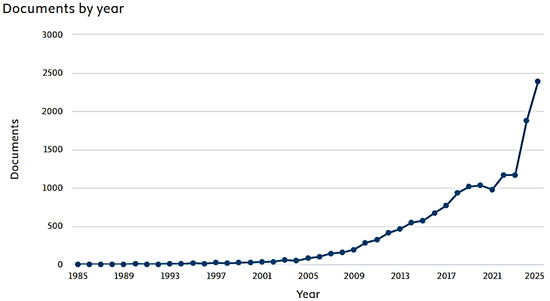
Despite the long-standing presence and growing importance of qualitative research (Figure 1), the large-scale and longitudinal development of qualitative and mixed-method inquiries across disciplines and geographical contexts remains underexplored [17][18]. Much of the existing literature is characterized by small-scale, context-specific studies that provide rich insights at the local level but offer limited comparative and systemic perspectives [18][19]. Consequently, there is a lack of comprehensive evidence on how qualitative research has evolved over time, how it differs across disciplines, and how its scholarly impact is distributed internationally. Bibliometric analysis offers a reproducible methodological approach to address this research gap [20]. By examining large bodies of the scientific literature, bibliometric methods enable mapping of publication trends, methodological orientations, disciplinary structures, language use, and geographical patterns of knowledge [21][22]. Such analyses provide valuable insights into the visibility, consolidation, and impact of research fields without relying on subjective interpretations of individual studies [23].
Figure 1. Documents by year (Scopus database) from 1985 to 2025.
Against this background, the present study conducts a bibliometric analysis of 15,115 documents indexed in Scopus between 1985 and 2026 to examine the development of qualitative and mixed-method research in the Social Sciences and the Arts & Humanities. This study aims to map publication growth, document types, methodological orientations, linguistic and geographical distributions, and disciplinary differences while exploring the relationships between qualitative, quantitative, and mixed methodologies. By offering one of the largest comparative bibliometric mappings of qualitative research to date, this study highlights both convergences and divergences in how qualitative inquiry is conceptualized and applied across fields, and points toward opportunities for more integrated and interdisciplinary methodological frameworks in future research.
It should be clarified that the present bibliometric mapping does not aim to capture the entirety of qualitative research output in the Social Sciences and Humanities. Instead, the corpus represents publications that explicitly engage with the terminology of “qualitative research,” “qualitative methods,” or “qualitative methodology,” in conjunction with broader discussions of development, evolution, or trends within the Social Sciences and Humanities. Consequently, this study primarily maps the self-referential and methodological discourse surrounding qualitative research rather than all empirical studies employing qualitative techniques (e.g., interviews or ethnography) without explicitly labeling them as such.

References

  1. Runhardt, R.W. Reactivity, validity, and measurement in the social sciences. Stud. Hist. Philos. Sci. 2025, 112, 1–9.
  2. Scharff, R.C. If History Had an Essence, It Wouldn’t Be History. In The Essence of History; Routledge: New York, NY, USA, 2025; pp. 34–60.
  3. Newton, T. What Is Social Science? A Comparison with Biology. Sociol. Theory 2025, 43, 238–263.
  4. Barašin, O. Problems of Understanding and Applying Methodology of Social Sciences. S. Jakupović Ur. Econ. Mark. Commun. Rev.–Časopis Za Ekon. I Tržišne Komun. 2023, 13, 414.
  5. Khoa, B.T.; Hung, B.P.; Hejsalem-Brahmi, M. Qualitative research in social sciences: Data collection, data analysis and report writing. Int. J. Public Sect. Perform. Manag. 2023, 12, 187–209.
  6. Denzin, N.K.; Lincoln, Y.S. Introduction: The Discipline and Practice of Qualitative Research. In Handbook of Qualitative Research, 2nd ed.; Denzin, N.K., Lincoln, Y.S., Eds.; Sage Publications: Thousand Oaks, CA, USA, 2000; pp. 1–34.
  7. Creswell, J.W. Mapping the field of mixed methods research. J. Mix. Methods Res. 2009, 3, 95–108.
  8. Patton, M.Q. Two decades of developments in qualitative inquiry: A personal, experiential perspective. Qual. Soc. Work 2002, 1, 261–283.
  9. Eisner, E.W. What the arts taught me about education. Art Educ. 1991, 44, 10–19.
  10. Bresler, L. Integrating the arts: Educational entrepreneurship in a school setting. Hell. J. Music. Educ. Cult. 2011, 2, 1.
  11. McCammon, L.A. Research on drama and theater for social change. Int. Handb. Res. Arts Educ. 2007, 16, 945–964.
  12. Zakopoulos, V.; Georgakopoulos, I.; Dalakouras, C.; Dimitrakopoulos, P.; Liomas, I. A framework to identify non-achievers in elearning business informatics lab courses. J. Compr. Bus. Adm. Res. 2024, 1–8.
  13. Jacobs, J.A. Journal rankings in sociology: Using the H Index with Google Scholar. Am. Sociol. 2016, 47, 192–224.
  14. Xanthopoulou, P.; Sahinidis, A. Mapping the Intersection of Entrepreneurship, Digitalization, and the SDGs: A Scopus-Based Literature. Sustainability 2025, 17, 8420.
  15. Aria, M.; Cuccurullo, C. bibliometrix: An R-tool for comprehensive science mapping analysis. J. Informetr. 2017, 11, 959–975.
  16. Donthu, N.; Kumar, S.; Mukherjee, D.; Pandey, N.; Lim, W.M. How to conduct a bibliometric analysis: An overview and guidelines. J. Bus. Res. 2021, 133, 285–296.
  17. Modak, N.M.; Raj, A.; Sana, S.S. A bibliometric and content analysis of core researches on operations research. Int. J. Oper. Res. 2023, 46, 358.
  18. Rousseau, R. Forgotten Founder of Bibliometrics. Nature 2014, 510, 218.
  19. Gialeli, M.; Troumbis, A.Y.; Giaginis, C.; Papadopoulou, S.K.; Antoniadis, I.; Vasios, G.K. The global growth of ‘Sustainable Diet’during recent decades, a bibliometric analysis. Sustainability 2023, 15, 11957.
  20. Zupic, I.; Čater, T. Bibliometric Methods in Management and Organization. Organ. Res. Methods 2015, 18, 429–472.
  21. Neuhaus, C.; Daniel, H.D. Data sources for performing citation analysis: An overview. J. Doc. 2008, 64, 193–210.
  22. Caputo, A.; Kargina, M. A user-friendly method to merge Scopus and Web of Science data during bibliometric analysis. J. Mark. Anal. 2021, 10, 82–88.
  23. Xanthopoulou, P.; Sahinidis, A.; Kavoura, A.; Antoniadis, I. Shifting mindsets: Changes in entrepreneurial intention among university students. Adm. Sci. 2024, 14, 272.

More
Upload a video for this entry
Information
Subjects: Others
Contributors MDPI registered users' name will be linked to their SciProfiles pages. To register with us, please refer to https://encyclopedia.pub/register : Vassilis Zakopoulos , Panagiota Xanthopoulou
View Times: 6
Online Date: 27 Feb 2026
Notice
You are not a member of the advisory board for this topic. If you want to update advisory board member profile, please contact office@encyclopedia.pub.
OK
Confirm
Only members of the Encyclopedia advisory board for this topic are allowed to note entries. Would you like to become an advisory board member of the Encyclopedia?
Yes
No
${ textCharacter }/${ maxCharacter }
Submit
Cancel
There is no comment~
${ textCharacter }/${ maxCharacter }
Submit
Cancel
${ selectedItem.replyTextCharacter }/${ selectedItem.replyMaxCharacter }
Submit
Cancel
Confirm
Are you sure to Delete?
Yes No
Academic Video Service



