Your browser does not fully support modern features. Please upgrade for a smoother experience.
Submitted Successfully!
Thank you for your contribution! You can also upload a video entry or images related to this topic. For video creation, please contact our Academic Video Service.
Version Summary Created by Modification Content Size Created at Operation
1 Ana Ibáñez -- 2059 2026-02-05 10:31:05 |
2 Figure 1 was included Ana Ibáñez + 13 word(s) 2072 2026-02-05 10:44:15 |

Video Upload Options

We provide professional Academic Video Service to translate complex research into visually appealing presentations. Would you like to try it?
Cite
If you have any further questions, please contact Encyclopedia Editorial Office.
Ibáñez, A.; Barreiro, C. Elemental Sulfur Metabolism and Acidithiobacillus. Encyclopedia. Available online: https://encyclopedia.pub/entry/59481 (accessed on 06 February 2026).
Ibáñez A, Barreiro C. Elemental Sulfur Metabolism and Acidithiobacillus. Encyclopedia. Available at: https://encyclopedia.pub/entry/59481. Accessed February 06, 2026.
Ibáñez, Ana, Carlos Barreiro. "Elemental Sulfur Metabolism and Acidithiobacillus" Encyclopedia, https://encyclopedia.pub/entry/59481 (accessed February 06, 2026).
Ibáñez, A., & Barreiro, C. (2026, February 05). Elemental Sulfur Metabolism and Acidithiobacillus. In Encyclopedia. https://encyclopedia.pub/entry/59481
Ibáñez, Ana and Carlos Barreiro. "Elemental Sulfur Metabolism and Acidithiobacillus." Encyclopedia. Web. 05 February, 2026.
Elemental Sulfur Metabolism and Acidithiobacillus
Edit

Sulfur oxidation is a cornerstone of the Earth’s sulfur cycle, and members of the genus Acidithiobacillus play a central role as highly specialized sulfur-oxidizing bacteria. These microorganisms are capable of efficiently oxidizing a wide range of reduced inorganic sulfur compounds (RISCs) under extreme acidic conditions, sustaining their autotrophic growth in environments that are inhospitable to most life forms. This metabolic versatility has positioned Acidithiobacillus species as key biological agents in industrial applications such as bioleaching for metal recovery and biological desulfurization processes in bioremediation.

This Encyclopedia entry provides a comprehensive review of the current knowledge on sulfur metabolism in Acidithiobacillus, summarizing the main oxidation pathways described to date and the regulatory mechanisms that coordinate them. While significant advances have been achieved through genomic, transcriptomic, and biochemical studies, the sulfur oxidation network in these bacteria remains only partially understood. Many enzymatic steps, regulatory links, and environmental triggers are still unresolved, highlighting the complexity of sulfur metabolism and the need for further research to fully exploit the biotechnological potential of Acidithiobacillus species.

sulfur-oxidizing bacteria sulfur oxidation Acidithiobacillus

1. Introduction

Despite the presence of iron-oxidizing members within the Acidithiobacillus genus [1], the oxidation of elemental sulfur, as well as diverse reduced sulfur compounds, serves as the main electron source for this bacterial group, enabling Acidithiobacillus to drive energy generation through respiratory processes [2]. Proteomic analysis has reported a separation of the iron and sulfur utilization pathways in both iron- and sulfur-oxidizer members, although the two energy-generating pathways can be simultaneously induced depending on the type and the concentration of the available oxidizable substrates [3].
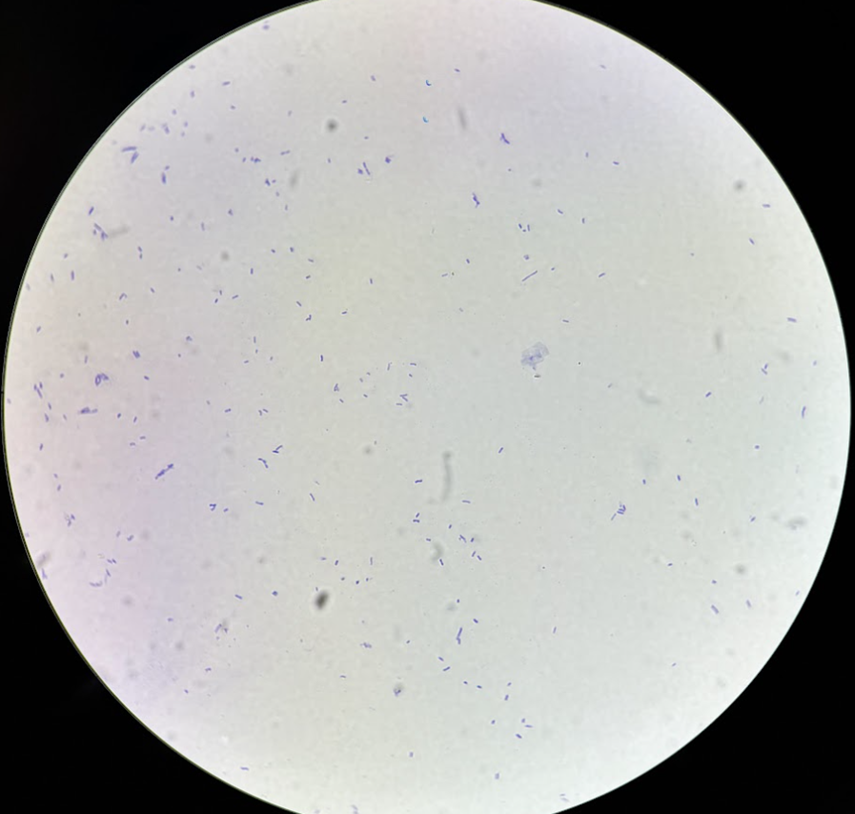
Figure 1. Acidithiobacillus thiooxidans DSMZ 14887 observed under optical microscopy after crystal violet staining (40× magnification).
The ability of Acidithiobacillus species to oxidize sulfur was first detected in A. thiooxidans in 1959 [4]. Since then, the identification of sulfur-oxidizing enzymes has remained a central focus of the field. The sulfur cycle is a vital biogeochemical process that affects ecosystem functioning, atmospheric chemistry, and nutrient availability. Sulfur can exist in different oxidation states ranging from −2 to +6, leading to the formation of a variety of reduced/oxidized inorganic sulfur compounds, including thiosulfate (S2O32−), sulfite (SO32−), sulfate (SO42−), tetrathionate (S4O62−), and elemental sulfur (S0), among others [5]. This transformation of sulfur compounds is a key step in the cycle, and it is mediated by a diverse array of microorganisms. Among these, Acidithiobacillus stands out due to its acidophilic nature, contributing to the sulfur cycle in acidic environments [5].
The adherence of bacterial cells to sulfur is a crucial step in the sulfur oxidation process in Acidithiobacillus species. When utilizing sulfur as a substrate, A. ferrooxidans exhibits an increased synthesis of fatty acids and lipid compounds in extracellular polymeric substances (EPS), which enhance bacterial adhesion to sulfur particles through hydrophobic interactions [1][6]. Similarly, in A. thiooxidans, phospholipids production has been reported as responsible for wetting elemental sulfur, an essential requirement for bacterial growth [7]. Thus, following cell adhesion to sulfur particles (including the orthombic α-S8, the main elemental sulfur form in nature), elemental sulfur is activated upon contact with a thiol group (RSH), such as that found in the outer-membrane proteins of the Acidithiobacillus genus. This activation process may induce the opening of the α-S8 ring, leading to the formation of linear polysulfide, enabling its entry into the bacterial cell and initiating its metabolism [6][8].
Once inside, the electrons derived from the reduction of sulfur are initially transferred to oxidized glutathione (GSSH) and then proceed through a series of sulfur transporters before ultimately entering the quinone pool. From there, the electrons can follow two possible routes: (i) they may directly and sequentially pass to the terminal enzyme complex to generate reducing power, or (ii) they can be transmitted to the NADH complex for the same purpose.
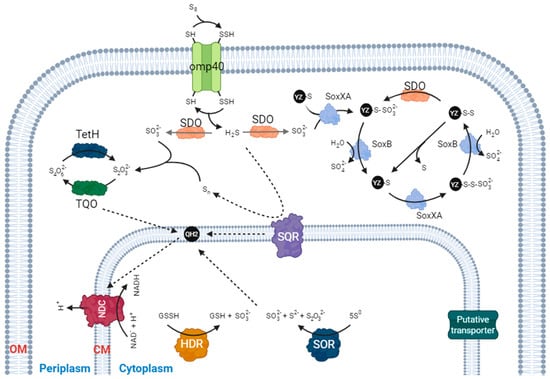
Nevertheless, since unraveling these peculiar pathways could provide valuable insights into the metabolic versatility of these bacteria and how they adapt to different environments [9], a comprehensive understanding of this intricate metabolic pathway needs a deep analysis of the proteins and processes involved (Figure 2). Following sections describe the principal enzymatic activities currently known in Acidithiobacillus for elemental sulfur metabolism, including those present in the periplasm (e.g., sulfur dioxygenase) and in the cytoplasm (such as sulfur oxygenase reductase).
Figure 2. Model of sulfur oxidation metabolism in Acidithiobacillus species, involving both the periplasm and the cytoplasm, within a complex metabolic pathway that encompasses numerous enzymes and transporters. SDO, sulfur dioxygenase; TQO, thiosulfate quinone oxidoreductase; SQR, sulfide:quinone oxidoreductase; QH2, quinol pool; NDC, NADH dehydrogenase complex; HDR, HDR-like complex; SOR, sulfur oxygenase reductase; OM, outer membrane; CM: cytoplasmic membrane. Created by BioRender.com.

2. Sulfur Dioxygenase (SDO)

Sulfur oxidation in the Acidithiobacillus genus is initiated by the enzyme sulfur dioxygenase (SDO; EC 1.13.11.18) [10][11], which is one of the earliest reported enzymes involved in the process. It was first isolated in 1987 from A. ferrooxidans, and it is composed by 21 and 26 kDa subunits in A. thiooxidans or two 23 kDa subunits in A. ferrooxidans [12][13][14]. This periplasmic enzyme (Figure 2) functions as a sulfur:ferric ion oxidoreductase and is able to catalyze the oxidation of S0 to sulfite [1][2]. However, the genes responsible for the biosynthesis of this enzyme (sdo genes) were identified almost thirty years later by Wang and co-workers [15]. Subsequent studies have led to the proposal of two homologs in mitochondria and heterotrophic bacteria: ETHE1 and PDO (persulfide dioxygenase), respectively, both of which have been extensively investigated [16][17][18][19][20]. The ETHE1/PDO complex cooperates with the sulfide:quinone oxidoreductase (SQR) to oxidize H2S, thereby diminishing the toxic impact of H2S on cellular processes [17][20]. However, the specific role of SDO in Acidithiobacillus species remains unknown. It has been postulated that sulfur may be adsorbed onto the cell surface by extracellular polymeric substances [1] and, as a result, it is transported to the periplasmic space following activation by a thiol-containing outer-membrane protein (OMP) to form persulfide sulfane sulfur (Figure 2). Subsequently, SDO might function as the primary enzyme for sulfur oxidation, leading to the production of sulfite [21]. Although not yet conclusively demonstrated, there are indications that the OMP responsible for intracellular sulfur uptake is likely the Omp40 (AFE2741) protein. Omp40 is a 40 kDa protein that forms an oligomeric structure of 120 kDa, associated with the adhesion to solid sulfur substrates and regarded as an adaptation to hinder the unrestricted movement of protons across the outer membrane in A. ferrooxidans [22]. Its expression is enhanced during the growth of A. ferrooxidans on sulfur, but not in the exclusive presence of iron, leading to the proposal that Omp40 might function as a potential sulfur transporter [23].
Additionally, recent research has revealed the presence of two or even three copies of SDO paralogs in certain strains of Acidithiobacillus [24], contributing to the intricacy of comprehending sulfur metabolism in these organisms. Such is the case for A. caldus MTH-04, where two homologs have been identified, named SDO1 (A5904_0421) and SDO2 (A5904_07909) [2]. Consequently, a detailed analysis of the SDO genes in Acidithiobacillus has shown that the homologous found from different species can be classified into four principal subgroups: ETHE1, Blh, SdoS, and SdoA. Other examples are A. thiooxidans A01 (SdoS; WP_024895058.1 and SdoA; WP_024893175.1), A. thiooxidans ZBY (SdoS; WP-024895058.1 and SdoA; WP_024893175.1), and A. ferridurans JCM_18981 (SdoS; BBF65856.1 and ETHE1; BBF64918.1) [24]. Indeed, the existence of various SDO subgroups suggests their potential involvement in distinct pathways for elemental sulfur oxidation. The ETHE1 subgroup appears to be associated with the H2S pathway, whereas the SdoS subgroup is likely connected to the S4O62− decomposition pathway [2]. This diversity in SDO subgroups implies a sophisticated regulation and coordination of sulfur metabolism in Acidithiobacillus species.

3. Sulfur Oxygenase Reductase (SOR)

Sulfur oxygenase reductase (SOR) is another well-known elemental sulfur-oxidizing enzyme. It catalyzes the oxygen-dependent disproportionation of elemental sulfur, a process in which sulfur molecules undergo a chemical transformation. This results in the production of several compounds, namely sulfite (SO3), thiosulfate (S2O3), and sulfide (H2S) (Figure 2). This enzymatic reaction plays a crucial role in the sulfur metabolism of Acidithiobacillus and contributes to the conversion of elemental sulfur into various sulfur compounds, which have significant ecological and biochemical implications [24].
First considered an “archaeal like” enzyme, it is also encoded in the genome of some acidophilic leaching bacteria such as some Acidithiobacillus species [25]. Once again, the intricacies surrounding the mechanistic action of SOR surpass current understanding. While the activity of SOR in A. caldus SM-1 was initially reported by Chen and co-workers in 2007 [26], subsequent investigations revealed the absence of the corresponding gene in the strain’s genome [27]. Finally, the observed enzymatic activity was attributed to sample contamination by Sulfobacillus [25]. However, despite this aforementioned discovery, genes encoding SOR have been finally identified in some, but not all, strains of A. thiooxidans, A. ferrooxidans, A. ferrivorans, A. caldus, and A. albertensis [10][28][29][30][31]. Phylogenetic analysis strongly suggests that the identified SORs in these Acidithiobacillus strains were likely acquired through horizontal gene transfer from sulfur-oxidizing archaea [24]. In fact, several analyses indicate that SOR activity is secondary, rather than essential, for cytoplasmic elemental sulfur oxidation in these sulfur-oxidizing bacteria [24][25][27][30].

4. Heterodisulfide Reductase (HDR)-like System

The next step in the sulfur metabolism is postulated to occur in the cytoplasm by a heterodisulfide reductase (HDR)-like system, which serves as an elemental sulfur oxidation enzyme in Acidithiobacillus and other sulfur-oxidizing bacteria and archaea [10][30][32][33][34], since transcriptomic analyses in A. thiooxidans have reported an increase in its expression levels in the presence of elemental sulfur compared to other sulfur sources such as thiosulfate [35].
This complex is proposed to be involved in the oxidation of disulfide intermediates, particularly sulfane sulfur species like GSSH (oxidized glutathione) or other sulfur carriers, finally converting them into sulfite. Nevertheless, concrete biochemical evidence in Acidithiobacillus supporting the function of HDR-like systems remains diffuse. Recently, indirect analyses have provided evidence of the role of the HDR-like complex in the oxidation of thiosulfate to sulfite in the α-proteobacteria Hyphomicrobium denitrificans [36], with the lipoate-binding protein LbpA being essential in this process [37]. Additionally, hdr-like genes are consistently found in conjunction with genes encoding the TusA protein and other rhodanase homologs [33]. TusA and DsrE are sulfur carrier proteins that exist in several sulfur-oxidizing bacteria and archaea [32][33]. rhd-tusA-dsrE genes have been reported either individually or as part of larger gene clusters in Acidithiobacillus species, including A. caldus and A. ferrooxidans, among others [24][32]. Thus, a sulfur oxidation pathway has been proposed, involving the HDR-like complex responsible for the oxidation of sulfane sulfur to sulfite developed by the carrier TusA. The electron transfer in this reaction may be facilitated by LbpA, leading to the generation of NADH [37]. The confirmation of the sulfur-oxidizing ability of the HDR-like complex and its involvement in the sulfur-metabolizing process demonstrated in H. denitrificans [36], Metallosphaera cuprina, and Allochromatium vinosum [32][33] holds the potential to provide valuable insights into the elemental sulfur oxidation mechanisms operating within the cytoplasm of Acidithiobacillus species. Consequently, further research on this complex is warranted.
In these aforementioned species, it has been also reported that inorganic sulfur compounds are successively transferred by the rhodanase (Rhd), as well as the carriers DsrE and TusA, producing sulfane sulfur at the Cys18 of TusA [32][33]. Rhd, which belongs to the sulfur transferase family found in organisms from all three domains of life, is known to participate in various cellular processes [24]. This enzyme cleaves the S–S bond in thiosulfate, producing sulfur and sulfite. Interestingly, Rhd has been purified from crude extracts of A. ferrooxidans, A. caldus, and A. thiooxidans [38][39], and its gene sequences have been identified in the complete genomes of Acidithiobacillus species [31][40]. However, its precise involvement in sulfur metabolism within Acidithiobacillus remains to be fully elucidated, since transcriptomic analyses have indicated low expression of the rhd gene in A. thiooxidans during both thiosulfate and sulfur growth conditions [35].
On the other hand, TusA plays a central role in sulfur movements within the cytoplasm of sulfur-oxidizing prokaryotes [33] and might deliver sulfane sulfur to the HDR-like system [37], thus acting as a crucial link between sulfur transferal and the HDR-like complex. Given the presence of these genes in certain Acidithiobacillus strains, it is plausible that similar pathways might operate in the cytoplasm of these sulfur-oxidizing bacteria. Consequently, conducting proteomic characterization and in vivo functional studies of these genes would be of great interest to confirm the functionality of the proposed process and shed light on the sulfur metabolism in Acidithiobacillus.
The coexistence of SDO, SOR, and the HDR-like complex in the Acidithiobacillus genus highlights the diversity and intricacy of elemental sulfur oxidation within these acidophilic bacteria. Notably, a triple sor-sdo1-sdo2 mutant of A. caldus MTH-04 displayed heightened elemental sulfur oxidation activity, suggesting the presence of as-yet-undetermined elemental sulfur oxidation enzymes in Acidithiobacillus species [2].

References

  1. Rouchalova, D.; Rouchalova, K.; Janakova, I.; Cablik, V.; Janstova, S. Bioleaching of Iron, Copper, Lead, and Zinc from the Sludge Mining Sediment at Different Particle Sizes, pH, and Pulp Density Using Acidithiobacillus ferrooxidans. Minerals 2020, 10, 1013.
  2. Wu, W.; Pang, X.; Lin, J.; Liu, X.; Wang, R.; Lin, J.; Chen, L. Discovery of a New Subgroup of Sulfur Dioxygenases and Characterization of Sulfur Dioxygenases in the Sulfur Metabolic Network of Acidithiobacillus caldus. PLoS ONE 2017, 12, e0183668.
  3. Valenzuela, L.; Chi, A.; Beard, S.; Shabanowitz, J.; Hunt, D.F.; Jerez, C.A. Differential-Expression Proteomics for the Study of Sulfur Metabolism in the Chemolithoautotrophic Acidithiobacillus ferrooxidans. In Microbial Sulfur. Metabolism; Springer: Berlin/Heidelberg, Germnay, 2008; pp. 77–86.
  4. Suzuki, I.; Werkman, C.H. Glutathione and Sulfuroxidation by Thiobacillus thiooxidans. Proc. Natl. Acad. Sci. USA 1959, 45, 239–244.
  5. Wang, Z.; Gerstein, M.; Snyder, M. RNA-Seq: A Revolutionary Tool for Transcriptomics. Nat. Rev. Genet. 2009, 10, 57–63.
  6. Kucera, J.; Pakostova, E.; Janiczek, O.; Mandl, M. Changes in Acidithiobacillus ferrooxidans Ability to Reduce Ferric Iron by Elemental Sulfur. Adv. Mat. Res. 2015, 1130, 97–100.
  7. Rahman, P.K.S.M.; Gakpe, E. Production, Characterisation and Applications of Biosurfactants-Review. Biotechnology 2008, 7, 360–370.
  8. Zhang, Y.; Yang, Y.; Liu, J.; Qiu, G. Isolation and Characterization of Acidithiobacillus ferrooxidans Strain QXS-1 Capable of Unusual Ferrous Iron and Sulfur Utilization. Hydrometallurgy 2013, 136, 51–57.
  9. Lee, S.-Y.; Kim, E.-G.; Park, J.-R.; Ryu, Y.-H.; Moon, W.; Park, G.-H.; Ubaidillah, M.; Ryu, S.-N.; Kim, K.-M. Effect on Chemical and Physical Properties of Soil Each Peat Moss, Elemental Sulfur, and Sulfur-Oxidizing Bacteria. Plants 2021, 10, 1901.
  10. Liljeqvist, M.; Rzhepishevska, O.I.; Dopson, M. Gene Identification and Substrate Regulation Provide Insights into Sulfur Accumulation during Bioleaching with the Psychrotolerant Acidophile Acidithiobacillus ferrivorans. Appl. Environ. Microbiol. 2013, 79, 951–957.
  11. Kanao, T.; Onishi, M.; Kajitani, Y.; Hashimoto, Y.; Toge, T.; Kikukawa, H.; Kamimura, K. Characterization of Tetrathionate Hydrolase from the Marine Acidophilic Sulfur-Oxidizing Bacterium, Acidithiobacillus thiooxidans Strain SH. Biosci. Biotechnol. Biochem. 2018, 82, 152–160.
  12. Silver, M.; Lundgren, D.G. Sulfur-Oxidizing Enzyme of Ferrobacillus ferrooxidans (Thiobacillus ferrooxidans). Can. J. Biochem. 1968, 46, 457–461.
  13. Sugio, T.; Mizunashi, W.; Inagaki, K.; Tano, T. Purification and Some Properties of Sulfur:Ferric Ion Oxidoreductase from Thiobacillus ferrooxidans. J. Bacteriol. 1987, 169, 4916–4922.
  14. Suzuki, I. Oxidation of Elemental Sulfur by an Enzyme System of Thiobacillus thiooxidans. Biochim. Biophys. Acta (BBA)—General. Subj. 1965, 104, 359–371.
  15. Wang, H.; Liu, S.; Liu, X.; Li, X.; Wen, Q.; Lin, J. Identification and Characterization of an ETHE1-like Sulfur Dioxygenase in Extremely Acidophilic Acidithiobacillus spp. Appl. Microbiol. Biotechnol. 2014, 98, 7511–7522.
  16. Sattler, S.A.; Wang, X.; Lewis, K.M.; DeHan, P.J.; Park, C.-M.; Xin, Y.; Liu, H.; Xian, M.; Xun, L.; Kang, C. Characterizations of Two Bacterial Persulfide Dioxygenases of the Metallo-β-Lactamase Superfamily. J. Biol. Chem. 2015, 290, 18914–18923.
  17. Liu, H.; Xin, Y.; Xun, L. Distribution, Diversity, and Activities of Sulfur Dioxygenases in Heterotrophic Bacteria. Appl. Environ. Microbiol. 2014, 80, 1799–1806.
  18. Jackson, M.R.; Melideo, S.L.; Jorns, M.S. Human Sulfide:Quinone Oxidoreductase Catalyzes the First Step in Hydrogen Sulfide Metabolism and Produces a Sulfane Sulfur Metabolite. Biochemistry 2012, 51, 6804–6815.
  19. Grings, M.; Seminotti, B.; Karunanidhi, A.; Ghaloul-Gonzalez, L.; Mohsen, A.-W.; Wipf, P.; Palmfeldt, J.; Vockley, J.; Leipnitz, G. ETHE1 and MOCS1 Deficiencies: Disruption of Mitochondrial Bioenergetics, Dynamics, Redox Homeostasis and Endoplasmic Reticulum-Mitochondria Crosstalk in Patient Fibroblasts. Sci. Rep. 2019, 9, 12651.
  20. Kabil, O.; Banerjee, R. Characterization of Patient Mutations in Human Persulfide Dioxygenase (ETHE1) Involved in H2S Catabolism. J. Biol. Chem. 2012, 287, 44561–44567.
  21. Rohwerder, T.; Sand, W. The Sulfane Sulfur of Persulfides Is the Actual Substrate of the Sulfur-Oxidizing Enzymes from Acidithiobacillus and Acidiphilium spp. Microbiology 2003, 149, 1699–1710.
  22. Guiliani, N.; Jerez, C.A. Molecular Cloning, Sequencing, and Expression of omp-40, the Gene Coding for the Major Outer Membrane Protein from the Acidophilic Bacterium Thiobacillus ferrooxidans. Appl. Environ. Microbiol. 2000, 66, 2318–2324.
  23. Ramírez, P.; Guiliani, N.; Valenzuela, L.; Beard, S.; Jerez, C.A. Differential Protein Expression during Growth of Acidithiobacillus ferrooxidans on Ferrous Iron, Sulfur Compounds, or Metal Sulfides. Appl. Environ. Microbiol. 2004, 70, 4491–4498.
  24. Peng, T.; Chen, L.; Wang, J.; Miao, J.; Shen, L.; Yu, R.; Gu, G.; Qiu, G.; Zeng, W. Dissolution and Passivation of Chalcopyrite during Bioleaching by Acidithiobacillus ferrivorans at Low Temperature. Minerals 2019, 9, 332.
  25. Janosch, C.; Remonsellez, F.; Sand, W.; Vera, M. Sulfur Oxygenase Reductase (Sor) in the Moderately Thermoacidophilic Leaching Bacteria: Studies in Sulfobacillus thermosulfidooxidans and Acidithiobacillus caldus. Microorganisms 2015, 3, 707–724.
  26. Chen, Z.-W.; Liu, Y.-Y.; Wu, J.-F.; She, Q.; Jiang, C.-Y.; Liu, S.-J. Novel Bacterial Sulfur Oxygenase Reductases from Bioreactors Treating Gold-Bearing Concentrates. Appl. Microbiol. Biotechnol. 2007, 74, 688–698.
  27. You, X.-Y.; Guo, X.; Zheng, H.-J.; Zhang, M.-J.; Liu, L.-J.; Zhu, Y.-Q.; Zhu, B.; Wang, S.-Y.; Zhao, G.-P.; Poetsch, A.; et al. Unraveling the Acidithiobacillus caldus Complete Genome and Its Central Metabolisms for Carbon Assimilation. J. Genet. Genom. 2011, 38, 243–252.
  28. Lee, Y.; Sethurajan, M.; van de Vossenberg, J.; Meers, E.; van Hullebusch, E.D. Recovery of Phosphorus from Municipal Wastewater Treatment Sludge through Bioleaching Using Acidithiobacillus thiooxidans. J. Environ. Manag. 2020, 270, 110818.
  29. Valdés, J.; Pedroso, I.; Quatrini, R.; Holmes, D.S. Comparative Genome Analysis of Acidithiobacillus ferrooxidans, A. thiooxidans and A. caldus: Insights into Their Metabolism and Ecophysiology. Hydrometallurgy 2008, 94, 180–184.
  30. Chen, L.; Ren, Y.; Lin, J.; Liu, X.; Pang, X.; Lin, J. Acidithiobacillus caldus Sulfur Oxidation Model Based on Transcriptome Analysis between the Wild Type and Sulfur Oxygenase Reductase Defective Mutant. PLoS ONE 2012, 7, e39470.
  31. Yin, H.; Zhang, X.; Li, X.; He, Z.; Liang, Y.; Guo, X.; Hu, Q.; Xiao, Y.; Cong, J.; Ma, L.; et al. Whole-Genome Sequencing Reveals Novel Insights into Sulfur Oxidation in the Extremophile Acidithiobacillus thiooxidans. BMC Microbiol. 2014, 14, 179.
  32. Liu, L.-J.; Stockdreher, Y.; Koch, T.; Sun, S.-T.; Fan, Z.; Josten, M.; Sahl, H.-G.; Wang, Q.; Luo, Y.-M.; Liu, S.-J.; et al. Thiosulfate Transfer Mediated by DsrE/TusA Homologs from Acidothermophilic Sulfur-Oxidizing Archaeon Metallosphaera cuprina. J. Biol. Chem. 2014, 289, 26949–26959.
  33. Dahl, C. Cytoplasmic Sulfur Trafficking in Sulfur-Oxidizing Prokaryotes. IUBMB Life 2015, 67, 268–274.
  34. Ehrenfeld, N.; Levicán, G.J.; Parada, P. Heterodisulfide Reductase from Acidithiobacilli is a Key Component Involved in Metabolism of Reduced Inorganic Sulfur Compounds. Adv. Mat. Res. 2013, 825, 194–197.
  35. Camacho, D.; Frazao, R.; Fouillen, A.; Nanci, A.; Lang, B.F.; Apte, S.C.; Baron, C.; Warren, L.A. New Insights into Acidithiobacillus thiooxidans Sulfur Metabolism Through Coupled Gene Expression, Solution Chemistry, Microscopy, and Spectroscopy Analyses. Front. Microbiol. 2020, 11, 411.
  36. Koch, T.; Dahl, C. A Novel Bacterial Sulfur Oxidation Pathway Provides a New Link between the Cycles of Organic and Inorganic Sulfur Compounds. ISME J. 2018, 12, 2479–2491.
  37. Cao, X.; Koch, T.; Steffens, L.; Finkensieper, J.; Zigann, R.; Cronan, J.E.; Dahl, C. Lipoate-Binding Proteins and Specific Lipoate-Protein Ligases in Microbial Sulfur Oxidation Reveal an Atypical Role for an Old Cofactor. Elife 2018, 7, e37439.
  38. Tabita, R.; Silver, M.; Lundgren, D.G. The Rhodanese Enzyme of Ferrobacillus ferrooxidans (Thiobacillus ferrooxidans). Can. J. Biochem. 1969, 47, 1141–1145.
  39. Gardner, M.N.; Rawlings, D.E. Production of Rhodanese by Bacteria Present in Bio-Oxidation Plants Used to Recover Gold from Arsenopyrite Concentrates. J. Appl. Microbiol. 2000, 89, 185–190.
  40. Berlemont, R.; Gerday, C. Extremophiles. In Comprehensive Biotechnology; Moo-Young, M., Ed.; Elsevier: Amsterdam, The Netherlands, 2011; pp. 229–242. ISBN 978-0-08-088504-9.

More
Upload a video for this entry
Information
Subjects: Microbiology
Contributors MDPI registered users' name will be linked to their SciProfiles pages. To register with us, please refer to https://encyclopedia.pub/register : Ana Ibáñez , Carlos Barreiro
View Times: 9
Revisions: 2 times (View History)
Update Date: 05 Feb 2026
Notice
You are not a member of the advisory board for this topic. If you want to update advisory board member profile, please contact office@encyclopedia.pub.
OK
Confirm
Only members of the Encyclopedia advisory board for this topic are allowed to note entries. Would you like to become an advisory board member of the Encyclopedia?
Yes
No
${ textCharacter }/${ maxCharacter }
Submit
Cancel
There is no comment~
${ textCharacter }/${ maxCharacter }
Submit
Cancel
${ selectedItem.replyTextCharacter }/${ selectedItem.replyMaxCharacter }
Submit
Cancel
Confirm
Are you sure to Delete?
Yes No
Academic Video Service