

 +1 credit
| Version | Summary | Created by | Modification | Content Size | Created at | Operation |
|---|---|---|---|---|---|---|
| 1 | Encyclopedia Editorial Office | -- | 1256 | 2025-10-17 10:55:31 |
Video Upload Options
Otodus megalodon was a gigantic predatory shark that lived from the early Miocene to the Pliocene Epoch. It is considered one of the largest and most powerful marine predators in Earth’s history. Known primarily from its fossilized teeth and vertebrae, O. megalodon played a crucial ecological role as an apex predator in Cenozoic marine ecosystems before its extinction in the late Pliocene.
1. Taxonomy and Classification
The taxonomy of Otodus megalodon has undergone significant revision over the past century. Historically, the species was classified as Carcharodon megalodon due to superficial similarities between its teeth and those of the modern great white shark (Carcharodon carcharias). However, advances in comparative morphology and phylogenetic analyses have demonstrated that O. megalodon belongs to an extinct lineage distinct from the modern white shark.
Most contemporary studies place the species within the family Otodontidae, a group that includes extinct megatooth sharks such as Otodus obliquus and Carcharocles angustidens. Recent research has clarified that Otodus is the valid genus name, and Carcharocles megalodon should be regarded as a junior synonym. This reclassification aligns with stratigraphic continuity and tooth morphology trends showing progressive enlargement and serration development within the Otodus–Carcharocles lineage [1].
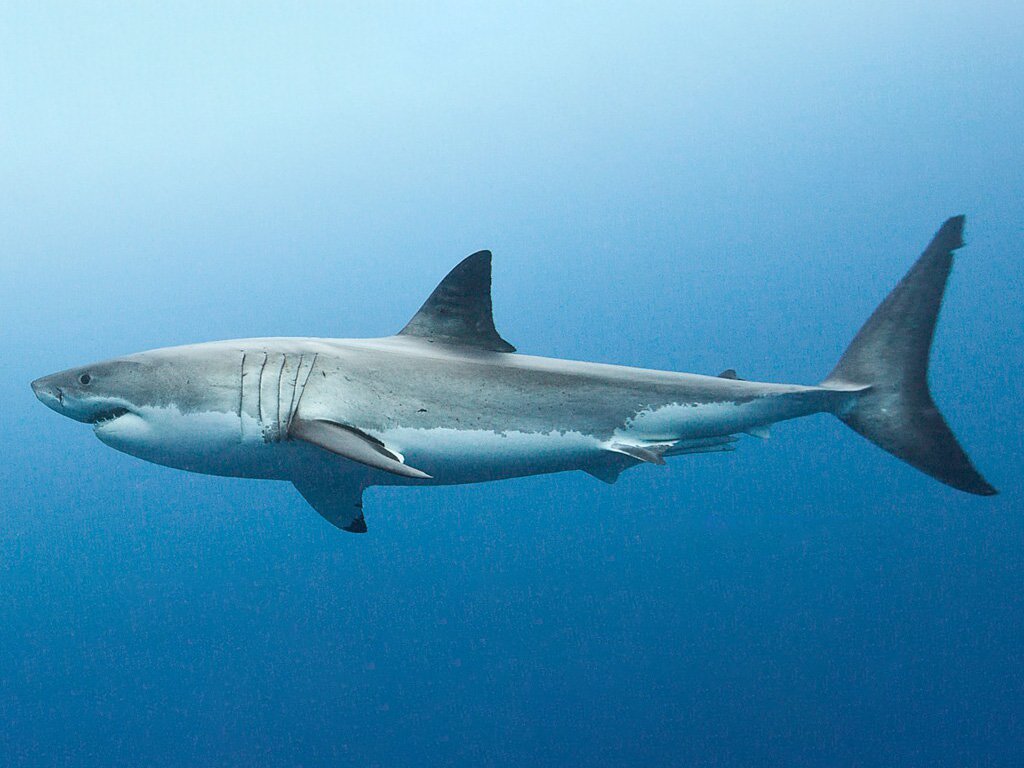
Source: Australian Museum
2. Fossil Record and Distribution
Fossil evidence indicates that O. megalodon had a cosmopolitan distribution in warm-temperate to tropical marine environments during the Neogene period. Its remains have been recovered from every continent except Antarctica, demonstrating a broad ecological tolerance. Teeth and vertebral centra have been found in marine sediments ranging from coastal to deep-water deposits, signifying that the species occupied a wide range of habitats, from continental shelves to open ocean zones.
Stratigraphically, O. megalodon fossils occur from the early Miocene (~23 million years ago, Ma) to the late Pliocene (~3.6 Ma). However, statistical analyses using Optimal Linear Estimation (OLE) of last-occurrence data suggest the species may have persisted until approximately 2.6 Ma, near the Pliocene–Pleistocene boundary [2]. This discrepancy reflects uncertainties in fossil sampling and dating, and thus the extinction timing remains a subject of debate .
3. Morphology and Size Estimates
Unlike bony fishes, sharks possess cartilaginous skeletons that rarely fossilize, leaving teeth and vertebrae as the primary material for morphological reconstructions. Tooth size, shape, and serration patterns indicate an apex predatory lifestyle similar to that of modern lamniform sharks.
Size estimation of O. megalodon has historically relied on regression equations derived from the relationship between tooth crown height and total body length in extant lamniforms. Earlier estimates suggested adult lengths up to 18–20 m. More recent vertebral-based reconstructions, using fossilized centra and scaling relationships with extant analogues, indicate that typical adult individuals likely measured between 14 and 18 m, with exceptional specimens possibly exceeding 20 m in total length.
Recent studies (2024–2025) have challenged the long-standing great-white–like reconstruction, suggesting that O. megalodon may have been more elongated and slender in form, with proportionally longer caudal and pectoral fins. This revised morphology implies improved long-distance cruising efficiency rather than short bursts of acceleration. The largest hypothetical individuals, based on extreme vertebral estimates, may have reached up to 24 m, though this remains highly speculative.
4. Growth, Reproduction, and Nursery Areas
Analysis of incremental growth bands in fossil vertebrae has provided insights into the ontogeny of O. megalodon. Studies have revealed that individuals exhibited rapid early growth, reaching several meters in length within the first few years. Reanalysis of vertebral growth patterns suggests neonates were remarkably large at birth, approximately 3.5–4 m long—among the largest of any known shark species.
This large neonatal size supports the hypothesis of intrauterine cannibalism, a reproductive strategy observed in extant lamniforms such as sand tiger sharks (Carcharias taurus), where embryos consume unfertilized eggs or smaller siblings.
Evidence for nursery areas comes from the discovery of small teeth in shallow coastal deposits of the Miocene and Pliocene, notably in the Gatun Formation (Panama) and Calvert Cliffs (USA). These assemblages suggest that juveniles inhabited protected nearshore environments, which may have provided abundant prey and reduced predation pressure. However, the necessity of specialized nurseries has been questioned, as the large size of neonates might have allowed them to occupy diverse habitats with reduced vulnerability.
5. Feeding Ecology and Trophic Role
Otodus megalodon was a macropredatory species with a diet dominated by marine mammals, including cetaceans and pinnipeds, as well as large fishes and sea turtles. The robust, serrated teeth were highly adapted for cutting through flesh and bone, leaving characteristic bite marks on fossilized whale remains. These marks demonstrate that O. megalodon targeted large prey items and sometimes dismembered carcasses.
Stable isotope analyses of tooth enamel support a high trophic level consistent with apex predation. Modeling of bite force based on biomechanical scaling predicts forces exceeding 100,000 newtons, making O. megalodon one of the most powerful vertebrate predators known. Nevertheless, these estimates are extrapolations with considerable uncertainty, as they rely on assumptions regarding muscle mass and jaw mechanics derived from modern lamniform analogues.
The ecological dominance of O. megalodon likely influenced marine vertebrate community structures during the Neogene. Its predation pressure on cetaceans may have shaped evolutionary trends in body size, migratory behavior, and habitat use among marine mammals.
6. Paleoenvironment and Behavior
The widespread occurrence of O. megalodon fossils in subtropical and tropical marine strata suggests that it preferred warm surface waters. During the Miocene Climatic Optimum (~17–15 Ma), oceanic conditions would have supported high productivity and diverse marine faunas suitable for sustaining such a large predator.
Paleoecological modeling indicates that adult O. megalodon were pelagic but probably frequented continental shelf regions where prey concentrations were high. Juveniles, conversely, were more common in nearshore habitats, consistent with the hypothesized use of nursery areas.
The species likely practiced long-range migrations following seasonal prey movements, analogous to modern great white sharks. The hydrodynamic efficiency inferred from its elongated body form supports this behavior, suggesting that O. megalodon could traverse large distances across ocean basins.
7. Extinction and Paleoecological Shifts
The extinction of O. megalodon near the end of the Pliocene coincided with profound environmental changes in global ocean systems. Several interrelated factors likely contributed to its disappearance.
Climate Cooling and Habitat Loss: Progressive cooling during the late Pliocene led to reduced sea surface temperatures and contraction of tropical habitats. As O. megalodon was a thermophilic species, the decline in suitable warm-water environments may have restricted its geographic range.
Prey Decline and Ecosystem Restructuring: The closure of the Central American Seaway (~3 Ma) altered ocean circulation and nutrient distribution, impacting the abundance and diversity of large marine mammals. Fossil records indicate that many baleen whale species underwent range shifts or population declines during this time.
Competition with Modern Predators: The emergence and diversification of modern apex predators such as the great white shark (Carcharodon carcharias) may have further intensified ecological competition. Though smaller, C. carcharias occupied overlapping niches and could exploit cooler, higher-latitude habitats inaccessible to O. megalodon.
Quantitative modeling and last-occurrence analyses suggest extinction occurred between 3.6 and 2.6 Ma. The combination of climatic cooling, prey base changes, and interspecific competition likely drove the species’ gradual decline.
8. Cultural and Scientific Legacy
The discovery and interpretation of O. megalodon fossils have profoundly influenced both paleontology and popular culture. The species was first described scientifically in the early 19th century, though fossil teeth had been known since antiquity and misidentified as “tongue stones".
During the 20th century, O. megalodon became an icon of prehistoric life, frequently depicted in media and fiction as a monstrous, extant survivor (44). While such portrayals are scientifically unfounded, they have stimulated public interest in marine paleontology. In research contexts, O. megalodon remains a key model for studying shark evolution, gigantism, and the ecological consequences of apex predator extinctions.
References
- https://australian.museum/learn/animals/fishes/otodus-megalodon/.
- https://journals.plos.org/plosone/article?id=10.1371/journal.pone.0111086.




