

 +1 credit
| Version | Summary | Created by | Modification | Content Size | Created at | Operation |
|---|---|---|---|---|---|---|
| 1 | Encyclopedia Editorial Office | -- | 949 | 2025-08-15 02:17:06 |
Video Upload Options
Gerty Theresa Cori (1896–1957) was a pioneering biochemist, best known for her discovery of the enzymatic processes involved in the breakdown and synthesis of glycogen, which is fundamental to our understanding of cellular energy metabolism. Along with her husband, Carl Cori, Gerty received the Nobel Prize in Physiology or Medicine in 1947, becoming the first woman to be awarded this prestigious honor in the field. Cori's research into biochemical reactions within living cells laid the groundwork for much of modern cellular biochemistry and molecular biology.
1. Birth and Early Life
Gerty Theresa Cori was born on August 15, 1896, in Prague, then part of the Austro-Hungarian Empire, now the capital of the Czech Republic. She was the daughter of Otto Radnitz, a chemical engineer, and Martha Radnitz, who provided her with a stimulating intellectual environment. Raised in a household where scientific inquiry and intellectualism were deeply valued, Gerty showed early interest in the sciences, despite the societal barriers to women in academia at the time.
Her early education was completed at German schools in Prague, where she excelled in her studies, particularly in the sciences. However, it was rare for women to pursue higher education at the time, and Gerty's entry into Charles University in Prague, where she studied medicine, marked a significant academic achievement. She graduated in 1920 with a medical degree, at a time when few women were granted the same opportunity [1].
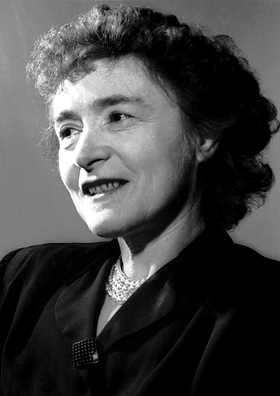
Source: By National Library of Medicine, Images from the History of Medicine, B05353 - http://en.wikipedia.org, https://www.nlm.nih.gov/changingthefaceofmedicine/gallery/photo_69_3.html, Public Domain, https://commons.wikimedia.org/w/index.php?curid=1454752
2. Education and Career Beginnings
Upon completing her medical degree in Prague, Cori began her scientific career with a focus on biochemistry. After moving to the United States in the 1920s, she worked at the University of Buffalo and later at Washington University in St. Louis, where she met her future husband, Carl Cori, a fellow biochemist. Together, the couple embarked on a lifelong partnership in scientific research. Though women were often excluded from leadership roles in scientific institutions, Gerty Cori persisted, ultimately achieving recognition for her contributions to biochemistry and becoming a professor at Washington University.
In the early years of their collaboration, the Coris focused on the biochemical processes involved in glycogen metabolism, leading to the discovery of the enzymatic cycle that would later be named the Cori cycle. Their research, which elucidated the role of enzymes in the interconversion of glucose and glycogen, was groundbreaking for both its theoretical and practical applications in understanding human metabolism [2].
3. The Cori Cycle and Nobel Prize
In 1947, Gerty Cori and her husband were jointly awarded the Nobel Prize in Physiology or Medicine for their discovery of the mechanisms involved in the conversion of glycogen to glucose. Their work demonstrated how glycogen is broken down into glucose through a series of enzymatic reactions, which then provides energy for cellular functions. This discovery is fundamental to our understanding of cellular energy metabolism, and the Cori cycle is still a key concept in both biochemistry and physiology today.
The Coris’ work laid the foundation for modern cellular biochemistry and molecular biology, as their research revealed crucial insights into how enzymes function within living organisms to regulate energy production. This knowledge paved the way for further discoveries in fields such as diabetes, muscular disorders, and metabolic diseases, where glycolytic and glycogenic pathways play critical roles.
As the first woman to receive the Nobel Prize in Physiology or Medicine, Gerty Cori’s achievement was a significant milestone in the recognition of women in science. Her accomplishments not only advanced the field of biochemistry but also served as an inspiration for women scientists and scholars, breaking gender barriers that had long existed in the scientific community.
4. Later Life and Legacy
After receiving the Nobel Prize, Gerty Cori continued her work in biochemistry and remained a professor at Washington University until her death in 1957. She remained an active researcher and mentor throughout her career, contributing to the education of future generations of scientists. However, her later years were marred by health problems, and she passed away from liver cancer in 1957, just ten years after receiving the Nobel Prize.
Gerty Cori's legacy has lived on in multiple ways. Aside from the significant scientific contributions she made to the field of biochemistry, she is also remembered as a trailblazer for women in science. Her success in a male-dominated field broke down many barriers and has continued to inspire countless women to pursue careers in science and research. In 1964, a research institute in her honor, the Gerty Cori Institute, was founded at Washington University, where she had conducted much of her work. Additionally, the Cori Cycle continues to be a cornerstone in the study of human metabolism and has been instrumental in understanding diseases such as diabetes, muscle disorders, and metabolic syndromes.
Her work remains foundational to many areas of medical research, and she is often cited as one of the leading figures in the study of human metabolism. Her career and scientific legacy continue to be celebrated through conferences, lectures, and awards in her name, ensuring that the impact of her work continues to be felt across disciplines.
5. Conclusion
Her groundbreaking work with her husband, Carl Cori, led to the elucidation of the Cori cycle, a key discovery in biochemistry that is fundamental to the study of metabolism. Her Nobel Prize in 1947 not only recognized her scientific accomplishments but also cemented her place in history as one of the pioneers of modern biochemistry. As one of the first women to achieve such prominence in the scientific community, she continues to serve as an inspiration for women in science.
References
- Gerty Cori. (2023). Nobel Prize Biography. Nobel Prize. Retrieved from https://www.nobelprize.org/prizes/medicine/1947/cori-gt/biographical.
- Gerty Cori. (2023). Encyclopedia Britannica. Retrieved from https://www.britannica.com/biography/Gerty-Cori.




