

 +1 credit
| Version | Summary | Created by | Modification | Content Size | Created at | Operation |
|---|---|---|---|---|---|---|
| 1 | Encyclopedia Editorial Office | -- | 1516 | 2025-08-08 03:52:09 |
Video Upload Options
Swidden farming, often referred to as slash-and-burn agriculture, is an agricultural practice involving the cutting down and burning of vegetation to clear land for crop cultivation. This method is characterized by the temporary use of plots of land, which are cultivated for a short period before being left fallow to restore soil fertility. Swidden farming is most commonly associated with tropical forest ecosystems, where its ecological and socio-economic implications have been extensively studied. Despite its historical significance in small-scale agriculture, the practice has faced criticism due to its potential environmental consequences, including deforestation and loss of biodiversity. However, swidden farming remains an essential livelihood for many rural communities worldwide.
1. Historical and Cultural Context
Swidden farming has deep historical roots and has been practiced for thousands of years by indigenous and rural communities, especially in the tropics. The practice, sometimes referred to as "shifting cultivation," is thought to have originated in various regions of the world, including the Amazon Basin, Southeast Asia, and Africa. It is a response to the challenges of farming in nutrient-poor soils, particularly those found in tropical rainforests [1].
Early anthropological studies have shown that swidden farming is often a complex and culturally significant activity, deeply intertwined with the social and ritualistic aspects of indigenous life. In many cultures, the choice of when and where to clear land and the specific crops planted are influenced by seasonal, ecological, and spiritual considerations. For instance, in Southeast Asia, traditional swidden farmers follow a set of local knowledge and practices that help them identify suitable sites for burning and planting, based on years of observation of the local environment.
Swidden farming also served as a critical practice in pre-industrial societies, where agriculture had to be highly adaptable to environmental and climatic variations. In the past, such systems were considered sustainable due to the extensive rotation of land use and the ability to use the fallow periods for soil recovery.
Source: https://www.nationalgeographic.com/science/article/160303-thailand-farmers-slash-and-burn-forests-climate-environment
2. Methodology and Techniques
Swidden farming is based on a cycle of land clearing, planting, and fallowing, where the use of fire plays a critical role in clearing vegetation. The methodology can be broken down into several key stages:
2.1. Land Preparation
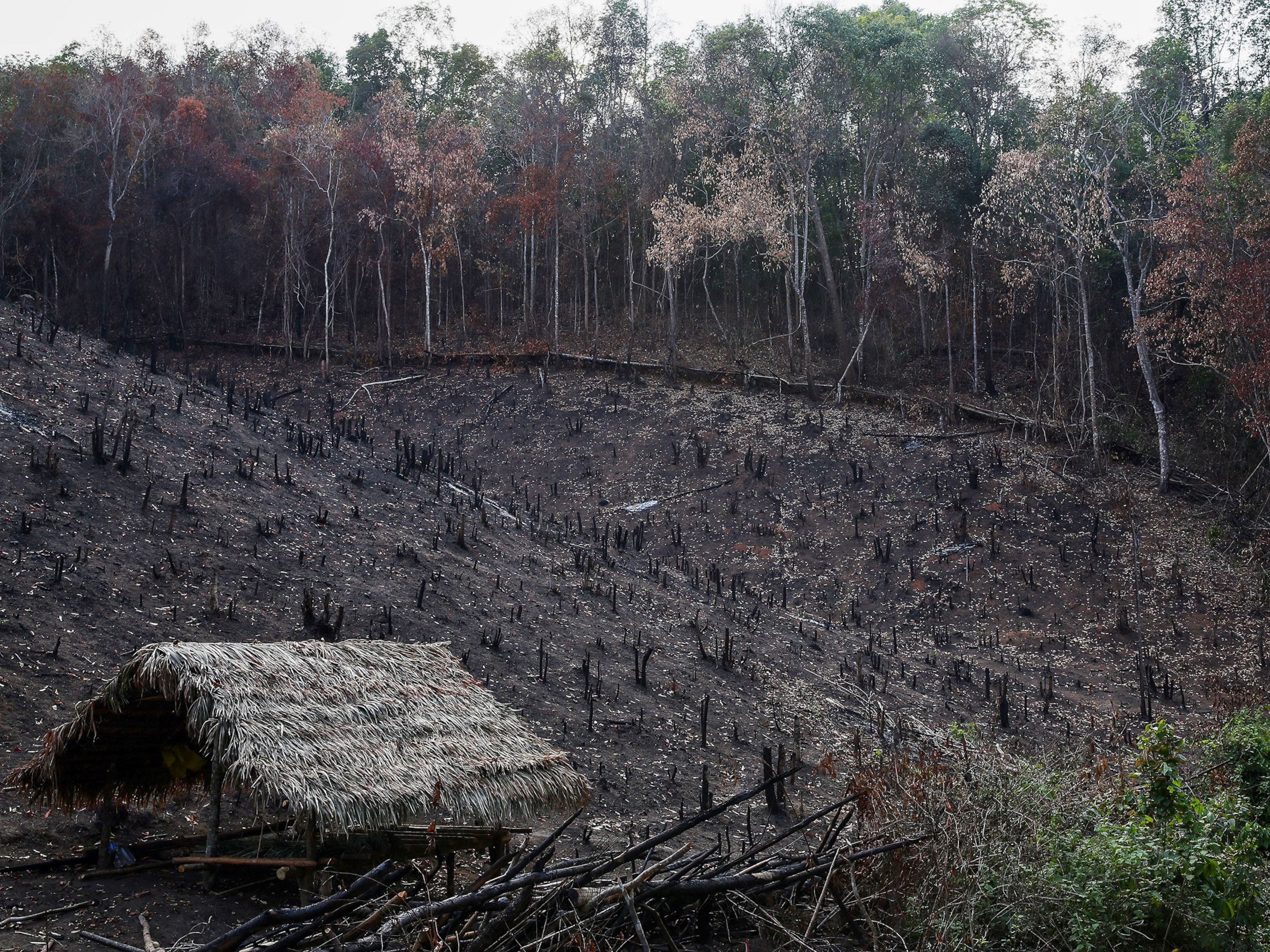
The first stage involves the clearing of forests or other vegetation. Farmers typically use manual tools such as machetes, axes, and knives to cut down vegetation, followed by the burning of the biomass to clear the area. This process, known as "slash-and-burn," reduces the physical barrier to soil cultivation and releases nutrients into the soil, particularly potassium and phosphorus, which are often scarce in tropical soils.
The timing of the burn is crucial. It is typically done during the dry season to minimize risks of uncontrolled fires. The ash left behind is rich in essential minerals and acts as a natural fertilizer for the crops.
2.2. Crop Cultivation
Once the land is cleared and burned, the farmers begin planting their crops. Common crops grown in swidden systems include rice, maize, millet, cassava, yams, beans, and various vegetables. The crops chosen depend on the ecological zone, market demand, and local dietary needs.
Swidden farming systems often involve a mixture of crops, known as polyculture, as opposed to monocropping systems. The diversity of crops helps mitigate risks associated with pests, diseases, and weather conditions, contributing to a more resilient agricultural system.
2.3. Fallow Period
The most distinct feature of swidden farming is the long fallow period, during which the land is left unused. After the harvest, farmers move to a new plot of land and allow the previously cultivated plot to rest. The fallow period, which may range from several years to decades, allows for soil regeneration, the restoration of nutrients, and the regrowth of vegetation. The length of the fallow period is a key determinant of the sustainability of the system, as longer fallows typically lead to more fertile soils and better yields.
In some regions, the fallow land may also be used for livestock grazing or gathering wild resources, which further integrates the farming system into the local ecosystem.
3. Environmental Implications
Swidden farming has both positive and negative environmental implications, which vary depending on the scale of its practice, the length of the fallow periods, and the specific ecological contexts in which it is practiced.
3.1. Soil Fertility and Carbon Sequestration
One of the benefits of swidden farming is its ability to improve soil fertility through the ash left by the burning process. In the short term, this can enhance crop yields, particularly in nutrient-poor tropical soils. The fallow period further enhances soil recovery, as vegetation regrowth and organic matter accumulation increase soil organic carbon levels. Some studies suggest that well-managed swidden farming systems contribute to carbon sequestration in the soil, helping mitigate climate change [2].
3.2. Deforestation and Biodiversity Loss
However, when practiced unsustainably or at larger scales, swidden farming can contribute to deforestation and biodiversity loss. Deforestation is particularly problematic when forests are cleared more quickly than they can regenerate, reducing wildlife habitats and leading to soil erosion. In some regions, the conversion of tropical forests into agricultural land has led to irreversible ecological damage, particularly in biodiversity hotspots like the Amazon and Southeast Asia [3].
The encroachment of swidden farming into protected or high-biodiversity areas often leads to the destruction of critical ecosystems, further exacerbating the risk of species extinction. These concerns have been the focus of global environmental campaigns and international regulations.
3.3. Climate Change and Land Degradation
Swidden farming can exacerbate climate change by releasing large amounts of carbon dioxide into the atmosphere during the burning phase, particularly if the forest being cleared is a carbon-rich tropical rainforest. Additionally, unsustainable practices, such as repeated short fallow periods, can lead to soil degradation, erosion, and the reduction of the land's ability to regenerate.
4. Social and Economic Impacts
Swidden farming plays an important role in the livelihoods of rural communities, particularly in developing countries. It offers several socio-economic benefits, including:
4.1. Livelihoods and Food Security
For small-scale farmers, swidden farming can be a sustainable method of food production, providing staple crops like rice and maize, as well as cash crops like cassava and beans. In many remote regions, swidden farming is still the primary means of subsistence farming. For marginalized groups, such as indigenous communities, it is an essential practice that ensures food security and cultural continuity.
4.2. Cultural Identity
Swidden farming is deeply intertwined with the cultural identity of many indigenous groups. In some parts of Southeast Asia, the practice is not merely a method of cultivation but a way of life. The communal rituals and knowledge passed down through generations regarding land management, crop rotation, and spiritual practices connected to the land are integral to the fabric of indigenous culture.
4.3. Rural Development and Economic Policy
Swidden farming is often practiced in areas where alternative forms of agriculture may be less viable due to poor infrastructure, lack of access to modern farming technology, and limited access to credit. Governments and international organizations have occasionally attempted to replace swidden farming with more intensive agricultural practices, but these interventions have often failed due to their inability to address the complex ecological and social factors involved in swidden farming systems.
5. Modern Challenges and Alternatives
The sustainability of swidden farming faces several challenges in the contemporary world, particularly in light of population growth, land scarcity, and increasing pressures on natural resources.
5.1. Population Growth and Land Pressure
As populations grow, the amount of available land for swidden farming diminishes, reducing the length of fallow periods and making it harder for the soil to regenerate. In some regions, shorter fallow periods have led to land degradation and declining agricultural productivity. The global push for sustainable land management practices calls into question the long-term viability of swidden farming without improvements in soil management, crop selection, and fallow management.
5.2. Transition to Sustainable Practices
Efforts have been made to modernize swidden farming by introducing agroforestry and permaculture techniques that integrate trees and other perennial crops into the farming system. This approach allows for long-term productivity while reducing deforestation and preserving biodiversity. Integrated approaches to land management, such as the use of cover crops, agroecological practices, and conservation tillage, also aim to mitigate the environmental risks associated with swidden farming.
5.3. Policy and Conservation Efforts
International organizations, including the United Nations Food and Agriculture Organization (FAO), have been working with governments and indigenous communities to develop more sustainable models of swidden farming that focus on conservation and productivity. The success of these initiatives depends on understanding local knowledge systems and empowering communities to make decisions based on their ecological and economic needs.
6. Conclusion
Swidden farming is a complex and multifaceted practice with both positive and negative environmental, social, and economic impacts. While it offers benefits in terms of food security, biodiversity, and soil fertility when managed properly, it can also lead to deforestation, soil degradation, and carbon emissions when not practiced sustainably. As global pressures on land and resources continue to increase, it will be important to balance traditional farming practices with modern sustainability efforts to ensure that swidden farming remains a viable agricultural system in the future.
References
- Richards, P. (1985). Indigenous Agricultural Revolution: Ecology and Food Production in West Africa. Hutchinson & Co.
- He, Y., et al. (2015). “Carbon sequestration in the soil under shifting cultivation in tropical forests.” Global Change Biology, 21(3), 1102–1114. https://doi.org/10.1111/gcb.12701
- Lambin, E. F., et al. (2001). "The Causes of Land-Use and Land-Cover Change in the Tropics." Global Environmental Change, 11(4), 261–269. https://doi.org/10.1016/S0959-3780(01)00007-3.




