

 +1 credit
| Version | Summary | Created by | Modification | Content Size | Created at | Operation |
|---|---|---|---|---|---|---|
| 1 | Encyclopedia Editorial Office | -- | 825 | 2025-05-20 11:14:35 |
Video Upload Options
A humanitarian organization established by Clara Barton in Washington, D.C., as the American affiliate of the International Red Cross Movement. It was founded to provide emergency assistance, disaster relief, and health education in the United States. Unlike its European counterparts at the time, the American Red Cross also addressed peacetime disasters, reflecting Barton's vision of a broader humanitarian mission. Today, it remains one of the largest nonprofit organizations in the U.S., offering services such as blood donation, disaster response, military support, and public health training.
1. Introduction
On May 21, 1881, Clara Barton officially established the American Red Cross in Washington, D.C. This pivotal moment in American humanitarian history marked the beginning of an organization dedicated to providing emergency assistance, disaster relief, and education within the United States. Inspired by the International Red Cross movement in Europe, Barton's vision brought a new era of organized, civilian-led humanitarian aid to the nation [1].
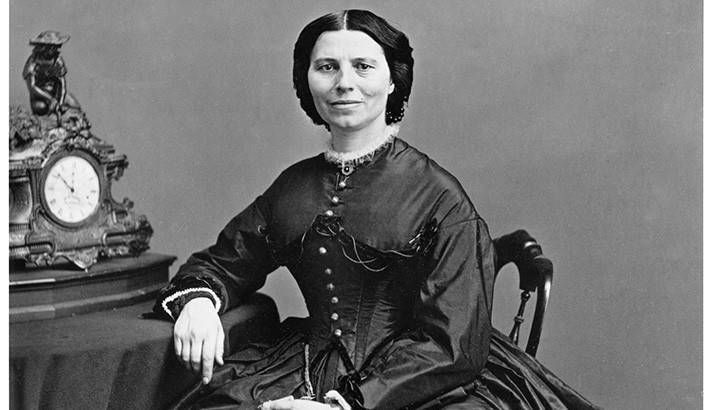
Source: American Red Cross
2. Clara Barton: Early Life and Influences
Clarissa Harlowe Barton, known as Clara Barton, was born on December 25, 1821, in North Oxford, Massachusetts. From a young age, she demonstrated a strong commitment to helping others, which led her to a career in teaching and later to work as a clerk at the U.S. Patent Office—one of the first women to hold such a position in the federal government.
During the American Civil War, Barton earned the nickname "Angel of the Battlefield" for her tireless efforts in providing supplies and care to wounded soldiers. Her experiences during the war highlighted the dire need for organized medical assistance and disaster response, planting the seeds for her future endeavors with the Red Cross.
3. Encounter with the International Red Cross
In 1869, seeking rest after the war, Barton traveled to Europe. While in Switzerland, she learned about the International Red Cross, founded in 1863, and the Geneva Convention of 1864, which established guidelines for humanitarian treatment during war. Barton volunteered with the International Red Cross during the Franco-Prussian War (1870–1871), gaining firsthand experience in international relief work [2].
This exposure deeply influenced her belief that the United States needed a similar organization. Upon returning home, Barton began a decade-long campaign to establish an American Red Cross and to persuade the U.S. government to ratify the Geneva Convention. Her relentless advocacy included writing pamphlets, delivering lectures, and meeting with political leaders.
4. Founding of the American Red Cross
After years of persistent effort, Barton succeeded in founding the American Red Cross on May 21, 1881. The organization was officially incorporated in 1882, the same year the United States ratified the Geneva Convention, largely due to Barton's influence. She served as the organization's first president, a position she held until 1904.

Unlike its European counterparts, the American Red Cross expanded its mission to include peacetime disaster relief, reflecting the unique needs of the United States. This broader scope allowed the organization to respond to natural disasters, epidemics, and other emergencies beyond the battlefield.
5. Early Relief Efforts
Under Barton's leadership, the American Red Cross quickly became involved in numerous relief operations:
-
1881 Michigan Forest Fires: The organization's first major disaster response involved aiding victims of massive forest fires in Michigan, providing food, clothing, and medical care.
-
1889 Johnstown Flood: Following a catastrophic dam failure in Pennsylvania that killed over 2,000 people, Barton and her team provided extensive relief, including shelter, supplies, and medical assistance.
-
1893 Sea Islands Hurricane: After a devastating hurricane in South Carolina, the Red Cross assisted in rebuilding homes and restoring agriculture, helping communities recover economically.
These efforts established the American Red Cross as a vital organization in disaster response and set precedents for future humanitarian work.
6. Advocacy and International Recognition
Barton's work with the Red Cross extended beyond immediate relief efforts. She advocated for the inclusion of natural disaster response in the Geneva Convention's scope, a proposal that was adopted in 1884. Her international work earned her several honors, including the Iron Cross of Germany and the Silver Cross of Imperial Russia, recognizing her contributions to humanitarian aid.
7. Challenges and Resignation
Despite her successes, Barton faced criticism regarding her management style and the organization's structure. Concerns about financial transparency and governance led to internal conflicts. In 1904, at the age of 83, Barton resigned from her position as president. She spent her remaining years writing and promoting public health initiatives until her death in 1912.
8. Legacy and Continued Impact
The American Red Cross has grown into a nationwide organization with a broad mandate, including:
-
Disaster Relief: Responding to natural and man-made disasters across the country.
-
Blood Services: Collecting and distributing blood and blood products.
-
Health and Safety Education: Providing training in CPR, first aid, and emergency preparedness.
-
Support for Military Families: Offering services to members of the armed forces and their families.
Barton's vision and dedication laid the foundation for an organization that continues to play a crucial role in American society. Her legacy is preserved through the ongoing work of the American Red Cross and the Clara Barton National Historic Site in Maryland.
References
- American Red Cross. (n.d.). Our History. Retrieved from https://www.redcross.org/about-us/who-we-are/history.html
- National Women's History Museum. (n.d.). Clara Barton Biography. Retrieved from https://www.womenshistory.org/education-resources/biographies/clara-barton




