

 +1 credit
| Version | Summary | Created by | Modification | Content Size | Created at | Operation |
|---|---|---|---|---|---|---|
| 1 | Farid Menaa | + 716 word(s) | 716 | 2020-12-25 11:36:52 | | | |
| 2 | Peter Tang | -13 word(s) | 703 | 2020-12-28 05:01:43 | | |
Video Upload Options
In our work, both Et-OH and Me-OH extracts of H. rhamnoides (91.69%±1.21) and C. fistula (79.44%±0.55) showed stronger action against urease activity. An overview on the medicinal uses of H. rhamnoides and C. fistula showing anti-urease activity may predict their possible alternative use for stomach problems.
1. Introduction
Enzyme inhibition studies continue a significant area of pharmaceutical research since these studies resulted in the findings of drugs useful in a diversity of physiological conditions. Urease inhibitors have attracted much devotion as prospective new anti-ulcer drugs. Atypically, urease was the first enzyme crystallized but its mechanism of action is still largely mis-understood [1].
Urease is a nickel enzyme produced by plants, fungi, algae, and bacteria. It is involved in nitrogen turnover and in crop fertilisation as well as in human and animal pathologies. It catalyses the hydrolysis of urea giving rise to ammonia and carbon dioxide.
Gastritis and gastro-duodenal ulcers can be caused by infection with H. pylori, known to be the main risk factor for the development of stomach cancer and lymphomas. The bacterium was isolated and for the 1st time grown on agar plates. Based on its constant presence in a high percentage of biopsies from patients affected by ulcers they proposed it to be the cause of the disease. To prove this Marshall exposed himself to contamination with a bacterial culture and got infected. Urease production is the main factor allowing the bacterium to survive in the very acidic environment of the stomach lumen before reaching the mucus layer, a natural protection against the low pH. The main role of urease in H. pylori infection is the creation of a "cloud" of ammonia used for bacterial cell protection. Hippophae rhamnoides is a source of seed oil, which is much unsaturated and valuable, because of its light absorption and emollient properties, as an ingredient in cosmetics, phyto-pharmaceuticals. Hippophae rhamnoides is used in cancer therapy, cardio vascular therapy, liver diseases, skin diseases, gastrointestinal disorders [2]. Cassia fistula contains tannins, fatty acids isoflavonoids, flavonoids, glycosides, anthraquinones, and phenolic compounds [3]. Cassia fistula possesses medicinal properties useful in the treatment of skin diseases, inflammatory diseases, rheumatism, anorexia and jaundice [4]. Cassia fistula and Hippophae rhamnoides are used extensively in folk medicines; however, they are not explored for anti-urese activities scientifically.
2. Results
Ethyl alcoholic (Et-OH) and methyl alcoholic (Me-OH) extracts of H. rhamnoides and Cassia fistula were assayed for the determination of anti-urease activity by Berthelot assay. Both plants showed stronger action against urease activity. The IC50 value of each extract was calculated from straight-line equation given in table 1 and % age inhibition values are given in table 2.
Table 1. The slope and r2 of % inhibition equation.
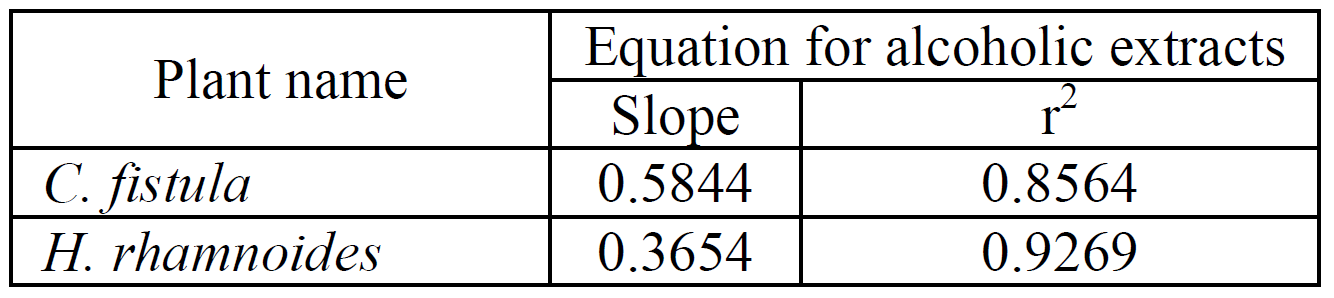
Table 2. %age inhibition of plant extracts in comparison to standard (Avg±SEM).

3. Discussion
There is considerable interest in alternative approaches for the eradication of Helicobacter pylori using biologically active compounds including antioxidants from a wide range of natural sources. The urease inhibition activity of the hydroxy acid isomers in this study can be attributed to the complex building ability of the hydroxy acid isomers with nickel active centre of the urease. The presence of -OH and -COOH group of monohydroxyeicosanoic acid isomers in the plant extracts may play together a great role in the inhibition of urease activity [5][6].
An overview on the medicinal uses of the plants showing anti-urease activity is given here which may predict their potential folk use for GIT disorders. C. fistula is most abundant throughout Pakistan. Its pods are especially useful in spasm and constipation [7]. H. rhamnoides is a popular plant, widely distributed throughout the Baltistan, Northern areas of Pakistan, having carminative and digestive properties.
4. Conclusion
Helicobacter pylori are the primary causative agent of gastric ulcer and related gastro-duodenal disorders. Current triple-regimen therapy of two antibiotics and one proton-pump inhibitors has been effective; however, adverse effects, patient non-compliance and subsequent relapse of Helicobacter pylori infections are common. The present findings provide a scientific basis for the folk use of C. fistula and H. rhomboids in GIT disorders. The anti-urease activity of the extracts of these plants may be associated to inhibit H. pylori, a key cause of stomach infections. The study is a step towards developing new pharmaceuticals for Helicobacter pylori infections.
References
- Amtul Z1, Rahman AU, Siddiqui RA, Choudhary MI. Chemistry and mechanism of urease inhibition. Curr Med Chem. 2002 Jul;9(14):1323-48.
- Sumner J.B. The isolation and crystallization of the enzyme urease. J. Biol. Chem., 69:435:441, 1996.
- Dixon N.E, C. Gazzola, J. J. Watters, R. Blakeley, and B. Zerner. Inhibition of jack bean urease (E.C. 3.5.1.5) by acetoxydroxamic acid and by phosphoramidate. An equivalent weight for urease. J. Am. Chem. Soc., 97:4130:4131, 1975.
- Alper J. Ulcers as an infectious disease. Science, 260:159-160, 1993.
- Weatherburn M.W. Phenol hypochlorite reaction for determination of ammonia. Ana, Chem., 39: 971-974, 1967.
- Torres J, Drumm B. A comprehensive review of the natural history of H. pylori infection in children. Arch. Med. Res., 31: 431-469, 2000.
- Kattak SG, Gilani SN, Ikram M. Anti-pyretic studies on some indigenous Pakistani medicinal plants. J. Ethnopharmacol, 14: 45-51, 1985.




