+1 credit
| Version | Summary | Created by | Modification | Content Size | Created at | Operation |
|---|---|---|---|---|---|---|
| 1 | Encyclopedia Editorial Office | -- | 868 | 2025-05-08 05:14:15 |
Video Upload Options
On May 12, 2008, at 14:28 local time, a catastrophic magnitude 8.0 (Mw) earthquake struck Wenchuan County in Sichuan Province, China (USGS, 2008). Known as the Great Sichuan Earthquake or Wenchuan Earthquake, it was the deadliest seismic event in China since the 1976 Tangshan Earthquake, with an official death toll of 69,227, over 374,000 injured, and 17,923 missing (Chinese Government, 2008). The disaster caused $125 billion (USD) in economic losses (World Bank, 2009), displaced 4.8 million people, and triggered long-term social, political, and environmental consequences.
1. Overview
On May 12, 2008, at 14:28:01 local time, a powerful earthquake struck Wenchuan County, located in Sichuan Province, southwestern China. Measuring 7.9 on the moment magnitude scale, the Wenchuan Earthquake (also referred to as the Great Sichuan Earthquake) became one of the most catastrophic seismic events in China's modern history, leaving nearly 90,000 people dead or missing, over 370,000 injured, and millions displaced. The tragedy prompted massive domestic and international relief efforts and sparked critical discussions on infrastructure safety and emergency preparedness [1][2][3][4].
2. Seismic and Geological Details
The earthquake's epicenter was located in Wenchuan County, approximately 80 km northwest of the provincial capital Chengdu. The focus depth was about 19 kilometers, making it a relatively shallow quake and therefore more destructive on the surface. It occurred along the Longmenshan fault zone, a major fault line marking the boundary between the Tibetan Plateau and the Sichuan Basin.
The intense seismic activity was attributed to the collision of the Indian and Eurasian tectonic plates, which has historically caused significant crustal deformation in the region. The quake triggered massive landslides, surface ruptures, and aftershocks—some exceeding magnitude 6.0—over the following weeks and months.
3. Human Toll and Structural Damage
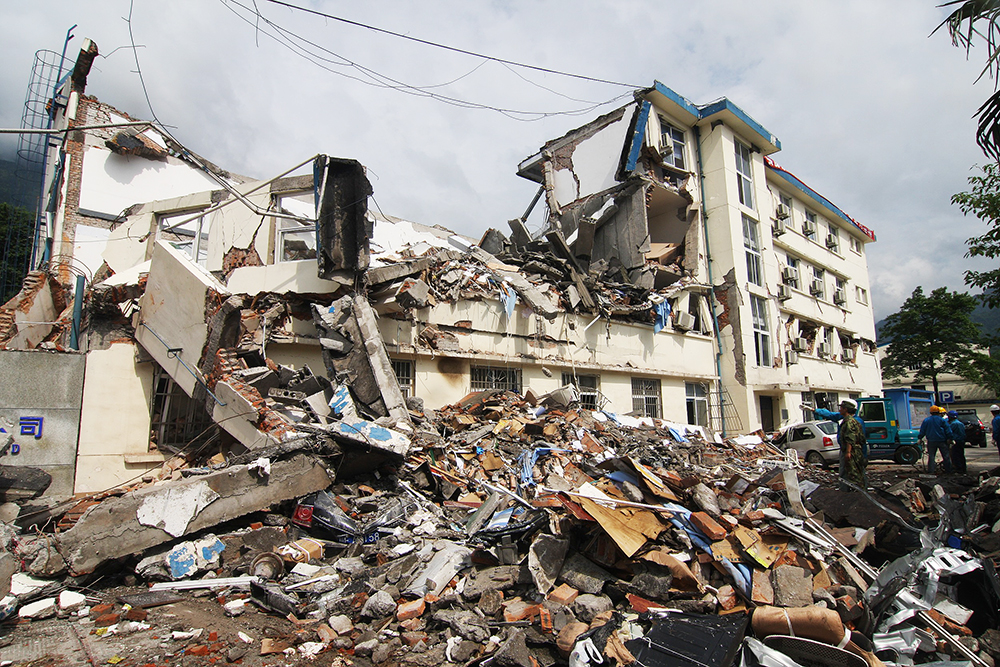
The 2008 earthquake affected a population of over 45 million people in ten provinces and regions, but Sichuan Province bore the brunt of the disaster. Among the most tragic aspects of the event was the collapse of thousands of school buildings, resulting in the deaths of over 5,000 students, a failure later attributed to substandard construction, sometimes described as "tofu-dreg projects" (豆腐渣工程).
More than 5 million buildings collapsed, and another 21 million were damaged. Major cities like Dujiangyan, Mianzhu, and Beichuan were almost completely destroyed. The town of Beichuan was so devastated that it was eventually abandoned and preserved as a memorial site.
4. Emergency Response and Rescue Efforts
Within minutes of the disaster, the Chinese government launched an extensive emergency response, deploying over 100,000 troops and rescue personnel to the affected areas. Premier Wen Jiabao personally traveled to the region to oversee relief operations, a move that was widely covered and praised domestically.
Rescue teams faced immense challenges, including blocked roads, disrupted communication, and frequent aftershocks. Helicopters and heavy machinery were deployed for search-and-rescue missions, often under dangerous conditions. Survivors were pulled from rubble days after the initial quake, and temporary shelters were set up across the province.
5. National and International Aid
The earthquake triggered a wave of national solidarity, with millions of Chinese citizens donating money, supplies, and even blood to assist the victims. The Red Cross Society of China and numerous NGOs coordinated civilian relief efforts, while universities and public institutions mobilized volunteers for support.
Internationally, more than 150 countries and regions offered assistance, including the United States, Japan, Russia, and members of the European Union. Foreign search-and-rescue teams were granted rare access to Chinese territory. Financial aid from abroad amounted to hundreds of millions of dollars, with the United Nations and World Health Organization providing technical and medical support.
6. Aftermath and Reconstruction
In the years following the earthquake, the Chinese government invested over 1 trillion yuan (approximately $150 billion USD) in rebuilding infrastructure, relocating affected communities, and enhancing disaster response mechanisms. Entire towns were rebuilt in safer locations, often using modern engineering techniques and stricter building codes.
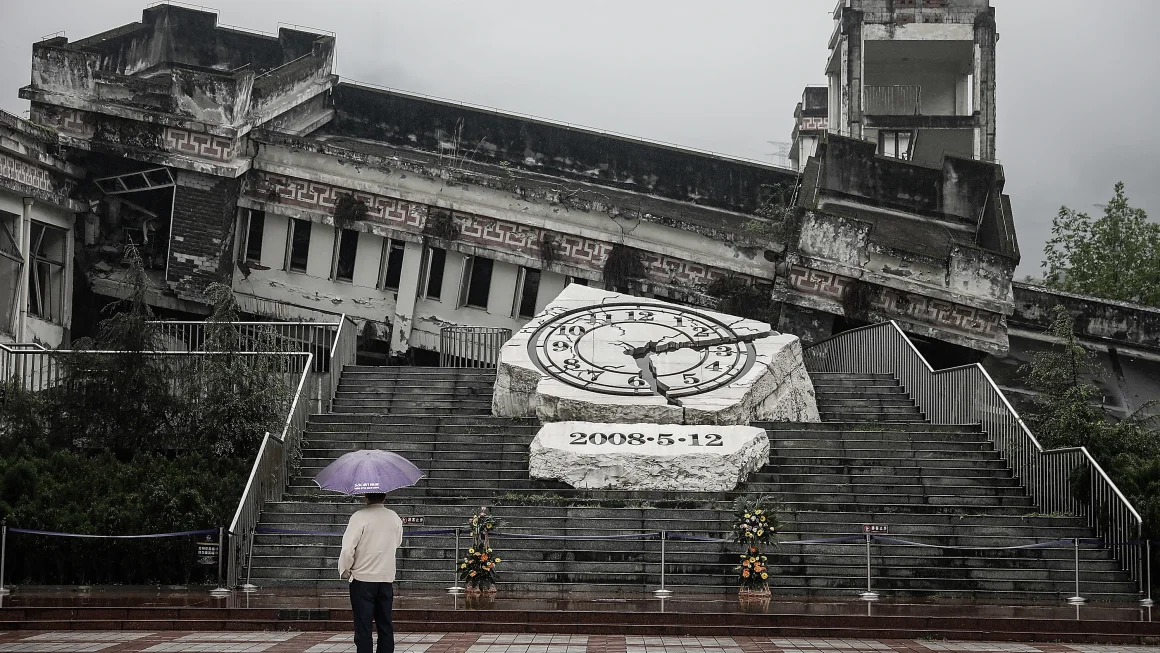
The Beichuan Earthquake Memorial Museum was established to preserve the memory of the disaster. The reconstruction effort was largely completed by 2012, but the trauma of the event continues to resonate deeply within Chinese society.
Source: CNN.
7. Controversies and Public Response
The earthquake also exposed serious issues, particularly the poor construction standards of many public buildings, especially schools. Accusations of corruption and negligence led to public protests by grieving parents, though many demonstrations were suppressed. Despite pledges of accountability, very few officials faced prosecution, a fact that continues to generate debate.
Moreover, the Chinese government's strict media control was temporarily loosened during the initial coverage of the disaster, allowing unprecedented reporting and social media discourse. However, this openness gradually receded, especially concerning sensitive topics like the student deaths and construction flaws.
8. Scientific and Policy Implications
The disaster prompted a re-evaluation of seismic hazard mapping in western China and led to a renewed emphasis on earthquake-resistant infrastructure. The China Earthquake Administration expanded its monitoring networks, and building codes were revised nationwide.
Additionally, the event spurred academic studies in seismology, urban planning, emergency medicine, and psychological trauma recovery, establishing a global case study for disaster management.
9. Legacy
The May 12 earthquake remains a pivotal moment in China's modern history—an event that revealed both the vulnerabilities of infrastructure and the strength of collective national response. It led to significant policy shifts, international cooperation, and public awareness about natural disaster risks. Every year on May 12, China commemorates the victims through ceremonies and public memorials, keeping alive the memory of those who perished and the lessons learned from the tragedy.
References
- Xu, X., Wen, X., Zheng, R., & Ma, B. (2009). Discovery of the Beichuan Fault and its seismic implications. Science in China Series D: Earth Sciences, 52(5), 618–628. https://doi.org/10.1007/s11430-009-0065-6
- Zhang, L., Wen, R., & Zhao, B. (2010). The May 12 Wenchuan Earthquake and Response of China. Natural Hazards, 54, 19–32. https://doi.org/10.1007/s11069-009-9451-8
- Burton, C. G., & Venton, C. C. (2009). Public sector disaster risk management in China. Disasters, 33(2), 235–251. https://doi.org/10.1111/j.1467-7717.2008.01072.x
- United Nations Office for Disaster Risk Reduction (UNDRR). (2010). Lessons from the Wenchuan Earthquake. https://www.undrr.org