+1 credit
| Version | Summary | Created by | Modification | Content Size | Created at | Operation |
|---|---|---|---|---|---|---|
| 1 | Encyclopedia Editorial Office | -- | 615 | 2025-04-24 11:27:15 | | | |
| 2 | Encyclopedia Editorial Office | Meta information modification | 615 | 2025-04-24 11:31:40 | | |
Video Upload Options
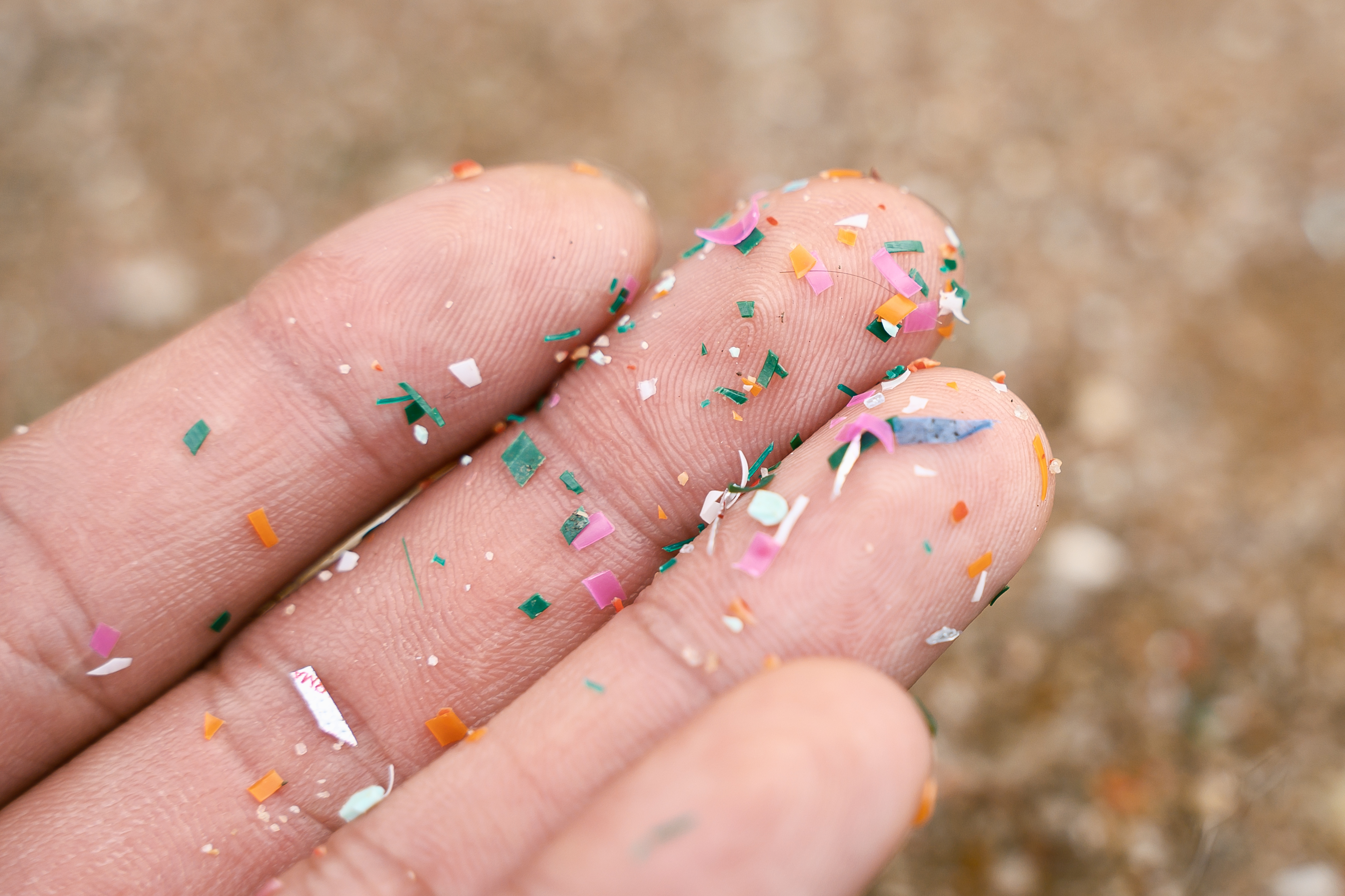
Microplastics are synthetic polymer particles measuring less than 5 millimeters in diameter that originate from the degradation of larger plastic materials or are manufactured at small sizes for industrial and consumer applications. They are classified as primary microplastics (intentionally produced, such as microbeads) and secondary microplastics (formed through the breakdown of larger plastic debris). Microplastics are persistent in the environment, can accumulate in organisms, and pose potential risks to ecosystems and human health.
1. Introduction
Microplastics are small plastic particles less than 5 millimeters in size, found widely in the environment — from ocean depths to mountaintops, and even inside living organisms. First noticed in the 1970s in marine samples, microplastics have become a pressing environmental and public health concern in the 21st century due to their persistence, abundance, and ability to enter food chains [1].
2. Classification of Microplastics
Microplastics are typically divided into two categories based on their origin:
2.1. Primary Microplastics
These are plastics that are intentionally manufactured at microscopic sizes for specific purposes, such as:
-
Microbeads in personal care products (e.g., exfoliating scrubs, toothpaste)
-
Industrial abrasives used in sandblasting
-
Pre-production plastic pellets (nurdles)
2.2. Secondary Microplastics
These are formed by the breakdown of larger plastic waste through environmental exposure such as:
-
UV radiation (photodegradation)
-
Mechanical wear (wave action or weathering)
-
Biological degradation [1]
Secondary microplastics are the most abundant and result from the degradation of plastic bags, bottles, fishing gear, and textiles.
3. Sources and Pathways into the Environment
Microplastics enter the environment through a variety of channels:
-
Urban runoff and wastewater: Fibers from synthetic clothing released during washing cycles
-
Atmospheric deposition: Airborne particles from vehicle tire abrasion, road dust, or industrial activity
-
Marine activities: Fishing gear, cargo spills, and ship coatings
-
Landfill leachate: Plastics breaking down in landfills can seep into soil and waterways [2]
These particles can travel through rivers to the ocean or become airborne and settle in remote ecosystems [3].
4. Environmental and Health Impacts
4.1. Marine and Terrestrial Ecosystems
Microplastics can absorb toxic chemicals such as persistent organic pollutants (POPs), which bioaccumulate when ingested by marine organisms. These plastics are often mistaken for food by fish, birds, and other animals, leading to internal injuries, malnutrition, and death [4].
4.2. Human Health
Microplastics have been detected in human food (especially seafood), drinking water, air, and even human blood and placental tissue. Potential health risks include:
-
Inflammation and oxidative stress
-
Endocrine disruption (due to additives like phthalates and bisphenol A)
-
Microbial contamination (they can act as carriers for pathogens) [4]
However, long-term effects on human health remain under active study [2].
5. Detection and Analysis
Detecting microplastics involves complex methods, including:
-
Filtration and density separation for sample collection
-
Spectroscopy techniques such as Fourier-transform infrared (FTIR) and Raman spectroscopy for polymer identification
-
Microscopy (optical or electron) for size and shape analysis [3]
Standardization of sampling and analysis methods is still evolving globally.
6. Solutions and Policy Responses
6.1. Prevention and Reduction
-
Bans on microbeads in cosmetics (e.g., U.S. Microbead-Free Waters Act, 2015)
-
Promotion of biodegradable materials and circular economy principles
-
Improvements in textile manufacturing to reduce fiber shedding [3]
6.2. Cleanup Efforts
While removing microplastics from the ocean is highly challenging due to their size and dispersion, several innovations are being explored:
-
Filtration systems at wastewater treatment plants
-
Ocean surface skimmers
-
Bioremediation through microbes capable of breaking down plastics [2]
6.3. Education and Consumer Action
Public awareness campaigns promote reducing single-use plastics, proper recycling, and choosing natural fiber clothing to limit fiber shedding [4].
7. Conclusion
Microplastics are a pervasive environmental pollutant with the potential for long-lasting ecological and health effects. Tackling this issue requires coordinated global efforts across science, industry, and public policy. As research continues to uncover the full extent of microplastic contamination, it becomes increasingly clear that reducing plastic production and consumption is key to mitigating future impacts.
References
- Andrady, A. L. (2011). Microplastics in the marine environment. Marine Pollution Bulletin, 62(8), 1596–1605. https://doi.org/10.1016/j.marpolbul.2011.05.030
- SAPEA (Scientific Advice for Policy by European Academies). (2019). A scientific perspective on microplastics in nature and society. https://doi.org/10.26356/microplastics
- Galloway, T. S., & Lewis, C. N. (2016). Marine microplastics spell big problems for future generations. Proceedings of the National Academy of Sciences, 113(9), 2331–2333. https://doi.org/10.1073/pnas.1600715113
- Wright, S. L., & Kelly, F. J. (2017). Plastic and human health: A micro issue? Environmental Science & Technology, 51(12), 6634–6647. https://doi.org/10.1021/acs.est.7b00423