

 +1 credit
| Version | Summary | Created by | Modification | Content Size | Created at | Operation |
|---|---|---|---|---|---|---|
| 1 | Bhavya Bhav | -- | 1003 | 2024-10-07 10:51:01 | | | |
| 2 | Jason Zhu | -39 word(s) | 964 | 2024-10-08 03:54:58 | | | | |
| 3 | Catherine Yang | Meta information modification | 964 | 2024-10-31 04:09:07 | | |
Video Upload Options
Spine pain is the most common problem in adults and children and hampers regular activities. The intensity of spine pain can range from mild to sharp, consistent pain that may appear from the neck to the leg region.
1. Epidemiology
After a long car drive, one may experience discomfort in the back, making the body weak and tired. This may typically be a spine or back pain that an individual can suffer in their lifetime because of various contributing factors. This article delves more into spine pain, its causes, and treatment.
According to studies, approximately 84% of adults suffer from lifetime acute or chronic spine pain or lower back pain, with a higher recurrence rate reaching 24-80%. In pediatrics, it is shown to be less; however, by the age of 18 or 20, most would have experienced at least one episode of back pain.
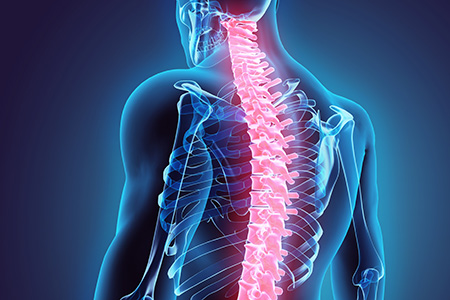
2. What Causes Back Pain
Spine pain or back pain is caused by various factors. Some of them are listed below
- Ligament injury that connects different bones.
- Injury to the muscle and tendon.
- Breakdown of disc between vertebrae and spine due to aging.
- The presence of degenerative conditions such as osteoarthritis or spinal stenosis can cause degeneration in the spine.
- Spondylolisthesis is the condition in which the bone vertebra dislocates from its original position, causing pain and discomfort.
- A herniated disc is a structural abnormality where a cushion-like structure or rubbery disc is ruptured between the spine bones.
- Vertebral fractures
- Infection: An infection of the varicella-zoster virus that affects the nerve supplies may typically lead to spine pain.
Apart from the above causes, the spine pain may trigger from daily activities such as frequent coughing, over stretching, lifting heavy objects for a long time, driving and sitting for longer periods.
3. When to Seek Medical Attention
Back pain sometimes goes within a couple of days by taking some over-the-counter medications. However, for the following symptoms one has to seek medical attention by consulting a spine specialist.
- Fever
- Swelling on the neck
- Pain reaching below the knees and down the legs
- Numbness in the genital areas
- Always feeling weak and resting doesn’t work well
If you, or a family member or friend is suffering from any of the above symptoms associated with back pain, consult an orthopedic spine specialist to find relief from spine pain.
An orthopedic spine specialist is a board-certified specialized doctor designated in diagnosis and treatment of various conditions related to bone and spinal cord. They help patients by understanding their diagnosis and provide treatment accordingly.
4. Risk Factors for Spine Pain
Spine pain is a common body ache that anyone can experience in their lifetime. However, individuals with the following risk factors are more likely to get it.
- As age advances, the intervertebral disc begins to shrink and stiffen, which appears as spine pain.
- Females are more prone to back pain due to factors such as menopause and less control over pain coping mechanisms.
- If a person is involved in occupational activities like heavy lifting.
- A sedentary lifestyle without any exercise or physical activity
- Pregnancy
- Genetic factors
- Medical conditions such as osteoporosis, cancer or endometriosis
- Smoking
- Obesity
5. Diagnosis
An initial consultation with a spine specialist may involve physical examination. Based on the severity the doctor may suggest blood tests such as complete blood count, C-reactive protein (CRP) and erythrocyte sedimentation rate and imaging tests such as X-rays, magnetic resonance imaging to diagnose the cause of the condition and prescribe the treatment accordingly.
6. Treatment
The management of back pain requires different approaches in adults and children. Some cases can have identifiable causes such as injury or presence of degenerative conditions. However, in certain cases the cause of the condition is idiopathic.
For acute back pain in adults, the spine specialist first rules out any serious conditions; if there are no indications for further testing, the patients are provided with proper counseling as a first-line treatment, such as avoidance of activities that trigger pain, mild exercises, and modifications in food habits. In addition to patient education, the doctor may provide medications such as nonsteroidal anti-inflammatory drugs (NSAIDs), opioids, muscle relaxants, physiotherapy, and sometimes integrated approaches such as massage and acupuncture as second-line treatment. Follow-up after 2 weeks can be advised.
In case of chronic back pain, the treatment starts with similar way but may involve additional examinations and medications that contain selective norepinephrine reuptake inhibitors (SNRIs), and interdisciplinary rehabilitation. Sometimes anticonvulsants like topiramate and gabapentin may be prescribed based on medical reports.
According to the American Pain Society, surgical referrals should be reserved for patients whose low-back pain is disabling and lasts for more than one year. However, concerning the patient's condition such as intensity of pain and age the doctors may consider carrying invasive surgical interventions. Some of them include:
- Epidural space injection therapy
- Lumbar disk replacement
- Microdiscectomy Endoscopic Discectomy
- PosteroLateral spinal fusion
- Vertebroplasty and Kyphoplasty
- Anterior interbody fusion
In case of management of Pediatric back pain, the first-line treatments involve activity modification, physical therapy, and NSAIDs. If diagnosed with serious conditions, the treatment is based on the standard of care for the specific condition as similar to adults. However, young patients who are actively involved in sports may be considered for surgical intervention.
7. Collaboration with Another Specialist
Depending on the patient’s condition, the primary care physician recommends the patient to spine specialists. Thus, a spine specialist can help patients with chronic back pain change their medication intake or do a pain management intervention. Hypersensitivity or higher fusion of radicular signs or changes can suggest a spine specialist to refer to the neurosurgical domain. In addition, a mental health therapist is well positioned to help in stress reduction and other forms of therapy that will serve a patient suffering from spine or back pain with significant psychological contribution.




