You're using an outdated browser. Please upgrade to a modern browser for the best experience.
Submitted Successfully!
Thank you for your contribution! You can also upload a video entry or images related to this topic. For video creation, please contact our Academic Video Service.
Version Summary Created by Modification Content Size Created at Operation
1 Ge Wang -- 4210 2022-09-15 14:42:52 |
2 update references and layout Amina Yu + 15 word(s) 4225 2022-09-16 03:52:06 |

Video Upload Options

We provide professional Academic Video Service to translate complex research into visually appealing presentations. Would you like to try it?
Cite
If you have any further questions, please contact Encyclopedia Editorial Office.
Wang, G.;  Bai, Y.;  Cui, J.;  Zong, Z.;  Gao, Y.;  Zheng, Z. CADD Methods in Development of Rat Sarcoma Inhibitors. Encyclopedia. Available online: https://encyclopedia.pub/entry/27213 (accessed on 16 December 2025).
Wang G,  Bai Y,  Cui J,  Zong Z,  Gao Y,  Zheng Z. CADD Methods in Development of Rat Sarcoma Inhibitors. Encyclopedia. Available at: https://encyclopedia.pub/entry/27213. Accessed December 16, 2025.
Wang, Ge, Yuhao Bai, Jiarui Cui, Zirui Zong, Yuan Gao, Zhen Zheng. "CADD Methods in Development of Rat Sarcoma Inhibitors" Encyclopedia, https://encyclopedia.pub/entry/27213 (accessed December 16, 2025).
Wang, G.,  Bai, Y.,  Cui, J.,  Zong, Z.,  Gao, Y., & Zheng, Z. (2022, September 15). CADD Methods in Development of Rat Sarcoma Inhibitors. In Encyclopedia. https://encyclopedia.pub/entry/27213
Wang, Ge, et al. "CADD Methods in Development of Rat Sarcoma Inhibitors." Encyclopedia. Web. 15 September, 2022.
CADD Methods in Development of Rat Sarcoma Inhibitors
Edit

Computer-aided drug design (CADD) has been increasingly important for the discovery of new inhibitors targeting Rat Sarcoma (RAS) and its upstream or downstream signaling pathways. Based on high-resolution 3D apo or complex structures of RAS and its upstream and downstream proteins, structure-based CADD (SB-CADD) is the optimal strategy for successful inhibitor discovery, especially virtual high-throughput screening (vHTS) in combination with molecular docking and molecular dynamics (MD) simulations. In addition, ligand-based CADD (LB-CADD) is also an essential strategy for inhibitor discovery that includes quantitative structure–activity relationship (QSAR) and pharmacophore modeling. More advanced computer algorithms, such as machine learning, are also promising for the discovery of RAS-related inhibitors.

RAS inhibitor computer-aided drug design molecular docking molecular dynamics simulation

1. Determination of the Target Protein Structure

To analyze the structural features of proteins, discover potential drug targets, screen potential drugs, and accelerate drug development, researchers need to determine the structures of target proteins. Many methods have been proposed for the purpose. The most traditional among them are nuclear magnetic resonance spectroscopy (NMR), X-ray crystallography, and cryo-electron microscopy (cryo-EM). Currently, there are approximately 400 open-access Rat Sarcoma (RAS) structures in the Protein Data Bank (PDB) database [1], most of which were obtained using these methods. Although these approaches are widely used and have high measurement accuracy, they are time consuming and expensive. Therefore, the newly developed computer-aided drug design (CADD) method is crucial for predicting the structure of target proteins and can be used to discover potential drug binding sites.
Homology modeling is a common method for estimating the structure of target proteins and evaluating structural properties based on the homologous sequence of proteins [2]. Many applications provide homology modeling, such as Modeller and SwissModel [3]. RAS-association domain family (RASSF) 2 is a tumor suppressor protein interacting with KRAS, whose epigenetic inactivation through promoter hypermethylation is frequently detected in multiple mutant RAS-containing primary tumors. Since RASSF2 acts as a proapoptotic KRAS-specific effector, some RAS inhibitors take effect through its overexpression to promote apoptosis and cell cycle arrest [4]. The typical amino acid sequences were retrieved from the Uniprot database by Kanwal et al. [5]. Six templates were then observed by searching for templates based on the query sequence using the NCBI Basic Local Alignment Search Tool (PSI-BLAST). Finally, the 3D structure of the target protein was generated by comparative modeling using spatial constraint-based Modeller (9V15), I-Tasser, SwissModel, 3D-Jigsaw, and ModWeb, with quality checks on the ERRAT protein structure verification server [5]. Compared to traditional methods such as X-ray crystallography and NMR, homologous modeling has the advantage of being cost-effective and time-saving in predicting the 3D structure of proteins. However, the obtained 3D model is often improper and inapplicable when the homologous sequence is inadequate [2].
Molecular dynamics (MD) simulation is excellent for checking the quality of protein models by monitoring the atomic motion in real-time using Newton’s equation of motion. A reliability structure with the optimal statistical eigenvalues of molecular dynamics and thermodynamics is then determined [6]. For example, Prakash et al. used two sets of classical MD simulation to determine the stability of the predictive model to be optimized [7]. However, the MD simulation requires high computational power to predict the protein structure in a given force field with multiple intramolecular interactions.

2. Identification of Binding Sites

In drug discovery, the identification of potential binding sites for small molecules is critical for the 3D structural model of the target protein. This process can be achieved by using a variety of methods to calculate and identify binding sites. Evaluating the energy, volume, and shape of potential binding sites can reflect the binding capacity of drugs [5][8].
New algorithms such as Phosfinder [9], LPIcom [10], Sitehound-Web [11], and GenProBiS [12] provide the recognition function of ligand binding sites in protein structures. In the study on RASSF2, Kanwal et al. [5] derived the potential binding sites of RASSF2 via Sitehound-Web after predicting the 3D structure of the RASSF2 protein. The efficiency of the binding sites can be verified by measuring the energy range and volume of the pockets. These web servers can be used to conveniently discover the potential binding sites of the predicted structures.
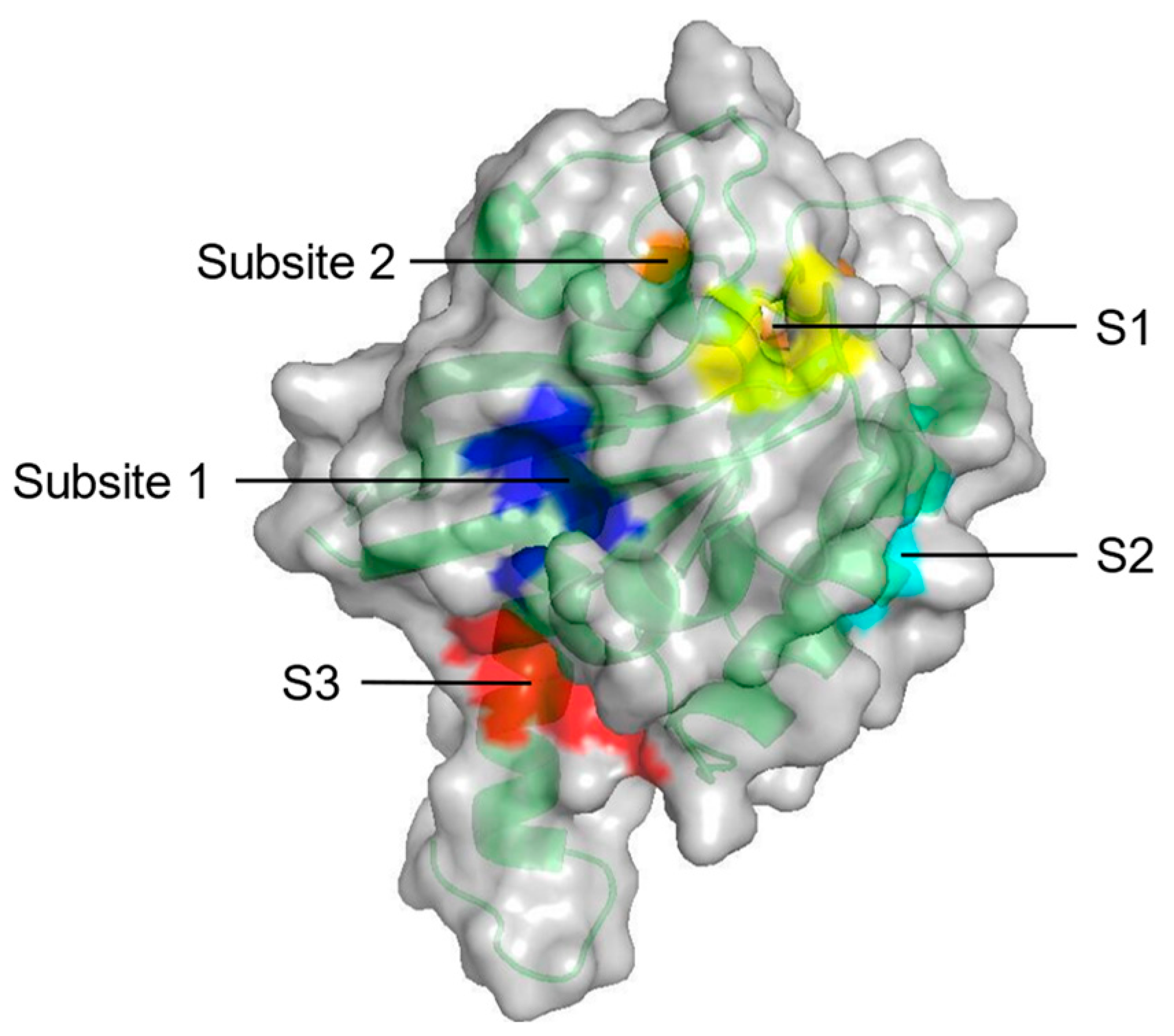
Probe-based molecular dynamics (PMD) simulation is a common method for discovering potential binding sites of target proteins by adding probe molecules to the conventional MD simulation process. Potential drug targets are identified based on the frequency of contact between the target site and the molecular probe relative to the druggability of the site [13]. In a study on the binding hotspots of KRAS, Prakash et al. [14] investigated the surface of KRAS using PMD simulation to evaluate the probability of interaction with organic molecules. Among eight potential druggable sites, five constitute the ligand binding pockets parallel to experimental results (Figure 1). Overall, PMD simulation can predict the potential binding sites of various proteins by simply modifying the probe.
Figure 1. Surface representation of five potential druggable sites (S1–S3, Subsite 1 and Subsite 2) on KRAS from PMD simulation (PDB ID: 4DSO).
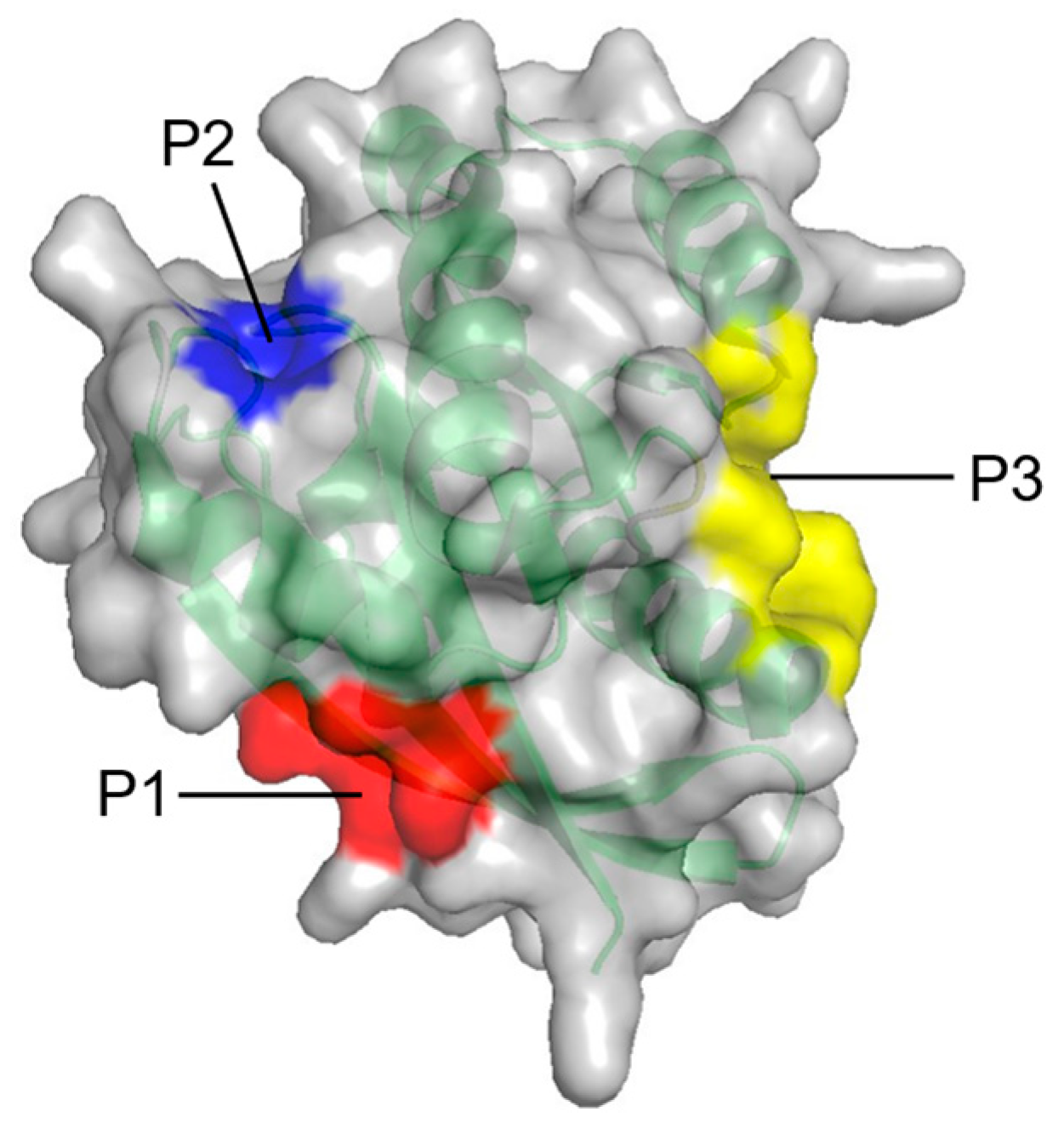
In contrast to PMD simulation, the fragment-based approach, FTMAP, uses relatively fixed probes. It correlates the druggability of the pocket with its propensity to bind these probes by rigidly docking each probe to generate thousands of binding sites and obtaining the final conformations through clustering and minimal free energy [15]. In identifying new allosteric sites on RAS, Grant et al. [16] used FTMAP to discover three new potential binding sites: P1, P2, and P3 (Figure 2).
Figure 2. Surface representation of three potential allosteric sites (P1–P3) on RAS from FTMAP.
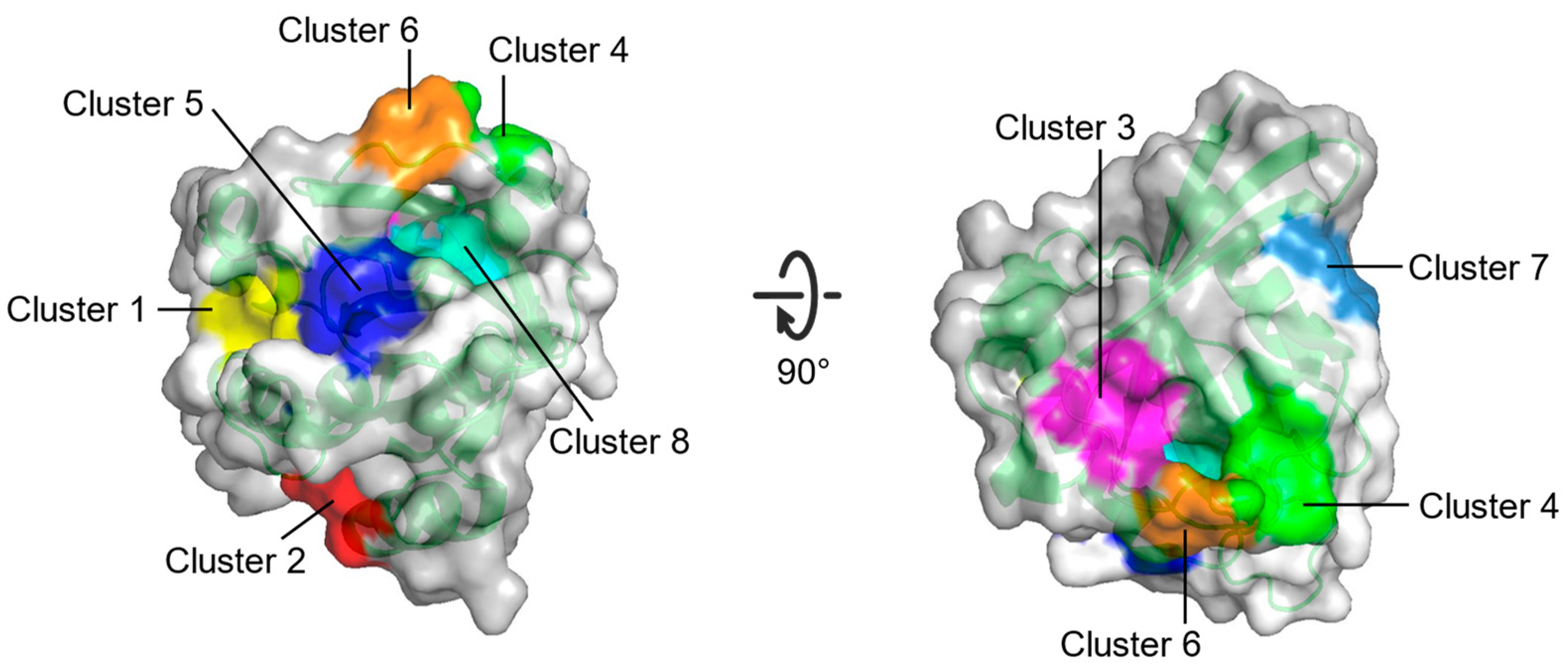
The multiple solvent crystal structures (MSCS) method employs organic solvent molecules to detect and characterize ligand binding sites on proteins. In MSCS, the X-ray crystal structure of the target protein is dissolved in different organic solvents. Organic solvent molecules that accumulate at specific sites on the protein indicate that they are potential sites for molecular interactions [17]. In a hot spot analysis of RAS GTPase surface binding sites, MSCS helped Buhrman et al. [18] to identify the potential binding sites of HRAS-GppNHp protein–protein interactions. Eight potential binding sites were obtained from different conformations under the crystal structure in the solvent (Figure 3). However, MSCS is limited by its reliance on the X-ray crystal structure of the target protein.
Figure 3. Surface representation of eight potential binding sites (Cluster 1–Cluster 8) on HRAS from the MSCS method.
In addition to predicting the structure of the target protein, AI can also be applied to accurately discover the potential binding sites on the target protein [19]. Discovering potential binding sites with AI will predict the binding ability of the binding sites to the ligands by narrowing the selection range of the target ligands, which is a primary direction for drug design. 

3. Virtual Screening

Virtual screening (VS) automatically searches a small-molecule library for structures that potentially bind well to the target biomolecule [20]. VS is a combination of several techniques based on high-throughput screening from millions of lead compounds, i.e., vHTS, to provide a solid foundation for further work. Although the continuous improvement of computer hardware has led to an unprecedented increase in computational power to screen as many compounds as theoretically possible, it is more recommended to construct optimal small-compound libraries and improve the computational speed and hit rate with various optimization algorithms for virtual drug screening strategies.
VS can be broadly divided into two types of screening strategies: receptor (structure)-based and ligand-based approaches [20]. Here, receptor and ligand stand for target proteins (drug targets) and small molecules (drugs), respectively. Structure-based virtual screening (SB-VS), also known as receptor-based virtual screening (RB-VS), is progressed inseparably from known protein structures and binding sites. In particular, this strategy involves molecular docking, structure-based pharmacophore modeling, molecular dynamics simulation and so on. SB-VS sometimes has to enable rapid high-throughput screening at the expense of scoring accuracy, so the induced fit effect and solvation effect are generally ignored. Ligand-based virtual screening (LB-VS) predicts the potential structure of candidate drugs from a set of active compounds known to bind to specific sites on the target protein. The features of screened ligands are extracted, such as structural conformation, charge distribution, and physicochemical properties. Then, the feature library, including molecular fingerprints, pharmacophore models, or matching ideal compounds, is constructed by QSAR. This strategy is mainly used when the structure of the target protein is unknown or when the target site is predicted in reverse, while a minor structural change can lead to a drastic change in molecular activity.
For RAS inhibitor discovery, an emerging “hybrid virtual screening” method has been employed to extract information from the global features of existing ligand–receptor complexes for similarity-matching to reduce the false positive rate and increase computational efficiency [21][22]. KRASG12D mutations resulted in a conformational exchange of exposing the Switch I region to continuously activate the GTP-bound form, which was more susceptible to bind to GEFs (e.g., SOS1). GTPase activity subsequently decreased, leading to the aberrant activation of downstream signaling [23][24]. Hashemi et al. developed a strategy to inhibit the guanylate cycle by competitively preventing the inactivated state of KRASG12D (iKRASG12D) from binding to SOS1 [25].

4. Molecular Docking Studies

As the most common method in the structure-based drug design of CADD, molecule docking is widely used in RAS-targeted drug discovery. The basic principle of molecule docking is to give a prediction of the ligand–receptor complex structure by computation methods. To achieve this, there are two key steps: sampling and scoring. The former targets ligands and active sites of proteins; moreover, it estimates experimental binding modes; the latter evaluates binding affinity through a scoring function (with various assumptions and simplifications) [26].
The earliest reported docking method is called “rigid body docking” derived from Fischer’s “lock-and-key assumption”. The essence of rigid body docking is that both ligands and receptors are treated as rigid bodies and that the affinity between ligand and receptor is positively related to the geometric fit between their structures [27]. This method is still used for macromolecular interactions due to its simplicity and feasibility. However, in practical tests, rigid body docking procedures such as ClusPro produced obvious disadvantages, such as fewer hits as the top 1 prediction and the lower accuracy of the generated models [28]. Over time, the theory of “induced-fit” was developed. It states that the active site of the enzyme is non-rigid. The substrate can induce a corresponding conformational change of the active site of the enzyme, and the relevant groups rearrange the correct orientation so that the enzyme and substrate fit together to form an intermediate complex, causing a reaction [29]. As a developmental method, “flexible docking” allows the conformational changes of small molecules or targets to precisely examine intermolecular recognition by matching spatial shape and energy. The binding capacity is ultimately determined by the change in binding free energy (ΔGbind) during the formation of the complex with indispensable kinetic considerations [30]. To simplify biological macromolecular dynamics, the assumptions of additivity and transferability have been employed in force fields instead of electronic degrees of freedom. Most classical force fields focus on five terms: the bond deformation and the angular geometry (stretching/compression of bonds, angular bending), rotation around some dihedral angle (torsion), the so-called nonbonding, the electrostatic interactions, and the dispersive interactions, as well as the repulsion because of atoms overlapping (van der Waals forces). The extended complex force fields include atomic polarizability and coupling forces, for instance, cross-coupling between bonds and angles [31].
In RAS post-translational modification, processing required three enzymes, as mentioned earlier, so targeting one of these enzymes is undoubtedly a promising strategy for inhibiting the process [32]. Molecular docking uses the crystal structure of FTase as a template to clarify the interaction between antroquinonol and the CAAX box of FTase after verifying the inhibition of isoprene transferase by antroquinonol in vitro. In conclusion, antroquinonol can inhibit the activity of prenyltransferase to restrict the activation of RAS and RAS-related GTP-binding protein, leading to the activation of autophagy and death of the cancer cell [33].
As a molecule in the RAS–RAF–MEK–ERK signaling pathway, BRAF protein kinase mutating in approximately 7% of human cancers has been manifested as elevated kinase activity and considered an important therapeutic target for inhibition. A study identifying 18 compounds targeting BRAF through virtual screening and ELISA confirmed that compound 1 efficiently inhibits BRAF kinase. Moreover, molecular docking clarifies the docking conformation of compound 1 in the active site of BRAF and deduces the scaffold based on the key of hexahydropteridine moiety. This conjecture has been confirmed by ELISA with homologous compound 19. After a series of in vitro experiments with analogs of compound 19 (1933), compound 24 exhibits the most potent inhibitory activity [34].
Since RASSF2 as a potential tumor suppressor gene promotes apoptosis and cell cycle arrest, Modeller (9V15) and online servers (I-Tasser, SwissModel, 3D-JigSaw, ModWeb) generated the 3D structure of RASSF2 based on homology modeling to identify its top 10 binding pockets ranked by energy. Furthermore, AutoDock Vina and AutoDock4 recognize the ligands of RASSF2 that regulate the normal activity of RASSF2. Finally, as stabilized RASSF2 compounds, ANP (phosphoaminophosphonic acid adenylate ester) and GNP (phosphoaminophosphonic acid guanylate ester) can serve as lead compounds for further studies targeting the RASSF family [5].

5. Molecular Dynamics (MD) Simulation

The MD simulation is endowed with a temporal dimension in which the dynamic interactions at the atomic and molecular levels can be traced over a period of time [35]. Compared to the static function of the structure determined by X-ray crystallography or cryo-electron microscopy, the MD simulation builds the time function of position and velocity for each atom with ideal environmental variables and initial flexible conformations evolving to final molecular conformations with lower energy or ligand–acceptor interaction patterns. In the MD simulation, a number of conditions should be tightly controlled, including the incorporation of mutations/modifications, the selection of ligand receptors, the imposition of perturbations and so on. Since the initial conditions are limited, the errors caused by the integration process in the simulation accumulate over the time dimension and cannot be completely eliminated. Therefore, it is necessary to improve the accuracy by optimizing the algorithms, exerting appropriate molecular mechanical force fields, and setting suitable parameters.
In classical MD simulation, the trajectories of molecules are traced by solving the Newtonian equations of motion of the interacting particle system to approximate the quantum mechanical model: the kinematic parameters of the atom are determined via interaction forces with given atomic coordinates and random initial velocities. The crucial kinetic steps are often located in transition states with high free energy and are difficult to be sampled, especially in complicated protein systems with heterogeneous states, complicated interactions, and undefinable solvent effects. To solve these problems, various algorithms should be carefully selected and optimized. The nudged elastic band (NEB) algorithm can calculate the transition state of protein structures within the minimum energy path (MEP) between different conformations [36]. Similarly, Pande et al. [36] used the well established Markov state model (MSM) method to describe long-time dynamics based on the transformation between Markovian substable conformations [37]. The accelerated MD (aMD) simulation method has been used in previous studies to calculate the short time scale in classical MD simulation [38]. Various MD simulation programs, such as GROMACS, AMBER, CHARMM, and NAMD, can evaluate the ligand–receptor binding properties in terms of RMSD, root-mean-square fluctuation (RMSF), interaction forces, and the energy of the complex system and so on. The force field of MD represents a potential energy function consisting of the functional form and the parameter sets. The parameter sets depend on the atom types of the MD molecular systems and are transferable based on the structural similarity of the molecules. For apo structures and polymers of macromolecular systems in biochemistry, optimized potentials for liquid simulations (OPLS), assisted model building with energy refinement (AMBER), and chemistry at Harvard macro-molecular mechanics (CHARMM) are common all-atom force fields with higher simulation accuracy, while Groningen molecular simulation (GROMOS) is a united-atom force field with higher computational efficiency.
MD simulation can break the bottleneck in determining protein structures and molecular interactions, especially in drug discovery [39]. In the SOS-induced nucleotide exchange process of the RAS system, MD simulation identifies the stable binding site of SRJ23 in the KRAS4B–SRJ23 (benzylidene derivative of AGP) complex [40][41]. Based on experimental evidence that the Src-induced dual phosphorylation of KRAS Y32/64 disrupts the GTPase cycle to interfere with RAS downstream signaling [42], MD simulation has revealed the complex process of unphosphorylated or phosphorylated KRAS4B in GAP, SOS, and RAF in the GTP/GDP-bound states. The dual phosphorylation of KRAS4B alters the nucleotide binding site conformations and generates perturbations at the catalytic site, resulting in the expansion of the GDP binding pocket and the latency of the intrinsic hydrolysis of RAS GTP. This has identified RAS phosphorylation as a drug target [43]. As a covalent inhibitor targeting the Switch II allosteric pocket (SII-P) for KRASG12C, AMG-510 (Sotorasib) is the first FDA-approved drug discovered by MD simulation. Using all-atom simulation on a long time scale (75 μs), in MD simulation, Pantsar and colleagues [44] found that AMG-510 remains stably bound to SII-P during switch swing, rather than fixing KRAS switches based on crystal structure. With the MD simulation, AMG-510 also explains the interaction with KRAS of PTM [44]. The interaction mechanism and kinetic parameters between KRASG12C and another covalent inhibitor, ARS-853, were also revealed with molecular docking and MD simulation [45]. There is a challenge that the dimerization or oligomerization of RAS with PTM on membranes can only be resolved with recombinant lipid membranes or nanodiscs [46][47][48]. Therefore, MD simulation plays a pioneering role in discovering new potential drug targets and strategies by revealing the interface interaction and energetic information of RAS dimer or other RAS-related pathway proteins at the atomic level [7].
MD simulation is also a robust tool for discovering allosteric binding sites. Allostery can modulate protein structure and activity by binding an effector to an allosteric site instead of the orthosteric site [49]. Therefore, the discovery of allosteric sites [50][51][52][53], the exploration of the allosteric mechanism [54][55][56][57], and the targeting of allosteric sites for drug discovery [58][59][60] are of great importance. In combination with the transition pathway generation algorithm and MSM analysis, MD simulation helps to identify several key conformational substates in RAS deactivation hydrolysis and a novel potential allosteric binding site for inhibitors to block downstream signaling effects [39]. NS1 is a peptidomimetic that binds to the variable configuration site of RAS to inhibit RAS dimerization and prevent the abnormal activation of the downstream RAF–MEK–ERK pathway. However, the affinity of NS1 for HRAS is reduced by the HRASR135K mutation. In a 200-ns MD simulation with dynamic network analysis and investigation of the overall architecture of the allosteric network of HRAS, Ni et al. [61] found that HRASR135K disrupts most of the key interactions at the interface of the wild-type HRAS–NS1 complex and abrogates the original allosteric regulation. There are studies on the allosteric effects of KRAS as the regulated or the regulator. Using aMD and allosteric pathway analysis, the mechanism of the allosteric activation of PI3Kα by KRAS4B was elucidated to the extent that KRAS4B binding disrupts the interaction between the p110 catalytic subunit and the p85 regulatory subunit of PI3Kα. This disruption leads to the exposure of the kinase domain of PI3Kα, which facilitates its membrane binding and substrate phosphorylation [55].

6. Quantitative Structure–Activity Relationship Study (QSAR)

QSAR is created by combining mathematical methods of empirical equations commonly used in physical chemistry based on the traditional structure–activity relationship between molecular structure and properties, such as molecules with similar structures having similar properties. Briefly, QSAR consists of the following core steps: experimentally determining the data for various compounds to construct training and test sets; computationally converting the structural formulas into the descriptor data for statistical operations, a process known as the acquisition of molecular descriptors; establishing a statistical model between the molecular properties of interest and the molecular descriptors of the training set; evaluating the obtained model according to various indicators; and attempting to explain the model from a mechanism. Various molecular descriptors reflecting different levels of chemical structure representation have been proposed as the core of QSAR. These levels range from molecular formulas (so-called 1D) and two-dimensional structural formulas (2D) to three-dimensional conformational formulas (3D) and higher formulas that take mutual orientation and time dependence into account (4D or higher) [62].
The 2D descriptor mainly defines the connectivity of atoms in molecules according to the existence and nature of chemical bonds, which is also called topological representation. This representation contains valuable and straightforward information about the molecular structure and has the advantage of being invariant to the rotation and translation of molecules. Although 2D descriptors cannot be used as unique representations without reconstructing molecules, they can characterize molecules with higher discrimination with well-defined ordered sequences [63]. Furthermore, 3D descriptors based on biological selectivity result from highly specific interactions between the target and ligands, such as hydrogen bonds. The ligand preferences arise mainly from non-covalent field effects imposed by the spatial proximity. The systematic sampling of field differences, such as the CoMFA formulation with the classical and dominant comparative molecular field, provides molecular descriptors suitable for QSAR. The main challenge in performing CoMFA is the alignment protocol for selecting conformation and orientation of the ligands in the training and test sets, which is cumbersome and expensive. However, new QSARs, such as topologically heterogeneous protocols, dramatically simplify reliable predictability [64]. Overall, 3D-QSAR research requires the structural alignment of compounds as the most critical step. Being related to the alignment protocol, the major obstacle in performing CoMFA is precisely the selection of ligands for the training and test groups, as well as the selection of the conformation and orientation of each ligand. In practice, this task often becomes slow and tedious and somewhat temporarily requires higher statistical standards (such as q2) [63]. To overcome this bottleneck, QSAR usually works with with other techniques such as molecular docking.

7. Pharmacophore Modelling

The pharmacophore is a concept that represents the structural characteristics indispensable for ligand–target interactions [65]. According to the official IUPAC definition: a pharmacophore is the ensemble of steric and electronic features that is necessary to ensure the optimal supra-molecular interactions with a specific biological target structure and to trigger (or to block) its biological response [66]. The pharmacophore includes a range of hydrogen bond acceptors and donors, acidity, alkalinity, nucleophilicity, or electrophilicity of the functional group [67]. Based on the pharmacophore modeling of active ligands, vHTS can screen compounds with similar pharmacophore properties. If a compound has multiple pharmacophore features described in the pharmacophore modeling of active ligands, it is a multitarget compound [68].
Pharmacophore modeling in conjunction with vHTS is widely used as a reliable and rapid ligand-based CADD approach to discover inhibitors of RAS upstream and downstream molecules [67]. RAF kinase inhibitor protein (RKIP) is a critical regulator of the RAS–RAF–MEK–ERK signaling pathway. In recent research on RKIP inhibitors by Parate et al., a pharmacophore model with a series of hydrogen bonds, hydrophobic groups, and aryl rings of locoastatin (the most potent RKIP inhibitor known to date) was created [69]. Based on the pharmacophore model, compounds that have an analogous structure can be selected from the library by vHTS. As a result, the model has assigned a total of 2557 compounds out of 14,492 compounds in the Marine Natural Product Library. By optimizing the model, the number of compounds was significantly reduced, to 134 for further research.
Pharmacophore modeling was also applied to the structural orientation of QSAR modeling. A reliable 3D QSAR model was established by pharmacophore models with similar structural properties and molecular comparison for RKIP inhibitor discovery by Xie et al. [70]. Moreover, pharmacophore modeling also helps in the discovery of inhibitor targets RAS upstream and downstream molecules such as PI3K-α and PKC-η [8].

8. Other CADD Applications

Although vHTS is widely used, the de novo design of RAS inhibitors still alternatively shows a promising future ahead. Recently, proteins such as fluorescence-activating β-barrel were developed by de novo drug design [71]. A functional RAS-binding domain with extreme thermostability was identified by another de novo sequence redesign model called ABACUS by Liu et al. [72]. The de novo sequence redesign model does not suffer from a restrictively cumulative effect for future directions.
Currently, mainly qualitative or semi-quantitative methods are used in MD simulation to calculate the binding affinity with accurate free energy. Accurate free energy prediction methods, such as alchemical free energy method (AFEM) and absolute binding free energy (ABFE), greatly improve the efficiency of CADD, although it is extremely demanding and costly [73]. Free energy prediction models that are more accurate and efficient than molecular docking and less computationally demanding than AFEM, including Poisson–Boltzmann surface area (MM /PBSA) and Born surface area (MM /GBSA) generalized molecular mechanics, have already been used in current research, such as the discovery of RAS inhibitors [74]. The discovery of allosteric binders of RAS can also be empowered with free energy prediction methods. For example, the naphthyridinone scaffold was identified as a novel covalent allosteric binder for KRASG12C in free energy perturbation models [75].
As a more promising CADD method, machine learning (ML) algorithms, such as neural networks and the transformer, are developing suitable models to predict target protein structure and discover potential compounds. Other CADD methods, including molecular docking, QSAR, and pharmacophore modeling, also benefit from machine learning algorithms [76][77]. In molecular docking, ML is used for scoring functions that translate protein–ligand interactions into descriptors. In this way, effective scoring function models such as a NN Score and a RF Score can be built. In QSAR and pharmacophore modeling, ML improves the accuracy of molecular comparison and descriptor identification. It is foreseeable that machine learning algorithms with high efficiency will be increasingly used for RAS inhibitor discovery in the future.

References

  1. Burley, S.K.; Berman, H.M.; Kleywegt, G.J.; Markley, J.L.; Nakamura, H.; Velankar, S. Protein Data Bank (PDB): The Single Global Macromolecular Structure Archive. Methods Mol. Biol. 2017, 1607, 627–641.
  2. Waterhouse, A.; Bertoni, M.; Bienert, S.; Studer, G.; Tauriello, G.; Gumienny, R.; Heer, F.T.; de Beer, T.A.P.; Rempfer, C.; Bordoli, L.; et al. SWISS-MODEL: Homology modelling of protein structures and complexes. Nucleic Acids Res. 2018, 46, W296–W303.
  3. Eswar, N.; Webb, B.; Marti-Renom, M.A.; Madhusudhan, M.S.; Eramian, D.; Shen, M.Y.; Pieper, U.; Sali, A. Comparative protein structure modeling using Modeller. Curr. Protoc. Bioinform. 2007, 50, 2.9.1–2.9.31.
  4. Donninger, H.; Hesson, L.; Vos, M.; Beebe, K.; Gordon, L.; Sidransky, D.; Liu, J.W.; Schlegel, T.; Payne, S.; Hartmann, A.; et al. The Ras effector RASSF2 controls the PAR-4 tumor suppressor. Mol. Cell. Biol. 2010, 30, 2608–2620.
  5. Kanwal, S.; Jamil, F.; Ali, A.; Sehgal, S.A. Comparative Modeling, Molecular Docking, and Revealing of Potential Binding Pockets of RASSF2; a Candidate Cancer Gene. Interdiscip. Sci. 2017, 9, 214–223.
  6. Collier, T.A.; Piggot, T.J.; Allison, J.R. Molecular Dynamics Simulation of Proteins. Methods Mol. Biol. 2020, 2073, 311–327.
  7. Prakash, P.; Sayyed-Ahmad, A.; Cho, K.J.; Dolino, D.M.; Chen, W.; Li, H.; Grant, B.J.; Hancock, J.F.; Gorfe, A.A. Computational and biochemical characterization of two partially overlapping interfaces and multiple weak-affinity K-Ras dimers. Sci. Rep. 2017, 7, 40109.
  8. Bhaskar, B.V.; Rammohan, A.; Babu, T.M.; Zheng, G.Y.; Chen, W.; Rajendra, W.; Zyryanov, G.V.; Gu, W. Molecular insight into isoform specific inhibition of PI3K-alpha and PKC-eta with dietary agents through an ensemble pharmacophore and docking studies. Sci. Rep. 2021, 11, 12150.
  9. Parca, L.; Mangone, I.; Gherardini, P.F.; Ausiello, G.; Helmer-Citterich, M. Phosfinder: A web server for the identification of phosphate-binding sites on protein structures. Nucleic Acids Res. 2011, 39, W278–W282.
  10. Singh, H.; Srivastava, H.K.; Raghava, G.P. A web server for analysis, comparison and prediction of protein ligand binding sites. Biol. Direct 2016, 11, 14.
  11. Hernandez, M.; Ghersi, D.; Sanchez, R. SITEHOUND-web: A server for ligand binding site identification in protein structures. Nucleic Acids Res. 2009, 37, W413–W416.
  12. Konc, J.; Skrlj, B.; Erzen, N.; Kunej, T.; Janezic, D. GenProBiS: Web server for mapping of sequence variants to protein binding sites. Nucleic Acids Res. 2017, 45, W253–W259.
  13. Wang, Y.; Lupala, C.S.; Liu, H.; Lin, X. Identification of Drug Binding Sites and Action Mechanisms with Molecular Dynamics Simulations. Curr. Top. Med. Chem. 2018, 18, 2268–2277.
  14. Prakash, P.; Hancock, J.F.; Gorfe, A.A. Binding hotspots on K-ras: Consensus ligand binding sites and other reactive regions from probe-based molecular dynamics analysis. Proteins 2015, 83, 898–909.
  15. Brenke, R.; Kozakov, D.; Chuang, G.Y.; Beglov, D.; Hall, D.; Landon, M.R.; Mattos, C.; Vajda, S. Fragment-based identification of druggable ‘hot spots’ of proteins using Fourier domain correlation techniques. Bioinformatics 2009, 25, 621–627.
  16. Grant, B.J.; Lukman, S.; Hocker, H.J.; Sayyah, J.; Brown, J.H.; McCammon, J.A.; Gorfe, A.A. Novel allosteric sites on Ras for lead generation. PLoS ONE 2011, 6, e25711.
  17. Mattos, C.; Bellamacina, C.R.; Peisach, E.; Pereira, A.; Vitkup, D.; Petsko, G.A.; Ringe, D. Multiple solvent crystal structures: Probing binding sites, plasticity and hydration. J. Mol. Biol. 2006, 357, 1471–1482.
  18. Buhrman, G.; O’Connor, C.; Zerbe, B.; Kearney, B.M.; Napoleon, R.; Kovrigina, E.A.; Vajda, S.; Kozakov, D.; Kovrigin, E.L.; Mattos, C. Analysis of binding site hot spots on the surface of Ras GTPase. J. Mol. Biol. 2011, 413, 773–789.
  19. Broomhead, N.K.; Soliman, M.E. Can We Rely on Computational Predictions To Correctly Identify Ligand Binding Sites on Novel Protein Drug Targets? Assessment of Binding Site Prediction Methods and a Protocol for Validation of Predicted Binding Sites. Cell Biochem. Biophys. 2017, 75, 15–23.
  20. Long, P.Q.; Quan, P.M. Virtual screening stategies in drug discovery–A brief overview. Vietnam. J. Sci. Technol. 2021, 59, 415–440.
  21. Vázquez, J.; López, M.; Gibert, E.; Herrero, E.; Luque, F.J. Merging ligand-based and structure-based methods in drug discovery: An overview of combined virtual screening approaches. Molecules 2020, 25, 4723.
  22. Qin, T.; Zhu, Z.; Wang, X.S.; Xia, J.; Wu, S. Computational representations of protein–ligand interfaces for structure-based virtual screening. Expert Opin. Drug Discov. 2021, 16, 1175–1192.
  23. Hunter, J.C.; Manandhar, A.; Carrasco, M.A.; Gurbani, D.; Gondi, S.; Westover, K.D. Biochemical and Structural Analysis of Common Cancer-Associated KRAS Mutations. Mol. Cancer Res. 2015, 13, 1325–1335.
  24. Pantsar, T.; Rissanen, S.; Dauch, D.; Laitinen, T.; Vattulainen, I.; Poso, A. Assessment of mutation probabilities of KRAS G12 missense mutants and their long-timescale dynamics by atomistic molecular simulations and Markov state modeling. PLoS Comput. Biol. 2018, 14, e1006458.
  25. Hashemi, S.; Sharifi, A.; Zareei, S.; Mohamedi, G.; Biglar, M.; Amanlou, M. Discovery of direct inhibitor of KRAS oncogenic protein by natural products: A combination of pharmacophore search, molecular docking, and molecular dynamic studies. Res. Pharm. Sci. 2020, 15, 226–240.
  26. Bhagat, R.T.; Butle, S.R.; Khobragade, D.S.; Wankhede, S.B.; Prasad, C.C.; Mahure, D.S.; Armarkar, A.V. Molecular Docking in Drug Discovery. J. Pharm. Res. 2021, 33, 46–58.
  27. Mezei, M. A new method for mapping macromolecular topography. J. Mol. Graph. Model. 2003, 21, 463–472.
  28. Desta, I.T.; Porter, K.A.; Xia, B.; Kozakov, D.; Vajda, S. Performance and Its Limits in Rigid Body Protein-Protein Docking. Structure 2020, 28, 1071–1081.e3.
  29. Koshland, D.E., Jr.; Neet, K.E. The catalytic and regulatory properties of enzymes. Annu. Rev. Biochem. 1968, 37, 359–410.
  30. Pagadala, N.S.; Syed, K.; Tuszynski, J. Software for molecular docking: A review. Biophys. Rev. 2017, 9, 91–102.
  31. Monticelli, L.; Tieleman, D.P. Force fields for classical molecular dynamics. Methods Mol. Biol. 2013, 924, 197–213.
  32. Moore, A.R.; Rosenberg, S.C.; McCormick, F.; Malek, S. RAS-targeted therapies: Is the undruggable drugged? Nat. Rev. Drug Discov. 2020, 19, 533–552.
  33. Ho, C.L.; Wang, J.L.; Lee, C.C.; Cheng, H.Y.; Wen, W.C.; Cheng, H.H.; Chen, M.C. Antroquinonol blocks Ras and Rho signaling via the inhibition of protein isoprenyltransferase activity in cancer cells. Biomed. Pharmacother. 2014, 68, 1007–1014.
  34. Luo, C.; Xie, P.; Marmorstein, R. Identification of BRAF inhibitors through in silico screening. J. Med. Chem. 2008, 51, 6121–6127.
  35. Hansson, T.; Oostenbrink, C.; van Gunsteren, W. Molecular dynamics simulations. Curr. Opin. Struct. Biol. 2002, 12, 190–196.
  36. Garrido Torres, J.A.; Jennings, P.C.; Hansen, M.H.; Boes, J.R.; Bligaard, T. Low-Scaling Algorithm for Nudged Elastic Band Calculations Using a Surrogate Machine Learning Model. Phys. Rev. Lett. 2019, 122, 156001.
  37. Husic, B.E.; Pande, V.S. Markov State Models: From an Art to a Science. J. Am. Chem. Soc. 2018, 140, 2386–2396.
  38. Bucher, D.; Pierce, L.C.; McCammon, J.A.; Markwick, P.R. On the Use of Accelerated Molecular Dynamics to Enhance Configurational Sampling in Ab Initio Simulations. J. Chem. Theory Comput. 2011, 7, 890–897.
  39. Lu, S.; Ni, D.; Wang, C.; He, X.; Lin, H.; Wang, Z.; Zhang, J. Deactivation Pathway of Ras GTPase Underlies Conformational Substates as Targets for Drug Design. ACS Catal. 2019, 9, 7188–7196.
  40. Lu, S.; Jang, H.; Zhang, J.; Nussinov, R. Inhibitors of Ras-SOS Interactions. ChemMedChem 2016, 11, 814–821.
  41. Wittinghofer, A.; Vetter, I.R. Structure-function relationships of the G domain, a canonical switch motif. Annu. Rev. Biochem. 2011, 80, 943–971.
  42. Kano, Y.; Gebregiworgis, T.; Marshall, C.B.; Radulovich, N.; Poon, B.P.K.; St-Germain, J.; Cook, J.D.; Valencia-Sama, I.; Grant, B.M.M.; Herrera, S.G.; et al. Tyrosyl phosphorylation of KRAS stalls GTPase cycle via alteration of switch I and II conformation. Nat. Commun. 2019, 10, 224.
  43. Wang, Y.; Ji, D.; Lei, C.; Chen, Y.; Qiu, Y.; Li, X.; Li, M.; Ni, D.; Pu, J.; Zhang, J.; et al. Mechanistic insights into the effect of phosphorylation on Ras conformational dynamics and its interactions with cell signaling proteins. Comput. Struct. Biotechnol. J. 2021, 19, 1184–1199.
  44. Pantsar, T. KRAS(G12C)-AMG 510 interaction dynamics revealed by all-atom molecular dynamics simulations. Sci. Rep. 2020, 10, 11992.
  45. Khrenova, M.G.; Kulakova, A.M.; Nemukhin, A.V. Proof of concept for poor inhibitor binding and efficient formation of covalent adducts of KRAS(G12C) and ARS compounds. Org. Biomol. Chem. 2020, 18, 3069–3081.
  46. Muratcioglu, S.; Chavan, T.S.; Freed, B.C.; Jang, H.; Khavrutskii, L.; Freed, R.N.; Dyba, M.A.; Stefanisko, K.; Tarasov, S.G.; Gursoy, A.; et al. GTP-Dependent K-Ras Dimerization. Structure 2015, 23, 1325–1335.
  47. Ambrogio, C.; Kohler, J.; Zhou, Z.W.; Wang, H.; Paranal, R.; Li, J.; Capelletti, M.; Caffarra, C.; Li, S.; Lv, Q.; et al. KRAS Dimerization Impacts MEK Inhibitor Sensitivity and Oncogenic Activity of Mutant KRAS. Cell 2018, 172, 857–868.e15.
  48. Sarkar-Banerjee, S.; Sayyed-Ahmad, A.; Prakash, P.; Cho, K.J.; Waxham, M.N.; Hancock, J.F.; Gorfe, A.A. Spatiotemporal Analysis of K-Ras Plasma Membrane Interactions Reveals Multiple High Order Homo-oligomeric Complexes. J. Am. Chem. Soc. 2017, 139, 13466–13475.
  49. Lu, S.; Shen, Q.; Zhang, J. Allosteric Methods and Their Applications: Facilitating the Discovery of Allosteric Drugs and the Investigation of Allosteric Mechanisms. Acc. Chem. Res. 2019, 52, 492–500.
  50. Huang, Z.; Zhu, L.; Cao, Y.; Wu, G.; Liu, X.; Chen, Y.; Wang, Q.; Shi, T.; Zhao, Y.; Wang, Y.; et al. ASD: A comprehensive database of allosteric proteins and modulators. Nucleic Acids Res. 2011, 39, D663–D669.
  51. Lu, S.; He, X.; Ni, D.; Zhang, J. Allosteric Modulator Discovery: From Serendipity to Structure-Based Design. J. Med. Chem. 2019, 62, 6405–6421.
  52. Feng, L.; Lu, S.; Zheng, Z.; Chen, Y.; Zhao, Y.; Song, K.; Xue, H.; Jin, L.; Li, Y.; Huang, C.; et al. Identification of an allosteric hotspot for additive activation of PPARγ in antidiabetic effects. Sci. Bull. 2021, 66, 1559–1570.
  53. Ni, D.; Wei, J.; He, X.; Rehman, A.U.; Li, X.; Qiu, Y.; Pu, J.; Lu, S.; Zhang, J. Discovery of cryptic allosteric sites using reversed allosteric communication by a combined computational and experimental strategy. Chem. Sci. 2020, 12, 464–476.
  54. Lu, S.; Chen, Y.; Wei, J.; Zhao, M.; Ni, D.; He, X.; Zhang, J. Mechanism of allosteric activation of SIRT6 revealed by the action of rationally designed activators. Acta Pharm. Sin. B 2021, 11, 1355–1361.
  55. Li, X.; Dai, J.; Ni, D.; He, X.; Zhang, H.; Zhang, J.; Fu, Q.; Liu, Y.; Lu, S. Insight into the mechanism of allosteric activation of PI3Kα by oncoprotein K-Ras4B. Int. J. Biol. Macromol. 2020, 144, 643–655.
  56. Li, X.; Wang, C.; Peng, T.; Chai, Z.; Ni, D.; Liu, Y.; Zhang, J.; Chen, T.; Lu, S. Atomic-scale insights into allosteric inhibition and evolutional rescue mechanism of Streptococcus thermophilus Cas9 by the anti-CRISPR protein AcrIIA6. Comput. Struct. Biotechnol. J. 2021, 19, 6108–6124.
  57. Nussinov, R.; Tsai, C.J.; Jang, H. Does Ras Activate Raf and PI3K Allosterically? Front. Oncol. 2019, 9, 1231.
  58. Lu, S.; He, X.; Yang, Z.; Chai, Z.; Zhou, S.; Wang, J.; Rehman, A.U.; Ni, D.; Pu, J.; Sun, J.; et al. Activation pathway of a G protein-coupled receptor uncovers conformational intermediates as targets for allosteric drug design. Nat. Commun. 2021, 12, 4721.
  59. Gorfe, A.A. Mechanisms of allostery and membrane attachment in Ras GTPases: Implications for anti-cancer drug discovery. Curr. Med. Chem. 2010, 17, 1–9.
  60. Zhang, Q.; Chen, Y.; Ni, D.; Huang, Z.; Wei, J.; Feng, L.; Su, J.C.; Wei, Y.; Ning, S.; Yang, X.; et al. Targeting a cryptic allosteric site of SIRT6 with small-molecule inhibitors that inhibit the migration of pancreatic cancer cells. Acta Pharm. Sin. B 2022, 12, 876–889.
  61. Ni, D.; Song, K.; Zhang, J.; Lu, S. Molecular Dynamics Simulations and Dynamic Network Analysis Reveal the Allosteric Unbinding of Monobody to H-Ras Triggered by R135K Mutation. Int. J. Mol. Sci. 2017, 18, 2249.
  62. Polanski, J. Receptor dependent multidimensional QSAR for modeling drug—Receptor interactions. Curr. Med. Chem. 2009, 16, 3243–3257.
  63. Cherkasov, A.; Muratov, E.N.; Fourches, D.; Varnek, A.; Baskin, I.; Cronin, M.; Dearden, J.; Gramatica, P.; Martin, Y.C.; Todeschini, R.; et al. QSAR modeling: Where have you been? Where are you going to? J. Med. Chem. 2014, 57, 4977–5010.
  64. Jilek, R.J.; Cramer, R.D. Topomers: A validated protocol for their self-consistent generation. J. Chem. Inf. Comput. Sci. 2004, 44, 1221–1227.
  65. Seidel, T.; Schuetz, D.A.; Garon, A.; Langer, T. The Pharmacophore Concept and Its Applications in Computer-Aided Drug Design. Prog. Chem. Org. Nat. Prod. 2019, 110, 99–141.
  66. Wermuth, C.G.; Ganellin, C.R.; Lindberg, P.; Mitscher, L.A. Glossary of terms used in medicinal chemistry (IUPAC Recommendations 1998). Pure Appl. Chem. 1998, 70, 1129–1143.
  67. Yang, S.Y. Pharmacophore modeling and applications in drug discovery: Challenges and recent advances. Drug Discov. Today 2010, 15, 444–450.
  68. Wei, D.; Jiang, X.; Zhou, L.; Chen, J.; Chen, Z.; He, C.; Yang, K.; Liu, Y.; Pei, J.; Lai, L. Discovery of multitarget inhibitors by combining molecular docking with common pharmacophore matching. J. Med. Chem. 2008, 51, 7882–7888.
  69. Parate, S.; Kumar, V.; Hong, J.C.; Lee, K.W. Investigation of marine-derived natural products as Raf kinase inhibitory protein (RKIP)-binding ligands. Mar. Drugs 2021, 19, 581.
  70. Xie, H.; Chen, L.; Zhang, J.; Xie, X.; Qiu, K.; Fu, J. A combined pharmacophore modeling, 3D QSAR and virtual screening studies on imidazopyridines as B-Raf inhibitors. Int. J. Mol. Sci. 2015, 16, 12307–12323.
  71. Dou, J.; Vorobieva, A.A.; Sheffler, W.; Doyle, L.A.; Park, H.; Bick, M.J.; Mao, B.; Foight, G.W.; Lee, M.Y.; Gagnon, L.A.; et al. De novo design of a fluorescence-activating beta-barrel. Nature 2018, 561, 485–491.
  72. Liu, R.; Wang, J.; Xiong, P.; Chen, Q.; Liu, H. De novo sequence redesign of a functional Ras-binding domain globally inverted the surface charge distribution and led to extreme thermostability. Biotechnol. Bioeng. 2021, 118, 2031–2042.
  73. Song, L.F.; Merz, K.M., Jr. Evolution of Alchemical Free Energy Methods in Drug Discovery. J. Chem. Inf. Model. 2020, 60, 5308–5318.
  74. Wang, E.; Sun, H.; Wang, J.; Wang, Z.; Liu, H.; Zhang, J.Z.H.; Hou, T. End-Point Binding Free Energy Calculation with MM/PBSA and MM/GBSA: Strategies and Applications in Drug Design. Chem. Rev. 2019, 119, 9478–9508.
  75. Mortier, J.; Friberg, A.; Badock, V.; Moosmayer, D.; Schroeder, J.; Steigemann, P.; Siegel, F.; Gradl, S.; Bauser, M.; Hillig, R.C.; et al. Computationally Empowered Workflow Identifies Novel Covalent Allosteric Binders for KRAS(G12C). ChemMedChem 2020, 15, 827–832.
  76. Melville, J.L.; Burke, E.K.; Hirst, J.D. Machine learning in virtual screening. Comb. Chem. High Throughput Screen. 2009, 12, 332–343.
  77. Eckert, H.; Bajorath, J. Molecular similarity analysis in virtual screening: Foundations, limitations and novel approaches. Drug Discov. Today 2007, 12, 225–233.

More
Upload a video for this entry
Information
Contributors MDPI registered users' name will be linked to their SciProfiles pages. To register with us, please refer to https://encyclopedia.pub/register : Ge Wang , Yuhao Bai , , Zirui Zong , , Zhen Zheng
View Times: 735
Revisions: 2 times (View History)
Update Date: 16 Sep 2022
Notice
You are not a member of the advisory board for this topic. If you want to update advisory board member profile, please contact office@encyclopedia.pub.
OK
Confirm
Only members of the Encyclopedia advisory board for this topic are allowed to note entries. Would you like to become an advisory board member of the Encyclopedia?
Yes
No
${ textCharacter }/${ maxCharacter }
Submit
Cancel
There is no comment~
${ textCharacter }/${ maxCharacter }
Submit
Cancel
${ selectedItem.replyTextCharacter }/${ selectedItem.replyMaxCharacter }
Submit
Cancel
Confirm
Are you sure to Delete?
Yes No
Academic Video Service