

 +1 credit
| Version | Summary | Created by | Modification | Content Size | Created at | Operation |
|---|---|---|---|---|---|---|
| 1 | Bahram Samanfar | + 3394 word(s) | 3394 | 2022-02-07 02:51:26 | | | |
| 2 | Bruce Ren | + 1 word(s) | 3395 | 2022-03-03 02:04:05 | | | | |
| 3 | Bruce Ren | Meta information modification | 3395 | 2022-03-04 01:29:47 | | | | |
| 4 | Bruce Ren | Meta information modification | 3395 | 2022-03-04 01:31:04 | | | | |
| 5 | Bruce Ren | Meta information modification | 3395 | 2022-03-04 01:51:01 | | |
Video Upload Options
Plant pathogens greatly impact food security of the ever-growing human population. Breeding resistant crops is one of the most sustainable strategies to overcome the negative effects of these biotic stressors. In order to efficiently breed for resistant plants, the specific plant–pathogen interactions should be understood. Soybean is a short-day legume that is a staple in human food and animal feed due to its high nutritional content. Soybean cyst nematode (SCN) is a major soybean stressor infecting soybean worldwide including in China, Brazil, Argentina, USA and Canada. There are many Quantitative Trait Loci (QTLs) conferring resistance to SCN that have been identified; however, only two are widely used: rhg1 and Rhg4. Overuse of cultivars containing these QTLs/genes can lead to SCN resistance breakdown, necessitating the use of additional strategies.
1. Introduction
1.1. Soybean
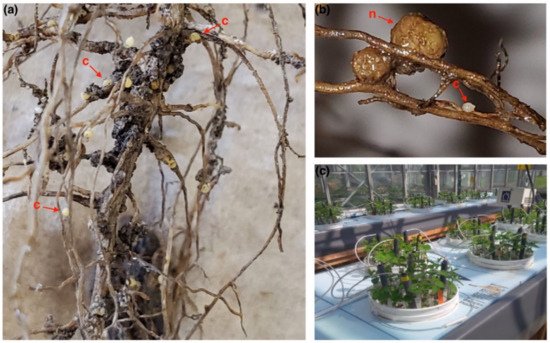
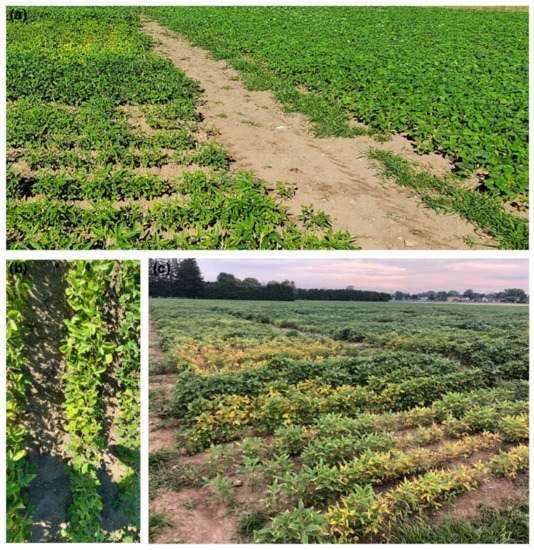
1.2. Soybean Cyst Nematode (SCN)
1.3. Host–Pathogen Interactions
2. What Is New at the rhg1 and Rhg4 Loci?
2.1. α- SNAP
2.2. WI12
2.3. SHMT
3. Wild Soybean as a Resistance Reservoir
References
- Barthet, V. Quality of Canadian Oilseed-Type Soybeans 2018; Canadian Grain Commission: Winnipeg, MB, Canada, 2018; pp. 1–15.
- Boerema, A.; Peeters, A.; Swolfs, S.; Vandevenne, F.; Jacobs, S.; Staes, J.; Meire, P. Soybean Trade: Balancing Environmental and Socio-Economic Impacts of an Intercontinental Market. PLoS ONE 2016, 11, e0155222.
- Xie, M.; Chung, C.Y.L.; Li, M.W.; Wong, F.L.; Wang, X.; Liu, A.; Wang, Z.; Leung, A.K.Y.; Wong, T.H.; Tong, S.W.; et al. A Reference-Grade Wild Soybean Genome. Nat. Commun. 2019, 10, 1–12.
- Schmutz, J.; Cannon, S.B.; Schlueter, J.; Ma, J.; Mitros, T.; Nelson, W.; Hyten, D.L.; Song, Q.; Thelen, J.J.; Cheng, J.; et al. Genome Sequence of the Palaeopolyploid Soybean. Nature 2010, 463, 178–183.
- Jumrani, K.; Bhatia, V.S. Impact of Combined Stress of High Temperature and Water Deficit on Growth and Seed Yield of Soybean. Physiol. Mol. Biol. Plants 2018, 24, 37–50.
- Li, X.; Fang, C.; Xu, M.; Zhang, F.; Lu, S.; Nan, H.; Su, T.; Li, S.; Zhao, X.; Kong, L.; et al. Quantitative Trait Locus Mapping of Soybean Maturity Gene E6. Crop Sci. 2017, 57, 2547–2554.
- Tylka, G.L.; Marett, C.C. Known Distribution of the Soybean Cyst Nematode, Heterodera glycines, in the United States and Canada in 2020. Plant Heal. Prog. 2021, 22, 72–74.
- Masonbrink, R.; Maier, T.; Hudson, M.; Severin, A.; Baum, T. A Chromosomal Assembly of the Soybean Cyst Nematode Genome. Authorea 2021, 21, 2407–2422.
- Davis, E.L.; Tylka, G.L. Soybean Cyst Nematode Disease. Plant Heal. Instr. 2000.
- Klink, V.P.; Overall, C.C.; Alkharouf, N.W.; MacDonald, M.H.; Matthews, B.F. Laser Capture Microdissection (LCM) and Comparative Microarray Expression Analysis of Syncytial Cells Isolated from Incompatible and Compatible Soybean (Glycine max) Roots Infected by the Soybean Cyst Nematode (Heterodera glycines). Planta 2007, 226, 1389–1409.
- Bandara, A.Y.; Weerasooriya, D.K.; Bradley, C.A.; Allen, T.W.; Esker, P.D. Dissecting the Economic Impact of Soybean Diseases in the United States over Two Decades. PLoS ONE 2020, 15, e0231141.
- McCarville, M.T.; Marett, C.C.; Mullaney, M.P.; Gebhart, G.D.; Tylka, G.L. Increase in Soybean Cyst Nematode Virulence and Reproduction on Resistant Soybean Varieties in Iowa from 2001 to 2015 and the Effects on Soybean Yields. Plant Health Prog. 2017, 18, 146–155.
- Boyd, L.A.; Ridout, C.; O’Sullivan, D.M.; Leach, J.E.; Leung, H. Plant-Pathogen Interactions: Disease Resistance in Modern Agriculture. Trends Genet. 2013, 29, 233–240.
- Peyraud, R.; Dubiella, U.; Barbacci, A.; Genin, S.; Raffaele, S.; Roby, D. Advances on Plant–Pathogen Interactions from Molecular toward Systems Biology Perspectives. Plant J. 2017, 90, 720–737.
- Yuan, M.; Ngou, B.P.M.; Ding, P.; Xin, X.F. PTI-ETI Crosstalk: An Integrative View of Plant Immunity. Curr. Opin. Plant Biol. 2021, 62, 102030.
- Gupta, R.; Lee, S.E.; Agrawal, G.K.; Rakwal, R.; Park, S.; Wang, Y.; Kim, S.T. Understanding the Plant-Pathogen Interactions in the Context of Proteomics-Generated Apoplastic Proteins Inventory. Front. Plant Sci. 2015, 6, 1–7.
- Concibido, V.; Lange, D.; Denny, R.; Orf, J.; Young, N. Genome Mapping of Soybean Cyst Nematode Resistance Genes in ‘Peking’, PI 90763, and PI 88788 Using DNA Markers. Crop Sci. 1997, 37, 258–264.
- Glover, K.D.; Wang, D.; Arelli, P.R.; Carlson, S.R.; Cianzio, S.R.; Diers, B.W. Near Isogenic Lines Confirm a Soybean Cyst Nematode Resistance Gene from PI 88788 on Linkage Group J. Crop Sci. 2004, 44, 936–941.
- Kim, M.; Hyten, D.L.; Bent, A.F.; Diers, B.W. Fine Mapping of the SCN Resistance Locus Rhg1-b from PI 88788. Plant Genome 2010, 3, 81–89.
- Liu, S.; Kandoth, P.K.; Warren, S.D.; Yeckel, G.; Heinz, R.; Alden, J.; Yang, C.; Jamai, A.; El-Mellouki, T.; Juvale, P.S.; et al. A Soybean Cyst Nematode Resistance Gene Points to a New Mechanism of Plant Resistance to Pathogens. Nature 2012, 492, 256–260.
- Cook, D.E.; Lee, T.G.; Guo, X.; Melito, S.; Wang, K.; Bayless, A.M.; Wang, J.; Hughes, T.J.; Willis, D.K.; Clemente, T.E.; et al. Copy Number Variation of Multiple Genes at Rhg1 Mediates Nematode Resistance in Soybean. Science 2012, 338, 1206–1209.
- Liu, S.; Kandoth, P.K.; Lakhssassi, N.; Kang, J.; Colantonio, V.; Heinz, R.; Yeckel, G.; Zhou, Z.; Bekal, S.; Dapprich, J.; et al. The Soybean GmSNAP18 Gene Underlies Two Types of Resistance to Soybean Cyst Nematode. Nat. Commun. 2017, 8, 14822.
- Bayless, A.M.; Zapotocny, R.W.; Han, S.; Grunwald, D.J.; Amundson, K.K.; Bent, A.F. The Rhg1-a (Rhg1 Low-Copy) Nematode Resistance Source Harbors a Copia-Family Retrotransposon within the Rhg1-Encoded α-SNAP Gene. Plant Direct 2019, 3, 1–19.
- Mitchum, M.G. Soybean Resistance to the Soybean Cyst Nematode Heterodera glycines: An Update. Phytopathology 2016, 106, 1444–1450.
- Bayless, A.M.; Zapotocny, R.W.; Grunwald, D.J.; Amundson, K.K.; Diers, B.W.; Bent, A.F. An Atypical N-Ethylmaleimide Sensitive Factor Enables the Viability of Nematode-Resistant Rhg1 Soybeans. Proc. Natl. Acad. Sci. USA 2018, 115, E4512–E4521.
- Dong, J.; Zielinski, R.E.; Hudson, M.E. T-SNAREs Bind the Rhg1 α-SNAP and Mediate Soybean Cyst Nematode Resistance. Plant J. 2020, 104, 318–331.
- Austin, H.W.; McNeece, B.T.; Sharma, K.; Niraula, P.M.; Lawrence, K.S.; Klink, V.P. An Expanded Role of the SNARE-Containing Regulon as It Relates to the Defense Process That Glycine max Has to Heterodera glycines. J. Plant Interact. 2019, 14, 276–283.
- Sharma, K.; Pant, S.R.; McNeece, B.T.; Lawrence, G.W.; Klink, V.P. Co-Regulation of the Glycine max Soluble N-Ethylmaleimide-Sensitive Fusion Protein Attachment Protein Receptor (SNARE)-Containing Regulon Occurs during Defense to a Root Pathogen. J. Plant Interact. 2016, 11, 74–93.
- Wang, R.; Deng, M.; Yang, C.; Yu1, Q.; Zhang1, L.; Zhu1, Q.; Guo, X. A Qa-SNARE Complex Protein Contributes to Soybean Cyst Nematode Resistance through Regulation of Mitochondria-Mediated Cell Death. J. Exp. Bot. 2021, 72, 7145–7162.
- Lawaju, B.R.; Niraula, P.; Lawrence, G.W.; Lawrence, K.S.; Klink, V.P. The Glycine max Conserved Oligomeric Golgi (COG) Complex Functions During a Defense Response to Heterodera glycines. Front. Plant Sci. 2020, 11, 1–17.
- Sharma, K.; Niraula, P.M.; Troell, H.A.; Adhikari, M.; Alshehri, H.A.; Alkharouf, N.W.; Lawrence, K.S.; Klink, V.P. Exocyst Components Promote an Incompatible Interaction between Glycine max (Soybean) and Heterodera glycines (the Soybean Cyst Nematode). Sci. Rep. 2020, 10, 1–22.
- McNeece, B.T.; Sharma, K.; Lawrence, G.W.; Lawrence, K.S.; Klink, V.P. The Mitogen Activated Protein Kinase (MAPK) Gene Family Functions as a Cohort during the Glycine max Defense Response to Heterodera glycines. Plant Physiol. Biochem. 2019, 137, 25–41.
- Niraula, P.M.; Sharma, K.; McNeece, B.T.; Troell, H.A.; Darwish, O.; Alkharouf, N.W.; Lawrence, K.S.; Klink, V.P. Mitogen Activated Protein Kinase (MAPK)Regulated Genes with Predicted Signal Peptides Function in the Glycine max Defense Response to the Root Pathogenic Nematode Heterodera glycines. PLoS ONE 2020, 15, e0241678.
- Niraula, P.M.; Zhang, X.; Jeremic, D.; Lawrence, K.S.; Klink, V.P. Xyloglucan Endotransglycosylase/Hydrolase Increases Tightly-Bound Xyloglucan and Chain Number but Decreases Chain Length Contributing to the Defense Response That Glycine max Has to Heterodera glycines. PLoS ONE 2021, 16, e0244305.
- Dong, J.; Hudson, M.E. WI12Rhg1 Interacts with DELLAs and Mediates Soybean Cyst Nematode Resistance through Hormone Pathways. Plant Biotechnol. J. 2021, 20, 283–296.
- Achard, P.; Cheng, H.; De Grauwe, L.; Decat, J.; Schoutteten, H.; Moritz, T.; Van Der Straeten, D.; Peng, J.; Harberd, N.P. Integration of Plant Responses to Environmentally Activated Phytohormonal Signals. Science 2006, 311, 91–94.
- Gomi, K.; Matsuoka, M. Gibberellin Signalling Pathway. Curr. Opin. Plant Biol. 2003, 6, 489–493.
- Kandoth, P.K.; Liu, S.; Prenger, E.; Ludwig, A.; Lakhssassi, N.; Heinz, R.; Zhou, Z.; Howland, A.; Gunther, J.; Eidson, S.; et al. Systematic Mutagenesis of Serine Hydroxymethyltransferase Reveals an Essential Role in Nematode Resistance. Plant Physiol. 2017, 175, 1370–1380.
- Yu, N.; Lee, T.G.; Rosa, D.P.; Hudson, M.; Diers, B.W. Impact of Rhg1 Copy Number, Type, and Interaction with Rhg4 on Resistance to Heterodera glycines in Soybean. Theor. Appl. Genet. 2016, 129, 2403–2412.
- Patil, G.B.; Lakhssassi, N.; Wan, J.; Song, L.; Zhou, Z.; Klepadlo, M.; Vuong, T.D.; Stec, A.O.; Kahil, S.S.; Colantonio, V.; et al. Whole-Genome Re-Sequencing Reveals the Impact of the Interaction of Copy Number Variants of the Rhg1 and Rhg4 Genes on Broad-Based Resistance to Soybean Cyst Nematode. Plant Biotechnol. J. 2019, 17, 1595–1611.
- Korasick, D.A.; Kandoth, P.K.; Tanner, J.J.; Mitchum, M.G.; Beamer, L.J. Impaired Folate Binding of Serine Hydroxymethyltransferase 8 from Soybean Underlies Resistance to the Soybean Cyst Nematode. J. Biol. Chem. 2020, 295, 3708–3718.
- Lakhssassi, N.; Piya, S.; Bekal, S.; Liu, S.; Zhou, Z.; Bergounioux, C.; Miao, L.; Meksem, J.; Lakhssassi, A.; Jones, K.; et al. A Pathogenesis-Related Protein GmPR08-Bet VI Promotes a Molecular Interaction between the GmSHMT08 and GmSNAP18 in Resistance to Heterodera glycines. Plant Biotechnol. J. 2020, 18, 1810–1829.
- Lakhssassi, N.; Patil, G.; Piya, S.; Zhou, Z.; Baharlouei, A.; Kassem, M.A.; Lightfoot, D.A.; Hewezi, T.; Barakat, A.; Nguyen, H.T.; et al. Genome Reorganization of the GmSHMT Gene Family in Soybean Showed a Lack of Functional Redundancy in Resistance to Soybean Cyst Nematode. Sci. Rep. 2019, 9, 1–16.
- Jain, S. The Pathogenesis Related Class 10 Proteins in Plant Defense against Biotic and Abiotic Stresses. Adv. Plants Agric. Res. 2015, 2, 305–314.
- Lakhssassi, N.; Piya, S.; Knizia, D.; El Baze, A.; Cullen, M.A.; Meksem, J.; Lakhssassi, A.; Hewezi, T.; Meksem, K. Mutations at the Serine Hydroxymethyltransferase Impact Its Interaction with a Soluble Nsf Attachment Protein and a Pathogenesis-Related Protein in Soybean. Vaccines 2020, 8, 349.
- Kofsky, J.; Zhang, H.; Song, B.-H. The Untapped Genetic Reservoir: The Past, Current, and Future Applications of the Wild Soybean (Glycine soja). Front. Plant Sci. 2018, 9, 949.
- Zhang, H.; Song, Q.; Griffin, J.D.; Song, B.H. Genetic Architecture of Wild Soybean (Glycine soja) Response to Soybean Cyst Nematode (Heterodera glycines). Mol. Genet. Genom. 2017, 292, 1257–1265.
- Zhang, H.; Song, B.H. RNA-Seq Data Comparisons of Wild Soybean Genotypes in Response to Soybean Cyst Nematode (Heterodera glycines). Genom. Data 2017, 14, 36–39.
- Zhang, H.; Li, C.; Davis, E.L.; Wang, J.; Griffin, J.D.; Kofsky, J.; Song, B.H. Genome-Wide Association Study of Resistance to Soybean Cyst Nematode (Heterodera glycines) Hg Type 2.5.7 in Wild Soybean (Glycine soja). Front. Plant Sci. 2016, 7, 1–11.
- Kofsky, J.; Zhang, H.; Song, B.-H. Novel Resistance Strategies to Soybean Cyst Nematode (SCN) in Wild Soybean. Sci. Rep. 2021, 11, 1–13.
- Huang, M.; Qin, R.; Li, C.; Liu, C.; Jiang, Y.; Yu, J.; Chang, D.; Roberts, P.A.; Chen, Q.; Wang, C. Transgressive Resistance to Heterodera glycines in Chromosome Segment Substitution Lines Derived from Susceptible Soybean Parents. Plant Genome 2021, 2020, 1–20.




