
Academic publishing continues to evolve with the advancement of open science and digital technologies. While journal articles remain a fundamental format for communicating individual research findings, academic books provide researchers with opportunities to explore topics in greater depth, integrate broader perspectives, and present comprehensive knowledge within a dedicated publication format.
To support diverse forms of scholarly communication, MDPI has developed MDPI Books, an open access academic book publishing program that enables researchers, editors, and academic communities to share extensive research contributions and educational resources with a global audience.
MDPI Books supports MDPI’s mission to foster open scientific exchange, with open access as a key approach for sharing knowledge. The program includes two main publication outputs: Open Access Books and Reprints.
Since the publication of the first Reprint in 2013 and the first original Open Access Book in 2017, MDPI Books has continued to expand its publishing portfolio, contributing to the advancement of open access publishing and the dissemination of scholarly knowledge across diverse disciplines.
For more information about MDPI Books and available publishing opportunities, please visit https://www.mdpi.com/books/.

1. What Is MDPI Books?
MDPI Books publishes academic books across a wide range of disciplines, providing researchers, editors, and academic communities with flexible publishing options for sharing scientific knowledge.
The program includes two complementary publication categories:
Open Access Books are original academic publications that present comprehensive research studies, educational resources, and specialized knowledge collections. By adopting an open access publishing model, these books enable broader access to scholarly content and support the dissemination of knowledge worldwide.
Reprints compile previously published research articles into dedicated book formats. By organizing related studies into structured collections, Reprints provide additional opportunities to increase the visibility and accessibility of published research.
Together, Open Access Books and Reprints provide researchers with different approaches to create, share, and preserve scholarly knowledge.
2. Open Access Books
Open Access Books published by MDPI Books contain original academic content and provide researchers with opportunities to present comprehensive studies, educational resources, and specialized knowledge collections in a book format.
Compared with individual journal articles, academic books allow authors to explore research topics in greater depth, present broader perspectives, and provide more comprehensive discussions of scientific developments.
2.1. Types of Open Access Books
MDPI Books supports different types of Open Access Books to accommodate diverse scholarly communication needs.
- Monograph
A monograph is a comprehensive/in-depth contribution to a single scholarly subject, or an aspect of a subject, written by a single or small group of authors. Both short-form (70–110 pages) or full-length monographs are accepted. This also includes PhD monographs based on doctoral theses from all fields.
- Edited Books
Edited books contain chapters usually written by different authors who are experts in their field. The chapters in an edited volume are original works (not republished works). One or more editors are responsible for the book as a whole. Edited volumes present different viewpoints and experiences on a common theme.
- Textbooks
A textbook contains a comprehensive compilation of content in a branch of study with the intention of explaining this branch or a particular sub-branch. It contains detailed information about a subject for people studying that subject.
- Project Reports
A project report is the formalized recording of project progress and project results.
- PhD Thesis / Dissertations
PhD theses can be published open access with MDPI Books, allowing the research to reach a wider audience while maintaining their original academic integrity. They are usually structured into multiple chapters and include a comprehensive literature review, methodology, results, and discussion. They do not undergo traditional external peer review, as they have already been formally evaluated and approved by the author's academic institution as part of the doctoral degree requirements and are clearly declared as PhD theses.
- Book Series
Book series are series of original Open Access Books covering the same subject area.
2.2. Benefits of Open Access Books
Open Access Books provide authors and readers with advantages in accessibility, knowledge sharing, and publishing support.
- Enhanced Accessibility and Discoverability
Open access publishing allows scholarly books to reach broader audiences by improving accessibility and removing barriers to knowledge sharing.
Through online libraries, indexing services, and metadata dissemination, Open Access Books can achieve greater discoverability and long-term visibility. Published books are available through the MDPI Books Online Library and are indexed through platforms including Google Books, CrossRef, EBSCO, WorldCat, and Scilit. Eligible titles are also submitted to the Web of Science Book Citation Index (BKCI).
- Comprehensive Knowledge Sharing
Academic books provide space for systematic analyses, interdisciplinary discussions, and extensive reviews that may go beyond the scope of individual research articles.
By presenting broader perspectives and integrated knowledge, Open Access Books contribute to long-term scientific communication and knowledge development.
- Author Rights and Publishing Support
Authors retain copyright of their work through Creative Commons licensing options. MDPI Books provides support throughout the publication process, including editorial coordination, production services, DOI and ISBN assignment, marketing support, and print-on-demand options.
2.3. Publication Process
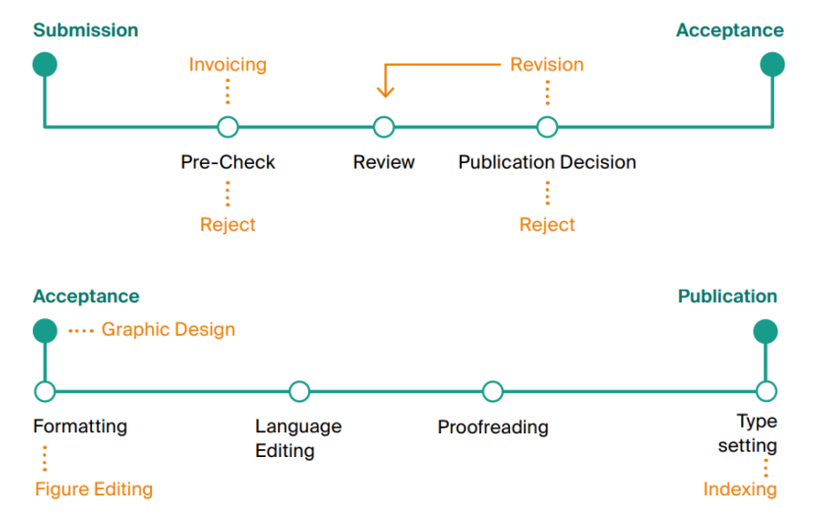
MDPI Books provides comprehensive support throughout the Open Access Book publishing process, from manuscript submission and initial quality checks to peer review, revision, production, and publication.
Following submission, manuscripts undergo an initial assessment, including checks for plagiarism, data integrity, figure permissions, and authorship information. The Editorial Office coordinates peer review and revision processes before accepted manuscripts proceed through professional editing, formatting, typesetting, and proofreading.
Published books are freely available online and can also be accessed in print formats through print-on-demand and distribution channels.
A complete publication process can typically be completed within approximately 6–12 months, depending on manuscript preparation and review requirements.
3. Reprints
In addition to original Open Access Books, MDPI Books provides Reprints, which compile previously published research articles into dedicated book formats.
Unlike Open Access Books, which contain original book-length content, Reprints focus on collecting and presenting existing research content. They allow researchers and editors to bring together related articles into thematic collections, extending the reach and visibility of published research beyond the traditional journal format.
3.1. Types of Reprints
To facilitate the collection and dissemination of published research, MDPI Books provides several Reprint formats.
- Journal Collection Reprints
Journal Collection Reprints compile articles from MDPI journals, including Special Issues, Topical Collections, Topics, and Proceedings.
These collections provide a dedicated book format for completed research collections and are available as digital publications and physical books through print-on-demand services.
- Custom Selection Reprints
Custom Selection Reprints allow tailored collections of published articles to be created according to specific requirements.
They can support various purposes, including thematic research collections, teaching resources, institutional publications, conference and academic meeting materials.
- Article Reprints
Article Reprints are professionally produced copies of individual journal articles. They preserve the original layout and typography of published research papers and provide a tangible format for sharing academic achievements.
They can support research communication, institutional events, academic promotion, and other professional activities.
3.2. Benefits of Reprints
Reprints provide additional opportunities to increase research visibility, organize published studies into focused collections, and support academic communication.
- Extending Research Visibility
By bringing related research articles together into dedicated volumes, Reprints help increase awareness of specific research topics, Special Issues, Topical Collections, and conference contributions.
- Creating Structured Research Collections
Reprints provide a convenient way to organize published studies into cohesive collections, allowing readers to discover related research more efficiently.
- Supporting Authors, Editors, and Institutions
For authors and editors, Reprints provide a lasting representation of research achievements and editorial contributions. For institutions, customized collections can support educational activities, conferences, and academic outreach.
4. Contact
For Open Access Books, researchers interested in editing a book volume or book series or in submitting a monograph proposal, can submit a Proposal Form and refer to the Information for Authors for further details.
For Reprints, authors, editors, and institutions interested in creating Reprints can contact articlereprints@mdpi.com for further information and support.