
A video abstract is the motion picture equivalent of a written abstract. Usually not longer than 5 minutes, video abstracts help the viewer to get a quick overview on a scholarly paper, research article, thesis or review: and to quickly ascertain the purpose and results of a given research.
1. What is a Video Abstract?
As scholarly communication moves toward digital, open access, and multimedia formats, traditional text-based dissemination is being complemented by more dynamic and accessible methods. A video abstract is a concise, visually engaging multimedia presentation that summarizes the core findings of a scholarly article. By combining narration with visuals such as animations, infographics, real-world footage, or data visualizations, it makes complex research easier to understand for both academic and non-specialist audiences.
Video abstracts are often shared through multiple channels, including academic publishers’ platforms (e.g., MDPI, Elsevier, Springer Nature), where they appear alongside the original article, as well as open access repositories, academic networks like ResearchGate, video platforms such as YouTube, and social media channels including LinkedIn and X.
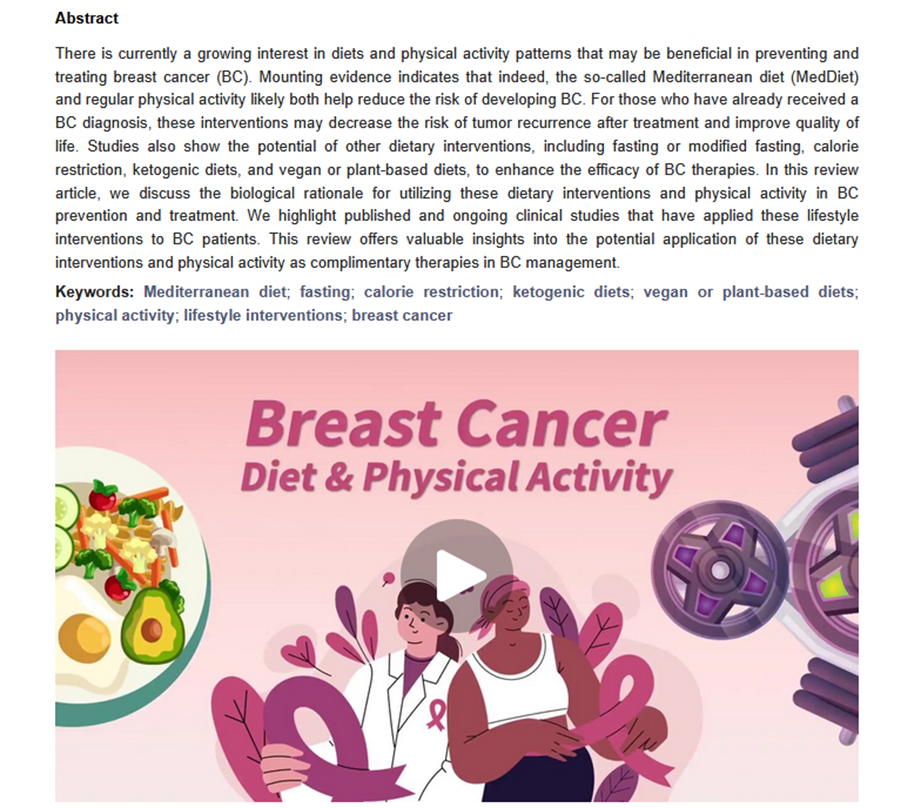
(Read the paper that this video abstract is based on here).
2. Why Create a Video Abstract?
In the evolving landscape of scholarly communication, video abstracts are becoming an essential tool for increasing research visibility, enhancing impact, and improving discoverability in a competitive research environment.
- Enhancing Views
Research consistently shows that video abstracts can significantly improve visibility. A 2014 study in the Journal of Librarianship and Scholarly Communication found that although only 5% of articles included a video abstract, 25–30% of the most-read articles featured one. More recently, a 2023 Scientometrics study reported a 35% increase in article views for papers with video abstracts, even after controlling for other factors.
- Boosting Citations
Research indicates that video abstracts can significantly increase citation rates. A 2009 study published in Scientometrics found that articles accompanied by video abstracts received 20% more citations than those without. This statistically significant increase highlights the role of video abstracts in enhancing a work’s academic reach.
- Amplifying Altmetrics Scores
Video abstracts can also enhance attention beyond scholarly circles. The Scientometrics study showed that articles with video abstracts have been shown to achieve a 25% higher Altmetric Attention Score (AAS), a metric that reflects attention across X , blogs, news outlets, and other digital media.
A well-produced video abstract can:
- Demonstrate experiments or fieldwork visually;
- Clarify theoretical concepts with illustrations or examples;
- Present tools, equipment, or datasets used in the study;
- Highlight simulations or animations that reinforce findings;
- Engage audiences in a more informal and memorable way.
Therefore, video abstracts support scholars when used in academic presentations, lectures, and instructional settings. In an era where research is increasingly evaluated by both scholarly impact and public relevance, video abstracts offer a compelling tool to bridge the gap between academia and broader societal engagement.
3. Which Publishers Encourage Video Abstracts?
Publishers encourage researchers to create and share video abstracts by offering comprehensive support and showcasing their measurable impact. Some publishers integrate video abstract submission options into manuscript submission systems, provide detailed guidelines and templates, and occasionally collaborate with third-party platforms to assist with production.
Most leading academic publishers now support or encourage the use of video abstracts as part of their publishing strategy, recognizing their value in enhancing research visibility and engagement. Publishers such as MDPI, Elsevier, Wiley, ACS Publications, Cell Press, Taylor & Francis, and IOP Science offer dedicated platforms or guidelines for submitting video content alongside written articles. The video abstract “How Do Sex Hormones Control Behavior?” has received over 190,000 views on YouTube, and the related article has been cited more than 290 times, reflecting both its broad public impact and substantial academic influence.
4. How To Produce a Good Video Abstract
A video abstract is a short, engaging video summary that condenses the key elements of a study into a visual format.
- Keep It Brief
Aim for under 5 minutes. Focus on the research question, methodology, key findings, and implications.
- Write a Clear and Engaging Script
Ensure clarity and accessibility. Avoid jargon, keeping the language simple and engaging for a broad audience.
- Use Visuals
Use professional video editing software and animation tools to present charts, graphs, and animations that simplify complex data and highlight key points.
- Ensure Quality Audio and Video
Record in a quiet environment with a good microphone. Proper lighting enhances professionalism.
- Adopt a Conversational Tone
Speak naturally to engage viewers, avoiding reading directly from the script.
However, creating video abstracts remains a significant challenge for most researchers, which is why many are turning to commercial services for assistance. Some video services offer one-stop solutions, helping researchers produce polished video abstracts.
5. MDPI Academic Video Service
The MDPI Academic Video Service is dedicated to helping researchers communicate their work through engaging visual media. Officially launched in April 2025, the service offers comprehensive support, including one-on-one video assistance, scriptwriting and editing, high-quality animations, voice actor or AI voiceovers, multiple revision rounds, custom infographics, and social media promotion.
This service includes the production of Video Abstracts, Short Takes, and Scholar Interviews, designed to complement traditional academic publications and enhance the reach of research.
Encyclopedia has collaborated with more than 56 SCI-indexed journals, including Nutrients, Foods, Sustainability, Cancers, Entropy, Remote Sensing, Nanomaterials, Animals. These collaborations aim to support the dissemination of research findings, facilitate viewer engagement, and contribute to broader scholarly communication efforts.
For more information about video abstracts or assistance with production, you can contact office@encyclopedia.pub.
6. Sample Video Abstracts
Flavonoid-Based Nanoparticles for Osteoarthritis and Rheumatoid Arthritis
Effectiveness of a Nine-Strain Synbiotic in IBS Patients
Estimating Anti-Viral Performance of Photocatalytic Materials