
Supersonic passenger aircraft have regained attention in recent years as advances in aerodynamics, materials, and digital engineering continue to expand the possibilities for high-speed air travel. At the same time, these aircraft introduce engineering challenges that are often more demanding than those encountered in conventional aviation. Fuel systems, in particular, must operate safely under elevated temperatures, complex subsystem interactions, and demanding operating conditions. Addressing potential hazards early in the design process is therefore an important aspect of aircraft development.
A recent study published in Aerospace, titled “Integrating Computer-Aided Design and Model-Based Systems Engineering for Early Zonal Hazard Analysis: Application to a Supersonic Aircraft Fuel System”, presents a framework that combines Computer-Aided Design (CAD) and Model-Based Systems Engineering (MBSE) to support hazard analysis during the conceptual design stage of a supersonic aircraft.
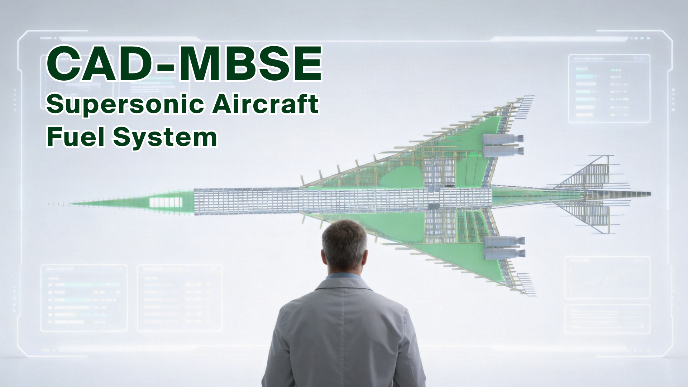
Figure 1. Integrating CAD and MBSE for Early Zonal Hazard Analysis. Produced by MDPI Academic Video Service (Source: https://encyclopedia.pub/video/1819).
1. Safety Challenges in Supersonic Aircraft Design
Safety assessment is a fundamental component of aircraft development. One commonly used approach is Zonal Safety Analysis (ZSA), which examines the interactions between systems and components located within specific areas of an aircraft. Traditionally, these assessments rely heavily on documentation, engineering reviews, and expert judgement.
As aircraft systems become increasingly interconnected, however, potential hazards often arise not only from individual components but also from their interactions with surrounding structures and neighboring systems. In supersonic aircraft, fuel systems may be affected by thermal loads, environmental control systems, structural elements, and propulsion-related components. Detecting these interactions late in development can result in costly redesigns and extended development schedules.
For this reason, there is growing interest in approaches that enable safety considerations to be incorporated earlier in the design process.
2. Linking System Architecture and Aircraft Geometry
The framework proposed in this study combines two complementary engineering tools.
CAD models provide detailed information about the physical arrangement of aircraft structures and subsystems, allowing engineers to evaluate component placement, spatial relationships, and potential thermal or structural concerns.
MBSE, by contrast, focuses on system functionality and interactions. It provides a structured representation of how different subsystems communicate, exchange resources, and respond to failures.
By integrating these two approaches, the framework links aircraft geometry with system architecture, enabling hazard analysis to be performed while the aircraft configuration is still evolving. Information from CAD models can inform system-level assessments, while the results of safety analyses can guide subsequent design modifications. This iterative process supports the refinement of both subsystem layouts and system architecture throughout conceptual development.
3. The SA-24 Phoenix Fuel System
To demonstrate the framework, the researchers applied it to the fuel system of the conceptual supersonic aircraft SA-24 Phoenix.
The study examined several hazards associated with fuel-system operation in a high-speed aircraft environment, including fuel vaporization caused by elevated temperatures, fuel tank over-pressurization, leakage scenarios, and structural fatigue resulting from thermal stresses. The analysis incorporated established safety assessment methods, including Functional Hazard Analysis (FHA), Failure Modes and Effects Analysis (FMEA), and Fault Tree Analysis (FTA), while also considering relevant certification requirements derived from EASA CS-25 standards.
Using the integrated CAD–MBSE framework, the researchers were able to evaluate both the physical arrangement of system components and the functional relationships between subsystems, providing a more comprehensive view of potential risks during early design stages.
4. Hazard Pathways and Mitigation Measures
The analysis identified several subsystem interactions that could contribute to safety risks. For example, heat generated by environmental control system ducting could influence fuel temperatures, while the proximity of fuel-system components to other aircraft systems created additional considerations for hazard management.
The integrated framework also allowed potential mitigation measures to be evaluated during conceptual design. These included thermal insulation, thermal shielding, increased subsystem separation, redundant venting arrangements, and structural fire barriers. Because hazard analysis and design evaluation were conducted within a connected modeling environment, potential design changes could be assessed and incorporated earlier than would typically be possible using conventional document-based approaches.
According to the study, the proposed framework resulted in an estimated reduction of up to 40% in Risk Priority Number (RPN) values for key thermal hazard pathways. The authors also report an approximately 25% reduction in conceptual design iteration time compared with traditional approaches.
5. Implications for Future Aircraft Programs
Although demonstrated using a supersonic fuel system, the framework has potential applications beyond this specific case study. Many modern aircraft contain highly integrated subsystems whose interactions can be difficult to evaluate using conventional methods alone.
The study reflects a broader shift toward digital engineering practices within aerospace development. By connecting geometric models, system architecture, and safety assessment activities, integrated digital frameworks can improve traceability between design decisions and safety requirements while supporting more informed engineering decisions throughout development.
6. Conclusion
The study demonstrates how CAD and MBSE can be integrated to support zonal hazard analysis during the earliest stages of aircraft design. Using the SA-24 Phoenix fuel system as a case study, the authors show how linking physical and functional models can help identify potential hazards, evaluate mitigation strategies, and support safety-informed design decisions before detailed development begins.
As aircraft systems continue to grow in complexity, approaches that enable earlier assessment of subsystem interactions may become increasingly valuable. While further refinement and validation are still needed, the framework presented in this work highlights the potential of digital engineering tools to support more efficient development processes and earlier identification of safety issues in future aircraft programs.