
Colorectal cancer remains one of the leading causes of cancer-related mortality worldwide. Although chemotherapy is widely used to treat this disease, conventional anticancer drugs often lack specificity and may affect both malignant and healthy tissues, leading to significant side effects. For this reason, developing drug delivery systems that can transport therapeutic agents directly to the target site has become an important research focus.
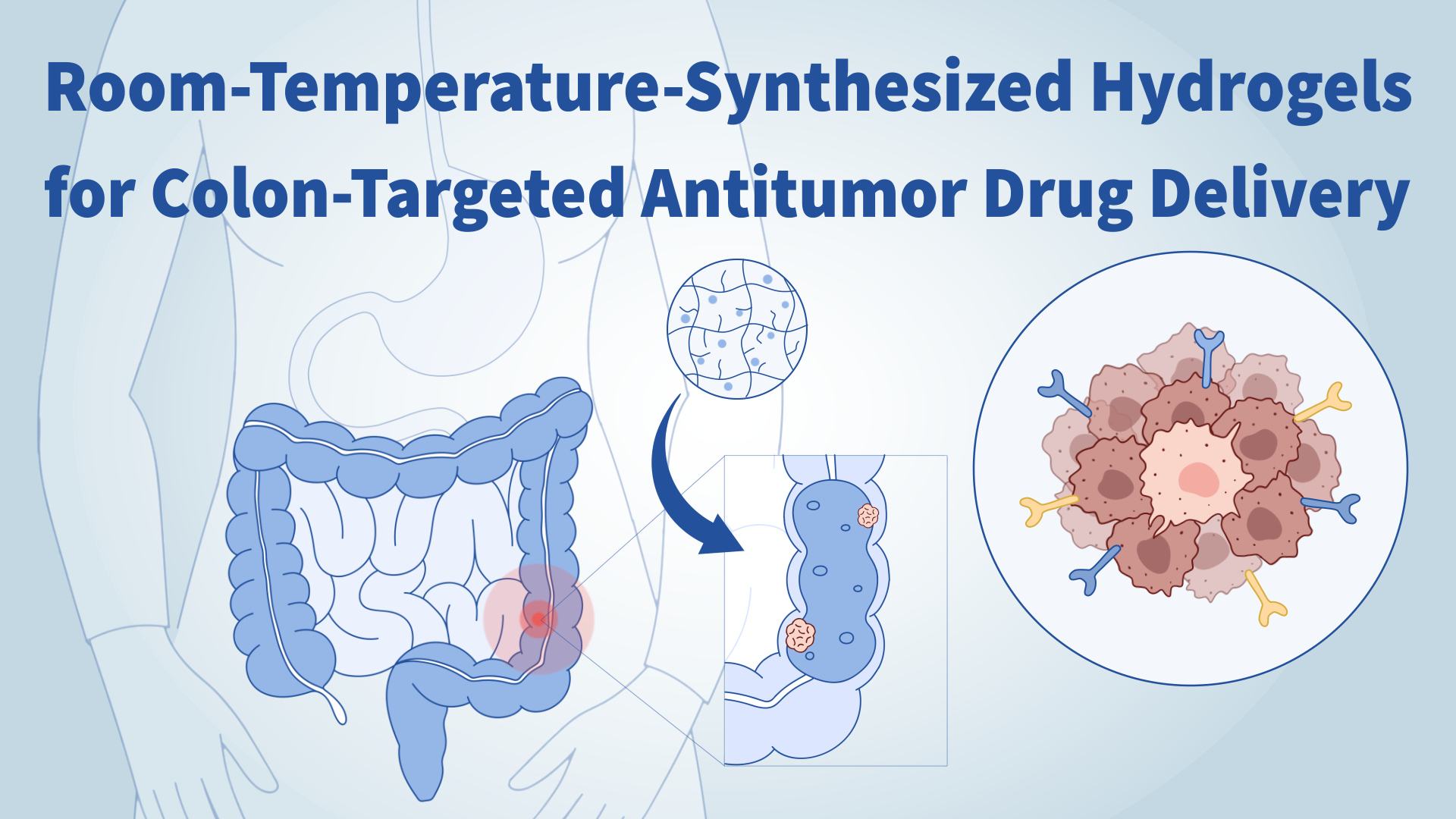
In this context, a recent study published in MDPI Gels, “The Influence of Synthesis Parameters on the Properties of Dextran-Based Hydrogels for Colon-Targeted Antitumor Drug Delivery Part I: Room Temperature Synthesis of Dextran/Inulin Hydrogels for Colon-Targeted Antitumor Drug Delivery”, explores a new strategy for colon-targeted therapy. The researchers developed biopolymer-based hydrogels composed of methacrylated dextran and inulin, two naturally derived polysaccharides that can be selectively degraded by microbial enzymes in the large intestine, enabling enzyme-triggered drug release in the colon.
1. Hydrogels as Drug Carriers
Hydrogels are three-dimensional networks of hydrophilic polymers that can absorb large amounts of water while maintaining their structural integrity. Their porous structure allows them to encapsulate therapeutic molecules and release them in a controlled manner, making them attractive candidates for drug delivery applications.
One particularly important feature of hydrogel systems is their ability to respond to environmental stimuli. Drug release can be triggered by changes in pH, the presence of specific enzymes, or other biological signals. These properties make hydrogels highly adaptable platforms for designing targeted delivery systems.
Biopolymer-based hydrogels are especially promising because they combine biocompatibility, biodegradability, and low toxicity. Natural polysaccharides contain functional groups such as hydroxyl, carboxyl, and amino groups that facilitate the formation of hydrogel networks through chemical or physical crosslinking. Owing to these characteristics, polysaccharide hydrogels have been widely investigated as carriers for anticancer drugs.
However, many existing hydrogel systems rely primarily on pH-sensitive drug release, which can be unreliable in the gastrointestinal tract. The pH varies significantly between different digestive organs and can also fluctuate due to diet, disease, or other physiological factors. This variability may cause drugs to be released before the carrier reaches the intended site.
2. Exploiting the Microbial Environment of the Colon
An alternative strategy is to exploit the unique enzymatic environment of the colon. The large intestine hosts a diverse microbial community capable of producing enzymes that selectively degrade certain polysaccharides. By designing carriers that respond specifically to these enzymes, it becomes possible to trigger drug release precisely in the colon.
Two polysaccharides particularly suited for this approach are dextran and inulin. Dextran can be degraded by the enzyme dextranase, while inulin can be broken down by inulinase. Both enzymes are produced by bacteria within the intestinal microbiota.
Dextran has already been widely investigated as a potential carrier for colon-targeted drug delivery because of its excellent biocompatibility and susceptibility to enzymatic degradation by intestinal bacteria. However, dextran has a limitation: its glycosidic bonds can undergo hydrolysis under the acidic conditions present in the stomach. This may lead to premature degradation of the carrier and unwanted drug release before it reaches the colon.
To overcome this issue, the researchers incorporated inulin into the hydrogel network. Inulin contains β-(2→1) fructan bonds that are highly resistant to acid hydrolysis. As a result, it helps protect the hydrogel structure from degradation in the stomach. In addition, inulin is widely recognized as a prebiotic, meaning that it can promote the growth of beneficial intestinal bacteria that may contribute to the enzymatic degradation process in the colon.
3. A Room-Temperature Method for Hydrogel Synthesis
A key innovation of the study lies in the room-temperature synthesis method used to prepare the hydrogels. Dextran and inulin were first chemically modified with glycidyl methacrylate under mild conditions. The modified polymers were then crosslinked through free radical polymerization in an aqueous solution using N,N′-methylenebisacrylamide as the crosslinking agent.
This synthesis approach offers several advantages. Because the reaction occurs at room temperature, it is energy-efficient and environmentally friendly. The mild conditions also make the method suitable for encapsulating thermolabile molecules, which might otherwise degrade during high-temperature processing. Furthermore, the hydrogels can form within only a few minutes, demonstrating the potential for rapid and scalable production.
Another important aspect of the study is the preparation of the hydrogels in granulated form, allowing them to be incorporated into capsules for oral administration. Encapsulation helps protect the hydrogel during its passage through the stomach and ensures that it reaches the colon before significant degradation occurs.
4. Tuning Hydrogel Properties Through Composition
To understand how the composition of the hydrogel influences its properties, the researchers systematically varied the proportion of inulin in the polymer network. The inulin content ranged from 0 to 20 wt%, allowing the team to evaluate how this parameter affects swelling behavior, structural characteristics, and mechanical properties.
Swelling experiments were conducted at pH 3 and pH 6, conditions relevant to different regions of the gastrointestinal tract. The results showed that hydrogels containing 20 wt% inulin exhibited the highest swelling capacity at both pH values. Increased swelling was associated with a lower crosslink density, resulting in a more flexible and less rigid polymer network.
Mechanical analysis confirmed this relationship. Hydrogels with higher inulin content displayed lower elastic modulus values, indicating reduced mechanical stiffness. To better characterize these materials, the researchers also introduced a new methodology for evaluating the mechanical properties of granulated hydrogels, providing valuable insight into how these materials might perform in practical pharmaceutical formulations.
5. Evaluating Drug Release Behavior
To test the hydrogels as drug carriers, the researchers incorporated uracil as a model compound. Uracil was selected because of its structural similarity to 5-fluorouracil, a widely used chemotherapeutic agent for colorectal cancer treatment.
The in vitro digestion experiments demonstrated that dextran-based hydrogels exhibited the most pronounced enzyme-triggered drug release in the simulated colorectal environment. This finding indicates that dextran plays the primary role in enabling targeted drug delivery through enzymatic degradation.
Interestingly, increasing the proportion of inulin did not significantly enhance biodegradation-driven drug release when combined with dextran. Instead, inulin mainly functioned as a protective component, helping prevent premature hydrolysis of the hydrogel in the acidic gastric medium.
These findings highlight the complementary roles of the two polysaccharides. Dextran governs the enzyme-triggered release mechanism in the colon, while inulin improves stability during the carrier’s transit through the upper digestive tract.
6. Implications for Future Drug Delivery Systems
Overall, this study demonstrates the potential of dextran-based hydrogels synthesized under mild conditions as carriers for colon-targeted drug delivery. The combination of dextran and inulin leverages the unique properties of both polymers: dextran enables enzymatic degradation by colonic bacteria, while inulin provides protection against premature degradation in acidic environments.
The room-temperature synthesis method offers a practical and energy-efficient approach to hydrogel production. At the same time, the ability to tune hydrogel composition allows researchers to optimize swelling behavior, mechanical properties, and degradation profiles.
Taken together, these findings suggest that dextran-based hydrogel systems—particularly those with carefully controlled compositions—represent promising platforms for enzyme-responsive drug delivery strategies aimed at colorectal cancer therapy.
For more information about topic, you can view the online video entitled "Room-Temperature-Synthesized Hydrogels for Colon-Targeted Antitumor Drug Delivery".