You're using an outdated browser. Please upgrade to a modern browser for the best experience.
Potential Bioactive Components in Fruits and Vegetable Wastes: History
Please note this is an old version of this entry, which may differ significantly from the current revision.

The food production industry generates millions of tonnes of waste every day, making it a major contributor to global waste production. Given the growing public concern about this issue, there has been a focus on utilizing the waste generated from popular fruits and vegetables, which contain high-added-value compounds. By efficiently using food waste from the fruit and vegetable industries, we can promote sustainable consumption and production practices that align with the United Nations' Sustainable Development Goals (SDGs).

  • added value
  • fruit and vegetable by-products
  • phytochemical compounds
  • extraction methods
  • applications of bioactive compounds

1. Introduction

The generation of food waste and by-products is viewed as a significant issue with adverse environmental, economic, and social effects. Food waste minimization is a widespread goal across the country. Despite global efforts, food insecurity remains prevalent. In 2020, the FAO estimated that approximately 721 to 811 million people would experience hunger, with 98% of them residing in developing countries [1]. Approximately 14% of the world’s food supply, valued at around $400 billion, is lost annually between harvest and commercialization [2]. Contrarily, it is estimated that 17% of food is lost or wasted during the retail and consumer stages [3]. Reducing food loss and waste is a crucial strategy for enhancing the efficiency, safety, quality, and sustainability of our food systems. The Food and Agriculture Organization (FAO) is committed to minimizing food waste throughout the production chain from harvest to sale [4]. Additionally, researchers must actively engage in recovering and revaluing crop waste by-products to develop innovations for use in the food industry. This approach can reduce food waste and create more resilient food systems.
During the processing of fruits and vegetables, a wide range of by-products are generated, including a significant quantity of waste in the juice industry. This waste includes leaves, peels, unwanted pulp, seeds, cull fruits, and stones [5][6], which contain high levels of bioactive substances such as polysaccharides (starch, cellulose, and pectin) and proteins [7][8]. Numerous studies have identified a variety of bioactive substances in fruit and vegetable by-products (FVBP)—including vitamin C and phytochemical compounds, such as flavonoids, anthocyanins, carotenoids, and phenolic acids [9][10][11]. Food waste has significant potential for producing edible films and coatings. Food-related biowaste can come from family cafeterias, industrial biowaste, decomposable plants, and botanical garden waste [12]. Packaging made from fruit and vegetable waste is a practical solution for reducing the manufacturing costs of edible films and coatings while adding value to food by-products. Additionally, the performance of the food packaging system can be improved through the different biological qualities of FVBP, such as dietary fibers, antioxidants, and antimicrobials [13][14][15][16].
Extracts of FVBP that contain antioxidant properties have been utilized to create innovative functional food products that are highly sought-after and well-received by consumers [17][18][19]. Furthermore, due to their bioactive properties that offer health benefits to humans, these natural additives can also be utilized in the food, biotechnology, and pharmaceutical industries [20]. However, their practical application is limited by their instability when exposed to regular food processing and storage conditions, such as changes in pH, temperature, light, oxygen, and ions. To address this challenge, an encapsulation method has recently been developed to enhance the stability and water solubility of these bioactive components while protecting them from external factors [21][22].

2. Bioactive Components in Fruits and Vegetables Waste

The increasing amount of agroindustrial waste has sparked numerous studies aimed at discovering bioactive compounds, especially in FVBP. These organic waste products contain affordable bioactive compounds (as listed in Table 1) that can be used to create innovative functional food ingredients and additives.
Table 1. Bioactive compounds from fruit and vegetable waste. 

Fruits and Vegetable Waste

Bioactive Compounds

Extraction Method

References

Fruits waste

Blackberry pomace

Phenolic acids, anthocyanins

Pressurized liquid extraction (PLE), supercritical fluid extraction (SFE)

[23]

Blueberry (Vaccinium ashei) juice

Hot water bath and steam pretreatments

[24]

Blackberry, blueberry and jaboticaba skin

-

[25]

Apple peels

-

[26]

Strawberry fruit peel

-

[27]

Raspberry pomace

Solid phase extraction (SPE)

[28]

Red dragon fruit peels

Methanol extraction

[29]

Tomato skin

Carotenoids, phenolic acids, and flavonoids

Supercritical CO2 extraction (SC-CO2)

[30]

Pumpkin seeds, peel, flesh

Aqueous phase extraction

[31]

Papaya peel

Ultrasound assisted extraction (UAE)

[32]

Melon peel

-

[33]

Red beetroot peel extract

Phenolic acids, flavonoids, betalains

Maceration technique

[34]

Red beetroot juice

Ultrasound assisted extraction (UAE)

[35]

Pulp and peel of prickly pear (Opuntia ficus-indica L. Mill) tissues

Single extraction

[36]

Blueberry pomace extract

Phenolic acids, anthocyanins, flavonol

High voltage electrical discharges (HVED), pulsed electric field (PEF), ultrasound-assisted extraction (UAE)

[37]

Apple peels

Phenolic, flavonoids

-

[38]

Vegetable by-products

Broccoli and artichokes waste

Phenolic, flavonoids

Methanolic extraction

[39]

Broccoli waste (stalk)

-

[40]

Asparagus leaf waste

-

[41]

Asparagus Officinalis roots

-

[42]

Onion skin

Pressurized hot water extraction

[43]

Yellow onion skin

Hot water extraction

[44]

Potato waste

Maceration, hot water extraction

[45]

Artichoke, red pepper, carrot, and cucumber waste

Ultrasonic processor

[46]

Potato peel

Phenolic, flavonoids, anthocyanins, carotenoids

-

[47]

Eggplant peel

Phenolic, flavonoids, anthocyanins

Microwave-assisted extraction (MAE)

[48]

3. Extraction Methods

Many bioactive compounds can be found in fruit and vegetable waste. To separate, identify, characterize, and extract these compounds in the proper way, it is crucial to know where they come from and what methods can be used for a particular plant matrix. Extraction technique is necessary to extract the desired bioactive component from a complex plant matrix, to enhance the sensitivity and selectivity of the analytical approach, to change the bioactive compound into an identification and separation form, and to have reproducible extraction methods. The bioactive compound can be extracted from fruit and vegetable waste using conventional and nonconventional techniques [49]. Maceration and hydrodistillation, microwave-assisted extraction, supercritical fluid extraction, pressurized liquid extraction, and pulsed electric field are examples of extraction techniques of bioactive compounds.

4. Valorization of Fruits and Vegetable Waste into Valuable Applications

In parallel with the food waste reduction strategies, recovery and revaluing of crop wastes have been actively conducted. The valorization of crop wastes are discussed in detail in the subsections below.

4.1. Antioxidant

The food sector is becoming increasingly influential in the outcome of novel biomaterials featuring antioxidant characteristics as it has the advantage of enhancing the shelf life of food products [50]. Compounds that are rich in polyphenols, such as phenolic acids and flavonoids, have been reported to have excellent antioxidant capacity [51], as those compounds can scavenge the reactive oxygen species (ROS) present in the food products [52]. Recently, Rangaraj et al. [53] developed an active gelatin film incorporated with date fruit syrup waste extract (DSWE) as an antioxidant additive for food storage studies. The active gelatin/DSWE blend films show a high release profile of the active phenolic compounds and higher antioxidant capacity in an aqueous food medium when compared to lipid-based food stimulants. Venturi et al. [54] used potato peels, which contain bioactive compounds and have higher antioxidant power to enhance the qualitative parameters of fresh-cut apples. During storage, a substantial anti-browning effect and a slowing of the softening of fruits were identified. The observed results indicate that potato extracts are suitable as antioxidant supplements for fresh-cut fruits, hence minimizing the usage of hazardous chemicals. Kurek et al. [52][55] created a chitosan and pectin film mixed with blackcurrant pomace powder to reduce the losses of food production, and this film is focused on food coating and wrappers. Based on the research, the antioxidant activity of the film was increased 30-fold. This film is suitable to be used as active or intelligent packaging films for antioxidant activity of fresh produce.
Kam et al. [56] utilized durian leaf extract in gelatin-based film for antioxidant activity enhancement of biodegradable film as active packaging. This research revealed that gelatin-based film with added 0.5% crude extract of durian leaf has 17.6 times higher DPPH scavenging activity than the negative control sample. Gelatin film with 0.5% durian leaf extract reduced the oxidation of palm oil at a rate that was three times lower. Deshmukh et al. [57] also employed guar gum/carboxymethyl cellulose incorporated with litchi shell waste extract (GCH/LSE) for antioxidant active packaging. According to the results obtained by the researchers, GCH/LSE 20% shows the highest antioxidant activity, which is 91.52%. Active GCH/LSE films are good at maintaining roasted peanuts’ oxidative stability. The GCH/LSE films were proven to be effective antioxidant packaging for foods with a high lipid content. Orqueda et al. [58] tested an active edible film using red chilto (Solanum betaceum) peel and seed to reduce the oxidation of salmon filets during storage. Based on the experiment conducted, samples collected from chilto peel had the highest concentration of phenolic compounds. Antioxidant pectin-based film can be found in S. betaceum fruit peel, and it successfully shows remarkable antioxidant properties that protect the salmon filets.
Ribeiro et al. [59] created pectin–phenolic antioxidant films from mango peels for food packaging applications. Result shows that film with aqueous or methanolic extracts provides higher antioxidant activity based on the inhibition of the DPPH radical. The extracts, on the other hand, increased elongation and the water vapor barrier and also provided films with a greater antioxidant capacity, making them promising materials as active food packaging/coating, particularly for food products susceptible to lipid oxidation, such as edible nuts, fruits, and breakfast cereals. Merino et al. [60] developed a highly antioxidant bioplastic film from avocado peels and seeds. The findings suggest that combining hydrolysis, plasticization, and pectin blending is critical for obtaining materials with competitive mechanical properties, biodegradability, excellent oxygen barrier properties, high antioxidant activity, optical clarity, and component migration suitable for food contact applications. The created materials, which stand out for their antioxidant activity, natural composition, and ecologically safe technique of creation, thereby constitute an appropriate and sustainable alternative to conventional nonbiodegradable plastic food packaging materials. A new active coating was developed using Cucumis metuliferus (CM) fruit-extract-loaded acetate cellulose coating for antioxidant active packaging [61]. To assess the total phenolic components and antioxidant activity of CM, the extraction procedure was initially optimized. Release studies of CM from the cellulose acetate layer to a fatty food simulant verified the antioxidant efficiency of bilayer packaging.
Gaikwad et al. [13] created a biocomposite film made of polyvinyl alcohol and apple pomace that possesses antioxidant qualities and may be used in active food packaging applications for the storage of soybean oil. They discovered that the inclusion of apple pomace into PVA films increased the overall phenolic content and the antioxidant capabilities of the films in delaying lipid oxidation. Meanwhile, Matta et al. [62] created an active edible film of methylcellulose (MC) containing extracts of green apple (Granny Smith) skin by incorporating ethanolic extracts of freeze-dried apple skin (EEFD) and aqueous extracts of apple skin (AES). The results indicate that including extract of green apple skin into MC films increases the films’ overall phenolic contents and antioxidant capabilities. The potential for developing these films into functional packaging materials for food to ensure quality and safety and broaden the shelf life of packaged foods is therefore significant, and it represents an attractive alternative to the conventional packaging materials in terms of food safety and shelf life extension. Similarly, Han and Song [63] conducted a study on the antioxidant properties of mandarin (Citrus unshiu) peel pectin films comprising sage (Salvia officinalis) leaf extract for environmentally and biodegradable food packaging in which the biopolymer films were made from pectin derived from mandarin peel, a waste of fruit processing. Antioxidant activity of the film increased as the amount of sage leaf extract increased, which indirectly proved the antioxidant properties of sage leaf extract.
Furthermore, Saberi et al. [14] utilized pea starch and guar gum (PSGG) to produce food packaging that was incorporated with natural antioxidants comprising of epigallocatechin gallate (EGCG), blueberry ash (BBA) fruit extract, macadamia (MAC) peel extract, and banana (BAN) peel extract. The findings showed that EGCG-PSGG films had the most antioxidant power, followed by BBA-PSGG, MAC-PSGG, and BAN-PSGG films, at all concentrations (0.75–3 mg mL−1) when measured using DPPH radical scavenging ability assay, cupric reducing antioxidant (CUPRAC), and ferric reducing activity power (FRAP). Inclusion of natural additives has been demonstrated to improve the moisture barrier of the films. Shahbazi [64] combined ethanolic red grape seed extract and Ziziphora clinopodioides essential oil into chitosan and gelatin films to enhance the antibacterial, antioxidant, physical, and mechanical properties of the chitosan (Ch) and gelatin (Ge) films. The two most important chemicals in the ZEO are carvacrol and thymol, which provide antibacterial and antioxidant properties for ZEO. In addition, mango peel extract (MPE) has revealed its robust free-radical-scavenging capabilities and was combined with fish gelatin films to improve the physical, barrier, mechanical, and antioxidant capabilities of the developed film [65].
Interestingly, Melo et al. [66] integrated three chemical fractions derived from mango kernels to create active films: mango kernel starch (MKS) as a matrix, mango kernel fat (MKF), and phenolic extract (MKPE). MKPE was added to give the films active qualities such as primarily antioxidant and UV absorber. The active films are especially appealing for use as bags, pouches, or coatings for oxidizable foods. Additionally, Moghadam et al. [67] created edible antioxidant films using mung bean protein and pomegranate peel. The current study effectively enhanced mung bean protein-based edible films with varying amounts of pomegranate peel as a natural bioactive chemical to develop an antibacterial and antioxidant packaging system. Pomegranate peel, a low-cost by-product of the food industry, has the potential to improve the bio-functional qualities of mung bean protein film. Rodsamran and Sothornvit [68] developed a pectin fraction from pineapple peel to serve as biopolymer films. As expected, TPC and antioxidant activity against DPPH and ABTS radicals in pectin films rose significantly when the PPS to water ratio increased in both stimulation media. The results demonstrated that the whole pineapple peel pectin extract solution (PPS) can be used as a natural plasticizer to produce pectin films with enhanced film properties, particularly in terms of the water vapor barrier and antioxidant properties, and that this research has the potential to become an effective active film or coating for food applications.
Additionally, Vargas-Torrico et al. [69] created gelatin/carboxymethylcellulose active films with Hass avocado peel extract as berry preservation packaging. According to their findings, avocado extract gave active films antifungal and antioxidant properties and altered the physicochemical characteristics of active films. Talón et al. [70] created edible films with a polyphenol from thyme extract (TE) as an antioxidant incorporated into chitosan and starch matrix. Inclusion of TE in the polymer matrix has been shown to improve the mechanical properties of the film as well as providing great antioxidant capacity. The findings also suggested that these antioxidant films may be used for coating applications to extend the shelf life of items susceptible to oxidative processes. Moreover, Urbina et al. [71] employed 100% apple-waste-derived multicomponent films as antioxidants in developing an active packaging. The researcher creates nano papers (NPs) with higher hydrophobicity and antioxidant activity from bacterial cellulose. PHA coatings with varying concentrations of apple extract (e) with antioxidant activity were also applied to the nano papers (NP/PHA-e). The integration of apple extract in the PHA coating supplied free radical scavenging capability to the films since the extracts retained their antioxidant potential after the films were processed. Kurek et al. [11] examined blueberry and red grape skin extract incorporated with chitosan (CS) and carboxymethyl cellulose (CMC) as an antioxidant film. The result showed that blueberry and red grape skin pomace extracts gives a great antioxidant activity.

4.2. Antimicrobial

As a result of recent worldwide food-borne microbial outbreaks, researchers have been looking for novel approaches to preventing microbial growth in food without compromising its flavor, texture, or safety. Use of antimicrobial packaging is one strategy that gives consumers more peace of mind about the quality and security of their food. Therefore, the use of polymers or antimicrobial agents to create barrier-enhanced or active packaging materials is a promising strategy for preventing the growth and dissemination of microorganisms in food. Recently, Ali et al. [16] employed pomegranate peel particles (PGP) mixed with starch as antimicrobial films which can also be used as food grade packaging material. PGP suppressed the development of both gram-positive (S. aureus) and gram-negative (Salmonella) bacteria. The research showed that created films displayed good antibacterial properties against both S. aureus and Salmonella. It was observed that as the concentration of PGP increased, so did the inhibition zone of the films against the targeted bacteria. PGP was significantly more effective against S. aureus than it was against Salmonella. Comparably, Hanani et al. [72] investigated fish gelatin films’ antibacterial characteristics as active packaging using pomegranate (Punica granatum L.) peel powder (PPP). Inclusion of PPP increased the physicochemical properties of the films as well as providing antibacterial capabilities. One of the most sensitive bacteria to the active film was determined to be Staphylococcus aureus (S. aureus), followed by Listeria monocytogenes (L. monocytogenes) as well as Escherichia coli (E. coli). For S. aureus, the most significant inhibitory zone (7.00 mm) was detected surrounding the film containing 5% PPP. These findings indicate that fish gelatin incorporating PPP has tremendous potential as a compelling film with antibacterial capabilities and can help maintain food quality and extend shelf life. Saleem and Saeed [73] studied the orange (Citrus sinensis L.), yellow lemon (Citrus limonia Osbeck), and banana (Musa acuminata) peel extracts as wide-range natural antimicrobial agents for agrowaste minimization. This study discovered that gram-negative bacteria are more sensitive to the extracts, with Klebsiella pneumoniae (gram-negative) bacteria exhibiting the highest sensitivity to the yellow lemon peel extract and the largest zone of inhibition.
Jodhani and Nataraj [74] utilized aloe vera gel and lemon peel extract to maintain the shelf life of banana (Musa spp.). The antifungal properties of lemon peel extract have been successfully tested on Colletotrichum musae, a decay-causing pathogen in bananas. The coating extended the shelf life of bananas up to 9 days without any disease incident. The combination effect on aloe vera and lemon peel essential oil effectively reduced quality losses of bananas without the use of chemical preservatives and hazardous fungicides. Meydanju et al. [75] developed a biodegradable film from lemon peel powder combined with xanthan gum (XG) and TiO2–Ag nanoparticles to inhibit the growth of Escherichia coli and Staphylococcus aureus. The synergistic effect of XG/TiO2-Ag and lemon peel powder has been reported to increase the growth of inhibition zone diameter. Additionally, Alparslan and Baygar [76] utilized orange (Citrus sinensis [L.] Osbeck) peel and combined it with chitosan films to monitor and evaluate the shelf life of deepwater pink shrimp. The antimicrobial properties of the combined film were tested on Bacillus subtilis, Staphylococcus aureus, Escherichia coli, Pseudomonas aeruginosa, and Candida albicans. The combination of chitosan film and OPEO (CH+OPEO) was effective in extending the shelf life of fresh shrimp to 15 days, whereas the only chitosan-coated (CH) group had a shelf life of 10 days, and the uncoated samples (control) only had a shelf life of 7 days.
Furthermore, Agdar et al. [77] evaluated the effectiveness of the salep gum coating containing orange peel essential oil in inhibiting the microbial growth on fish filets stored in refrigerated temperature for 16 days. The combined film prevented the growth of total aerobic mesophilic, coliforms, psychrophilic, and lactic acid bacteria. Additionally, the shelf life of fish filets was extended to 12 days when coated with salep gum containing 0.5% orange peel essential oil. Ramli et al. [78] observed the antibacterial activity of durian (Durio zibethinus) seed and peel extracts for effective shelf life enhancement of preserved meat. In terms of antibacterial characteristics, studies indicate that seeds have promising antimicrobial properties against E. coli, P. vulgaris, S. marcescens, and S. aureus and greater inhibitory zone size than peeling. Mayeli et al. [79] innovated a coating layer enriched with zein and sour orange peel extract to act as an antibacterial coating for refrigerated fish. The developed coating reduced the number of Enterobacteriaceae, Pseudomonas spp., and psychrotrophic bacteria during the storage period. The combined effect of the coating layers extended fish freshness by an average of 12 days. Shukor et al. [80] innovated antimicrobial packaging films using jackfruit peel waste for the shelf life of cherry tomatoes. The samples were tested for 7 days and the antimicrobial activity was done using Escherichia coli and Staphylococcus aureus. Based on the results gained, both Escherichia coli and Staphylococcus aureus were inhibited by films containing 10 wt% thymol. The application of these active films to actual food demonstrated that cherry tomato samples exhibited a considerable reduction in fungus growth.

4.3. Antibrowning

The browning reaction, caused by an enzyme, is a serious issue with fresh produce. It alters the food’s quality in an unfavorable way, shortens its shelf life, and decreases its value on the market. Chemicals, especially sulfites, can inhibit enzymes responsible for browning. Reports indicate, however, that it poses health risks to consumers. Recently, Thivya et al. [81] discovered a new alternative to prevent the browning of fresh-cut apples and potatoes by proposing an active packaging composed of sodium alginate (SA) and carboxymethyl (CMC) along with shallot onion waste extract (SOWEs). Shallot onion waste extracts were reported to have an antibrowning effect due to their high content of polyphenols and antioxidant activity. The incorporation of SOWEs in SA/CMC active packaging has successfully inhibited the enzymatic reaction of polyphenol oxidase that is responsible for enzymatic browning in fruits and vegetables. Similarly, Tinello et al. [82] inactivated polyphenol oxidase enzyme using juices and distillates extracted from different onion varieties (white, yellow, and red) and inner layers of Borettana onion wastes. The inhibitory action of the extracted anti-browning agents was tested on commercial mushroom tyrosinase. The studies not only inhibited browning action but also extended the shelf life and improved the sensory properties of the food products. Interestingly, Liang et al. [83] successfully inhibited browning action in fresh-cut asparagus lettuce using extractable condensed tannins (ECTs) extracted from durian shells. The inhibitory action is predominant due to the presence of B-type procyanidins, propelargonidins and prodelphinidins, as well as a low degree of 3-O-galloylation, which are potent compounds that inhibit tyrosinase activity in fruits and vegetables.
Furthermore, Jirasuteeruk and Theerakulkait [84] investigated the anti-browning properties of mango peel extract from different varieties of mangoes. It was reported that mango extract from the Chok-Anan cultivar showed to have greater inhibition action compared to the Nam-Dok-Mai and Kaew cultivars. Chok-Anan mangoes exhibited high phenolics content and therefore inhibited polyphenol oxidase to a greater extent than the other two cultivars. Faiq and Theerakulkait [85] also reported that papaya peel crude extract has high bioactive phenolic compounds and hence has successfully inhibited browning reaction in potatoes, apples, and bananas. Martínez-Hernández et al. [86] produced an antibrowning agent from tomato skin which has a very high lycopene content. Fresh-cut apples were dipped in the lycopene microspheres, which successfully controlled the browning reaction after 9 days at 5 °C. Tinello et al. [87] utilized the juices from unripe grapes to serve as antibrowning and antioxidant agents to dried “Golden Delicious” apple slices. The appearance of the treated apple slices showed good results, demonstrating that the antibrowning agent of unripe grape juices effectively inhibited polyphenol oxidase activity.

4.4. Adsorbents

There is an alarming level of contamination in the aqueous medium, atmosphere, and geosphere due to the large number of toxic and poisonous chemicals released into our environment by various industries. Heavy metal pollution of the aqueous medium is a growing environmental crisis. Particularly problematic in treating industrial wastewater are toxic metals like zinc, mercury, lead, chromium, cadmium, nickel, and copper. Most of them cause cancer and are not biodegradable; they also form aggregates in living organisms. In order to safely remove pollutants and metallic elements from industrial effluents and wastewater, considerable in-depth industrial research has been conducted. As a result, several forms of fruit waste could be utilized to absorb or eliminate hazardous compounds, such as pesticides, heavy metals, and dyes.
Hussain et al. [88] study the flavonoids, total phenolics, and antioxidant properties of agricultural wastes and their capacity to eliminate pesticide waste using banana peels. Banana peels contain chlorophyll, hemicellulose, pectin, cellulose, and other low-molecular-weight compounds with higher antioxidant activity and phenolic content. At a concentration of 9 g, banana peels successfully decreased diazinon by 63.86%, while parathion was lowered by 50.34%. This study shows that agricultural wastes effectively remove diazinon from water, and their usage is environmentally friendly. Maia et al. [89] created activated carbon using banana peel waste using NaOH and pyrolysis to remove methylene blue. The results revealed that the activated carbon derived from banana peel waste has a vast surface area, which is required to remove blue methylene. The maximum dye removal efficiency was 99.8% when the MB starting concentration was 25 mg/L, the sorbent was 0.03 g, and the contact duration was 60 min. Banana-peel-activated carbon coated with Al2O3-Chitosan was developed. Ramutshatsha-Makhwedzha et al. [90] tested this study for the adsorption removal process of cadmium and lead from wastewater and found it to be successful. The BPAC composite was proven reusable until the third cycle of adsorption–desorption (% Re > 80). Based on the data obtained, the produced material could remove Cd2+ and Pb2+ up to 99.9% of the time.
Wang et al. [91] investigated activated carbon generated using tangerine seed waste for high-performance carbamate pesticide adsorption of plants and water. A novel activated carbon produced from waste tangerine seed was effectively synthesized in this work. Batch adsorption investigations revealed that the pseudo-second-order kinetic model and the Langmuir isotherm model predicted TSAC adsorption behavior well. Bendiocarb, metolcarb, isoprocarb, pirimicarb, carbaryl, and methiocarb have adsorption capacities of 7.97, 9.11, 13.95, 39.37, 44.64, and 93.46 mg/g, respectively. Furthermore, this adsorption mechanism was both spontaneous and exothermic. Gnanasekaran et al. [92] used orange peel extract with 3D ZnO/SnO2 for the removal of chlorophenol effluent. The research found that the existing various (Zn2+, Sn4+, and Sn2+) states aided in postponing the transmission of electron–hole recombination to achieve photocatalytic chlorophenol degradation. In this study, a green 3D composite system is used to absorb the chlorophenol by 77.5% through photocatalysis. Aminu and Oladepo [93] created orange-peel-mediated synthesis of silver nanoparticles for the detection of mercury (II) ions. Their results found that the golden-brown AgNPs colloid solution turned colorless when applied to water. AgNPs show good sensitivity and selectivity for the colorimetric detection of mercury (II) ions with the limit of detection og 1.24 × 10⁻⁶ mol/L.
Hassan et al. [94] also used date pits for the removal of organophosphorus pesticide from water. Three types of date pits were used as adsorbents, including roasted date pits, activated date pits, and nanoactivated date pits. The observation shows that nanoactivated date pits have high removal percentage and removal capacity of profenofos from aqueous solution compared to roasted date pits and activated date pits. Mohammad and El-Sayed [95] created activated carbon peach stones for the removal of imidacloprid. The researcher used two types of activated carbon (PSAC 300 and PSAC 500). The result shows that both PSAC 300 and PSAC 500 were able to remove imidacloprid, with about 80% and 99% removal efficiencies, respectively. Overall, PSAC 500 exhibited the maximum adsorption capacity of 39.37 mg/g. Al-Ghouti and Sweleh [96] employed activated carbon (ACOS) from black and green olive stones to remove methylene blue (MB) in water successfully. It was also discovered that black activated carbon olive stones had the most significant N%, H%, and C% prior to adsorption. Furthermore, the highest absorption of methylene blue occurred at the optimal pH value of 10. Methylene blue adsorption capacities were 714 mg g−1 and 769 mg g−1 for black and green activated carbon olive stones, respectively.
Batool et al. [97] removed organochlorine pesticides (OCPs) using a zerovalent iron (Fe0) supported on biochar nanocomposite (Fe0-BRtP) from Nephelium lappaceum (Rambutan) fruit peel waste. The experiment found that Fe0-BRtP combined the advantages of adsorption and dechlorination of OCPs in aqueous solution and up to 96–99% removal was obtained within 120 min. The removal efficiency of regenerated Fe0-BRtP was 89–92% after being reused five times. This Fe0-BRtP nanocomposite could be used as a green and low-cost prospective material for adsorption and reduction of OCPs in aquatic environments. Shakoor and Nasar [98] used citrus limetta peel waste as a methylene blue dye adsorbent. Langmuir adsorption isotherm was found to be the best fit for the data. The maximum adsorption capacity for a monolayer coverage was found to be 227.3 mg/g. The results show that CLP is a very effective, low-cost method of removing dyes from wastewater. Salama [99] investigated cellulose grafted with soy protein isolate (SPI) to remove organic dyes from wastewater. This method exhibited adsorption capacity up to 454 mg/g. The efficiency of MB removal was 95% after four adsorption-desorption cycles. This method is a new sustainable, cost-effective, and reusable hybrid material which can successfully adsorb dyes in wastewater. Goksu and Tanaydin [100] devised a technique for removing crystal violet (CV) color that uses almond shells as an effective adsorbent, and according to the findings of this study, almond shells are effective adsorbents for extracting crystal violet (CV) from aqueous solutions. On almond shells, the excellent adsorption capacity was reported to be 1.075 mg g−1. According to the results of the adsorption experiment, almond shells might be utilized to effectively remove CV in aqueous solutions.

4.5. Indicator in Packaging

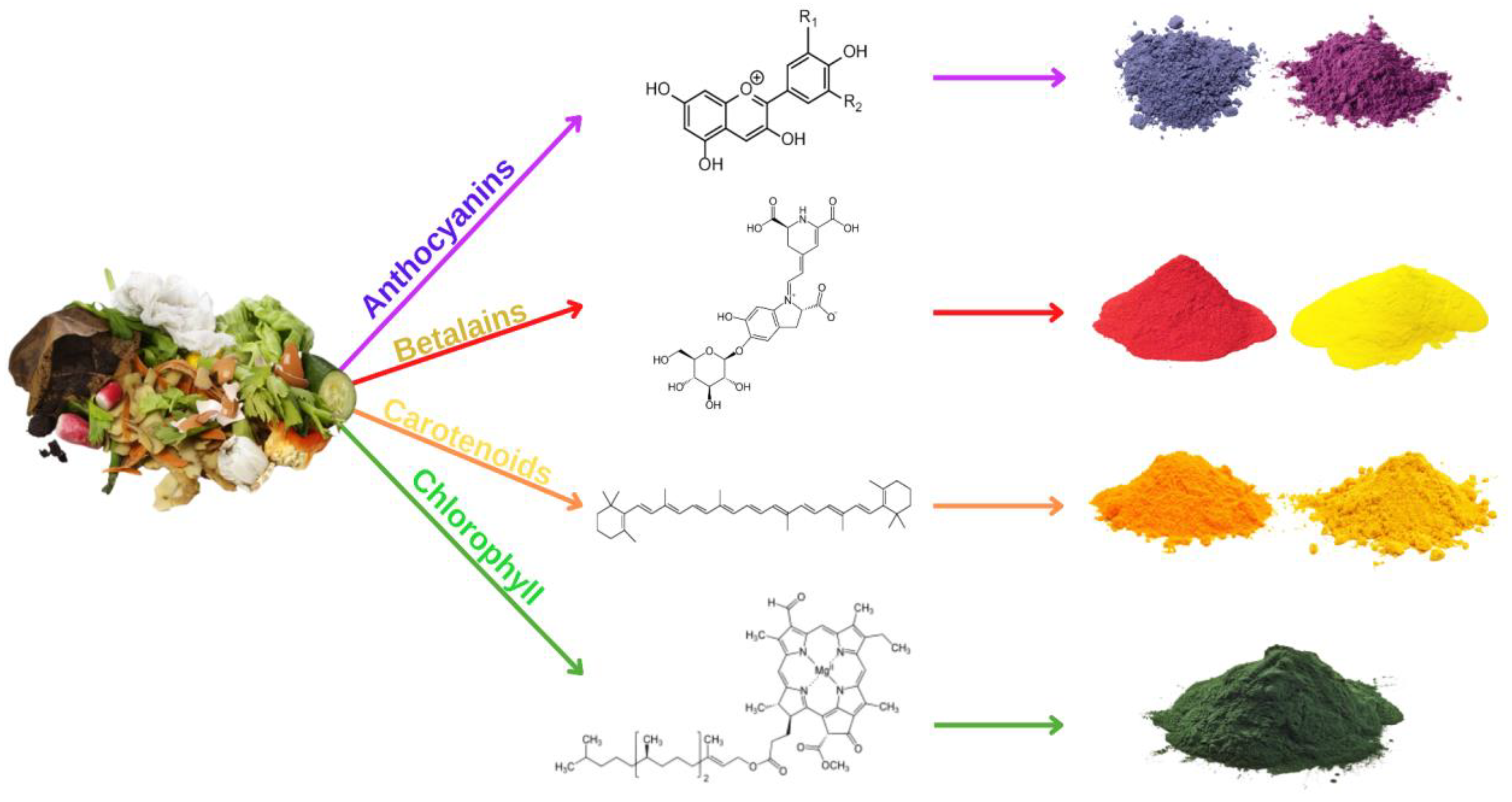
Petrochemical-derived synthetic pigments have been widely employed in a variety of food items. However, these colors negatively impact human health, making it necessary for the scientific community to search for safer, natural, and eco-friendly pigments. Recently, the pigments industry has expanded fast due to its numerous applications in food. As a result, it requires sustainable pigments manufacturing from renewable bio-resources. The valorization of vegetal wastes can fulfill the needs of natural pigment production at the industrial scale for food, medicinal, and cosmeceutical uses. Natural colors, such as anthocyanins, betalains, carotenoids, and chlorophylls, are abundant in these wastes [101]. Figure 1 below shows the source of natural pigments.
Figure 1. Natural source of pigments.

4.6. Enzymes

In the industrial sector, enzymes play a crucial role in reducing chemical loads, eliminating toxic substances, and reducing pollution [102]. Industrial enzymes currently have a market value of USD 5.9 billion, with a projected market value of USD 8.7 billion in 2026 and a compound annual growth rate of 6.5% [103]. A wide range of enzymes are commonly used in the industry, including lipases, carbohydrases, proteases, and polymerases [104]. Most of the waste produced by the food industry is lignocellulosic, which contains enzymes that are essential raw materials for production and processing [105]. As an example, bromelain, which is extracted from pineapple peel, can improve food digestion [106] and soften beef meat [107] and can be transformed into value-added products.
Previously, Hussain et al. [108] extracted bromelain from pineapple core using the maceration extraction method. A maceration of chicken breast meat with 100% core extract shows an 86% reduction in hardness and pH decreases from 5.87 to 4.99. Meanwhile, Singh et al. [109] analyzed the effect of bromelain enzyme extracted from four different pineapple wastes—peel, stem, core, and crown—on tenderizing chicken and beef meat. Rizqiati et al. [110] investigated the effect of drying on cayenne pineapple crown enzyme characteristics—including protein content, activity units, and specific activity—in terms of moisture content, yield, and characteristics. The results obtained showed that the optimal drying temperature was 55 °C because it had the highest moisture content, protein content, and enzyme characteristics as well as the longest immersion duration for the best texture of meat. Lipases have been applied as food additives in the modification of taste in the food industry [111]. Recently, Okino-Delgado et al. [112] examined different varieties and fractions of orange wastes as sources of lipases. Among the fruit varieties studied, bagasse, peel, and frit lipases showed optimal pH values between 6.0 and 8.0 and optimal temperatures between 30 °C and 60 °C. Next, Tambun et al. [113] successfully produced fatty acids directly from avocado seeds by activating the lipase enzyme. The highest fatty acid content found was 11.67%. Furthermore, there is an enzyme called papain present in the bark, leaves, and fruit of the papaya plant [114].
Papain is extracted from fruit and stem latex can be utilized as a primary ingredient in brewing and winemaking [115]. Singla et al. [32] previously investigated the effects of microwave treatment and enzyme addition on ultrasound-assisted extraction (UAE) of bioactive compounds and antioxidant activity from papaya peels. Extracts prepared using UAE extraction were found to have antioxidant activity, indicating that they are useful for preparing plant extracts that contain antioxidants. Phothiwicha et al. [116] evaluated the bioactivity of papain extracted from Chaya and papaya stalks on beef meat. The texture and mastication of beef samples marinated with papain had a softer texture and were easier to chew after the marination. Amylases can therefore be used in a variety of industries, such as food, fermentation, and pharmaceuticals [117]. At present, Abdullah et al. [118] produced a safe sweetener in the form of glucose syrup using alpha amylase extracted from mango seed core, which can be used as an alternative to artificial sweeteners through enzymatic reactions. In a study which tested the amylase production ability of Bacillus subtilis K-18 (KX881940) by hydrolyzing potato peels as carbon sources, Mohtaq et al. [119] found that the bacterium can produce amylase as a result of starch hydrolysis.

This entry is adapted from the peer-reviewed paper 10.3390/molecules28062631

References

  1. UNICEF. The State of Food Security and Nutrition in the World 2021; FAO Publisher: Rome, Italy, 2021.
  2. FAO, I. The State of Food and Agriculture 2019. Moving Forward on Food Loss and Waste Reduction; FAO Publisher: Rome, Italy, 2019; pp. 2–13.
  3. UNEP. Food Waste Index Report 2021. Available online: https://www.unep.org/resources/report/unep-food-waste-index-report-2021 (accessed on 15 September 2022).
  4. FAO. Food Loss and Waste 2022. Available online: https://www.fao.org/nutrition/capacity-development/food-loss-and-waste/en/ (accessed on 15 September 2022).
  5. de los Ángeles Fernández, M.; Espino, M.; Gomez, F.J.; Silva, M.F. Novel approaches mediated by tailor-made green solvents for the extraction of phenolic compounds from agro-food industrial by-products. Food Chem. 2018, 239, 671–678.
  6. Amaya-Cruz, D.M.; Rodríguez-González, S.; Pérez-Ramírez, I.F.; Loarca-Piña, G.; Amaya-Llano, S.; Gallegos-Corona, M.A.; Reynoso-Camacho, R. Juice by-products as a source of dietary fibre and antioxidants and their effect on hepatic steatosis. J. Funct. Foods 2015, 17, 93–102.
  7. Bas-Bellver, C.; Barrera, C.; Betoret, N.; Seguí, L. Turning agri-food cooperative vegetable residues into functional powdered ingredients for the food industry. Sustainability 2020, 12, 1284.
  8. Ni, N.; Dumont, M.J. Protein-based hydrogels derived from industrial byproducts containing collagen, keratin, zein and soy. Waste Biomass Valorization 2017, 8, 285–300.
  9. Barros, H.D.; Baseggio, A.M.; Angolini, C.F.; Pastore, G.M.; Cazarin, C.B.; Marostica-Junior, M.R. Influence of different types of acids and pH in the recovery of bioactive compounds in Jabuticaba peel (Plinia cauliflora). Int. Food Res. J. 2019, 124, 16–26.
  10. Machado, A.P.D.; Rezende, C.A.; Rodrigues, R.A.; Barbero, G.F.; Rosa, P.D.V.E.; Martínez, J. Encapsulation of anthocyanin-rich extract from blackberry residues by spray-drying, freeze-drying and supercritical antisolvent. Powder Technol. 2018, 340, 553–562.
  11. Kurek, M.; Hlupić, L.; Garofulić, I.E.; Descours, E.; Ščetar, M.; Galić, K. Comparison of protective supports and antioxidative capacity of two bio-based films with revalorised fruit pomaces extracted from blueberry and red grape skin. Food Packag. Shelf Life 2019, 20, 100315.
  12. Ardolino, F.; Parrillo, F.; Arena, U. Biowaste-to-biomethane or biowaste-to-energy? An LCA study on anaerobic digestion of organic waste. J. Clean. Prod. 2018, 174, 462–476.
  13. Gaikwad, K.K.; Lee, J.Y.; Lee, Y.S. Development of polyvinyl alcohol and apple pomace bio-composite film with antioxidant properties for active food packaging application. J. Food Sci. Technol. 2016, 53, 1608–1619.
  14. Saberi, B.; Vuong, Q.V.; Chockchaisawasdee, S.; Golding, J.B.; Scarlett, C.J.; Stathopoulos, C.E. Physical, barrier, and antioxidant properties of pea starch-guar gum biocomposite edible films by incorporation of natural plant extracts. Food Bioprocess Technol. 2017, 10, 2240–2250.
  15. Šeregelj, V.; Pezo, L.; Šovljanski, O.; Lević, S.; Nedović, V.; Markov, S.; Tomić, A.; Čanadanović-Brunet, J.; Vulić, J.; Šaponjac, V.T.; et al. New concept of fortified yogurt formulation with encapsulated carrot waste extract. LWT 2021, 138, 110732.
  16. Ali, A.; Chen, Y.; Liu, H.; Yu, L.; Baloch, Z.; Khalid, S.; Zhu, J.; Chen, L. Starch-based antimicrobial films functionalized by pomegranate peel. Int. J. Biol. Macromol. 2019, 129, 1120–1126.
  17. Maner, S.; Sharma, A.K.; Banerjee, K. Wheat flour replacement by wine grape pomace powder positively affects physical, functional and sensory properties of cookies. Proc. Natl. Acad. Sci. India Sect. B 2017, 87, 109–113.
  18. Ayo, J.A.; Kajo, N. Effect of soybean hulls supplementation on the quality of acha based biscuits. Am. J. Agric. Biol. Sci. 2016, 6, 49–56.
  19. Marchiani, R.; Bertolino, M.; Ghirardello, D.; McSweeney, P.L.; Zeppa, G. Physicochemical and nutritional qualities of grape pomace powder-fortified semi-hard cheeses. J. Food Sci. Technol. 2016, 53, 1585–1596.
  20. Coman, V.; Teleky, B.E.; Mitrea, L.; Martău, G.A.; Szabo, K.; Călinoiu, L.F.; Vodnar, D.C. Bioactive potential of fruit and vegetable wastes. Adv. Food Nutr. Res. 2020, 91, 157–225.
  21. Gomes, S.; Finotelli, P.V.; Sardela, V.F.; Pereira, H.M.; Santelli, R.E.; Freire, A.S.; Torres, A.G. Microencapsulated Brazil nut (Bertholletia excelsa) cake extract powder as an added-value functional food ingredient. LWT 2019, 116, 108495.
  22. Souza, A.C.P.; Gurak, P.D.; Marczak, L.D.F. Maltodextrin, pectin and soy protein isolate as carrier agents in the encapsulation of anthocyanins-rich extract from jaboticaba pomace. Food Bioprod. Process. 2017, 102, 186–194.
  23. Santos, P.H.; Ribeiro, D.H.B.; Micke, G.A.; Vitali, L.; Hense, H. Extraction of bioactive compounds from feijoa (Acca sellowiana (O. Berg) Burret) peel by low and high-pressure techniques. J. Supercrit. Fluids 2019, 145, 219–227.
  24. Zhang, L.; Wu, G.; Wang, W.; Yue, J.; Yue, P.; Gao, X. Anthocyanin profile, color and antioxidant activity of blueberry (Vaccinium ashei) juice as affected by thermal pretreatment. Int. J. Food Prop. 2019, 22, 1035–1046.
  25. Rigolon, T.C.B.; Barros, F.A.R.D.; Vieira, É.N.R.; Stringheta, P.C. Prediction of total phenolics, anthocyanins and antioxidant capacity of blackberry (Rubus sp.), blueberry (Vaccinium sp.) and jaboticaba (Plinia cauliflora (Mart.) Kausel) skin using colorimetric parameters. Food Sci. Technol. 2020, 40, 620–625.
  26. Riaz, A.; Aadil, R.M.; Amoussa, A.M.O.; Bashari, M.; Abid, M.; Hashim, M.M. Application of chitosan-based apple peel polyphenols edible coating on the preservation of strawberry (Fragaria ananassa cv Hongyan) fruit. J. Food Process. Preserv. 2021, 45, e15018.
  27. Sirijan, M.; Pipattanawong, N.; Saeng-on, B.; Chaiprasart, P. Anthocyanin content, bioactive compounds and physico-chemical characteristics of potential new strawberry cultivars rich in-anthocyanins. J. Berry Res. 2020, 10, 397–410.
  28. Szymanowska, U.; Baraniak, B. Antioxidant and potentially anti-inflammatory activity of anthocyanin fractions from pomace obtained from enzymatically treated raspberries. Antioxidants 2019, 8, 299.
  29. Prabowo, I.; Utomo, E.P.; Nurfaizy, A.; Widodo, A.; Widjajanto, E.; Rahadju, P. Characteristics and antioxidant activities of anthocyanin fraction in red dragon fruit peels (Hylocereus polyrhizus) extract. Drug Invent. Today 2019, 12, 670–678.
  30. Pellicanò, T.M.; Sicari, V.; Loizzo, M.R.; Leporini, M.; Falco, T.; Poiana, M. Optimizing the supercritical fluid extraction process of bioactive compounds from processed tomato skin by-products. Food Sci. Technol. 2019, 40, 692–697.
  31. Hussain, A.; Kausar, T.; Din, A.; Murtaza, M.A.; Jamil, M.A.; Noreen, S.; Rehman, H.U.; Shabbir, H.; Ramzan, M.A. Determination of total phenolic, flavonoid, carotenoid, and mineral contents in peel, flesh, and seeds of pumpkin (Cucurbita maxima). J. Food Process. Preserv. 2021, 45, e15542.
  32. Singla, M.; Singh, A.; Sit, N. Effect of microwave and enzymatic pretreatment and type of solvent on kinetics of ultrasound assisted extraction of bioactive compounds from ripe papaya peel. J. Food Process Eng. 2022, 42, e14119.
  33. Gómez-García, R.; Campos, D.A.; Oliveira, A.; Aguilar, C.N.; Madureira, A.R.; Pintado, M. A chemical valorisation of melon peels towards functional food ingredients: Bioactives profile and antioxidant properties. Food Chem. 2021, 335, 127579.
  34. El-Beltagi, H.S.; El-Mogy, M.M.; Parmar, A.; Mansour, A.T.; Shalaby, T.A.; Ali, M.R. Phytochemical characterization and utilization of dried red beetroot (Beta vulgaris) peel extract in maintaining the quality of Nile Tilapia fish fillet. Antioxidants 2022, 11, 906.
  35. Fernando, G.S.N.; Wood, K.; Papaioannou, E.H.; Marshall, L.J.; Sergeeva, N.N.; Boesch, C. Application of an ultrasound-assisted extraction method to recover betalains and polyphenols from red beetroot waste. ACS Sustain. Chem. Eng. 2021, 9, 8736–8747.
  36. García-Cayuela, T.; Gómez-Maqueo, A.; Guajardo-Flores, D.; Welti-Chanes, J.; Cano, M.P. Characterization and quantification of individual betalain and phenolic compounds in Mexican and Spanish prickly pear (Opuntia ficus-indica L. Mill) tissues: A comparative study. J. Food Compos. Anal. 2019, 76, 1–13.
  37. Lončarić, A.; Celeiro, M.; Jozinović, A.; Jelinić, J.; Kovač, T.; Jokić, S.; Lores, M. Green extraction methods for extraction of polyphenolic compounds from blueberry pomace. Foods 2020, 9, 1521.
  38. Gulsunoglu, Z.; Purves, R.; Karbancioglu-Guler, F.; Kilic-Akyilmaz, M. Enhancement of phenolic antioxidants in industrial apple waste by fermentation with Aspergillus spp. Biocatal. Agric. Biotechnol. 2020, 25, 101562.
  39. Lucera, A.; Costa, C.; Marinelli, V.; Saccotelli, M.A.; Del Nobile, M.A.; Conte, A. Fruit and vegetable by-products to fortify spreadable cheese. Antioxidants 2018, 7, 61.
  40. Salas-Millán, J.Á.; Aznar, A.; Conesa, E.; Conesa-Bueno, A.; Aguayo, E. Functional food obtained from fermentation of broccoli by-products (stalk): Metagenomics profile and glucosinolate and phenolic compounds characterization by LC-ESI-QqQ-MS/MS. LWT 2022, 169, 113915.
  41. Chitrakar, B.; Zhang, M.; Zhang, X.; Bhandari, B. Valorization of asparagus-leaf by-product through nutritionally enriched chips to evaluate the effect of powder particle size on functional properties and rutin contents. Dry. Technol. 2022, 41, 34–45.
  42. Zhang, H.; Birch, J.; Yang, H.; Xie, C.; Kong, L.; Dias, G.; Bekhit, A.E.D. Effect of solvents on polyphenol recovery and antioxidant activity of isolates of Asparagus Officinalis roots from Chinese and New Zealand cultivars. Int. J. Food Sci. 2018, 53, 2369–2377.
  43. Sagar, N.A.; Pareek, S.; Gonzalez-Aguilar, G.A. Quantification of flavonoids, total phenols and antioxidant properties of onion skin: A comparative study of fifteen Indian cultivars. J. Food Sci. Technol. 2020, 57, 2423–2432.
  44. Milea, Ș.A.; Crăciunescu, O.; Râpeanu, G.; Oancea, A.; Enachi, E.; Bahrim, G.E.; Stănciuc, N. Multifunctional ingredient from aqueous flavonoidic extract of yellow onion skins with cytocompatibility and cell proliferation properties. Appl. Sci. 2021, 11, 7243.
  45. Joly, N.; Souidi, K.; Depraetere, D.; Wils, D.; Martin, P. Potato by-products as a source of natural Chlorogenic acids and phenolic compounds: Extraction, characterization, and antioxidant capacity. Molecules 2020, 26, 177.
  46. Vaz, A.A.; Odriozola-Serrano, I.; Oms-Oliu, G.; Martín-Belloso, O. Physicochemical properties and bioaccessibility of phenolic compounds of dietary fibre concentrates from vegetable by-products. Foods 2022, 11, 2578.
  47. Makori, S.I.; Mu, T.H.; Sun, H.N. Profiling of polyphenols, flavonoids and anthocyanins in potato peel and flesh from four potato varieties. Potato Res. 2022, 65, 193–208.
  48. Doulabi, M.; Golmakani, M.T.; Ansari, S. Evaluation and optimization of microwave-assisted extraction of bioactive compounds from eggplant peel by-product. J. Food Process. Preserv. 2020, 44, e14853.
  49. Rodriguez Garcia, S.L.; Raghavan, V. Green extraction techniques from fruit and vegetable waste to obtain bioactive compounds—A review. Crit. Rev. Food Sci. Nutr. 2022, 62, 6446–6466.
  50. Goulas, V.; Hadjivasileiou, L.; Primikyri, A.; Michael, C.; Botsaris, G.; Tzakos, A.G.; Gerothanassis, I.P. Valorization of carob fruit residues for the preparation of novel bi-functional polyphenolic coating for food packaging applications. Molecules 2019, 24, 3162.
  51. Piechowiak, T.; Skóra, B.; Grzelak-Błaszczyk, K.; Sójka, M. Extraction of antioxidant compounds from blueberry fruit waste and evaluation of their in vitro biological activity in human keratinocytes (HaCaT). Food Anal. Methods 2021, 14, 2317–2327.
  52. Cadiz-Gurrea, M.D.L.L.; Pinto, D.; Delerue-Matos, C.; Rodrigues, F. Olive fruit and leaf wastes as bioactive ingredients for cosmetics—A preliminary study. Antioxidants 2021, 10, 245.
  53. Rangaraj, V.M.; Rambabu, K.; Banat, F.; Mittal, V. Effect of date fruit waste extract as an antioxidant additive on the properties of active gelatin films. Food Chem. 2021, 355, 129631.
  54. Venturi, F.; Bartolini, S.; Sanmartin, C.; Orlando, M.; Taglieri, I.; Macaluso, M.; Lucchesini, M.; Trivellini, A.; Zinnia, A.; Mensuali, A. Potato peels as a source of novel green extracts suitable as antioxidant additives for fresh-cut fruits. Appl. Sci. 2019, 9, 2431.
  55. Kurek, M.; Benbettaieb, N.; Ščetar, M.; Chaudy, E.; Repajić, M.; Klepac, D.; Valić, S.; Debeaufort, F. Characterization of food packaging films with blackcurrant fruit waste as a source of antioxidant and color sensing intelligent material. Molecules 2021, 26, 2569.
  56. Kam, W.Y.J.; Mirhosseini, H.; Abas, F.; Hussain, N.; Hedayatnia, S.; Chong, H.L.F. Antioxidant activity enhancement of biodegradable film as active packaging utilizing crude extract from durian leaf waste. Food Control 2018, 90, 66–72.
  57. Deshmukh, R.K.; Akhila, K.; Ramakanth, D.; Gaikwad, K.K. Guar gum/carboxymethyl cellulose based antioxidant film incorporated with halloysite nanotubes and litchi shell waste extract for active packaging. Int. J. Biol. Macromol. 2022, 201, 1–13.
  58. Orqueda, M.E.; Méndez, D.A.; Martínez-Abad, A.; Zampini, C.; Torres, S.; Isla, M.I.; López-Rubio, A.; Fabra, M.J. Feasibility of active biobased films produced using red chilto wastes to improve the protection of fresh salmon fillets via a circular economy approach. Food Hydrocoll. 2022, 133, 107888.
  59. Ribeiro, A.C.B.; Cunha, A.P.; da Silva, L.M.R.; Mattos, A.L.A.; de Brito, E.S.; de Souza, M.D.S.M.; de Azeredo, H.M.C.; Ricardo, N.M.P.S. From mango by-product to food packaging: Pectin-phenolic antioxidant films from mango peels. Int. J. Biol. Macromol. 2021, 193, 1138–1150.
  60. Merino, D.; Bertolacci, L.; Paul, U.C.; Simonutti, R.; Athanassiou, A. Avocado peels and seeds: Processing strategies for the development of highly antioxidant bioplastic films. ACS Appl. Mater. Interfaces 2021, 13, 38688–38699.
  61. Arrieta, M.P.; Garrido, L.; Faba, S.; Guarda, A.; Galotto, M.J.; López de Dicastillo, C. Cucumis metuliferus fruit extract loaded acetate cellulose coatings for antioxidant active packaging. Polymers 2020, 12, 1248.
  62. Matta, E.; Tavera-Quiroz, M.J.; Bertola, N. Active edible films of methylcellulose with extracts of green apple (Granny Smith) skin. Int. J. Biol. Macromol. 2019, 124, 1292–1298.
  63. Han, H.S.; Song, K.B. Antioxidant activities of mandarin (Citrus unshiu) peel pectin films containing sage (Salvia officinalis) leaf extract. Int. J. Food Sci. 2020, 55, 3173–3181.
  64. Shahbazi, Y. The properties of chitosan and gelatin films incorporated with ethanolic red grape seed extract and Ziziphora clinopodioides essential oil as biodegradable materials for active food packaging. Int. J. Biol. Macromol. 2017, 99, 746–753.
  65. Adilah, A.N.; Jamilah, B.; Noranizan, M.A.; Hanani, Z.N. Utilization of mango peel extracts on the biodegradable films for active packaging. Food Packag. Shelf Life 2018, 16, 1–7.
  66. Melo, P.E.; Silva, A.P.M.; Marques, F.P.; Ribeiro, P.R.; Brito, E.S.; Lima, J.R.; Azeredo, H.M. Antioxidant films from mango kernel components. Food Hydrocoll. 2019, 95, 487–495.
  67. Moghadam, M.; Salami, M.; Mohammadian, M.; Khodadadi, M.; Emam-Djomeh, Z. Development of antioxidant edible films based on mung bean protein enriched with pomegranate peel. Food Hydrocoll. 2020, 104, 105735.
  68. Rodsamran, P.; Sothornvit, R. Preparation and characterization of pectin fraction from pineapple peel as a natural plasticizer and material for biopolymer film. Food Bioprod. Process. 2019, 118, 198–206.
  69. Vargas-Torrico, M.F.; Aguilar-Méndez, M.A.; von Borries-Medrano, E. Development of gelatin/carboxymethylcellulose active films containing Hass avocado peel extract and their application as a packaging for the preservation of berries. Int. J. Biol. Macromol. 2022, 206, 1012–1025.
  70. Talón, E.; Trifkovic, K.T.; Nedovic, V.A.; Bugarski, B.M.; Vargas, M.; Chiralt, A.; González-Martínez, C. Antioxidant edible films based on chitosan and starch containing polyphenols from thyme extracts. Carbohydr. Polym. 2017, 157, 1153–1161.
  71. Urbina, L.; Eceiza, A.; Gabilondo, N.; Corcuera, M.Á.; Retegi, A. Valorization of apple waste for active packaging: Multicomponent polyhydroxyalkanoate coated nanopapers with improved hydrophobicity and antioxidant capacity. Food Packag. Shelf Life 2019, 21, 100356.
  72. Hanani, Z.N.; Yee, F.C.; Nor-Khaizura, M.A.R. Effect of pomegranate (Punica granatum L.) peel powder on the antioxidant and antimicrobial properties of fish gelatin films as active packaging. Food Hydrocoll. 2019, 89, 253–259.
  73. Saleem, M.; Saeed, M.T. Potential application of waste fruit peels (orange, yellow lemon and banana) as wide range natural antimicrobial agent. J. King Saud Univ. Sci. 2020, 32, 805–810.
  74. Jodhani, K.A.; Nataraj, M. Synergistic effect of Aloe gel (Aloe vera L.) and Lemon (Citrus Limon L.) peel extract edible coating on shelf life and quality of banana (Musa spp.). J. Food Meas. Charact. 2021, 15, 2318–2328.
  75. Meydanju, N.; Pirsa, S.; Farzi, J. Biodegradable film based on lemon peel powder containing xanthan gum and TiO2–Ag nanoparticles: Investigation of physicochemical and antibacterial properties. Polym. Test. 2022, 106, 107445.
  76. Alparslan, Y.; Baygar, T. Effect of chitosan film coating combined with orange peel essential oil on the shelf life of deepwater pink shrimp. Food Bioprocess Technol. 2017, 10, 842–853.
  77. Agdar GhareAghaji, M.; Zomordi, S.; Gharekhani, M.; Hanifian, S. Effect of edible coating based on salep containing orange (Citrus sinensis) peel essential oil on shelf life of rainbow trout (Oncorhynchus mykiss) fillets. J. Food Process. Preserv. 2021, 45, e15737.
  78. Ramli, A.N.M.; Sukri, N.A.M.; Azelee, N.I.W.; Bhuyar, P. Exploration of antibacterial and antioxidative activity of seed/peel extracts of Southeast Asian fruit Durian (Durio zibethinus) for effective shelf-life enhancement of preserved meat. J. Food Process. Preserv. 2021, 45, e15662.
  79. Mayeli, M.; Mehdizadeh, T.; Tajik, H.; Esmaeli, F.; Langroodi, A.M. Combined impacts of zein coating enriched with methanolic and ethanolic extracts of sour orange peel and vacuum packing on the shelf life of refrigerated rainbow trout. Flavour Fragr. J. 2019, 34, 460–470.
  80. Shukor, U.A.A.; Nordin, N.; Tawakkal, I.S.M.A.; Talib, R.A.; Othman, S.H. Utilization of jackfruit peel waste for the production of biodegradable and active antimicrobial packaging films. In Biopolymers and Biocomposites from Agro-Waste for Packaging Applications; Woodhead Publishing: Sawston, UK, 2021; pp. 171–192.
  81. Thivya, P.; Bhosale, Y.K.; Anandakumar, S.; Hema, V.; Sinija, V.R. Development of active packaging film from sodium alginate/carboxymethyl cellulose containing shallot waste extracts for anti-browning of fresh-cut produce. Int. J. Biol. Macromol. 2021, 188, 790–799.
  82. Tinello, F.; Mihaylova, D.; Lante, A. Valorization of onion extracts as anti-browning agents. Food Sci. Biotechnol. 2020, 3, 16–21.
  83. Liang, D.; Liu, L.; Qin, Z.; Li, G.; Ding, B.; Chen, H.; Wang, Z. Antioxidant and antityrosinase activity of extractable condensed tannins from durian shells with antibrowning effect in fresh-cut asparagus lettuce model. LWT 2022, 162, 113423.
  84. Jirasuteeruk, C.; Theerakulkait, C. Inhibitory effect of different varieties of mango peel extract on enzymatic browning in potato purée. Agric. Nat. Resour. 2020, 54, 217–222.
  85. Faiq, M.; Theerakulkait, C. Effect of papaya peel extract on browning inhibition in vegetable and fruit slices. Ital. J. Food Sci. 2018, 30, 57–61.
  86. Martínez-Hernández, G.B.; Castillejo, N.; Artés-Hernández, F. Effect of fresh–cut apples fortification with lycopene microspheres, revalorized from tomato by-products, during shelf life. Postharvest Biol. Technol. 2019, 156, 110925.
  87. Tinello, F.; Mihaylova, D.; Lante, A. Effect of dipping pre-treatment with unripe grape juice on dried “Golden Delicious” apple slices. Food Bioprocess Technol. 2018, 11, 2275–2285.
  88. Maia, L.S.; Duizit, L.D.; Pinhatio, F.R.; Mulinari, D.R. Valuation of banana peel waste for producing activated carbon via NaOH and pyrolysis for methylene blue removal. Carbon Lett. 2021, 31, 749–762.
  89. Zaini, H.M.; Roslan, J.; Saallah, S.; Munsu, E.; Sulaiman, N.S.; Pindi, W. Banana peels as a bioactive ingredient and its potential application in the food industry. J. Funct. Foods 2022, 92, 105054.
  90. Ramutshatsha-Makhwedzha, D.; Mbaya, R.; Mavhungu, M.L. Application of activated carbon banana peel coated with al2o3-chitosan for the adsorptive removal of lead and cadmium from wastewater. Materials 2022, 15, 860.
  91. Wang, Y.; Wang, S.L.; Xie, T.; Cao, J. Activated carbon derived from waste tangerine seed for the high-performance adsorption of carbamate pesticides from water and plant. Bioresour. Technol. 2020, 316, 123929.
  92. Gnanasekaran, L.; Priya, A.K.; Gracia, F. Orange peel extract influenced partial transformation of SnO2 to SnO in green 3D-ZnO/SnO2 system for chlorophenol degradation. J. Hazard. Mater. 2022, 424, 127464.
  93. Aminu, A.; Oladepo, S.A. Fast orange peel-mediated synthesis of silver nanoparticles and use as visual colorimetric sensor in the selective detection of mercury (II) ions. Arab. J. Sci. Eng. 2021, 46, 5477–5487.
  94. Hassan, S.S.; Al-Ghouti, M.A.; Abu-Dieyeh, M.; McKay, G. Novel bioadsorbents based on date pits for organophosphorus pesticide remediation from water. J. Environ. Chem. Eng. 2020, 8, 103593.
  95. Mohammad, S.G.; El-Sayed, M.M. Removal of imidacloprid pesticide using nanoporous activated carbons produced via pyrolysis of peach stone agricultural wastes. Chem. Eng. Commun. 2021, 208, 1069–1080.
  96. Al-Ghouti, M.A.; Sweleh, A.O. Optimizing textile dye removal by activated carbon prepared from olive stones. Environ. Technol. Innov. 2019, 16, 100488.
  97. Batool, S.; Shah, A.A.; Bakar, A.F.A.; Maah, M.J.; Bakar, N.K.A. Removal of organochlorine pesticides using zerovalent iron supported on biochar nanocomposite from Nephelium lappaceum (Rambutan) fruit peel waste. Chemosphere 2022, 289, 133011.
  98. Shakoor, S.; Nasar, A. Removal of methylene blue dye from artificially contaminated water using citrus limetta peel waste as a very low cost adsorbent. J. Taiwan Inst. Chem. Eng. 2016, 66, 154–163.
  99. Salama, A. New sustainable hybrid material as adsorbent for dye removal from aqueous solutions. J. Colloid Interface Sci. 2017, 487, 348–353.
  100. Goksu, A.; Tanaydin, M.K. Adsorption of hazardous crystal violet dye by almond shells and determination of optimum process conditions by Taguchi method. Desalin. Water Treat. 2017, 88, 189–199.
  101. Sharma, K.; Mahato, N.; Cho, M.H.; Lee, Y.R. Converting citrus wastes into value-added products: Economic and environmentally friendly approaches. Nutrition 2017, 34, 29–46.
  102. Chapman, J.; Ismail, A.E.; Dinu, C.Z. Industrial applications of enzymes: Recent advances, techniques, and outlooks. Catalysts 2018, 8, 238.
  103. Lugani, Y.; Vemuluri, V.R. Extremophiles Diversity, Biotechnological Applications and Current Trends. In Extremophiles; CRC Press: Boca Raton, FL, USA, 2022; pp. 1–30.
  104. Liu, X.; Kokare, C. Microbial enzymes of use in industry. In Biotechnology of Microbial Enzymes; Academic Press: Cambridge, MA, USA, 2017; pp. 267–298.
  105. Ravindran, R.; Jaiswal, A.K. Microbial enzyme production using lignocellulosic food industry wastes as feedstock: A review. Bioengineering 2016, 3, 30.
  106. Gómez-García, R.; Vilas-Boas, A.A.; Oliveira, A.; Amorim, M.; Teixeira, J.A.; Pastrana, L.; Pintado, M.M.; Campos, D.A. Impact of simulated human gastrointestinal digestion on the bioactive fraction of upcycled pineapple by-products. Foods 2022, 11, 126.
  107. Ramli, A.N.M.; Hamid, H.A.; Zulkifli, F.H.; Zamri, N.; Bhuyar, P.; Manas, N.H.A. Physicochemical properties and tenderness analysis of bovine meat using proteolytic enzymes extracted from pineapple (Ananas comosus) and jackfruit (Artocarpus heterophyllus) by-products. J. Food Process. Preserv. 2021, 45, e15939.
  108. Hussain, N.; Weng, C.H.; Munawar, N. Effects of different concentrations of pineapple core extract and maceration process on free-range chicken meat quality. Ital. J. Food Sci. 2022, 34, 124–131.
  109. Singh, T.A.; Sarangi, P.K.; Singh, N.J. Tenderisation of meat by bromelain enzyme extracted from pineapple wastes. Int. J. Curr. Microbiol. 2018, 7, 3256–3264.
  110. Rizqiati, H.; Nugraheni, A.; Susanti, S.; Fatmawati, L.; Nuryanto, N.; Arifan, F. Characteristic of isolated crude bromelain extract from cayenne pineapple crown in various drying temperature and its effect on meat texture. Food Res. 2021, 5, 72–79.
  111. Sarmah, N.; Revathi, D.; Sheelu, G.; Yamuna Rani, K.; Sridhar, S.; Mehtab, V.; Sumana, C. Recent advances on sources and industrial applications of lipases. Biotechnol. Prog. 2018, 34, 5–28.
  112. Okino-Delgado, C.H.; Pereira, M.S.; da Silva, J.V.I.; Kharfan, D.; do Prado, D.Z.; Fleuri, L.F. Lipases obtained from orange wastes: Commercialization potential and biochemical properties of different varieties and fractions. Biotechnol. Prog. 2019, 35, e2734.
  113. Tambun, R.; Tambun, J.A.; Tarigan, I.A.A. Fatty acid production from avocado seed by activating Lipase Enzyme in the seed. IOP Conf. Ser. Mater. Sci. Eng. 2020, 725, 12075.
  114. Shinde, A.; Kolhe, D.; Hase, D.P.; Chavan, M.J. A brief introduction about carica papaya linn. World J. Pharm. Res. 2020, 9.
  115. Adiaha, M.S. Effect of nutritional, medicinal and pharmacological properties of papaya (Carica papaya Linn.) to human development: A review. World Sci. News 2017, 2, 238–249.
  116. Phothiwicha, A.; Thamsaad, K.; Boontranurak, K.; Sintuya, P.; Panyoyai, N. Utilization of papain extracted from Chaya and papaya stalks as halal beef tenderiser. IFSTJ 2021, 5, 1–5.
  117. Kumar, D. A review of the use of microbial amylase in industry. Asian J. Res. Soc. Sci. Humanit. 2021, 11, 57–61.
  118. Abdullah, T.; Nurhidayatullah, N.; Widiati, B. Seed waste of mango (Mangifera indica) as raw material glucose syrup alternative substitute for synthetic sweetener. J. Pijar Mipa 2022, 17, 271–275.
  119. Mushtaq, Q.; Irfan, M.; Tabssum, F.; Iqbal Qazi, J. Potato peels: A potential food waste for amylase production. J. Food Process Eng. 2017, 40, e12512.
More
This entry is offline, you can click here to edit this entry!
Academic Video Service