
The Kingdom of Plantae is considered the main source of human food, and includes several edible and medicinal plants, whereas mushrooms belong to the Kingdom of fungi. Higher plants and macro-fungi (mushrooms) are important species, which have many common attributes (e.g., the nutritional and medicinal ones), although they have many differences. Higher plants can form their own food (which contains chlorophyll as autotrophic) from sunlight, water, and CO2, whereas mushrooms as saprophytes can biodegrade dead organic matter by extracting enzymes. Fungi are considered, in general, decomposers, pathogens, parasites, or mutualists. There are a lot of similar characteristics between mushrooms and higher plants, but there are also many differences among them, especially from the human health point of view.
- phytoremediation
- food crops
- energy crops
- polluted soils
1. Introduction
2. Plant and Human Nutrition for Sustainability
Nutrition in plants and human presents many similarities and differences. It is the process of obtaining or providing the organism with food necessary for its growth and health. This nutrition has a strong link to Sustainable Development Goals as a part of the global public agenda, which can contribute to the structuring of global sciences and research [28]. Not surprisingly, considering the lessons learned from Covid-19, the required scientific studies should focus on the area of sustainability and human health [28][29]. Richardson and Lovegrove [29] reported on the nutritional status of some micronutrients (Cu, Fe, Se, and Zn, and vitamin D, A, B vitamins, and vitamin C) and their possible and modifiable risk factor for COVID-19, which support the normal functions of the human immune system. They confirmed that avoiding deficiencies in the intakes of these micronutrients in patients could strengthen their resilience to the COVID-19 pandemic. Finally, a number of important nutrients need to be considered that could be found in vegetables, fruits, or edible plants (Figure 1).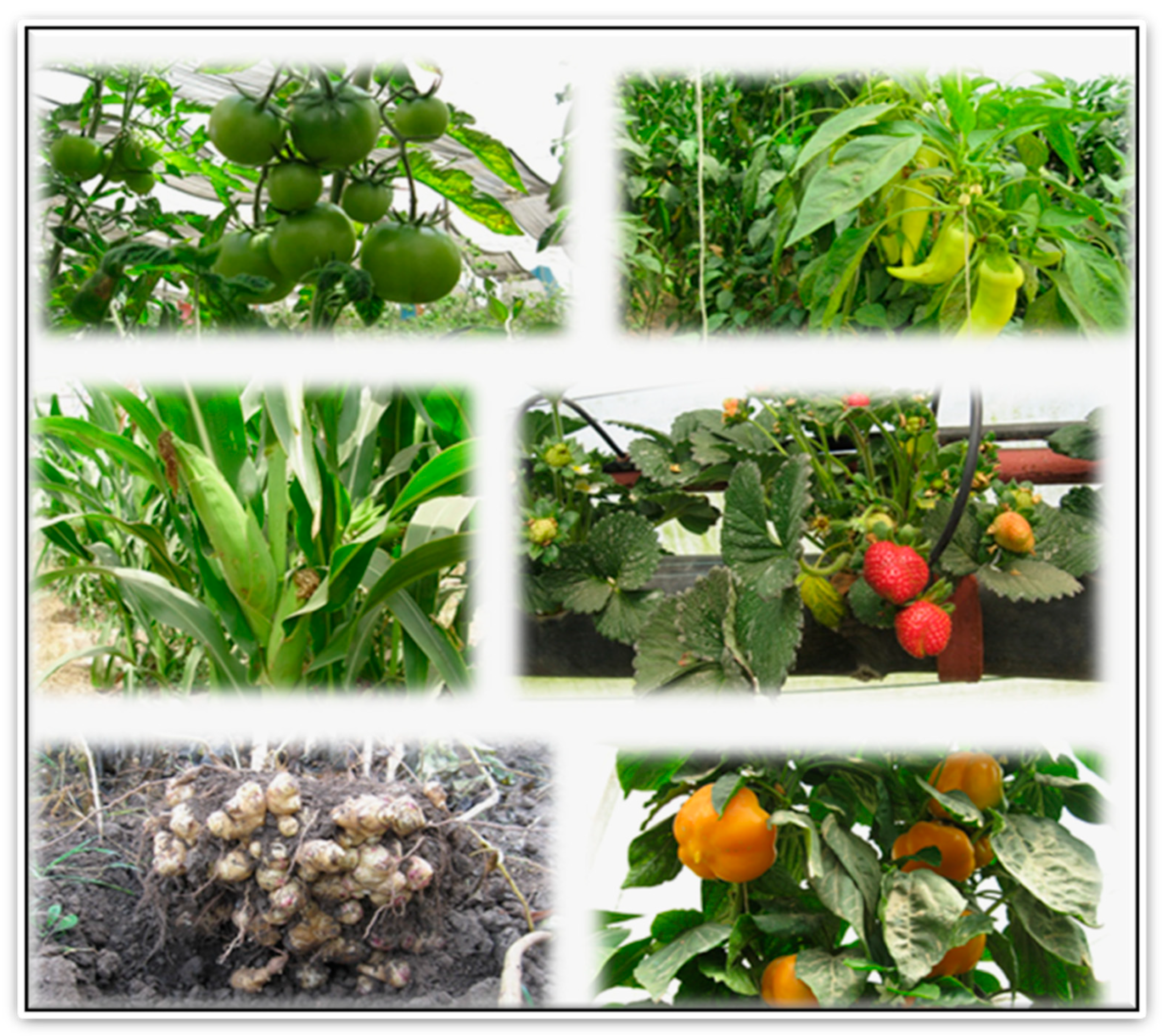 Figure 1. The problem of producing enough foods needs fertile soil, which supplies the cultivated plants with proper nutrients. Shown are photos of some edible plants, which can supply human with needed nutrients for human health. The photos in details from the upper photos (tomato and pepper), in the middle (maize and strawberry), and in the lower photos of Jerusalem artichoke tubers and fruits of color pepper, which show a good nutritional status as an important source for human health. All photos by El-Ramady.
3. Phytomedicine and Human Health
4. Higher Plants and Mushrooms: A General Comparison
Higher plants have many similarities and differences to macro-fungi (mushrooms) as presented in Figure 2A,B. Both higher plants and mushrooms are living organisms belonging to one domain (Eukarya) and are considered, in general, vegetarian as well as both of them possessing distinguishing attributes for human health. High plants are located in the Kingdom of Plantae, but mushrooms are in the Kingdom of Fungi. They can also be used as edible sources for medicinal activities.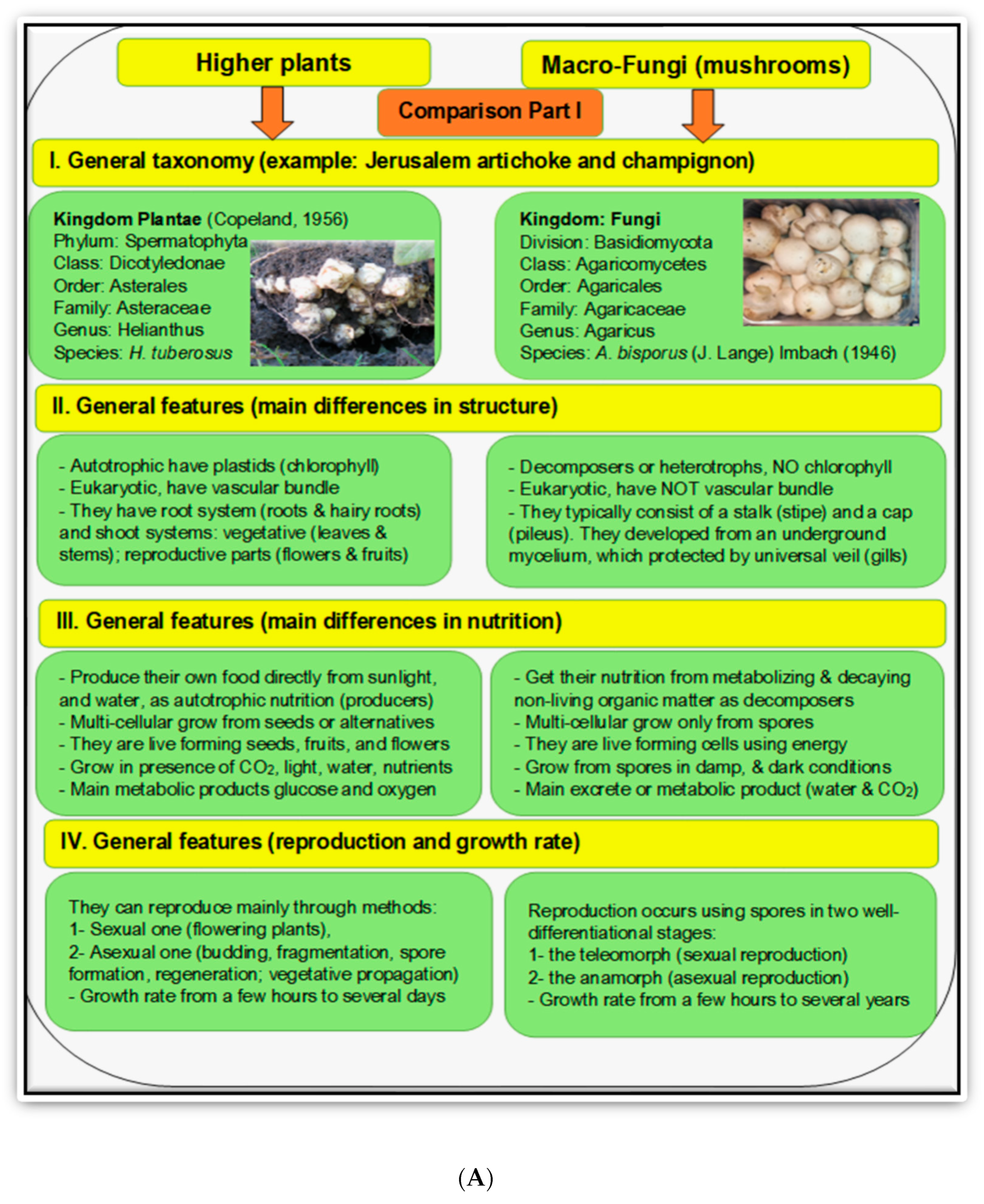
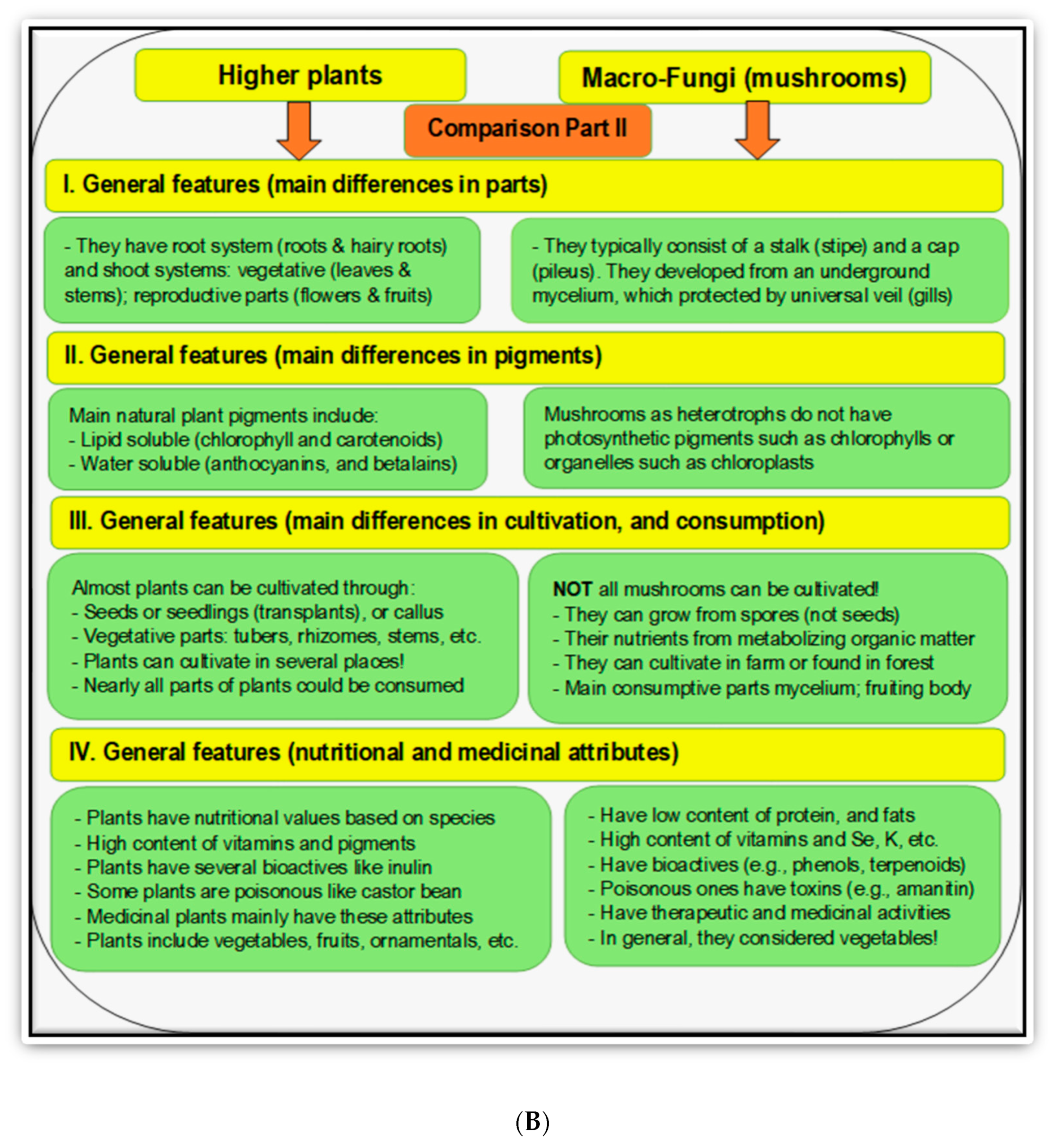 Figure 2. (A) This is the first part of a comparison between higher plants and mushrooms from different points of view, such as taxonomy (using Jerusalem artichoke as an example of a higher plant and champignon as a mushroom), structure, nutrition, reproduction and growth. (B) This is the second part of a comparison between higher plants and mushrooms including more different points of view such as the pigments, cultivation and their nutritional/medicinal attributes.
5. Unconventional Foods of Plants and Mushrooms
There are several classifications of plants, which depend on a specific categories such as higher and lower plants based on the existence of flowers or vascular system; common and unconventional edible plants; traditional and modern wild edible plants [51]; cultivated and wild edible plants [52], and conventional and unconventional food plants [53]. The common attributes that can be existed in edible mushrooms and edible plants are being consumable foods and having a nutritional value, such as desirable content of proteins, carbohydrates, or vitamins. Many studies on unconventional foods derived from plants or mushrooms have been published in different locations all over the world for plants [53][54][55] or mushrooms [56][57]. Increasing attention has been noticed to this group of underutilized plants, which have many different terms such as unconventional vegetables or traditional vegetables, alternative food plants, famine foods, wild edible plants, and plants for the future [54][58]. Therefore, there is an urgent need for unconventional medicinal/food plants with consideration of their potential under the initiative of “from flask to patient” and “from field to fork” [59]. There are many innovative technologies in food production acting as food frontiers, which can achieve eco-sustainability and the security of global food, seeking for more sustainable future. These food frontiers may include controlled-environment agriculture [60], climate-driven northern agricultural expansion [61], cellular agriculture [62], entomophagy [63] and seaweed aquaculture [3][64][65]. Based on the single-cell protein in macro-fungi/mushrooms, many possibilities exist to use agricultural residues and wastes because of their fast growth, high cell densities, long history of use, and simple reactor design. However, they have many challenges, including a need for non-food carbon substrates and a possibility for existing mycotoxins [62]. The main target that attracts several scientists all over the world is how to find “plant protein-based meat and dairy analogues” especially under climate change [66][67][68], and single-cell proteins derived from mushrooms as reported by Stephan et al. [69] in Table 1. Mushrooms contain many bioactive compounds (e.g., phenolics, polysaccharides, polyketides, steroids, triterpenoids, etc.), are considered nutraceuticals, a vegan protein source (up to 45%), and food flavor agents for the food industry [70]. The protein content in mushrooms depends mainly on the mushroom species and the edible part of the mushroom (i.e., fruiting body and mycelium), where the most common mushrooms Pleurotus ostreatus, Agaricus biosporus, and Lentinus edodes (Berg) have protein (%) in fruiting body and mycelium as follows (36 and 25.70), (45.9 and 47.1), and (23.5 and 17%), respectively in fruiting body and mycelium [70].| Source of Proteins (the Country, if Any) | Sources of Plant Proteins | Refs. | |
|---|---|---|---|
| Dairy-based protein alternatives (general study) | Quinoa and lentil are considered high-digestibility proteins | [71] | |
| Meat analogues including steak, burgers, meatballs, and cutlets (Italy) | Plant steaks, burgers, meatballs, and cutlets | [72] | |
| Fibrous meat analogues (Poland) | Pea protein isolate and oat fiber concentrate | [73] | |
| Innovative approaches for meat production | Strategy of adding quinoa or chia to meat products | [74] | |
| Dairy cheese analogs (the USA) | Plant-based cheese analogs | [75] | |
| Fermented meat sausages (Span and Italy) | Plant-based alternatives includes flavor of plant protein isolates | [76] | |
| Applied binders in meat product (sausages) processing | Quinoa flour could be applied as binder in beef sausage production | [77] | |
| Producing beef burgers formed from flour of quinoa and buckwheat | Flour of both quinoa and buckwheat along with soy protein in beef burgers | [78] | |
| Meat co-products as a meat replacer (general study) | Crops or seaweeds can be replaced by 20% in meat protein | [79] | |
| Boiled meat sausages (Germany) | Pleurotus sapidus | as protein in a vegan boiled sausage analog | [69] |
References
- Elbasiouny, H.; El-Ramady, H.; Elbehiry, F.; Rajput, V.D.; Minkina, T.; Mandzhieva, S. Plant Nutrition under Climate Change and Soil Carbon Sequestration. Sustainability 2022, 14, 914.
- Huang, S.; Wang, P.; Yamaji, N.; Ma, J.F. Plant Nutrition for Human Nutrition: Hints from Rice Research and Future Perspectives. Mol. Plant 2020, 13, 825–835.
- Raja, K.; Kadirvel, V.; Subramaniyan, T. Seaweeds, an Aquatic Plant-Based Protein for Sustainable Nutrition—A Review. Future Foods 2022, 5, 100142.
- Larson-Meyer, E.D.; Ruscigno, M. Plant-Based Sports Nutrition: Expert Fueling Strategies for Training, Recovery, and Performance, 1st ed.; Human Kinetics: Champaign, IL, USA, 2020.
- Agidew, M.G. Phytochemical Analysis of Some Selected Traditional Medicinal Plants in Ethiopia. Bull. Natl. Res. Cent. 2022, 46, 87.
- Alam, T.; Khan, S.A.; Dhanalekshmi, U.M. Traditional Uses, Phytochemistry, and Pharmacological Profile of Salvadora Persica Linn. In Edible Plants in Health and Diseases; Masoodi, M.H., Rehman, M.U., Eds.; Springer: Singapore, 2022; pp. 95–134. ISBN 9789811649585.
- Dhaliwal, S.S.; Sharma, V.; Shukla, A.K.; Verma, V.; Kaur, M.; Shivay, Y.S.; Nisar, S.; Gaber, A.; Brestic, M.; Barek, V.; et al. Biofortification—A Frontier Novel Approach to Enrich Micronutrients in Field Crops to Encounter the Nutritional Security. Molecules 2022, 27, 1340.
- El-Ramady, H.; Abdalla, N.; Elbasiouny, H.; Elbehiry, F.; Elsakhawy, T.; Omara, A.E.-D.; Amer, M.; Bayoumi, Y.; Shalaby, T.A.; Eid, Y.; et al. Nano-Biofortification of Different Crops to Immune against COVID-19: A Review. Ecotoxicol. Environ. Saf. 2021, 222, 112500.
- El-Ramady, H.; Brevik, E.C.; Elbasiouny, H.; Elbehiry, F.; El-Henawy, A.; Faizy, S.E.-D.; Elsakhawy, T.; Omara, A.E.-D.; Amer, M.; Eid, Y. Soils, Biofortification, and Human Health Under COVID-19: Challenges and Opportunities. Front. Soil Sci. 2021, 1, 732971.
- El-Ramady, H.; Faizy, S.E.-D.; Abdalla, N.; Taha, H.; Domokos-Szabolcsy, É.; Fari, M.; Elsakhawy, T.; Omara, A.E.-D.; Shalaby, T.; Bayoumi, Y.; et al. Selenium and Nano-Selenium Biofortification for Human Health: Opportunities and Challenges. Soil Syst. 2020, 4, 57.
- Kumar, S.; Dikshit, H.K.; Mishra, G.P.; Singh, A. (Eds.) Biofortification of Staple Crops; Springer: Singapore, 2022; ISBN 9789811632792.
- Kumar, S.; Dikshit, H.K.; Mishra, G.P.; Singh, A.; Aski, M.; Virk, P.S. Biofortification of Staple Crops: Present Status and Future Strategies. In Biofortification of Staple Crops; Kumar, S., Dikshit, H.K., Mishra, G.P., Singh, A., Eds.; Springer: Singapore, 2022; pp. 1–30. ISBN 9789811632792.
- González-Ball, R.; Bermúdez-Rojas, T.; Romero-Vargas, M.; Ceuterick, M. Medicinal Plants Cultivated in Urban Home Gardens in Heredia, Costa Rica. J. Ethnobiol. Ethnomed. 2022, 18, 7.
- Masoodi, M.H.; Rehman, M.U. (Eds.) Edible Plants in Health and Diseases: Volume 1: Cultural, Practical and Economic Value; Springer Nature: Singapore, 2022; ISBN 9789811648793.
- Masoodi, M.H.; Rehman, M.U. (Eds.) Edible Plants in Health and Diseases: Volume II: Phytochemical and Pharmacological Properties; Springer: Singapore, 2022; ISBN 9789811649585.
- Iqbal, Y.; Ponnampalam, E.N.; Cottrell, J.J.; Suleria, H.A.R.; Dunshea, F.R. Extraction and Characterization of Polyphenols from Non-Conventional Edible Plants and Their Antioxidant Activities. Food Res. Int. 2022, 157, 111205.
- Zhang, H.; Jiang, F.; Zhang, J.; Wang, W.; Li, L.; Yan, J. Modulatory Effects of Polysaccharides from Plants, Marine Algae and Edible Mushrooms on Gut Microbiota and Related Health Benefits: A Review. Int. J. Biol. Macromol. 2022, 204, 169–192.
- Nath, H.; Samtiya, M.; Dhewa, T. Beneficial Attributes and Adverse Effects of Major Plant-Based Foods Anti-Nutrients on Health: A Review. Hum. Nutr. Metab. 2022, 28, 200147.
- Kumar, M.; Tomar, M.; Punia, S.; Dhakane-Lad, J.; Dhumal, S.; Changan, S.; Senapathy, M.; Berwal, M.K.; Sampathrajan, V.; Sayed, A.A.S.; et al. Plant-Based Proteins and Their Multifaceted Industrial Applications. LWT 2022, 154, 112620.
- Lu, Q.; Ruan, H.-N.; Sun, X.-Q.; Luo, J.-Y.; Yang, M.-H. Contamination Status and Health Risk Assessment of 31 Mycotoxins in Six Edible and Medicinal Plants Using a Novel Green Defatting and Depigmenting Pretreatment Coupled with LC-MS/MS. LWT 2022, 161, 113401.
- Xia, Y.; Yan, B. Energy-Food Nexus Scarcity Risk and the Synergic Impact of Climate Policy: A Global Production Network Perspective. Environ. Sci. Policy 2022, 135, 26–35.
- Terneus Páez, C.F.; Viteri Salazar, O. Analysis of Biofuel Production in Ecuador from the Perspective of the Water-Food-Energy Nexus. Energy Policy 2021, 157, 112496.
- Yuan, S.; Peng, S. Food-Energy-Emission Nexus of Rice Production in China. Crop Environ. 2022, 1, 59–67.
- Luqman, M.; Al-Ansari, T. Energy, Water and Food Security through a Waste-Driven Polygeneration System for Sustainable Dairy Production. Int. J. Hydrog. Energy 2022, 47, 3185–3210.
- Ambaye, T.G.; Chebbi, A.; Formicola, F.; Prasad, S.; Gomez, F.H.; Franzetti, A.; Vaccari, M. Remediation of Soil Polluted with Petroleum Hydrocarbons and Its Reuse for Agriculture: Recent Progress, Challenges, and Perspectives. Chemosphere 2022, 293, 133572.
- Chen, Y.; Svenning, J.-C.; Wang, X.; Cao, R.; Yuan, Z.; Ye, Y. Drivers of Macrofungi Community Structure Differ between Soil and Rotten-Wood Substrates in a Temperate Mountain Forest in China. Front. Microbiol. 2018, 9, 37.
- Fernández Ruiz, A.; Rodríguez de la Cruz, D.; Vicente Villardón, J.L.; Sánchez Durán, S.; García Jiménez, P.; Sánchez Sánchez, J. Considerations on Field Methodology for Macrofungi Studies in Fragmented Forests of Mediterranean Agricultural Landscapes. Agronomy 2022, 12, 528.
- Bassaganya-Riera, J.; Berry, E.M.; Blaak, E.E.; Burlingame, B.; le Coutre, J.; van Eden, W.; El-Sohemy, A.; German, J.B.; Knorr, D.; Lacroix, C.; et al. Goals in Nutrition Science 2020–2025. Front. Nutr. 2021, 7, 606378.
- Richardson, D.P.; Lovegrove, J.A. Nutritional Status of Micronutrients as a Possible and Modifiable Risk Factor for COVID-19: A UK Perspective. Br. J. Nutr. 2021, 125, 678–684.
- Kurhekar, J.V. Ancient and Modern Practices in Phytomedicine. In Preparation of Phytopharmaceuticals for the Management of Disorders; Elsevier: Amsterdam, The Netherlands, 2021; pp. 55–75. ISBN 978-0-12-820284-5.
- Nigam, M. Phytomedicine: Scope and Current Highlights. In Preparation of Phytopharmaceuticals for the Management of Disorders: The Development of Nutraceuticals and Traditional Medicine; Egbuna, C., Mishra, A.P., Goyal, M.R., Eds.; Academic Press: Cambridge, MA, USA, 2021; pp. 39–54.
- Vater, C.; Bosch, L.; Mitter, A.; Göls, T.; Seiser, S.; Heiss, E.; Elbe-Bürger, A.; Wirth, M.; Valenta, C.; Klang, V. Lecithin-Based Nanoemulsions of Traditional Herbal Wound Healing Agents and Their Effect on Human Skin Cells. Eur. J. Pharm. Biopharm. 2022, 170, 1–9.
- Yadav, S.; Mishra, A.P.; Kumar, S.; Negi, A.; Maurya, V.K. Herbal Wound Healing Agents. In Preparation of Phytopharmaceuticals for the Management of Disorders; Elsevier: Amsterdam, The Netherlands, 2021; pp. 169–184. ISBN 978-0-12-820284-5.
- Rai, M.; Kosalec, I. (Eds.) Promising Antimicrobials from Natural Products; Springer International Publishing: Cham, Switzerland, 2022; ISBN 978-3-030-83503-3.
- Chavda, V.P.; Patel, A.B.; Vihol, D.; Vaghasiya, D.D.; Ahmed, K.M.S.B.; Trivedi, K.U.; Dave, D.J. Herbal Remedies, Nutraceuticals, and Dietary Supplements for COVID-19 Management: An Update. Clin. Complement. Med. Pharmacol. 2022, 2, 100021.
- Ugoeze, K.C.; Odeku, O.A. Herbal Bioactive–Based Cosmetics. In Herbal Bioactive-Based Drug Delivery Systems; Elsevier: Amsterdam, The Netherlands, 2022; pp. 195–226. ISBN 978-0-12-824385-5.
- Egbuna, C.; Mishra, A.P.; Goyal, M.R. Preparation of Phytopharmaceuticals for the Management of Disorders; Elsevier: Amsterdam, The Netherlands, 2021; ISBN 978-0-12-820284-5.
- Tsirigotis-Maniecka, M.; Szyk-Warszyńska, L.; Maniecki, Ł.; Szczęsna, W.; Warszyński, P.; Wilk, K.A. Tailoring the Composition of Hydrogel Particles for the Controlled Delivery of Phytopharmaceuticals. Eur. Polym. J. 2021, 151, 110429.
- Kumari, P.; Raina, K.; Thakur, S.; Sharma, R.; Cruz-Martins, N.; Kumar, P.; Barman, K.; Sharma, S.; Kumar, D.; Prajapati, P.K.; et al. Ethnobotany, Phytochemistry and Pharmacology of Palash (Butea Monosperma (Lam.) Taub.): A Systematic Review. Curr. Pharmacol. Rep. 2022, 8, 188–204.
- Algın Yapar, E.; Durgun, M.E.; Esentürk, I.; Güngör, S.; Özsoy, Y. Herbal Bioactives for Ocular Drug Delivery Systems. In Herbal Bioactive-Based Drug Delivery Systems; Elsevier: Amsterdam, The Netherlands, 2022; pp. 25–61. ISBN 978-0-12-824385-5.
- Virmani, R.; Pathak, K. Herbal Bioactives for Pulmonary Drug Delivery Systems. In Herbal Bioactive-Based Drug Delivery Systems; Elsevier: Amsterdam, The Netherlands, 2022; pp. 63–92. ISBN 978-0-12-824385-5.
- Kaur, G.; Kaur, P.; Madaan, P.; Verma, R.; Chandel, P.; Salgotra, T.; Kaur, H.; Sindhu, R.K. Herbal Bioactives in Transdermal Drug Delivery System. In Herbal Bioactive-Based Drug Delivery Systems; Elsevier: Amsterdam, The Netherlands, 2022; pp. 93–110. ISBN 978-0-12-824385-5.
- Deshkar, S.S.; Mahore, J.G. Herbal Bioactive–Based Vaginal and Rectal Drug Delivery Systems. In Herbal Bioactive-Based Drug Delivery Systems; Elsevier: Amsterdam, The Netherlands, 2022; pp. 111–168. ISBN 978-0-12-824385-5.
- Maurya, A.P.; Chauhan, J.; Yadav, D.K.; Gangwar, R.; Maurya, V.K. Nutraceuticals and Their Impact on Human Health. In Preparation of Phytopharmaceuticals for the Management of Disorders; Elsevier: Amsterdam, The Netherlands, 2021; pp. 229–254. ISBN 978-0-12-820284-5.
- Cotter, T. Organic Mushroom Farming and Mycoremediation: Simple to Advanced and Experimental Techniques for Indoor and Outdoor Cultivation; Chelsea Green Publishing: White River Junction, VT, USA, 2015.
- Korman, R. Growing Mushrooms: The Complete Grower’s Guide to Becoming a Mushroom Expert and Starting Cultivation at Home; Amazon Digital Services LLC: Seattle, WA, USA, 2020; ISBN 978-1-65911-727-1.
- El-Ramady, H.; Abdalla, N.; Badgar, K.; Llanaj, X.; Törős, G.; Hajdú, P.; Eid, Y.; Prokisch, J. Edible Mushrooms for Sustainable and Healthy Human Food: Nutritional and Medicinal Attributes. Sustainability 2022, 14, 4941.
- Elsakhawy, T.; Omara, A.E.-D.; Abowaly, M.; El-Ramady, H.; Badgar, K.; Llanaj, X.; Törős, G.; Hajdú, P.; Prokisch, J. Green Synthesis of Nanoparticles by Mushrooms: A Crucial Dimension for Sustainable Soil Management. Sustainability 2022, 14, 4328.
- El-Ramady, H.; Abdalla, N.; Fawzy, Z.; Badgar, K.; Llanaj, X.; Törős, G.; Hajdú, P.; Eid, Y.; Prokisch, J. Green Biotechnology of Oyster Mushroom (Pleurotus Ostreatus L.): A Sustainable Strategy for Myco-Remediation and Bio-Fermentation. Sustainability 2022, 14, 3667.
- Aftab, T. (Ed.) Environmental Challenges and Medicinal Plants: Sustainable Production Solutions under Adverse Conditions; Environmental Challenges and Solutions; Springer International Publishing: Cham, Switzerland, 2022; ISBN 978-3-030-92049-4.
- León-Lobos, P.; Díaz-Forestier, J.; Díaz, R.; Celis-Diez, J.L.; Diazgranados, M.; Ulian, T. Patterns of Traditional and Modern Uses of Wild Edible Native Plants of Chile: Challenges and Future Perspectives. Plants 2022, 11, 744.
- Ray, A.; Ray, R.; Sreevidya, E.A. How Many Wild Edible Plants Do We Eat—Their Diversity, Use, and Implications for Sustainable Food System: An Exploratory Analysis in India. Front. Sustain. Food Syst. 2020, 4, 56.
- Milião, G.L.; de Oliveira, A.P.H.; de Soares, L.S.; Arruda, T.R.; Vieira, É.N.R.; de Leite Junior, B.R.C. Unconventional Food Plants: Nutritional Aspects and Perspectives for Industrial Applications. Future Foods 2022, 5, 100124.
- Leal, M.L.; Alves, R.P.; Hanazaki, N. Knowledge, Use, and Disuse of Unconventional Food Plants. J. Ethnobiol. Ethnomed. 2018, 14, 6.
- Peisino, M.C.O.; Zouain, M.S.; de Christo Scherer, M.M.; Schmitt, E.F.P.; Toledo e Silva, M.V.; Barth, T.; Endringer, D.C.; Scherer, R.; Fronza, M. Health-Promoting Properties of Brazilian Unconventional Food Plants. Waste Biomass Valorization 2020, 11, 4691–4700.
- Das, A.K.; Nanda, P.K.; Dandapat, P.; Bandyopadhyay, S.; Gullón, P.; Sivaraman, G.K.; McClements, D.J.; Gullón, B.; Lorenzo, J.M. Edible Mushrooms as Functional Ingredients for Development of Healthier and More Sustainable Muscle Foods: A Flexitarian Approach. Molecules 2021, 26, 2463.
- Rangel-Vargas, E.; Rodriguez, J.A.; Domínguez, R.; Lorenzo, J.M.; Sosa, M.E.; Andrés, S.C.; Rosmini, M.; Pérez-Alvarez, J.A.; Teixeira, A.; Santos, E.M. Edible Mushrooms as a Natural Source of Food Ingredient/Additive Replacer. Foods 2021, 10, 2687.
- Do Nascimento, V.T.; de Oliveira Campos, L.Z. Famine Foods: Thoughts from a Caatinga Research Experience. In Local Food Plants of Brazil; Ethnobiology; Jacob, M.C.M., Albuquerque, U.P., Eds.; Springer International Publishing: Cham, Switzerland, 2021; pp. 161–176. ISBN 978-3-030-69138-7.
- Dou, J.; Weathers, P. Specialty Molecules from Plants and in Vitro Cultures as New Drugs: Regulatory Considerations from Flask to Patient. Plant Cell Tissue Organ Cult. PCTOC 2022, 149, 105–111.
- Thomson, A.; Price, G.W.; Arnold, P.; Dixon, M.; Graham, T. Review of the Potential for Recycling CO2 from Organic Waste Composting into Plant Production under Controlled Environment Agriculture. J. Clean. Prod. 2022, 333, 130051.
- Meyfroidt, P. Emerging Agricultural Expansion in Northern Regions: Insights from Land-Use Research. One Earth 2021, 4, 1661–1664.
- Nyyssölä, A.; Suhonen, A.; Ritala, A.; Oksman-Caldentey, K.-M. The Role of Single Cell Protein in Cellular Agriculture. Curr. Opin. Biotechnol. 2022, 75, 102686.
- Bisconsin-Júnior, A.; Rodrigues, H.; Behrens, J.H.; da Silva, M.A.A.P.; Mariutti, L.R.B. “Food Made with Edible Insects”: Exploring the Social Representation of Entomophagy Where It Is Unfamiliar. Appetite 2022, 173, 106001.
- Bizzaro, G.; Vatland, A.K.; Pampanin, D.M. The One-Health Approach in Seaweed Food Production. Environ. Int. 2022, 158, 106948.
- Glaros, A.; Marquis, S.; Major, C.; Quarshie, P.; Ashton, L.; Green, A.G.; Kc, K.B.; Newman, L.; Newell, R.; Yada, R.Y.; et al. Horizon Scanning and Review of the Impact of Five Food and Food Production Models for the Global Food System in 2050. Trends Food Sci. Technol. 2022, 119, 550–564.
- Van Vliet, S.; Kronberg, S.L.; Provenza, F.D. Plant-Based Meats, Human Health, and Climate Change. Front. Sustain. Food Syst. 2020, 4, 128.
- Singh, M.; Trivedi, N.; Enamala, M.K.; Kuppam, C.; Parikh, P.; Nikolova, M.P.; Chavali, M. Plant-Based Meat Analogue (PBMA) as a Sustainable Food: A Concise Review. Eur. Food Res. Technol. 2021, 247, 2499–2526.
- Klöckner, C.A.; Engel, L.; Moritz, J.; Burton, R.J.; Young, J.F.; Kidmose, U.; Ryynänen, T. Milk, Meat, and Fish From the Petri Dish—Which Attributes Would Make Cultured Proteins (Un)Attractive and for Whom? Results From a Nordic Survey. Front. Sustain. Food Syst. 2022, 6, 847931.
- Stephan, A.; Ahlborn, J.; Zajul, M.; Zorn, H. Edible Mushroom Mycelia of Pleurotus Sapidus as Novel Protein Sources in a Vegan Boiled Sausage Analog System: Functionality and Sensory Tests in Comparison to Commercial Proteins and Meat Sausages. Eur. Food Res. Technol. 2018, 244, 913–924.
- Bakratsas, G.; Polydera, A.; Katapodis, P.; Stamatis, H. Recent Trends in Submerged Cultivation of Mushrooms and Their Application as a Source of Nutraceuticals and Food Additives. Future Foods 2021, 4, 100086.
- Alrosan, M.; Tan, T.-C.; Mat Easa, A.; Gammoh, S.; Alu’datt, M.H. Recent Updates on Lentil and Quinoa Protein-Based Dairy Protein Alternatives: Nutrition, Technologies, and Challenges. Food Chem. 2022, 383, 132386.
- Cutroneo, S.; Angelino, D.; Tedeschi, T.; Pellegrinin, N.; Martini, D.; Group, S.Y.W. Nutritional Quality of Meat Analogues: Results From the Food Labelling of Italian Products (FLIP) Project. Front. Nutr. 2022, 9, 852831.
- Ramos Diaz, J.M.; Kantanen, K.; Edelmann, J.M.; Suhonen, H.; Sontag-Strohm, T.; Jouppila, K.; Piironen, V. Fibrous Meat Analogues Containing Oat Fiber Concentrate and Pea Protein Isolate: Mechanical and Physicochemical Characterization. Innov. Food Sci. Emerg. Technol. 2022, 77, 102954.
- Fernández-López, J.; Viuda-Martos, M.; Pérez-Alvarez, J.A. Quinoa and Chia Products as Ingredients for Healthier Processed Meat Products: Technological Strategies for Their Application and Effects on the Final Product. Curr. Opin. Food Sci. 2021, 40, 26–32.
- Grossmann, L.; McClements, D.J. The Science of Plant-Based Foods: Approaches to Create Nutritious and Sustainable Plant-Based Cheese Analogs. Trends Food Sci. Technol. 2021, 118, 207–229.
- Flores, M.; Piornos, J.A. Fermented Meat Sausages and the Challenge of Their Plant-Based Alternatives: A Comparative Review on Aroma-Related Aspects. Meat Sci. 2021, 182, 108636.
- Muchekeza, J.T.; Jombo, T.Z.; Magogo, C.; Mugari, A.; Manjeru, P.; Manhokwe, S. Proximate, Physico-Chemical, Functional and Sensory Properties OF Quinoa and Amaranth Flour AS Potential Binders in Beef Sausages. Food Chem. 2021, 365, 130619.
- Bahmanyar, F.; Hosseini, S.M.; Mirmoghtadaie, L.; Shojaee-Aliabadi, S. Effects of Replacing Soy Protein and Bread Crumb with Quinoa and Buckwheat Flour in Functional Beef Burger Formulation. Meat Sci. 2021, 172, 108305.
- Anzani, C.; Boukid, F.; Drummond, L.; Mullen, A.M.; Álvarez, C. Optimising the Use of Proteins from Rich Meat Co-Products and Non-Meat Alternatives: Nutritional, Technological and Allergenicity Challenges. Food Res. Int. 2020, 137, 109575.
- Felix, M.; Camacho-Ocaña, Z.; López-Castejón, M.L.; Ruiz-Domínguez, M. Rheological Properties of Quinoa-Based Gels. An Alternative for Vegan Diets. Food Hydrocoll. 2021, 120, 106827.
- Huang, K.; Shi, J.; Li, M.; Sun, R.; Guan, W.; Cao, H.; Guan, X.; Zhang, Y. Intervention of Microwave Irradiation on Structure and Quality Characteristics of Quinoa Protein Aggregates. Food Hydrocoll. 2022, 130, 107677.
- Luo, L.; Cheng, L.; Zhang, R.; Yang, Z. Impact of High-Pressure Homogenization on Physico-Chemical, Structural, and Rheological Properties of Quinoa Protein Isolates. Food Struct. 2022, 32, 100265.
- Zuo, Z.; Zhang, X.; Li, T.; Zhou, J.; Yang, Y.; Bian, X.; Wang, L. High Internal Phase Emulsions Stabilized Solely by Sonicated Quinoa Protein Isolate at Various PH Values and Concentrations. Food Chem. 2022, 378, 132011.
- Gupta, A.; Sharma, S.; Reddy Surasani, V.K. Quinoa Protein Isolate Supplemented Pasta: Nutritional, Physical, Textural and Morphological Characterization. LWT 2021, 135, 110045.
- Ingrassia, R.; Busti, P.A.; Boeris, V. Physicochemical and Mechanical Properties of a New Cold-Set Emulsion Gel System and the Effect of Quinoa Protein Fortification. LWT 2022, 156, 113048.