
The notion of the active role of mitochondria in the decoding and shaping of intracellular Ca2+ signals dates back at the end of the 19th century. However, the identity of the molecule(s) involved in Ca2+ ion transport into mitochondria remained elusive for decades. Only in the last ten years, the factors, and the relative coding genes, mediating Ca2+ entry in mitochondria started to be genetically and biochemically described. The gene for the pore-forming unit of the mitochondrial Ca2+ channel was discovered in 2011, and its product was named mitochondrial Ca2+ uniporter or MCU. The mitochondria Ca2+ uptake regulator 1 gene, MICU1, was cloned one year before, in 2010. The increasing interest of the scientific community towards mitochondrial Ca2+ signaling and metabolism in the subsequent years led to the identification of many other MCU components and to the description of their 3D structure and physiological role. Here, we will present a brief overview of the land marking discoveries in the history of mitochondrial Ca2+ studies.
- MCU
- mitochondrial Ca2+ uniporter
- Ca2+ signaling
- mitochondrial metabolism
Note: The following contents are extract from your paper. The entry will be online only after author check and submit it.
1. Introduction
Ca
Every cell type, in every tissue and at any evolutionary level, can communicate with the surrounding environment and with neighboring cells. Both intercellular and extracellular communication play fundamental roles in shaping cell behavior and driving cell fate decisions. Cell-to-cell and environmental signals are normally conveyed by distinct extracellular mediators (hydrophilic or hydrophobic compounds, mechanical, ionic, cell–cell interactions, etc.) that are normally perceived by cells through surface receptors. These receptors convey them into a limited number of intracellular molecules, which are referred to as ‘second messengers’, which, in turn, forward the message to intracellular effectors finally activating the ultimate cellular responses. Despite the plethora of different signals and stimuli that cells may receive, only a few molecules to date have been described as second messengers of intracellular communication. Among them, the most common and, definitively, the most extensively studied is Ca2+.2+ ions are involved in the decoding of a vast range of stimuli [1–3] and mitochondria play a fundamental role in the orchestration of cellular Ca
, the MCU complex.2+ signals. Indeed, mitochondria efficiently uptake Ca
overload. Indeed, an excessive accumulation of the cation in the mitochondrial matrix triggers the permeability transition pore (PTP) opening, the release of pro-apoptotic factors, and finally, induction of programmed cell death [13]. Given the strong association between mitochondrial Ca2+ upon Ca
overload and apoptosis induction, the maintenance of mitochondrial Ca2+ release from ER or extracellular Ca
homeostasis is thus a crucial aspect for ensuring cell survival [14][15].2+ entry [4] thus buffering the cytosolic Ca
signaling for cell physiology, the unveiling of the molecular factors mediating mitochondrial Ca2+ raise and tuning global Ca
entry and the mechanism(s) of their regulation has been one of the scientific challenges of recent years. In this review, we aim to summarize some of the milestone achievements in the history of mitochondrial Ca2+ signaling. Moreover, the increase of Ca
research with a particular focus on the recent findings of the mitochondrial Ca2+ in the mitochondrial matrix stimulates both Ca
uniporter and its role in organ physiology. We will briefly describe the early studies leading to the demonstration of the Ca2+-sensitive mitochondrial dehydrogenases [5–7] and respiratory chain complexes [8,9] thus boosting cellular oxidative metabolism.
We provide here a brief overview of the milestone achievements in the history of mitochondrial Ca
accumulation capacity of mitochondria, then we will go through the historical chronicle of the discoveries of the mitochondrial Ca2+ research, with a particular focus on the recent findings on the mitochondrial Ca
uniporter genes and multiple regulators (Figure 1) and we will conclude with an excursus on the physiological relevance of mitochondrial Ca2+ uniporter complex and its regulators.
uptake in the context of skeletal muscle tissue.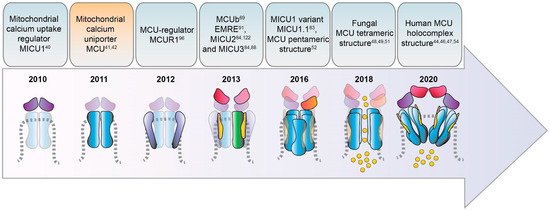
Figure 1. Timeline of the identification of MCU complex components.
2. MTitochondrial Ca2+ smelignaling in the pre-MCU ere of MCU Identification
The first report about the relevance of Ca
It is suggestive to recall that the notion of Ca2+ ions being relevant to organ physiology dates back to more than one century ago when the first report on the physiological action of Ca2+ ions appeared in 1883 [4]. At that time, Ringer described the effects of Ca2+ addition to isolated frog hearts and demonstrated that the supplementation of Ca2+ in the perfusion solution actively induces and sustains the contraction of the organ ex vivo [4]. This seminal observation revealed that Ca2+ is a fundamental messenger within cells, a concept that then extended to virtually every cell type and physiological and pathological process, giving rise to a broad field of study commonly referred to as the field of intracellular Ca2+ signaling. The intrinsic ability of contracting myocytes to operate ex vivo and to rapidly and effectively respond to environmental condition changes made them the ideal experimental system for the investigation of the role of Ca2+ in organ and cell physiology and was extensively exploited by researchers in the following years.2+ ions to organ physiology dates back to the work of Ringer in 1883 [10], who described the capacity of Ca
concentration are highly regionalized within the cell cytoplasm and allowing the direct measure of Ca2+ to induce organ contraction when added to isolated frog hearts. After that, the cardiac physiologists Slater and Cleland identified some subcellular compartments able to accumulate Ca
levels in the mitochondria matrix as well as in the ER lumen; ii) they pinpointed the fact that organelles, including ER and mitochondria, are in close contact with each other through macromolecular structures involving proteins from both the compartments. In the case of ER-mitochondrial contacts, these structures are biochemically isolated as mitochondria-associated membranes (MAMs) and are formed by membrane channels, as the IP3R and VDAC, respectively, and adaptor proteins of both organelles, such as Grp75, mitofusins, PACS [38]. Upon cell stimulation, the massive release of Ca2+ that they called "sarcosomes" [11]. Interestingly, these “sarcosomes” were indeed isolated mitochondria, to which the addition of Ca
through the ER membrane clusters of IP3Rs generates microdomains of high Ca2+ caused the block of their oxidative phosphorylation activity. Thus, Ca
concentration right at the mouth of the channel pores, exactly where mitochondria are located. This allows mitochondria to perceive a local cation concentration sufficient to meet the low affinity of the mitochondrial Ca2+ ions behaved as mitochondria uncoupler.
It was in the early 60′s, even before the postulation of the chemiosmotic theory by Peter Mitchell [12] that the concept of Ca
uptake machinery [36][39]. Thus, their strategic position in proximity of ER Ca2+ being actively taken up by energized mitochondria was experimentally validated [13–15].
Soon after that, the group of Denton discovered that three critical oxidative enzymes resident in mitochondria (pyruvate dehydrogenase phosphatase, NAD-isocitrate dehydrogenase and oxoglutarate dehydrogenase) are subjected to a Ca
release channels and their ability to take up Ca2+-dependent modulation [5–7].
Despite all these conceptual advancements, two major issues continued to puzzle the scientific community for a long time: i) the apparent paradox between the physiological low Ca
with high conductance make mitochondria the ideal operator for cushioning the sudden Ca2+ levels (in the submicromolar range) present in the cytosol, [16–18], and the reduced Ca
rise in the cytosol of stimulated cells, thus behaving as an instrumental Ca2+ affinity of the mitochondrial Ca
buffer [6]. The fact that Ca2+ uptake machinery (in the order of several µM [19]); ii) the fundamental question about the molecular identity of the mitochondrial Ca
entry into mitochondria stimulates the TCA cycle, respiration, and ATP production then places mitochondrial Ca2+ channel mediating Ca
uptake as a key element for the prompt modulation of cell metabolism to rapidly and efficiently adapt to a variety of environmental cues and energy demands.2+ entry into mitochondria.
It took several decades to answer to those two enigmas. Indeed, thanks to the development of new genetic Ca
uniporter (MCU) machinery. The chronicle of MCU discoveries actually started in 2010, with the identification of the first gene required for the uptake of Ca2+ probes and recombinant fluorescent proteins specifically targeted to intracellular domains [20,21], it was possible to measure variations of Ca
by mitochondria, CBARA1, coding for the mitochondrial Ca2+ concentration in defined and limited areas of the cell. This led to the visualization of organelle dynamics and interorganelle contacts (as those between mitochondria and ER) and to the identification of microdomains of high Ca
uptake 1 protein (MICU1) [40], then followed by the identification of the mitochondrial channel and the elucidation of its interactors, as described below. The search of the other mitochondrial Ca2+ concentration right at the mouth of the channel pores, exactly where mitochondria are located. This allows mitochondria to perceive a local cation concentration sufficient to meet the low affinity of the mitochondrial Ca
channel components has been proceeding expansively in the last decade (see next paragraph for a detailed timeline) and it is presently still actively ongoing. The discoveries of many different groups worldwide have been indeed instrumental to provide cell biologists with new knowledge on the functional role of mitochondrial Ca2+ uptake machinery [21,22]. The answer to the second fundamental question of the mitochondrial signaling field came with the discovery of the molecular identity of the mitochondrial Ca
and with new tools for the genetic and molecular intervention on global Ca2+ uniporter (MCU) and its multiple regulators.
signaling and cell energetics.3. IdDiscoventificry and Characterization of the MCU Complex Components
3.1. MCU
The discovery of MCU is due to two pioneering studies published in 2011 [23,24] (Figure 1) that identified the MCU pore-forming protein and cloned its coding gene CCDC109A. MCU is a highly conserved 40 kDa polypeptide ubiquitously expressed in plants, metazoans, protozoans, and fungi but absent in yeast [25], it oligomerizes to form the active Ca
The chronicle of MCU discovery starts with two pioneering studies published in 2011 [41][42] (Figure 1) that finally identified and cloned the long-sought MCU pore-forming unit gene, CCDC109A. MCU is a highly conserved 40 kDa protein ubiquitously expressed in plants, metazoans, protozoans, and fungi but not present in yeast [43]. This pore-forming unit oligomerizes to form the active channel within the inner mitochondrial membrane (IMM) and it directly interacts with the channel regulator MICU1, which was identified one year earlier [40]. These reports clearly demonstrated that the transient downregulation of MCU inhibits the mitochondrial accumulation of Ca2+ that follows the IP3-generating agonist in stimulated cells. Of note, the blunted mitochondrial Ca2+ uptake response occurs without changes in the mitochondria morphology or membrane potential of the MCU-silenced cells [41]. On the contrary, MCU overexpression enhances agonist-induced mitochondrial Ca2+ channel within the inner mitochondrial membrane (IMM) and directly interacts with the mitochondrial Ca
uptake in mammalian cells. In addition, in vitro experiments, in which recombinant MCU proteins were inserted in a planar lipid bilayer, showed that this pore-subunit alone is sufficient to form the channel. Indeed, in this setting, the MCU electrophysiological activity is completely abolished by the addition of the known inhibitor Ruthenium Red, firmly pointing at MCU as the genuine core component of the mitochondrial Ca2+ uptake regulator 1 protein MICU1 [26].
Recently, the structure of the human MCU together with its auxiliary component EMRE was obtained [27]. Each human MCU arranges in tetramers and each subunit complexes with one EMRE peptide. The silencing of MCU blunted the mitochondrial Ca
machinery.2+ uptake response in HeLa cells [23]. On the contrary, MCU overexpression enhances agonist-induced mitochondrial Ca
transport since, if substituted with uncharged residues, MCU mutants failed to rescue the mitochondrial Ca2+ uptake in mammalian cells. In addition, the precise description of the molecular interactions between MCU and its regulators EMRE-MICU1-MICU2 in the complex (called holocomplex or uniplex) has been also obtained both in the presence and absence of Ca
uptake in MCU-silenced cells [41][42]. However, the definitive description of MCU 3D structure had to wait till the very last years, when cryo-EM and X-ray diffraction analyses finally allowed the resolution of full-length MCU structure [44][45][46][47][48][49][50][51]. These studies coherently confirmed that purified MCU from different sources (fungi and metazoan) arranges in a tetramer, confuting previous assumptions on a putative pentameric MCU architecture [52]. Notably, the cryo-EM data also unveiled the exact position of the MCU channel selectivity filter, in which the DIME motif is fundamental for the coordination of Ca2+ [28] (Figure 2).
ions and which was definitively shown to reside at the beginning of the second transmembrane α-helix [50] and not in the linker region between the two transmembrane helices, as previously suggested [52].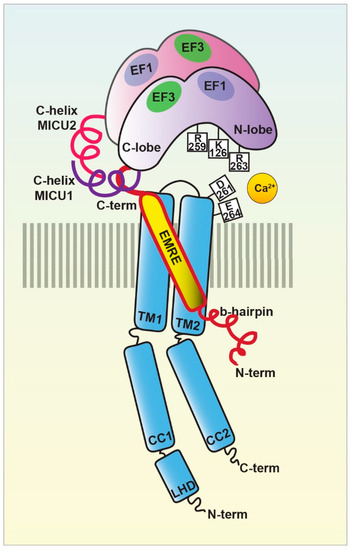
2+
2+
2+
In the presence of the ion, the multiprotein holocomplex shows a two-fold symmetry and consists of two V-shaped MCU-EMRE heterotetramers and two MICU1-MICU2 heterodimers that bridge the tops of the MCU-EMRE tetramers (Figure 1) through the interaction between MICU1 and EMRE [29] (Figure 2). Differently, in the absence of Ca
Moreover, in the very last year, further insight into MCU channel modulation and function has been gained thanks to the achievement of the human MCU-MICUs holocomplex structure in both the Ca2+-free and Ca2+, the holocomplex adopts a less stable conformation, where the MICU1-MICU2 heterodimer blocks the channel pore formed by the MCU transmembrane domains [29] (Figures 2 and 3).
Sequence and topology analyses revealed that both the N- and C-termini of MCU are located in the mitochondrial matrix and that MCU is endowed with two transmembrane domains, linked by a short highly conserved acidic loop exposed in the intermembrane space (IMS) which contains the so-called acidic “DIME” motif. The acidic residues present in this stretch are critical for the Ca
-bound state by several independent reports. The gating mechanism by which MICU1 regulates the uniporter activity via the conformational change triggered by Ca2+ coordination and constitute tha selectivity filter of the MCU channel [23,24].
More recently, the structure of the human MCU together with its auxiliary component EMRE was obtained [27]. Each human MCU arranges in tetramers and each subunit complexes with one EMRE peptide. Human MCU appears organized in various domains, which are: i) the N-terminal domain (NTD), ii) the linker helix domain (LHD) —absent in fungi—, iii) the coiled-coil domains (CC), and iv) the transmembrane domains (TM) (Figure 2).
The gating mechanism by which MICU1 regulates the uniporter activity via the conformational change triggered by Ca
was finally unveiled [44]. Furthermore, the precise description of the molecular interactions between MCU-EMRE-MICU1-MICU2 in the human MCU supercomplex (MEMMS) has been also obtained [54] (Figure 2). Indeed, MEMMS appears as a 480 kDa integral unit where EMRE coordinates the matrix gate of the MCU channel and MICU proteins interact with the C-terminus of EMRE in the IMS thus enhancing Ca2+ was finally unveiled in 2020 [30]. Indeed, EMRE coordinates the matrix gate of the MCU channel and interacts with MICU proteins in the IMS enhancing Ca
influx through the MCU pore in high [Ca2+ influx through the MCU pore in high [Ca
] conditions [54] (Figure 3). Finally, the distinct Ca2+] conditions [28] (Figure 2 and 3). In the presence of Ca
-dependent assembly conformations of the beetle and human MCU holocomplexes with human MICUs have also been detailed [46][47]. In the presence of Ca2+, the multiprotein complex shows a two-fold symmetry and consists of two V-shaped MCU-EMRE tetrameric subcomplexes and two MICU1-MICU2 heterodimers that bridge the tops of the subcomplexes (Figure 1). In this setting, the assembly of the MICU1-MICU2 heterodimers to the MCU-EMRE subcomplexes is ensured by the interaction between MICU1 and EMRE [29] (Figure 2). Differently, in the absence of Ca
, the multiprotein complex shows a two-fold symmetry and consists of two V-shaped MCU-EMRE tetrameric subcomplexes and two MICU1-MICU2 heterodimers that bridge the tops of the subcomplexes (Figure 1). In this setting, the assembly of the MICU1-MICU2 heterodimers to the MCU-EMRE subcomplexes is ensured by the interaction between MICU1 and EMRE [47] (Figure 2). Differently, in the absence of Ca2+, the holocomplex adopts alternative less stable conformations with both monomeric and dimeric forms of the MCU-EMRE tetramers, where the MICU1-MICU2 heterodimer block the channel entrance formed by MCU transmembrane domains [29] (Figures 2 and 3).
, the holocomplex adopts alternative less stable conformations with both monomeric and dimeric forms of the MCU-EMRE tetramers, where the MICU1-MICU2 heterodimer block the channel entrance formed by MCU transmembrane domains [47] (Figure 2 and Figure 3).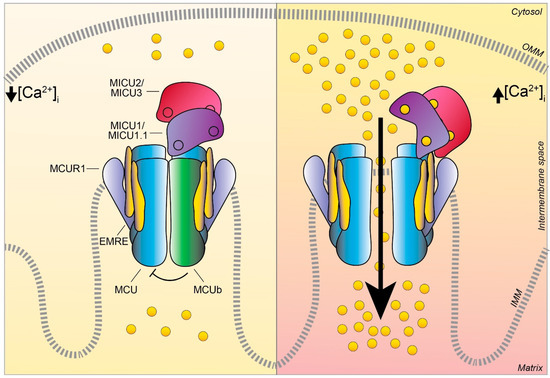
Figure 3.
2+
2+
2+
2+
2+
2+
2+
2+
2+
In 2013, three independent groups showed that the MCU silencing/knockout or its overexpression affect survival in different in vivo models [31–33]. The MCU
A large body of experimental evidence on the MCU complex functional role has accumulated since the discovery of the MCU. The genetic manipulation of the MCU led to the generation of germline and tissue-specific transgenic models [55][56][57][58][59][60][61][62], which provided pivotal tools for understanding the pathophysiological implications of the mitochondrial Ca2+ signaling in vivo that would have otherwise remained unexplored.–/– mouse [31] develops normally and displays minor defects (only mild metabolic alterations after stress conditions) without signs of impaired cell survival. However, the same group showed that, in a pure C57BL/6 background, MCU
mouse [55] develops normally and displays minor defects without signs of impaired cell survival. Under stress conditions, relatively mild metabolic alterations were observed, such as increased plasma lactate levels in line with impaired exercise performance. However, the same group soon after those findings, showed that embryos from MCU−/− mice in a pure C57BL/6 background were not viable, displaying embryonic lethality at around E 11.5–E 13.5, thus suggesting a major involvement of mitochondrial Ca2+ uptake in organ metabolism and organism development that was compensated in a mixed genetic background [67].−/− mouse embryos were not viable, displaying lethality at around E 11.5–E 13.5, thus suggesting a major involvement of mitochondrial Ca
mouse model described [55], even though it presents some defects in the epidermal wound repair mechanisms. More recently, the characterization of C. elegans deficient of a functional MCU [68] suggested that uniporter activity is essential for mitochondrial Ca2+ uptake in organ metabolism and organism development that was compensated in a mixed genetic background [34].
Interestingly, some years later, it has been reported that the block of MCU-dependent Ca
transfer during high-intensity stimulation of the worm pharynx muscle. However, a lot still remains to be explored on the role of MCU in this model and most of the knowledge on mitochondrial Ca2+ uptake affects Drosophila melanogaster development and memory establishment [35].
regulation of muscle physiology has been achieved using the mammalian mouse model where MCU expression was genetically targeted, which we will briefly review in the following paragraphs.3.2. MCUb
MCU is not the only pore-forming subunit of the mitochondrial Ca
In 2013, Raffaello and co-authors discovered that MCU is not the only pore-forming subunit of the mitochondrial Ca2+ uniporter, since an alternative MCU isoform exists, named MCUb, which crosses the IMM and associates to MCU to form the calcium channel [69] (Figure 1 and Figure 3). The MCUb protein is encoded by the MCU CCDC109a paralog gene CCDC109b. Interestingly, this gene is found in vertebrates, but it is not present in other organisms in which MCU is expressed, such as plants, Nematoda, and Arthropoda. Despite the high structural similarity with MCU, MCUb sequence presents two critical aminoacidic substitutions in the loop region and in the TM1 domain, which explains its inability to transport Ca2+. Indeed, MCUb acts as a negative regulator of MCU activity, drastically reducing mitochondrial Ca2+ uniporter, since an alternative MCU isoform was discovered in 2013 and named MCUb. It crosses the IMM and associates to MCU to form the calcium channel [36] (Figures 1 and 3). Despite the high similarity with MCU, MCUb presents differences in two critical aminoacidic positions in the loop region and in the TM1 domain, which impede Ca
currents in vitro in planar lipid bilayer experiments and also when overexpressed in mammalian cells [69]. On the contrary, in other organisms, such as trypanosomatid species, the ortholog of MCUb is capable to conduct the cation and its overexpression facilitates mitochondrial Ca2+ transport. Thus, MCUb acts as a MCU negative regulator, drastically reducing mitochondrial Ca
uptake [70].2+ currents both in vitro and in mammalian cells [36]. However, in other organisms, such as trypanosomatid species, the orthologue of MCUb is capable to conduct the cation and its overexpression facilitates mitochondrial Ca
current to each cell type [69][71]. For instance, a high MCUb/MCU ratio (3:1) is typical of cells with low mitochondrial Ca2+ uptake [37].
Notably, MCUb is expressed at different levels in different tissues, and the MCUb:MCU proportion results a distinctive feature of each cell-type ensuring the appropriate mitochondrial Ca
transients, such as adult cardiomyocytes (Figure 4). In fact, MCUb can be described as a protective gene in cardiac myocytes since i) its expression is transiently induced after ischemia-reperfusion injury and ii) transgenic mice overexpressing MCUb have a reduced mitochondrial Ca2+ current to each of them [36,38]. As an example, adult cardiomyocytes have a high MCUb/MCU ratio (3:1) and display relatively modest mitochondrial Ca
uptake ability, thus preventing Ca2+ transients (Figure 4). On the contray, skeletal muscle and neuronal cells have a low MCUb/MCU ratio (1:40) and are characterized by an extremely high capacity to accumulate Ca
overload, which is sufficient to protect myocytes from ischemia-reperfusion injury and to decelerate their ongoing necrosis [72][73]. A low MCUb/MCU ratio (1:40) is instead a characteristic of tissues with an extremely high capacity of mitochondrial Ca2+ in mitochondria [36,39] (Figure 4).
accumulation, such as skeletal muscle [69][74] (Figure 4).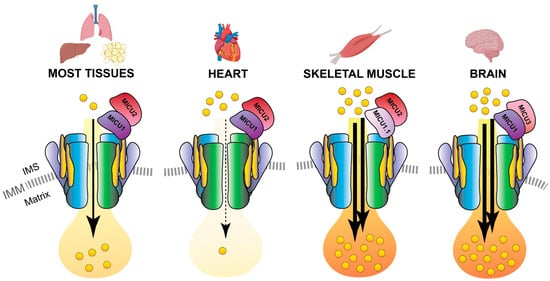
Figure 4.
2+
2+
3.3. MICU1
MICU1 was actually the first component to be described as the regulator of the long-sought MCU channel and its identification even anticipated that of the pore-forming subunit MCU (Figure 1). Indeed, in 2010, an integrative comparative strategy revealed the product of the CBARA gene to be the mitochondrial calcium uptake 1 (MICU1). MICU1 resides in the IMS and does not take part to the pore-forming domain of the channel, but regulates its activity in a Ca
MICU1 was actually the first component to be described as the regulator of the long-sought MCU channel and its identification even anticipated that of the pore-forming subunit MCU (Figure 1). Indeed, in 2010, an integrative strategy combining comparative physiology, evolutionary genomics, and organelle proteomics revealed the 54 kDa protein, encoded by the CBARA gene and residing in the IMS, to be the mitochondrial calcium uptake 1 (MICU1), which does not take part to the pore-forming domain of the channel, but it strongly regulates its activity in a Ca2+-dependent way [40][75]. Indeed, after the N-terminal mitochondrial targeting sequence, MICU1 shows two canonical EF-hand Ca2+ binding domains that confers the Ca2+-dependent way [26,40]since it possesses two canonical Ca
-sensitivity (Figure 2 and Figure 3). In the last decade, several lines of evidence confirmed the initial hypothesis about the role of MICU1 as both MCU gatekeeper at low Ca2+ binding EF-hand domains that confers the Ca
concentration and MCU positive regulator at high Ca2+-sensitivity (Figures 2 and 3). This allows MICU1 to act as both MCU gatekeeper, at low Ca
concentration, thus explaining the sigmoid cooperative effect of the MCU activation curve [75].2+ concentration, and MCU positive regulator, at high Ca
influx in intact and permeabilized HeLa cells [40]. Later studies also demonstrated that the absence of MICU1 also leads to an adaptive Ca2+ concentration [40].
The downregulation of MICU1 abolishes mitochondrial Ca
accumulation inside the mitochondria matrix, triggering excessive ROS production and the consequent higher sensitivity to apoptotic stress. In addition, the ability of MICU1 to sense cytosolic Ca2+ influx in cells [26] and leads to an adaptive Ca
levels confers to MICU1 the capacity to set the threshold for the activation of mitochondrial Ca2+ accumulation inside the mitochondria matrix, triggering excessive ROS production and the consequent higher sensitivity to apoptotic stress.
The characterization of MICU1
uptake. Nevertheless, this occurs without altering the overall kinetics of the channel [75][76].-/- transgenic mice reveals that, despite partial postnatal mortality, the viable animals show marked ataxia and muscle weakness [41], a phenotype similar to that of human patients bearing MICU1 genomic mutation [42]. More recently, a new Ca
transgenic mice reveals that, despite partial postnatal mortality, the viable animals show marked ataxia and muscle weakness [77], a phenotype which is reminiscent of that of human patients bearing MICU1 genomic mutation [78]. Moreover, the MICU1−/− mice display several biochemical defects, including an increase in resting mitochondrial Ca2+ levels, altered mitochondrial morphology, and a decreased ATP production [77]. Interestingly, the loss of MICU1 triggers a sustained pro-inflammatory response after partial hepatectomy and failure of liver regeneration in MICU1-deficient mice. In this scenario, the lack of MICU1 enhances mitochondrial permeability transition pore (PTP) opening in hepatocytes, thus leading to massive necrosis [79].2+-independent role of MICU1 in the regulation of cell metabolism via inhibition of the mitochondrial transport of pyruvate and fatty acids has emerged [43]. In addition, MICU1 is responsible for conferring and ensuring the stringent MCU selectivity for Ca
over Mn2+ over Mn
since. Indeed, when present, MICU1 impedes Mn2+ [44], which is crucial to guarantee the survival of cells sensitive to Mn
ions to cross the MCU channel pore; on the contrary, in the absence of MICU1, both Ca2+ such as neurons. Finally, super-resolution and electron microscopy studies showed that MICU1 also controls mitochondrial cristae junctions’ integrity [45].
Interestingly, a second variant of MICU1, named MICU1.1, has been discovered by our group as an alternative splicing product of the MICU1 mRNA [46] (Figure 1). MICU1.1 is well-conserved among species and expressed almost exclusively in skeletal muscle tissue and, to a less extent, in brain [46] (Figure 4). MICU1.1 behaves as a positive regulator of MCU, similarly and even more powerful than MICU1 due to its more efficient Ca
and Mn2+-binding, which leads to the activation of the uniporter at lower Ca
cations can enter the mitochondrial matrix. This additional MICU1 checkpoint is of fundamental importance to guarantee cell survival of cells sensitive to Mn2+ concentrations [46].
such as neurons, thus setting MICU1 as a crucial safeguard against cellular toxicity due to manganese in neurodegenerative diseases [82].3.4. MICU21.1
The mitochondrial calcium uptake protein 2 or MICU2, known also as EF-hand domain-containing family member A1 (EFHA1), was found to be a paralog of MICU1 [47] (Figure 1). MICU2 resides in the IMS, contains two EF-hand Ca
3.5. MICU2
2+-binding domains, and interacts with both MICU1 and MCU [47] (Figure 2). It is present at high levels in the intestine, prostate, and cardiac tissues and its stability strictly depends on the presence of MICU1 [47]. It has been shown that MICU2 positively regulates MCU activation by controlling the cytosolic [Ca
] threshold for the relief of MICU1-mediated inhibition of MCU. This function allows MICU2 to restrict the spatial Ca2+] threshold for the relief of MICU1-mediated inhibition of MCU [48].
The MICU2 genetic ablation in mouse produces a decrease in the threshold for mitochondrial Ca
crosstalk between inositol 1,4,5-trisphosphate receptor (InsP3R) and MCU channels [86].2+
uptake due to loss of the gatekeeping activity and overall loss of MCU-dependent Ca2+ influx due to the destabilization of the entire uniporter complex [49].
influx due to the destabilization of the entire uniporter complex. These findings lead to the conclusion that the amount of MCU and MICUs proteins is crucial to maintain the stability of the whole complex. Moreover, some phenotypic features of the MICU2−/− mice are in common with models of cardiac pathologies, suggesting that MICU2 may act as a possible cardioprotective factor.3.56. MICU3
MICU3, previously known as EFHA2, is another MICU1 paralog [47] (Figure 1) mainly expressed in the brain, much less expressed in skeletal muscle, and virtually absent in other tissues [50,51]. As the other MICUs, also MICU3 binds Ca
MICU3, previously known as EFHA2, is another MICU1 paralog, originally identified by the same genetic sequence analysis that described MICU2 [84] (Figure 1). This finding added another level of complexity to the regulation of the MCU machinery. MICU3 is an evolutionarily conserved gene since it is present in plants and in vertebrates, with a peculiar tissue-specific distribution: indeed, it is mainly expressed in the brain, much less expressed in skeletal muscle, and virtually absent in other tissues [88][89]. The MICU3 gene encodes a 55 kDa protein that shares 34% and 47% protein sequence similarity with MICU1 and MICU2, respectively [84]. Like the other MICUs, also MICU3 has an N-terminal mitochondrial targeting sequence and binds Ca2+ thanks to the presence of EF-hand domains. The crystal structure of human MICU3 has been recently characterized in both Ca2+-free and Ca2+-bound conditions [90]. This crystallographic analysis revealed a MICU3 3D structure very similar to that of MICU2, in line with the role of these factors as MCU channel gatekeepers at low intracellular Ca2+ levels. Upon cytosolic Ca2+ thanks to the presence of EF-hand domains. The crystallographic analysis in both Ca
increase, MICU heterodimers, including those containing MICU3, undergo a conformational change that releases the latch formed upon the uniporter mouth, thus allowing Ca2+-free and Ca
flux through the MCU pore [90] (Figure 3 and Figure 4).2+-bound conditions [52] revealed a MICU3 structure and function very similar to that of MICU2, in line with the role of these factors as MCU channel gatekeepers at low intracellular Ca
uptake through MICU1 [88]. Indeed, MICU3 forms heterodimers exclusively with MICU1, but not with MICU2, and the MICU1-MICU3 interaction leads to a significant increase of mitochondrial Ca2+ levels (Figures 3 and 4).
MICU3 functions as a potent positive regulator of mitochondrial Ca
uptake, demonstrating the stimulatory action of MICU3 on uniporter activity [88]. Moreover, MICU3 downregulation blocks Ca2+ uptake through heterodimerization with MICU1 [50]. The experimental evidence lead to hypothesize that the primary role of MICU3 is to enhance MCU channel activity in neurons to ensure efficient mitochondrial Ca
influx elicited by synaptic activity in primary cortical neurons, suggesting a specific role of this MCU regulator on neuronal function [88]. This line of evidence lets to hypothesize that the primary role of MICU3 is to enhance MCU opening to ensure mitochondrial Ca2+
uptake in response to both small and fast cytosolic Ca2+ rises, typical of synaptic neuronal stimulation (Figure 4).
rises, typical of synaptic neuronal stimulation (Figure 4).3.67. EMRE
The Essential MCU REgulator (EMRE) was discovered by
The Essential MCU REgulator (EMRE) is an additional constituent of the uniporter, discovered by quantitative mass spectrometry analysis of affinity-purified MCU complex components [91] (Figure 1). EMRE is a metazoan-specific protein of 10 kDa, ubiquitously expressed in all mammalian tissue, with one transmembrane domain, a mitochondrial targeting sequence, and a highly conserved C-terminus [91]. Moreover, it is required for the binding of MICU1 to MCU (Figurequantitative mass spectrometry analysis of affinity-purified MCU complex components [91] (Figure 1). EMRE is a metazoan-specific protein of 10 kDa, ubiquitously expressed in all mammalian tissue, with a single transmembrane domain [91]. It is required for the binding of MICU1 to MCU (Figure 2) and for MCU function [91,92]. EMRE was shown to control MCU activity by sensing Ca
2). Initial biochemical and cellular studies revealed that it is required for MCU function [91][92]. Indeed, in yeast cells, reconstituted with human MCU protein, the expression of MCU alone is not sufficient for uniporter activity, because the MCU channel is active only when also EMRE is co-expressed with the MCU pore-forming unit [92]. Interestingly, the knockdown of EMRE led to the loss of mitochondrial Ca2+ uptake to a similar extent to what was observed in MCU-silenced HEK-293T and HeLa cells [91]. The following studies tried to give a more detailed explanation of the EMRE function within the MCU complex [93]. EMRE was shown to control MCU activity by sensing Ca2+ elevation inside the matrix via its C-terminal domain and coordinating the other MCU regulators. Indeed, when EMRE acidic C-terminus was either deleted or substituted with neutral residues, mitochondrial Ca2+ permeation through the uniporter increased and the Ca2+ elevation inside the matrix via its C-terminal domain and coordinating the other MCU regulators [93]. According to another model, EMRE N-terminus is present inside the matrix, while its C-terminal portion faces the IMS thus stimulating MCU activity via transmembrane helix interaction [94] and also by favoring MCU dimerization [53].
3.7. MCUR1
The CCDC90A gene, known as mitochondrial calcium uniporter regulator 1 or MCUR1, has been firstly identified from an RNAi screening searching for mitochondrial membrane components involved in mitochondrial Ca
2+ uptake regulation [53] (Figure 1).
Only recently, crystallographic analysis of human MCUR1 protein revealed the sites of its interaction with MCU within the IMM. It has been shown that the MCUR1-dependent regulation of MCU depends on MCUR1 protein level and stability, similarly to what is reported for EMRE during MCU complex assembly [54].
Despite Paupe and collaborators claimed that MCUR1 is not a direct regulator of MCU, but rather a cytochrome c oxidase (COX) assembly factor [55] several lines of evidence suggest that it regulates the mitochondrial Ca
2+ entry through MCU [53,56].
The latest findings assigned to MCUR1 also a relevant role in the control of cell metabolism [57] and autophagy [53,58,59] through modulation of mitochondrial Ca
2+. In mammalian cells, MCUR1 downregulation has been also linked to AMPK phosphorylation and LC3 processing [53], which directly links MCUR1 levels to the activation of autophagy [59].
The entry is from: 10.3390/biom11060786
4. References
- Raffaello, A.; Mammucari, C.; Gherardi, G.; Rizzuto, R. Calcium at the Center of Cell Signaling: Interplay between Endoplasmic Reticulum, Mitochondria, and Lysosomes. Trends Biochem. Sci. 2016, 41, 1035–1049, doi:10.1016/j.tibs.2016.09.001.
- Clapham, D.E. Calcium Signaling. Cell 2007, 131, 1047–1058, doi:10.1016/j.cell.2007.11.028.
- Berridge, M.J.; Lipp, P.; Bootman, M.D. The versatility and universality of calcium signalling. Nat. Rev. Mol. Cell Biol. 2000, 1, 11–21.
- Rizzuto, R.; Pozzan, T. Microdomains of Intracellular Ca 2+ : Molecular Determinants and Functional Consequences. Physiol. Rev. 2006, 86, 369–408, doi:10.1152/physrev.00004.2005.
- Denton, R.M.; Randle, P.J.; Martin, B.R. Stimulation by calcium ions of pyruvate dehydrogenase phosphate phosphatase. Biochem. J. 1972, 128, 161–163, doi:10.1042/bj1280161.
- Denton, R.M.; Richards, D.A.; Chin, J.G. Calcium ions and the regulation of NAD+-linked isocitrate dehydrogenase from the mitochondria of rat heart and other tissues. Biochem. J. 1978, 176, 899–906, doi:10.1042/bj1760899.
- McCormack, J.G.; Denton, R.M. The effects of calcium ions and adenine nucleotides on the activity of pig heart 2-oxoglutarate dehydrogenase complex. Biochem. J. 1979, 180, 533–544, doi:10.1042/bj1800533.
- Territo, P.R.; Mootha, V.K.; French, S.A.; Balaban, R.S. Ca2+ activation of heart mitochondrial oxidative phosphorylation: Role of the F0/F1-ATPase. Am. J. Physiol. - Cell Physiol. 2000, 278, doi:10.1152/ajpcell.2000.278.2.c423.
- Glancy, B.; Willis, W.T.; Chess, D.J.; Balaban, R.S. Effect of calcium on the oxidative phosphorylation cascade in skeletal muscle mitochondria. Biochemistry 2013, 52, 2793–2809, doi:10.1021/bi3015983.
- Ringer, S. A third contribution regarding the Influence of the Inorganic Constituents of the Blood on the Ventricular Contraction. J. Physiol. 1883, 4, 222–225, doi:10.1113/jphysiol.1883.sp000127.
- Slater, E.C.; Cleland, K.W. The effect of calcium on the respiratory and phosphorylative activities of heart-muscle sarcosomes. Biochem. J. 1953, 55, 566–580, doi:10.1042/bj0550566.
- Mitchell, P. Coupling of phosphorylation to electron and hydrogen transfer by a chemi-osmotic type of mechanism. Nature 1961, 191, 144–148, doi:10.1038/191144a0.
- Stathopulos, P.B.; Ikura, M. Store operated calcium entry: From concept to structural mechanisms. Cell Calcium 2017, 63, 3–7.
- DeLuca, H.F.; Engstrom, G.W. Calcium uptake by rat kidney mitochondria. Proc. Natl. Acad. Sci. U. S. A. 1961, 47, 1744–1750, doi:10.1073/pnas.47.11.1744.
- Lehninger, A.L.; Rossi, C.S.; Greenawalt, J.W. Respiration-dependent accumulation of inorganic phosphate and Ca++ by rat liver mitochondria. Biochem. Biophys. Res. Commun. 1963, 10, 444–448, doi:10.1016/0006-291X(63)90377-2.
- Ridgway, E.B.; Ashley, C.C. Calcium transients in single muscle fibers. Biochem. Biophys. Res. Commun. 1967, 29, 229–234, doi:10.1016/0006-291X(67)90592-X.
- Rudolf, R.; Mongillo, M.; Rizzuto, R.; Pozzan, T. Looking forward to seeing calcium. Nat. Rev. Mol. Cell Biol. 2003, 4, 579–586, doi:10.1038/nrm1153.
- Takahashi, A.; Camacho, P.; Lechleiter, J.D.; Herman, B. Measurement of intracellular calcium. Physiol. Rev. 1999, 79, 1089–1125.
- Carafoli, E. The interplay of mitochondria with calcium: An historical appraisal. Cell Calcium 2012, 52, 1–8, doi:10.1016/j.ceca.2012.02.007.
- De Giorgi, F.; Brini, M.; Bastianutto, C.; Marsault, R.; Montero, M.; Pizzo, P.; Rossi, R.; Rizzuto, R. Targeting aequorin and green fluorescent protein to intracellular organelles. In Proceedings of the Gene; Elsevier B.V., 1996; Vol. 173, pp. 113–117.
- Rizzuto, R.; Pinton, P.; Carrington, W.; Fay, F.; Fogarty, K.; Lifshitz, L.; Tuft, R.; Pozzan, T. Close Contacts with the Endoplasmic Reticulum as Determinants of Mitochondrial Ca2+ Responses. Science (80-. ). 1998, 280, 1763–1766, doi:10.1126/science.280.5370.1763.
- Rizzuto, R.; Brini, M.; Murgia, M.; Pozzan, T. Microdomains with high Ca2+ close to IP3-sensitive channels that are sensed by neighboring mitochondria. Science 1993, 262, 744–7.
- De Stefani, D.; Raffaello, A.; Teardo, E.; Szabò, I.; Rizzuto, R. A forty-kilodalton protein of the inner membrane is the mitochondrial calcium uniporter. Nature 2011, 476, 336–40, doi:10.1038/nature10230.
- Baughman, J.M.; Perocchi, F.; Girgis, H.S.; Plovanich, M.; Belcher-Timme, C. a; Sancak, Y.; Bao, X.R.; Strittmatter, L.; Goldberger, O.; Bogorad, R.L.; et al. Integrative genomics identifies MCU as an essential component of the mitochondrial calcium uniporter. Nature 2011, 476, 341–345, doi:10.1038/nature10234.
- Kovács-Bogdán, E.; Sancak, Y.; Kamer, K.J.; Plovanich, M.; Jambhekar, A.; Huber, R.J.; Myre, M.A.; Blower, M.D.; Mootha, V.K. Reconstitution of the mitochondrial calcium uniporter in yeast. Proc. Natl. Acad. Sci. U. S. A. 2014, 111, 8985–90, doi:10.1073/pnas.1400514111.
- Perocchi, F.; Gohil, V.M.; Girgis, H.S.; Bao, X.R.; McCombs, J.E.; Palmer, A.E.; Mootha, V.K. MICU1 encodes a mitochondrial EF hand protein required for Ca2+uptake. Nature 2010, 467, 291–296, doi:10.1038/nature09358.
- Wang, Y.; Nguyen, N.X.; She, J.; Zeng, W.; Yang, Y.; Bai, X. chen; Jiang, Y. Structural Mechanism of EMRE-Dependent Gating of the Human Mitochondrial Calcium Uniporter. Cell 2019, 177, doi:10.1016/j.cell.2019.03.050.
- Zhuo, W.; Zhou, H.; Guo, R.; Yi, J.; Zhang, L.; Yu, L.; Sui, Y.; Zeng, W.; Wang, P.; Yang, M. Structure of intact human MCU supercomplex with the auxiliary MICU subunits. Protein Cell 2020.
- Wang, C.; Jacewicz, A.; Delgado, B.D.; Baradaran, R.; Long, S.B. Structures reveal gatekeeping of the mitochondrial Ca2+ uniporter by MICU1-MICU2. Elife 2020, 9, 1–30, doi:10.7554/eLife.59991.
- Fan, M.; Zhang, J.; Tsai, C.W.; Orlando, B.J.; Rodriguez, M.; Xu, Y.; Liao, M.; Tsai, M.F.; Feng, L. Structure and mechanism of the mitochondrial Ca2+ uniporter holocomplex. Nature 2020, doi:10.1038/s41586-020-2309-6.
- Pan, X.; Liu, J.; Nguyen, T.; Liu, C.; Sun, J.; Teng, Y.; Fergusson, M.M.; Rovira, I.I.; Allen, M.; Springer, D.A.; et al. The Physiological Role of Mitochondrial Calcium Revealed by Mice Lacking the Mitochondrial Calcium Uniporter. Nat. Cell Biol. 2013, 15, 1464–1472, doi:10.1038/ncb2868.
- Huang, G.; Vercesi, A.E.; Docampo, R. Essential regulation of cell bioenergetics in Trypanosoma brucei by the mitochondrial calcium uniporter. Nat. Commun. 2013, doi:10.1038/ncomms3865.
- Prudent, J.; Popgeorgiev, N.; Bonneau, B.; Thibaut, J.; Gadet, R.; Lopez, J.; Gonzalo, P.; Rimokh, R.; Manon, S.; Houart, C.; et al. Bcl-wav and the mitochondrial calcium uniporter drive gastrula morphogenesis in zebrafish. Nat. Commun. 2013, doi:10.1038/ncomms3330.
- Murphy, E.; Pan, X.; Nguyen, T.; Liu, J.; Holmström, K.M.; Finkel, T. Unresolved questions from the analysis of mice lacking MCU expression. Biochem. Biophys. Res. Commun. 2014, 449, 384–385, doi:10.1016/j.bbrc.2014.04.144.
- Drago, I.; Davis, R.L. Inhibiting the Mitochondrial Calcium Uniporter during Development Impairs Memory in Adult Drosophila. Cell Rep. 2016, doi:10.1016/j.celrep.2016.08.017.
- Raffaello, A.; De Stefani, D.; Sabbadin, D.; Teardo, E.; Merli, G.; Picard, A.; Checchetto, V.; Moro, S.; Szabò, I.; Rizzuto, R. The mitochondrial calcium uniporter is a multimer that can include a dominant-negative pore-forming subunit. EMBO J. 2013, 32157, 2362–2376, doi:10.1038/emboj.2013.157.
- Chiurillo, M.A.; Lander, N.; Bertolini, M.S.; Storey, M.; Vercesi, A.E.; Docampo, R. Different Roles of Mitochondrial Calcium Uniporter Complex Subunits in Growth and Infectivity of Trypanosoma cruzi. MBio 2017, 8, e00574-17, doi:10.1128/mBio.00574-17.
- Fieni, F.; Lee, S.B.; Jan, Y.N.; Kirichok, Y. Activity of the mitochondrial calcium uniporter varies greatly between tissues. Nat. Commun. 2012, 3, 1317, doi:10.1038/ncomms2325.
- Mammucari, C.; Raffaello, A.; Vecellio Reane, D.; Gherardi, G.; De Mario, A.; Rizzuto, R. Mitochondrial calcium uptake in organ physiology: from molecular mechanism to animal models. Pflügers Arch. - Eur. J. Physiol. 2018, 470, 1165–1179, doi:10.1007/s00424-018-2123-2.
- Csordás, G.; Golenár, T.; Seifert, E.L.; Kamer, K.J.; Sancak, Y.; Perocchi, F.; Moffat, C.; Weaver, D.; Perez, S.D.L.F.; Bogorad, R.; et al. MICU1 controls both the threshold and cooperative activation of the mitochondrial Ca2+ uniporter. Cell Metab. 2013, 17, 976–987, doi:10.1016/j.cmet.2013.04.020.
- Liu, J.C.; Liu, J.; Holmström, K.M.; Menazza, S.; Parks, R.J.; Fergusson, M.M.; Yu, Z.X.; Springer, D.A.; Halsey, C.; Liu, C.; et al. MICU1 Serves as a Molecular Gatekeeper to Prevent In Vivo Mitochondrial Calcium Overload. Cell Rep. 2016, 16, 1561–1573, doi:10.1016/j.celrep.2016.07.011.
- Logan, C. V; Szabadkai, G.; Sharpe, J.A.; Parry, D.A.; Torelli, S.; Childs, A.-M.; Kriek, M.; Phadke, R.; Johnson, C.A.; Roberts, N.Y.; et al. Loss-of-function mutations in MICU1 cause a brain and muscle disorder linked to primary alterations in mitochondrial calcium signaling. Nat. Genet. 2014, 46, 188–93, doi:10.1038/ng.2851.
- Nemani, N.; Dong, Z.; Daw, C.C.; Madaris, T.R.; Ramachandran, K.; Enslow, B.T.; Rubannelsonkumar, C.S.; Shanmughapriya, S.; Mallireddigari, V.; Maity, S.; et al. Mitochondrial pyruvate and fatty acid flux modulate MICU1-dependent control of MCU activity. Sci. Signal. 2020, 13, 6206, doi:10.1126/scisignal.aaz6206.
- Kamer, K.J.; Sancak, Y.; Fomina, Y.; Meisel, J.D.; Chaudhuri, D.; Grabarek, Z.; Mootha, V.K. MICU1 imparts the mitochondrial uniporter with the ability to discriminate between Ca2+ and Mn2+. Proc. Natl. Acad. Sci. U. S. A. 2018, 115, E7960–E7969, doi:10.1073/pnas.1807811115.
- Gottschalk, B.; Klec, C.; Leitinger, G.; Bernhart, E.; Rost, R.; Bischof, H.; Madreiter-Sokolowski, C.T.; Radulović, S.; Eroglu, E.; Sattler, W.; et al. MICU1 controls cristae junction and spatially anchors mitochondrial Ca2+ uniporter complex. Nat. Commun. 2019, doi:10.1038/s41467-019-11692-x.
- Vecellio Reane, D.; Vallese, F.; Checchetto, V.; Acquasaliente, L.; Butera, G.; De Filippis, V.; Szabò, I.; Zanotti, G.; Rizzuto, R.; Raffaello, A. A MICU1 Splice Variant Confers High Sensitivity to the Mitochondrial Ca2+ Uptake Machinery of Skeletal Muscle. Mol. Cell 2016, 64, 760–773, doi:10.1016/j.molcel.2016.10.001.
- Plovanich, M.; Bogorad, R.L.; Sancak, Y.; Kamer, K.J.; Strittmatter, L.; Li, A.A.; Girgis, H.S.; Kuchimanchi, S.; De Groot, J.; Speciner, L.; et al. MICU2, a Paralog of MICU1, Resides within the Mitochondrial Uniporter Complex to Regulate Calcium Handling. PLoS One 2013, 8, doi:10.1371/journal.pone.0055785.
- Payne, R.; Hoff, H.; Roskowski, A.; Foskett Correspondence, J.K.; Foskett, J.K. MICU2 Restricts Spatial Crosstalk between InsP 3 R and MCU Channels by Regulating Threshold and Gain of MICU1-Mediated Inhibition and Activation of MCU. Cell Rep. 2017, 21, 3141–3154, doi:10.1016/j.celrep.2017.11.064.
- Bick, A.G.; Wakimoto, H.; Kamer, K.J.; Sancak, Y.; Goldberger, O.; Axelsson, A.; DeLaughter, D.M.; Gorham, J.M.; Mootha, V.K.; Seidman, J.G.; et al. Cardiovascular homeostasis dependence on MICU2, a regulatory subunit of the mitochondrial calcium uniporter. Proc. Natl. Acad. Sci. 2017, 114, 201711303, doi:10.1073/pnas.1711303114.
- Patron, M.; Granatiero, V.; Espino, J.; Rizzuto, R.; De Stefani, D. MICU3 is a tissue-specific enhancer of mitochondrial calcium uptake. Cell Death Differ. 2018, doi:10.1038/s41418-018-0113-8.
- Márkus, N.M.; Hasel, P.; Qiu, J.; Bell, K.F.S.; Heron, S.; Kind, P.C.; Dando, O.; Simpson, T.I.; Hardingham, G.E. Expression of mRNA encoding Mcu and other mitochondrial calcium regulatory genes depends on cell type, neuronal subtype, and ca2+ signaling. PLoS One 2016, doi:10.1371/journal.pone.0148164.
- Xing, Y.; Wang, M.; Wang, J.; Nie, Z.; Wu, G.; Yang, X.; Shen, Y. Dimerization of MICU Proteins Controls Ca2+ Influx through the Mitochondrial Ca2+ Uniporter. Cell Rep. 2019, doi:10.1016/j.celrep.2019.01.022.
- Mallilankaraman, K.; Cárdenas, C.; Doonan, P.J.; Chandramoorthy, H.C.; Irrinki, K.M.; Golenár, T.; Csordás, G.; Madireddi, P.; Yang, J.; Müller, M.; et al. MCUR1 is an essential component of mitochondrial Ca2+ uptake that regulates cellular metabolism. Nat. Cell Biol. 2012, 14, 1336–1343, doi:10.1038/ncb2622.
- Adlakha, J.; Karamichali, I.; Sangwallek, J.; Deiss, S.; Bär, K.; Coles, M.; Hartmann, M.D.; Lupas, A.N.; Hernandez Alvarez, B. Characterization of MCU-Binding Proteins MCUR1 and CCDC90B — Representatives of a Protein Family Conserved in Prokaryotes and Eukaryotic Organelles. Structure 2019, doi:10.1016/j.str.2018.11.004.
- Paupe, V.; Prudent, J.; Dassa, E.P.; Rendon, O.Z.; Shoubridge, E.A. CCDC90A (MCUR1) is a cytochrome c oxidase assembly factor and not a regulator of the mitochondrial calcium uniporter. Cell Metab. 2015, 21, 109–116, doi:10.1016/j.cmet.2014.12.004.
- Vais, H.; Tanis, J.E.; Müller, M.; Payne, R.; Mallilankaraman, K.; Foskett, J.K. MCUR1, CCDC90A, is a regulator of the mitochondrial calcium uniporter. Cell Metab. 2015, 22, 533–535.
- Zulkifli, M.; Neff, J.K.; Timbalia, S.A.; Garza, N.M.; Chen, Y.; Watrous, J.D.; Murgia, M.; Trivedi, P.P.; Anderson, S.K.; Tomar, D.; et al. Yeast homologs of human MCUR1 regulate mitochondrial proline metabolism. Nat. Commun. 2020, doi:10.1038/s41467-020-18704-1.
- Chaudhuri, D.; Artiga, D.J.; Abiria, S.A.; Clapham, D.E. Mitochondrial calcium uniporter regulator 1 (MCUR1) regulates the calcium threshold for the mitochondrial permeability transition. Proc. Natl. Acad. Sci. 2016, 113, E1872–E1880, doi:10.1073/pnas.1602264113.
- Natarajan, V.; Mah, T.; Peishi, C.; Tan, S.Y.; Chawla, R.; Arumugam, T.V.; Ramasamy, A.; Mallilankaraman, K. Oxygen Glucose Deprivation Induced Prosurvival Autophagy Is Insufficient to Rescue Endothelial Function. Front. Physiol. 2020, doi:10.3389/fphys.2020.533683.
References
- Raffaello, A.; Mammucari, C.; Gherardi, G.; Rizzuto, R. Calcium at the Center of Cell Signaling: Interplay between Endoplasmic Reticulum, Mitochondria, and Lysosomes. Trends Biochem. Sci. 2016, 41, 1035–1049.
- Clapham, D.E. Calcium Signaling. Cell 2007, 131, 1047–1058.
- Berridge, M.J.; Lipp, P.; Bootman, M.D. The versatility and universality of calcium signalling. Nat. Rev. Mol. Cell Biol. 2000, 1, 11–21.
- Ringer, S. A third contribution regarding the Influence of the Inorganic Constituents of the Blood on the Ventricular Contraction. J. Physiol. 1883, 4, 222–225.
- Rizzuto, R.; Pozzan, T. Microdomains of Intracellular Ca2+: Molecular Determinants and Functional Consequences. Physiol. Rev. 2006, 86, 369–408.
- Rizzuto, R.; De Stefani, D.; Raffaello, A.; Mammucari, C. Mitochondria as sensors and regulators of calcium signalling. Nat. Rev. Mol. Cell Biol. 2012, 13, 566–578.
- Denton, R.M.; Randle, P.J.; Martin, B.R. Stimulation by calcium ions of pyruvate dehydrogenase phosphate phosphatase. Biochem. J. 1972, 128, 161–163.
- Denton, R.M.; A Richards, D.; Chin, J.G. Calcium ions and the regulation of NAD+-linked isocitrate dehydrogenase from the mitochondria of rat heart and other tissues. Biochem. J. 1978, 176, 899–906.
- McCormack, J.G.; Denton, R.M. The effects of calcium ions and adenine nucleotides on the activity of pig heart 2-oxoglutarate dehydrogenase complex. Biochem. J. 1979, 180, 533–544.
- Territo, P.R.; Mootha, V.K.; French, S.A.; Balaban, R.S. Ca2+ activation of heart mitochondrial oxidative phosphorylation: role of the F0/F1-ATPase. Am. J. Physiol. Physiol. 2000, 278, C423–C435.
- Glancy, B.; Willis, W.T.; Chess, D.J.; Balaban, R.S. Effect of Calcium on the Oxidative Phosphorylation Cascade in Skeletal Muscle Mitochondria. Biochem. 2013, 52, 2793–2809.
- Quintana, A.; Pasche, M.; Junker, C.; Alansary, D.; Rieger, H.; Kummerow, C.; Nuñez, L.; Villalobos, C.; Meraner, P.; Becherer, U.; et al. Calcium microdomains at the immunological synapse: how ORAI channels, mitochondria and calcium pumps generate local calcium signals for efficient T-cell activation. EMBO J. 2011, 30, 3895–3912.
- Rasola, A.; Bernardi, P. The mitochondrial permeability transition pore and its involvement in cell death and in disease pathogenesis. Apoptosis 2007, 12, 815–833.
- Penna, E.; Espino, J.; De Stefani, D.; Rizzuto, R. The MCU complex in cell death. Cell Calcium 2018, 69, 73–80.
- Pinton, P.; Romagnoli, A.; Rizzuto, R.; Giorgi, C. Ca2+ signaling, mitochondria and cell death. Curr. Mol. Med. 2008, 8, 119–130.
- Heilbrunn, L.V.; Wiercinski, F.J. The action of various cations on muscle protoplasm. J. Cell. Comp. Physiol. 1947, 29, 15–32.
- Hasselbach, W.; Makinose, M. [The calcium pump of the “relaxing granules” of muscle and its dependence on ATP-splitting]. Biochem Z 1961, 333, 518–528.
- Hasselbach, W. Structural and enzymatic properties of the calcium transporting membranes of the sarcoplasmic reticulum. Ann. N. Y. Acad. Sci. 1966, 137, 1041–1048.
- Ebashi, S.; Lipmann, F. Adenosine triphosphate-linked concentration of calcium ions in a particulate fraction of rabbit muscle. J. Cell Biol. 1962, 14, 389–400.
- Weber, A.; Herz, R.; Reiss, I. On the Mechanism of the Relaxing Effect of Fragmented Sarcoplasmic Reticulum. J. Gen. Physiol. 1963, 46, 679–702.
- Jöbsis, F.; O’Connor, M. Calcium release and reabsorption in the sartorius muscle of the toad. Biochem. Biophys. Res. Commun. 1966, 25, 246–252.
- Slater, E.C.; Cleland, K.W. The effect of calcium on the respiratory and phosphorylative activities of heart-muscle sarcosomes. Biochem. J. 1953, 55, 566–580.
- Chance, B. On possible mechanisms for the control of electron transport in the respiratory chain. In Proceedings of the 3rd International Congress of Biochemistry, Brussels, Belgium, 1956.
- Stathopulos, P.B.; Zheng, L.; Li, G.-Y.; Plevin, M.J.; Ikura, M. Structural and Mechanistic Insights into STIM1-Mediated Initiation of Store-Operated Calcium Entry. Cell 2008, 135, 110–122.
- DeLuca, H.F.; Engstrom, G.W. CALCIUM UPTAKE BY RAT KIDNEY MITOCHONDRIA. Proc. Natl. Acad. Sci. USA 1961, 47, 1744–1750.
- Lehninger, A.L.; Rossi, C.S.; Greenawalt, J.W. Respiration-dependent accumulation of inorganic phosphate and Ca++ by rat liver mitochondria. Biochem. Biophys. Res. Commun. 1963, 10, 444–448.
- Mitchell, P.J. Coupling of Phosphorylation to Electron and Hydrogen Transfer by a Chemi-Osmotic type of Mechanism. Nat. Cell Biol. 1961, 191, 144–148.
- Denton, R.M.; Coore, H.G.; Martin, B.R.; Randle, P.J. Insulin activates Pyruvate Dehydrogenase in Rat Epididymal Adipose Tissue. Nat. New Biol. 1971, 231, 115–116.
- Ridgway, E.; Ashley, C. Calcium transients in single muscle fibers. Biochem. Biophys. Res. Commun. 1967, 29, 229–234.
- Rudolf, R.; Mongillo, M.; Rizzuto, R.; Pozzan, T. Looking forward to seeing calcium. Nat. Rev. Mol. Cell Biol. 2003, 4, 579–586.
- Takahashi, A.; Camacho, P.; Lechleiter, J.D.; Herman, B. Measurement of Intracellular Calcium. Physiol. Rev. 1999, 79, 1089–1125.
- Carafoli, E. The interplay of mitochondria with calcium: An historical appraisal. Cell Calcium 2012, 52, 1–8.
- Rizzuto, R.; Brini, M.; Pozzan, T. Targeting Recombinant Aequorin to Specific Intracellular Organelles. In Methods in Cell Biology; Elsevier B.V.: Amsterdam, The Netherlands, 1994; Volume 40, pp. 339–358.
- De Giorgi, F.; Brini, M.; Bastianutto, C.; Marsault, R.; Montero, M.; Pizzo, P.; Rossi, R.; Rizzuto, R. Targeting aequorin and green fluorescent protein to intracellular organelles. Gene 1996, 173, 113–117.
- Marsault, R.; Murgia, M.; Pozzan, T.; Rizzuto, R. Domains of high Ca2+ beneath the plasma membrane of living A7r5 cells. EMBO J. 1997, 16, 1575–1581.
- Rizzuto, R.; Pinton, P.; Carrington, W.; Fay, F.S.; Fogarty, K.E.; Lifshitz, L.M.; Tuft, R.A.; Pozzan, T. Close Contacts with the Endoplasmic Reticulum as Determinants of Mitochondrial Ca2+ Responses. Science 1998, 280, 1763–1766.
- Pinton, P.; Pozzan, T.; Rizzuto, R. The Golgi apparatus is an inositol 1,4,5-trisphosphate-sensitive Ca2+ store, with functional properties distinct from those of the endoplasmic reticulum. EMBO J. 1998, 17, 5298–5308.
- Hayashi, T.; Rizzuto, R.; Hajnoczky, G.; Su, T.-P. MAM: more than just a housekeeper. Trends Cell Biol. 2009, 19, 81–88.
- Rizzuto, R.; Brini, M.; Murgia, M.; Pozzan, T. Microdomains with high Ca2+ close to IP3-sensitive channels that are sensed by neighboring mitochondria. Science 1993, 262, 744–747.
- Perocchi, F.; Gohil, V.M.; Girgis, H.S.; Bao, X.R.; McCombs, J.E.; Palmer, A.E.; Mootha, V.K. MICU1 encodes a mitochondrial EF hand protein required for Ca2+ uptake. Nat. Cell Biol. 2010, 467, 291–296.
- De Stefani, D.; Raffaello, A.; Teardo, E.; Szabò, I.; Rizzuto, R. A forty-kilodalton protein of the inner membrane is the mitochondrial calcium uniporter. Nature 2011, 476, 336–340.
- Baughman, J.M.; Perocchi, F.; Girgis, H.S.; Plovanich, M.; Belcher-Timme, C.A.; Sancak, Y.; Bao, X.R.; Strittmatter, L.; Goldberger, O.; Bogorad, R.L.; et al. Integrative genomics identifies MCU as an essential component of the mitochondrial calcium uniporter. Nat. Cell Biol. 2011, 476, 341–345.
- Kovács-Bogdán, E.; Sancak, Y.; Kamer, K.J.; Plovanich, M.; Jambhekar, A.; Huber, R.J.; Myre, M.A.; Blower, M.D.; Mootha, V.K. Reconstitution of the mitochondrial calcium uniporter in yeast. Proc. Natl. Acad. Sci. USA 2014, 111, 8985–8990.
- Fan, M.; Zhang, J.; Tsai, C.-W.; Orlando, B.J.; Rodriguez, M.; Xu, Y.; Liao, M.; Tsai, M.-F.; Feng, L. Structure and mechanism of the mitochondrial Ca2+ uniporter holocomplex. Nat. Cell Biol. 2020, 582, 129–133.
- Wu, W.; Shen, Q.; Zhang, R.; Qiu, Z.; Wang, Y.; Zheng, J.; Jia, Z. The structure of the MICU 1- MICU 2 complex unveils the regulation of the mitochondrial calcium uniporter. EMBO J. 2020, 39.
- Wang, Y.; Han, Y.; She, J.; Nguyen, N.X.; Mootha, V.K.; Bai, X.-C.; Jiang, Y. Structural insights into the Ca2+-dependent gating of the human mitochondrial calcium uniporter. eLife 2020, 9, 1–19.
- Wang, C.; Jacewicz, A.; Delgado, B.D.; Baradaran, R.; Long, S.B. Structures reveal gatekeeping of the mitochondrial Ca2+ uniporter by MICU1-MICU2. eLife 2020, 9, 1–30.
- Nguyen, N.X.; Armache, J.-P.; Lee, C.; Yang, Y.; Zeng, W.; Mootha, V.K.; Cheng, Y.; Bai, X.-C.; Jiang, Y. Cryo-EM structure of a fungal mitochondrial calcium uniporter. Nat. Cell Biol. 2018, 559, 570–574.
- Yoo, J.; Wu, M.; Yin, Y.; Herzik, M.A., Jr.; Lander, G.C.; Lee, S.-Y. Cryo-EM structure of a mitochondrial calcium uniporter. Science 2018, 361, 506–511.
- Fan, C.; Fan, M.; Orlando, B.J.; Fastman, N.M.; Zhang, J.; Xu, Y.; Chambers, M.G.; Xu, X.; Perry, K.; Liao, M.; et al. X-ray and cryo-EM structures of the mitochondrial calcium uniporter. Nat. Cell Biol. 2018, 559, 575–579.
- Baradaran, R.; Wang, C.; Siliciano, A.F.; Long, S.B. Cryo-EM structures of fungal and metazoan mitochondrial calcium uniporters. Nat. Cell Biol. 2018, 559, 580–584.
- Oxenoid, K.; Dong, Y.; Cao, C.; Cui, T.; Sancak, Y.; Markhard, A.L.; Grabarek, Z.; Kong, L.; Liu, Z.; Ouyang, B.; et al. Architecture of the mitochondrial calcium uniporter. Nat. Cell Biol. 2016, 533, 269–273.
- Wang, Y.; Nguyen, N.X.; She, J.; Zeng, W.; Yang, Y.; Bai, X.-C.; Jiang, Y. Structural Mechanism of EMRE-Dependent Gating of the Human Mitochondrial Calcium Uniporter. Cell 2019, 177, 1252–1261.
- Zhuo, W.; Zhou, H.; Guo, R.; Yi, J.; Zhang, L.; Yu, L.; Sui, Y.; Zeng, W.; Wang, P.; Yang, M. Structure of intact human MCU supercomplex with the auxiliary MICU subunits. Protein Cell 2021, 12, 220–229.
- Pan, X.; Liu, J.; Nguyen, T.; Liu, C.; Sun, J.; Teng, Y.; Fergusson, M.M.; Rovira, I.I.; Allen, M.; Springer, D.A.; et al. The physiological role of mitochondrial calcium revealed by mice lacking the mitochondrial calcium uniporter. Nat. Cell Biol. 2013, 15, 1464–1472.
- Kwong, J.Q.; Lu, X.; Correll, R.N.; Schwanekamp, J.A.; Vagnozzi, R.J.; Sargent, M.A.; York, A.J.; Zhang, J.; Bers, D.M.; Molkentin, J.D. The Mitochondrial Calcium Uniporter Selectively Matches Metabolic Output to Acute Contractile Stress in the Heart. Cell Rep. 2015, 12, 15–22.
- Luongo, T.S.; Lambert, J.P.; Yuan, A.; Zhang, X.; Gross, P.; Song, J.; Shanmughapriya, S.; Gao, E.; Jain, M.; Houser, S.R.; et al. The Mitochondrial Calcium Uniporter Matches Energetic Supply with Cardiac Workload during Stress and Modulates Permeability Transition. Cell Rep. 2015, 12, 23–34.
- Drago, I.; Davis, R.L. Inhibiting the Mitochondrial Calcium Uniporter during Development Impairs Memory in Adult Drosophila. Cell Rep. 2016, 16, 2763–2776.
- Choi, S.; Quan, X.; Bang, S.; Yoo, H.; Kim, J.; Park, J.; Park, K.-S.; Chung, J. Mitochondrial calcium uniporter in Drosophila transfers calcium between the endoplasmic reticulum and mitochondria in oxidative stress-induced cell death. J. Biol. Chem. 2017, 292, 14473–14485.
- Hamilton, J.; Brustovetsky, T.; Rysted, J.E.; Lin, Z.; Usachev, Y.M.; Brustovetsky, N. Deletion of mitochondrial calcium uniporter incompletely inhibits calcium uptake and induction of the permeability transition pore in brain mitochondria. J. Biol. Chem. 2018, 293, 15652–15663.
- Gherardi, G.; Nogara, L.; Ciciliot, S.; Fadini, G.P.; Blaauw, B.; Braghetta, P.; Bonaldo, P.; De Stefani, D.; Rizzuto, R.; Mammucari, C. Loss of mitochondrial calcium uniporter rewires skeletal muscle metabolism and substrate preference. Cell Death Differ. 2019, 26, 362–381.
- Kwong, J.Q.; Huo, J.; Bround, M.J.; Boyer, J.G.; Schwanekamp, J.A.; Ghazal, N.; Maxwell, J.T.; Jang, Y.C.; Khuchua, Z.; Shi, K.; et al. The mitochondrial calcium uniporter underlies metabolic fuel preference in skeletal muscle. JCI Insight 2018, 3.
- Huang, G.; Vercesi, A.E.; Docampo, R. Essential regulation of cell bioenergetics in Trypanosoma brucei by the mitochondrial calcium uniporter. Nat. Commun. 2013, 4, 1–14.
- Prudent, J.; Popgeorgiev, N.; Bonneau, B.; Thibaut, J.; Gadet, R.; Lopez, J.; Gonzalo, P.; Rimokh, R.; Manon, S.; Houart, C.; et al. Bcl-wav and the mitochondrial calcium uniporter drive gastrula morphogenesis in zebrafish. Nat. Commun. 2013, 4, 2330.
- Tomar, D.; Jaña, F.; Dong, Z.; Quinn, W.J.; Jadiya, P.; Breves, S.L.; Daw, C.C.; Srikantan, S.; Shanmughapriya, S.; Nemani, N.; et al. Blockade of MCU-Mediated Ca2+ Uptake Perturbs Lipid Metabolism via PP4-Dependent AMPK Dephosphorylation. Cell Rep. 2019, 26, 3709–3725.
- Soman, S.; Keatinge, M.; Moein, M.; Da Costa, M.; Mortiboys, H.; Skupin, A.; Sugunan, S.; Bazala, M.; Kuznicki, J.; Bandmann, O. Inhibition of the mitochondrial calcium uniporter rescues dopaminergic neurons inpink1−/−zebrafish. Eur. J. Neurosci. 2017, 45, 528–535.
- Murphy, E.; Pan, X.; Nguyen, T.; Liu, J.; Holmström, K.M.; Finkel, T. Unresolved questions from the analysis of mice lacking MCU expression. Biochem. Biophys. Res. Commun. 2014, 449, 384–385.
- Álvarez-Illera, P.; García-Casas, P.; Fonteriz, R.I.; Montero, M.; Alvarez, J. Mitochondrial Ca2+ Dynamics in MCU Knockout C. elegans Worms. Int. J. Mol. Sci. 2020, 21, 8622.
- Raffaello, A.; De Stefani, D.; Sabbadin, D.; Teardo, E.; Merli, G.; Picard, A.; Checchetto, V.; Moro, S.; Szabò, I.; Rizzuto, R. The mitochondrial calcium uniporter is a multimer that can include a dominant-negative pore-forming subunit. EMBO J. 2013, 32, 2362–2376.
- Chiurillo, M.A.; Lander, N.; Bertolini, M.S.; Storey, M.; Vercesi, A.E.; Docampo, R. Different Roles of Mitochondrial Calcium Uniporter Complex Subunits in Growth and Infectivity of Trypanosoma cruzi. mBio 2017, 8, e00574-17.
- Fieni, F.; Lee, S.B.; Jan, Y.N.; Kirichok, Y. Activity of the mitochondrial calcium uniporter varies greatly between tissues. Nat. Commun. 2012, 3, 1–12.
- Huo, J.; Lu, S.; Kwong, J.Q.; Bround, M.J.; Grimes, K.M.; Sargent, M.A.; Brown, M.E.; Davis, M.E.; Bers, D.M.; Molkentin, J.D. MCUb Induction Protects the Heart From Postischemic Remodeling. Circ. Res. 2020, 127, 379–390.
- Lambert, J.P.; Luongo, T.S.; Tomar, D.; Jadiya, P.; Gao, E.; Zhang, X.; Lucchese, A.M.; Kolmetzky, D.W.; Shah, N.S.; Elrod, J.W. MCUB Regulates the Molecular Composition of the Mitochondrial Calcium Uniporter Channel to Limit Mitochondrial Calcium Overload During Stress. Circulation 2019, 140, 1720–1733.
- Mammucari, C.; Raffaello, A.; Reane, D.V.; Gherardi, G.; De Mario, A.; Rizzuto, R. Mitochondrial calcium uptake in organ physiology: from molecular mechanism to animal models. Pflügers Arch. Eur. J. Physiol. 2018, 470, 1165–1179.
- Csordás, G.; Golenár, T.; Seifert, E.L.; Kamer, K.J.; Sancak, Y.; Perocchi, F.; Moffat, C.; Weaver, D.; Perez, S.D.L.F.; Bogorad, R.; et al. MICU1 Controls Both the Threshold and Cooperative Activation of the Mitochondrial Ca2+ Uniporter. Cell Metab. 2013, 17, 976–987.
- Mallilankaraman, K.; Doonan, P.; Cárdenas, C.; Chandramoorthy, H.C.; Müller, M.; Miller, R.; Hoffman, N.E.; Gandhirajan, R.K.; Molgó, J.; Birnbaum, M.J.; et al. MICU1 Is an Essential Gatekeeper for MCU-Mediated Mitochondrial Ca2+ Uptake that Regulates Cell Survival. Cell 2012, 151, 630–644.
- Liu, J.C.; Liu, J.; Holmström, K.M.; Menazza, S.; Parks, R.J.; Fergusson, M.M.; Yu, Z.-X.; Springer, D.A.; Halsey, C.; Liu, C.; et al. MICU1 Serves as a Molecular Gatekeeper to Prevent In Vivo Mitochondrial Calcium Overload. Cell Rep. 2016, 16, 1561–1573.
- Logan, C.V.; Szabadkai, G.; A Sharpe, J.; A Parry, D.; Torelli, S.; Childs, A.-M.; Kriek, M.; Phadke, R.; A Johnson, C.; Roberts, N.Y.; et al. Loss-of-function mutations in MICU1 cause a brain and muscle disorder linked to primary alterations in mitochondrial calcium signaling. Nat. Genet. 2013, 46, 188–193.
- Antony, A.N.; Paillard, M.; Moffat, C.; Juskeviciute, E.; Correnti, J.; Bolon, B.; Rubin, E.; Csordás, G.; Seifert, E.L.; Hoek, J.B.; et al. MICU1 regulation of mitochondrial Ca2+ uptake dictates survival and tissue regeneration. Nat. Commun. 2016, 7, 10955.
- Nemani, N.; Dong, Z.; Daw, C.C.; Madaris, T.R.; Ramachandran, K.; Enslow, B.T.; Rubannelsonkumar, C.S.; Shanmughapriya, S.; Mallireddigari, V.; Maity, S.; et al. Mitochondrial pyruvate and fatty acid flux modulate MICU1-dependent control of MCU activity. Sci. Signal. 2020, 13, eaaz6206.
- Gottschalk, B.; Klec, C.; Leitinger, G.; Bernhart, E.; Rost, R.; Bischof, H.; Madreiter-Sokolowski, C.T.; Radulović, S.; Eroglu, E.; Sattler, W.; et al. MICU1 controls cristae junction and spatially anchors mitochondrial Ca2+ uniporter complex. Nat. Commun. 2019, 10, 1–17.
- Kamer, K.J.; Sancak, Y.; Fomina, Y.; Meisel, J.D.; Chaudhuri, D.; Grabarek, Z.; Mootha, V.K. MICU1 imparts the mitochondrial uniporter with the ability to discriminate between Ca2+ and Mn2+. Proc. Natl. Acad. Sci. USA 2018, 115, E7960–E7969.
- Reane, D.V.; Vallese, F.; Checchetto, V.; Acquasaliente, L.; Butera, G.; De Filippis, V.; Szabò, I.; Zanotti, G.; Rizzuto, R.; Raffaello, A. A MICU1 Splice Variant Confers High Sensitivity to the Mitochondrial Ca 2+ Uptake Machinery of Skeletal Muscle. Mol. Cell 2016, 64, 760–773.
- Plovanich, M.; Bogorad, R.L.; Sancak, Y.; Kamer, K.J.; Strittmatter, L.; Li, A.A.; Girgis, H.S.; Kuchimanchi, S.; De Groot, J.; Speciner, L.; et al. MICU2, a Paralog of MICU1, Resides within the Mitochondrial Uniporter Complex to Regulate Calcium Handling. PLoS ONE 2013, 8, e55785.
- Wu, W.; Shen, Q.; Lei, Z.; Qiu, Z.; Li, D.; Pei, H.; Zheng, J.; Jia, Z. The crystal structure of MICU 2 provides insight into Ca 2+ binding and MICU 1- MICU 2 heterodimer formation. EMBO Rep. 2019, 20, e47488.
- Payne, R.; Hoff, H.; Roskowski, A.; Foskett, J.K. MICU2 Restricts Spatial Crosstalk between InsP 3 R and MCU Channels by Regulating Threshold and Gain of MICU1-Mediated Inhibition and Activation of MCU. Cell Rep. 2017, 21, 3141–3154.
- Bick, A.G.; Wakimoto, H.; Kamer, K.J.; Sancak, Y.; Goldberger, O.; Axelsson, A.; DeLaughter, D.M.; Gorham, J.M.; Mootha, V.K.; Seidman, J.G.; et al. Cardiovascular homeostasis dependence on MICU2, a regulatory subunit of the mitochondrial calcium uniporter. Proc. Natl. Acad. Sci. USA 2017, 114, E9096–E9104.
- Patron, M.; Granatiero, V.; Espino, J.; Rizzuto, R.; De Stefani, D. MICU3 is a tissue-specific enhancer of mitochondrial calcium uptake. Cell Death Differ. 2018, 26, 179–195.
- Márkus, N.M.; Hasel, P.; Qiu, J.; Bell, K.F.S.; Heron, S.; Kind, P.C.; Dando, O.; Simpson, T.I.; Hardingham, G.E. Expression of mRNA Encoding Mcu and Other Mitochondrial Calcium Regulatory Genes Depends on Cell Type, Neuronal Subtype, and Ca2+ Signaling. PLoS ONE 2016, 11, e0148164.
- Xing, Y.; Wang, M.; Wang, J.; Nie, Z.; Wu, G.; Yang, X.; Shen, Y. Dimerization of MICU Proteins Controls Ca2+ Influx through the Mitochondrial Ca2+ Uniporter. Cell Rep. 2019, 26, 1203–1212.
- Sancak, Y.; Markhard, A.L.; Kitami, T.; Kovács-Bogdán, E.; Kamer, K.J.; Udeshi, N.D.; Carr, S.A.; Chaudhuri, D.; Clapham, D.E.; Li, A.; et al. EMRE Is an Essential Component of the Mitochondrial Calcium Uniporter Complex. Science 2013, 342, 1379–1382.
- Yamamoto, T.; Yamagoshi, R.; Harada, K.; Kawano, M.; Minami, N.; Ido, Y.; Kuwahara, K.; Fujita, A.; Ozono, M.; Watanabe, A.; et al. Analysis of the structure and function of EMRE in a yeast expression system. Biochim. Biophys. Acta (BBA) Bioenerg. 2016, 1857, 831–839.
- Vais, H.; Mallilankaraman, K.; Mak, D.-O.D.; Hoff, H.; Payne, R.; Tanis, J.E.; Foskett, J.K. EMRE Is a Matrix Ca 2+ Sensor that Governs Gatekeeping of the Mitochondrial Ca 2+ Uniporter. Cell Rep. 2016, 14, 403–410.
- Tsai, M.-F.; Phillips, C.B.; Ranaghan, M.; Tsai, C.-W.; Wu, Y.; Willliams, C.; Miller, C. Dual functions of a small regulatory subunit in the mitochondrial calcium uniporter complex. eLife 2016, 5.
- König, T.; Tröder, S.E.; Bakka, K.; Korwitz, A.; Richter-Dennerlein, R.; Lampe, P.A.; Patron, M.; Mühlmeister, M.; Guerrero-Castillo, S.; Brandt, U.; et al. The m -AAA Protease Associated with Neurodegeneration Limits MCU Activity in Mitochondria. Mol. Cell 2016, 64, 148–162.