This entry synthesizes the multidisciplinary literature on ghosting published through late 2023 across psychological and social science journals. Search terms include “ghosting” and “online dating”. Both quantitative and qualitative studies are included. The rise in ghosting can be attributed to advancements in technology and the increased popularity of dating apps. It is defined as an abrupt one-sided ending, without explanation, of an established friendship/romantic or other communication connection. The prevalence of ghosting has increased, as reported by both ghosters (i.e., persons who stopped responding) and ghostees (i.e., persons who were “dumped”). Individuals characterized by dark triad traits (i.e., psychopathy, Machiavellianism, and narcissism) are more likely than others to be ghosters. These individuals have a history of using ghosting as their preferred method of ending relationships without concern for its negative impact on ghostees or, indeed, on themselves. The psychological effects of ghosting can influence mental health, although most individuals ultimately find ways of coping.
Although never easy, there are various ways, from protective to cruel, of ending a relationship. These can vary from gradual to abrupt and from face-to-face discussion and in-depth explanation to silence and avoidance
[1][2][1,2]. An extreme form of avoidance is called ghosting
[2]. Ghosting is characterized by the sudden and unexpected termination of all forms of communication without a clear explanation or advanced discussion. This can happen either suddenly or gradually
[1][3][4][1,3,4]. It usually involves the act of “unfriending” or “unmatching” a person on social media
[1][3][1,3], but it can be done through nonresponse to phone calls, emails, or text messages
[4]. LeFebvre and colleagues, as well as Koessler and colleagues, argued that ghosting is limited to romantic relationships
[5][6][5,6]. However, recent studies based on insights and interviews have demonstrated that this phenomenon also occurs in the context of friendships
[7][8][9][7,8,9]. A unique study performed by Forrai et al. further supported this contention, showing that ghosting a romantic partner is different than ghosting a friend. It was found that communication overload (i.e., the sense of being overwhelmed by the frequency of messaging) was a predictor of ghosting romantic partners, while self-esteem issues predicted ghosting friends. Additionally, the evidence suggests that ghosting within romantic relationships does not suffer long-term effects, whereas friend ghosting leads to depressive symptoms and has negative consequences for both the ghoster and the ghostee
[8].
The emergence of ghosting must be understood within the shifting of historical dynamics between direct person-to-person relating and the new mode of relating via communication media
[5]. In the past, face-to-face meetings built and strengthened social ties, making each party accountable for behavior during contact
[10]. The advent of the telegraph and telephone subsequently permitted communication during physical separations, thus maintaining relationships over a distance but reducing closeness
[11]. Radio and television centralized one-way intimate broadcasts into homes, creating fantasy relationships that, at times, felt real
[4]. Internet forums, emailing, and text messaging allowed fast, low-cost, asynchronous connections between people over a geographical distance, spurring a form of disembodied intimacy among relative strangers
[5]. Social platforms have expanded this form of pseudo-intimacy
[9][12][9,12]. Each advancement, perhaps paradoxically, made it easier to avoid the difficult conversations that inevitably arise over time between persons building a potentially intimate relationship
[10]. The present-day practice of ghosting thus reflects what happens when attempting to relate through impersonal means rather than face-to-face. It takes advantage of the impersonal to avoid painful conversations and social accountability.
The widespread use of social media and cell phones has made ghosting the path of least resistance
[13], the motive being wanting to end a relationship without the discomfort of a face-to-face meeting
[4]. The precursors are finding communications with the ghostee to be annoying, boring, overly intrusive, and time-consuming or to be obstacles to the formation of other preferred relationships
[13]. A study conducted by Timmermans et al. revealed three themes when reviewing ghostees’ perspectives on reasons for being ghosted. Approximately 59% blamed the ghoster, attributing his/her actions to personality flaws such as cowardice or unresolved commitment issues or other relationship breakdowns, such as loss of romantic interest or involvement in a new relationship. Another 37% of the participants placed the blame on themselves and were convinced that they had said or done something wrong or were simply unworthy of the relationship. A third (overlapping) group of 37% blamed dating apps that facilitated ghosting
[12]. Dating apps are the latest communication technology to affect relationships. Features such as swiping and messaging foster quick superficial judgments of the persons with whom one “talks”. This makes connections relatively remote and fosters the emergence of ghosting, seemingly painless breakups
[12].
The same study also examined the reasons given by ghosters and identified five major themes. Three were the same as those of ghostees. In addition, some felt that there was no obligation to discuss breaks beforehand, while others believed (or said they believed) that no explanation was less painful for the ghostee than the trauma of explanatory discussions
[14].
With advances in technology and the evolution of social media, the prevalence of ghosting has increased, giving rise to a variety of online communication apps
[4]. It has been reported that 20–40% of the general population has experienced ghosting either as a ghostee, a ghoster, or both
[14][15][14,15]. The prevalence of having been ghosted by a romantic partner has been estimated to range between 13% and 23% for adults reporting the experience of having been ghosted by a romantic partner
[15]. A survey of 1000 U.S. adults by YouGov and Huffington Post showed that 13% endorsed having been ghosted and 11% endorsed having been a ghoster
[16]. Freedman et al., studying 554 U.S. adults, reported that 25.3% had been ghosted, whereas 21.3% had ghosted a former partner
[2][17][2,17]. A second sample of 747 participants revealed that 23% had been ghosted and 18.9% had ghosted
[17]. Similarly, LeFebvre et al. sampled 99 U.S. university students and reported that 29.3% of them ghosted, while 25.3% characterized themselves as ghostees
[5]. In another recent study of 333 U.S. adults conducted by Koessler et al., 64.5% had ghosted, whereas 72% had been ghosted
[18]. In Spain, 19.3% had experienced ghosting at least once in the year prior to a ghosting study
[15]. Two studies concluded that ghosting was used at least one third of the time as the preferred rejection technique for dating apps
[19][20][19,20].
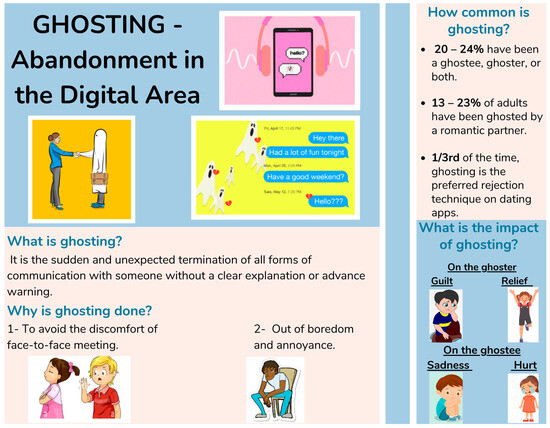
Figure 1 provides the definition, prevalence, and impacts of ghosting.
Figure 1. Summary of the important points pertaining to all forms of ghosting.
Ghosting is a topic of psychological interest because it occurs frequently, can cause mental distress, and has been little researched. Recently, a measure of ghosting (GHOST) based on the Shannon–Weaver communication model was developed to explore the experiences of ghostees
[4]. The act of ghosting often exposes hidden dimensions of personality and is, for that reason, of interest to mental health researchers and providers. This approach may become a fruitful area of inquiry in the course of a mental health assessment
[12][13][12,13].
Our central research question in this entry examines ghosting motivations and their effects on the persons involved. We propose that technologically induced anonymity and the ease of avoiding emotionally difficult conversations are key factors promoting ghosting behaviors. We also explore the psychological impacts of ghosting on both ghostees and ghosters, suggesting that, for many, the hurt of being rejected and the guilt of being responsible for this form of silent rejection have adverse consequences.