
AOver the Systematic Ryears, ethnopharmacological and phytochemical investigations have been conducted to understand the potential effects of the Croton genus on several diseases. It has been revealed that these terpenoid-rich species traditionally used to treat gastrointestinal diseases, heal wounds, and relieve paiew n have a wide range of the Diabetes-Rrapeutic effects; however, those used to treat diabetes, as well as their action mechanisms, have not been reviewed so far. Therefore, the main objective of this review was to compile all Croton species that have shown pharmacolated Mogical effects against diabetes and describe their action mechanisms of Action Involved in the Therapeutic Ef. Through a search of the literature, 17 species with hypoglycemic, antihyperglycemic, antilipidemic, antihypertensive, antioxidant, and anti-inflammatory effects were found. Among the mechanisms by which they exerted these effects were the inhibition of α-glucosidases, the promotion of insulin secretion, and the increase in glucose uptake. Interestingly, it was found that some of them may have antihyperglycemic properties, although there were no ethnopharmacological reports that support their traditional use. Moreover, others only presented studies on their hypoglycemic effect in fasting, so further works are encouraged to describe the mechanisms involved in lowering fasting blood glucose levels, such as hepatic glucose production, especially for C. cajucara, C. cuneatus, C. gratissimus var. gratissimus, C. guatemalensis, and C. membranaceus. It is expected that this review contributes to the plant science knowledge of the gect of Croton Specinus, and it can be used in future references on the identification and development of new molecules/phytomedicines that help in the treatment of diabetes.
- traditional medicine
- medicinal plants
- Croton genus
- type 2 diabetes
- action mechanisms
The Croton genus, belonging to the Euphorbiaceae family, encompasses a diverse range of plant species known for their ethnopharmacological relevance in traditional medicine across various cultures. This review aims to consolidate current knowledge on the antidiabetic potential of Croton species, with a particular focus on their mechanisms of action. Through an extensive literature analysis, 17 distinct species were identified that exhibit pharmacological activities associated with diabetes management, including hypoglycemic, antihyperglycemic, and anti-inflammatory effects. These therapeutic effects are attributed to a range of biological mechanisms such as the inhibition of α-glucosidase enzymes, enhancement of peripheral glucose uptake, and stimulation of insulin secretion by pancreatic β-cells.
Despite promising preliminary findings, many of these species lack comprehensive mechanistic studies, and for several, ethnopharmacological documentation remains limited or anecdotal. This gap underscores the necessity for further in vitro and in vivo investigations to validate and deepen our understanding of their bioactive compounds and their molecular targets. Exploring these mechanisms not only provides insight into the therapeutic value of Croton species but also supports the broader endeavor of integrating plant-based interventions into modern antidiabetic treatment strategies.
-
Inhibition of α-glucosidases: Reduces the hydrolysis of polysaccharides, delaying carbohydrate absorption.
-
Promotion of insulin secretion: Enhances insulin release from pancreatic cells.
-
Increased glucose uptake: Facilitates glucose uptake via GLUT4 translocation in adipocytes.
These mechanisms contribute to better control of blood glucose levels in diabetes.
In conclusion, Croton species represent a largely untapped reservoir of bioactive phytochemicals with the potential to contribute meaningfully to diabetes management. Rigorous pharmacological, toxicological, and clinical studies are warranted to fully elucidate their efficacy, safety, and mechanistic pathways.
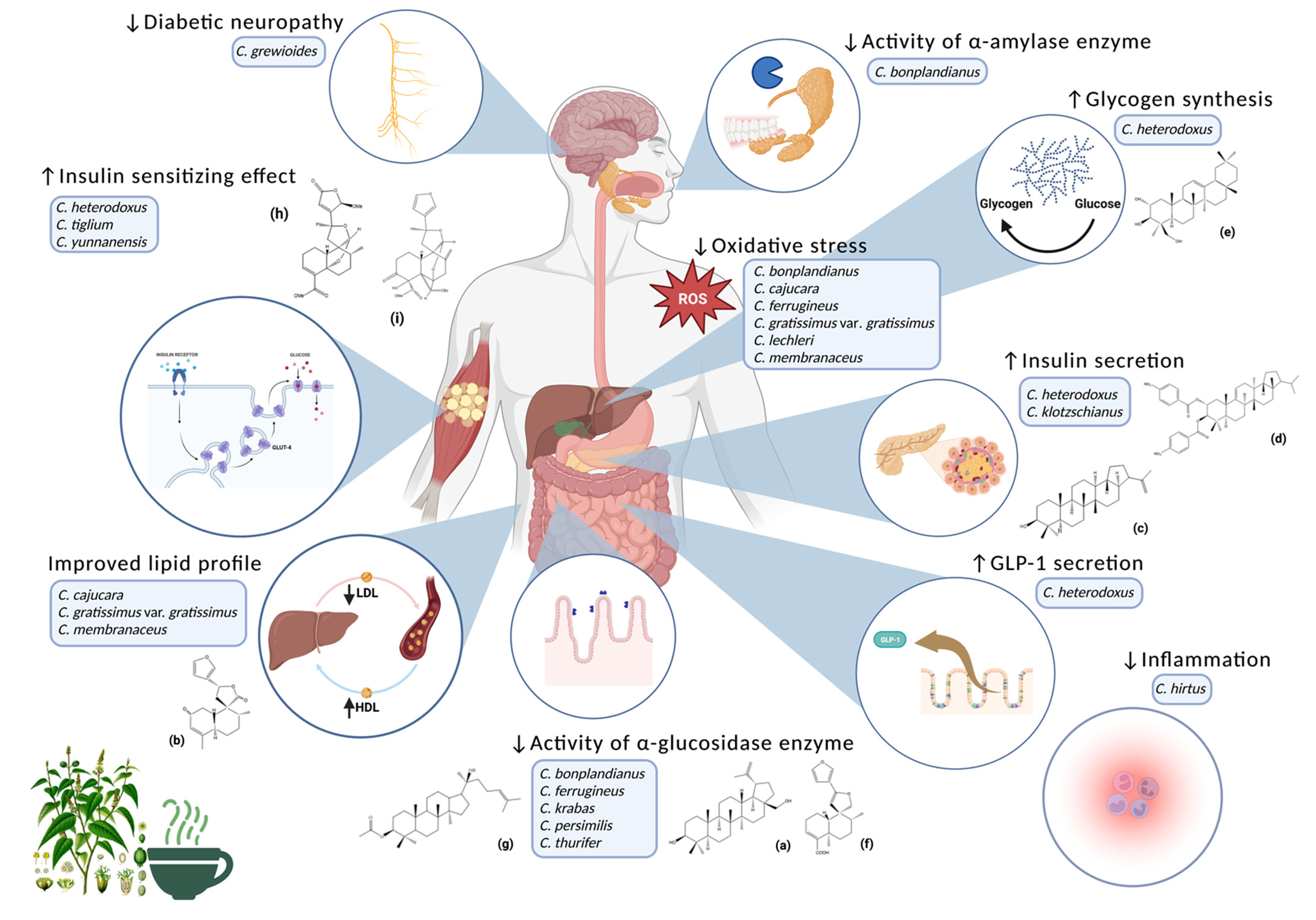
Summary of the mechanisms of action involved in the diabetes-related pharmacological effects of Croton species. The modes of action involved in the modulation of glucose and lipid
metabolism, as well as inflammation, oxidative stress and diabetic complications of Croton species and their compounds are schematized.