
When it comes to cellular biology, we often think of cells as highly efficient factories, constantly producing proteins to fuel growth and division. But what happens when we dial down the production? Can a cell continue to thrive with reduced biosynthetic activity? This question lies at the heart of a recent study published in MDPI Cells, where researchers dive deep into how calorie restriction (CR) and the reduction of biosynthetic activity impact cell growth, size, and the ability to proliferate in yeast.
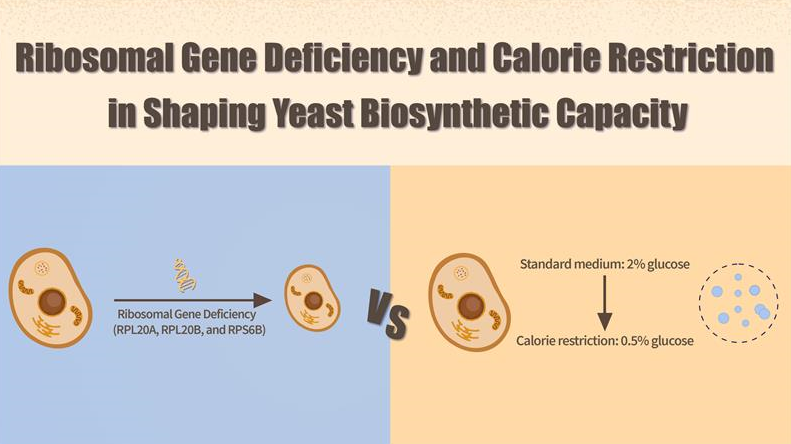
The study, titled "Interplay Between Ribosomal Gene Deficiency and Calorie Restriction in Shaping Yeast Biosynthetic Capacity" reveals that reducing biosynthesis—particularly protein synthesis—does not necessarily hinder a cell’s efficiency. In fact, the study uncovers that lowering protein production can actually enhance cellular function and lifespan, but only if biosynthetic activity doesn’t fall below a certain threshold. To investigate this, the researchers used two strategies to reduce biosynthesis in yeast: calorie restriction (CR) and gene deletions of ribosomal proteins (RPL20A, RPL20B, and RPS6B), which are key components of the ribosome involved in protein synthesis.
1. Reducing Biosynthesis: The Effect on Cell Growth and Size
At the core of this study is the role of biosynthesis, especially protein synthesis, in cell growth, division, and overall health. Protein synthesis is one of the most energy-consuming processes in a cell, and previous research has shown that reducing protein synthesis can extend lifespan and improve cellular efficiency.
To reduce biosynthetic activity, the researchers used two main methods:
-
Gene Deletions: By deleting specific ribosomal proteins, such as RPL20A, RPL20B, and RPS6B, the researchers reduced the cells' biosynthetic capacity. These deletions led to lower protein synthesis and a reduced ability to produce new proteins.
-
Calorie Restriction (CR): By limiting the availability of nutrients, CR also reduces biosynthetic activity, slowing down cellular growth.
The results showed that yeast strains with reduced biosynthetic activity—whether due to gene deletions or calorie restriction—experienced slower growth rates, smaller cell sizes, and a prolonged cell cycle. Most notably, the effects were especially prominent in the G1 phase, suggesting that a reduction in biosynthesis mainly affects the early stages of the cell cycle.
However, in yeast strains with a low biosynthetic capacity due to gene deletions (e.g., Δrpl20a), calorie restriction did not lead to any further significant reductions in growth or biosynthetic activity. This finding strongly suggests that there is a minimum biosynthetic threshold required to maintain cellular fitness. Below this threshold, further reductions in biosynthesis have little to no effect on growth, underscoring the importance of maintaining a baseline level of biosynthetic activity for proper cell function.
2. The Impact of Calorie Restriction: Thresholds and Cellular Efficiency
Calorie restriction is well-known for extending lifespan in various organisms, but its effects on cellular efficiency are more nuanced than previously thought. The study revealed that in yeast strains with already reduced biosynthetic activity—such as those with ribosomal protein gene deletions—calorie restriction did not further limit cell growth or biosynthetic activity. This suggests that the cells’ biosynthetic threshold plays a critical role in the response to calorie restriction.
When biosynthetic activity falls below this threshold, further reductions do not result in additional benefits. Essentially, the study indicates that there is a limit to how much biosynthesis can be reduced before it starts impairing the cell’s ability to function and proliferate.
3. Biosynthetic Efficiency: The Key to Proliferation and Lifespan?
The study’s findings propose that slowing down biosynthesis, particularly protein synthesis, does not necessarily hinder cellular efficiency. In fact, the study found that cells with reduced biosynthesis used available resources more efficiently. This greater efficiency is key to allowing cells to continue dividing and proliferating, even when their protein synthesis machinery is less active.
The study also noted that yeast cells with reduced biosynthetic activity were smaller in size but still managed to proliferate effectively. This suggests that smaller cell size might confer an advantage, enabling cells to use energy and resources more efficiently, potentially leading to enhanced proliferation and longer lifespan under certain conditions.
Additionally, reducing protein synthesis helps maintain proteostasis—the balance between protein production, folding, and degradation—thereby preventing the accumulation of damaged proteins. This protective mechanism is crucial for helping cells withstand environmental stress and minimize cellular damage over time.
4. Implications for Cellular Health and Aging Research
This study marks a significant shift in how we understand biosynthetic activity and cellular health. Traditionally, higher levels of protein synthesis were believed to correlate with better cell growth and function. However, this study suggests that reducing protein synthesis—especially when biosynthetic activity is optimized—may actually promote cellular longevity and efficiency.
For aging research, these findings are particularly important. The study suggests that calorie restriction, a well-known lifespan-extending intervention, may only be effective if the cell’s biosynthetic activity is above a certain threshold. This insight could help scientists develop strategies to extend lifespan and improve cellular health—not by increasing protein synthesis, but by optimizing cellular machinery to function efficiently without overloading it with unnecessary protein production.
5. Conclusion: Rethinking Cellular Efficiency and Proliferation
This research provides valuable insights into how reducing biosynthesis affects cell size, growth, and proliferation. By investigating calorie restriction and ribosomal protein gene deletions, the study demonstrates that there is a critical biosynthetic threshold necessary for cells to maintain their efficiency and proliferate. Reducing protein synthesis does not necessarily compromise cell growth or function. In fact, it may enhance the efficient use of cellular resources, leading to longer cell lifespan and better stress resistance.
These findings challenge the traditional belief that higher biosynthesis is always better for cell function. Instead, they highlight the importance of finding an optimal level of biosynthetic activity, and understanding this balance could have far-reaching implications for aging research, metabolic diseases, and therapies aimed at improving cellular function in aging organisms.
For more information about topic, you can view the online video entitled "Ribosomal Gene Deficiency and Calorie Restriction in Shaping Yeast Biosynthetic Capacity".