
You're using an outdated browser. Please upgrade to a modern browser for the best experience.
Role of p300 and Tumours: History
Please note this is an old version of this entry, which may differ significantly from the current revision.
Contributor: Qingmei Zeng , , Yongxiang Zhao , , Zhinan Chen , Wan Huang

p300 acts as a transcription coactivator and an acetyltransferase that plays an important role in tumourigenesis and progression. In previous studies, it has been confirmed that p300 is an important regulator in regulating the evolution of malignant tumours and it also has extensive functions. From the perspective of non-posttranslational modification, it has been proven that p300 can participate in regulating many pathophysiological processes, such as activating oncogene transcription, promoting tumour cell growth, inducing apoptosis, regulating immune function and affecting embryo development. p300 has been found to act as an acetyltransferase that catalyses a variety of protein modification types, such as acetylation, propanylation, butyylation, 2-hydroxyisobutyration, and lactylation. Under the catalysis of this acetyltransferase, it plays its crucial tumourigenic driving role in many malignant tumours. Therefore, the function of p300 acetyltransferase has gradually become a research hotspot. From a posttranslational modification perspective, p300 is involved in the activation of multiple transcription factors and additional processes that promote malignant biological behaviours, such as tumour cell proliferation, migration, and invasion, as well as tumour cell apoptosis, drug resistance, and metabolism.

  • p300
  • tumours
  • inhibitor
  • posttranslational modification
  • Acetyltransferase

1. p300 Can Regulate Transcription
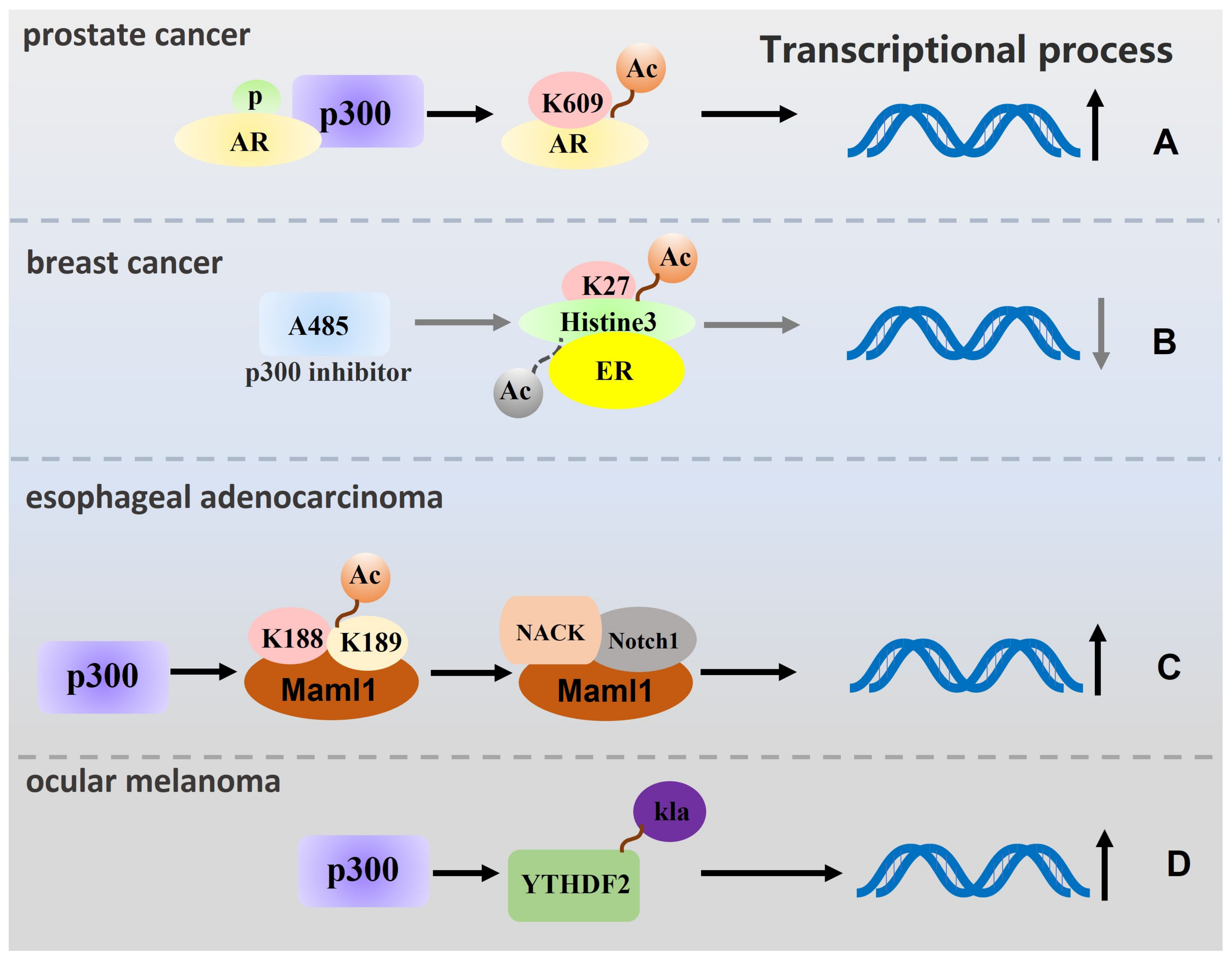
Transcription is the process of transforming genetic information from DNA to RNA. As the first step of protein biosynthesis, transcription is the synthesis step of mRNA and non-coding RNA (tRNA, rRNA, etc.). p300 can regulate transcription, acting as a coactivator of transcription through two mechanisms. First, p300 regulates transcription factor activity, binds enhancers and promotes gene expression by exerting its own transcriptional functions or by cooperating with other molecules. Secondly, p300 regulates transcription factors by promoting modifications that affect the transcription process. The second mechanism has been the focus of recent studies.
p300 can function as an acetyltransferase to modify certain proteins and then participate in the transcription process. For instance, in gastric cancer and melanoma, p300 affects the proliferation, cell cycle and ageing of tumour cells to some extent by acetylating histones to promote transcription of the corresponding genes [1][2], and a similar finding was found in diffuse large B-cell lymphoma (DLBCL) [3]. p300 also regulates transcriptional processes in prostate cancer; on the one hand, p300 recognise phosphorylated AR, which promotes subsequent AR acetylation at K609, thereby facilitating transcription [4]. On the other hand, p300 can promote the malignant progression of prostate cancer by increasing the levels of H3K18ac, H3K27ac and H4ac in the transcription start site (TSS) and antioxidant response element (ARE) regions, which in turn affects the transcriptional level [5]. In breast cancer, the p300 inhibitor A485 can decrease the transcript levels of highly expressed genes by reducing the H3K27ac level in specific genes, such as ER [6]. It has also been demonstrated that DOT1L interacts with the p300/c-Myc complex to enhance EMT-induced stemness properties by recognising promoters such as those of ZEB1 and ZEB2; this promotes DNA methylation and histone acetylation, enhances epithelial−mesenchymal transition (EMT) regulators, and accelerates the malignant progression of breast cancer [7]. Regarding esophageal adenocarcinoma, p300 acetylates K188 and K189 of Maml1, recruiting NACK into the Notch1 ternary complex, which in turn leads to transcription initiation [8]. The interaction of p300 with MRTF-A was verified in MCF-7 cells, and p300 was found to be recruited to the promoter of MRTF-A target genes to acetylate histones and thereby reconfigure chromatin structure [9]. In addition, p300 can play a role in tumour immune regulation. p300 enhances myeloid-derived suppressor cell (MDSC) immunosuppressive function by regulating C/EBPβ acetylation and Arg-1 transcription [10].
Studies on the effect of p300 inhibitors on transcriptional regulation have found that treatment of multiple myeloma cells with A485 preferentially enables the deacetylation of enhancer progenitor-associated histones at the transcriptional level [11]. Similar findings were observed in human colorectal carcinomas [12]. The p300 inhibitor A485 inhibits acetylation of H3 at the CD274 (encoding PD-L1) promoter site and blocks CD274 transcription, providing a mechanistic basis for the combination of A485 and anti-PD-L1 antibodies in the treatment of prostate cancer [13].Treatment of hepatocellular carcinoma (HCC) with the p300 inhibitor B029-2 inhibits the transcription of six metabolic genes, PSPH, PSAT1, ALDH18A1, ATIC, TALDO1 and DTYMK by blocking the binding of H3K18ac and H3K27Ac to the relevant promoters [14]. In macrophages and induced pluripotent stem cells (iPSCs), p300 has been shown to regulate histone lactylation, and p300 is known to catalyse YTHDF2 promoter lactylation in ocular melanoma cells. HDAC1-3 and SIRT1-3 were shown to be demulsification in other studies [15][16] . Figure 1 shows a schematic representation of transcription-related pathways regulated by p300.
Figure 1. Schematic representation of transcription-related pathways regulated by p300. (A) The p300 gene recognises phosphorylated AR in prostate cancer and promotes AR acetylation in K609, thereby promoting transcription. (B) A485, an inhibitor of p300, can reduce the level of transcription of highly expressed genes by reducing the level of H3K27ac in particular genes (such as ER). (C) In esophageal adenocarcinoma, p300 acetylates K188 and K189 of Maml1, and recruits NACK to the ternary complex of Notch1, resulting in the initiation of transcription. (D) p300 can catalyse the lactate of YTHDF2 promoter in ocular melanoma cells and then regulate the transcription process. (Remarks: The grey arrow is the related process in which p300 inhibitors participate in regulation, and the dotted line is the process in which modification types are removed).

2. p300 Regulates Tumour Cell Proliferation, Migration, and Invasion

p300, a tumour-promoting protein, plays an essential role in malignant progression in most solid tumours, and its role has been confirmed in prostate cancer, colorectal cancer, liver cancer, and other diseases. Many years of research have shown that p300 can be involved in biological processes that regulate tumour cell proliferation, migration and invasion, Tumour cell proliferation, migration, and invasion are three important features of the biological behaviour of malignant tumour development. Of these, tumour cell proliferation is the basis of tumour cell growth, development, inheritance and reproduction, and cells all proliferate by division. Tumour cell migration, also known as tumour cell crawling, is a common phenomenon in the pathological process of tumour metastasis. Cellular invasion is the process of expansion and proliferation of malignant tumour cells from their origin to surrounding normal tissue along the interstitial space. Indicating that tumour cells breach the basement membrane. and a clear understanding of the p300 mechanism of action provides a solid basis for further clarification of the role of p300. Furthermore, the focus of research on p300 over the years has shifted, and most studies now focus on the role of p300 as an acetylase.
p300 possesses acetyltransferase activity and plays a procancer role in both solid and haematological cancers. In many solid tumours, such as breast cancer [17], hepatocellular carcinoma [18], oesophageal cancer [19], and cutaneous squamous cell carcinomas [20], increased p300 expression is associated with an aggressive phenotype and a low survival rate; furthermore, histochemistry analysis of a variety of primary tumour tissues has revealed that lower overall levels of H3K18ac are associated with lower survival and a higher risk of recurrence in prostate cancer, renal cancer, lung cancer, pancreatic cancer and breast cancer [21][22][23][24][25]. Wang et al. showed that p300 can acetylate PHF5A, promote cell proliferation, and affect the prognosis of colorectal cancer [26]. In studies of colorectal cancer development, p300 was found to act not only through overexpression of the Wnt signalling pathway but also through interaction with and acetylation of MTA2 to promote migration and invasion [27][28]. HAN et al. suggested that cervical cancer is highly malignant in part because p300 promotes the proliferation, migration, and invasion of HeLa cells by mediating lysine crotonylation and increasing HNRNPA1 expression [29]. p300 can promote the invasion and migration of human nasopharyngeal carcinoma cells (CNE-2 cells), possibly by acetylating Smad2 and Smad3 through the TGF-β signalling pathway and inducing EMT [30]. AR is acetylated, and its stability is regulated by p300, which promotes prostate cancer cell proliferation [31]. In MCF-7 cell experiments, overexpression of p300 and MRTF-A was found to catalyse MRTF-A acetylation and to increase the transcript levels of migration-related genes such as MYL9, MYH9 and CYR61, which in turn increased breast cancer cell viability and promoted cell migration [9]. However, p300 can exert a tumour suppressor effect; for example, in regulating osteosarcoma development, p300 can acetylate JHDMIA K409 and can inhibit the proliferation and invasion of HOS osteosarcoma cells [32].
Regarding haematological tumours, the p300 inhibitor C646 was found to cause apoptosis and slow the proliferation of AML1-ETO-positive acute myeloid leukaemia (AML) cells. Treatment with C464 delayed the growth and induced apoptosis of AML1-ETO-positive AML cell lines and primary parental cells, and the study found that acetylation of AML1-ETO by p300 may be responsible [33][34]. In T-cell acute lymphoblastic leukaemia, p300 and HDAC1 were found to acetylate and deacetylate the K1692 and K1731 positions of Notch3, which plays a key role in T-cell proliferation and the overall malignant progression of T-cell leukaemia [35]. In human leukaemia cell lines, it was also demonstrated that the CREBBP/EP300 bromodomain is essential for regulating the GATA1/MYC regulatory axis during proliferation, and administration of CREBBP/EP300 bromodomain inhibitors was very effective in reducing H3K27ac levels and thus hindering cancer cell proliferation [36].
In successive studies exploring the therapeutic feasibility of p300 inhibitors, it was found that A485, a p300-specific inhibitor, significantly inhibited the growth of ER+ breast cancer cells, which may be related to the down-regulation of enhancer H3K27ac, which inhibits the expression of ER target gene [6]. The antitumour activity of A485 in growth hormone pituitary adenoma was also associated with reduced levels of H3K18ac and H3K27ac [37]. Treatment of colon cancer cells with the isothiazolone-based agent PCAF and the p300 histone acetyltransferase (HAT) co-inhibitors CCT077791 and CCT077792 inhibited histone acetylation and thus prevented colon cancer cell proliferation [38][39]. Treatment of hepatocellular carcinoma cells with the highly potent p300 inhibitor B029-2 significantly reduced the levels of H3K18ac and H3K27ac and significantly reduced the proliferation and metastatic capacity of hepatocellular carcinoma cells [14]. The reason why the combination of curcumin and anti-PD-1 therapy is more effective than anti-PD-1 therapy alone is that curcumin can reduce p300-induced histone acetylation in the promoter region of TGF-β1 because it inhibits p300 expression, thereby activating immune cell function and reducing immune escape [40]. Triple-negative breast cancer cells are sensitive to the p300 inhibitor L002, and treatment with L002 can significantly inhibit the growth of cancer cells. In animal experiments, it was also confirmed that L002 could significantly inhibit tumour growth in vivo, and histochemistry experiments showed that the level of H4ac was significantly decreased in the group that received L002. It was further speculated that L002 might function by decreasing the level of histone acetylation [41].

3. p300 Regulates Tumour Cell Apoptosis
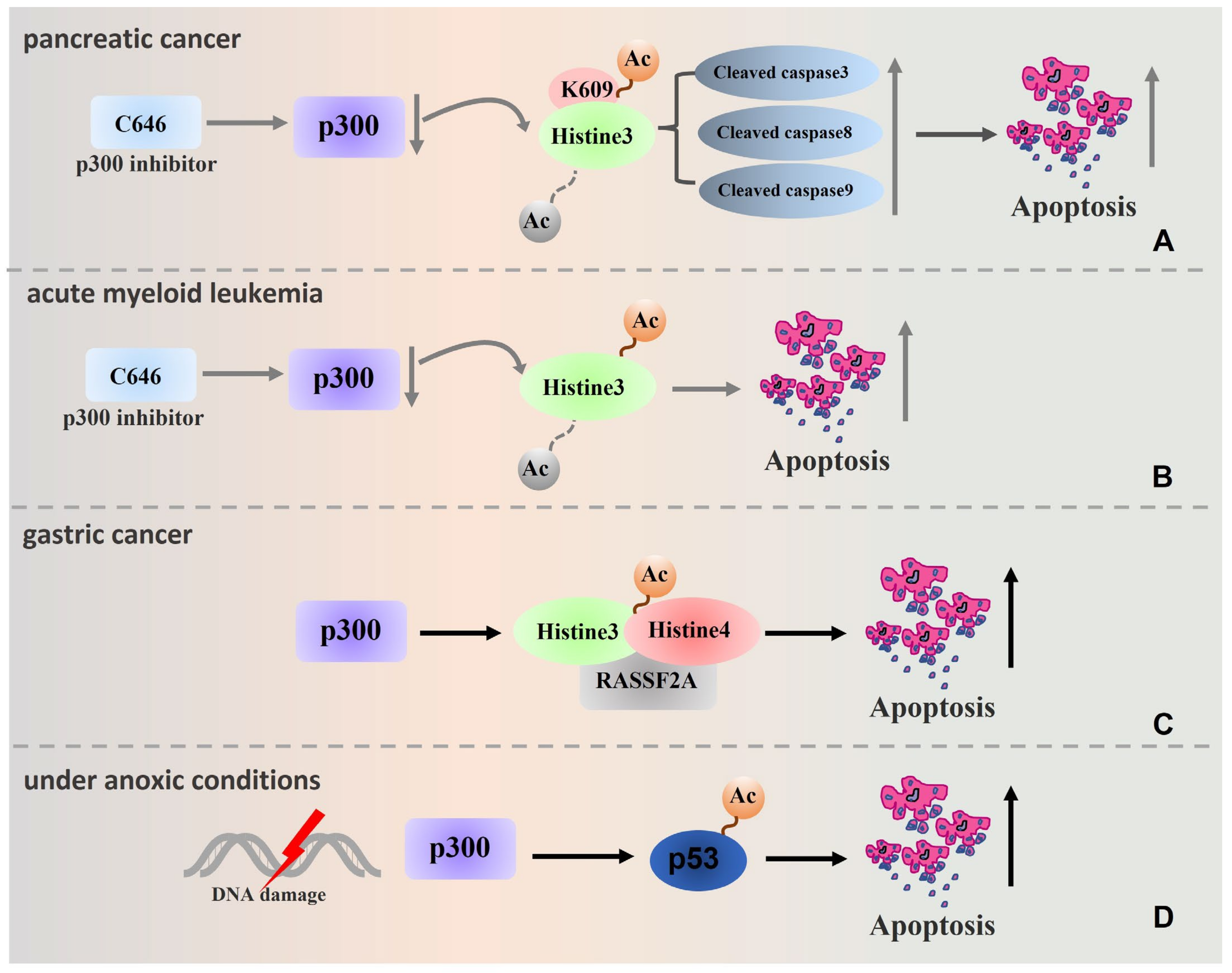
Tumour cell apoptosis is an ordered or procedural manner of cell death, and it is an active death process of tumour cells under the control of specific genes. Apoptotic cells will ultimately be processed by phagocytes. In the case of cancer cells, the interruption of the apoptosis process signifies the development and spread of cancer. Apoptosis significantly affects the fate of tumour cells, and in general, p300 directly and indirectly regulates tumour cell apoptosis and affects tumour progression. p300 affects the following regulatory signalling molecules during the complex pathogenesis of the development of different tumours: c-MYC [42], c-Met, cyclin D1, Bcl2 [43], TRAIL [44], RAR and ATRA [45], Wnt/β-catenin [27], API5 [46], p53 [47], etc. p300 acts as an acetyltransferase, catalysing the acetylation of histones and nonhistone proteins, and plays an integral role in regulating tumour cell apoptosis. Ono et al. performed pancreatic cancer cell-related experiments and found that the expression of apoptosis-related proteins such as cleaved caspases 3, 8, and 9 and PARP was increased after p300 interference, and acetylation of H3K27 was also inhibited by C646 treatment, suggesting that p300 may regulate apoptosis of pancreatic cancer cells via its HAT activity [48]. Liu et al. found that p300 is involved in the acetylation of H3 and H4 on the RASSF2A promoter and regulates RASSF2A expression, which in turn induces the apoptosis of gastric cancer cells [1]. In studies by Fu and others, C646 treatment led to the apoptosis of AML1-ETO-positive AML cell lines and primary parental cells, while normal haematopoietic stem cells were not affected [33][49]. Because p300 can mediate histone acetylation, it is speculated that targeting p300 to regulate histone acetylation may be an important new therapeutic option for AML treatment [34]. Interestingly, p300 can also catalyse the modification of some nonhistone proteins; for example, in the presence of hypoxia or DNA damage, p300 can acetylate p53, which in turn regulates apoptosis [50][51]. Figure 2 shows a schematic representation of the pathways involved in the regulation of apoptosis by p300.
Figure 2. Schematic representation of pathways involved in the regulation of apoptosis by p300. (A) In pancreatic cancer studies, C646 treatment was followed by interference with p300 followed by inhibition of acetylation of H3K27, leading to increased expression of apoptosis-related proteins such as cleaved caspase 3, 8 and 9 and promoting cell apoptosis. (B) C646 treatment leads to apoptosis in AML1-ETO positive AML cell line and primary parental cells, which may be associated with p300-mediated histone acetylation. (C) p300 is involved in the acetylation of the Histones H3 and H4 on RASSF2A promoter and regulates the expression of RASSF2A, thus inducing apoptosis of gastric cancer cells. (D) p300 acetylates p53 and regulates apoptosis in the presence of hypoxia or DNA damage (Remarks: The grey arrow is the related process in which p300 inhibitors participate in regulation, and the dotted line is the process in which modification types are removed).

4. p300 Regulates the Formation of Tumour Drug Resistance

Drug resistance, leading to a decrease or lack of efficacy of the drug towards the pathogen, generally refers to the decline or even disappearance of the pathogen’s susceptibility to the drug following repeated drug contact. The emergence of drug resistance is a significant reason for the ineffectiveness of tumour treatment, and it is a problem that needs to be understood and solved. As a regulator closely related to the degree of tumour malignancy, p300 is also involved in the development of drug resistance. Lapatinib is a chemotherapeutic drug for breast cancer, and p300 mediates FOXO3 acetylation and enhances sensitivity to lapatinib [52]. It has also been demonstrated in relevant experiments in cisplatin-resistant bladder cancer cells that cisplatin resistance may be acquired by p300 catalysing foxo3a acetylation[53]. Ono et al. found that HAT inhibition by C646 increased the cytotoxic effect of gemcitabine on pancreatic cancer cell lines at 96 h. The researchers also confirmed that acetylation of H3K27 was inhibited and speculated that the development of gemcitabine resistance in pancreatic cancer was prevented, at least in part, by a HAT-dependent mechanism [48]. In addition, many other related studies have found that p300 inhibition enhances the sensitivity of drug-resistant tumour cells to chemotherapeutic agents by modulating HAT activity. For example, Mladek et al. found that CPI-1612 can effectively block RBBP4/p300 HAT activity by inhibiting the deposition of H3K27Ac in GBM cells, providing a new idea for the sensitisation of glioma to temozolomide (TMZ) [54]. In the study by Huang et al., p300 interference decreased the H3K27ac level, while a strain resistant to EZH2 inhibitors became sensitive. Subsequently, MLL1, which inhibits the binding of p300 to CBP and reduces the level of H3K27ac, was also assessed, providing research directions that could facilitate a more comprehensive understanding of p300 function and the development of tumour therapy [55].

5. p300 Regulates Tumour Metabolic Processes
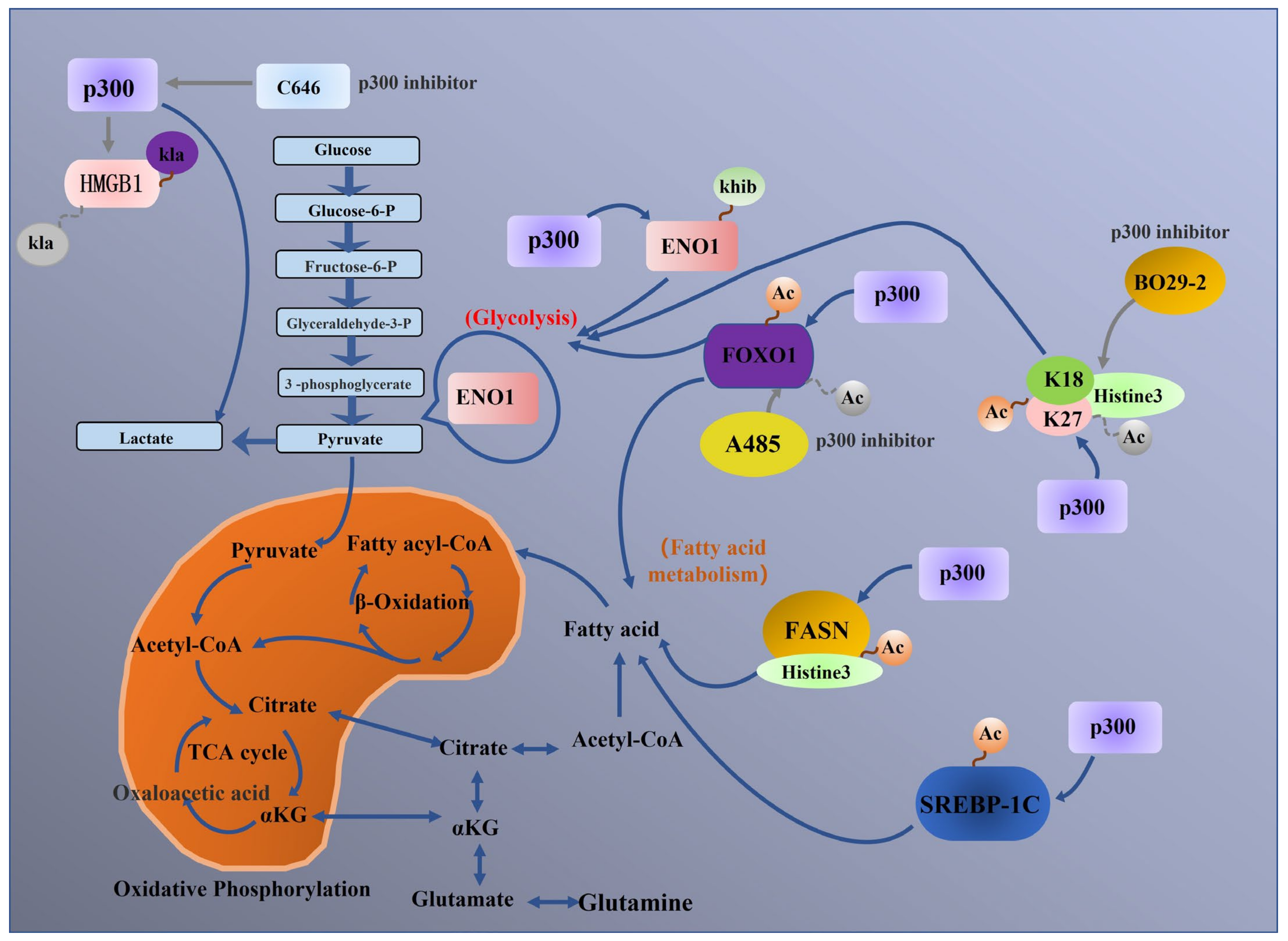
p300 is a typical acetyltransferase and transcriptional coactivator that not only regulates transcription, apoptosis, and protein localisation, proliferation, migration, and invasion but also participates in metabolic processes. As we all know, tumour cell metabolism, means that tumour cells will acquire unique metabolic preferences depending on their tissue of origin, the degree of genetic changes, and the degree of interaction with hormones and systemic metabolites. That is, tumour occurrence is dependent on the reprogramming of cellular metabolism. p300 is involved in the regulation of tumour cell metabolism primarily as follows, for example, p300 can regulate glucose metabolism and fat metabolism. According to early studies on p300, it has a unique role in the control of metabolic processes as an acetyltransferase.
In studies related to prostate cancer, p300 was found to have a tumour-promoting effect and to regulate the expression of FASN, a regulator of lipid metabolism, by acetylating H3 in the FASN gene promoter. Therefore, p300 may be involved in the regulation of lipid metabolism [56]. Early studies of cellular lipid metabolism revealed that the stability of SREBP-1c is dynamically controlled by p300 acetylation and SIRT1 deacetylation, the latter being a mechanism specific to HepG2 cells [57]. A485, which regulates FOXO1 deacetylation and degradation via a proteasome-dependent pathway, has been shown to inhibit hepatic lipogenesis and glycoprotein production [58]. p300 and HDAC1 acetylate and deacetylate the catalytic subunit of adenosine monophosphate-activated protein kinase (AMPK); these proteins were found to enhance the interactions of the upstream kinase LKB1 when AMPK is deacetylated and lead to phosphorylation and activation of AMPK, resulting in lipolysis in human hepatocytes [41].
p300 can increase the H3K18Ac and H3K27Ac levels in the promoter regions of the metabolism-related genes PSAT1, ATIC and TALDO1 in Huh-7 cells, which in turn promotes glycolysis [14]. Similar studies have also demonstrated that B029-2, which regulates the acetylation of H3 K18 and K27, reduces the glycolytic capacity of hepatocellular carcinoma cells; thus, it has been explored as a potential p300-targeting drug for cancer treatment [14]. In addition to acetylation of nonhistone proteins, p300 catalyses 2-hydroxyisobutylation and lactylation of nonhistone proteins. Recent studies have also shown that p300 regulates glycolysis and lactate excretion by mediating the 2-hydroxyisobutyl conversion of ENO1 to induce acetylase activity, thereby regulating colon cancer metabolism [59]. Treatment with C646 also inhibits the metabolism of HepG2 (or Huh7) hepatocellular carcinoma cells via this mechanism [60]. p300 is also involved in the metabolic processes of immune cells. p300 helps macrophages take up extracellular lactate via monocarboxylic acid transporters (MCTs) and catalyses lactylation of HMGB1 in macrophages. C646 inhibits p300 acetylase activity and inhibits lactate-induced lactylation of HMGB1, two regulatory mechanisms by which p300 participates in macrophage metabolism [61]. In addition, deletion of the p300 gene to detect its effect on metabolic processes in serum induced changes in metabolites such as glutamate/glutamine and choline glycerate, and this finding was verified in HCT116 cells [62]. Figure 3 shows a schematic diagram of the mechanisms of p300 in tumour metabolic regulation.
Figure 3. Schematic diagram of the mechanisms of p300 in tumour metabolism regulation. p300 catalyses many different types of posttranslational modifications, such as acetylation, β-hydroxyisobutyrylation and lactylation, in tumour cells to modulate glycometabolism and lipid metabolism. (Remarks: The grey arrow is the related process in which p300 inhibitors participate in regulation, and the dotted line is the process in which modification types are removed).

This entry is adapted from the peer-reviewed paper 10.3390/biom13030417

References

  1. Liu, C.; Pan, Y.; Wang, X.; Lu, J.; Huang, B.; Li, X. Activation of RASSF2A by p300 induces late apoptosis through histone hyperacetylation. Cell Biol. Int. 2010, 34, 1133–1139.
  2. Bandyopadhyay, D.; Okan, N.A.; Bales, E.; Nascimento, L.; Cole, P.A.; Medrano, E.E. Down-regulation of p300/CBP histone acetyltransferase activates a senescence checkpoint in human melanocytes. Cancer Res. 2002, 62, 6231–6239.
  3. Haery, L.; Lugo-Picó, J.G.; Henry, R.A.; Andrews, A.J.; Gilmore, T.D. Histone acetyltransferase-deficient p300 mutants in diffuse large B cell lymphoma have altered transcriptional regulatory activities and are required for optimal cell growth. Mol. Cancer 2014, 13, 1–13.
  4. Sawant, M.; Mahajan, K.; Renganathan, A.; Weimholt, C.; Luo, J.; Kukshal, V.; Jez, J.M.; Jeon, M.S.; Zhang, B.; Li, T.; et al. Chronologically modified androgen receptor in recurrent castration-resistant prostate cancer and its therapeutic targeting. Sci. Transl. Med. 2022, 14, eabg4132.
  5. Ianculescu, I.; Wu, D.Y.; Siegmund, K.D.; Stallcup, M.R. Selective roles for cAMP response element-binding protein binding protein and p300 protein as coregulators for androgen-regulated gene expression in advanced prostate cancer cells. J. Biol. Chem. 2012, 287, 4000–4013.
  6. Waddell, A.; Mahmud, I.; Ding, H.; Huo, Z.; Liao, D. Pharmacological Inhibition of CBP/p300 Blocks Estrogen Receptor Alpha (ERalpha) Function through Suppressing Enhancer H3K27 Acetylation in Luminal Breast Cancer. Cancers 2021, 13, 2799.
  7. Cho, M.H.; Park, J.H.; Choi, H.J.; Park, M.K.; Won, H.Y.; Park, Y.J.; Lee, C.H.; Oh, S.H.; Song, Y.S.; Kim, H.S.; et al. DOT1L cooperates with the c-Myc-p300 complex to epigenetically derepress CDH1 transcription factors in breast cancer progression. Nat. Commun 2015, 6, 7821.
  8. Jin, K.; Zhou, W.; Han, X.; Wang, Z.; Li, B.; Jeffries, S.; Tao, W.; Robbins, D.J.; Capobianco, A.J. Acetylation of Mastermind-like 1 by p300 Drives the Recruitment of NACK to Initiate Notch-Dependent Transcription. Cancer Res. 2017, 77, 4228–4237.
  9. He, H.; Wang, D.; Yao, H.; Wei, Z.; Lai, Y.; Hu, J.; Liu, X.; Wang, Y.; Zhou, H.; Wang, N.; et al. Transcriptional factors p300 and MRTF-A synergistically enhance the expression of migration-related genes in MCF-7 breast cancer cells. Biochem. Biophys. Res. Commun. 2015, 467, 813–820.
  10. Wang, W.; Chen, Y.; Du, R.; Xia, X.; Zhang, Y.; Guo, H.; Ma, J.; Tian, J.; Wang, S. C/EBPbeta enhances immunosuppression activity of myeloid-derived suppressor cells by a P300-mediated acetylation modification. Inflamm. Res. 2022, 71, 1547–1557.
  11. Hogg, S.J.; Motorna, O.; Cluse, L.A.; Johanson, T.M.; Coughlan, H.D.; Raviram, R.; Myers, R.M.; Costacurta, M.; Todorovski, I.; Pijpers, L.; et al. Targeting histone acetylation dynamics and oncogenic transcription by catalytic P300/CBP inhibition. Mol. Cell 2021, 81, 2183–2200.e2113.
  12. Ishihama, K.; Yamakawa, M.; Semba, S.; Takeda, H.; Kawata, S.; Kimura, S.; Kimura, W. Expression of HDAC1 and CBP/p300 in human colorectal carcinomas. J. Clin. Pathol. 2007, 60, 1205–1210.
  13. Liu, J.; He, D.; Cheng, L.; Huang, C.; Zhang, Y.; Rao, X.; Kong, Y.; Li, C.; Zhang, Z.; Liu, J.; et al. p300/CBP inhibition enhances the efficacy of programmed death-ligand 1 blockade treatment in prostate cancer. Oncogene 2020, 39, 3939–3951.
  14. Cai, L.Y.; Chen, S.J.; Xiao, S.H.; Sun, Q.J.; Ding, C.H.; Zheng, B.N.; Zhu, X.Y.; Liu, S.Q.; Yang, F.; Yang, Y.X.; et al. Targeting p300/CBP Attenuates Hepatocellular Carcinoma Progression through Epigenetic Regulation of Metabolism. Cancer Res. 2021, 81, 860–872.
  15. Moreno-Yruela, C.; Zhang, D.; Wei, W.; Bæk, M.; Liu, W.; Gao, J.; Danková, D.; Nielsen, A.L.; Bolding, J.E.; Yang, L.; et al. Class I histone deacetylases (HDAC1–3) are histone lysine delactylases. Sci. Adv. 2022, 8, 1–15.
  16. Li, X.; Yang, Y.; Zhang, B.; Lin, X.; Fu, X.; An, Y.; Zou, Y.; Wang, J.X.; Wang, Z.; Yu, T. Lactate metabolism in human health and disease. Signal. Transduct. Target. Ther. 2022, 7, 305.
  17. Xiao, X.S.; Cai, M.Y.; Chen, J.W.; Guan, X.Y.; Kung, H.F.; Zeng, Y.X.; Xie, D. High Expression of p300 in Human Breast Cancer Correlates with Tumor Recurrence and Predicts Adverse Prognosis. Chin. J. Cancer Res. 2011, 23, 201–207.
  18. Yokomizo, C.; Yamaguchi, K.; Itoh, Y.; Nishimura, T.; Umemura, A.; Minami, M.; Yasui, K.; Mitsuyoshi, H.; Fujii, H.; Tochiki, N.; et al. High expression of p300 in HCC predicts shortened overall survival in association with enhanced epithelial mesenchymal transition of HCC cells. Cancer Lett. 2011, 310, 140–147.
  19. Li, Y.; Yang, H.-X.; Luo, R.-Z.; Zhang, Y.; Li, M.; Wang, X.; Jia, W.-H. High Expression of p300 Has an Unfavorable Impact on Survival in Resectable Esophageal Squamous Cell Carcinoma. Ann. Thorac. Surg. 2011, 91, 1531–1538.
  20. Chen, M.K.; Cai, M.Y.; Luo, R.Z.; Tian, X.; Liao, Q.M.; Zhang, X.Y.; Han, J.D. Overexpression of p300 correlates with poor prognosis in patients with cutaneous squamous cell carcinoma. Br. J. Derm. 2015, 172, 111–119.
  21. Attar, N.; Kurdistani, S.K. Exploitation of EP300 and CREBBP Lysine Acetyltransferases by Cancer. Cold. Spring Harb. Perspect. Med. 2017, 7, a026534.
  22. Manuyakorn, A.; Paulus, R.; Farrell, J.; Dawson, N.A.; Tze, S.; Cheung-Lau, G.; Hines, O.J.; Reber, H.; Seligson, D.B.; Horvath, S.; et al. Cellular histone modification patterns predict prognosis and treatment response in resectable pancreatic adenocarcinoma: Results from RTOG 9704. J. Clin. Oncol. 2010, 28, 1358–1365.
  23. Seligson, D.B.; Horvath, S.; Shi, T.; Yu, H.; Tze, S.; Grunstein, M.; Kurdistani, S.K. Global histone modification patterns predict risk of prostate cancer recurrence. Nature 2005, 435, 1262–1266.
  24. Mosashvilli, D.; Kahl, P.; Mertens, C.; Holzapfel, S.; Rogenhofer, S.; Hauser, S.; Buttner, R.; Von Ruecker, A.; Muller, S.C.; Ellinger, J. Global histone acetylation levels: Prognostic relevance in patients with renal cell carcinoma. Cancer Sci. 2010, 101, 2664–2669.
  25. Seligson, D.B.; Horvath, S.; McBrian, M.A.; Mah, V.; Yu, H.; Tze, S.; Wang, Q.; Chia, D.; Goodglick, L.; Kurdistani, S.K. Global levels of histone modifications predict prognosis in different cancers. Am. J. Pathol. 2009, 174, 1619–1628.
  26. Wang, Z.; Yang, X.; Liu, C.; Li, X.; Zhang, B.; Wang, B.; Zhang, Y.; Song, C.; Zhang, T.; Liu, M.; et al. Acetylation of PHF5A Modulates Stress Responses and Colorectal Carcinogenesis through Alternative Splicing-Mediated Upregulation of KDM3A. Mol. Cell 2019, 74, 1250–1263.e1256.
  27. Zhou, J.; Zhan, S.; Tan, W.; Cheng, R.; Gong, H.; Zhu, Q. P300 binds to and acetylates MTA2 to promote colorectal cancer cells growth. Biochem. Biophys. Res. Commun. 2014, 444, 387–390.
  28. Lazarova, D.L.; Wong, T.; Chiaro, C.; Drago, E.; Bordonaro, M. p300 Influences Butyrate-Mediated WNT Hyperactivation In Colorectal Cancer Cells. J. Cancer 2013, 4, 491–501.
  29. Han, X.; Xiang, X.; Yang, H.; Zhang, H.; Liang, S.; Wei, J.; Yu, J. p300-Catalyzed Lysine Crotonylation Promotes the Proliferation, Invasion, and Migration of HeLa Cells via Heterogeneous Nuclear Ribonucleoprotein A1. Anal. Cell. Pathol. 2020, 2020, 5632342.
  30. Liao, Z.W.; Zhao, L.; Cai, M.Y.; Xi, M.; He, L.R.; Yu, F.; Zhou, T.C.; Liu, M.Z. P300 promotes migration, invasion and epithelial-mesenchymal transition in a nasopharyngeal carcinoma cell line. Oncol. Lett. 2017, 13, 763–769.
  31. Zhong, J.; Ding, L.; Bohrer, L.R.; Pan, Y.; Liu, P.; Zhang, J.; Sebo, T.J.; Karnes, R.J.; Tindall, D.J.; van Deursen, J.; et al. p300 acetyltransferase regulates androgen receptor degradation and PTEN-deficient prostate tumorigenesis. Cancer Res. 2014, 74, 1870–1880.
  32. Wang, Y.; Sun, B.; Zhang, Q.; Dong, H.; Zhang, J. p300 Acetylates JHDM1A to inhibit osteosarcoma carcinogenesis. Artif. Cells Nanomed. Biotechnol. 2019, 47, 2891–2899.
  33. Gao, X.N.; Lin, J.; Ning, Q.Y.; Gao, L.; Yao, Y.S.; Zhou, J.H.; Li, Y.H.; Wang, L.L.; Yu, L. A histone acetyltransferase p300 inhibitor C646 induces cell cycle arrest and apoptosis selectively in AML1-ETO-positive AML cells. PLoS ONE 2013, 8, e55481.
  34. Dutta, R.; Tiu, B.; Sakamoto, K.M. CBP/p300 acetyltransferase activity in hematologic malignancies. Mol. Genet. Metab. 2016, 119, 37–43.
  35. Palermo, R.; Checquolo, S.; Giovenco, A.; Grazioli, P.; Kumar, V.; Campese, A.F.; Giorgi, A.; Napolitano, M.; Canettieri, G.; Ferrara, G.; et al. Acetylation controls Notch3 stability and function in T-cell leukemia. Oncogene 2012, 31, 3807–3817.
  36. Garcia-Carpizo, V.; Ruiz-Llorente, S.; Sarmentero, J.; Grana-Castro, O.; Pisano, D.G.; Barrero, M.J. CREBBP/EP300 bromodomains are critical to sustain the GATA1/MYC regulatory axis in proliferation. Epigenetics Chromatin 2018, 11, 30.
  37. Ji, C.; Xu, W.; Ding, H.; Chen, Z.; Shi, C.; Han, J.; Yu, L.; Qiao, N.; Zhang, Y.; Cao, X.; et al. The p300 Inhibitor A-485 Exerts Antitumor Activity in Growth Hormone Pituitary Adenoma. J. Clin. Endocrinol. Metab. 2022, 107, e2291–e2300.
  38. Chen, Q.; Yang, B.; Liu, X.; Zhang, X.D.; Zhang, L.; Liu, T. Histone acetyltransferases CBP/p300 in tumorigenesis and CBP/p300 inhibitors as promising novel anticancer agents. Theranostics 2022, 12, 4935–4948.
  39. Stimson, L.; Rowlands, M.G.; Newbatt, Y.M.; Smith, N.F.; Raynaud, F.I.; Rogers, P.; Bavetsias, V.; Gorsuch, S.; Jarman, M.; Bannister, A.; et al. Isothiazolones as inhibitors of PCAF and p300 histone acetyltransferase activity. Mol. Cancer Ther. 2005, 4, 1521–1532.
  40. Guo, L.; Li, H.; Fan, T.; Ma, Y.; Wang, L. Synergistic efficacy of curcumin and anti-programmed cell death-1 in hepatocellular carcinoma. Life Sci. 2021, 279, 119359.
  41. Yang, H.; Pinello, C.E.; Luo, J.; Li, D.; Wang, Y.; Zhao, L.Y.; Jahn, S.C.; Saldanha, S.A.; Chase, P.; Planck, J.; et al. Small-molecule inhibitors of acetyltransferase p300 identified by high-throughput screening are potent anticancer agents. Mol. Cancer Ther. 2013, 12, 610–620.
  42. Ogiwara, H.; Sasaki, M.; Mitachi, T.; Oike, T.; Higuchi, S.; Tominaga, Y.; Kohno, T. Targeting p300 Addiction in CBP-Deficient Cancers Causes Synthetic Lethality by Apoptotic Cell Death due to Abrogation of MYC Expression. Cancer Discov. 2016, 6, 430–445.
  43. Wang, Y.M.; Gu, M.L.; Meng, F.S.; Jiao, W.R.; Zhou, X.X.; Yao, H.P.; Ji, F. Histone acetyltransferase p300/CBP inhibitor C646 blocks the survival and invasion pathways of gastric cancer cell lines. Int. J. Oncol. 2017, 51, 1860–1868.
  44. Zhang, B.; Chen, D.; Liu, B.; Dekker, F.J.; Quax, W.J. A novel histone acetyltransferase inhibitor A485 improves sensitivity of non-small-cell lung carcinoma cells to TRAIL. Biochem. Pharm. 2020, 175, 113914.
  45. Dietze, E.C.; Caldwell, L.E.; Marcom, K.; Collins, S.J.; Yee, L.; Swisshelm, K.; Hobbs, K.B.; Bean, G.R.; Seewaldt, V.L. Retinoids and retinoic acid receptors regulate growth arrest and apoptosis in human mammary epithelial cells and modulate expression of CBP/p300. Microsc. Res. Tech. 2002, 59, 23–40.
  46. Sharma, V.K.; Lahiri, M. Interplay between p300 and HDAC1 regulate acetylation and stability of Api5 to regulate cell proliferation. Sci. Rep. 2021, 11, 16427.
  47. Avantaggiati, M.L.; Ogryzko, V.; Gardner, K.; Giordano, A.; Levine, A.S.; Kelly, K. Recruitment of p300/CBP in p53-dependent signal pathways. Cell 1997, 89, 1175–1184.
  48. Ono, H.; Basson, M.D.; Ito, H. P300 inhibition enhances gemcitabine-induced apoptosis of pancreatic cancer. Oncotarget 2016, 7, 51301–51310.
  49. Fu, L.; Huang, W.; Jing, Y.; Jiang, M.; Zhao, Y.; Shi, J.; Huang, S.; Xue, X.; Zhang, Q.; Tang, J.; et al. AML1-ETO triggers epigenetic activation of early growth response gene l, inducing apoptosis in t(8;21) acute myeloid leukemia. FEBS J. 2014, 281, 1123–1131.
  50. Janknecht, R. The versatile functions of the transcriptional coactivators p300 and CBP and their roles in disease. Histol. Histopathol. 2002, 17, 657–668.
  51. Gopalakrishna Iyer, N.; Chin, S.F.; Ozdag, H.; Daigo, Y.; Hu, D.E.; Cariati, M.; Brindle, K.; Aparicio, S.; Caldas, C. p300 regulates p53-dependent apoptosis after DNA damage in colorectal cancer cells by modulation of PUMA/p21 levels. Proc. Natl. Acad. Sci. USA 2004, 101, 7386–7391.
  52. Mahmud, Z.; Gomes, A.R.; Lee, H.J.; Aimjongjun, S.; Jiramongkol, Y.; Yao, S.; Zona, S.; Alasiri, G.; Gong, G.; Yague, E.; et al. EP300 and SIRT1/6 Co-Regulate Lapatinib Sensitivity Via Modulating FOXO3-Acetylation and Activity in Breast Cancer. Cancers 2019, 11, 1067.
  53. Shiota, M.; Yokomizo, A.; Kashiwagi, E.; Tada, Y.; Inokuchi, J.; Tatsugami, K.; Kuroiwa, K.; Uchiumi, T.; Seki, N.; Naito, S. Foxo3a expression and acetylation regulate cancer cell growth and sensitivity to cisplatin. Cancer Sci. 2010, 101, 1177–1185.
  54. Mladek, A.C.; Yan, H.; Tian, S.; Decker, P.A.; Burgenske, D.M.; Bakken, K.; Hu, Z.; He, L.; Connors, M.A.; Carlson, B.L.; et al. RBBP4-p300 axis modulates expression of genes essential for cell survival and is a potential target for therapy in glioblastoma. Neuro. Oncol. 2022, 24, 1261–1272.
  55. Huang, X.; Yan, J.; Zhang, M.; Wang, Y.; Chen, Y.; Fu, X.; Wei, R.; Zheng, X.L.; Liu, Z.; Zhang, X.; et al. Targeting Epigenetic Crosstalk as a Therapeutic Strategy for EZH2-Aberrant Solid Tumors. Cell 2018, 175, 186–199.e119.
  56. Gang, X.; Yang, Y.; Zhong, J.; Jiang, K.; Pan, Y.; Jeffrey Karnes, R.; Zhang, J.; Xu, W.; Wang, G.; Huang, H. P300 acetyltransferase regulates fatty acid synthase expression, lipid metabolism and prostate cancer growth. Oncotarget 2016, 7, 15135–15149.
  57. Ponugoti, B.; Kim, D.H.; Xiao, Z.; Smith, Z.; Miao, J.; Zang, M.; Wu, S.Y.; Chiang, C.M.; Veenstra, T.D.; Kemper, J.K. SIRT1 deacetylates and inhibits SREBP-1C activity in regulation of hepatic lipid metabolism. J. Biol. Chem. 2010, 285, 33959–33970.
  58. Zhou, F.; Liu, Q.; Zhang, L.; Zhu, Q.; Wang, S.; Zhu, K.; Deng, R.; Liu, Y.; Yuan, G.; Wang, X.; et al. Selective inhibition of CBP/p300 HAT by A-485 results in suppression of lipogenesis and hepatic gluconeogenesis. Cell Death Dis. 2020, 11, 745.
  59. Huang, H.; Tang, S.; Ji, M.; Tang, Z.; Shimada, M.; Liu, X.; Qi, S.; Locasale, J.W.; Roeder, R.G.; Zhao, Y.; et al. p300-Mediated Lysine 2-Hydroxyisobutyrylation Regulates Glycolysis. Mol. Cell 2018, 70, 663–678.e6.
  60. Yuan, Y.; Yuan, H.F.; Geng, Y.; Zhao, L.N.; Yun, H.L.; Wang, Y.F.; Yang, G.; Zhang, X.D. Aspirin modulates 2-hydroxyisobutyrylation of ENO1K281 to attenuate the glycolysis and proliferation of hepatoma cells. Biochem. Biophys. Res. Commun. 2021, 560, 172–178.
  61. Yang, K.; Fan, M.; Wang, X.; Xu, J.; Wang, Y.; Tu, F.; Gill, P.S.; Ha, T.; Liu, L.; Williams, D.L.; et al. Lactate promotes macrophage HMGB1 lactylation, acetylation, and exosomal release in polymicrobial sepsis. Cell Death Differ. 2022, 29, 133–146.
  62. Bundy, J.G.; Iyer, N.G.; Gentile, M.S.; Hu, D.E.; Kettunen, M.; Maia, A.T.; Thorne, N.P.; Brenton, J.D.; Caldas, C.; Brindle, K.M. Metabolic consequences of p300 gene deletion in human colon cancer cells. Cancer Res. 2006, 66, 7606–7614.
More
This entry is offline, you can click here to edit this entry!
Academic Video Service