Your browser does not fully support modern features. Please upgrade for a smoother experience.

Please note this is an old version of this entry, which may differ significantly from the current revision.
The insects of the family Blattidae have a long history of medicinal application, and some studies have demonstrated their antitumor, tissue repair, antibacterial, antiviral, and other pharmacological effects. The family Blattidae belongs to Arthropoda, Insecta, Pterygota, Blattariae in entomological taxonomy, which has existed on the earth for 320 million years. The species is extremely widely distributed throughout the world and can be found almost anywhere except the poles due to its high reproductive potential and adaptability. This family is well known for its role as a sanitary pest throughout the world.
- family Blattidae
- phytochemical profiling
- isolation
- identification
- bioactivities
1. Antitumor Effect
Increasing evidence has revealed the antitumor effects of the family Blattidae on a variety of cancer cells [1]. It can be used in all stages of tumorigenesis by inhibiting the synthesis of DNA, RNA, and proteins and preventing the energy metabolism of tumor cells. Specifically, the extract of the family Blattidae mainly exerts antitumor activity through five aspects: cell cycle arrest, induction of apoptosis, repression of tumor gene expression, antiangiogenic effect, and reversal of drug resistance. At present, the chemical components with antitumor activity of the family Blattidae which have been reported include sulfated glycosaminoglycans (GAGs), chitosan, peptides, polysaccharides, coumarins, and chalcone. As a highly sulfated linear polysaccharide in the glycosaminoglycans family consisting of repeating disaccharide units, Heparan sulfate (HS) is composed of N-acetylglucosamine (GlcNAc) and glucuronic acid (GlcA) residues. It regulates tumor cell proliferation by binding to fibroblast growth factor 2 (FGF-2). The negatively charged sulfuric acid group in HS and the positively charged arginine and lysine in FGF-FGFR (fibroblast growth factor receptor, FGFR) are combined through electrostatic interaction and hydrogen bonding, so that HS and FGF-FGFR form a ternary complex. This combination allows HS to regulate cell growth by controlling the release of FGFs, thereby forming a negative regulatory mechanism. Therefore, the binding of FGFs to HS requires that their ends have sulfation sites, such as N-SO3, 6-O-SO3, and 2-O-SO3, and the degree of sulfation on HS is the key to its regulatory effect [2][3]. As an alkaline polysaccharide, chitosan has a similar structure to HS and a good antitumor effect.
In the structure–activity relationship study of coumarins acting on U-937 cells, the aromatic portion of the coumarin nucleus is of major importance for differentiation-inducing capacity. Specifically, ortho-dihydroxycoumarins (o-DHC) proved to be more effective apoptosis inducers than monohydroxycoumarins or open-chain analogues, confirming that the presence of the catechol moiety is essential to induce apoptosis in U-937 cells. In addition, although the δ-lactone portion does not exert biological activity by itself, it could increase the potency of the growth inhibitory activity of the catechol moiety on U-937 cells [4]. The existence of these structural fragments makes o-DHC more toxic to tumor cells than normal blood cells. The antitumor mechanism of coumarins is shown in Figure 1. Furthermore, ortho- or meta-dihydroxycoumarins have more cytotoxic effect on human tumor cell lines than mono-hydroxycoumarins. It should be noted that the integrity of the coumarin nucleus plays an important role in the biological activity of o-DHC to promote apoptosis [5]. The introduction of trifluoromethyl groups in the coumarin structure will increase fat solubility and easily enter tumor cells. Therefore, the antitumor activity of fluorocoumarin compounds is stronger than that of simple coumarin compounds.
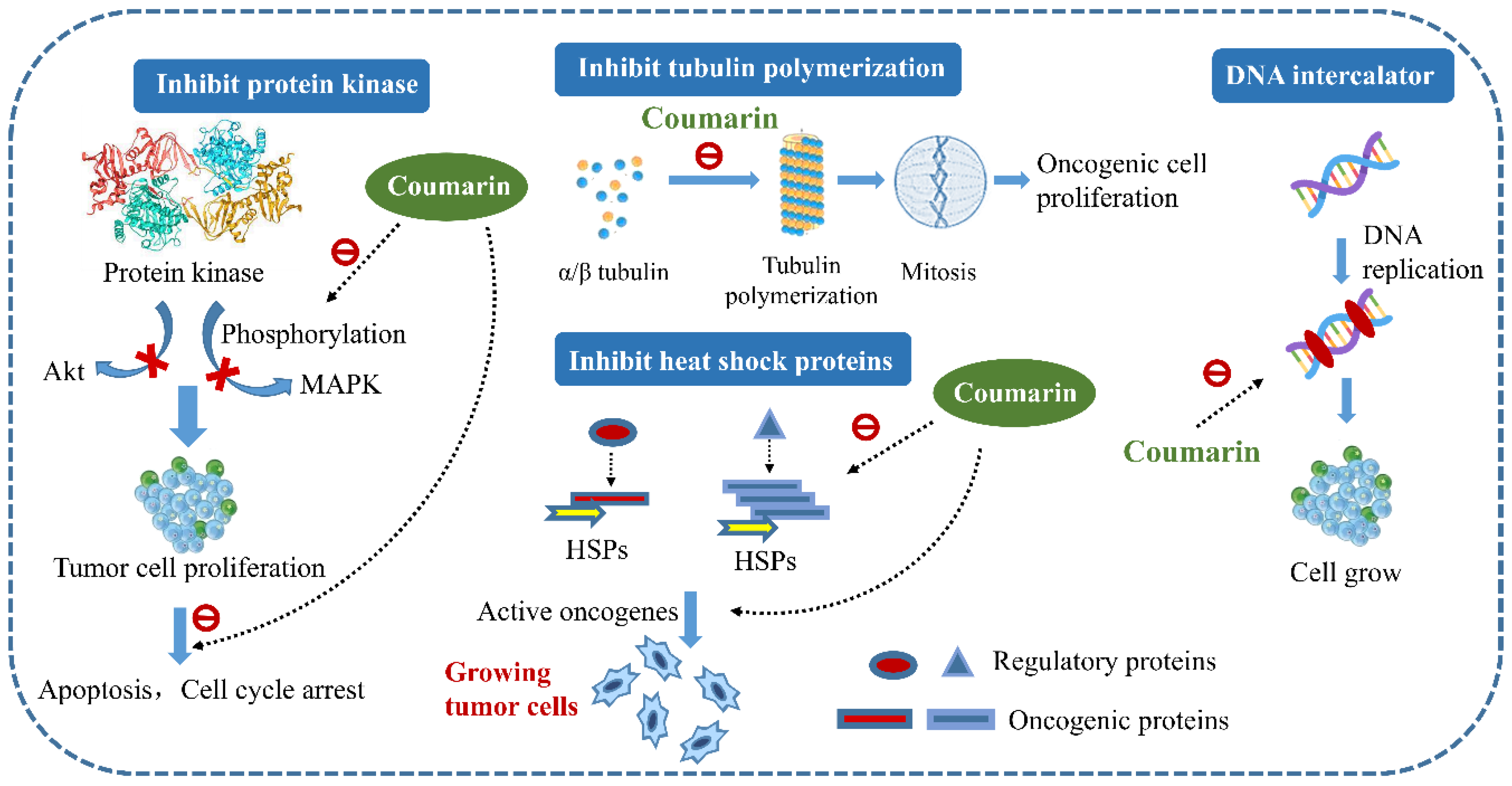
Figure 1. The antitumor mechanism of coumarin.
2. Antifibrosis Effect
Liver fibrosis is the response of damage repair to excessive deposition of liver extracellular matrix caused by various chronic pathogenic factors. Recently, many pharmacological experiments have explored the mechanism of its anti-liver-fibrosis process, and the results indicate that it may be related to the anti-lipid-peroxidation reaction and the reduction of liver fibrosis cytokine expression. Clinical practice has confirmed that “Ganlong” capsule consisting of the extract of PA has a significant inhibitory effect on chronic hepatitis B. The main ingredient of glycosaminoglycans has a significant preventive effect on chronic alcoholic liver injury in rats. The mechanism of action may be related to the anti-lipid-peroxidation reaction and the reduction in the level of inflammatory factors in the body. Glycosaminoglycans can increase the activity of superoxide dismutase (SOD) and glutathione (GSH), thereby reducing the production of lipid peroxidation products and avoiding the increase of liver cell membrane permeability and the damage of mitochondria in liver cells. In addition, this ingredient has been proven to significantly reduce the concentration of TNF-α in rat serum, which leads to liver protection by delaying the inflammatory response caused by alcohol in liver cells [6].
Polysaccharides are the main medicinal substances in the family Blattidae, with antifibrosis and liver-injury-preventative effects. Generally, D-glucan connected by β-(1→6) has lower activity, while polysaccharides with β-(1→3)-D-glucan show strong biological activity, but there must be a certain amount of β-(1→6) bonds on the branch [7]. There are four types of high-level structures of active polysaccharides: type A is a stretchable ribbon, type B is a buckling spiral, type C is a wrinkle ribbon, and type D is a curved line graph. Polysaccharides with type B structure can enhance immune function, type A is less active, and types C and D are generally inactive [8]. The content of uronic acid in the polysaccharide is closely related to the ability of free radical scavenging and antioxidant activity. The higher the content of uronic acid in polysaccharides, the stronger the ability to activate the hydrogen atoms on the anomeric carbon to undergo redox reactions with oxygen free radicals [9]. The antioxidant capacity of polysaccharides is also affected by the composition of monosaccharides. Polysaccharides rich in Ara, Rha, and Gal as monosaccharides show strong antioxidant activity. Meanwhile, the content and the position of sulfate in polysaccharides affect their antioxidant activity. Higher sulfate content in polysaccharides leads to higher activity because the presence of sulfate activates the hydrogen on the anomeric carbon, which enhances the hydrogen supply capacity of the polysaccharide. In addition, sulfation at C-4 and C-6 positions of the polysaccharide has strong antioxidant activity, while the sulfation at C-2 inhibits this activity [10].
3. Wound-Healing Effect
Common injuries include acute injuries, burns, and ulcers. Wound healing is a series of complex biological processes involving multiple cells, extracellular matrix, and cytokines, which are mainly composed of bleeding, inflammatory, proliferative, and remodeling types. The mechanism of action to promote wound healing includes (1) network interaction regulation between various cells and cell growth factors on the wound; (2) strengthening the oxidative metabolism function of immune active cells on the wound; (3) improving the microcirculation of the wound; (4) keeping the wound moist, and so on. Any abnormality at each stage can lead to delayed wound healing. Although some growth-factor-based therapies have shown a powerful effect in accelerating wound closure, due to the complex compatibility of multiple growth factors involved in wound healing and the possibility of carcinogenesis, their safety has always been the focus of attention. Thus, there is a real need for an alternative to synthetic wound-healing products, and natural products are the most reliable and successful sources of drug leads in this aspect.
In current research, Zhu [11] studied the wound-healing activity of different solvent-eluted components of PA and found that the healing rates of ethanol extract (EE) are the highest compared to the total polysaccharides (TPS), total proteins (TP), and negative control (NC) groups. Specifically, the healing rate of the EE-treated group significantly increased to 65% at the third day compared to only 16% in the NC group. Seven compounds (including cyclopeptides, diterpenoid, phenolic acids, fatty acids, and glycosides) were identified from this fraction with the UPLC-MS method, among which the diterpenoid, one phenolic acid, and two glycosides were first reported in PA. It was found that the high content of arbutin in the active part will lead to stimulated collagen production that is closely related to skin and ulcer repair. In addition, arbutin can significantly reduce proinflammatory cytokines, including IL-1β and TNF-α. The active part also contains diterpenoids and phenolic acid compounds, which are rich in phenolic hydroxyl groups. Therefore, it has obvious antioxidant activity, which can eliminate free radicals related to inflammation and promote healing.
The isocoumarin glycoside (13) in the extract of PA can stimulate collagen production by 31.2% in human dermal fibroblasts adult (HDFa) at a concentration of 30 μM, which indicates that it plays an important role in skin repair and ulceration. Isocoumarin nucleus is the most key active structure. It was found that when the basic structural nucleus was destroyed, the activity of promoting collagen production would be significantly weakened [12]. Moreover, the active ingredient in ethanolic extract contains epidermal growth factor (EGF), which can promote the proliferation of granulation tissue and mediate the mucosal repair effect of epithelial cells. The polyol component in PA can significantly promote the growth of granulation tissue [11], but its concrete structure must be determined by further research.
4. Anti-Inflammatory Effect
As another meaningful activity, the anti-acute-inflammation effect and mechanism of American cockroach extract CII-3 were investigated using in vivo models; the results showed that CII-3 could significantly reduce the swelling of the auricle model induced by dimethyl benzene and then lower the content of PGE2, histamine, and malondialdehyde (MDA) in the inflammatory part while increasing SOD activity [13]. Histamine stimulates smooth muscle to contract, the relaxation of capillaries, and increase in osmotic pressure of blood vessel walls through the H1 receptor effect, which is one of the mechanisms of inflammation.
5. Antibacterial Effect
Insects of the family Blattidae can carry more than 50 type of bacteria without infection, and the ability to do so is closely related to the antibacterial substances in their bodies. For instance, the antibacterial peptides isolated and purified form the body of PA are resistant to gram-negative and positive bacteria, which also have a broad-spectrum antibacterial effect. Antibacterial peptides first act on the outer wall of bacteria, causing depression and perforation in the outer wall. Eventually, the substances in the bacteria were leaked, and then the bacteria disintegrated [14]. Ali’s group found that the crude brain homogenate extract (100 μg/mL) of PA had a potent bactericidal effect on methicillin-resistant Staphylococcus aureus (MRSA) and pathogenic Escherichia coli K1, achieving a bactericidal effect of more than 90% [15]. Body fat and muscle lysate exhibited no bactericidal activity against MRSA and E. coli K1 at the same concentration, while hemolymph showed bactericidal effects of 35% and 20% against the above two bacteria, respectively. Among them, the relative molecular weight of the antimicrobial peptide was less than 10 kD, and it did not show toxicity to human cells.
From the perspective of the structure–activity relationship, the antimicrobial peptide is first attached to the surface of the bacterial membrane due to electrostatic attraction. Then, the hydrophobic C-terminus is inserted into the hydrophobic region of the membrane and changes the conformation of the membrane, and a number of antimicrobial peptides form ion channels on the membrane, leading to the escape of certain ions and the death of bacteria [16].
6. Others
In addition, the family Blattidae also has myocardial protection and antioxidant effects. The clinical research showed that the “Xinmailong” injection, with the main active ingredients of adenosine, inosine, protocatechuic acid, and pyroglutamate dipeptides from PA, had various effects on the cardiovascular system, such as increasing myocardial contractility, reducing pulmonary artery pressure, and dilating blood vessels, with good effect on congestive heart failure. It can promote Ca2+ inflow of myocardial cells and lastingly increase the positive muscle strength of the heart. At the same time, related constituents can also expand the coronary arteries, increase blood flow, and inhibit myocardial damage mediated by oxygen free radicals. In addition, it has the effect of expanding the blood vessels of the lungs and kidneys and reducing the pressure of the body arteries [17].
Cancer, aging, and other diseases are mostly associated with excessive free radical production. Different extracts and components of the family Blattidae can express scavenging activity against different oxidation systems. Polysaccharides such as sticky sugar amino acid and heparan sulfate in PA have strong scavenging abilities of hydroxyl free radicals (•OH) and have a certain protective effect against cell damage from hydrogen peroxide. High-dose PA oil (800, 1000 μg/mL) showed a significant protective effect on the oxidative damage of SH-SY5Y cells caused by H2O2 due to the increased activity of cell-antioxidant enzymes SOD and GSH-Px and the decrease in lipid peroxide MDA content. The cell viability increased along with the oil concentration of PA, with the highest cell viability of 69.49% at the concentration of 1000 μg/mL. The viability of cells not treated with the oil was 51.69%, while that of the positive control group (VE) was 76.51%. Therefore, it possesses the potential to treat diseases related to oxidative stress in vivo, such as cardiovascular and nervous system diseases [18].
This entry is adapted from the peer-reviewed paper 10.3390/molecules27248882
References
- Zeng, C.; Liao, Q.; Hu, Y.; Shen, Y.; Geng, F.; Chen, L. The Role of Periplaneta americana (Blattodea: Blattidae) in Modern Versus Traditional Chinese Medicine. J. Med. Entomol. 2019, 56, 1522–1526.
- El Masri, R.; Seffouh, A.; Lortat-Jacob, H.; Vives, R.R. The "in and out" of glucosamine 6-O-sulfation: The 6th sense of heparan sulfate. Glycoconj. J. 2017, 34, 285–298.
- Cole, C.L.; Rushton, G.; Jayson, G.C.; Avizienyte, E. Ovarian cancer cell heparan sulfate 6-O-sulfotransferases regulate an angiogenic program induced by heparin-binding epidermal growth factor (EGF)-like growth factor/EGF receptor signaling. J. Biol. Chem. 2014, 289, 10488–10501.
- Vazquez, R.; Riveiro, M.E.; Vermeulen, M.; Alonso, E.; Mondillo, C.; Facorro, G.; Piehl, L.; Gomez, N.; Moglioni, A.; Fernandez, N.; et al. Structure-anti-leukemic activity relationship study of ortho-dihydroxycoumarins in U-937 cells: Key role of the delta-lactone ring in determining differentiation-inducing potency and selective pro-apoptotic action. Bioorg. Med. Chem. 2012, 20, 5537–5549.
- Kupeli Akkol, E.; Genc, Y.; Karpuz, B.; Sobarzo-Sanchez, E.; Capasso, R. Coumarins and Coumarin-Related Compounds in Pharmacotherapy of Cancer. Cancers 2020, 12, 1959–1983.
- Li, D.; Li, W.; Chen, Y.; Liu, L.; Ma, D.; Wang, H.; Zhang, L.; Zhao, S.; Peng, Q. Anti-fibrotic role and mechanism of Periplaneta americana extracts in CCl4-induced hepatic fibrosis in rats. Acta. Biochim. Biophys. Sin. 2018, 50, 491–498.
- Wasser, S.P. Medicinal mushrooms as a source of antitumor and immunomodulating polysaccharides. Appl. Microbiol. Biotechnol. 2002, 60, 258–274.
- Yang, Y.; Ji, J.; Di, L.; Li, J.; Hu, L.; Qiao, H.; Wang, L.; Feng, Y. Resource, chemical structure and activity of natural polysaccharides against alcoholic liver damages. Carbohydr. Polym. 2020, 241, 116355.
- Ktari, N.; Bkhairia, I.; Nasri, M.; Ben Salah, R. Structure and biological activities of polysaccharide purified from Senegrain seed. Int. J. Biol. Macromol. 2020, 144, 190–197.
- Zhong, Q.; Wei, B.; Wang, S.; Ke, S.; Chen, J.; Zhang, H.; Wang, H. The Antioxidant Activity of Polysaccharides Derived from Marine Organisms: An Overview. Mar. Drugs 2019, 17, 674.
- Zhu, J.J.; Yao, S.; Guo, X.; Yue, B.S.; Ma, X.Y.; Li, J. Bioactivity-Guided Screening of Wound-Healing Active Constituents from American Cockroach (Periplaneta americana). Molecules 2018, 23, 101.
- Luo, S.L.; Huang, X.J.; Wang, Y.; Jiang, R.W.; Wang, L.; Bai, L.L.; Peng, Q.L.; Song, C.L.; Zhang, D.M.; Ye, W.C. Isocoumarins from American cockroach (Periplaneta americana) and their cytotoxic activities. Fitoterapia 2014, 95, 115–120.
- Chen, J.Y.; Li, H.W.; Wu, D.X.; Liu, G.M.; Peng, F.; Geng, L. A study of the anti-inflammatory effect and mechanism of CII-3 extracted from Periplaneta americana. J. Dali Univ. 2015, 14, 8–11.
- Basseri, H.R.; Dadi-Khoeni, A.; Bakhtiari, R.; Abolhassani, M.; Hajihosseini-Baghdadabadi, R. Isolation and purification of an antibacterial protein from immune induced haemolymph of American cockroach, Periplaneta americana. Iran. J. Arthropod-Borne Dis. 2016, 10, 519–527.
- Ali, S.M.; Siddiqui, R.; Ong, S.K.; Shah, M.R.; Anwar, A.; Heard, P.J.; Khan, N.A. Identification and characterization of antibacterial compound(s) of cockroaches (Periplaneta americana). Appl. Microbiol. Biotechnol. 2017, 101, 253–286.
- Yan, Y.; Li, Y.; Zhang, Z.; Wang, X.; Niu, Y.; Zhang, S.; Xu, W.; Ren, C. Advances of peptides for antibacterial applications. Colloids Surf. B Biointerfaces 2021, 202, 111682.
- Lin, S.S.; Liu, C.X.; Wang, X.L.; Mao, J.Y. Intervention mechanisms of Xinmailong injection, a Periplaneta Americana Extract, on cardiovascular disease: A systematic review of basic researches. Evid. Based. Complement Alternat. Med. 2019, 2019, 8512405.
- Tang, X.G.; Zhang, C.M.; Liu, J.; Xiao, P.Y.; Yang, Y.S. Research of the effect of Periplaneta americana different extracts on scavenging free radical and anti-lipid peroxidation. Sci. Technol. Food Ind. 2016, 37, 83–85.
This entry is offline, you can click here to edit this entry!