Your browser does not fully support modern features. Please upgrade for a smoother experience.

Please note this is an old version of this entry, which may differ significantly from the current revision.
Subjects:
Nanoscience & Nanotechnology
MXenes are a family of two-dimensional (2D) composite materials based on transition metal carbides, nitrides and carbonitrides that have been attracting attention since 2011. Combination of electrical and mechanical properties with hydrophilicity makes them promising materials for biomedical applications. MXenes are two-dimensional inorganic compounds consisting of layers of carbides, carbonitrides and nitrides of transition metals a few atoms thick.
- 2D materials
- MXene
1. Synthesis
The two main approaches employed for the synthesis of 2D Mxenes are top-down and bottom-up mechanisms. Top-down mechanism correspond to the exfoliation of large crystal quantities into single-layered MXene sheets whereas the bottom-up approach concentrate on the growth of MXenes from atoms/molecules.
To date, much of MXene synthesis has involved the wet application of a MAX phases etching procedure followed by phase exfoliation. MAX phases is a wide class of layered ternary carbides and nitrides exhibiting combination of properties of metallic and ceramic materials obtained by sintering of starting elemental powders [10]. The first and most well-known MXene was Ti3C2 obtained by dipping Ti3AlC3 fine powders in presence of hydrofluoric acid at ambient conditions [6]. Thus, all MXenes have the formula Mn + 1XnTx, where M is a transition metal, X is carbon or nitrogen with n = 1, 2 or 3, T are the surface termination groups (represented, as a rule, by O, -F or -OH) and x is the number of the surface functional groups [7,11,12,13] (Figure 1).
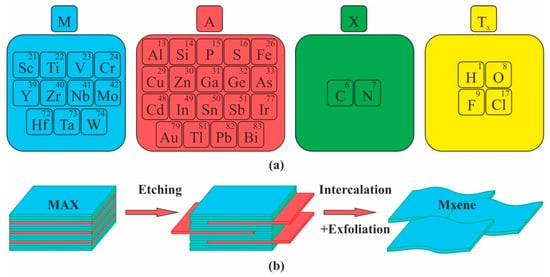
Figure 1. MXenes: (a) Constituent elements of MAX and MXenes; (b) Top-down synthesis of MXenes from their MAX precursors by selective etching.
Up to date MAX phase etching with hydrofluoric acid (HF) is the most widely used method for fabricating of various types of MXenes [14,15]. However, this technique is not optimal when producing materials intended for use in biomedicine, not only because of HF toxicity for biological objects, but also due to the fact that such MXenes have -F functional groups harmful for some biomedical applications. Li et al. [16] were the first research group to study the possibility of hydrothermal etching of Ti3AlC2 without fluoride ions, although their process requires an autoclave treatment at 270 °C and the properties of the obtained nanosheets have not yet been studied. Sun et al. suggested another promising method [17] consisting in the MAX phase electrochemical etching with HCl, thus abandoning the use of fluoride, though the process is rather slow and provides only a low yield. Yang et al. [18] recently described yet another promising and highly efficient fluoride-free etching method based on the anodic corrosion of titanium aluminium carbide (Ti3AlC2) in a binary aqueous electrolyte. The dissolution of aluminium followed by in situ intercalation of ammonium hydroxide results in the extraction of carbide flakes (Ti3C2Tx, T = O, OH). Thus, the authors not only transformed Ti3AlC2 into Ti3C2Tx with a high (over 40%) yield, but also produced the product with the properties comparable with those of the MXenes fabricated by the methods employing HF or HCl/LiF.
In recent years, several alternative MXene synthesis route have been developed, known as bottom-up methods. Among them are the chemical vapor deposition (CVD) [19,20,21,22,23,24], template method [25,26] and plasma-enhanced pulsed laser deposition (PEPLD) [27]. The bottom-up synthesis approach produces higher quality MXenes compared to those manufactured via top-down methods. Additionally, bottom-up methods can grow 2D carbides and nitrides of transition metals with stoichiometry unobtainable through selective etching, including WC [20], TaC and TaN [28] and some heterostructures [24]. It is important to note that bottom-up methods have been unable to produce single-layer structures, and up till now they have yielded only ultrathin films consisting of several layers.
Besides of rapid development of various methods for obtaining of MXenes in scientific laboratories [29,30], the transition from laboratory to industrial production of MXenes by means of top-down synthesis technology has been actively developed in recent years [31,32]. In particular, selective wet etching processes demonstrate good results that makes such MXenes more attractive from the point of practical biomedical and environmental applications.
2. Potential Applications in Medicine
The sphere of MXene applications is constantly growing, and they are now seen as solutions for numerous areas, including optics, manufacturing and energy industries, and biomedicine [33,34,35,36,37,38,39]. Attractiveness of MXenes stems from their outstanding properties, such as high surface-to-volume ratio, excellent electric conductivity, absorption in the near-infrared region, together with the ease with which MXenes surface can be functionalized with various polymers or nanoparticles. All these factors make MXenes suitable nanoplatforms for drug delivery, cancer treatment, bioimaging and biosensor development. Modifications of MXene surface might improve their in vivo effectiveness because of decreased toxicity, improved colloidal stability and prolonged circulation inside the body. MXenes developed for biomedical applications may have structural and dose-dependent antimicrobial activity, and they can be applied in photothermal therapy, addressed drug delivery, photoacoustic and optical imaging, as well as for implant development (Figure 2) [40,41,42].
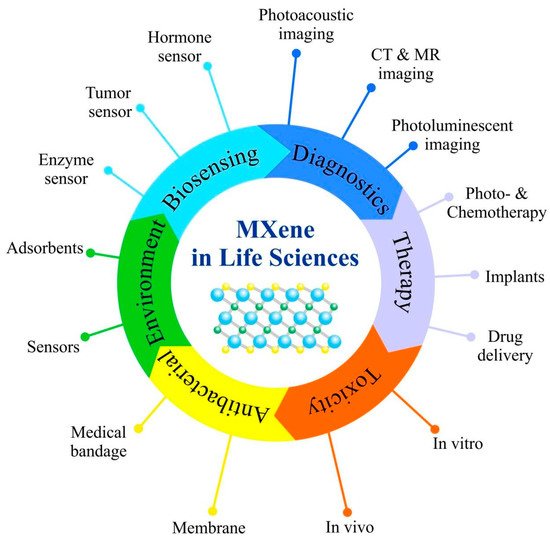
Figure 2. Summary of emerging 2D MXenes used in Life Sciences.
Scientific interest in MXenes is steadily increasing (Figure 3). It is clear from the graph that the number of articles on the toxicity/biocompability is growing annually, but their number is less than 5% of the total number of publications on MXenes. This highlights the need for further systematic study of the biological effects of MXenes, given their great potential for biomedical and environmental applications.
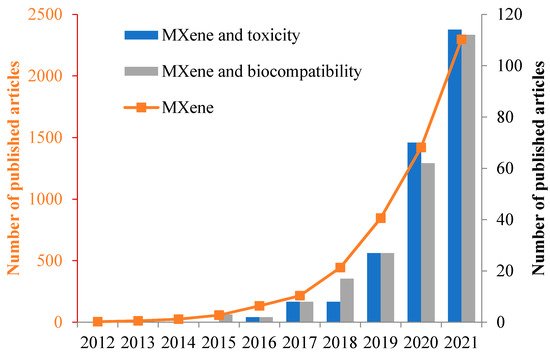
Figure 3. Exponential increase in publications related to MXenes. Data obtained from Scopus using the following search parameters “TITLE-ABS-KEY” (search data 1 March 2022).
2.1. Sensors
Currently Ti2C and Ti3C2 MXenes are being used as a basis for developing highly sensitive gas sensors [43,44,45,46,47] and biosensors [48,49,50,51,52,53,54,55,56]. For example, [49,57] studied electrochemical behavior of Ti3C2 MXenes in mediator-free H2O2 biosensors. The authors discovered that hemoglobin is adsorbed by the surface functional groups of the nanolayers and becomes immobilized on their inner surfaces, thus making the multi-layered Ti3C2 structure a promising scaffolding for enzyme immobilization. Rakhi et al. conducted research of a biosensor platform based on Ti3C2 MXenes for sensitive enzymatic glucose detection [50]. A sensor was fabricated by immobilization of glucose oxidase enzyme on Nafion-solubilized Au/MXene nanocomposite over glassy carbon electrode, and the electrode displayed a linear amperometric response in a very wide glucose concentration range with a relatively high sensitivity as well as excellent stability, reproducibility and repeatability.
Peng at al. [58] developed a simple and highly sensitive sensing platform based on ultrathin two-dimensional MXene Ti3C2 nanosheets (Ti3C2 NSs) for selective analysis of Human papillomavirus (HPV-18). Ultrathin Ti3C2 nanosheets possess high fluorescence quenching ability to dye-labeled single-stranded DNA (ssDNA) and different affinities for ssDNA and double-stranded DNA (dsDNA). This fluorescent sensor for HPV-18 detection shows a low detection limit of 100 pM and a high specificity. Additionally, the developed DNA sensor can be employed to determine PCR amplified HPV-18 from cervical scrapes samples. This work shows that ultrathin Ti3C2 nanosheets can be potential candidates for construction of high-performance fluorescence DNA biosensors. A similar principle of fluorescence quenching has been employed for developing another sensor for selective detection of Ag+ and Mn2+ ions (Figure 4) by means of fluorescence quenching of nanosized Ti3C2 MXene [59].
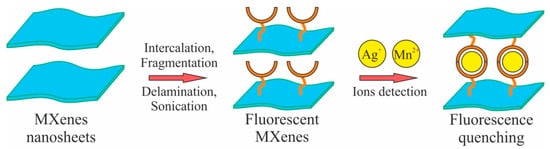
Figure 4. Schematic representation for the preparation of fluorescent MXene nanosheets and their applications for sensitive and selective fluorescence detection of Ag+ and Mn2+ ions. Based on [59].
Monolayer MXene Ti3C2 shows great ability to sense Ag+ and Mn2+ ions due to its good hydrophilicity and the presence of functional groups on its surface. The synthesized Ti3C2 nanosheets display highest emission fluorescence peak at 461 nm upon the excitation wavelength of 384 nm. The quenching of the fluorescence emission peak of Ti3C2 was observed only upon the addition of Ag+ and Mn2+ ions, exhibiting good linear response between I0/I and concentration in the range of 0.1–40 μM and 0.5–60 μM for Ag+ and Mn2+ ions. The authors consider the proposed method useful for detecting Ag+ and Mn2+ ions in food and real water samples.
A nanohybrid of Ti3C2Tx MXene and phosphomolybdic acid (PMo12) embedded with polypyrrole (PPy@Ti3C2Tx/PMo12) was presented by Zhou at al. [60] as an aptamer biosensor for osteopontin (OPN) detection. The obtained PPy@Ti3C2Tx/PMo12 hybrid not only displayed rich-chemical functionality, relatively high crystallinity degree, and homogeneous surface morphology but also showed desirable electrochemical activity. These features provided the hybrid with good stability, excellent biocompatibility, and strong binding force toward OPN aptamer strands. A PPy@Ti3C2Tx/PMo12-based aptasensor exhibited an extremely low detection limit of 0.98 μg/L as well as high selectivity and stability, good reproducibility, acceptable regenerability, and applicability in human serum samples. These properties make the hybrid a sensitive and reliable tool for OPN detection in clinical diagnostics.
A biosensor based on Pt nanoparticles-modified Ti3C2Tx could detect small redox molecules such as ascorbic acid, dopamine, uric acid and acetaminophen with selectivity down to nM level [61].
Ti3C2Tx MXenes with a few layers also display excellent results when used as a novel highly-sensitive surface plasmon resonance biosensor. Wu at al. [62] demonstrated that coating of the metals (Au, Ag, Cu, Al) with a thin Ti3C2Tx MXene film enhances the SPR-biosensor sensitivity at λ = 633 nm by 16.8–46.3%, depending on the metal and on the number of MXene layers.
In addition, Ti3C2Tx can be used as an electroluminescent (ECL) sensor for nucleotide mismatch discrimination in human urine samples [63]. A solid-state ECL sensor was prepared by depositing Ti3C2 on a glass carbon electrode (GCE). The Ti3C2Tx coating enhanced Ru(bpy)32+ adsorption on the electrode surface (Figure 5).
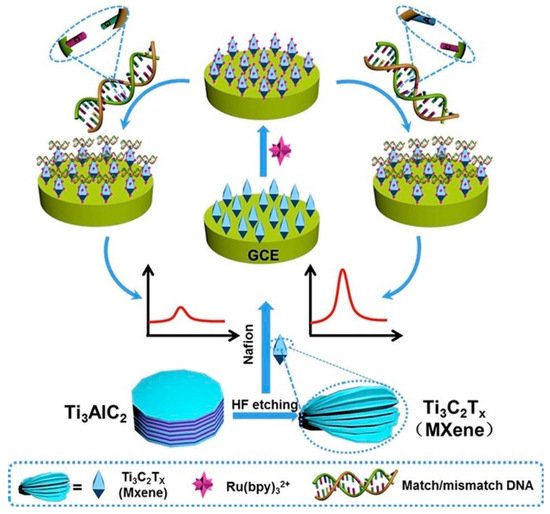
Figure 5. Schematic diagram of solid-state sensor preparation on glass carbon electrode (GCE) based on Ti3C2Tx MXene obtained from HF-etching Ti3AlC2 and single-nucleotide mismatch discrimination by the prepared sensor. Reprinted with permission from Ref. [63]. 2022, Elsevier.
The sensor was examined using tripropylamine (TPA) as a representative ECL coreactant. The sensor was shown to be applicable for detecting a single-nucleotide mismatch in the p53 gene, which proves MXenes highly useful for cancer diagnostics and for other biomedical applications.
Wearable perspiration analyzer can become the next step in non-invasive monitoring of health biomarkers. Lei et al. [64] developed a stretchable, wearable, and modular multifunctional biosensor incorporating a novel MXene/Prussian blue (Ti3C2Tx/PB) composite designed for sensitive detection of biomarkers (e.g., glucose and lactate) in sweat (Figure 6). A three-phase solid-liquid-air interface guarantees superior sensor performance and stability in in vitro experiments.
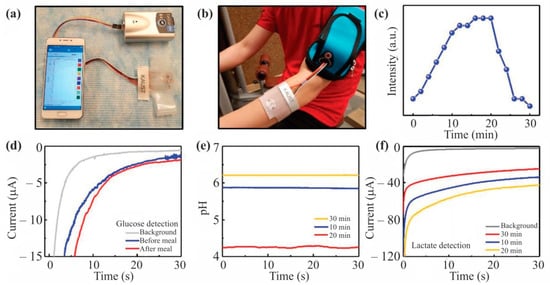
Figure 6. Real-time on-body evaluation of the MXene-based sensor patch indicating the pH levels, lactate, and glucose concentrations. (a) Schematic illustration of the oxygen-rich enzyme electrode. (b) The wearable sweat-monitoring patch is connected to a portable electrochemical analyzer on the skin. (c) Cycling resistance profile for on-body tests. (d) Measured chronoamperometric responses of glucose sensors and pH changes before and after meals with three different glucose sensors. (e) Measured pH level of pH sensor at different times during the exercise. (f) Measured chronoamperometric responses of the lactate sensor at different times during the exercise. Reprinted with permission from Ref. [64]. 2022, John Wiley and Sons.
Cheng at al. [65] employed an abrasive paper stencil printing process to produce a highly sensitive MXene-based piezoresistive sensor with bioinspired microporous microspinous structures. The fabricated sensor showed high sensitivity (151.4 kPa−1), relatively short response time (<130 ms), subtle pressure detection limit of 4.4 Pa, and excellent cycle stability over 10,000 cycles. In practice, the sensor showed great performance in monitoring human physiological signals, detecting quantitatively pressure distributions, and remote monitoring of intelligent robot motion in real time.
Liu at al. [66] reported development of a MXene-based microfluidic biosensor. A Ti3C2Tx based screen-printed electrode incorporated with a dialysis microfluidic chip was constructed for a direct and continuous multicomponent analysis of whole blood. The fabricated sensor can be applied for continuous assay of urea, uric acid, and creatinine levels in human blood.
Determination of hepatotoxic drugs is critical for both clinical diagnosis and quantity control of their pharmaceutical formulations. Zhang at al. [67] described the developed a simple but sensitive sensor based on an MXene modified screen-printed electrode (MXene/SPE) for detection of acetaminophen (ACOP) and isoniazid (INZ), which are two commonly used drugs that might, in certain circumstances, induce liver damage. MXene modified SPE showed excellent electrocatalytic activity toward the oxidation of ACOP and INZ compared with bare SPE in 0.1 M H2SO4, and the separated oxidation peak potentials ensured simultaneous detection of the targets within wide linear ranges from 0.25 to 2000 μM for ACOP and from 0.1–4.6 mM for INZ. The detection limits of ACOP and INZ were 0.048 μM and 0.064 mM, respectively.
The comparative efficiency of biomedical sensors based on MXenes is presented in Table 1.
Table 1. MXenes based sensor for biomedicine.
| Sensor Composition |
Detectable Analyte | Sensor Type | Sensor Efficiency | Source |
|---|---|---|---|---|
| MXene-Ti3C2 | Hemoglobin | Electrochemical biosensors | detection limit of 20 nM | [49] |
| MXene-Ti3C2 | Hemoglobin | Electrochemical biosensor | linear range of 0.5–11,800 μM, detection limit of 0.12 μM | [57] |
| GOx/Au/Ti3C2Tx-MXene/Nafion/GCE | Glucose | Electrochemical biosensor (amperometric) | detection limit of 5.9 μM | [50] |
| Ti3C2-MXene functionalized with aminosilane | Carcinoembryonic antigen (CEA) | Electrochemical biosensor | linear detection range of 0.0001–2000 ng mL−1 with sensitivity of 37.9 µA ng−1 mL cm−2 per decade | [51] |
| Ti3C2 | Human papillomavirus (HPV) | Optical biosensor | detection limit of 100 pM | [58] |
| Ti3C2Tx MXene and phosphomolybdic acid embedded with polypyrrole | Osteopontin | Aptamer biosensor | 0.98 μg/L | [60] |
| Ti3C2Tx/PtNP modified GCE | Ascorbic acid, dopamine, uric acid, acetaminophen | Electrochemical biosensor | nM level | [61] |
| OH-terminated Ti3C2 | Label-free single-nucleotide in human urine | Electrochemiluminescence biosensor | Detection limit of 5 nM | [63] |
| Ti3C2Tx/Prussian blue | Glucose and lactate in sweat | Electrochemical biosensor (amperometric) | Sensitivities of 35.3 µA mm−1 cm−2 for glucose and 11.4 µA mm−1 cm−2 for lactate | [64] |
| MXene-Ti3C2Tx incorporated with a dialysis microfluidic chip | Urea, uric acid, and creatinine | Electrochemical biosensor | [66] | |
| MXene-Ti3C2Tx modified screen-printed electrode | Acetaminophen (ACOP), isoniazid (INZ) | Electrochemical biosensor | Linear ranges from 0.25 to 2000 μM for ACOP and 0.1–4.6 mM for INZ. The detection limits of ACOP and INZ were 0.048 μM and 0.064 mM | [67] |
| Ti3C2Tx/ZIF-8 | HIV-1 protein | Electrochemical biosensor | detection limit 0.3 fM | [68] |
| Au/Ti3C2T/HB5 | HER2-positive cancer cells | Electrochemical cytosensor | linear range of 102–106 cells/mL, detection limit of 47 cells/mL | [69] |
| Chit/ChOx/Ti3C2Tx | Cholesterol | Electrochemical biosensor | concentration of cholesterol ranging from 0.3 to 4.5 nM, detection limit of 0.11 nM, sensitivity of 132.66 μA nM−1 cm−2 | [70] |
| Ti3C2Tx MXene/LBG/PDMS | Cortisol | Electrochemical impedimetric immunosensor | linearity 0.01–100 nM, detection limit 88 pM | [71] |
| PEI-Ru@Ti3C2@AuNPs | SARS-CoV-2 RdRp gene | Electrochemiluminescent biosensor | Detection limit of 12.8 aM | [72] |
| ZnO/Ti3C2 | Glucose | Electrochemical enzymatic biosensor | Sensitivity 29 μA mM−1 cm−2, limit of detection ≈ 17 μM, linear detection range 0.05–0.7 mM) | [73] |
2.2. Targeted Drug Delivery
Targeted drug delivery is the delivery to a target site without affecting other tissues. In targeted drug delivery, bioavailability is one of the important issues. One of the factors increasing the bioavailability of drugs is their hydrophilicity. Therefore, hydrophilic MXenes are good candidates for a targeted delivery platform. Another important advantage of MXenes is the ability of their surface to be functionalized with therapeutic molecules.
An MXene-based platform for targeted drug delivery can become a useful addition to the arsenal of cancer treatment methods [74,75,76]. Liu et al. [77] described a method for layer-by-layer Ti3C2 surface modification with doxorubicin and hyaluronic acid, that creates an effective platform for selective chemo/photothermal cancer therapy.
Xing et al. [78] were the first to synthesize composite hydrogels based on cellulose and Ti3C2 MXene for loading with anticancer drugs and their delivery to malignant cells. This nanoplatform provides combined chemo/photothermal cancer therapy. Properties such as large pores and high water content (98%) mean that the material is characterized by high drug-loading capability (84%). Good biocompatibility and three-dimensional networks of the hydrogel promote controlled sustained release of doxorubicin hydrochloride, thus reducing the drug toxicity. The authors reported that the cellulose/MXene composite hydrogels possess excellent infrared absorption characteristics, especially well displayed under illumination with an 808 nm wavelength. The response to illumination manifests itself as a continuous dynamic process in water and promotes drug release due to expansion of the pores. After laser irradiation for 5 min the hydrogel with 235.2 ppm MXene concentration led to 100% non-relapsive death of the tumor cells with the cell biodegradation within two weeks.
Ti3C2 MXenes and composite materials based on them have a high drug-loading capacity [79,80]. In addition, according to Han et al. [80] Ti3C2 MXenes not only possess drug-loading capability as high as 211.8%, but also exhibit both pH-responsive and near infrared laser-triggered on-demand drug release. The authors explored the Ti3C2 MXenes ability for efficient tumor eradication by synergistic photothermal ablation and chemotherapy, which was systematically demonstrated both in vitro and in vivo. These Ti3C2 MXenes have also been demonstrated as desirable contrast agents for photoacoustic imaging, showing the potential for diagnostic-imaging guidance and monitoring during therapy. The high in vivo histocompatibility of Ti3C2 and its easy excretion out of the body have been evaluated and demonstrated, showing high biosafety for further clinical translation.
The advantage of MXenes for targeted drug delivery is their hydrophilicity, which increases the bioavailability of drugs for body tissues [81], high drug loading capacity [82], as well as facile encapsulation [83]. This makes MXenes one of the most promising new materials for biomedicine, including various applications for combating COVID-19 [84].
2.3. Photo/Chemotherapy of Cancer
The development of therapies that are selective for tumor tissues is one of the most important goals of anticancer research. Within this framework, photo- and chemotherapy can be considered a very promising approach. These approaches require fluorosensitizers and chemotherapeutic agents that are bioavailable and nontoxic to the surrounding tissues. MXenes provide a promising basis for such pharmaceuticals.
MXenes can be successfully used as novel highly efficient and selective agents for photothermal cancer therapy [76,77,85,86].
Ti2C MXenes superficially modified with PEG showed a good photothermal conversion efficacy thus triggering cancerous cells’ ablation with a satisfactory selectivity towards non-malignant cells during in vitro experiments. The observed effects might be due to MXene-induced reactive oxygen intermediates production generated by the photothermal effect. The applied doses of Ti2C_PEG in the presented work were considerably lower compared to other MXene-based photothermal agents [85]. Lin et al. [87] modified Ti3C2Tx MXene with soybean phospholipid (SP) and with poly(lactic-co-glycolic acid) (PLGA) in order to reveal the effects of the hybrid as a photothermal agent for cancer treatment. Both in vitro and in vivo experiments proved a high potential of modified Ti3C2 MXenes as a novel photothermal agent for cancer therapy, providing excellent relapse-free tumor ablation both in the case of Ti3C2/SP intravenous administration at 20 μg/kg and in the case of localized intratumoral implantation of PLGA/Ti3C2 at 2 μg/kg. It is important to note that the characteristics of the PLGA/Ti3C2-SP phase transition not only eradicate the tumor but also ensure no escape of the implanted agents into the bloodstream, thus making the studied material safe for in vivo applications.
Despite a large number of papers on photonic tumor hyperthermia, current photothermal-conversion nanoagents still suffer from critical issues preventing further clinical translation, including low biodegradability. In their work Feng et al. [88] report the construction of novel 2D molybdenum carbide (Mo2C) MXenes for photothermal tumor hyperthermia. Surface treatment of Mo2C-PVA nanoflakes with polyvinyl alcohol (PVA) confers high biocompatibility and fast degradability. One should note that Mo2C-PVA MXene possesses intense near-infrared (NIR) absorption, covering the near-infrared region (NIR I and II), and a desirable photothermal-conversion efficiency (24.5% for NIR I and 43.3% for NIR II). This study not only broadens the nanomedical applications of MXene, but also provides the paradigm of an inorganic multifunctional biomedical nanoplatform with desirable biodegradability and high therapeutic performance.
Biocompatible Ta4C3 MXenes exhibit unique functionalities for photothermal conversion and for in vitro/in vivo photothermal ablation of tumors. Lin et al. [89] developed a multifunctional nanosystem based on 2D tantalum carbide (Ta4C3 MXenes) modified with soybean phospholipid (SP) for dual mode photoacoustic/KT imaging and highly effective in vivo photothermal tumor ablation in murine xenograft models. Two-dimensional ultrathin Ta4C3-SP nanosheets with lateral sizes ≈100 nm displayed outstanding photothermal characteristics in the near-infrared region with the attenuation coefficient 4.06 Lg−1cm−1 at 808 nm, superior photothermal-conversion performance (44.7%), as well as photothermal stability. It is significant that Ta4C3-SP nanosheets did not display toxic effects during in vitro or in vivo experiments.
The 3D scaffolds integrating 2D Ti3C2 MXene into 3D-printed bioactive glass structures [86] seem highly promising for the treatment of bone tumors, as they induce photothermal bone-tumor ablation and improve bone-tissue regeneration.
Traditionally, ceramic-based materials, produced by high-temperature solid-phase reaction and sintering, are preferred as bone scaffolds in hard-tissue engineering because of their tunable biocompatibility and excellent mechanical properties. However, their possible cancer phototherapeutic applications in the near-infrared light (NIR-I and NIR-II) have rarely been considered. The study of a novel kind of MXene, namely 2D niobium carbide (Nb2C), has become among the first research works in this area [90]. The authors demonstrated high effectiveness of the material both in NIR-I and NIR-II biowindows. The ultrathin Nb2C nanosheets exhibited extraordinarily high photothermal conversion efficiency (36.4% at NIR-I and 45.65% at NIR-II), as well as high photothermal stability during in vivo photothermal ablation of murine xenograft tumors. The Nb2C nanosheets intrinsically feature unique enzyme-responsive biodegradability to human myeloperoxidase, low phototoxicity, and high biocompatibility.
MXenes can become a solution to the therapy of tumors insensitive to traditional chemotherapy, for example, as in hepatocellular carcinoma (HCC), which is one of the most common and deadly gastrointestinal malignancies. Li et al. reported development of a novel 2D MXene-based composite nanoplatform for highly efficient and synergistic chemotherapy and photothermal hyperthermia against HCC. A surface-nanopore engineering strategy was developed for the MXenes’ surface functionalization, which achieved the uniform coating of a thin mesoporous-silica layer onto the surface of 2D Ti3C2 MXene (Ti3C2@mMSNs). Both in vitro and in vivo experiments demonstrated high active-targeting capability, synergistic chemotherapy (contributed by the mesoporous shell) and photothermal hyperthermia (contributed by the Ti3C2 MXene core), resulting in complete eradication of the tumor without obvious reoccurrence [91].
Titanium carbide (Ti3C2) MXene quantum dots (MQDs) possess intrinsic immunomodulatory properties and selectively reduce activation of human CD4+ IFN-γ+ T-lymphocytes by ≈20%, simultaneously promoting expansion of immunosuppressive CD4+ CD25+ FoxP3+ regulatory T-cells by 3% in a stimulated lymphocyte population [92]. Furthermore, MQDs are biocompatible with bone marrow-derived mesenchymal stem cells and induced pluripotent stem cell-derived fibroblasts.
2.4. Tissue Engineering
Tissue engineering includes techniques that enhance or replace biological tissues using a combination of cells, engineered materials, and appropriate biochemical and physicochemical factors. Tissue engineered materials must be biocompatible and have a set of specific mechanical properties. Therefore, fabrication of tissue engineered matrices is another application that can successfully utilize such MXene properties such as mechanical strength, biocompatibility and excellent electroconductivity. Zhang et al. [93] studied osteoinductivity and guided bone regeneration ability of multilayered Ti3C2Tx MXene films in vitro and in vivo. The research work showed that MXene films are highly cytocompatible and enhance osteogenic differentiation in vitro. When implanted into subcutaneous sites and calvarial defect sites in rats, MXene films showed good biocompatibility, osteoinductivity and bone regeneration activity in vivo. In particular, the authors observed increased activity of macrophages attached to the MXene films which might indicate initiation of MXenes biodestruction in the body.
In the work of Huang et al. [94] composite MXene-containing nanofibers were fabricated by electrospinning and doping, and displayed excellent hydrophilicity because of a large number of introduced functional hydrophilic groups. The conditions proved to provide a good microenvironment for bone marrow-derived mesenchymal stem cells (BMSC) growth. The experiment results demonstrated that the obtained MXene composite nanofibers had good biocompatibility and greatly improved cellular activity by enhancing mesenchymal stem cells differentiation to osteoblasts.
Pan et al. [86] evaluated the effect of a 3D matrix consisting of Ti3C2 MXene and bioglass on osteoblast cell osteogenic potential. The results showed that these Ti3C2 MXene-integrated composite scaffolds efficiently accelerated growth of newborn bone tissue while providing it with a good adhesion medium. The authors noted excellent development of the cell filopodia fiber, enhanced number of calcium nodules and moderate induction of cell proliferation. Further study conducted on Sprague–Dawley rats showed that MXene integration into the 3D scaffolding enhanced the osteogenesis rate in the damaged bone area by 30% compared to MXene-free scaffolding.
Thus, these results prove that MXenes can become an excellent material for tissue engineering and controlled bone tissue regeneration.
2.5. Bioimaging
Bioimaging is a non-invasive biological activity visualization process that does not interfere with various life processes and helps to explore the three-dimensional structure of samples. Quantum dots are essential components of bioimaging systems. The biocompatibility of quantum dots makes it possible to use them in a biological environment. MXenes are capable of becoming the basis for the fabrication of such quantum dots.
Exceptional properties of Ti3C2 MXene-based quantum dots have shown great promise for their employment as fluorescent sensors in bioimaging, optical sensing, and photoelectric conversion. [95].
Ti3C2Tx were successfully used as biocompatible multicolor sensors for photoluminescent detection of RAW264.7 cell lines, which may greatly extend the applications of MXene-based materials in optical sensing. MXene quantum dots (MQD) showed excitation-dependent photoluminescence spectra with quantum yields of up to ≈10% due to strong quantum confinement [96].
Lu et al. [97] demonstrated a facile, high-output method for preparing bright white emitting Ti3C2 MQDs. The resulting product was two layers thick with a lateral dimension of 13.1 nm. Importantly, the Ti3C2 MQDs presented strong two-photon white fluorescence. Their fluorescence under high pressure was also investigated and the team found that the white emission was very stable and that pressure application made it possible to change emission from cool white to warm white.
Zhou et al. [98] reported an unprecedented method for the synthesis of amphiphilic carbide-derived graphene quantum dots (GQDs) from layered Ti3C2Tx MXene using solvothermal treatment of Ti3C2Tx MXene in dimethylformamide (DMF). The research results indicate that DMF can simultaneously act as reaction media and nitrogen-doping agent for the formation of highly fluorescent carbide-derived GQDs. The resulting GQDs, with uniform size distribution, exhibit excellent dispersibility in both hydrophilic and hydrophobic solvents. With their superior properties of bright and tunable photoluminescence, low cytotoxicity, good photostability and chemical inertness, the carbide-derived GQDs are promising for applications in fluorescent ink, light-emitting composites and cellular imaging (Figure 7).
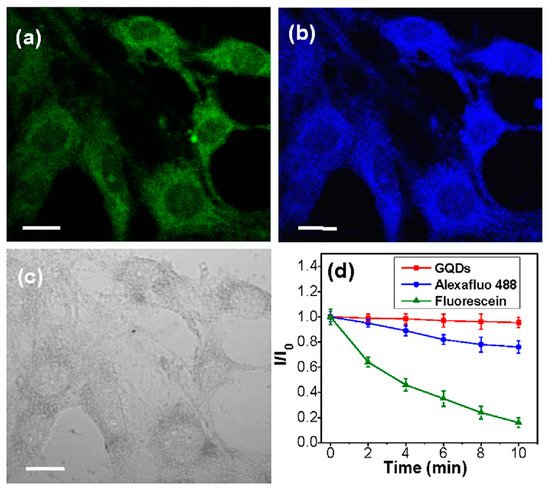
Figure 7. CLSM images of MCF-7 cells after incubation with MXene-based GQDs for 2 h by excitation at 488 nm (a), 364 nm (b), and under bright field (c). The scale bar is 20 mm. (d) Time-dependent fluorescence intensity ratio (I/I0) of GQDs, Alexa fluo 488, and fluorescein. I0 and I are the emission intensities of GQDs, Alexa fluo 488, and fluorescein without and with laser illumination for diverse time, respectively. Reprinted with permission from Ref. [98]. 2022, Elsevier.
Low quantum yield in the UV spectrum, potential instability and nonspecific adsorption reducing the efficiency of MQDs use in the biological environment are the issues that hamper MXenes application for bioimaging. The electron structure-related mechanisms of MXenes remain unclear [99]. Finally, as with other promising nanomaterials in biomedicine, the problems associated with acute and long-term toxicity have not yet been resolved; this point will be discussed in more detail in the following sections.
2.6. Antibacterial Agents
For antibacterial agents selective toxicity to bacteria, prevention of antibiotic resistance, and non-toxicity to humans are important. MXenes have a great future in such applications [100,101,102,103]. In particular, 2D materials, including MXenes, are considered to become promising novel antibacterial agents. Their power for disinfection is derived from their unique physicochemical properties and good biocompatibility [104,105]. For example, Ti3C2/chitosan composite nanofibers are promising candidate materials for creating biodegradable wound dressings [106] effective against wound inoculation with both Gram-positive and Gram-negative bacteria.
Notwithstanding considerable achievements of modern medicine, there is still high annual mortality from various infections, such as dysentery and pneumonia. Excessive and uncontrollable use of broad-spectrum antibiotics has resulted in bacteria gradually developing resistance to antimicrobial agents [107]. Thus, development of new bactericidal compositions is a paramount task for the modern researchers. New 2D materials with unique physicochemical properties that have emerged in the recent decade are paving the road to create highly efficient antibacterial agents [108]. Enhanced membrane permeability, membrane disruption, metabolic activity suppression, DNA destruction, and cell membrane stress caused by its mechanical damage with sharp nanosheets edges, are considered the major mechanisms of 2D nanomaterials antibacterial activity [109,110]. Certain chemical manipulations and functionalizations render MXenes convenient vehicles for various antibacterial functional groups, thus making MXenes a promising class of materials for bacterial and fungal growth inhibition. However, current information on their antimicrobial properties is extremely scarce.
Research conducted by Jastrzebska et al. [111,112] has demonstrated that Ti2C displays no toxic effect against Gram-positive bacteria Bacillus sp., Staphylococcus aureus and Sarcina. SEM-examination of the areas of prevailing bacterial absorption revealed insignificant degree of apoptosis only in Bacillus sp., especially when the cells were situated between the Ti2C layers. Besides, bacterial cells absorption on Ti2C nanosheets changed their zeta-potential compared to the native bacterial cells.
The research conducted by Rasool et al. [109,113] shows that Ti3C2 MXenes display antibacterial properties (up to 99%) against bacterial strains of Gram-positive Escherichia coli and Gram-negative Bacillus subtilis. Similar results were obtained in the study of the antibacterial properties (up to 100%) of double transition-metal TiVCTX MXene. The authors suggest mechanical damage to the cell membrane as the main mechanism of action. [114].
Based on the data obtained via the colony count method, the descending order of antibacterial activity against both bacterial strains is as follows: single layer Ti3C2Tx ≫ multilayer Ti3C2Tx > Ti3AlC2, displaying a clear correlation between the MXenes thickness and their antibacterial activity. Higher dosage of Ti3C2Tx resulted in sharp decrease in the number of E. coli and B. subtilis colonies. The authors also report that the antibacterial effect of the studied MXene is even higher than that of graphene oxide due to higher MXene electroconductivity. The authors assume mechanical damage to the cell walls as the primary destructive mechanism. The results of these works suggest dependence of MXene toxicity against bacterial cells on their stoichiometry (i.e., Ti2C or Ti3C2).
In the work of Mayerberger et al. [106] cytotoxicity of a chitosan/Ti3C2Tx composite was tested against E. coli и S. aureus strains. The authors report a sharp decrease in the number of the colony forming units by 95% and 62%, respectively; the effect was observed after a 4h treatment with the composite loaded with 0.75wt% Ti3C2Tx.
Scaffolds based on Ti3C2Tx MXene@polydopamine demonstrated excellent antibacterial activity against E. coli, S. aureus and methicillin-resistant S. aureus (antibacterial efficiency was 99.03%) [115].
Pandey et al. [116] fabricated Ti3C2Tx MXene-based membranes loaded with variable amounts of Ag (AgNP) nanoparticles for ultrafast water purification. It is interesting to note that AgNPs were sandwiched between the MXene layers and formed 1–4 nm slits. Both pristine and functionalized with 21% of AgMPs membranes with 470 nm thickness and 2.1 nm pores were investigated for their antibacterial properties against E. coli. A hydrophilic polyvinylidene difluoride (PVDF)-based membrane was used for the control. The 21% Ag + MXene composite membrane demonstrated more than 99% E. coli growth inhibition, while the pristine Ti3C2Tx MXene membrane exhibited only ∼60% bacterial growth inhibition compared to the control. Such a pronounced increase in antibacterial activity may be attributed to AgNP influence.
This entry is adapted from the peer-reviewed paper 10.3390/nano12111797
This entry is offline, you can click here to edit this entry!