
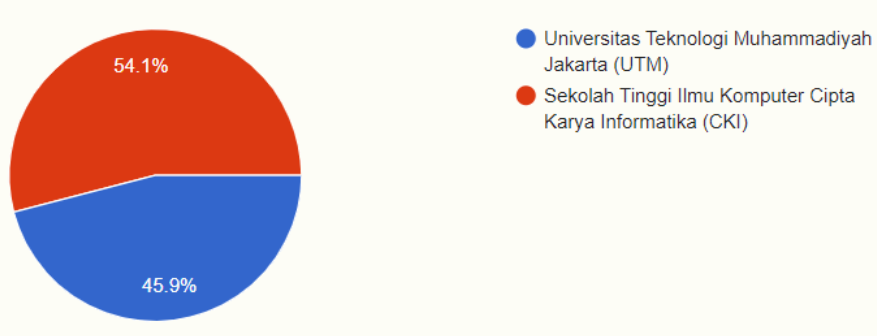
In today’s fast-paced tech world, it’s important to understand and adapt to new methods like Agile. Agile is commonly used in project and product management to help with planning, executing, monitoring, and completing projects based on user needs. This approach can also be applied in education, especially in classroom lectures. This research examines how Agile is used in lectures at UTM Jakarta and STIKOM CKI Jakarta. It looks at students’ understanding of Agile, their creativity during lectures, and the impact of a new curriculum on classroom learning. To analyse this, the study used descriptive statistics to measure students' understanding of Agile, a correlation test to see connections between different aspects of lectures, and a regression test to examine the new curriculum's impact. The goals are to 1) Measure students' understanding of Agile concepts. 2) Assess students' creativity in class, and 3) Analyze how curriculum changes affect classroom activities. Results show that students have a moderate understanding of Agile, and their creativity is evident in how they apply concepts, document work, and present material. The regression model shows that the new curriculum has a positive impact on classroom learning, and the findings are valid and reliable. Overall, Agile methods can enhance learning and creativity in the classroom.
- Agile Analysis
- Agile Concept
- Agile Implementation
- Agile in Education
- Agile Lecturers
The purpose of this research is to analyse the process of applying the Agile method or concept to the process of implementing lectures at the Muhammadiyah University of Technology (UTM) Jakarta and STIKOM Cipta Karya Informatika (CKI) Jakarta. The application analysis is carried out to see the extent to which students understand the Agile method or concept, find out the level of student creativity in the process of implementing classroom lectures, and find out whether there is an impact of new curriculum changes on teaching and learning activities on the implementation of classroom lectures.
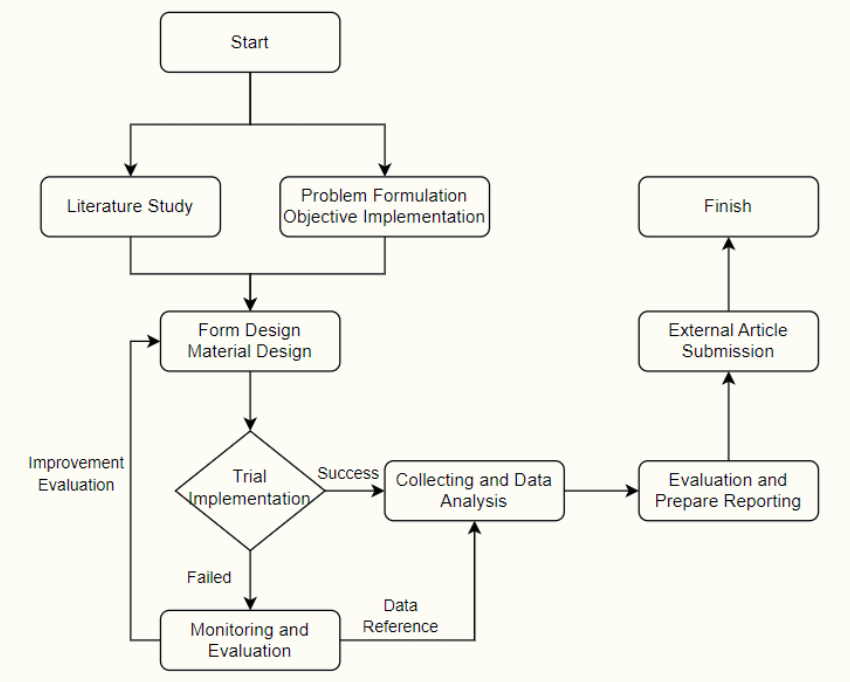
The method used in this research is to conduct descriptive statistical tests to see summary statistics(Mishra et al., 2019) about the level of understanding of Agile methods or concepts among students. Then conduct a correlation test to see if there is a relationship between variables in the context of the implementation of class lectures. Basedonthe problem mentioned in this research, we conduct analysis for Agile method or concept that can be implemented in the education area to make sure all the students can understand about Agile. They also can be more proactive in the teaching and learning process(Dermawan et al., 2022).This research can open new insights for students about examples of applying agile methods or concepts to the implementation of lectures. And a reference for lecturers to be able to apply this concept in teaching and learning activities by providing interactive learning materials based on the development of the curriculum currently used by the campus.
Based on the results of the regression tests, residual histograms and P-P plots conducted in this study, we can conclude that the regression model applied to evaluate the impact of the new curriculum on the implementation process of teaching and learning activities in the classroom shows valid and reliable results. The near-normal distribution of residuals corroborates the validity of the model and supports the finding that the implementation of the new curriculum has a significant impact on the process of implementing teaching and learning activities. This can be supported by applying Agile methods or concepts in the implementation of lectures at the UTM Jakartaand STIKOM CKI Jakarta.
This entry is adapted from: https://doi.org/https://doi.org/10.51454/decode.v4i3.639