
- Computational Physics
- Computational Biophysics
- Algorithms
- Statistical Physics
- Theoretical Physics
- Physical Chemistry
- Epidemology
- Polymers
- Networks
- Ferrofluids
Basic Information
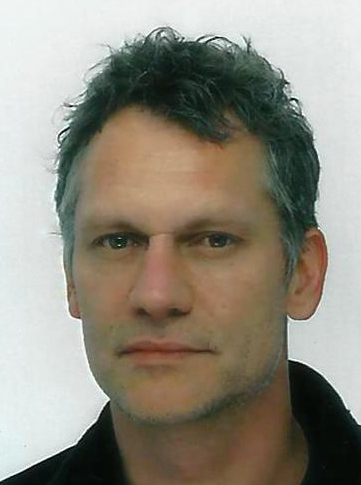
(Mar 1965–)
Location: Rheinhausen now Duisburg, Germany
Research areas: Computational Physics and Biophysics, Algorithms, Applied Mathematics, Statistical Physics, Theoretical Physics, Physical Chemistry, Epidemology, Gradient Elasticity, Polymers, Networks, Ferrofluids.
Relevant references see google scholar.
Member of the Editorial Boards of Polymers, Frontiers in Physics, Covid, preprints.org, Open Physics.
Born March 21, 1965 in Rheinhausen, near Cologne, Germany, married April 12, 1990 in Chanceaux, France, divorced 1998,two daughters *24 Dec 1993, *1 Apr 2001 and a son *2 Jul 1992,
German and Swiss Citizenships.
Education and University Studies:
08/75 —06/84 4 years primary school, 9 years grammar school, Abitur 1.9 (Moers/D)
10/85 —05/91 Mathematics and Physics, Technical University (TU) Berlin/D
06/91 Physics diplome (best grade)
10/94 Graduate certificate 1.0 (Graduiertenkolleg Polymer Materials)
12/94 Dr. rer. nat. (summa cum laude), Supervisor: Prof. Dr. Siegfried Hess
Employments:
02/86—09/91 Violin player,RIAS (Radio) Sinfony Orchestra Berlin
02/86—09/91 Teacher for students,TU Berlin, Physics Department
07/91—12/92 Assistant Researcher, DFG, Special research area (Sfb) 335 Anisotropic fluids
10/93—03/97 Scientific Assistant, TU Berlin, Institute for Theoretical Physics, Physics Department
03/95—07/96 Invited Professor, Univ. Metz/F, Laboratoire de Physique des Liquides et Interfaces (LPLI)
02/96—06/96 Assistant Professor, Univ.Strasbourg/F, Institute Charles Sadron (CRM/EAHP)
05/96—06/06 Invited Researcher, Cambridge/UK, Isaac Newton Institute
10/96—12/01 Lehrbeauftragter (Lecturer),TU Berlin, Theoretical, Statistical and Computational Physics
02/97—03/97 Invited Professor, Univ.Strasbourg/F, Ecolechimie, polymeres et materiaux (ECPM)
11/97—12/06 Oberassistent, Polymer Physics, Dept. Materials Science, ETH Zurich
10/98—02/03 Senior Researcher (C1), TU Berlin, Institute of Theoretical Physics
07/01—12/08 Privatdozent (Lecturer) for Theoretical Physics, Computersimulation, and Statistical Physics of complex fluids, TU Berlin
03/03–present Privatdozent (Lecturer) for Computational Polymer Physics, ETH Zurich
01/07–present Senior Researcher, Polymer Physics, Dept. Materials Science, ETH Zurich
12/06–present Professor Computational Polymer Physics, ETH Zurich
Fellowships:
01/93—09/93 PhD fellowship,GraduiertenkollegPolymerwerkstoffe(DFG)
04/97—11/97 Postdoc fellowship,MINERVA foundation,with Prof.Avinoam Ben-Shaul, Fritz Haber Center for Molecular Dynamics, Jerusalem/IL
11/97—12/97 Habilitation fellowship,German Research Foundation (DFG)
Patent
12/06 Design method and system for polymer material with Hiromichi Yanagihara, Toyota Motor Corporation, Patent JP2006338449 int. classification G06F17/50
Lecture courses:
Computer simulations in statistical physics, Univ. Metz/F and TU Berlin
Monte-Carlo in physics: Methods and applications, Univ. Strasbourg/F
Computer simulations in theoretical physics, Univ. Metz/F
Fokker-Planck equations and molecular dynamics, Univ. Strasbourg/F
Introduction to computer simulation methods, ECPM Strasbourg/F
Theoretical Physics IIIa (quantum meachnics/thermodynamics), TU Berlin
Statistical Physics II (Computer simulation in statistical physics), TU Berlin
Theoretical Physics Ia (Point and continuum mechanics, special relativity), TU Berlin
Theoretical Physics III (Elektrodynamics/optics), TU Berlin
Statistical Physics II (Physics of anisotropic fluids, quantum thermodynamics), TU Berlin
Theoretical Physics IV (Thermodynamics and statistics), TU Berlin
Statistical Physics II (Anisotropic fluids, plasticity, liquid crystals), TU Berlin
Theoretical Physics IIa (Mechanics, electrodynamics, quantum mechanics), TU Berlin
Statistical Physics I, TU Berlin
Computerpraktikum (Materials Department) ETH Zurich, ETH Zurich
Multiscale Simulation and Computation (with Prof. P. Koumoutsakos, ETH Zurich
Computational Physics in Materials Science, ETH Zurich
Computer Laboratory, ETH Zurich
Multiscale Modeling and Computation, ETH Zurich
Introduction to Computational Physics (with Prof. H. Herrmann), ETH Zurich
Computational Polymer Physics, ETH Zurich
Multiscale Modeling and Computation, ETH Zurich
Polymers I, Polymer Physics, ETH Zurich
Computational Thinking Labs I+II, ETH Zurich
PhD supervision (selection)
Yi Ding, Multiscale modeling of dendronized polymers
Qiang Zhu, Dynamics of entanglement networks
Matteo Colangeli, Boltzmann equation and coarse-graining
Bechir Mokdad, Reduced modeling of Fokker-Planck equations
Orit Peleg, Simple dynamic models of competitive interactions in biophysical networks
Monirosadat Sadati, Cross-slot channel & regularization of scattered velocimetry data
Ester Cordova Mateo, Structure and properties of polymeric systems
Shiwani Singh, Lattice Fokker Planck for complex fluids
Manjesh Singh, Simulation and experimental studies of polymer-brushes under shear
Ahmad MokhimiKheirabadi, Multiscale modeling of polymer interfaces
Aikaterini Galata, Polymers at surfaces
Gregor Hofer, 2D Polymers
Samarth Agrawal, Aerogels and percolation
This entry is adapted from: https://www.complexfluids.ethz.ch