
Multi-criteria decision-making (MCDM) is necessary for choosing one from the available alternatives (or from the Pareto-optimal solutions obtained by multi-objective optimization), where the performance of each alternative/solution is quantified in terms of several criteria (or objectives). This brief paper presents an overview of MCDM. It outlines the essential steps in MCDM, including the various normalization, weighting, and ranking (MCDM) methods that are critical to decision making. Additionally, this paper introduces two readily available programs for performing MCDM calculations. Finally, it discusses the challenges and prospects in this area.
- Multi-Criteria Decision-Making
- Multi-Attribute Decision-Making
- Multi-Objective Optimization
- Multi-Criteria Analysis
Multi-Criteria Decision-Making: Methods, Programs and Potential
Seyed Reza Nabavi a and Gade Pandu Rangaiah b, c, *
a Department of Applied Chemistry, Faculty of Chemistry, University of Mazandaran, Babolsar, Iran
b Department of Chemical and Biomolecular Engineering, National University of Singapore, Singapore 117585, Singapore
c School of Chemical Engineering, Vellore Institute of Technology, Vellore 632014, India
* Corresponding author: Gade Pandu Rangaiah, Email: chegpr@nus.edu.sg
This entry is adapted from the peer-reviewed paper: Wang, Z.; Nabavi, S.R.; Rangaiah, G.P. Multi-Criteria Decision Making in Chemical and Process Engineering: Methods, Progress, and Potential. Processes 2024, 12, 2532. https://doi.org/10.3390/pr12112532.
Abstract
Multi-criteria decision-making (MCDM) is necessary for choosing one from the available alternatives (or from the Pareto-optimal solutions obtained by multi-objective optimization), where the performance of each alternative/solution is quantified in terms of several criteria (or objectives). This brief paper presents an overview of MCDM. It outlines the essential steps in MCDM, including the various normalization, weighting, and ranking (MCDM) methods that are critical to decision making. Additionally, this paper introduces two readily available programs for performing MCDM calculations. Finally, it discusses the challenges and prospects in this area.
1. Introduction
Optimization is a fundamental tool in decision making and has been widely applied in engineering, economics, business, and related disciplines. Traditionally, most optimization problems are for improving a single performance metric, referred to as single-objective optimization (SOO). However, over the past two decades, the growing complexity of real-world systems has shifted attention toward problems involving multiple, often conflicting, objectives. This has led to the rapid development and use of multi-objective optimization (MOO), particularly in engineering and energy-related applications, as highlighted in several comprehensive reviews [1–3].
In SOO, optimization typically results in a single optimal solution corresponding to either a minimum or a maximum of the objective function. In contrast, MOO problems rarely allow a unique optimal solution. Instead, they generate a set of equally good optimal solutions, commonly known as Pareto-optimal or non-dominated solutions. For these solutions, improvement in one objective cannot be achieved without deteriorating at least one other objective. This trade-off behavior is an inherent characteristic of MOO and reflects the competing nature of objectives encountered in practical systems, such as economic performance, energy efficiency, environmental impact, and safety.
The concept of Pareto optimality is illustrated in Figure 1 for a process optimization problem involving the simultaneous maximization of ethane conversion and ethylene selectivity in an industrial steam cracking reactor [4]. In this figure, Pareto-optimal solutions are shown as filled blue circles, while dominated solutions are indicated by filled red triangles. As depicted in Figure 1, improvement in one objective (e.g., ethylene selectivity) of any Pareto-optimal solution is accompanied by worsening of the other objective (e.g., ethane conversion); in other words, there is trade-off between the two objectives.
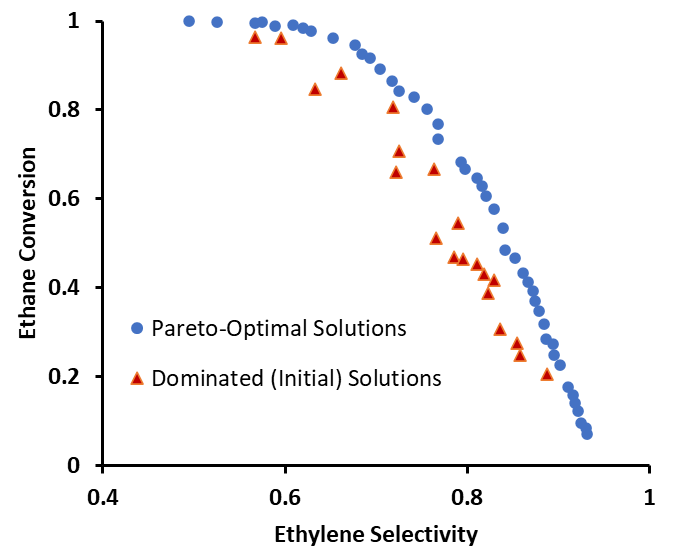
Figure 1. Pareto-optimal and dominated solutions for the simultaneous maximization of ethane conversion and ethylene selectivity in an industrial reactor.
In most MOO applications, number of Pareto-optimal solutions obtained is relatively large, often exceeding several tens, which complicates the task of selecting a single solution for implementation. In addition to optimization-based problems, many decision-making situations involve a limited number of predefined alternatives, whose performances are evaluated against multiple criteria [5]. In such cases, the analysis is not to generate new solutions, but to compare existing alternatives in a structured and rational manner. A representative example is the selection of renewable energy sources, where alternatives such as solar, wind, hydro, and biomass are assessed based on technical, economic, environmental, and social criteria. Husain et al. [6], for instance, evaluated four renewable energy alternatives in India using ten criteria, including installed cost, operating and maintenance cost, efficiency, greenhouse gas emissions, land requirement, job creation, technical maturity, and social acceptance, as summarized in Table 1. While some criteria were derived from the literature and technical analyses, others relied on expert judgment and surveys, reflecting the multidimensional nature of such decisions.
Table.1 Renewable energy alternatives and evaluation criteria for selection [6]. Here, criteria C1, C2, C3, C6 and C7 are to be minimized whereas C4, C5, C8, C9 and C10 are to be maximized.
|
Alternatives (Renewable Energy Sources) |
Criteria (see the text for significance of each criterion) |
||||||||||
|
C1 |
C2 |
C3 |
C4 |
C5 |
C6 |
C7 |
C8 |
C9 |
C10 |
||
|
Solar |
596 |
9,000 |
0.038 |
22 |
19 |
48 |
12 |
0.87 |
4 |
4.58 |
|
|
Wind |
1038 |
28,000 |
0.04 |
35 |
33 |
11 |
250 |
0.17 |
4 |
4.17 |
|
|
Hydro |
1817 |
45,425 |
0.065 |
76.61 |
57 |
24 |
500 |
0.27 |
5 |
3.56 |
|
|
Biomass |
1154 |
46,160 |
0.057 |
84.33 |
68 |
230 |
13 |
0.21 |
3 |
4.00 |
|
Whether the alternatives originate from Pareto-optimal solutions of an MOO problem (as in Figure 1) or from a finite set of predefined options (as in Table 1), decision-makers ultimately need to select a single alternative/solution for practical implementation. This selection process is addressed by multi-criteria decision-making (MCDM), which provides systematic approaches for decision making in the presence of multiple, and often conflicting, criteria. MCDM methods typically aim to rank the available alternatives, enabling the decision-maker to identify one or more preferred options.
MCDM has been extensively applied across diverse fields, including material selection, sustainable manufacturing, healthcare systems, environmental management, and industrial engineering [7–11]. Due to its interdisciplinary nature, the terminology used in MCDM varies across studies. Terms such as criteria, objectives, and attributes are often used interchangeably, while MCDM itself is referred to as multi-attribute decision-making (MADM), multi-criteria decision analysis (MCDA), or multi-criteria analysis (MCA).
According to the classification proposed by Hwang and Yoon [12], decision-making problems can be broadly divided into MADM, which deals with a finite number of alternatives, and multi-objective decision-making (MODM), which is closely related to MOO and commonly encountered in optimization problems. In this paper, the term MCDM is used as a general umbrella encompassing MADM, MCDA, and MCA, while MOO refers specifically to formulation and solution of optimization problems to generate Pareto-optimal solutions.
In many (engineering) applications, MOO and MCDM are applied sequentially. First, MOO techniques are used to find Pareto-optimal solutions representing feasible trade-offs among competing objectives. Subsequently, MCDM is employed to rank these solutions and select the most appropriate (or consensus) one based on decision-maker preferences and application-specific priorities. This combined framework has become increasingly important as optimization results alone are often insufficient for decision making.
The growing relevance of MCDM is further evidenced by the sharp increase in related publications over the past two decades. A search of the SCOPUS database using common MCDM terms in title, abstract and keywords of an article, shows a substantial rise in the number of published studies across multiple subject areas from 2000 to 2025, as illustrated in Figure 2. Particularly notable growth is observed in engineering and computer science, underscoring the expanding role of MCDM in complex technical systems.
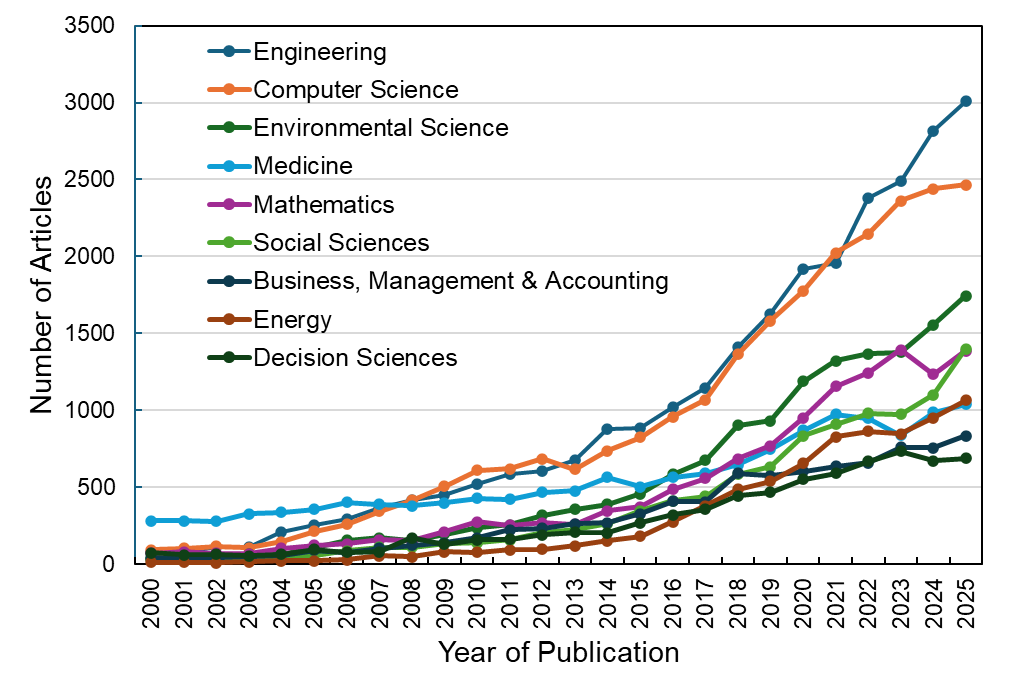
Figure 2. Yearly number of articles related to MCDM and its applications, in diverse subject areas, as grouped in the SCOPUS database
Given its practical importance and methodological diversity, the main objectives of this review are to highlight the scope and need for MCDM, outline its essential steps, summarize commonly used normalization and weighting techniques, review widely applied and recent MCDM methods, introduce available MCDM software tools, and discuss current challenges and future opportunities in this field.
2. Steps in MCDM
The general procedure of MCDM is illustrated in Figure 3. Depending on the application, the process may begin with solving a MOO problem to generate Pareto-optimal solutions, or with the careful and accurate identification of alternatives, criteria, and their corresponding values. Pareto-optimal solutions (alternatives) represent optimal trade-offs among conflicting criteria, where no single alternative outperforms the others in all aspects. Subsequently, an alternatives criteria matrix (ACM) is constructed to systematically organize the performance of each alternative (say, in each row of the matrix) with respect to the selected criteria (say, in the columns of the matrix).
To make the criteria comparable, normalization is applied using methods such as vector, sum, max-min, or max normalization, typically scaling the values to within the range of zero to one. After normalization, criteria weights are assigned to reflect their relative importance; criteria weights can be determined by either subjective or objective weighting methods (outlined in the next section). The weighted, normalized ACM is then used to rank the alternatives using MCDM techniques outlined in Section 4. Finally, the top-ranked alternatives are reviewed for selection, and sensitivity analysis may be performed to assess the robustness of the rankings against changes in data, weighting, or methodological choices.
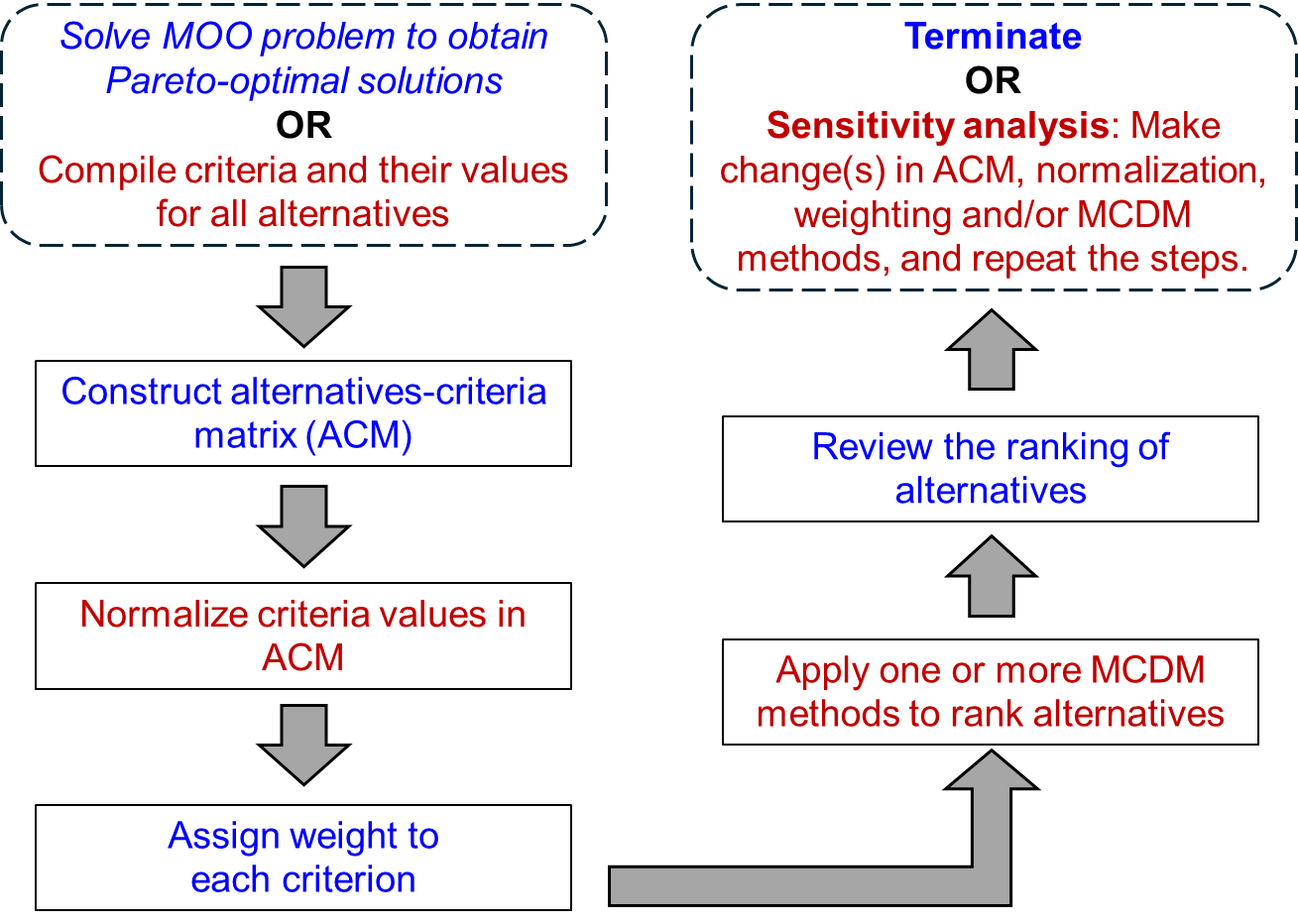
Figure 3. General steps in MCDM
3. Normalization and Weighting Methods
In MCDM applications, criteria usually differ in units and magnitude, and so normalization is a crucial preprocessing step to make them comparable. Normalization methods transform criteria values into a common scale and generally include two forms: a direct formula for maximization criteria and an inverse formula for minimization criteria. Inverse formula reverses the optimization direction, converting “smaller-is-better” criteria into “larger-is-better” ones through either sign change or reciprocal transformation. However, not all MCDM methods employ both the direct and inverse formula. For instance, the original TOPSIS (technique for order of preference by similarity to ideal solution) method proposed by Hwang and Yoon [12] and the MOORA (MOO on the basis of ratio analysis) method introduced by Brauers and Zavadskas [13] rely solely on direct normalization. In general, the choice of normalization method and formulation can significantly influence the final decision outcomes.
Criteria weights in MCDM can be determined using expert judgment or quantitative methods, respectively classified as subjective or objective methods (Figure 4). In this figure, the acronyms in alphabetical sequence are: AHP - analytic hierarchy process, BWM – best-worst method, CRITIC - criteria importance through intercriteria correlation, FUCOM – full consistency method, MEREC - method based on the removal effects of criteria, StDev- standard deviation, StatVar -statistical variance, and SWARA stepwise weight assessment ratio analysis (SWARA). Subjective methods rely on decision-makers’ preferences, whereas objective methods derive criteria weights solely using criteria values of all alternatives in ACM. Common objective and subjective weighting methods are described in Wang et al. [14] and Wang and Rangaiah [15].
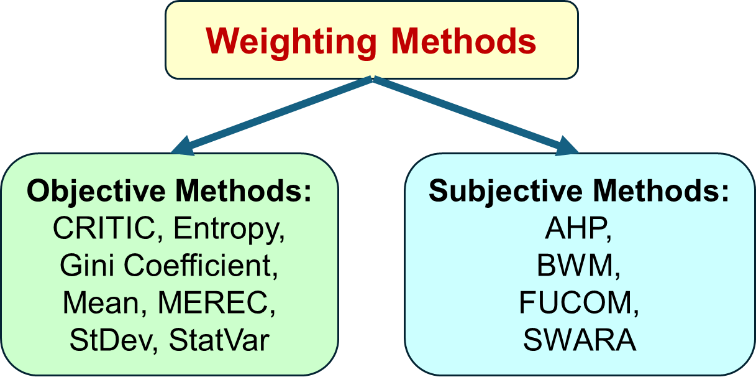
Figure 4. Objective and subjective weighting methods
4. MCDM Methods
In the literature, there are more than 200 MCDM methods for ranking alternatives; they are classified into several types as shown in Figure 5, which is based on the grouping by Ishizaka & Nemery [16] and Thakkar [17]. Popular methods in each type are indicated in Figure 5, and their detailed steps and equations can be found in Chapters 3, 7–9 of Wang & Rangaiah [15]. Most methods require criteria weights, except certain GRA variants.
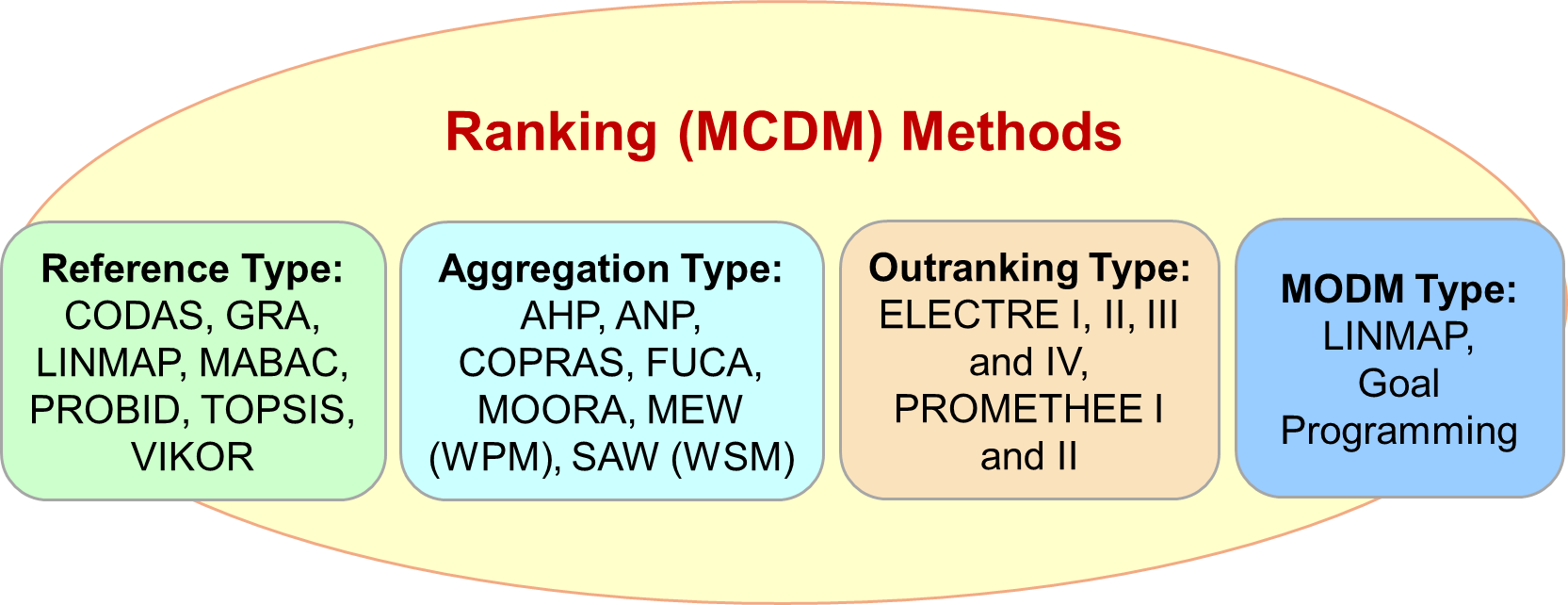
Figure 5. Classification of MCDM methods, and popular ones in each of Reference, Aggregation, Outranking, and MODM type Methods; see the text for full form of acronyms
4.1. Reference Type MCDM Methods
Reference type methods evaluate alternatives relative to ideal solutions: the positive ideal solution (PIS) with the best criteria values, and the negative ideal solution (NIS) with the worst criteria values. Then, alternatives are ranked based on PIS and/or NIS values of alternatives. Specifically, CODAS (Combinative Distance-based Assessment) computes Euclidean and Taxicab distances from NIS, where greater distance indicates a better alternative [18]. GRA (Gray/Grey Relational Analysis), based on gray system theory, evaluates similarity to PIS and does not require weights [19, 20].
LINMAP (Linear Programming Technique for Multidimensional Analysis of Preference) calculates distances to PIS; also, it can estimate criteria weights via linear programming (LP) [21]. MABAC (Multi-Attributive Border Approximation Area Comparison) uses the border approximation area matrix derived from weighted, normalized criteria to calculate distances and scores [22]. PROBID (Preference Ranking on the Basis of Ideal-average Distance) assesses the alternatives against multiple tiers of ideal solutions and the average solution, integrating distances inversely to compute an overall performance score [23]. TOPSIS ranks alternatives based on their closeness to PIS and distance from NIS [12]. VIKOR (Visekriterijumska Optimizacija i Kompromisno Resenje) identifies compromise solutions by combining utility (proximity to PIS) and regret (distance from NIS) measures [24].
4.2. Aggregation Type MCDM Methods
Aggregation type methods rank alternatives by combining weighted performance across criteria. For ranking the alternatives, AHP (Analytic Hierarchy Process) uses pairwise comparisons and Saaty’s 1-9 scale to calculate local priority vectors for each criterion, which are aggregated to produce global priorities [25]. ANP (Analytic Network Process) extends AHP for interdependent criteria using a network structure and pairwise comparisons [26]. COPRAS (Complex Proportional Assessment) calculates sums of weighted normalized benefit and cost criteria for each alternative to determine relative importance [27]. FUCA (Faire Un Choix Adéquat) ranks alternatives per criterion and aggregates ranks to determine overall ranking [28]. MOORA computes performance of alternatives by subtracting aggregated cost criteria from aggregated benefits criteria [13]. MEW (Multiplicative Exponent Weighting, also known as Weighted Product Method or Model) multiplies normalized criteria values raised to their respective weights [29, 30]. SAW (Simple Additive Weighting) sums weighted, normalized criteria values to rank alternatives [31–33].
4.3. Outranking Type MCDM Methods
Outranking methods assess pairwise preferences to establish which alternatives dominate others. ELECTRE (Elimination et Choix Traduisant la Realité) uses thresholds and veto rules to handle contradictions and define preference relations [34]. PROMETHEE (Preference Ranking Organization Method for Enrichment Evaluations) calculates preference indices per criterion and combines them to derive global outranking scores [35]. Each of these two methods has multiple variants.
4.4. MODM Type Methods
MODM methods focus on MOO. Techniques like ε-constraint, non-dominated sorting genetic algorithm II and multi-objective particle swarm optimization are less directly used in MCDM but they generate non-dominated (Pareto-optimal) solutions for further analysis. LP and goal programming (GP) are widely applied. GP minimizes deviations from prioritized goals, managing trade-offs among objectives. See Jones & Tamiz [36] for details and recent developments in GP. Both LINMAP and GP find one compromise or trade-off solution for the conflicting criteria; thus, they combine solving MOO problem and MCDM.
5. MCDM Programs
Robust and reliable computational tools are essential for ensuring accurate and consistent calculations in MCDM. Although there are tools that have one or two MCDM methods, comprehensive programs that integrate multiple methods remain scarce. Such integrated platforms are particularly valuable for sensitivity analysis and systematic comparison of different MCDM outcomes. This section introduces two representative tools: EMCDM and PyMCDM that address this gap. EMCDM is an Excel VBA-based program developed by [33, 37], leveraging the widespread use of Microsoft Excel in both academia and industry. This program (Figure 6) follows a clear five-step workflow, allowing users to define alternatives, type and weight of each criterion, either manually or via 8 embedded weighting methods. Further, it supports 16 MCDM methods and allows users to apply any one method or all methods.
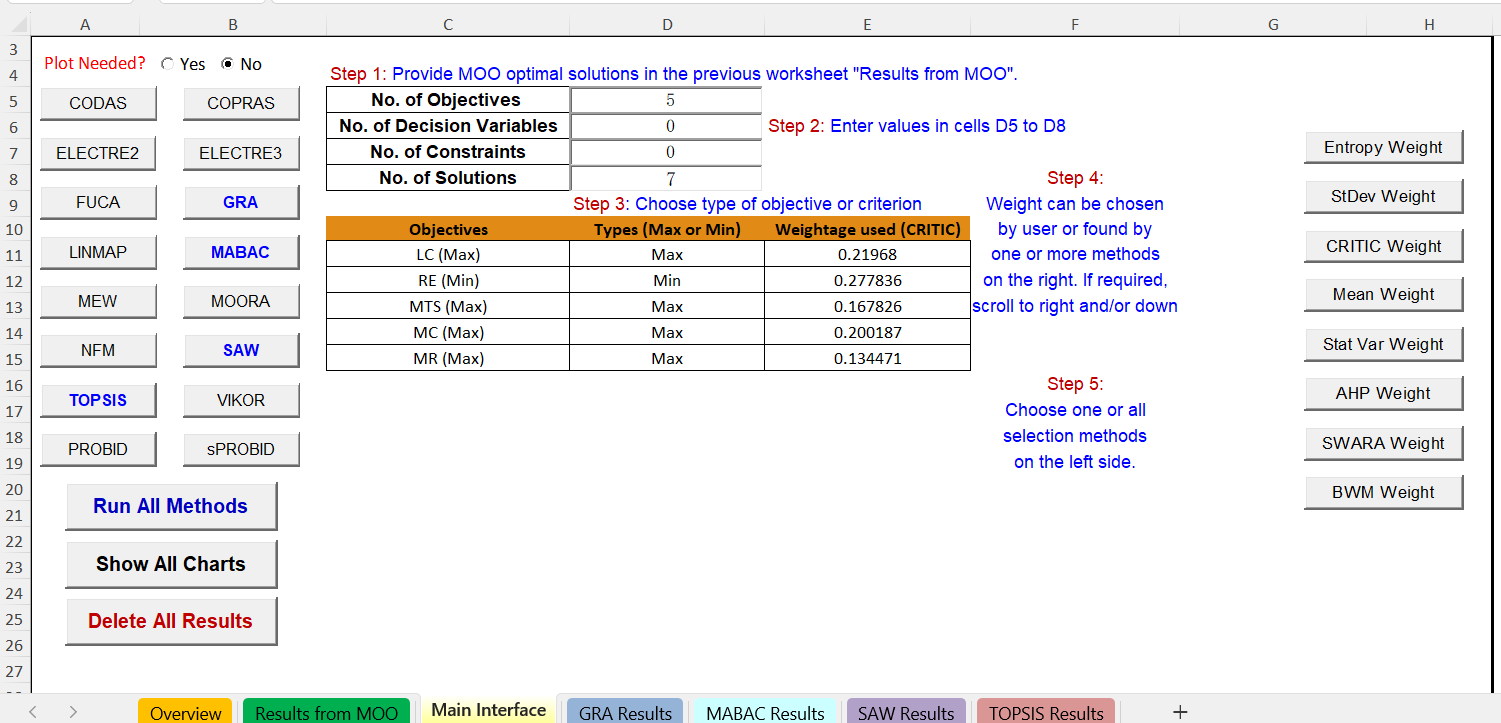
Figure 6. Main interface of EMCDM (version 3), showing 16 MCDM methods and 8 weighting techniques; the five-step workflow is highlighted in red.
PyMCDM is a Python-based library developed by Kizielewicz et al. [38], built on established scientific packages such as NumPy, Matplotlib, and SciPy. Version 1.1.0 includes 15 MCDM methods, 10 weighting methods, and 8 normalization techniques, offering high flexibility for users with basic Python knowledge. In addition, other Python-based tools, such as scikit-criteria and pyDecision, further expand the available MCDM software. For more details on all these tools, see Chapter 10 in Wang and Rangaiah [15].
6. Challenges and Opportunities in MCDM
MCDM involves several challenges and opportunities since the selection of criteria, alternatives, criteria values, normalization, weighting techniques, and MCDM (ranking) methods can significantly influence the ranking and recommended alternatives. In applications, identifying relevant criteria, all feasible alternatives and reliably determining their criteria values are essential. Such data may be obtained from experiments, surveys, literature, or by solving MOO problems. Experimental and survey-based data often contain uncertainty and variability, while MOO solutions may not capture all Pareto-optimal alternatives, both of which can affect decision outcomes.
After constructing a reliable ACM, MCDM typically proceeds through normalization, weight determination, and application of one or more ranking methods (Figure 3). Although original MCDM formulations often recommend specific normalization or weighting, these are not necessarily optimal for all applications. Moreover, the “correct” criteria weights or ranking method are generally unknown; also, rank reversal may occur due to changes in the ACM. A key reason for these challenges is that the true or best alternative is usually unknown in real-world problems.
To address these issues, careful selection of criteria, reliable determination of alternatives and their criteria values, and testing multiple normalization, weighting, and ranking methods are recommended. Sensitivity analysis plays a crucial role by examining how variations in ACM, weights, normalization and/or methods affect top-ranked alternatives, followed by selecting alternatives favored by majority of tests. Comprehensive tools (e.g., EMCDM) facilitate such analyses. Previous studies (e.g., [37, 41, 42, 43]) have provided insights into sensitivity behavior and robust method combinations.
7. Conclusions
This review brings together key aspects in MCDM and its application. It outlines different normalization techniques, weighting strategies, and ranking (MCDM) methods that have been proposed and used in literature, as well as practical software tools like EMCDM and PyMCDM that support accurate and comprehensive application of MCDM. Although the use of MCDM has expanded significantly, important challenges remain, including uncertainty in criteria, their values and weights as well as in the stability of rankings under changing conditions. Addressing these issues will require more flexible decision-making frameworks and systematic sensitivity analyses.
Declaration of generative AI and AI-assisted technologies in the writing process
During the preparation of this work, the authors used ChatGPT to homogenize and enhance the text. After using this tool, the authors reviewed and edited the content as needed and they take full responsibility for the contents of this publication.
References
|
This entry is adapted from: https://doi.org/https://doi.org/10.3390/pr12112532