
In the Theory of Entropicity (ToE), entropy is a dynamic universal field that governs both time’s arrow and motion’s limits, rather than merely quantifying disorder. This field imposes two core constraints: it drives all systems irreversibly toward higher entropy and enforces a maximum causal‐propagation rate—experienced as the speed of light, c. Rather than a geometric axiom, c emerges from the entropic field’s structure: massless signals follow paths of minimal entropic resistance set by local and global entropy configurations.
Relativistic time dilation and length contraction arise as entropic‐field distortions. As an object nears c, rising entropy resistance slows its internal processes (time dilation) and compresses spatial intervals (length contraction). The entropic No-Rush Theorem forbids any superluminal interaction by preventing the field from establishing conditions faster than its propagation limit. Likewise, the finite speed of quantum entanglement or wave‐function collapse reflects the same entropic time constraint.
In this framework, Einstein’s field equations appear as an emergent entropic geometry: spacetime curvature encodes how the entropy field constrains motion and interaction. Thus, ToE unifies thermodynamics, quantum mechanics, and relativity by revealing c as a thermodynamic consequence of entropy’s universal governance.
- Quantum Mechanics
- Field Theory
- Entropy
- Thermodynamics
- Einstein
- Theory of Entropicity
- Relativity
- Particle Physics
- Time Dilation and Lorentz Contraction
- Postulates of Einstein's Theory of Relativity
Relativistic Time Dilation and Lorentz Contraction in the Theory of Entropicity (ToE)
Entropy as the Underlying Regulator of Light Speed in the Theory of Entropicity (ToE)
According to the Theory of Entropicity (ToE), the constancy of the speed of light—a foundational postulate in Einstein’s theory of relativity—is not an unexplained given of nature but an emergent consequence of a deeper entropic principle. In ToE, entropy is redefined not merely as a statistical measure of disorder, but as a dynamic and universal field—denoted  —that governs the structure and evolution of space, time, and interaction.
This entropic field plays two critical roles:
-
Temporal Regulation: It establishes an irreversible arrow of time by driving all physical systems toward higher entropy in a path-dependent and asymmetric manner.
Kinematic Constraint: It enforces a maximum propagation rate for causal influence, which manifests in our observed universe as the speed of light ToE proposes that no physical interaction, signal, or object can move faster than the rate allowed by the entropy field itself[1][2][3][4][5][6]. This rate is not arbitrary—it is encoded in the structure of entropy flow in the universe. The speed of light is thus the entropic speed limit:

In this view, the constancy of cc arises not from spacetime geometry alone but from the underlying entropic constraint embedded in the field structure of the cosmos. Light, as a massless excitation, follows the least entropic resistance path, and its velocity is dictated by the local and global configuration of entropy.
This leads to several profound implications:
Implications of ToE on the Speed of Light and Causality
-
Entropic Explanation of Special Relativity:
Time dilation and length contraction are interpreted in ToE as manifestations of local entropic field distortions. Systems moving near cc experience increased entropy resistance, which slows internal clocks and compresses spatial intervals—not because of Lorentzian spacetime, but because of the increased entropic cost of motion. -
No Superluminal Interactions:
Faster-than-light (FTL) propagation is forbidden not by geometric constraints alone but by the entropic No-Rush Theorem. That is, no process can occur faster than the entropic field permits, because the field must first establish the conditions for that process to happen. -
Quantum Measurement and Entropy Speed Limit:
The finite speed at which entanglement or wavefunction collapse can occur (e.g., the 232 attosecond constraint) is seen as a reflection of the entropic time constraint—i.e., collapse and information exchange must obey the entropic propagation limit, not just relativistic cc. -
General Relativity as an Emergent Entropic Geometry:
ToE allows one to derive Einstein's field equations as an effective entropic metric theory, where the curvature of spacetime is simply how the entropy field encodes constraints on motion and interaction.
Conclusion
In the Theory of Entropicity, the speed of light (c) is not an unexplained constant but the natural maximum flow rate of the entropic field, which underlies all physical processes. The light speed barrier is thus a thermodynamic consequence of entropy’s universal governance over time, causality, and motion. It is not geometry that limits entropy—but entropy that shapes and constrains geometry. This is a crucial and vital point in the Theory of Entropicity (ToE).
Deriving the Speed of Light, c, as the Entropic Propagation Limit in the Theory of Entropicity (ToE)
1. What We Want To Show
In ToE, the universal constant “c” is not postulated but emerges as the characteristic (null) speed of disturbances in the entropy field and of any physical signal constrained by that field.
We do this by:
-
Writing (or recalling) the ToE action and its Euler–Lagrange equation for S(x).
-
Linearizing around a background to read off the wave operator.
-
Identifying the characteristic cone (light-cone) of that operator.
-
Showing that requiring matter, information, and entropic perturbations to share the same causal cone fixes the propagation speed to c.
-
Optionally cross-checking with an entropic flux law that reproduces Maxwell’s wave speed 1/√(ε0 μ0).
2. Starting From ToE's Master Entropic Equation (MEE)
We take the ToE's MEE schematic (already established in another submission)[7][8]:

Let us group the  -kinetic terms by defining
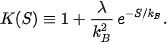 Thus the total kinetic piece is

Varying with respect to  and ignoring surface terms gives the Euler–Lagrange equation:

where 
3. Linearization Around Homogeneous Background
Let
\
with  constant. Then
  and
and

To first order:

For free entropic waves (neglecting sources and mass term):
 So perturbations of the entropy field obey a wave equation with the same metric
  up to the constant K0. That constant rescales the field but does not change the null cone of
  .
.
The condition for characteristics obeys: , which is the null cone of
The entropy perturbation’s fastest signal travels along null directions of  . Therefore, its characteristic speed is the same “c” that defines null intervals in
 .
.
4. Characteristic Speed in Local Inertial Frame
In local inertial coordinates we have the linearized equation:

such that as we divide by  , which we set as equal to
  , we readily obtain: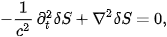
which is the standard wave equation with signal speed
Thus, in the Theory of Entropicity(ToE), entropy field supports waves that move at a given speed c. If we now impose ToE’s No-Rush Theorem[1][9] (“no process outruns the entropic field”), then all interactions are bounded by this same speed of c. We see that from simple entropic arguments of the Theory of Entropicity(ToE), we have arrived at Einstein's constancy of the speed of light in his beautiful Theory of Relativity (ToR).
5. Shared Null Cone Requirement with Matter and Light
In order to prevent causal paradoxes, we impose the following demands on light and matter:
-
Matter couplings (
 ) feel
  as their kinetic metric (as usual).
 -
Entropic disturbances
 feel the same null cone (since their kinetic term is proportional to
  ).
). -
Electromagnetic field (if we recast it entropically) also propagates on the same cone.
Therefore, everyone shares the same characteristic speed. If EM waves didn’t, then we would have super- or subluminal mismatches, thus violating ToE’s causal-entropy consistency. That forces the “entropic cone” and “EM cone” to coincide → velocity = c.
6. Constitutive Flux–Law Derivation
Now, define the entropy flux 4-vector as:

with conductivity
The conservation/production equation: then linearizes (for
 ) to
) to
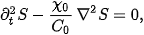
where  is entropic capacity.
Let us further define
To prevent superluminal signals (No-Rush Theorem), we can demand that (that is, demand that all physical signals cannot outrun  (No-Rush Theorem)):
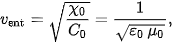
where we know from classical physics that  ,
,
that is
which directly fulfills the natural wave constant (c) in Maxwell's Electromagnetism (EM). Thus, in the Theory of Entropicty (ToE), radiation is just a special “entropic excitation”. This fixes χ0/C0 numerically and ties ToE's entropic constants back to measured EM constants.
7. Null Entropic Geodesic
Another way for us to derive the speed of light in the Theory of Entropicity (ToE) is for us to start by using the entropic action:
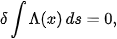
with  for massless excitations along the path (that is, null entropic trajectory). This yields

which is the null condition whose coordinate speed is Hence, the trajectory’s coordinate speed is c.
8. The Attosecond Constraint Cross-Check
We have the Empirical entanglement formation time .
.
For correlation length L,

Observed  never implies
 thus reinforcing
  as the ceiling for global propagation.
References
- Obidi, John Onimisi. A Critical Review of the Theory of Entropicity (ToE) on Original Contributions, Conceptual Innovations, and Pathways towards Enhanced Mathematical Rigor: An Addendum to the Discovery of New Laws of Conservation and Uncertainty. Cambridge University; 30 June 2025. https://doi.org/10.33774/coe-2025-hmk6n
- Obidi, John Onimisi. On the Discovery of New Laws of Conservation and Uncertainty, Probability and CPT-Theorem Symmetry-Breaking in the Standard Model of Particle Physics: More Revolutionary Insights from the Theory of Entropicity (ToE). Cambridge University; 14 June 2025. https://doi.org/10.33774/coe-2025-n4n45
- Obidi, John Onimisi. Einstein and Bohr Finally Reconciled on Quantum Theory: The Theory of Entropicity (ToE) as the Unifying Resolution to the Problem of Quantum Measurement and Wave Function Collapse. Cambridge University; 14 April 2025. https://doi.org/10.33774/coe-2025-vrfrx
- Obidi, John Onimisi. Relativistic Time Dilation, Lorentz Contraction: Theory of Entropicity. Encyclopedia. Available online: https://encyclopedia.pub/entry/58667 (accessed on 22 July 2025).
- Obidi, John Onimisi. Entropic Cost of Motion in Theory of Entropicity. Encyclopedia. Available online: https://encyclopedia.pub/entry/58666 (accessed on 22 July 2025).
- Obidi, John Onimisi. Theory of Entropicity Explains Einstein's Relativity Light Constancy. Encyclopedia. Available online: https://encyclopedia.pub/entry/58654 (accessed on 22 July 2025).
- Obidi, John Onimisi. Master Equation of the Theory of Entropicity (ToE). Encyclopedia; 2025. https://encyclopedia.pub/entry/58596
- HandWiki contributors, 'Physics:A Concise Introduction to the Evolving Theory of Entropicity (ToE)', HandWiki, , 14 July 2025, 06:05 UTC,
- Obidi, John Onimisi. The No-Rush Theorem in Theory of Entropicity (ToE). Encyclopedia. Available online: https://encyclopedia.pub/entry/58617 (accessed on 22 July 2025).