Your browser does not fully support modern features. Please upgrade for a smoother experience.

Please note this is an old version of this entry, which may differ significantly from the current revision.
Artificial neural networks (ANNs) have become key methods for achieving global climate goals. The applications of ANNs to renewable energies such as solar, wind, and tidal energy were studied.
- machine learning
- artificial neural network
- big data
- energy transition
1. Introduction
Currently, the most accurate, most efficient, and most powerful machine for performing operations is the human brain, which can provide solutions to problems that PCs are not capable of solving. Researchers and scientists have developed artificial intelligence (AI) models to reproduce, to some extent, the processes that take place in the human brain [1]. Currently, AI is divided into different groups: artificial neural networks (ANNs) and different hybrid systems. Among them, ANNs are the best method as they are accurate, fast, and simple and have the ability to model a multivariate system [2].
The neural network (NN) concept has more than half a century of history; however, it is only in the last 20 years that the largest number of applications have been developed in the fields of defense, engineering, mathematics, economics, medicine, meteorology, and many others.
The history of neural networks dates to the 1940s. It was Warren McCulloch and Walter Pitts who first built a very simple neural network using electrical circuits [3]. Later, Donald Hebb proposed that neural pathways strengthen with each use, an important concept in human learning [4]. Then, in the 1950s, Nathaniel Rochester of IBM Research Laboratories first attempted to simulate complex neural networks [5]. In 1959, Bernard Widrow and Marcian Hoff developed models called “ADALINE” and “MADALINE” [6][7]. After the publication of the book “Perceptrons” by Marvin Minsky and Seymour Papert in 1969, there was a period of slowdown in research. This book argued that the concept of a single perception approach to neural networks did not have an effective correlation in multilayer neural networks [8]. In the 1970s, two competing models emerged in the conception of neural networks, called symbolism and connectionism [9]. The controversy ended with the acceptance of the symbolic paradigm as the most viable line of research. In the early 1980s, however, connectionism resurfaced, based on Werbos’s 1974 studies. These studies made it possible to rapidly develop the formation of multilayer neural networks using the so-called “backpropagation” algorithm [10][11]. Since then, the field of neural networks has seen significant advances. Some of these advances were the introduction and development of max-pooling in three-dimensional data recognition [12]. On the other hand, advances included the development of deep learning and its application to a wide variety of fields such as renewable energy [12].
However, ANNs are not the only ones that learn by example. There are other methods, such as the following. Supervised learning: this method trains algorithms on the basis of sample input and output data labeled by humans [13]; deep learning: it uses neural networks to learn from the data and to improve performance by increasing the number of samples that are available during the learning process [14]; machine learning paradigms for unsupervised classification such as conceptual clustering [15], which is an unsupervised learning method that focuses on generating concept descriptions for the generated classes. Other machine learning paradigms that learn by example are semi-supervised learning [16], active learning [17], transfer learning [18], and online learning [19].
The data collection needed to train ANNs must be a sufficiently complete and consistent set of information [20]. The development of machine learning models requires historical data from several years, supplemented by information that is more recent. This information amounts to thousands of data points [20]. In the context of different energy transition scenarios and geographical locations, it is essential to ensure that the data collection is as complete, impartial, and representative as possible. This is achieved by managing diverse and reliable sources of information. Some of the most used sources are public repositories, data from official agencies and organizations, research centers, and geographic databases [21][22]. To ensure that the data are impartial, complete, and representative of all the energy transition scenarios analyzed, it is necessary to perform careful data selection and apply measures such as domain adaptation and data augmentation [23]. Model performance can also be improved, and training data can be augmented by using pretrained models in other domains [23]. The authors, based on the objective pursued and the exact geographical location, have analyzed all data obtained in the various studies, with latitude and longitude coordinates provided in many of them. Similarly, much of the data provided are based on measurements made by the authors themselves when using AI.
ANNs have gained momentum to the point where they have become popular and useful models for classification, clustering, recognition, and prediction in a wide variety of applications [24]. ANNs are increasingly being used for different applications due to their ability and effectiveness in solving different problems. They have proven to be very efficient when it is complex to cull through a mass of existing data, for example, in the evaluation of public transportation of people and goods [25], image recognition [26], medical analysis [27], efficiency analysis in nonlinear contexts, or to adjust production functions, among other applications [28][29].
ANN consists, in most cases, of an input layer, at least one hidden layer (in the case of a simplified model), an output layer, the weight, the connection biases, the activation function, and the sum node. The layers in turn are made up of several connected units (called neurons) [30], considered to be the fundamental building blocks for the correct functioning of a neural network. The link between neurons is achieved by so-called connecting links [2]. The basic diagram of a neuron is shown in Figure 1 [31].
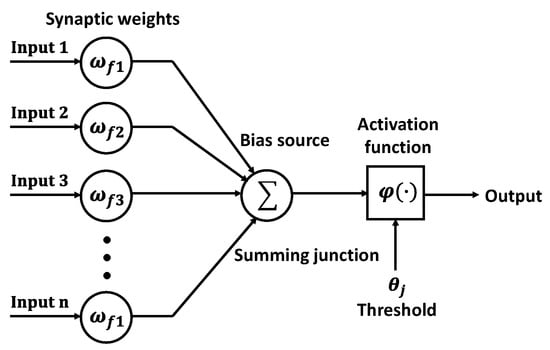
Figure 1. Schematic diagram of a neuron [31].
The main characteristic feature of ANNs compared to other approaches is their ability to learn by example. ANNs can be applied to any situation where there is a relationship between input and output variables [32]. The procedure for the learning process is what is known as a learning algorithm, the purpose of which is to alter the synaptic weights of the networks in order to achieve a previously set goal [33].
ANNs must be trained by feeding the network a set of quantified data to achieve the desired output using a pool of input data [34]. The learning process continues until the NN output matches the expected output [35]. The problem with ANN models lies precisely in overtraining, i.e., when the network capacity for training is too high or too many training iterations are allowed per network [36]. The degree of training accuracy obtained in the different applications where the ANN technique is used is very high, in the order of 10−5 to complete the training processes [2]. NNs can be grouped into different categories depending on their structure [37]. This classification is shown in Figure 2. The most commonly used are single-layer feed-forward networks, multilayer feed-forward networks, radial basis networks, and dynamic (differential) or recurrent neural networks. Of these, single-layer power supply networks are the best known and most widely used. Single-layer power supply networks were the first and simplest networks devised. Information travels in only one direction: from input nodes, through hidden nodes, to output nodes. This type of NN can be designed based on different unities, and among them, the perceptron is the most famous and simplest example [38]. Rosenblatt created the perceptron in 1958, thanks to the creation of the training algorithm [39]. The perceptron is composed of a single neuron with adjustable synaptic weights and thresholds [40]. The most frequently used algorithm is the so-called backpropagation (BP) algorithm [41]. The BP algorithm consists of training and correcting the weights until the error function is below the desired tolerance limit [37].
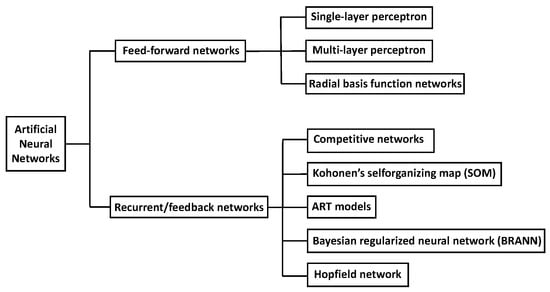
Figure 2. Artificial Neural Networks classification.
2. Applications of ANNs to Renewable Energies
This section details the different research carried out in the field of renewable energies and more specifically in wind, solar, and tidal energy. These three types of renewable energies have been selected as they are the ones that have the largest contributions to the national energy balances [42] as well as due to the greater abundance of works found.
2.1. Applications of ANNs for Wind Power and Speed Prediction
Within the renewable energy mix, wind energy is currently considered the most economical way to generate electricity. Recently, there has been new research into methods capable of predicting wind speed. This is of great importance due to the continuous growth of wind power generation worldwide [43]. For proper operation of wind farms, a constant stream of data about wind speed and wind direction is required. Artificial neural networks are an excellent method for short-, medium-, and long-term wind speed forecasting.
The following Table 1 summarizes the main research pieces found. The studies have been classified according to the ANN structure, journal and region, input and outputs for the network, and the activation function employed.
Table 1. Uses of artificial neural networks for wind power and speed prediction.
| Authors and Year |
ANN Type and Structure | Journal | Country/ Region |
I/O Setting |
Activation Function | Notes | ||
|---|---|---|---|---|---|---|---|---|
| Input | Output | |||||||
| 1 | [44] | Multilayer Perceptron (MLP) 3-4-1 |
Renewable Energy | Muppandal, India |
Wind speed (Ws), relative humidity (RH), generation hours |
Energy output of wind farms | logsig (hidden layer) purelin (output layer) |
Trained by BP algorithm Input data normalized to [0, 1] |
| 2 | [45] | ANN 4-X-2 |
Renewable Energy | Turkey | Longitude (lon), latitude (lat), altitude (A), measurement height |
Ws, related power | logsig (hidden and output layer) |
Trained by BP algorithm Input and Output data normalized to [0, 1] |
| 3 | [46] | MLP 5-10-5-1 |
Renewable Energy | Turkey | Ws, month (M) | Ws | logsig (hidden layer) purelin (output layer) |
Resilient propagation (RP) algorithm was adopted |
| 4 | [47] | Radial Basis Function (RBF) 1-7-2 |
Renewable and Sustainable Energy Reviews |
Iran | Ws | Proportional and integral (PI) gains | - | Use Gaussian function for hidden layer Gravitational search algorithm (GSA) is adopted |
| 5 | [48] | MLP 3-(2-100)-24 |
Renewable Energy | Medina city, Saudi Arabia | Mean daily Ws | Ws prediction of the next day |
tansig (hidden layer) purelin (output layer) |
Input data normalized to [0, 1] Trained by Levenberg–Marquardt (LM) BP algorithm Compared and outperforms support vector machine (SVM) SVM used Gaussian kernel 2000 days used for training and 728 days used for testing |
| 6 | [49] | MLP 6-7-5-1 MLP 4-7-5-1 |
Renewable and Sustainable Energy Reviews |
Alberta, Canada |
Wind power (Wp) WP1 (t − 1), WP1 (t − 2), WP1 (t − 3), WP1 (t − 4), WP1 (t − 5), WP1 (t − 6) |
Short-term forecasting of the Wp time series | tansig (hidden layer) purelin (output layer) |
Input data normalized to [−1, 1] Imperialist competitive algorithm (ICA), GA, and particle swarm optimization (PSO) are employed for training the neural network 1200 data used for training and 168 data used for testing |
| 7 | [50] | ANN 2-(16-32)-(16-32)-1 |
Renewable Energy | Coquimbo, Chile | Ws, wind direction (Wd) |
Turbine power | - | ADAM algorithm is adopted 103,308 data used for training and 52,560 data used for testing |
| 8 | [51] | RBF 2-3-1 MLP 2-4-1 ADALINE 2-4-1 |
Applied Energy | North Dakota, USA | Mean hourly Ws | Forecast value of next hourly average Ws | - | Trained by LM algorithm 5000 data used for training and 120 data used for testing |
| 9 | [52] | MLP 5-5-3 |
Renewable Energy | Guadeloupean archipelago, French West Indies | Ws, 30 min moving average speed | Wp (t + kt) | tansig (hidden layer) purelin (output layer) |
Bayesian regularized (BR) |
| 10 | [53] | ANN 7-20-1 |
Renewable Energy | China | Actual Ws, Wp | Ws | - | Trained by BP algorithm |
| 11 | [54] | MLP 6-7-1 |
Renewable Energy | Albacete, Spain | Wsp1, Wsp2, temperature (T) Tp2, solar cicle1, solar cicle2, Wdp1 | Ws forecast (48 h later) | - | LM algorithm is adopted |
| 12 | [55] | ANN 3-3-1 ANN 3-2-X ANN 3-1 ANN 2-1 |
Renewable Energy | Oaxaca, México | Previous values of hourly Ws |
Current value of Ws | - | 550 data used for training and 194 data used for testing |
| 13 | [56] | ANN - |
Renewable Energy | Basque Country, Spain |
Ws data in the last 3 h | Ws in 1 h | sigmoid (output layer) |
Trained by BP algorithm |
| 14 | [57] | MLP X-8-X |
Renewable Energy | Rostamabad, Iran | Standard deviation, average, slope |
Ws (k + l), …, Ws (k + 2), Ws (k + 1) | - | Trained by BP algorithm 672 patterns used for training |
| 15 | [58] | MLP 5-3-3-1 |
Communications in Nonlinear Science and Numerical Simulation |
Italy | Ws, RH, generation hours, T, maintenance hours |
Total wind energy | tansig (first hidden layer) sigmoid (second hidden layer) purelin (output layer) |
Trained by BP algorithm |
| 16 | [59] | MLP 6-25-1 |
Renewable Energy | Himachal Pradesh, India |
Average temperature (TAVG), maximum temperature (Tmax), minimum temperature (ax), air pressure (Pair), solar irradiance (G), A |
Average daily Ws for 11 H.P. locations |
- | Trained by LM algorithm Scaled conjugate gradient (SCG) algorithm is adopted Input and target data are normalized to [−1, 1] 60% data used for training, 20% used for testing, and 20% used for validation |
| 17 | [60] | MLP 4-15-15-1 |
Applied Energy |
Nigeria | lat, lon, A, M | Mean monthly Ws | tansig (hidden layers) purelin (output layer) |
SCG and LM algorithms are adopted Input and target data normalized to [−1, 1] |
| 18 | [61] | MLP 14-15-1 |
WSEAS Transactions on Systems | Portugal | Average hourly values of Ws | Average hourly Ws | - | Trained BP algorithm 87.75% patterns used for training, 9.75% used for validation, and 2.5% used for testing |
| 19 | [62] | MLP 5-6-6-6-2 |
- | Cyprus | M, mean monthly values of Ws at two levels (2 and 7 m) |
Mean monthly values of Ws of a third station |
tansig (hidden layer) logsig (output layer) |
Trained by BP algorithm 90% patterns used for training and 10% patterns used for testing |
| 20 | [63] | MLP 9-10-1 |
Energy Conversion and Management |
Marmara, Turkey |
9 stations Ws | Ws | - | Trained by BP algorithm |
| 21 | [64] | MLP 4-8-1 |
Theoretical and Applied Climatology | Tabriz, Azerbaijan, Iran |
Pair, air temperature (Tair), RH, precipitation |
Monthly Ws | logsig (hidden layer) purelin (output layer) |
Trained by LM algorithm Input and output data normalized to [0, 1] 75% of data used for training and 25% used for testing |
| 22 | [65] | MLP 31-63-31 |
Knowledge-Based Systems |
Minqin, China | Historical daily average Ws during March previous year |
Daily average Ws during March target year |
tansig (hidden layer) logsig (output layer) |
Trained by BP algorithm |
| 23 | [66] | MLP X-25-1 |
2014 4th IEEE International Conference on Information Science and Technology |
Colorado, USA | T, RH, Wd, wind gust, pressure (P), historical Ws | Ws | tansig (hidden layer) |
Trained by BP with momentum 1000 input/output pairs used for training and 200 input/output pairs used for testing |
The applications have different characteristics in several aspects, such as the ANN structure, the input data, the activation function used, and the training algorithm. As can be seen from the literature, various studies on wind speed prediction have been carried out for more than twenty years in different parts of the world, most of them located in Turkey, India, China, or Iran.
The main characteristics of the networks studied are detailed below.
-
ANN type: from the 23 references analyzed, the MLP network has been used in 17 of them, followed by the RBF in two of them. Five of them did not specify the type of ANN used.
-
Structure of the ANN: the predominant type is simple with one hidden layer (70%) and the rest with two hidden layers (26%) with the exception of the investigation of [41], which uses three hidden layers. The number of neurons in the hidden layer is usually around 15, while in other cases more than 63 are selected [67].
-
Amount of data: the percentage of research that makes use of data for validation is 8.69%.
-
I/O configuration: the inputs to the models usually take in situ measured features such as past wind speeds, temperature, relative humidity, altitude, month, or pressure.
-
Activation function: only 13 of the 23 cases detail the activation function used. In the hidden layer, linear functions are used, with tansig and logsig being the most commonly used, while in the output layer, linear functions of the purelin type are adopted.
Figure 3 details the most common inputs and outputs used by ANNs in wind power and wind speed prediction and the operating scheme.
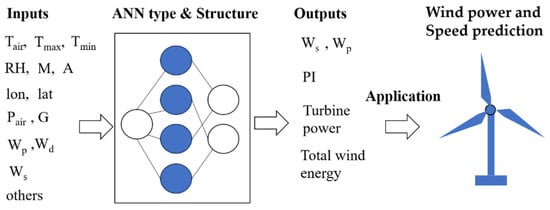
Figure 3. Inputs and outputs in ANNs applied to wind energy and wind speed prediction.
ANNs are highly recommended for predicting wind speed and power generation for several reasons, including self-learning, low error, and high efficiency predictability [68].
2.2. Applications of ANNs for Solar Energy Systems
Within solar energy, the ANN technique has proven to be an alternative to conventional methods, providing great benefits in terms of precision, performance, and modeling. The study indicates that the advantage of ANN techniques over conventional techniques is that they do not require knowledge of internal system parameters, require less computational effort, and offer robust outputs to multivariate problems. NN modeling requires data representing the history, the current performance of the real system, and a correct selection of a NN model. Mellit et al. [69] conducted an overview of the different AI techniques for sizing PV systems. The research shows that one of the advantages of AI in modeling PV systems is that it allows good optimization in isolated areas, where meteorological data are not always available. Mellit and Kalogiriu [70] have applied AI techniques to model, predict, simulate, optimize, and control photovoltaic systems.
The applications of ANNs to solar energy go beyond that, as there is also research such as the one carried out in [71], in which the application of the ANN technique seeks to optimize and predict the performance of the different devices involved in a solar energy system such as solar collectors, heat pumps, or solar air. The research shows how the application of ANNs can save time and reduce the financial costs of the system since it is not necessary to carry out so many experimental tests to determine the relationship between the input and output variables. Another application of ANNs is shown in the research of [72], where the performance of solar collectors is predicted, thus improving the efficiency of the system as a whole. The developed model also showed advantages over conventional computational methods in terms of calculation and prediction time.
Solar radiation data are very important because in most cases they are not available due to the lack of a meteorological station. It is therefore necessary to have techniques to accurately predict solar radiation. ANNs are the solution to the problems of conventional methods [73].
Different ANN models have been applied for solar irradiance prediction, such as the MLP neural network, the RBF neural network, or the general regression neural network (GRNN). The different studies have been classified, taking into account different factors such as network structure and type, input/output configuration, or the activation function and tuning algorithm employed, as is shown in Table 2.
Table 2. Uses of artificial neural networks for solar energy prediction.
| Authors and Year |
ANN Type and Structure |
Journal | Country/ Region |
I/O Setting | Activation Function | Notes | ||
|---|---|---|---|---|---|---|---|---|
| Input | Output | |||||||
| 1 | [74] | RBF 6-11-24 RBF 6-15-24 |
Solar Energy | Huazhong, China | G (t + 1), Ws (t + 1), Tair (t + 1), RH (t + 1), t, power (Pw) (t) | Pw1 (t + 1), Pw2 (t + 1), …, Pw24 (t + 1) | - | k-fold (validation) Input and output data normalized to [0, 1] |
| 2 | [75] | MLP 2-3-1 |
Renewable Energy | Jaen, Spain | G, module cell temperature (TC) |
G, ambient temperature (Ta) | - | Trained by LM BP algorithm |
| 3 | [76] | MLP 3-3-1 MLP 4-3-1 |
Energy | Corsica Island, France Bastia Ajaccio |
RH, sunshine duration (S), nebulosity (Y) Y, S, P, differential pressure (DGP) |
Global radiation (GR) |
tansig (hidden layer) purelin (output layer) |
Trained by LM algorithm Input data normalized to [−1, 1] 80% data used for training, 10% for validation, and 10% used for testing |
| 4 | [77] | MLP 8-3-1 |
Solar Energy | Ajaccio, Corsica Island, France |
Clearness index (KT) KTt−1, KTt−2, KTt−3, KTt−4, KTt−5, KTt−6, KTt−7, KTt−8 | Daily global solar radiation (GSR) |
purelin (output layer) | Trained by LM algorithm Use Gaussian function for hidden layer Input data normalized to [0, 1] 80% data used for training, 10% for validation, and 10% used for testing |
| 5 | [78] | MLP 3-11-17-24 |
Solar Energy | Trieste, Italia | G, Tair, hour or day (t) | G1 (t + 1), G2 (t + 1), …, G24 (t + 1) | - | Trained by LM BP Algorithm k-fold validation Input and output data normalized to [−1, 1] |
| 6 | [79] | RBFN (2-3-4)- (4-5-7)-1 MLP (2-3-4)- (2-3-5)-1 |
Energy | Al-Medina, Saudi Arabia | Tair, S, RH, t | Daily global solar radiation (GD) |
- | 1460 data used for training and 365 data used for testing |
| 7 | [80] | MLP 6-5-1 |
Applied Energy |
Turkey | lat, lon, A, M, S, T | G | logsig (hidden layer) | Trained by BP algorithm SCG, Pola–Ribiere conjugate gradient (CGP), and LM algorithms are adopted Input and output data normalized to [−1, 1] |
| 8 | [81] | MLP 3-20-1 |
Renewable and Sustainable Energy Reviews |
Morocco | lon, lat, A | Mean annual and monthly G | - | Trained by BP algorithm Input and output data normalized to [0, 1] |
| 9 | [82] | MLP 2-36-1 MLP 3-20-1 |
Energy Sources, Part A: Recovery, Utilization, and Environmental Effects |
Abha, Saudi Arabia | Tair, RH, hour or day (t) | Diffuse solar radiation (DSR) |
logsig (hidden layer) | Trained by BP algorithm 1462 days used for training and 250 days used for testing |
| 10 | [83] | MLP 5-8-1 |
Expert Systems with Applications |
Anatolia, Turkey |
lat, lon, A, S, average cloudiness | G | tansig (hidden layer) purelin (output layer) |
Trained by BP algorithm |
| 11 | [84] | MLP 7-5-1 |
Applied Energy |
Nigeria | lat, lon, A, M, S, T, RH | G | tansig (hidden layer) purelin (output layer) |
SCG and LM algorithms are adopted Input data normalized to [−1, 1] 11,700 datasets used for training and 5850 datasets used for validation and testing |
| 12 | [85] | MLP 4-X-1 |
International Journal of Photoenergy | Malaysia | lat, lon, day or hour (t), S | KT | logsig (hidden layer) | Trained by BP algorithm |
| 13 | [86] | MLP 4-4-1 |
International Journal of Computer Applications | India | lat, lon, S, A | G | tansig (hidden layer) purelin (output layer) |
LM algorithm is adopted |
| 14 | [87] | MLP 5-40-1 |
Energy | Egypt | GSR, like long-wave atmospheric emission, Tair, RH, P | Diffuse fraction (KD) |
sigmoid (output layer) | Trained by BP algorithm |
| 15 | [88] | MLP 7-15-1 |
Solar Energy | Jaen, Spain | t (day), t (hour), KT, hourly clearness index (kt) kt−1, kt−2, kt−3, S | Solar radiation maps |
- | Trained by BP algorithm (with momentum and random presentations) Input data normalized to [0, 1] |
| 16 | [89] | MLP 6-X-1 |
Solar Energy | Helwan, Egypt | Wd, Ws, Ta, RH, cloudiness, water vapor | G | sigmoid (output layer) | Trained by LM BP algorithm Input data normalized to [0, 1] |
| 17 | [90] | MLP 2-X-1 MLP 3-X-1 MLP 3-X-X-1 |
Solar Energy | Athalassa, Cyprus |
S, theoretical sunshine duration (S0d), M, Tmax |
GD | tansig (hidden layer) | Trained by BP algorithm 90% data used for training and 10% used for testing |
| 18 | [91] | MLP 7-9-1 |
Renewable Energy | India | lat, lon, A, M, S, rainfall ratio, RH |
KT | tansig (hidden layer) purelin (output layer) |
Trained by BP algorithm |
| 19 | [92] | MLP 2-5-1 |
Energy Policy | China | Kt, S (%) | Monthly mean daily KD | tansig (hidden layer) purelin (output layer) |
Trained by BP algorithm TRAINLM algorithm is adopted Input and output data normalized to [0, 1] |
| 20 | [93] | MLP 6-15-1 |
Solar Energy | Uganda | S, Tmax, Total Cloud Cover (TCC), lat, lon, A | Monthly average daily GSR on a horizontal surface |
tansig (hidden layer) purelin (output layer) |
Trained by LM BP algorithm Input data normalized to [−1, 1] |
| 21 | [94] | MLP 6-6-1 |
Applied Energy |
Turkey | lat, lon, A, M, DSR, mean beam radiation | G | logsig (hidden layer) purelin (output layer) |
SCG and RP algorithms are adopted |
| 22 | [95] | GRNN 6-1.0-1 |
Energy | Turkey | lat, lon, A, surface emissivity (ε4), surface emissivity (ε5), land surface temperature |
G | - | - |
| 23 | [96] | MLP 7-4-1 |
Energy Conversion and Management |
Iran | Tmax, Tmin, RH, VP, total precipitation, Ws, S |
GSR | logsig (hidden layer) purelin (output layer) |
Trained by BP algorithm 65 months used for training and 7 months used for testing |
| 24 | [97] | ANN 6-6-1 |
Applied Energy | Turkey | lat, lon, A, M, S, T | G | logsig (hidden layer) | SCG, CGP, and LM algorithms are adopted Trained by BP algorithm Input and output data normalized to [−1, 1] |
| 25 | [98] | MLP 3-6-1 |
Renewable Energy | Khuzestan, Iran | Tmax, Tmin, extra-terrestrial radiation (Ra) |
GSR | logsig (hidden layer) | Trained by LM BP algorithm Input data normalized to [0, 1] 70% data used for training and 30% patterns used for testing |
| 26 | [99] | MLP 5-3-1 |
Energy Procedia |
Bechar, Algeria |
M, t (day), t (hour), T, RH |
GSR | tansig (hidden layer) purelin (output layer) |
Trained by LM BP algorithm 81% data used for training and 19% used for testing |
| 27 | [100] | MLP 9-11-1 |
Renewable and Sustainable Energy Reviews |
Republic of Indonesia |
T, RH, S, Ws, precipitation, lon, lat, A, M |
GSR | - | Trained by BP algorithm |
| 28 | [101] | RBF 4-50-2 |
Energy Sources, Part A: Recovery, Utilization, and Environmental Effects | Saudi Arabia | Ta, RH, GSR, t | DSR, direct normal radiation (DNR) |
- | Use Gaussian function for hidden layer 1460 values used for training and 365 values used for testing |
| 29 | [102] | MLP 8-15-1 |
Renewable Energy | Sultanate of Oman | Location (L), M, P, T, VP, RH, WS, S | GR | - | Trained by BP algorithm |
In contrast to the previous case, there is more literature available and the existing research from 1998 to 2012 has been collected. Most of the studies focus on countries that enjoy strong and prolonged hot climates such as the countries bordering the Mediterranean Sea as well as Saudi Arabia and China. As in the previous section and as mentioned at the beginning, the different applications are analyzed. The main characteristics of the networks studied are detailed below.
-
ANN type: in most of the investigations, the MLP network has been used (24 out of 29 cases) followed by the RBF.
-
Structure of the ANN: most studies use simple structures with a single hidden layer (96%), and the remaining with two hidden layers. The number of neurons in the hidden layer is usually in the order of 10, reaching 50 neurons in the research of [101]. In some cases, the number of neurons in the hidden layer is not specified, as in [89][90].
-
Amount of data: the percentage of research that make use of data for validation is 6.9%.
-
I/O configuration: altitude, latitude, longitude, relative humidity, or month of the year are used as the most common inputs.
-
Activation function: only 19 of the 29 investigations detail the activation function used. In the hidden layer, linear functions are used, with tansig and logsig being the most commonly used, while in the output layer, linear functions of the purelin type are adopted.
Figure 4 details the most common inputs and outputs used by ANNs in solar energy prediction and the operating scheme.
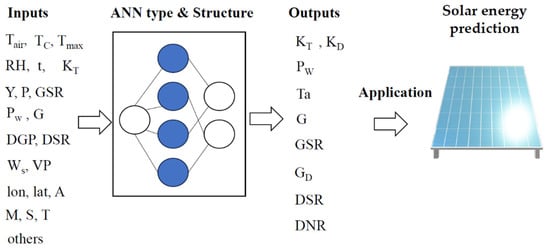
Figure 4. Inputs and outputs in ANNs applied to solar energy systems.
2.3. Applications of ANNs for Wave Prediction
Tidal energy, like other renewable energies, is fundamental to achieving the European climate targets for 2030 and 2050. Recently, the use of NNs for wave height (H) and period prediction has gained importance. ANNs have also been applied in different fields of ocean, coastal, and environmental engineering [103]. The following table summarizes the main research pieces found. The studies have been classified according to the ANN structure, journal and region, input and outputs for the network, and the activation function employed. The following Table 3 shows the H predictions.
Table 3. Uses of artificial neural networks for wave height prediction.
| Authors and Year |
ANN Type and Structure |
Journal | Country/ Region |
I/O Setting | Activation Function | Notes | ||
|---|---|---|---|---|---|---|---|---|
| Input | Output | |||||||
| 1 | [104] | ANN 28-15-4 28-9-4 28-4-4 28-7-4 |
Journal of Atmospheric and Oceanic Technology | Gulf of Maine, Gulf of Alaska, Gulf of Mexico | 7 days of significant H | 6, 12, 18, 24 h forecast | logsig (hidden and output layer) |
Input data normalized to [0, 1] Conjugate gradient algorithm with Fletcher–Reeves is adopted |
| 2 | [105] | MLP 3-5-5-2 |
Ocean Engineering |
Bombay, India | Deep water wave height (Ho), wave energy period (Te) |
Breaking wave height (Hb), water depth at the time of breaking (db) | sigmoid (output layer) |
Trained by BP algorithm Input and output data normalized to [0, 1] |
| 3 | [106] | MLP 48-97-24 |
Ocean Engineering |
Ireland | 48 h history wave parameters |
H and zero-up- crossing peak wave period (Tp) over hourly intervals from 1 h to 24 h |
logsig (hidden layer) purelin (output layer) |
Trained by resilient BP algorithm |
| 4 | [107] | MLP 6-5-1 |
Proceedings of the Institution of Civil Engineers-Maritime Engineering |
Anzali, Iran | H, Tp | Energy flux (Fe) over horizon of 1 to 12 h |
sigmoid (output layer) |
Conjugate gradient algorithm is adopted 80% data used for training and 20% used for testing |
| 5 | [108] | MLP 2-4-3 MLP 4-4-4 |
Ocean Engineering |
Karwar, India | Ws | 3-hourly values of H and average cross-period | - | Trained by BP algorithm 80% data used for training and 20% data used for testing |
| 6 | [109] | Deep Neural Network (DNN) 6-64-32-32-1 |
Ocean Engineering |
Pacific and Atlantic coasts and the Gulf of Mexico |
H, Te, Fe, weighted average period, Tp, Ws, Wd |
Fe, Te, H | - | SCG BP algorithm is adopted Input data normalized to [0, 1] 75% data used for training and 25% data used for testing |
| 7 | [110] | MLP 3-300-300-2 |
Ocean Engineering |
Lake Michigan, United Sates of America | Wind field, db, ice coverage |
H, Te | ReLU (hidden layer) |
Stochastic gradient-based algorithm is adopted 80% data used for training and 20% data used for testing |
| 8 | [111] | MLP 1-x-1 |
Marine Structures | Goa, India | H | Fe | sigmoid (output layer) |
Trained by BP cascade correlation algorithms 80% patterns used for training and 20% patterns used for testing |
| 9 | [112] | MLP 6-5-1 |
Ocean Engineering |
Persian Gulf | Ht, Ht−1, Ht−2, Utcos(Φt − θ), Ut−1cos(Φt – 1 − θt), Ut−2cos(Φt − 2 − θ2) |
H for the next 3, 6, 12, 24 h | sigmoid (output layer) |
Conjugate gradient and LM algorithms are adopted 80% data used for training and 20% data used for testing |
| 10 | [113] | MLP 3-4-4-1 |
Applied Soft Computing |
Spain | H, Te, θm | Fe | tansig (hidden layer) purelin (output layer) |
Trained by BP algorithm 67% data used for training and 33% data used for testing |
| 11 | [114] | MLP 3-3-1 |
Ocean Engineering |
Lake Superior, USA | Ws, weather station index (W) |
H | sigmoid (hidden and output layer) |
Trained by BP algorithm Input and output data normalized to [−1, 1] Compared with SVM, Bayesian networks, and adaptive neuro-fuzzy inference system (ANFIS) 345 patterns used for training and 54 patterns used for testing |
| 12 | [115] | MLP 5-2-1 |
Renewable Energy | Brazil | Wind shear velocity (U) U1, U2, Un, Y (t − 1), Y (t − i) |
Wave energy potential | tansig (hidden layer) purelin (output layer) |
Trained by LM BP algorithm 90% data used for training and 10% data used for testing |
| 13 | [116] | MLP X-15-1 |
Applied Ocean Research |
Canary Islands, Spain | H, Tp | Predict Fe | tansig (hidden layer) purelin (output layer) |
Gradient descent with momentum and BP algorithm are adopted 89% data used for training and 11% data used for testing Input and output data normalized to [−1, 1] |
| 14 | [117] | MLP 4-4-1 |
Applied Ocean Research |
India | H values of the preceding 3, 6, 12, and 24th hour | H subsequent 3, 6, 12 and 24th hour | - | Trained by LM BP algorithm 60% data used for training and 40% data used for testing |
| 15 | [118] | RBF 21-13-1 MLP 21-9-1 |
Marine Structures | India | H(1–21) | H(SW3) | - | Use Gaussian function for hidden layer BP, SCG, conjugate gradient Powell–Beale (CGB), Broyden–Fletcher–Goldfarb (BFG), and LM algorithms are adopted 80% data used for training and 20% data used for testing |
| 16 | [119] | MLP 8-4-1 MLP 2-2-1 |
Ocean Engineering |
Taiwan | Significant wave height (H1/3), highest one-tenth wave height (H1/10), highest wave height (Hmax), mean wave height (Hmean) (stations A and B) |
H1/3 (station C) |
sigmoid (output layer) |
Trained by BP algorithm Input data normalized to [0, 1] |
| 17 | [120] | MLP 2-5-1 |
Marine Structures | Yanam, India | Ht, Ht−1 | Ht+1 | - | Trained by BP algorithm Conjugate gradient and cascade correlation algorithms are adopted 80% data used for training and 20% data used for testing |
| 18 | [121] | ANN 9-1-1 ANN 4-1-1 ANN 9-8-1 ANN 9-1-1 |
Applied Ocean Research | Ratnagiri, Pondicherry, Gopalpur, Kollam, India |
t − 24, t − 21, t − 18, t − 15, t − 12, t − 9, t − 6, t − 3 |
t + 24 (24 h ahead predicted error) |
logsig (hidden layer) purelin (output layer) |
Trained by LM algorithm Input data normalized to [0, 1] 70% data used for training and 15% used for validation and testing |
| 19 | [122] | MLP 4-9-3 MLP 4-7-1 MLP 2-5-1 MLP 4-8-1 |
Applied Ocean Research | Lake Ontario, Canada/USA | Ws, Wd, fetch length, wind duration | H, Tp, (wave direction) Θ |
tansig/ sigmoid (hidden layer) purelin (output layer) |
Trained by BP algorithm 10-fold cross- validation used Input data normalized to [0, 1] 611 data used for training and 326 data used for testing |
| 20 | [123] | MLP 1-3-1 |
Ocean Engineering |
Lake Superior, Canada/USA | Ws | H | sigmoid (transfer function) | Compared and outperforms with model tree 4045 data used for training and 3259 data used for testing |
While it is true that studies appear in the literature since 2001, unlike the two previous cases, there has been an increase in the number of studies carried out in recent years. Most of the research is concentrated in India, Canada, and the United States and applies to both lakes and the open sea. The main characteristics of the networks studied are detailed below.
-
Structure of the ANN: most of the studies analyzed use simple structures with a single hidden layer. Research has also been found that uses two hidden layers or even the research of [109], which uses three. The number of neurons in the hidden layer is usually in the order of 10, reaching 300 neurons in the research of [110].
-
Amount of data: in most research, the volume of data is in the order of hundreds or thousands. Normally, a major part of the data is used for training, with the remainder applied to testing. The percentage of studies that make use of data for validation is 5%.
-
I/O configuration: temperature, wind speed, wind direction, and historical wave data are normally used as inputs. Outputs predict wave heights from one hour to 24 h in advance.
-
Activation function: the activation function is specified in 15 out of the 20 research. In the hidden layer, linear functions are used, with tansig and logsig being the most commonly used, while in the output layer, linear functions of the purelin and sigmoid types are adopted.
As a summary of all the previous sections, in the case of renewable energies, the predominant structure chosen is the multilayer perceptron structure with one or two hidden layers, because it may act as a universal function approximator. In addition, together with the backpropagation algorithm, it is able to learn any type of continuous function between a set of input and output variables.
Figure 5 details the most common inputs and outputs used by ANNs in wave height prediction and the operating scheme.
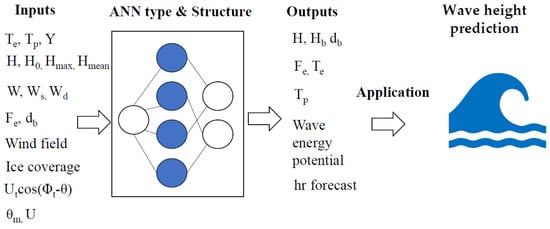
Figure 5. Inputs and outputs in ANNs applied to wave prediction.
This entry is adapted from the peer-reviewed paper https://doi.org/10.3390/app14010389
References
- Youssef, A.; El-Telbany, M.; Zekry, A. The role of artificial intelligence in photo-voltaic systems design and control: A review. Renew. Sustain. Energy Rev. 2017, 78, 72–79.
- Jani, D.; Mishra, M.; Sahoo, P. Application of artificial neural network for predicting performance of solid desiccant cooling systems—A review. Renew. Sustain. Energy Rev. 2017, 80, 352–366.
- McCulloch, W.S.; Pitts, W. A logical calculus of the ideas immanent in nervous activity. Bull. Math. Biophys. 1943, 5, 115–133.
- Hebb, D.O. The first stage of perception: Growth of the assembly. Organ. Behav. 1949, 4, 60–78.
- Miller, D.D.; Brown, E.W. Artificial intelligence in medical practice: The question to the answer? Am. J. Med. 2018, 131, 129–133.
- Widrow, B.; Hoff, M.E. Adaptive switching circuits. In IRE WESCON Convention Record; Institute of Radio Engineers: New York, NY, USA, 1960; pp. 96–104.
- Widrow, B. Ancient History. In Cybernetics 2.0: A General Theory of Adaptivity and Homeostasis in the Brain and in the Body; Springer International Publishing: Berlin/Heidelberg, Germany, 2022.
- Minsky, M.; Papert, S. Perceptrons. An Introduction to Computational Geometry; The MIT Press Ltd.: Cambridge, MA, USA, 1969.
- Olazaran, M. A sociological history of the neural network controversy. Adv. Comput. 1993, 37, 335–425.
- Werbos, P. Beyond Regression: New Tools for Prediction and Analysts in the Behavioral Sciences. Ph.D. Thesis, Harvard University, Cambridge, MA, USA, 1974.
- Werbos, P.J. Generalization of backpropagation with application to a recurrent gas market model. Neural Netw. 1988, 1, 339–356.
- Gholamalinezhad, H.; Khosravi, H. Pooling methods in deep neural networks, a review. arXiv 2020, arXiv:2009.07485.
- Zhu, X.; Goldberg, A.B. Introduction to Semi-Supervised Learning; Springer Nature: Berlin/Heidelberg, Germany, 2022.
- Matsuo, Y.; LeCun, Y.; Sahani, M.; Precup, D.; Silver, D.; Sugiyama, M.; Uchibe, E.; Morimoto, J. Deep learning, reinforcement learning, and world models. Neural Netw. 2022, 152, 267–275.
- Pérez-Suárez, A.; Martínez-Trinidad, J.F.; Carrasco-Ochoa, J.A. A review of conceptual clustering algorithms. Artif. Intell. Rev. 2019, 52, 1267–1296.
- Dang, W.; Guo, J.; Liu, M.; Liu, S.; Yang, B.; Yin, L.; Zheng, W. A Semi-Supervised Extreme Learning Machine Algorithm Based on the New Weighted Kernel for Machine Smell. Appl. Sci. 2022, 12, 9213.
- Nguyen, V.L.; Shaker, M.H.; Hüllermeier, E. How to measure uncertainty in uncertainty sampling for active learning. Mach. Learn. 2022, 111, 89–122.
- Peirelinck, T.; Kazmi, H.; Mbuwir, B.V.; Hermans, C.; Spiessens, F.; Suykens, J.; Deconinck, G. Transfer learning in demand response: A review of algorithms for data-efficient modelling and control. Energy AI 2022, 7, 100126.
- Wang, J.; Lu, S.; Wang, S.H.; Zhang, Y.D. A review on extreme learning machine. Multimed. Tools Appl. 2022, 81, 41611–41660.
- Whang, S.E.; Roh, Y.; Song, H.; Lee, J.G. Data collection and quality challenges in deep learning: A data-centric AI perspective. VLDB J. 2023, 32, 791–813.
- Sze, V.; Chen, Y.H.; Yang, T.J.; Emer, J.S. Efficient processing of deep neural networks: A tutorial and survey. Proc. IEEE 2017, 105, 2295–2329.
- Roh, Y.; Heo, G.; Whang, S.E. A survey on data collection for machine learning: A big data—AI integration perspective. IEEE Trans. Knowl. Data Eng. 2019, 33, 1328–1347.
- Su, X.; Zhao, Y.; Bethard, S. A comparison of strategies for source-free domain adaptation. In Proceedings of the 60th Annual Meeting of the Association for Computational Linguistics, Dublin, Ireland, 22–27 May 2022; pp. 8352–8367.
- Abiodun, O.; Jantan, A.; Omolara, A.; Dada, K.; Mohamed, N.; Arshad, H. State-of-the-art in artificial neural network applications: A survey. Heliyon 2018, 4, e00938.
- Costa, Á.; Markellos, R.N. Evaluating public transport efficiency with neural network models. Transp. Res. Part C Emerg. Technol. 1997, 5, 301–312.
- Abdou, M.A. Literature review: Efficient deep neural networks techniques for medical image analysis. Neural Comput. Appl. 2022, 34, 5791–5812.
- Le, T.H. Applying Artificial Neural Networks for Face Recognition. Adv. Artif. Neural Syst. 2011, 2011, 673016.
- Santín, D.; Delgado, F.J.; Valiño, A. The measurement of technical efficiency: A neural network approach. Appl. Econ. 2004, 36, 627–635.
- Labidi, J.; Pelach, M.A.; Turon, X.; Mutje, P. Predicting flotation efficiency using neural networks. Chem. Eng. Process. Process Intensif. 2007, 46, 314–322.
- Li, B.; Delpha, C.; Diallo, D.; Migan-Dubois, A. Application of Artificial Neural Networks to photovoltaic fault detection and diagnosis: A review. Renew. Sustain. Energy Rev. 2021, 138, 110512.
- Abarghouei, A.A.; Ghanizadeh, A.; Shamsuddin, S.M. Advances of soft computing methods in edge detection. Int. J. Adv. Soft Comput. Its Appl. 2009, 1, 162–203.
- Hamad, K.; Khalil, M.A.; Shanableh, A. Modeling roadway traffic noise in a hot climate using artificial neural networks. Transp. Res. Part D Transp. Environ. 2017, 53, 161–177.
- Karabacak, K.; Cetin, N. Artificial neural networks for controlling wind–PV power systems: A review. Renew. Sustain. Energy Rev. 2014, 29, 804–827.
- Rojas, R. Neural Networks: A Systematic Introduction; Springer Science Y Business Media: Berlin/Heidelberg, Germany, 2013.
- Mohanraj, M.; Jayaraj, S.; Muraleedharan, C. Applications of artificial neural networks for refrigeration, air-conditioning and heat pump systems—A review. Renew. Sustain. Energy Rev. 2012, 16, 1340–1358.
- Yin, C.; Rosendahl, L.; Luo, Z. Methods to improve prediction performance of ANN models. Simul. Model. Pract. Theory 2003, 11, 211–222.
- Yang, K. Artificial Neural Networks (ANNs): A New Paradigm for Thermal Science and Engineering. J. Heat Transf. 2008, 130, 093001.
- Poznyak, T.I.; Oria, I.C.; Poznyak, A.S. Chapter 3—Background on dynamic neural networks. In Ozonation and Biodegradation in Environmental Engineering; Elsevier: Amsterdam, The Netherlands, 2019; pp. 57–74.
- Rosenblatt, F. The perceptron: A probabilistic model for information storage and organization in the brain. Psychol. Rev. 1958, 65, 386–408.
- Poznyak, A.S.; Sanchez, E.N.; Yu, W. Differential Neural Networks for Robust Nonlinear Control: Identification, State Estimation and Trajectory Tracking; World Scientific: Singapore, 2001.
- Hecht-Nielsen, R. Theory of the backpropagation neural network. In Neural Networks for Perception; Academic Press: Cambridge, MA, USA, 1992; pp. 65–93.
- Eurostat. Eurostat Statics Explained. 2019. Available online: https://ec.europa.eu/eurostat/statistics-explained/index.php?title=Renewable_energy_statistics#Wind_and_water_provide_most_renewable_electricity.3B_solar_is_the_fastest-growing_energy_source (accessed on 27 December 2023).
- Noorollahi, Y.; Jokar, M.A.; Kalhor, A. Using artificial neural networks for temporal and spatial wind speed forecasting in Iran. Energy Convers. Manag. 2016, 115, 17–25.
- Mabel, M.C.; Fernandez, E. Analysis of wind power generation and prediction using ANN: A case study. Renew. Energy 2008, 33, 986–992.
- Çam, E.; Arcaklıoğlu, E.; Çavuşoğlu, A.; Akbıyık, B. A classification mechanism for determining average wind speed and power in several regions of Turkey using artificial neural networks. Renew. Energy 2005, 30, 227–239.
- Bilgili, M.; Sahin, B.; Yasar, A. Application of artificial neural networks for the wind speed prediction of target using reference stations data. Renew. Energy 2007, 32, 2350–2360.
- Assareh, E.; Biglari, M. A novel approach to capture the maximum power from variable speed wind turbines using PI controller, RBF neural netowork and GSA evolutionary algorithm. Renew. Sustain. Energy Rev. 2015, 51, 1023–1037.
- Mohandes, M.; Halawani, T.; Rehman, S.; Hussain, A.A. Support vector machines for wind speed prediction. Renew. Energy 2004, 29, 939–947.
- Bigdeli, N.; Afshar, K.; Gazafroudi, A.S.; Ramandi, M.Y. A comparative study of optimal hybrid methods for wind power prediction in wind farm of Alberta, Canada. Renew. Sustain. Energy Rev. 2013, 27, 20–29.
- Manobel, B.; Sehnke, F.; Lazzús, J.A.; Salfate, I.; Felder, M.; Montecinos, S. Wind turbine power curve modeling based on Gaussian Processes and Artificial Neural Netoworks. Renew. Energy 2018, 125, 1015–1020.
- Li, G.; Shi, J. On comparing three artificial neural networks for wind speed forecasting. Appl. Energy 2010, 87, 2313–2320.
- Blonbou, R. Very short-term wind power forecasting with neural networks and adaptive Bayesian learning. Renew. Energy 2011, 36, 1118–1124.
- Liu, H.; Tian, H.-Q.; Chen, C.; Li, Y.-F. A hybrid statistical method to predict wind speed and wind power. Renew. Energy 2010, 35, 1857–1861.
- Salcedo-Sanz, S.; Pérez-Bellido, Á.M.; Ortiz-García, E.G.; Portilla-Figueras, A.; Prieto, L.; Paredes, D. Hybridizing the fifth generation mesoscale model with artificial neural networks for short-term wind speed prediction. Renew. Energy 2009, 34, 1451–1457.
- Cadenas, E.; Rivera, W. Short term wind speed forecasting in La Venta, Oaxaca, México, using artificial neural networks. Renew. Energy 2009, 34, 274–278.
- Flores, P.; Tapia, A.; Tapia, G. Application of a control algorithm for wind speed prediction and active power generation. Renew. Energy 2005, 30, 523–536.
- Monfared, M.; Rastegar, H.; Kojabadi, H.M. A new strategy for wind speed forecasting using artificial intelligent methods. Renew. Energy 2009, 34, 845–848.
- Grassi, G.; Vecchio, P. Wind energy prediction using a two-hidden layer neural network. Commun. Nonlinear Sci. Numer. Simul. 2010, 15, 2262–2266.
- Ramasamy, P.; Chandel, S.; Yadav, A.K. Wind speed prediction in the mountainous region of India using an artificial neural network model. Renew. Energy 2015, 80, 338–347.
- Fadare, D. The application of artificial neural networks to mapping of wind speed profile for energy application in Nigeria. Appl. Energy 2010, 87, 934–942.
- Fonte, P.M.; Silva, G.X.; Quadrado, J.C. Wind speed prediction using artificial neural networks. WSEAS Trans. Syst. 2005, 4, 379–384.
- Kalogirou, S.; Neocleous, C.; Pashiardis, S.; Schizas, C. Wind speed prediction using artificial neural networks. In Proceedings of the European Symposium on Intelligent Techniques, Crete, Greece, 3–4 June 1999.
- Öztopal, A. Artificial neural network approach to spatial estimation of wind velocity data. Energy Convers. Manag. 2006, 47, 395–406.
- Ghorbani, M.A.; Khatibi, R.; Hosseini, B.; Bilgili, M. Relative importance of parameters affecting wind speed prediction using artificial neural networks. Theor. Appl. Clim. 2013, 114, 107–114.
- Guo, Z.-H.; Wu, J.; Lu, H.-Y.; Wang, J.-Z. A case study on a hybrid wind speed forecasting method using BP neural network. Knowl.-Based Syst. 2011, 24, 1048–1056.
- Lodge, A.; Yu, X. Short term wind speed prediction using artificial neural networks. In Proceedings of the 4th IEEE International Conference on Information Science and Technology, Shenzhen, China, 26–28 April 2014.
- Bhaskar, K.; Singh, S.N. AWNN-assisted wind power forecasting using feed-forward neural network. IEEE Trans. Sustain. Energy 2012, 3, 306–315.
- Le, X.C.; Duong, M.Q.; Le, K.H. Review of the Modern Maximum Power Tracking Algorithms for Permanent Magnet Synchronous Generator of Wind Power Conversion Systems. Energies 2022, 16, 402.
- Mellit, A.; Kalogirou, S.; Hontoria, L.; Shaari, S. Artificial intelligence techniques for sizing photovoltaic systems: A review. Renew. Sustain. Energy Rev. 2009, 13, 406–419.
- Mellit, A.; Kalogirou, S.A. Artificial intelligence techniques for photovoltaic applications: A review. Prog. Energy Combust. Sci. 2008, 34, 574–632.
- Elsheikh, A.H.; Sharshir, S.W.; Abd Elaziz, M.; Kabeel, A.E.; Guilan, W.; Haiou, Z. Modeling of solar energy systems using artificial neural network: A comprehensive review. Sol. Energy 2019, 180, 622–639.
- Ghritlahre, H.K.; Prasad, R.K. Application of ANN technique to predict the performance of solar collector systems—A review. Renew. Sustain. Energy Rev. 2018, 84, 75–88.
- Yadav, A.K.; Chandel, S. Solar radiation prediction using Artificial Neural Network techniques: A review. Renew. Sustain. Energy Rev. 2014, 33, 772–781.
- Chen, C.; Duan, S.; Cai, T.; Liu, B. Online 24-h solar power forecasting based on weather type classification using artificial neural network. Sol. Energy 2011, 85, 2856–2870.
- Almonacid, F.; Rus, C.; Pérez, P.J.; Hontoria, L. Estimation of the energy of a PV generator using artificial neural network. Renew. Energy 2009, 34, 2743–2750.
- Voyant, C.; Muselli, M.; Paoli, C.; Nivet, M.-L. Optimization of an artificial neural network dedicated to the multivariate forecasting of daily global radiation. Energy 2011, 36, 348–359.
- Paoli, C.; Voyant, C.; Muselli, M.; Nivet, M.-L. Forecasting of preprocessed daily solar radiation time series using neural networks. Sol. Energy 2010, 84, 2146–2160.
- Mellit, A.; Pavan, A.M. A 24-h forecast of solar irradiance using artificial neural network: Application for performance prediction of a grid-connected PV plant at Trieste, Italy. Sol. Energy 2010, 84, 807–821.
- Benghanem, M.; Mellit, A. Radial Basis Function Network-based prediction of global solar radiation data: Application for sizing of a stand-alone photovoltaic system at Al-Madinah, Saudi Arabia. Energy 2010, 35, 3751–3762.
- Sözen, A.; Arcaklioǧlu, E.; Özalp, M.; Kanit, E. Use of artificial neural networks for mapping of solar potential in Turkey. Appl. Energy 2004, 77, 273–286.
- Ouammi, A.; Zejli, D.; Dagdougui, H.; Benchrifa, R. Artificial neural network analysis of Moroccan solar potential. Renew. Sustain. Energy Rev. 2012, 16, 4876–4889.
- Rehman, S.; Mohandes, M. Estimation of Diffuse Fraction of Global Solar Radiation Using Artificial Neural Networks. Energy Sources Part A Recovery Util. Environ. Eff. 2009, 31, 974–984.
- Koca, A.; Oztop, H.F.; Varol, Y.; Koca, G.O. Estimation of solar radiation using artificial neural networks with different input parameters for Mediterranean region of Anatolia in Turkey. Expert Syst. Appl. 2011, 38, 8756–8762.
- Fadare, D. Modelling of solar energy potential in Nigeria using an artificial neural network model. Appl. Energy 2009, 86, 1410–1422.
- Khatib, T.; Mohamed, A.; Sopian, K.; Mahmoud, M. Solar Energy Prediction for Malaysia Using Artificial Neural Networks. Int. J. Photoenergy 2012, 2012, 419504.
- Yadav, A.K.; Chandel, S.S. Artificial Neural Network based prediction of solar radiation for Indian stations. Int. J. Comput. Appl. 2012, 50, 1–4.
- Elminir, H.K.; Azzam, Y.A.; Younes, F.I. Prediction of hourly and daily diffuse fraction using neural network, as compared to linear regression models. Energy 2007, 32, 1513–1523.
- Hontoria, L.; Aguilera, J.; Zufiria, P. An application of the multilayer perceptron: Solar radiation maps in Spain. Sol. Energy 2005, 79, 523–530.
- Elminir, H.K.; Areed, F.F.; Elsayed, T.S. Estimation of solar radiation components incident on Helwan site using neural networks. Sol. Energy 2005, 79, 270–279.
- Tymvios, F.S.; Jacovides, C.P.; Michaelides, S.C.; Scouteli, C. Comparative study of Ångström’s and artificial neural networks’ methodologies in estimating global solar radiation. Sol. Energy 2005, 78, 752–762.
- Alam, S.; Kaushik, S.C.; Garg, S.N. Computation of bean solar radiation at normal incidence using artificial neural network. Renew. Energy 2006, 31, 1483–1491.
- Jiang, Y. Prediction of monthly mean daily diffuse solar radiation using artificial neural networks and comparison with other empirical models. Energy Policy 2008, 36, 3833–3837.
- Mubiru, J.; Banda, E. Estimation of monthly average daily global solar irradiation using artificial neural networks. Sol. Energy 2008, 82, 181–187.
- Şenkal, O.; Kuleli, T. Estimation of solar radiation over Turkey using artificial neural network and satellite data. Appl. Energy 2009, 86, 1222–1228.
- Şenkal, O. Modeling of solar radiation using remote sensing and artificial neural network in Turkey. Energy 2010, 35, 4795–4801.
- Azadeh, A.; Maghsoudi, A.; Sohrabkhani, S. An integrated artificial neural networks approach for predicting global radiation. Energy Convers. Manag. 2009, 50, 1497–1505.
- Sözen, A.; Arcaklioǧlu, E. Solar potential in Turkey. Appl. Energy 2005, 80, 35–45.
- Rahimikhoob, A. Estimating global solar radiation using artificial neural network and air temperature data in a semi-arid environment. Renew. Energy 2010, 35, 2131–2135.
- Hasni, A.; Sehli, A.; Draoui, B.; Bassou, A.; Amieur, B. Estimating Global Solar Radiation Using Artificial Neural Network and Climate Data in the South-western Region of Algeria. Energy Procedia 2012, 18, 531–537.
- Rumbayan, M.; Abudureyimu, A.; Nagasaka, K. Mapping of solar energy potential in Indonesia using artificial neural network and geographical information system. Renew. Sustain. Energy Rev. 2012, 16, 1437–1449.
- Rehman, S.; Mohandes, M. Splitting Global Solar Radiation into Diffuse and Direct Normal Fractions Using Artificial Neural Networks. Energy Sources Part A Recover. Util. Environ. Eff. 2012, 34, 1326–1336.
- Al-Alawi, S.M.; Al-Hinai, H.A. An ANN-based approach for predicting global radiation in locations with no direct measurement instrumentation. Renew. Energy 1998, 14, 199–204.
- Makarynskyy, O.; Pires-Silva, A.; Makarynska, D.; Ventura-Soares, C. Artificial neural networks in wave predictions at the west coast of Portugal. Comput. Geosci. 2005, 31, 415–424.
- Londhe, S.N.; Panchang, V. One-Day Wave Forecasts Based on Artificial Neural Networks. J. Atmos. Ocean. Technol. 2006, 23, 1593–1603.
- Deo, M.; Jagdale, S. Prediction of breaking waves with neural networks. Ocean Eng. 2003, 30, 1163–1178.
- Makarynskyy, O. Improving wave predictions with artificial neural networks. Ocean Eng. 2004, 31, 709–724.
- Hadadpour, S.; Etemad-Shahidi, A.; Kamranzad, B. Wave energy forecasting using artificial neural netowrks in the Caspian See. Proceeding Inst. Civ. Eng.-Marit. Eng. 2014, 167, 42–52.
- Deo, M.C.; Jha, A.; Chaphekar, A.S.; Ravikant, K. Neural netoworks for wave forecasting. Ocean Eng. 2001, 28, 889–898.
- Bento, P.; Pombo, J.; Mendes, R.; Calado, M.; Mariano, S. Ocean wave energy forecasting using optimised deep learning neural networks. Ocean Eng. 2021, 219, 108372.
- Feng, X.; Ma, G.; Su, S.-F.; Huang, C.; Boswell, M.K.; Xue, P. A multi-layer perceptron approach for accelerated wave forecasting in Lake Michigan. Ocean Eng. 2020, 211, 107526.
- Agrawal, J.; Deo, M. Wave parameter estimation using neural networks. Mar. Struct. 2004, 17, 536–550.
- Kamranzad, B.; Etemad-Shahidi, A.; Kazeminezhad, M.H. Wave height forecasting in Dayyer, the Persian Gulf. Ocean Eng. 2011, 38, 248–255.
- Castro, A.; Carballo, R.; Iglesias, G.; Rabuñal, J.R. Performance of artifcial neural networks in nearshore wave power prediction. Appl. Soft Comput. 2014, 23, 194–201.
- Malekmohamadi, I.; Bazargan-Lari, M.R.; Kerachian, R.; Nikoo, M.R.; Fallahnia, M. Evaluating the efficacy of SVMs, BNs, ANNs and ANFIS in wave height prediction. Ocean Eng. 2011, 38, 487–497.
- Sánchez, A.S.; Rodrigues, D.A.; Fontes, R.M.; Martins, M.F.; de Araújo Kalid, R.; Torres, E.A. Wave resource characterization through in-situ measurement followed by artificial neural networks’ modeling. Renew. Energy 2018, 115, 1055–1066.
- Avila, D.; Marichal, G.N.; Padrón, I.; Quiza, R.; Hernández, Á. Forecasting of wave energy in Canary Islands based on Artificial Intelligence. Appl. Ocean Res. 2020, 101, 102189.
- Jain, P.; Deo, M. Real-time wave forecasts off the western Indian coast. Appl. Ocean Res. 2007, 29, 72–79.
- Kalra, R.; Deo, M.; Kumar, R.; Agarwal, V.K. RBF network for spatial mapping of wave heights. Mar. Struct. 2005, 18, 289–300.
- Tsai, C.P.; Lin, C.; Shen, J.N. Neural netowrk for wave forecasting among multi-stations. Ocean. Eng. 2002, 29, 1683–1695.
- Agrawal, J.; Deo, M. On-line wave prediction. Mar. Struct. 2002, 15, 57–74.
- Londhe, S.N.; Shah, S.; Dixit, P.R.; Nair, T.B.; Sirisha, P.; Jain, R. A Coupled Numerical and Artificial Neural Netowirk Model for Improving Location Specific Wave Forecast. Appl. Ocean. Res. 2016, 59, 483–491.
- Mahjoobi, J.; Etemad-Shahidi, A.; Kazeminezhad, M. Hindcasting of wave parameters using different soft computing methods. Appl. Ocean Res. 2008, 30, 28–36.
- Etemad-Shahidi, A.; Mahjoobi, J. Comparison between M5′ model tree and neural networks for prediction of significant wave height in Lake Superior. Ocean Eng. 2009, 36, 1175–1181.
This entry is offline, you can click here to edit this entry!