
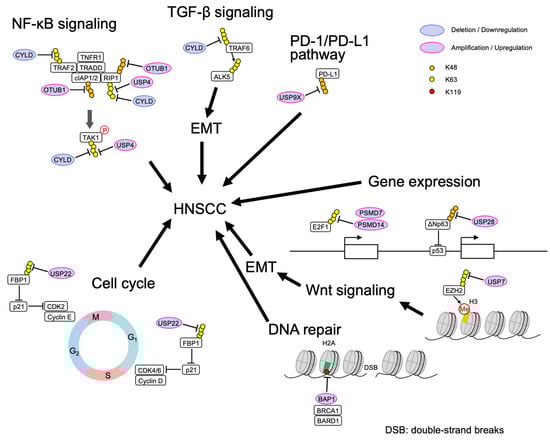
Ubiquitin is a highly-conserved small regulatory protein that has been found in almost all tissues of eukaryotic organisms. Ubiquitin was first identified in 1975. It performs its myriad functions through conjugation to a large range of target proteins. A variety of different modifications can occur. This discovery that ubiquitin can be attached to proteins and label them for destruction won the Nobel Prize for chemistry in 2004. The ubiquitin protein consists of 76 amino acids and has a molecular mass of about 8.5 kDa. Under the conditions where ATP provides energy, ubiquitin molecules bind to the target protein through the cascade catalytic reaction of ubiquitin-activating enzyme (E1), ubiquitin-conjugating enzyme (E2), and ubiquitin ligase (E3). The ubiquitinated target protein is recognized and degraded by 26S proteasome. Ubiquitination and deubiquitination are two popular ways for the post-translational modification of proteins. These two modifications affect intracellular localization, stability, and function of target proteins. The process of deubiquitination is involved in histone modification, cell cycle regulation, cell differentiation, apoptosis, endocytosis, autophagy, and DNA repair after damage. It is involved in the processes of carcinogenesis and cancer development. The deubiquitinating enzyme (DUB) function in head and neck squamous cell carcinoma (HNSCC) is discussed.
- HNSCC
- deubiquitinating enzyme
- cancer
1. The Role and Mechanism of DeubiquitinatingUB Enzyme in Head and Neck Squamous Cell in HNSCCarcinoma
| DUB | Abnormal Regulation |
The Roles in HNSCC | Substrates | References | |
|---|---|---|---|---|---|
| CYLD | mutation | removes K63-polyubiquitin and M1 linear-ubiquitin chains and inhibits NFκB signaling | RIP1, TRAF2, TRAF6, TAK1, NEMO | [4] | [49] |
| Low expression | promotes TGF-β signaling and cell invasion | ALK5 | [5] | [50] | |
| Low expression | removes K63-polyubiquitin, thereby inhibiting TGF-β signaling |
SMAD7 | [6][15] | [51,60] | |
| USP4 | overexpression | removes K63-polyubiquitin and promotes TNF-α induced apoptosis | RIP1 | [18] | [63] |
| USP7 | overexpression | promotes cell growth, cell migration, and invasion | EZH2 | [7][16] | [52,61] |
| USP9X | overexpression | deubiquitinates and stabilizes PD-L1 to promote cell proliferation |
PD-L1 | [19] | [64] |
| Low expression | mTOR pathway | [20] | [65] | ||
| USP22 | overexpression | associates with lymph node metastasis and histological grade | [21] | [66] | |
| USP28 | overexpression | inhibits p53 on the promoter of pro-apoptotic genes | Np63 | [8][9][10][11] | [53,54,55,56] |
| BAP1 | overexpression | deubiquitinates H2A at the DSB site suppresses transcription, and promotes DNA repair |
H2Aub(K119) | [22] | [67] |
| PSMD14 | overexpression | stabilizes E2F1, gives stemness to cells by SOX2 expression and Akt signal activation | E2F1 | [12] | [57] |
| PSMD7 | overexpression | a prognostic factor correlated with immune infiltration | [13] | [58] | |
| OTUB1 | overexpression | a risk factor | [4][14][17] | [49,59,62] |