Your browser does not fully support modern features. Please upgrade for a smoother experience.

Please note this is a comparison between Version 2 by Beatrix Zheng and Version 1 by Radu Claudiu Fierascu.
Wine production is one of the most critical agro-industrial sectors worldwide, generating large amounts of waste with negative environmental impacts, but also with high economic value and several potential applications. From wine shoots to grape pomace or seeds, all of the wastes are rich sources of bioactive compounds with beneficial effects for human health, with these compounds being raw materials for other industries such as the pharmaceutical, cosmetic or food industries. Furthermore, these compounds present health benefits such as being antioxidants, supporting the immune system, anti-tumoral, or preventing cardiovascular and neural diseases.
- grapevine wastes
- biological applications
- antioxidant
- viticulture
1. Introduction
Viticulture is one of the world’s most recognizable agricultural activities, with a global grape production of 77.8 million tons per year [1]. Interest in vineyards has grown significantly worldwide. In the last 5 years, the European Union (EU) vineyard has presented a stable balance between deforestation and the planting of new vineyards, while China attains 3rd place worldwide after Spain and France in vineyard area [2] (Figure 1, according to statistics provided by the International Organization of Vine and Wine).
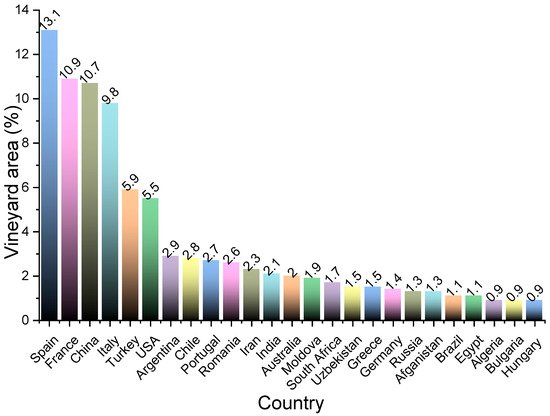
Figure 1.
Percentages of vineyard areas of the main vine-growing countries in 2020.
Grape production is divided into three main categories: wine grapes (57%), table grapes (36%) and dried grapes (7%) [2] (Figure 2, according to statistics provided by the International Organization of Vine and Wine).
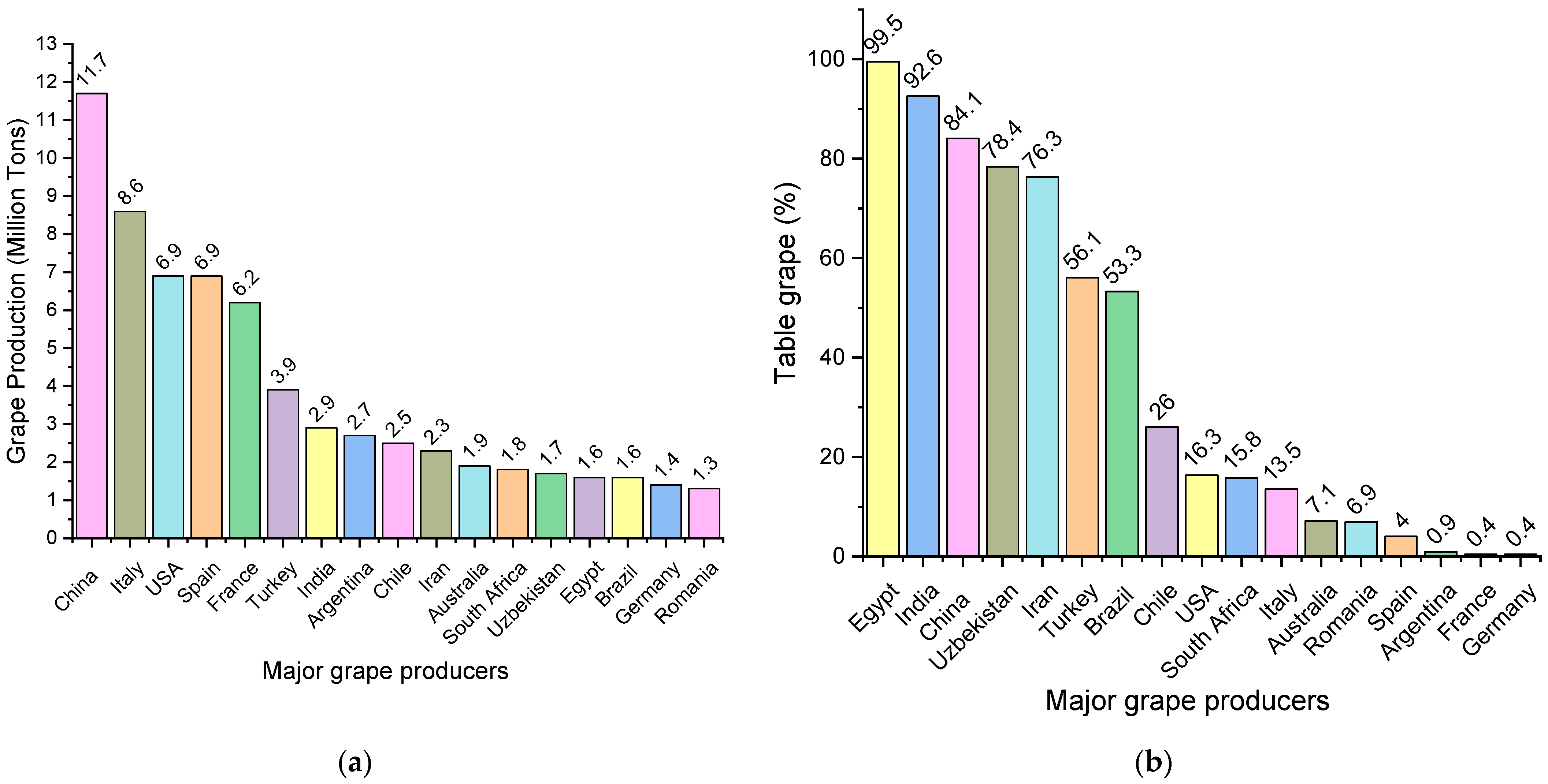
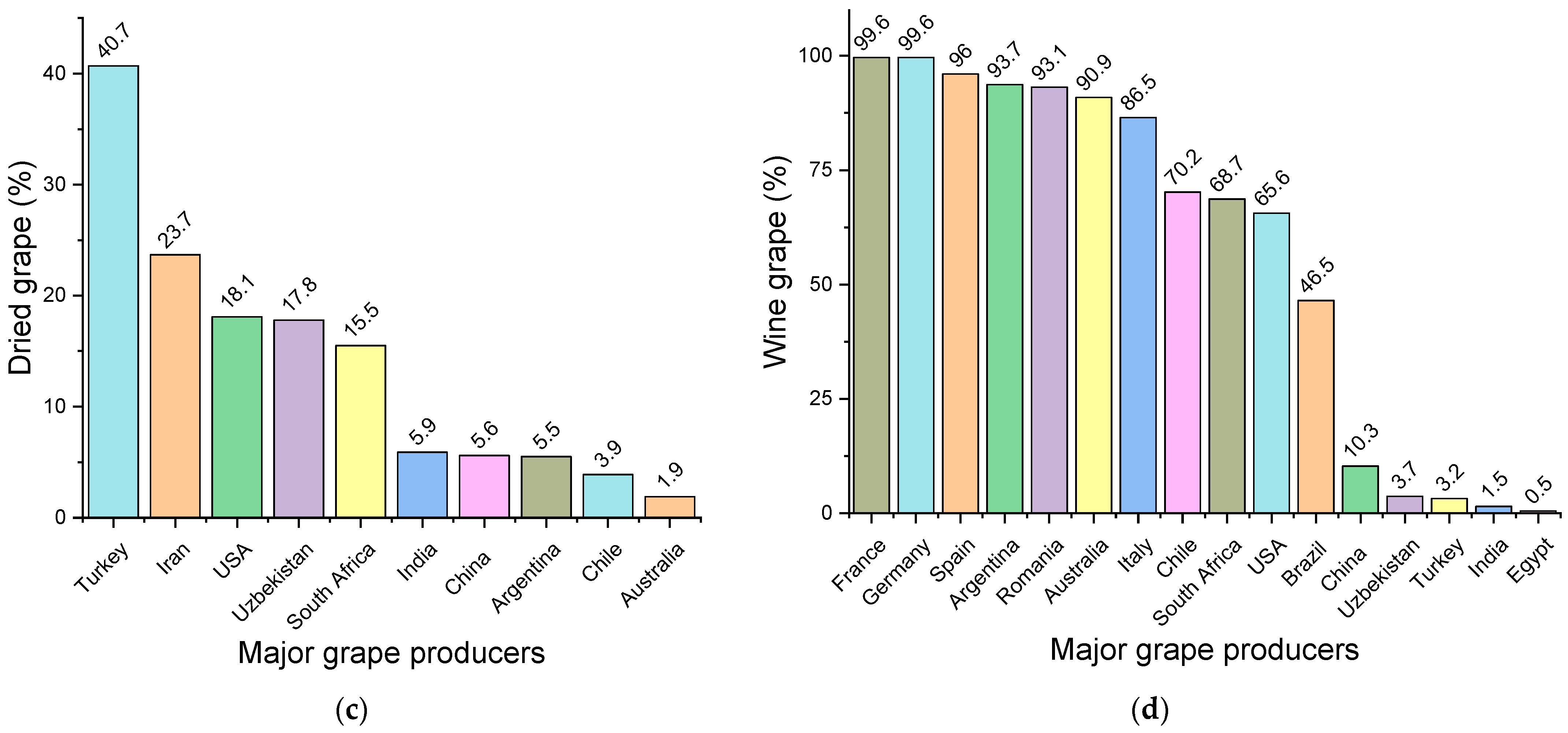
Figure 2. Grape production of the main producers and production per category (%): (a) grape production by country; (b) table grape production (%); (c) dried grape production (%); (d) wine grape production (%).
Waste products are generated at each stage of the winemaking process [3]. There are two distinct categories that show the origin of winery wastes: those that result from the collection of grapes (solid wastes), and those that result from the winemaking process (liquid wastes) [4]. The first category broadly involves grape stalks (7.5% of total solid wastes generated by winery), grape pomace (45%), grape seeds (6%) [5[5][6],6], stems, as well as wine yeasts [7]. Pomace represents 20–25% of the initial weight of the grapes, being a solid residue resulting from the processes of fermentation and pressing of the grapes [8].
Wine yeast accounts for about 5% of the total weight of grapes, being rich in ethanol, tartaric acid, phenolic compounds and yeast cells [9]. Grape skins represent 7% of the total weight of the grapes, usually being removed before the fermentation stage, in order to avoid excessive astringency of the wine. They are a rich source of phenolic compounds (especially tannins, flavan-3-ols, hydroxycinnamic acids, monomeric and oligomeric flavonols and stilbenes) [10] and lignocellulosic compounds (hemicellulose, cellulose and lignin), most of them with antioxidant properties [7].
Grape seeds are rich in antioxidant compounds such as vitamin E, phenolic compounds, phytosterols, fibers, proteins, carbohydrates and minerals, especially lipids, and melatonin [11]. In contrast, grape skins and pulp are a rich source of fiber, phenolic acids (gallic acid, vanilla and caftaric acid), flavonols (quercetin, myricetin and kaempferol), and anthocyanins [12]. However, the wine industry produces, in a short period of time, a large amount of waste and by-products, representing about 30% of the initial weight of the grapes [13,14][13][14]. The accumulation of these wastes can cause economic and environmental issues due to the organic matter, acidic pH, salinity and heavy metal content [15].
2. Development of Cosmetic Formulations Based on Bioactive Compounds Obtained from Grapevine Wastes
The cosmetics industry includes a wide range of products having as their main role the care, protection and improvement of skin (Figure 43). Given their final application, they can be classified into hygienic (deodorants, soaps), decorative (hair dyes, makeup) and protective (moisturizers, lubricants or sunscreens) products [38][16]. Each of them contains a basic substance, an active ingredient and a raw material or main ingredient. Classic preservatives in cosmetic formulations, mainly parabens or formaldehyde, exhibit negative effects on an organism, and were eventually replaced by natural ingredients. The process includes the extraction of biologically active principles (especially polyphenols) and their application in cosmetic formulations, as antioxidants for skin care [39][17]. Various scientific studies confirm the presence of high levels of bioactive compounds in grapevine wastes (especially canes, stems, leaves, etc.), the literature data presenting over 183 phenolic compounds, 78 stilbenes, 15 hydroxycinnamic acids, 9 hydroxybenzoic acids, 17 flavan-3-ols, 14 anthocyanins, 8 flavanoavonols, 2 flavones and 5 coumarins [40][18]. Many of these biocompounds can be successfully applied for the development of new cosmetic formulations [41][19].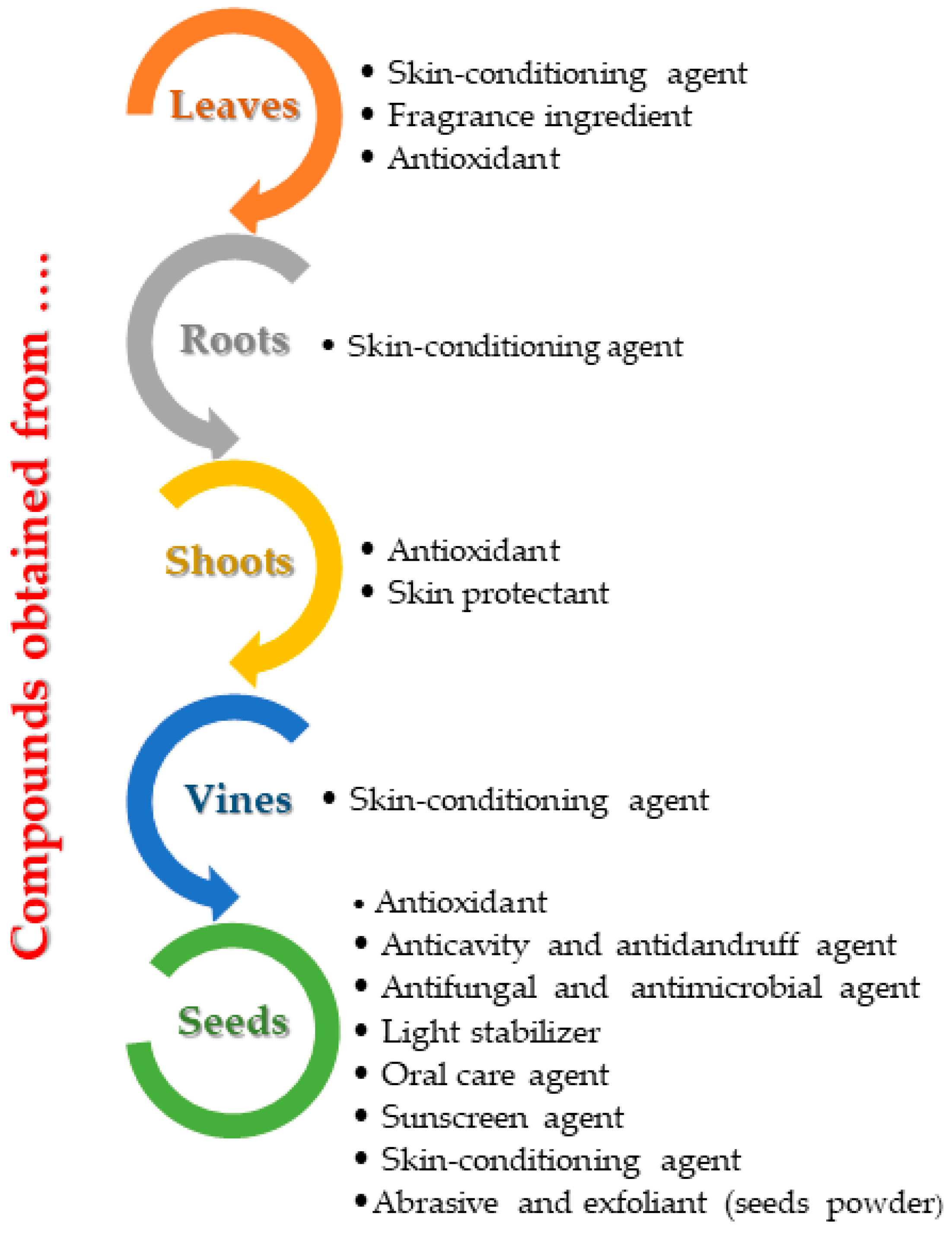
Figure 43. The main applications of bioactive compounds obtained from grapevine waste extracts in cosmetic formulations.
Table 21. Some examples of grapevine wastes application in cosmetic formulations.
Some examples of grapevine wastes application in cosmetic formulations.
| Extracted Wastes | Formulation | Potential Application | Ref. |
|---|---|---|---|
| Vine canes | Topical formulation: vine-cane extract/glycerin (7%)/carbopol (0.5%)/triethanolamine (0.3%)/preservative (phenoxyethanol/methyl paraben/ethyl paraben/propyl paraben/butyl paraben mixture, 0.1%)/perfume (0.1%). | Protection against different oxidants | [47] |
| Extracts enriched with polyphenols | Utility against dark spots or as skin-lightening agents | [45] | |
| Vine shoots | Serum: vine shoot extract 0.045%/biotechnological extract—Ronacare Hydroine 1% | Anti-aging effects | [46] |
| Grape seeds | Emulsion: oily phase containing propylene paraben (preservative)/paraffin oil/Abil-EM 90 (emulsifier)/distilled water/5% grape seed extract | Anti-aging | [44] |
| Emulgel: oily phase + aqueous phase (containing grape seeds extract) + gel phase (Carbopol 940/water) | Anti-aging | ||
| Emulsion: 5% mineral oil/7% cetomacrogol 1000/2% cetyl alcohol/7% octyl methoxycinnamate/3% grape seed extract/1% xanthan/5% glycerin/0.5% phenoxyethanol/purified water qs to 100 | UVA protection | [40] | |
| Extract obtained via an ultrasound-assisted method | Anti-elastase and anti-tyrosinase factors in dermo-cosmetics | [43] | |
| Grape pomace | Sunscreen: 10% w/w grape pomace extract and 11.5% w/w UV (Butylmethoxydibenzoyl methane—UVA, ethylhexyl methoxycinnamate and ethylhexyl dimethyl PABA-UVB) | UV protection | [42] |
| Extract as raw material | Combat skin wrinkling and pigmentation/ability to inhibits the growth of ulcerated bacteria in wounds to the foot | [37] |
3. Applications in the Food and Beverage Industries
The food industry is one of the main industries that generates different types of waste. Worldwide, the interest in new valorization mechanisms has increased significantly in order to protect resources and the environment [74][53]. Due to its phytochemical profile, abundant polyphenols and fibers, and exhibiting of high antioxidant and antimicrobial activities, grapevine waste extract (vine shoots, grape stalks and wine lees) might be efficiently used in the food sector as an oenological and functional additive, functional food or even as fillers in food packaging [24][54]. Therefore, adding grape by-products (pomace) into animals’ diets has been shown to be effective in increasing the nutritional value of their meat. In the same way, they have been added to the diets of poultry, observing the ratio improvement of polyunsaturated and saturated fatty acids [75,76][55][56]. Furthermore, the use of grape stems and wine lees grape extracts as feed additives in broilers’ diets improves the quality of the meat [77][57]. De Iseppi et al. [78][58] proposed the use of wine yeast glycocompounds (a winemaking by-product) in order to improve both the sensory properties and stability of wine. Results obtained in the case of wine lees extracted by autoclave showed an enhancement of wine foaming along with the efficient recovery of tartrates from its insoluble fraction, and the yeast extracted by enzymatic and ultrasound methods stabilizes the proteins from heat-sensitive wine [78][58]. Raposo et al. [79][59] studied extracts from vine shoots, which contain 29% stilbenes, for their potential preservative effect on bottled wine. In the initial phase, the wines treated with shoot extracts presented qualitative superior oenological parameters and higher values of purity and color intensity; unfortunately, these characteristics are not maintained after a year [79][59]. Additionally, Gutiérrez-Escobar et al. [80][60] have studied the possibility of the replacement of SO2 in wine with pure stilbene extracts from grapevine shoots. The natural extracts, abundant in E-ε-viniferin (70%) and E-resveratrol (18%) and with no aromatic compounds, exhibited high antimicrobial activity against Brettanomyces bruxellensis and Zygosaccharomyces bailli yeasts strains. Thus, vine shoot extract might be used as a preservative of wine as well as to increase its stilbenes content [80][60]. Various scientific studies report the applicability of grape stems extracts in the food industry. Phenolic acids, flavanols and tannins from dried and milled vine stems have the ability to remove unstable proteins, being used as a replacement for bentonite (a clay used in wine to avoid protein haze formation) [81][61]. The hydroalcoholic extracts of grape stems play an important role in the inhibition of food pathogens such as Listeria monocytogenes, Staphylococcus aureus, Salmonella enterica subsp. enterica serovar Typhimurium and Escherichia coli in the cases of lettuce and spinach [82][62]. By drying, crushing and autolysis of wine yeast, proteins are successfully extracted and applied in the production of fortified cereal bars, improving their protein content [83][63]. Due to their phytochemical composition, wine lees can also enhance the antioxidant and antimicrobial activity and phenolic compounds in burgers, being used as an alternative to synthetic additives [84][64]. Phenolic compounds and dietary fiber from wine lees can be also used in the production of high added-value ice cream, conferring better structure, high antioxidant content and inhibitory effect towards the oxidation of human erythrocyte membranes [85][65], enhancing their physical, chemical and sensory properties, along with protection against Lactobacillus acidophilus during storage [86][66]. Iuga et al. [87][67] proposed the use of grape seeds and pomace as secondary flours in the production of pasta and pastry products, having the effect of improving the functional ingredients in these branches of the food industry [87][67]. In the same way, the flours obtained from these types of waste offer physico-chemical characteristics within the nutritional standards, being applied in the biscuit industry [88][68]. The negative effects of plastic materials on the environment have led the scientific community to develop new biodegradable materials. Thus, insoluble lignocellulosic fibers extracted from grape stalks are used as foams in food packaging, giving them improved mechanical properties, high resistance to moisture and biodegradable characteristics [89][69]. Díaz-Galindo et al. [90][70] created a new sustainable food packaging formula based on polylactic acid loaded with grapevine cane extract (5–15 wt%), aiming to prevent food contamination throughout transport and storage. The material showed thermal stability up to 300 °C and resistance values at traction similar to those of commercial materials; the addition of larger amounts of extract increases the breaking strength of the films. Some representative examples regarding the application of compounds from grapevine wastes in food and beverage industry are presented in Table 32.
Table 32. Applications of grapevine wastes-derived products in food and beverage industry.
Applications of grapevine wastes-derived products in food and beverage industry.
| Type of Wastes | Application | Effect | Ref. |
|---|---|---|---|
| Grape pomace | Added into animals’ diets | Increasing the nutritional value of meat | [55] |
| Pasta and pastry products as secondary flours | Growing functional ingredients in food industry | [67] | |
| Grape stems/stalks | Disinfectants in cases of leafy fresh vegetables: lettuce and spinach | Inhibition of pathogens Listeria monocytogenes, Staphylococcus aureus, Salmonella enterica subsp. enterica serovar Typhimurium and Escherichia coli | [62] |
| Substitute for bentonite in wine | Removing unstable proteins | [61] | |
| Food packaging as foams | Increased mechanical properties, high resistance to moisture, biodegradable characteristics | [69] | |
| Grapevine canes | Food packaging formula (polylactic acid loaded with grapevine cane ex-tract) | Prevent food contamination during transport and storage; increases the breaking strength of the packaging films | [70] |
| Grape stems and wine lees | Feed additives in broilers’ diets | Improvement of meat quality | [57] |
| Vine shoots | Preservative of wine | Increased quality of oenological parameters and higher values of purity and color intensity | [59] |
| Replacement of SO2 in wine | High antimicrobial activity against Brettanomyces bruxellensis and Zygosaccharomyces bailli; increased wine stilbene content | [60] | |
| Wine lees | Wine industry | Reversing wine foam and stabilizing proteins in heat-sensitive wine | [58] |
| Development of fortified cereal bars | Improving protein content | [63] | |
| Alternative to synthetic additives | Enhancement of antioxidant and antimicrobial activity in burgers | [64] | |
| Production of high added-value ice cream | Superior structure, high antioxidant effect, oxidation inhibition on human erythrocyte membranes | [65] | |
| Production of high added-value ice cream | Enhanced physical, chemical and sensory properties, protection against Lactobacillus acidophilus during storage | [66] |
4. Potential Uses of Grapevine Waste-Derived Products in Biomedical Applications
It is well known that the long-term use of commercial synthetic drugs presents side effects on human health [91][71]. Various scientific papers claim the benefits that polyphenols recovered from different plants in general, and from grapevine wastes in particular, can bring on human health, by protecting the cardiovascular system and neurons as well as anticancer activity [92,93,94,95,96,97][72][73][74][75][76][77]. In different parts of the grapevine, there are different nutritional components such as proteins, lipids, carbohydrates, minerals, vitamins and a wide diversity of bioactive compounds that can have antioxidant, antiviral, antiplatelet, antifungal, anti-cataract, anti-obesity, anticholinergic, and anti-inflammatory effects among others [98][78]. As mentioned before, winemaking by-products consist of high levels of polyphenols and dietary fiber that fulfil various beneficial roles on human health, namely cardiovascular disease and obesity prevention, control of glucose absorption and the levels of cholesterol in blood [99,100][79][80]. One of the main radical generators involved in cell damage is the powerful oxidant called peroxynitrite (ONOO−). Thus, quercetin, catechin and epicatechin extracted from grape seeds and skins lead to IC50 values of 48.8, 55.7 and 56.7 mM [101][81]. Two potential inhibitor compounds of amyloid β-protein 25−35 (Aβ) were recovered from grapevine extracts, namely ampelopsin A and piceatannol [102][82]. It is known that ampelopsin A is responsible for the in vivo protection against brain cell dysfunction by blocking the aggregation of Aβ [103][83]. In addition, piacetamol (a hydroxyresveratrol) has cardioprotective activity and can also decrease neuronal inflammation in microglial cells [104][84]. Another compound that can prevent the aggregation of amyloid-β peptides was isolated by Chaher et al. from vine shoot extracts. Thus, the newly isolated compound, Vitisinol C, showed an EC50 value of 5 ± 3 (μmol/L), being proposed for use in the evolution of pharmaceutical therapy for Alzheimer’s disease [105][85]. Nowadays, it is a generally accepted premise that moderate and regular consumption of red wine might be the key to the prevention of cardiovascular, oncological and neurodegenerative diseases, type 2 diabetes and other chronic diseases [106][86]. However, winemaking by-products present a much higher total content of anthocyanins, stilbenes, and flavanols, being much more effective in antioxidant therapy than wine itself [107][87]. Bioactive compounds from wine by-products exert their protective effect on disorders caused by oxidative stress or inflammatory processes [108][88]. Thus, flavonoids from grape pomace can decrease the production of RONS (reactive oxygen species and nitrogen) by inhibiting the enzymes that produce them, in particular NOX4 (NADPH oxidase 4), eNOS (endothelial nitric oxide synthase), COX2 (ciclooxigenase 2) and SOD1 and 2 (superoxide dismutase 1 and 2), upregulating NF-κB (nuclear factor-kappa B) and downregulating Nrf2 (nuclear factor erythroid 2-related factor 2) pathways [109][89]. Enzymatic grape pomace extracts can adapt, in vitro, the transcription of 7α-hydroxylase cholesterol and 27-hydroxylase sterol [110][90], and ex vivo tests in Wistar rats show lowering levels of VLDL cholesterol and triacylglycerol [106][86]. Ulcerative colitis, induced by acetic acid, showed ulceration, edema and erosions to the colon in laboratory mice. Histological examination presented an improvement in the intensity and distribution of lesions during the treatment with 0.15 and 0.1 mg of grape pomace seeds [111][91]. Following the evaluation of grape stem extracts, Quero et al. [112][92] reported the effects they have on cancer cells (Caco-2, MCF-7, and MDA-MB-231) and also on the intestinal barrier (differentiated Caco-2 cells), suggesting them as a promising factor in cancer treatment and in adjustment of ROS in the gastrointestinal tract. The extracts exerted a decreasing effect on the growth of cancer cells, causing death by apoptosis and an inhibitory effect on the antioxidant enzyme TrxR1, which is responsible for the growth of ROS at the cellular level. In the intestinal barrier, bioactive compounds produce an antioxidant effect providing protection to the intestine in the case of disturbances associated with oxidative stress [112][92]. Similarly, grape seed extracts from the Negramaro variety were found to be able to induce apoptotic cell death in MCF-7 breast cancer cells. Researchers demonstrated that this effect of grape seed extracts is mediated by improving gap-junction-mediated cell–cell communications through reallocating connexin-43 proteins on plasma membranes and controlling cx43 mRNA expression [113][93]. A preliminary test over 14 days was performed on rats, to which a pretreatment with 4 mL/kg/day grape seed oil (GSO) was applied, following the experimental induction of ischemia by a single administration of isoproterenol (ISO) 45 mg/kg after 14 days. The final results showed that GSO pretreatment has the ability to remarkably decrease the ventricular conduction, the levels of proinflammatory cytokines and the myocardial fraction of creatine kinase, thus providing a cardioprotective effect in ISO-induced myocardial ischemia [114][94]. In the case of Cyclophosphamide-induced cardiotoxicity (a single dose of 200 mg/kg/b.w.), a pretreatment consisting of grape seed extracts (oral administration on rats, 150 and 300 mg/kg doses for 6 weeks) has the ability to protect the liver and heart tissue, and may also have an ameliorating effect on oxidative and apoptotic biomarkers, as well as the activity of liver and heart function enzymes [115][95]. Grape seed extracts were also proven to possess the capacity to reduce two digestive enzymes, namely pancreatic lipases and α-glucosidases, thus having utility in preventing obesity [116][96]. According to Doshi et al. [117][97], grape seeds and stems may be a new source of insulin secretagogues, suggesting their application in the treatment of type II diabetes. In the presence of these waste extracts, clinical trials on mice showed that, in the pancreatic islets, there is a 2- to 8-fold increase in insulin secretion at a concentration of 5.5 mM and 16.5 mM glucose [117][97]. One of the major risk factors for cardiovascular disease is represented by hypertension. Thus, Odai et al. [118][98] conducted a scientific study in which, for 12 weeks, they administered high doses of grape seed proanthocyanidin extract (400 mg) to 6 men and 24 women, all middle-aged and prehypertensive. The final results revealed an improvement in vascular elasticity and a decrease in systolic blood pressure by 13 mmHg after 12 weeks [118][98]. Two experimental pathways have been adopted by Empl et al. [119][99] to investigate the possibility of using grapevine shoots extracts as agents in the prevention of human gastrointestinal cancer. In vivo research on ApcMin mice, which were subject to a high-fat diet similar to a human model of adenomatous polyposis, reported that both low and high doses of grapevine shoot extracts have the ability to reduce the number (in males) and volume (in females) of intestinal adenoma. An in vitro experiment was conducted on APC10.1 cells derived from one ApcMin mouse, showing that shoot extracts may reduce the increase in APC10.1 cells by stopping the cycle and cell sequence, as well as by lessening the number of cells [120][100]. The neuroprotective effects of organic and conventional extracts from grapevine leaves have been analyzed by their ability to diminish protein and lipid damage and by adjustment of enzymatic antioxidant activity. Organic extracts have shown a protective effect on oxidative deterioration (caused by hydrogen peroxide in the brain of rats) of lipids and proteins in the hippocampus and cerebellum tissues. The conventional ones could reduce TBARS (thiobarbituric acid reactive species) levels in the cortex [120][100]. The MTT test, applied to evaluate the antiproliferative activity of grape leaf extracts on melanoma A375 and SK-MEL cells, revealed that, with increasing water concentrations and methanolic leaf extracts (1.136, 2.27 and 4.54 mg/mL), a decrease in melanoma cell proliferation is observed during 72 h. Thus, the extracts exert an antiproliferative effect comparable to Cisplatinium [121][101]. Meng et al. [122][102] induced obesity in mice by applying a high-fat diet, containing 60% kcal from fat. They claim that the intragastric application of leaf extract (400 mg/(kg × day) inhibits the secretion of pancreatic lipase (IC50 = 1.18 mg/mL), supports the secretion of fibroblast growth factor-15 (which stops the synthesis of bile acids and fatty acids) and can reduce food intake by suppressing orexigenic neuropeptide-Y. All these aspects can lead to a lower level of serum cholesterol and low-density lipoproteins in triglycerides, while also decreasing the amount of tissue fat. Thus, leaf extracts may be a natural source of components for preventing obesity mediated by neuropeptide-Y and bile acids [122][102]. Some representative examples regarding the biomedical applications of compounds from grapevine wastes are presented in Table 43.
Table 43. Examples of biomedical applications of compounds from grapevine wastes.
Examples of biomedical applications of compounds from grapevine wastes.
| Waste | Type of Study | Biomedical Activity | Effect | Ref. |
|---|---|---|---|---|
| Grape leaves | In vivo | Antiproliferative | Reduce melanoma A375 and SK-MEL cells proliferation over 72 h; induce antiproliferative effect comparable to Cisplatinium | [101] |
| Neuroprotective | Protection against oxidative deterioration of lipids and proteins in the hippocampus and cerebellum tissues; reduce levels of thiobarbituric acid reactive species in the cortex | [100] | ||
| Obesity prevention | Inhibit the secretion of pancreatic lipase; increase the secretion of fibroblast growth factor-15; decrease levels of serum cholesterol and low-density lipoproteins in triglycerides; reduced the amount of tissue fat | [102] | ||
| Grape seeds | Decrease pancreatic lipases and α-glucosidases | [96] | ||
| Grape pomace | In vitro | Anti-cholesterol | Transcription of 7α-hydroxylase cholesterol and 27-hydroxylase sterol | [90] |
| Ex-vivo | Reduce VLDL cholesterol and triacylglycerol | [86] | ||
| In vivo | Inflammatory bowel disorders prevention | Decrease intensity and distribution of ulcerations, edema and erosions in the colon | [91] | |
| Grape shoots | In vivo | Anticarcinogenic | Decrease the number of intestinal adenoma (male mice); decrease the volume of intestinal adenoma (female mice) | [99] |
| In vitro | Reduce the increasing of APC10.1 cells number; stopping the cycle and cell sequence | |||
| Grape stems | In vivo | Reduce growth of Caco-2, MCF-7, and MDA-MB-231 cancer cells; inhibition effect on the enzyme TrxR1; protection of the intestine | [92] | |
| Grape seeds | Induce apoptotic cell death to MCF-7 cancer cells | [93] | ||
| Cardioprotective | Reduce ventricular conduction; decrease levels of proinflammatory cytokines; reduce myocardial fraction of creatine kinase; protective effect in ISO-induced myocardial ischemia | [94] | ||
| Ameliorating effect on oxidative and apoptotic biomarkers; ameliorating activity of liver and heart function enzymes | [95] | |||
| Hypertension prevention | Improvement of vascular elasticity; reduced systolic blood pressure by 13 mmHg after 12 weeks | [98] | ||
| Grape stems and seeds | Type II diabetes prevention | Increased insulin secretion in the pancreatic islets | [97] |
References
- International Organisation of Vine and Wine, 2019 Statistical Report on World Vitiviniculture. Available online: https://www.oiv.int/public/medias/6782/oiv-2019-statistical-report-on-world-vitiviniculture.pdf (accessed on 3 January 2022).
- Moncayo, J.R.; Aurand, J.M. FAO-OIV Focus 2016. Table and Dried Grapes; Food and Agriculture Organization of the United Nations; International Organisation of Vine and Wine, 2016; Available online: https://www.fao.org/3/i7042e/i7042e.pdf (accessed on 3 January 2022).
- Conradie, A.; Sigge, G.O.; Cloete, T.E. Influence of winemaking practices on the characteristics of winery wastewater and water usage of wineries. S. Afr. J. Enol. Vitic. 2014, 35, 10–19.
- Yu, J.; Ahmedna, M. Functional components of grape pomace: Their composition, biological properties and potential applications. Int. J. Food Sci. Technol. 2013, 48, 221–237.
- Broome, J.C.; Warner, K.D. Agro-environmental partnerships facilitate sustainable wine-grape production and assessment. Calif. Agric. 2008, 62, 133–141.
- Zacharof, M.P. Grape Winery Waste as Feedstock for Bioconversions: Applying the Biorefinery Concept. Waste Biomass Valor. 2017, 8, 1011–1025.
- Prozil, S.O.; Evtuguin, D.V.; Lopes, L.P.C. Chemical composition of grape stalks of Vitis vinifera L. from red grape pomaces. Ind. Crops Prod. 2012, 35, 178–184.
- Chowdhary, P.; Gupta, A.; Gnansounou, E.; Pandey, A.; Chaturvedi, P. Current trends and possibilities for exploitation of Grape pomace as a potential source for value addition. Environ. Pollut. 2021, 278, 116796.
- Kalli, E.; Lappa, I.; Bouchagier, P.; Tarantilis, P.A.; Skotti, E. Novel application and industrial exploitation of winery by-products. Biores. Bioproc. 2018, 5, 46.
- Teixeira, A.; Baenas, N.; Dominguez-Perles, R.; Barros, A.; Rosa, E.; Moreno, D.A.; Garcia-Viguera, C. Natural bioactive compounds from winery byproducts as health promoters: A review. Int. J. Mol. Sci. 2014, 15, 15638–15678.
- Vitalini, S.; Gardana, C.; Zanzotto, A.; Simonetti, P.; Faoro, F.; Fico, G.; Iriti, M. The presence of melatonin in grapevine (Vitis vinifera L.) berry tissues. J. Pineal Res. 2011, 51, 331–337.
- Pintać, D.; Majkić, T.; Torović, L.; Orčić, D.; Beara, I.; Simin, N.; Mimica– Dukić, N.; Lesjak, M. Solvent selection for efficient extraction of bioactive compounds from grape pomace. Ind. Crops Prod. 2018, 111, 379–390.
- Bustamante, M.A.; Moral, R.; Paredes, C.; Pérez-Espinosa, A.; Moreno-Caselles, J.; Pérez-Murcia, M.D. Agrochemical characterisation of the solid by-products and residues from the winery and distillery industry. Waste Manag. 2008, 28, 372–380.
- Bordiga, M.; Travaglia, F.; Locatelli, M.; Arlorio, M.; Coïsson, J.D. Spent grape pomace as a still potential by-product. Int. J. Food Sci. Technol. 2015, 50, 2022–2031.
- Ahmad, B.; Yadav, V.; Yadav, A.; Rahman, M.U.; Yuan, W.Z.; Li, Z.; Wang, X. Integrated biorefinery approach to valorize winery waste: A review from waste to energy perspectives. Sci. Total Environ. 2020, 719, 137315.
- Garcia, R. Comercialization and productive internacionalization in the cosmetic industry: Competitive challenges for Brazilian firms. Production 2005, 15, 158–171.
- Ahmad, F.; Khan, S.T. Potential industrial use of compounds from by-products of fruits and vegetables. In Health and Safety Aspects of Food Processing Technologies; Malik, A., Erginkaya, Z., Erten, H., Eds.; Springer International Publishing: Cham, Switzerland, 2019; pp. 273–307.
- Goufo, P.; Singh, R.K.; Cortez, I. A Reference List of Phenolic Compounds (Including Stilbenes) in Grapevine (Vitis vinifera L.). Antioxidants 2020, 9, 398.
- Fiume, M.M.; Bergfeld, W.F.; Belsito, D.V.; Hill, R.A.; Klaassen, C.D.; Liebler, D.C.; Marks, J.G.; Shank, R.C.; Slaga, T.J.; Snyder, P.W.; et al. Safety Assessment of Vitis vinifera (Grape)-Derived Ingredients as Used in Cosmetics. Int. J. Toxicol. 2014, 33, 48S–83S.
- Zillich, O.V.; Schweiggert-Weisz, U.; Eisner, P.; Kerscher, M. Polyphenols as active ingredients for cosmetic products. Int. J. Cosmetic Sci. 2015, 37, 455–464.
- Potapovich, A.I.; Kostyuk, V.A.; Kostyuk, T.V.; De Luca, C.; Korkina, L.G. Effects of pre- and posttreatment with plant polyphenols on human keratinocyte responses to solar UV. Inflamm. Res. 2013, 62, 773–780.
- Kawamura, T.; Muraoka, I. Exercise-induced oxidative stress and the effects of antioxidant intake from a physiological viewpoint. Antioxidants 2018, 7, 119.
- Shankar, K.; Mehendale, H.M. Oxidative Stress. In Encyclopedia of Toxicology, 3rd ed.; Wexler, P., Ed.; Academic Press: Oxford, UK, 2014; pp. 735–737.
- Yahfoufi, N.; Alsadi, N.; Jambi, M.; Matar, C. The immunomodulatory and anti-inflammatory role of polyphenols. Nutrients 2018, 10, 1618.
- Virgili, F.; Marino, M. Regulation of cellular signals from nutritional molecules: A specific role for phytochemicals, beyond antioxidant activity. Free Radic. Biol. Med. 2008, 45, 1205–1216.
- D’angelo, S.; Trojsi, F.; Salvatore, A.; Daniele, L.; Raimo, M.; Galletti, P.; Monsurrò, M.R. Accumulation of altered aspartyl residues in erythrocyte membrane proteins from patients with sporadic amyotrophic lateral sclerosis. Neurochem. Int. 2013, 63, 626–634.
- Zarbafian, M.; Dayan, S.; Fabi, S.G. Teachings from Covid-19 and aging-an oxidative process. J. Cosmet Dermatol. 2020, 19, 3171–3176.
- Tripathi, S.S.; Singh, S.; Singh, A.K. Human skin stem cells, aging, and possible antiaging strategies. In Skin Aging and Cancer: Ambient UV-R Exposure; Dwivedi, A., Agarwal, N., Ray, L., Tripathi, A.K., Eds.; Springer: Singapore, 2019; pp. 309–331.
- Saluja, S.S.; Fabi, S.G. A holistic approach to antiaging as an adjunct to antiaging procedures: A review of the literature. Dermatol. Surg. 2017, 43, 475–484.
- Singh, B.; Malhotra, H.; Kumar, D.; Mujtaba, S.F.; Upadhyay, A.K. Understanding cellular and molecular events of skin aging and cancer: An integrative perspective. In Skin Aging and Cancer: Ambient UV-R Exposure; Dwivedi, A., Agarwal, N., Ray, L., Tripathi, A.K., Eds.; Springer: Singapore, 2019; pp. 11–28.
- Rodrigues, F.; Palmeira-de-Oliveira, A.; das Neves, J.; Sarmento, B.; Amaral, M.H.; Oliveira, M.B. Medicago spp. extracts as promising ingredients for skin care products. Ind. Crops Prod. 2013, 49, 634–644.
- Matos, M.S.; Romero-Díez, R.; Álvarez, A.; Bronze, M.R.; Rodríguez-Rojo, S.; Mato, R.B.; Cocero, M.J.; Matias, A.A. Polyphenol-Rich Extracts Obtained from Winemaking Waste Streams as Natural Ingredients with Cosmeceutical Potential. Antioxidants 2019, 8, 355.
- Lin, Y.S.; Chen, H.J.; Huang, J.P.; Lee, P.C.; Tsai, C.R.; Hsu, T.F.; Huang, W.Y. Kinetics of Tyrosinase Inhibitory Activity Using Vitis vinifera Leaf Extracts. BioMed Res. Int. 2017, 2017, 5232680.
- Soleymani, S.; Iranpanah, A.; Najafi, F.; Belwal, T.; Ramola, S.; Abbasabadi, Z.; Momtaz, S.; Farzaei, M.H. Implications of grape extract and its nanoformulated bioactive agent resveratrol against skin disorders. Arch. Dermatol. Res. 2019, 311, 577–588.
- Fabbrocini, G.; Staibano, S.; De Rosa, G.; Battimiello, V.; Fardella, N.; Ilardi, G.; La Rotonda, M.I.; Longobardi, A.; Mazzella, M.; Siano, M.; et al. Resveratrol-Containing Gel for the Treatment of Acne Vulgaris. Am. J. Clin. Dermatol. 2011, 12, 133–141.
- Ferzli, G.; Patel, M.; Phrsai, N.; Brody, N. Reduction of facial redness with resveratrol added to topical product containing green tea polyphenols and cafeine. J. Drugs Dermatol. 2013, 12, 770–774.
- Leal, C.; Gouvinhas, I.; Santos, R.A.; Rosa, E.; Silva, A.M.; Saavedra, M.J.; Barros, A.I.R.N.A. Potential application of grape (Vitis vinifera L.) stem extracts in the cosmetic and pharmaceutical industries: Valorization of a by-product. Ind. Crops Prod. 2020, 154, 112675.
- Bail, S.; Stuebiger, G.; Krist, S.; Unterweger, H.; Buchbauer, G. Characterization of various grape seed oils by volatile compounds, triacylglycerol composition, total phenols, and antioxidant capacity. Food Chem. 2008, 108, 1122–1132.
- Hanganu, A.; Todasca, M.C.; Chira, N.A.; Maganu, M.; Rosca, S. The compositional characterization of Romanian grape seed oils using spectroscopic methods. Food Chem. 2012, 134, 2453–2458.
- Yarovaya, L.; Waranuch, N.; Wisuitiprot, W.; Khunkitti, W. Effect of grape seed extract on skin fibroblasts exposed to UVA light and its photostability in sunscreen formulation. J. Cosmet. Dermatol. 2020, 20, 1271–1282.
- Couteau, C.; Chauvet, C.; Paparis, E.; Coiard, L. Influence of certain ingredients on the SPF determined in vivo. Arch. Dermatol. Res. 2012, 304, 817–821.
- Hübner, A.A.; Sarruf, F.D.; Oliveira, C.A.; Neto, A.V.; Fischer, D.C.H.; Kato, E.T.M.; Bacchi, E.M. Safety and Photoprotective Efficacy of a Sunscreen System Based on Grape Pomace (Vitis vinifera L.) Phenolics from Winemaking. Pharmaceutics 2020, 12, 1148.
- Michailidis, D.; Angelis, A.; Nikolaou, P.E.; Mitakou, S.; Skaltsounis, A.L. Exploitation of Vitis vinifera, Foeniculum vulgare, Cannabis sativa and Punica granatum By-Product Seeds as Dermo-Cosmetic Agents. Molecules 2021, 26, 731.
- Rafique, M.; Shah, S.N.H.; Hussain, I.; Javed, I.; Nisar, N.; Riaz, R. Development of grape seed extract based formulations by using noninvasive biophysical technique and its impact on skin aging. Pak. J. Pharm. Sci. 2021, 34, 1621–1628.
- Malinowska, M.A.; Billet, K.; Drouet, S.; Munsch, T.; Unlubayir, M.; Tungmunnithum, D.; Giglioli-Guivarch, N.; Hano, C.; Lanoue, A. Grape Cane Extracts as Multifunctional Rejuvenating Cosmetic Ingredient: Evaluation of Sirtuin Activity, Tyrosinase Inhibition and Bioavailability Potential. Molecules 2020, 25, 2203.
- Cornacchione, S.; Sadick, N.S.; Neveu, M.; Talbourdet, S.; Lazou, K.; Viron, C.; Renimel, I.; de Queral, D.; Kurfurst, R.; Schnebert, S.; et al. In vivo skin antioxidant effect of a new combination based on a specific Vitis vinifera shoot extract and a biotechnological extract. J. Drugs Dermatol. 2007, 6, s8–s13.
- Moreira, M.M.; Rodrigues, F.; Dorosh, O.; Pinto, D.; Costa, P.C.; Švarc-Gajić, J.; Delerue-Matos, C. Vine-Canes as a Source of Value-Added Compounds for Cosmetic Formulations. Molecules 2020, 25, 2969.
- Kodeš, Z.; Vrublevskaya, M.; Kulišová, M.; Jaroš, P.; Paldrychová, M.; Pádrová, K.; Lokcová, K.; Palyzová, A.; Mat’átková, O.; Kolouchová, I. Composition and Biological Activity of Vitis viniferaWinter Cane Extract on Candida Biofilm. Microorganisms 2021, 9, 2391.
- Moldovan, M.L.; Carpa, R.; Fizeșan, I.; Vlase, L.; Bogdan, C.; Iurian, S.M.; Pop, A. Phytochemical Profile and Biological Activities of Tendrils and Leaves Extracts from a Variety of Vitis vinifera L. Antioxidants 2020, 9, 373.
- Singla, S.; Malhotra, R.; Shashikiran, N.D.; Saxena, S. Antibacterial efficacy of mouthwash prepared from pomegranate, grape seed and guava extracts against oral streptococci: An in vivo study. J. Clin. Pediatr. Dent. 2018, 42, 109–113.
- Chandrasekar, R.; Priyanka, K.; Sakhira, K.; Sreeprada, K.; Harshitha, K.; Haripriya, B.; Babu, M. Formulation and stability evaluation of Natural Preservatives in Poly-Herbal Skin Care Cream. Int. J. Res. Develop. Pharm. Life Sci. 2018, 7, 2999–3005.
- Guerrero, R.F.; Biais, B.; Richard, T.; Puertas, B.; Waffo-Teguo, P.; Merillon, J.M.; Cantos-Villara, E. Grapevine cane’s waste is a source of bioactive stilbenes. Ind. Crops Prod. 2016, 94, 884–892.
- Campos, D.A.; Gómez-García, R.; Vilas-Boas, A.A.; Madureira, A.R.; PinTado, M.M. Management of Fruit Industrial By-Products—A Case Study on Circular Economy Approach. Molecules 2020, 25, 320.
- Troilo, M.; Difonzo, G.; Paradiso, V.M.; Summo, C.; Caponio, F. Bioactive Compounds from Vine Shoots, Grape Stalks, and Wine Lees: Their Potential Use in Agro-Food Chains. Foods 2021, 10, 342.
- Bennato, F.; Di Luca, A.; Martino, C.; Ianni, A.; Marone, E.; Grotta, L.; Ramazzotti, S.; Cichelli, A.; Martino, G. Influence of Grape Pomace Intake on Nutritional Value, Lipid Oxidation and Volatile Profile of Poultry Meat. Foods 2020, 9, 508.
- Kandylis, P. Grapes and Their Derivatives in Functional Foods. Foods 2021, 10, 672.
- Mavrommatis, A.; Giamouri, E.; Myrtsi, E.D.; Evergetis, E.; Filippi, K.; Papapostolou, H.; Koulocheri, S.D.; Zoidis, E.; Pappas, A.C.; Koutinas, A.; et al. Antioxidant Status of Broiler Chickens Fed Diets Supplemented with Vinification By-Products: A Valorization Approach. Antioxidants 2021, 10, 1250.
- De Iseppi, A.; Marangon, M.; Vincenzi, S.; Lomolino, G.; Curioni, A.; Divol, B. A novel approach for the valorization of wine lees as a source of compounds able to modify wine properties. LWT Food Sci. Technol. 2021, 136, 110274.
- Raposo, R.; Ruiz-Moreno, M.J.; Garde-Cerdán, T.; Puertas, B.; Moreno-Rojas, J.M.; Gonzalo-Diago, A.; Guerrero, R.; Ortíz, V.; Cantos-Villar, E. Grapevine-shoot stilbene extract as a preservative in red wine. Food Chem. 2016, 197, 1102–1111.
- Gutiérrez-Escobar, R.; Fernández-Marín, M.I.; Richard, T.; Fernández-Morales, A.; Carbú, M.; Cebrian-Tarancón, C.; Torja, M.J.; Puertas, B.; Cantos-Villar, E. Development and characterization of a pure stilbene extract from grapevine shoots for use as a preservative in wine. Food Control 2021, 121, 107684.
- Kosinska-Cagnazzo, A.; Heeger, A.; Udrisard, I.; Mathieu, M.; Bach, B.; Andlauer, W. Phenolic compounds of grape stems and their capacity to precipitate proteins from model wine. J. Food Sci. Technol. 2020, 57, 435–443.
- Vázquez-Armenta, F.J.; Silva-Espinoza, B.A.; Cruz-Valenzuela, M.R.; González-Aguilar, G.A.; Nazzaro, F.; Fratianni, F.; Ayala-Zavala, J.F. Antibacterial and antioxidant properties of grape stem extract applied as disinfectant in fresh leafy vegetables. J. Food Sci. Technol. 2017, 54, 3192–3200.
- Borges, M.S.; Biz, A.P.; Bertolo, A.P.; Bagatini, L.; Rigo, E.; Cavalheiro, D. Enriched cereal bars with wine fermentation biomass. J. Sci. Food. Agric. 2021, 101, 542–547.
- Alarcón, M.; López-Viñas, M.; Pérez-Coello, M.S.; Díaz-Maroto, M.C.; Alañón, M.E.; Soriano, A. Effect of wine lees as alternative antioxidants on physicochemical and sensorial composition of deer burgers stored during chilled storage. Antioxidants 2020, 9, 687.
- Hwang, J.Y.; Shyu, Y.S.; Hsu, C.K. Grape wine lees improves the rheological and adds antioxidant properties to ice cream. LWT Food Sci. Technol. 2009, 42, 312–318.
- Ayar, A.; Siçramaz, H.; Öztürk, S.; Öztürk Yilmaz, S. Probiotic properties of ice creams produced with dietary fibres from by-products of the food industry. Int. J. Dairy Technol. 2018, 71, 174–182.
- Iuga, M.; Mironeasa, S. Potential of grape byproducts as functional ingredients in baked goods and pasta. Compr. Rev. Food Sci. Food Saf. 2020, 19, 2473–2505.
- Sainz, R.L.; Szezecinski, A.C.S.F.; Fontana, M.; Bosenbecker, V.K.; Ferri, V.C.; Do Nascimento, C.O. Uso de harina de baya de uva en la producción de cookies. BIO Web Conf. 2019, 12, 04003.
- Engel, J.B.; Ambrosi, A.; Tessaro, I.C. Development of a cassava starch-based foam incorporated with grape stalks using an experimental design. J. Polym. Environ. 2019, 27, 2853–2866.
- Díaz-Galindo, E.P.; Nesic, A.; Cabrera-Barjas, G.; Dublan-García, O.; Ventura-Aguilar, R.I.; Vázquez-Armenta, F.J.; Aguilar-Montes de Oca, S.; Mardones, C.; Ayala-Zavala, J.F. Physico-Chemical and Antiadhesive Properties of Poly(Lactic Acid)/Grapevine Cane Extract Films against Food Pathogenic Microorganisms. Polymers 2020, 12, 2967.
- Karimi, A.; Majlesi, M.; Rafieian-Kopaei, M. Herbal versus synthetic drugs; beliefs and facts. J. Nephropharmacol. 2015, 4, 27–30.
- Khurana, S.; Venkataraman, K.; Hollingsworth, A.; Piche, M.; Tai, T.C. Polyphenols: Benefits to the Cardiovascular System in Health and in Aging. Nutrients 2013, 5, 3779–3827.
- Rebas, E.; Rzajew, J.; Radzik, T.; Zylinska, L. Neuroprotective Polyphenols: A Modulatory Action on Neurotransmitter Pathways. Curr. Neuropharmacol. 2020, 18, 431–445.
- Niedzwiecki, A.; Roomi, M.W.; Kalinovsky, T.; Rath, M. Anticancer Efficacy of Polyphenols and Their Combinations. Nutrients 2016, 8, 552.
- Rasines-Perea, Z.; Teissedre, P.-L. Grape Polyphenols’ Effects in Human Cardiovascular Diseases and Diabetes. Molecules 2017, 22, 68.
- Ibrahim Fouad, G.; Zaki Rizk, M. Possible neuromodulating role of different grape (Vitis vinifera L.) derived polyphenols against Alzheimer’s dementia: Treatment and mechanisms. Bull. Natl. Res. Cent. 2019, 43, 108.
- Šikuten, I.; Štambuk, P.; Andabaka, Ž.; Tomaz, I.; Marković, Z.; Stupić, D.; Maletić, E.; Kontić, J.K.; Preiner, D. Grapevine as a Rich Source of Polyphenolic Compounds. Molecules 2020, 25, 5604.
- Insanu, M.; Karimah, H.; Pramastya, H.; Fidrianny, I. Phytochemical Compounds and Pharmacological Activities of Vitis vinifera L.: An Updated Review. Biointerface Res. Appl. Chem. 2021, 11, 13829–13849.
- Ianni, A.; Martino, G. Dietary grape pomace supplementation in dairy cows: Effect on nutritional quality of milk and its derived dairy products. Foods 2020, 9, 168.
- Coelho, M.C.; Pereira, R.N.; Rodrigues, A.S.; Teixeira, J.A.; Pintado, M.E. The use of emergent technologies to extract added value compounds from grape by-products. Trends Food Sci. Technol. 2020, 106, 182–197.
- Iacopini, P.; Baldi, M.; Storchi, P.; Sebastiani, L. Catechin, epicatechin, quercetin, rutin and resveratrol in red grape: Content, in vitro antioxidant activity and interactions. J. Food Compos. Anal. 2008, 21, 589–598.
- Biais, B.; Krisa, S.; Cluzet, S.; Da Costa, G.; Waffo-Teguo, P.; Mérillon, J.M.; Richard, T. Antioxidant and Cytoprotective Activities of Grapevine Stilbenes. J. Agric. Food Chem. 2017, 65, 4952–4960.
- Zga, N.; Papastamoulis, Y.; Toribio, A.; Richard, T.; Delaunay, J.C.; Jeandet, P.; Renault, J.H.; Monti, J.P.; Mérillon, J.M.; Waffo-Téguo, P. Preparative purification of antiamyloidogenic stilbenoids from Vitis vinifera (Chardonnay) stems by centrifugal partition chromatography. J. Chromatogr. B: Anal. Technol. Biomed. Life Sci. 2009, 877, 1000–1004.
- Nassra, M.; Krisa, S.; Papastamoulis, Y.; Kapche, G.D.; Bisson, J.; André, C.; Konsman, J.P.; Schmitter, J.M.; Mérillon, J.M.; Waffo-Téguo, P. Inhibitory activity of plant stilbenoids against nitric oxide production by lipopolysaccharide-activated microglia. Planta Med. 2013, 79, 966–970.
- Chaher, N.; Arraki, K.; Dillinseger, E.; Temsamani, H.; Bernillon, S.; Pedrot, E.; Delaunay, J.C.; Merillon, J.M.; Monti, J.P.; Izard, J.C.; et al. Bioactive stilbenes from Vitis vinifera grapevine shoots extracts. J. Sci. Food Agric. 2013, 94, 951–954.
- Nemzer, B.; Kalita, D.; Yashin, A.Y.; Yashin, Y.I. Chemical Composition and Polyphenolic Compounds of RedWines: Their Antioxidant Activities and Effects on Human Health—A Review. Beverages 2022, 8, 1.
- De Oliveira, W.P.; Biasoto, A.C.T.; Marques, V.F.; dos Santos, I.M.; Magalhães, K.; Correa, L.C.; Negro-Dellacqua, M.; Miranda, M.S.; Costa de Camargo, A.; Shahidi, F. Phenolics from Winemaking By-Products Better Decrease VLDL-Cholesterol and Triacylglycerol Levels than Those of Red Wine in Wistar Rats. J. Food Sci. 2017, 82, 2432–2437.
- Gerardi, G.; Cavia-Saiz, M.; Muñiz, P. From winery by-product to healthy product: Bioavailability, redox signaling and oxidative stress modulation by wine pomace product. Crit. Rev. Food Sci. Nutr. 2021, 1–23.
- Gerardi, G.; Cavia-Saiz, M.; Rivero-Pérez, M.D.; González-SanJosé, M.L.; Muñiz, P. Modulation of Akt-p38-MAPK/Nrf2/SIRT1 and NF-κB pathways by wine pomace product in hyperglycemic endothelial cell line. J. Funct. Foods 2019, 58, 255–265.
- Ferri, M.; Bin, S.; Vallini, V.; Fava, F.; Michelini, E.; Roda, A.; Minnucci, G.; Bucchi, G.; Tassoni, A. Recovery of polyphenols from red grape pomace and assessment of their antioxidant and anti-cholesterol activities. N. Biotechnol. 2016, 33, 338–344.
- Saadoune, Z.; Laribi, H.; Benali, Y.; Brahimi, A.; Bennani, R.; El-Hadi, D. Valorization of Algerian Grape Pomace Seeds: Extraction of Bioactive Compounds, Prevention and Treatment of Experimental Inflammatory Bowel Diseases. Waste Biomass Valor. 2021, 12, 5401–5412.
- Quero, J.; Jiménez-Moreno, N.; Esparza, I.; Osada, J.; Cerrada, E.; Ancín-Azpilicueta, C.; Rodríguez-Yoldi, M.J. Grape Stem Extracts with Potential Anticancer and Antioxidant Properties. Antioxidants 2021, 10, 243.
- Leone, A.; Longo, C.; Gerardi, C.; Trosko, J.E. Pro-Apoptotic Effect of Grape Seed Extract on MCF-7 Involves Transient Increase of Gap Junction Intercellular Communication and Cx43 Up-Regulation: A Mechanism of Chemoprevention. Int. J. Mol. Sci. 2019, 20, 3244.
- Bocsan, I.C.; Pop, R.M.; Sabin, O.; Sarkandy, E.; Boarescu, P.M.; Roşian, Ş.H.; Leru, P.M.; Chedea, V.S.; Socaci, S.A.; Buzoianu, A.D. Comparative Protective Effect of Nigella sativa Oil and Vitis vinifera Seed Oil in an Experimental Model of Isoproterenol-Induced Acute Myocardial Ischemia in Rats. Molecules 2021, 26, 3221.
- Mohamed, H.K.; El-Fattah, H.M.A.; Barakat, H.; Ahmed, K.A.; Galal, S.M. Effect of Grape Seeds (Vitis vinifera L.) and Mandarin Peels (Citrus reticulate L.) Extracts on the Cardiotoxicity Induced by Cyclophosphamide in Rats. Annu. Res. Rev. Biol. 2021, 36, 31–53.
- Li, Y.; Yang, D.; Chen, B.; Cao, H.Y.; Zhang, Q.F. Antioxidative and digestive enzymes inhibitory activities of 27 edible plants. Food Sci. Technol. 2021.
- Doshi, P.; Adsule, P.; Banerjee, K.; Oulkar, D. Phenolic compounds, antioxidant activity and insulinotropic effect of extracts prepared from grape (Vitis vinifera L) byproducts. J. Food Sci. Technol. 2013, 52, 181–190.
- Odai, T.; Terauchi, M.; Kato, K.; Hirose, A.; Miyasaka, N. Effects of Grape Seed Proanthocyanidin Extract on Vascular Endothelial Function in Participants with Prehypertension: A Randomized, Double-Blind, Placebo-Controlled Study. Nutrients 2019, 11, 2844.
- Empl, M.T.; Cai, H.; Wang, S.; Junginger, J.; Kostka, T.; Hewicker-Trautwein, M.; Brown, K.; Gesche, A.J.; Steinberg, P. Effects of a Grapevine Shoot Extract Containing Resveratrol and Resveratrol Oligomers on Intestinal Adenoma Development in Mice: In Vitro and In Vivo Studies. Mol. Nutr. Food Res. 2018, 62, 1700450.
- Dani, C.; Oliboni, L.S.; Agostini, F.; Funchal, C.; Serafini, L.; Henriques, J.A.; Salvador, M. Phenolic content of grapevine leaves (Vitis labrusca var. Bordo) and its neuroprotective effect against peroxide damage. Toxicol. In Vitro 2010, 24, 148–153.
- Selma, F.; Chahinez, T.; Salim, G.; Sakina, Z.; Guy, D.; Rozzo, M.C. Antioxidant and Anti-Cancer Effects of Crude Extracts from (Vitis Vinifera L.) Leaves on Melanoma Cells (SK-Mel and A375). Emir. J. Food Agric. 2021, 33, 691–698.
- Meng, L.; Jiao, Y.; Zhou, X.; Liang, C.; Yan, K.; Zhao, Y.; Deng, X.; Han, X.; Yang, Y.; Liu, H.; et al. Leaf extract from Vitis vinifera L. reduces high fat diet-induced obesity in mice. Food Funct. 2021, 12, 6452.
More