Your browser does not fully support modern features. Please upgrade for a smoother experience.

Please note this is a comparison between Version 1 by Maja Jazvinšćak Jembrek and Version 2 by Beatrix Zheng.
Propolis (bee glue) is a resinous mixture collected by honeybees from leaf buds and tree sap. It is used by honeybees for sealing holes in honeycombs, and to smooth out the inside walls, reinforcing the structural stability of the hive and protecting the hive entrance from intruders.
- cancer
- propolis
- polyphenolic/flavonoid compounds
- molecular targets
1. Propolis
Raw propolis typically contains 50% plant resin, 30% beeswax, 10% essential and aromatic oil, and 5% pollen. The rest are various organic compounds, and some micro and macro minerals. Overall, in propolis from different geographical areas, over 800 compounds have been identified. These include phenolic acids, flavonoids (flavones, flavanones, flavonols, dihydroflavonols, and chalcones), terpenes, lignans, amino acids, fatty acids, vitamins, and minerals [1][2][3][4][5][6][7][5,6,7,8,9,50,51]. Besides geographical location, the chemical profile of propolis also depends on plant sources and bee species [1][2][3][4][5][7][8][9][10][5,6,7,8,9,51,52,53,54]. The main chemical components of propolis are fatty and aliphatic acids (24–26%), flavonoids (18–20%), and sugars (15–18%). Compounds that are present in less than 10% are aromatic acids (5–10%), esters (2–6%), vitamins (2–4%), alcohol and terpenes (2–3.3%), microelements (0.5–2.0%), and others (21–27%) [7][8][9][10][51,52,53,54].
Regarding elements, about 30 have been found, of which calcium, manganese, zinc, copper, silicon, iron, and aluminum are the most abundant [8][9][10][52,53,54]. Vitamins that have been found in propolis include B-group vitamins (B1, B2, B6, niacin, and folate), vitamins C, D, and E, and pro-vitamin A (β-carotene). Small amounts of enzymes, mostly originating from the bee glandular secretion and possibly from pollen, are also present: α-and β-amylase, α- and β-lactamase, maltase, esterase, and transhydrogenase [2][3][4][5][7][8][9][10][6,7,8,9,51,52,53,54]. The total protein content in the ethanol extract of propolis (EEP) is estimated to be 2.8%, on average [2][3][4][7][8][9][10][11][6,7,8,51,52,53,54,55]. Free amino acids (about 17) are present in low amounts [2][3][4][6,7,8]. In recent years, pyroglutamic acid, an amino acid derivative found in bees, has also been identified in propolis. Poly-, di-, and monosaccharides are also present: saccharose, glucose, fructose, rhamnose, ribose, talose, and gulose [2][3][4][5][7][8][9][10][11][6,7,8,9,51,52,53,54,55].
There are several types of propolis according to the geographical origin and collecting season (Table 1). The major component of propolis from North America, Europe, and non-tropical Asia is bud resin from poplar trees (Populus species). Different samples of poplar-type propolis have comparable chemical profiles. The principal components are phenolics, including flavonoid aglycones, aromatic acids, and their esters. Brazilian green (Alecrim) propolis is collected from Baccharis dracunculifolia (Asteraceae) and specifically contains prenylated derivatives of p-coumaric acid and o-hydroxy-acetophenone. Flavonoids, diterpenes, and lignans, different from those in European propolis, may also be found in Brazilian propolis. Red propolis is characteristic of Cuba, where its botanical origin is Clusia nemorosa (Clusiaceae), and of Venezuela, where it is collected from C. scrobiculata. Characteristic components that differentiate Cuban propolis from both European and Brazilian propolis are polyprenylated benzophenones. Propolis produced in the Pacific region contains geranyl flavanones, which are also found in propolis from the African regions [7][51].
Table 1.
The major types of propolis, their geographical origin, and major constituents.
| Propolis Type | Geographic Origin | Plant Source | Typical Chemical Constituents | |||||||||||||||||||
|---|---|---|---|---|---|---|---|---|---|---|---|---|---|---|---|---|---|---|---|---|---|---|
| Poplar propolis |
Europe, North America, non-tropical regions of Asia | Populus | spp. (most often | P. nigra | L.) | pinocembrin, pinobanksin, pinobanksin-3-O-acetate, chrysin, galangin, phenolic acids, and their esters | ||||||||||||||||
| Birch propolis | Russia | Betula verucosa | Ehrh. | acacetin, apigenin, ermanin, rhamnocitrin, kaempferid, α-acetoxybetulenol, cinnamic acids, phenylpropanoid sesquiterpenols, | ||||||||||||||||||
| Green (Alecrim) propolis | Brazil | Baccharis | ssp. (most often | B. dracunculifolia | DC.) | prenylated p-coumaric acids and o-hydroxy-acetophenone, labdane, diterpenic acids | ||||||||||||||||
| Red propolis |
Cuba, Mexico, Brazil, Venezuela, Amazon | Clussia | ssp.(?) | Clusia | flower | Dalbergia ecastaphyllum | phenylpropene derivative elemicin, triterpenic alcohol β-amyrin, prenylated benzophenones, polyprenylated benzophenones, formononetin, isoliquiritigenin, liquiritigenin, medicarpin, and biochanin A | |||||||||||||||
| Mediterranean propolis |
Greece, Malta, Crete, Cyprus, Turkey, Algeria, Southern Italy | Cupressaceae | / | Juniperus | / | Pinus | family), | Conifer | spp., | Ferula communis | , | Castanea sativa | , | Cistus | spp., | Quercus ilex | L., | Fraxinus ornus | L., and | Olea europaea | L. | diterpenes, communic, cupressic and isocupressic acids, totarol, labdane, abietane diterpenes, clerodane, pinobanksin esters, anthraquinones, esters of caffeic and ferulic acids, |
| “Canarian” propolis | Canarian Islands | unknown | furoruran lignans (sesamin, episesamin, methyl xanthoxylol, aschantin, sesartenin, and yangambin), sesquiterpenoids, spatulenol, nerolidol | |||||||||||||||||||
| “Pacific” propolis | Okinawa, Taiwan, Japan | Macaranga | plants, | Macaranga tanarius | C-prenyl-flavanones prenylflavonoids, more specifically isonymphaeol-B, nymphaeol-A, nymphaeol-B, nymphaeol-C, propolins, 3′-geranyl-naringenin |
Regardless of its plant source and chemical profile, propolis consistently exerts antimicrobial, antioxidative, immunomodulatory, anti-inflammatory, anti-allergic, derma-protective, laxative, anti-diabetic, anti-angiogenic, and antitumor activity [4][5][12][13][14][15][8,9,10,11,12,13]. The antimicrobial activity is attributed to flavonoids such as pinocembrin, galangin, pinobanksin, pinobanksin-3-acetate, and caffeic acid esters. Propolis with powerful antioxidant activity contains kaempferol, caffeic acid, and phenethyl caffeate. Flavonoids such as quercetin, acacetin, and naringenin, and cinnamic acid derivatives including baccharin, drupanin, and caffeic acid phenethyl ester (CAPE) are important for the anti-inflammatory activity of propolis. CAPE is the major constituent of propolis from temperate zones that exerts a broad range of biological effects, including the inhibition of nuclear factor κB (NF-κB), suppression of cell proliferation, stimulation of cell cycle arrest, and induction of apoptosis. On the other hand, components from Brazilian, Cuban, and Mexican propolis, demonstrated both pro- and anti-inflammatory effects, depending on the dose applied, which might be useful in the development of new immunomodulatory drugs [11][55].
The concentration of bioactive molecules in propolis may vary substantially in samples of different origins, and such differences may affect its biological activities and pharmacological effects. The characteristic compounds of propolis from different geographical origins are listed in Table 1.
The healing properties of propolis are recognized in traditional medicine since ancient times. Recent findings have revealed that the therapeutic efficacy of propolis in wound healing is related to the expression of collagen types I and III and wound matrix degradation, suggesting that propolis creates an appropriate biochemical milieu for re-epithelization [16][56].
Propolis and its bioactive molecules also exhibit prominent cytostatic [17][18][19][57,58,59], anti-carcinogenic, and antitumor effects, both in in vitro and in vivo tumor models [17][18][19][20][21][57,58,59,60,61]. Hence, propolis and its major components (caffeic acid, CAPE, artepillin C, quercetin, naringenin, resveratrol, galangin, genistein, and others) are considered as promising antineoplastic agents [1][18][19][20][21][22][23][24][25][26][27][5,46,47,48,49,58,59,60,61,62,63]. A growing amount of data from in vitro and in vivo studies has shown that flavonoids act as chemopreventive agents and increase the efficacy of chemotherapy and radiotherapy in various cancers by regulating the activity of Akt, NF-κB, cyclooxygenase (COX)-2, c-Myc, apoptotic, and other pathways. The diversity of their effects suggests that propolis and its active compounds could be a novel and multitarget therapeutic strategy in cancer therapy [1][2][3][5][12][13][14][28][29][3,4,5,6,7,9,10,11,12].
2. Molecular and Cellular Targets of Propolis and Its Flavonoids in Cancer Chemoprevention
Accumulating evidence suggests that propolis and its flavonoids have a wide range of molecular targets either through direct interactions or through modulation of gene expression. Oršolić and Bašić [28][3] summarized knowledge of the various molecular mechanisms of chemopreventive or therapeutic action of flavonoids and other polyphenols in the prevention of chemical carcinogenesis in animal models. These molecular mechanisms can be divided into several categories: (i) mechanisms involved in the prevention of metabolic activation of carcinogens, (ii) mechanisms that inhibit proliferation of tumor cells through inactivation or downregulation of prooxidant enzymes and signal transduction enzymes, (iii) mechanisms involved in the initiation of cell death (apoptosis), and (iv) mechanisms that inhibit mitochondrial functions. When considering molecular targets relevant for cancer prevention, it has been shown that the flavonoids quercetin and kaempferol interact with the transcription factor aryl hydrocarbon receptor, which has a prominent role in the development of chemical-induced cancer [15][13].
Molecular targets modulated by propolis and its flavonoids include transcription factors, growth factors and their receptors, cytokines, enzymes, and genes participating in the regulation of cell proliferation, and apoptosis [1][2][3][5][12][13][14][15][28][29][30][3,4,5,6,7,9,10,11,12,13,14].
Growing data [1][2][3][15][28][29][30][3,4,5,6,7,13,14] suggest that propolis and its polyphenolic/flavonoid compounds are multitarget agents in cancer prevention. As indicated, the modulation of oncogenes, tumor suppressor genes, and intracellular signaling pathways inhibits cell proliferation and induces transformation, angiogenesis, and apoptosis, which have been proposed as the key mechanisms of the chemopreventive action of diverse polyphenolic compounds.
Various flavonoids demonstrate powerful antioxidant properties in vitro and in vivo, directly scavenging a broad spectrum of reactive oxygen, nitrogen, and chlorine species, such as superoxide anion, hydroxyl radical, peroxyl radical, hypochlorous acid, and peroxynitrous acid. In addition, they act as metal ion chelators, thus reducing their prooxidant capacity via Fenton chemistry [26][28][31][32][33][3,41,42,43,62]. Furthermore, the antioxidant action of flavonoids is achieved through the inhibitory activity of certain enzymes that participate in ROS production (e.g., xanthine oxidase, PKC, ascorbic acid oxidase, cyclooxygenases, lipoxygenases, Na+/K+ ATPase, and cAMP phosphodiesterase), or by potentiating the action of other cellular antioxidants. By scavenging free radicals, chelating metal ions (mainly iron and copper), and stimulating endogenous antioxidant defenses, propolis and its flavonoids directly attenuate the generation of ROS, reduce lipid peroxidation and oxidative DNA damage, decrease levels of oxidized glutathione and increase the pool of reduced glutathione, restore activities of antioxidative enzymes, such as catalase, superoxide dismutase, glutathione S-transferase, and glucose 6-phosphate dehydrogenase, modulate signal transduction pathways, such as ERK-Nrf2-HO1 pathways, and regulate expression and activity of proteins involved in redox regulation such as glutamate-cysteine ligase regulatory subunit (GCLM) and thioredoxin reductase (TrxR1) [15][27][30][34][35][36][37][38][39][40][13,14,63,64,65,66,67,68,69,70].
In addition, flavonoids and other phenolic compounds may inhibit activities of telomerase [27][34][35][36][37][38][63,64,65,66,67,68], matrix metalloproteinases [1][2][3][28][29][41][42][3,4,5,6,7,71,72], angiotensin-converting enzyme [43][73], and sulfotransferase [44][74]. They also may interact with sirtuins [45][75] and cellular drug transport systems [46][47][48][76,77,78], compete with glucose for transport across the membrane [49][50][51][79,80,81], interfere with cyclin-mediated cell cycle regulation [28][29][52][53][1,2,3,4], and modulate platelet function [54][82]. Furthermore, isoflavones and lignans found in propolis act as phytoestrogens and modulate hormone-dependent carcinogenesis in animals [55][56][57][83,84,85]. Finally, it must be emphasized that flavonoids are recognized as xenobiotics, which are visible by their rapid metabolism, and their detrimental effects have been observed in vitro and in vivo [40][58][59][70,86,87].
2.1. Oxidative Stress and Tumor Development: Role of Propolis and Its Polyphenolic/Flavonoid Components
Therapeutic effects of propolis on numerous diseases, such as infections, hypertension, cardiovascular disorders, diabetes, allergies, asthma, and cancer, are assigned to its anti-oxidative, immuno-modulatory, and anti-inflammatory properties [4][5][12][13][14][15][28][30][31][32][33][60][61][62][63][64][65][66][67][68][69][70][3,8,9,10,11,12,13,14,15,16,17,34,35,36,37,38,39,40,41,42,43,88]. These diseases are accompanied by mitochondrial dysfunction and increased ROS production and the enzymatic and non-enzymatic oxidation of polyunsaturated fatty acids (PUFAs). Fenton and Haber–Weiss reactions, mainly catalyzed by iron ions, generate •OH (hydroxyl radicals) from H2O2 (hydrogen peroxide) and superoxide anions (•O2−). During normal metabolism and NADPH oxidation, ROS/RNS (e.g., OH•, O2•−, nitric oxide NO, nitrogen dioxide NO2, and peroxyl ROO• and lipid peroxyl LOO• radicals) are continuously produced, and are significantly involved in cellular aging, mutagenesis, and carcinogenesis. At physiological concentrations, ROS are important signaling molecules involved in the regulation of cell growth, the adhesion of cells toward other cells, differentiation, senescence, and apoptosis, while prolonged and enhanced ROS production is considered essential for the progression of inflammatory disease. Inflammation is a critical component of tumor progression. ROS-sensitive signaling pathways are persistently activated in many types of cancers, contributing to cell growth/proliferation, differentiation, protein synthesis, glucose metabolism, cell survival, and inflammation [71][89]. Oxidative DNA damage considerably contributes to mutagenesis and cancer. If unrepaired, ROS-induced DNA damage may result in mutations. Moreover, oxidative damage of oncogenes or tumor suppressor genes may accelerate cancer transformation. Thus, ROS participate in both the development and progression of cancer [72][90]. ROS may also regulate cell motility and tumor cell metastasis by increasing vascular permeability. Furthermore, ROS can induce intracellular signaling pathways by reversible oxidation of phosphatases, such as phosphatase and tensin homolog (PTEN) or protein tyrosine phosphatase (PTP), at cysteine residues in their active sites, or by direct oxidation of kinases such as Src. This results in the activation of several signaling pathways such as Src/PKD1-mediated activation of NF-κB, the mitogen-activated protein kinases (MAPKs) (ERK1/2, p38, and JNK) signaling pathways, and the phosphatidylinositide 3-kinases/protein kinase B (PI3K/Akt) signaling cascade. However, another mechanism by which ROS initiate cellular signaling is based on the activation of redox-regulated transcription factors such as activating protein-1 (AP-1) or forkhead transcription factors (FOXO) [71][72][73][74][89,90,91,92].
It has to be emphasized that cancer development is a multistage process that may be induced by environmental hazards, inflammatory agents, and modulators of transcription factors (e.g., NF-κB, STAT3, and AP-1) that mediate communication between cancer cells and inflammatory cells. Overexpression of proinflammatory transcription factors NF-κB, STAT3, and AP-1 results in the release of cytokines and chemokines, and pre-existing inflammation plays a critical role in immunosuppression via the STAT3 pathway, which stimulates the expression of programmed death ligands 1 and 2 (PD-L1 and PD-L2) in cancer cells and suppresses the activity of immune cells [75][93].
2.2. Regulation of Cell Proliferation by Propolis and Its Polyphenolic/Flavonoid Compounds
Propolis and flavonoids are chemopreventive compounds that affect the proliferation, differentiation, and apoptosis of cancer cells, and their effect is especially pronounced in direct contact with cancer cells, for example, in the gastrointestinal system [3][28][3,7]. Antitumor properties of propolis and its phenolic constituents have been reported in various culture cell lines of human origin, including leukemia cells (HL-60, U937, MOLT-4, NALM-6, K562, CI41, HL-205, K-562-J, RS4;11, CEM, NB4, NALM-16, SUP-B15, and REH), colon cancer cells (SW480, HCT116), cervical cancer cells (ME180, Hela), glioblastoma cells (U87MG), lung carcinoma cells (A549), hepatocellular carcinoma cells (HepG2, SNU449), pancreatic cancer cells (PANC-1, BxPC-3), and mammary carcinoma cells (MCF-7) [76][77][78][79][80][81][82][83][84][85][86][87][88][103,104,105,106,107,108,109,110,111,112,113,114,115]. Direct cytotoxic effects of propolis and polyphenolic/flavonoid compounds were confirmed in mammary carcinoma cells [21][60][15,61] and primary culture of human papillary urothelial carcinoma cells [30][85][14,112]. ThWe researchers aand others have shown that propolis and its flavonoids inhibit the proliferation of cancer cells by activating cytotoxic and apoptotic mechanisms [17][23][24][25][34][36][86][87][88][89][90][91][92][18,47,48,49,57,64,66,113,114,115,116,117,118]. It seems that the cytotoxicity of flavonoids depends on their chemical structure, concentration, and type of leukemic cells. Reynal et al. [93][119] found that genistein induces a time- and dose-dependent effect on both myeloid and lymphoid leukemic cell lines. Plasma concentrations of genistein (1–20 µM) after a soy-enriched diet results in a loss of clonogenicity in leukemic cells. In leukemic mice fed on a diet enriched with 0.5% genistein, survival time was significantly increased in comparison with mice on a normal diet. The moderate antileukemic effect of genistein in vivo is probably due to its very rapid inactivation (15 min) in mice. In another study, genistein did not exceed 1 µM concentration in the blood of mice fed with a 0.6% soy extract supplement [94][120]. The antitumor activity of curcumin, epigallocatechin gallate (EGCG), or indole-3-carbinol (I3C) in MDA-MB-231 breast cancer cells was confirmed through the inhibition of clonogenic growth by 55% to 60%, an increase in basal caspase-3/7 activity by 1.5 to 2 times, and a prolonged doubling time, while genistein did not show an anticancer effect on the same cells [95][121]. Similarly, animal studies did not show the inhibition of tumor growth in the MDA-MB-231 cell xenograft with the ~1 μM concentration of genistein in serum [96][122]. This probably indicates the lack of a protective effect of genistein in estrogen receptor-α-negative tumors [97][123]. CAPE inhibited the proliferation of the colorectal cell line SW480 by downregulating the expression of β-catenin, c-myc, and cyclin D1 [98][124]. The dose-dependent effect of CAPE on the proliferation of LNCaP, DU-145, and PC-3 human prostate cancer cells was confirmed in a xenograft model using LNCaP cells and nude mice [99][125]. In addition, propolis and CAPE in a dose-dependent manner inhibited self-renewal of cancer stem cells, progenitor formation, and clonal growth.Key Mechanisms of Propolis and Its Polyphenolic/Flavonoid Compounds Involved in Inhibition of Cell Proliferation
Several mechanisms have been implicated in the inhibition of cell proliferation: (i) inhibition of the activity of tyrosine-specific protein kinases [100][101][102][126,127,128], such as inhibition of PKC, which is one of the key enzymes in the regulation of cellular proliferation and tumor growth; (ii) induction of the differentiation of carcinoma cells [15][28][100][101][102][103][3,13,126,127,128,129]; (iii) transcriptional changes in cell cycle- and apoptosis-related genes such as NF-κB, Bcl-X(L) and COX-2; (iv) binding to the estrogen receptor and inhibition of an estrogen receptor-positive human breast cancer cells [104][105][130,131]; (v) induction of apoptosis, (vi) downregulation of the expression of mutated H-Ras and p53 tumor suppression gene [15][28][100][3,13,126], (vii) modulation of gene methylation and re-expression of tumor suppressors or other genes silenced by aberrant DNA methylation [93][104][105][119,130,131], (viii) inhibition of pro-oxidative enzymes xanthine oxidase, cyclooxygenases, or lipooxygenases [15][28][100][101][3,13,126,127], and (ix) some flavonoids are a direct poison for topoisomerase II (TopoII), through the stabilization of double strand breaks in the TopoII-DNA cleavage [5][12][13][14][15][29][4,9,10,11,12,13]. Flavonoids exhibit a wide range of activities that orchestrate signal transduction. They downregulate growth factors (epidermal growth factor (EGF) and vascular endothelial growth factor (VEGF)), modulate survival signaling pathways (ERK, JNK, AP-1, and NF-κB), and reduce the expression of cell cycle regulators (cyclinD1, cdk4/6, p21, and p53) and apoptosis regulators (PARP, ceramides, and caspases) [15][23][24][25][28][52][53][100][1,2,3,13,47,48,49,126]. Cell cycle progression is a sequential and highly regulated process that drives the division of mammalian cells through the G1, S, G2, and M phases. G1-S or G2-M transitions are regulated by checkpoints that may arrest cell cycle progression in environmental stress conditions. As balanced interactions between cyclins, cyclin-dependent kinases (CDK), and CDK inhibitors (CDI) regulate progression through the cell cycle [106][132], altered expression of the cell-cycle-specific proteins by dietary components potentially may sustain the proliferation of neoplastic cells and serve as “effect” biomarkers of their cytotoxic activity. The phenolic compounds of propolis, such as genistein, quercetin, kaempferol, myricetin, luteolin, chrysin, and apigenin, have been confirmed to modulate cell proliferation through an effect on the cell cycle by inducing CDI (p21 and p27) and inhibiting CDK4, CDK2, cyclin D1, and cyclin E [107][108][109][110][111][112][113][133,134,135,136,137,138,139]. Kabała-Dzik et al. [25][49] compared caffeic acid (CA) and CAPE activity on triple-negative human Caucasian breast adenocarcinoma cell line (MDA-MB-231). They showed that CAPE displays higher cytotoxic and apoptotic activity compared to CA, and that CAPE induces cell cycle arrest in the S phase (time and dose-dependently), while CA demonstrated this effect only at 50 and 100 μM concentrations. Algerian propolis and its combination with doxorubicin decreased cell viability, prevented cell proliferation and cell cycle progression, induced apoptosis by activating caspase-3 and -9 activities, and increased the accumulation of chemotherapeutic drugs in MDA-MB-231 cells by blocking P-gp function and cell cycle arrest in the S phase [110][136]. Jiang and co-authors also demonstrated that Chinese propolis selectively inhibits the proliferation of human gastric cancer SGC-7901 cells by triggering both death receptor- and mitochondria-induced apoptosis, and cell cycle arrest in the S phase [111][137]. In the study by Zang et al. [112][138], it was shown that flavones (luteolin, chrysin, and apigenin) and flavonols (quercetin, kaempferol, and myricetin) can induce cytotoxicity to OE33 cells (a human esophageal adenocarcinoma cell line) by causing G2/M arrest and induction of apoptosis. At low μM doses, polyphenols activated hormetic signaling pathways involving various kinases and transcription factors [112][138]. These pathways, in turn, activate the expression of genes encoding stress resistance proteins, such as antioxidant and detoxifying enzymes, protein chaperones, neurotrophic factors, and other cytoprotective proteins. Of note, one such pathway is the Nrf2/ARE pathway [113][114][115][139,140,141]. At low concentrations, polyphenolic compounds are not cytotoxic, but cytostatic. They usually arrest the cell cycle in the S/G2 and mitotic phases, leading to cell death. In addition, they act on multiple kinases implicated in cancer pathogenesis [116][142]. Propolis, as well as flavonoids derived from propolis, such as galangin, is a potent COX-2 inhibitor [15][23][24][25][28][52][53][100][117][1,2,3,13,47,48,49,126,143]. Flavonoids and caffeic acid analogs are also effective xanthine oxidase inhibitors [15][23][24][25][28][52][53][100][117][1,2,3,13,47,48,49,126,143]. COX-2 and xanthine oxidase are ROS-producing pro-oxidant enzymes that contribute to inflammation. There is considerable evidence suggesting that angiogenesis and chronic inflammation are mutually interdependent. Inhibition of angiogenesis has an anti-inflammatory effect. For example, EEP and components of propolis, such as CAPE, quercetin, resveratrol, and genistein, exhibit anti-inflammatory and anti-angiogenic properties in urothelial cancer [15][23][24][25][28][52][53][100][117][1,2,3,13,47,48,49,126,143]. Some flavonoids from propolis, such as galangin, genistein, baicalein, hesperetin, naringenin, and quercetin, suppressed the proliferation of an estrogen receptor (ER)-positive human breast cancer cell line MCF-7 [15][28][52][53][118][119][120][1,2,3,13,144,145,146]. Flavonoids possess a binding affinity for ER-α estrogen receptors expressed in the breast, endometrium, and ovaries, and for ER-β estrogen receptors in the brain, blood vessels, lungs, and bones. CAPE greatly contributes to the estrogenic activity of propolis and shows a higher affinity for ER-β than to ER-α. Studies have shown that CAPE is a selective agonist of the ER-β. As ER-β does not contribute to the estrogenic effect on the ER-positive cancer cells, it is assumed that CAPE acts as a modulator of the estrogen receptor [120][146]. In addition, chrysin, yet another active compound from propolis, blocks the conversion of androgens into estrogens by inhibiting aromatase, hence increasing testosterone levels. Besides chrysin, galangin, as well as flavones such as naringenin, deplete estrogen synthesis via aromatase inhibition. Flavonoids and flavonoid derivatives possess two structural features that contribute to the aromatase inhibitory activity. Firstly, the A and C rings of the flavonoids are structurally similar to the D and C rings of the aromatase substrate androstenedione, and secondly, the presence of oxo-group at the C4 position, which is essential for binding iron atoms of the heme group of aromatases [121][147]. Similar activity was also observed for apigenin [122][123][124][125][148,149,150,151]. In breast carcinoma cells, the antiproliferative effects of genistein were mediated by an intracellular metabolite, which inhibited cell cycle progression. In addition, genistein may affect apoptosis, angiogenesis, and metastatic processes. Various molecular effects modulated by genistein include the downregulation of growth factors (EGF and VEGF), and modifications of survival signaling pathways (ERK, JNK, AP-1, and NF-κB), cell cycle regulators (cyclinD1, cdk4/6, p21, and p53), and regulators of apoptosis (PARP, ceramides, and caspases) [126][127][128][152,153,154]. Regarding propolis, it has been shown that it inhibits cell cycle progression by suppressing expressions of cyclin A, cyclin B, and Cdk2 and by stopping proliferation at the G2 phase, by increasing levels of p21 and p27 proteins, and through the inhibition of telomerase reverse transcriptase (hTERT), leading to telomere shortening and cancer cell death [5][12][13][14][15][28][29][52][53][129][130][1,2,3,4,9,10,11,12,13,155,156].2.3. Epigenetic Regulation by Propolis and Its Polyphenolic/Flavonoid Compounds
Growing evidence suggests that flavonoids may affect tumor progression by acting at chromatin remodeling and interfering with epigenetic alterations. Chromatin remodeling refers to chemical modifications of DNA and histones, including DNA methylation and multiple histone modifications, such as acetylation, phosphorylation, sumoylation, and ubiquitination. Post-translational modifications of histones are important for the epigenetic regulation of gene expression. In that regard, two important modifications of histones are processes of acetylation and deacetylation. Histone acetylation is catalyzed by the histone acetyltransferases (HATs), whereas 18 different histone deacetylases (HDACs) catalyze histone deacetylation. HDACs are divided into four classes based on their structural similarity [15][131][132][13,157,158], and are distributed in the cytoplasm, mitochondria, and nucleus. Seven members of HDACs are known as sirtuins (SIRTs—SIRT1—SIRT7) [131][132][157,158]. Noncoding RNAs, such as microRNAs (miRNAs) and short interfering RNAs (siRNAs), as well as some other epigenome constituents, are also implicated in the control of epigenetic mechanisms that regulate gene expression. The genetic mutations along with the epigenetic alterations can be found in cancer cells. Several dietary and nutritional compounds have been reported to affect epigenetic modifications and gene expression of tumor suppressors and other cancer-related genes. The epigenetic alterations are reversible, and under certain conditions may be induced by natural polyphenols [131][157]. It is known that enzymes regulating epigenetic processes, DNA methyltransferases (DNMTs) and HDACs, are aberrantly upregulated in both developed cancer and in early phases of carcinogenesis [132][158]. The network of SIRT1-modulated signals is very complex and involves direct interactions of SIRT1 with proteins involved in cell survival, DNA repair, and cell cycle/apoptosis [131][132][133][134][135][157,158,159,160,161]. If the tight homeostatic balance between the acetylation and deacetylation changes due to the abnormal activities of either HATs or HDACs, this will end in pathological situations, as seen in cancer [132][158]. Not surprisingly, HDAC inhibitors have been in the focus as therapeutic options in cancer chemotherapy. On the other hand, dietary polyphenols from propolis may act as HDAC inhibitors, which might be of great importance in the prevention and therapy of cancer and other diseases [131][132][133][134][135][136][137][138][139][140][157,158,159,160,161,162,163,164,165,166]. It has been shown that specific enzymes and methylated DNA binding proteins may suppress the expression of tumor suppressor genes, leading to tumor formation and progression. Genes participating in cell cycle regulation, DNA repair, angiogenesis, and apoptosis are inactivated by hypermethylation of their respective 5′CpG islands. Some key regulatory genes influenced by DNA hypermethylation and histone acetylation and deacetylation are genes coding E-cadherin, pi-class glutathione S-transferase, the tumor suppressor cyclin-dependent inhibitor 2A (CDKN2A), PTEN, and insulin-like growth factor (IGF-II), among others. Accordingly, there are growing efforts to discover and develop compounds capable to act as DNA demethylating agents and histone deacetylases inhibitors (HDACi) [136][162]. One potential approach to prevent hypermethylation of DNA and inactivation of tumor suppressor genes is to use natural polyphenols from propolis, such as genistein, several isothiocyanates, catechin, lycopene, and quercetin.2.4. Regulation of Cell Death by Propolis and Its Polyphenolic/Flavonoid Compounds
The growth rate of pre-neoplastic or neoplastic cells is higher than that of normal cells due to disturbed functioning of their cell-growth and cell-death mechanisms. Many studies have revealed that apoptosis- and/or autophagy-related signaling pathways are modulated by propolis and polyphenols. The complex network of functional interconnections between apoptosis and autophagy in polyphenol-mediated cancer therapy may be the key factor involved in the actions of polyphenols (Figure 1).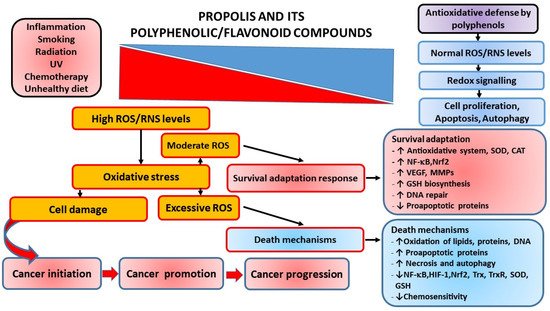
Figure 1. Interrelationship between ROS, oxidative stress, and inflammation-induced immune dysregulation and cancer pathophysiology. A number of factors induce the generation of high levels of reactive radicals (ROS), leading to oxidative stress (OS) and OS-induced inflammation. ROS can activate transcription factors NF-κB, AP-1, and HIF-1α that promote expression of pro-inflammatory genes, and activation of these redox-sensitive pathways may result in various cellular responses. ROS can serve as signaling molecules maintaining physiological functions such as cell growth, proliferation, and survival. Excessive production of ROS leads to oxidative damage of cellular macromolecules and cell death, while a moderate level of ROS leads to cell adaptation and survival through increased synthesis of antioxidant molecules, induction of angiogenesis factors, and increased DNA repair processes. In addition, ROS can stimulate signal transduction pathways and activate the key transcription factors such as Nrf2 and NF-kB. The altered patterns of gene expression induced by excess ROS contribute to the carcinogenesis process. Chronic inflammation upregulates cellular levels of inflammatory mediators, including COX-2, reactive oxygen and nitrogen species, and inflammatory cytokines, and activates protooncogenes. Depending on the overall functions and ratio of inflammatory mediators, the inflammatory response may be pro- or anti-tumorigenic. Finally, the antioxidant regulatory mechanisms that modulate and balance host defense, inflammation, and OS are indicated. In general, the strategies of antioxidant and anti-inflammation therapy as a defensive approach against cancer include: (1) use of antioxidants, (2) suppression of inflammation, and (3) stimulation of repair processes. Note: ROS, Reactive oxygen species; NO, Nitric oxide; NF-κB, Nuclear factor kappa-light-chain-enhancer of activated B cells; UV, ultraviolet radiation; SOD, Superoxide dismutase; CAT, Catalase; Nrf2, nuclear factor E2-related factor 2; VEGF, Vascular endothelial growth factor; MMPs, Matrix metalloproteinases; GSH, Reduced glutathione; HIF-1, Hypoxia-inducible factor-1; Trx, Thioredoxin; TrxR, thioredoxin reductase.
2.5. Regulation of Inflammatory Pathways by Propolis and Its Polyphenolic/Flavonoid Compounds
Inflammation is a complex process caused by the overproduction of ROS, local disturbance of blood circulation, and impaired tissue metabolism, among other factors. Cancer-induced inflammation has an acute and chronic stage. Acute inflammation is the primary stage of inflammation mediated by innate immunity. It activates the immune system, lasts shortly, and is generally perceived as a therapeutic inflammation. If the inflammation continues for a long time, the second stage, chronic inflammation, begins [141][142][233,234]. Chronic inflammation is associated with diverse chronic conditions, including cancer, diabetes, obesity, and cardiovascular, pulmonary, and neurologic diseases [142][234]. Clinical and epidemiologic studies have indicated that chronic inflammation is involved in tumor initiation, promotion, and progression [141][142][233,234].
The interplay between inflammation and cancer implicates inflammatory mediators such as NF-κB, TNF, inducible nitric oxide synthase (iNOS), cyclooxygenases (COX), and lipoxygenases (LOX) [143][144][235,236]. Constitutive COX-1 and inducible COX-2 are key prostaglandin-producing isoenzymes. COX-2 is expressed in response to inflammatory stimuli and has an important role in cancer development and progression. Accordingly, its inhibition may suppress tumor growth, proliferation, angiogenesis, metastasis, and inflammation, and trigger apoptosis.
On the other hand, one of the biggest challenges in cancer treatment is the ongoing autocrine and paracrine activation of proinflammatory transcription factors, such as NF- κB, signal transducer and activator of transcription 3 (STAT-3), activator protein 1 (AP-1), forkhead box protein M1 (FOXM1), and hypoxia-inducible factor 1α (HIF-1α) that drive the overproduction of diverse mediators of inflammation—inflammatory cytokines, chemokines, cellular adhesion molecules, anti-apoptotic molecules, and iNOS [145][146][147][148][149][150][151][152][153][154][155][156][157][158][159][160][237,238,239,240,241,242,243,244,245,246,247,248,249,250,251,252]. Regarding propolis and its components, numerous studies have demonstrated the anti-inflammatory effects of various flavonoids [28][29][52][53][67][145][146][147][148][149][150][151][152][153][154][155][156][157][158][159][160][161][162][1,2,3,4,38,174,198,237,238,239,240,241,242,243,244,245,246,247,248,249,250,251,252]. The anti-inflammatory properties of several flavonols (quercetin, rutin, and morin) and flavanones (hesperetin and hesperidin) were examined in animal models of acute and chronic inflammation. These studies revealed several mechanisms (Figure 2) underlying the anti-inflammatory effects of propolis and its flavonoids: (i) antioxidative and radical scavenging activities, (ii) regulation of cellular activities of inflammatory cells, (iii) modulatory effects on the activities of enzymes involved in the metabolism of arachidonic acid (phospholipase A2, COX, and LOX) and NOS, (iv) adjustment of the production of other proinflammatory mediators, and (v) transcriptional regulation of proinflammatory genes [15][28][29][53][163][2,3,4,13,211].
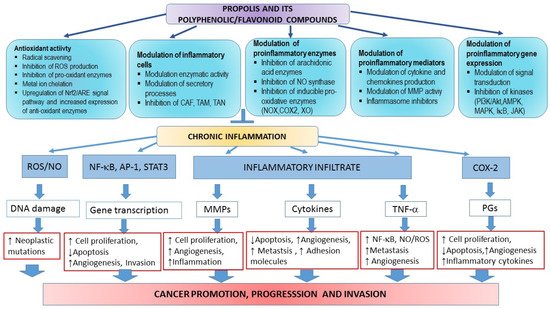
Figure 2. Potential therapeutic strategies to treat cancer promotion and progression by propolis and its polyphenolic/flavonoid compounds. The role and possible mechanisms of action of propolis and its flavonoids in regulation of inflammatory pathways by (i) antioxidative and radical scavenging activities, (ii) regulation of cellular activities of inflammatory cells, (iii) modulation of the enzymes involved in arachidonic acid metabolism (phospholipase A2, cyclooxygenase, and lipoxygenase) and nitric oxide synthase, (iv) modulation of the release of other pro-inflammatory molecules, and (v) transcriptional modulation of proinflammatory genes are shown. Note: ROS, Reactive oxygen species; NO, Nitric oxide; NF-κB, Nuclear factor kappa-light-chain-enhancer of activated B cells; COX-2, Cyclooxygenase-2; MMPs, Matrix metalloproteinases; TNF-α, Tumor necrosis factor-alpha; PGs, Prostaglandins; CAF, Cancer-associated fibroblast; TAM, Tumor-associated macrophages; NOX, Nicotinamide adenine dinucleotide phosphate (NADPH) oxidases; XO, Xanthine oxidase; PI3/Akt, Phosphatidylinositol 3-kinase (PI3K)/protein kinase B (AKT); AMPK, AMP-activated protein kinase; IκB, Nuclear factor of kappa light polypeptide gene enhancer in B-cells inhibitor; JAK, Janus kinases; AP-1, Activator protein 1; STAT3, Signal transducer and activator of transcription 3.
The other molecular mechanisms underlying the anti-inflammatory action of flavonoids include suppression of proinflammatory enzymes, such as COX-2, LOX, and iNOS, suppression of NF-κB and AP-1, activation of phase II antioxidant detoxifying enzymes such as glutathione peroxidase (GPx), heme oxygenases, γ-glutamylcysteine synthetase (γ-GCS), superoxide dismutase (SOD) and glutathione reductase (GR), and modulation of MAPKs, PKC, and nuclear factor-erythroid 2-related factor 2 (Nrf2) [145][146][147][148][149][237,238,239,240,241]. Nrf2 is the transcription factor involved in both the constitutive and inducible expression of anti-oxidant responsive element (ARE)-regulated genes. Its induction by flavonoids inhibits adhesion of monocytes to endothelial cells and transmigration via suppressed expression of monocyte chemoattractant protein-1 (MCP-1) and vascular cell adhesion molecule-1 (VCAM-1), and attenuates activation of the p38 MAPK signaling pathway.
The molecular mechanisms of cytokine-modulating activities of polyphenols, including the suppression of transcription factors NF-κB and AP-1 and inhibition of MAPK activity, are particularly important mechanisms of action from the anti-inflammatory perspective. Flavonoids are effective in downregulating the expression of various proinflammatory cytokines/chemokines (TNF-α, IL-1β, IL-6, IL-8, and monocyte-chemoattractant protein-1) in different cell types such as RAW macrophages, Jurkat T-cells, and peripheral blood mononuclear cells. Furthermore, propolis and its components, CAPE, caffeic acid, quercetin, and naringenin among others, reduce the production of eicosanoids, whose increased production has been implicated in inflammation. In fact, propolis components inhibited the LOX pathway of arachidonic acid metabolism, of which CAPE was the most potent modulator [13][93][150][151][152][164][11,97,119,242,243,244]. Moreover, the inhibitory effects of CAPE on the production of proinflammatory cytokines IL-1β, TNF-α, and MCP-1 in lipopolysaccharide (LPS)-stimulated RAW264.7 macrophages have been reported [149][150][241,242].
Numerous literature data provide evidence of anti-inflammatory action of propolis [67][151][152][153][165][166][38,44,45,243,244,245]. Several studies have shown that propolis acts as a powerful anti-inflammatory agent against both acute and chronic inflammation [154][155][156][246,247,248]. The observed anti-inflammatory effects of propolis are attributed to the presence of flavonoids, especially galangin. Galangin inhibits COX and LOX activity, and reduces PGE2 release and the expression of the inducible isoform of COX (COX-2) [135][157][158][161,249,250]. Besides galangin, many authors [148][159][160][167][168][240,251,252,253,254] have emphasized the anti-inflammatory contribution of quercetin. For example, quercetin attenuated TNF-α-mediated induction of IL-8 and MCP-1 expression by inhibiting the activation of NF-κB. Wadsworth et al. [169][255] suggested that quercetin possesses the unique ability to suppress the transcription of TNF-α by inhibiting the activation of the stress-activated protein kinase (SAPK/JNK) signaling, therefore inhibiting the binding of transcription factor AP-1 to DNA. Quercetin also inhibited the phosphorylation of ERK1/2 and activity of p38 MAPK. Of note, these kinases have important roles in the post-transcriptional regulation of TNF-α mRNA.
Propolis and Functional Activation of Macrophages in Cancer
Macrophages are specialized cells of the immune system that secrete various inflammatory mediators. These include various growth factors, cytokines, proteolytic enzymes, proteoglycans, lipid signaling molecules, and prostaglandins [44][167][168][170][171][23,74,98,253,254]. Macrophages are critically involved in the initiation, maintenance, and resolution of inflammation. They are also important for the maintenance of tissue homeostasis [43][168][171][73,98,254]. Along with other inflammatory cells, macrophages release a broad spectrum of bioactive molecules that can induce large changes at the site of inflammation by interacting with epithelial, mesenchymal, and vascular endothelial cells. In addition, macrophages are plastic cells able to adjust their functional response to diverse stimuli by polarizing to functionally and phenotypically different states that are usually divided into two groups, classically activated (M1) and alternatively activated (M2) macrophages. M1 macrophages exert proinflammatory and anticancer functions, whereas M2 macrophages and the related tumor-associated macrophages (TAMs) regulate tissue remodeling, support angiogenesis, facilitate tumor proliferation, and may show immunomodulatory activity by releasing immunosuppressive molecules [43][167][168][73,253,254].
It has been shown that ROS production is important for both the activation and functions of M1 macrophages, and the differentiation of M2 macrophages and TAMs. Antioxidant agents blocked the differentiation of TAMs and tumorigenesis in mouse models of cancer [43][73]. Although the role of macrophages in tumors is still a matter of debate, many data suggest that macrophages are important players in tumor development. An increased number of TAMs usually indicates a poor prognosis as TAMs promote the production of various growth factors, proteases, angiogenic factors, and ROS, which may support cancer progression (Figure 3). TAMs recruited to the tumor site have an important role in the angiogenic switch and malignant transformation, thus correlating tumor progression with tumor angiogenesis [172][256].
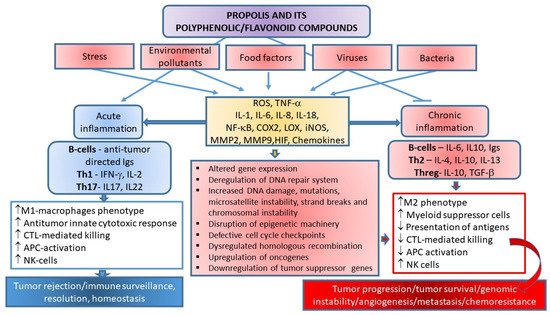
Figure 3. Relationship between ROS, inflammation, cancer, and propolis compounds. Increased oxidative stress can result from numerous endogenous and exogenous factors. An increase in ROS levels and a redox imbalance stimulate intracellular signaling cascades that can potentially stimulate different states of inflammation and their role in tumorigenesis. Under physiological conditions, phagocyte-derived oxidants have a protective function by disabling invading bacteria and parasites, destroying the damaged cells. Controlled, physiological inflammation is a useful, adaptive response that plays an important role in protection against infection, tissue repair, and adaptation to stress, more exactly, in the establishment of disturbed homeostasis. Chronic inflammation is linked to various steps of tumorigenesis, including cellular transformation, progression, survival, proliferation, invasion, angiogenesis, and metastasis. Propolis and its components scavenge reactive oxygen intermediates or prevent their formation, and thus reduce DNA damage, mutagenesis, and the transformation of normal cells into tumor ones. In addition, natural ingredients of propolis induce a prominent reduction in CD4 + CD25 + FoxP3+ regulatory T cells that suppress antitumor activity by IL-10 or TGF-β production. Inhibition of the M2 phenotype and stimulation of the M1 macrophage polarization associated with the production of Th1 cytokines such as TNF-α, IFN-γ, and colony-stimulating factor 2 (CSF2), increase antigen-presenting capacity, as well as the production of ROS and cytokines (IL-6, IL-12, IL-23, and TNF-α) that both contribute to the microbicidal and pro-inflammatory activities of M1 macrophages, which are termed as “fighting” macrophages. M1 macrophages are associated with a good prognosis in the cancer context. Note: ROS, Reactive oxygen species; TNF-α, Tumor necrosis factor-alpha; IL, Interleukin; NF-κB, Nuclear factor kappa-light-chain-enhancer of activated B cells; COX-2, Cyclooxygenase-2; LOX, Lipoxygenase; iNOS, Inducible nitric oxide synthase; MMP2, Matrix metalloproteinase2; MMP9, Matrix metalloproteinase 9; HIF, Hypoxia-inducible factor; Th1, T helper 1 cells; Th2, T helper 2 cells; Th17, T helper 17 cells; Threg, Regulatory T cells; TGF-β, Transforming growth factor β; Igs, Immunoglobulins; CTL, Cytotoxic T lymphocytes; APC, Antigen-presenting cell; NK, Natural killer cell.
Apart from TAMs, ROS are another contributing factor with an important role in tumor biology. ROS promote carcinogenesis and malignant progression of tumor cells by various mechanisms. They induce oxidative DNA damage and genetic instability, acting as signaling intermediates that transduce mitogenic and survival messages initiated by growth factor receptors and adhesion molecules, facilitate cell motility, and remodel the tumor environment by stimulating inflammation (repair) and angiogenesis [43][171][172][173][174][73,98,256,257,258].
Oršolić et al. [43][73] demonstrated that the immunomodulatory activity of caffeic acid (an important active component of propolis), its effect on increased M1-mediated antitumor efficacy, and reduced M2 activity of TAMs, are the key mechanisms involved in the inhibition of angiogenesis and tumor growth. The inhibition of the M2 activity of TAMs decreases the activity of arginase-1 and maintains levels of NO in caffeic acid-treated mice. Previously, it has been shown that the increased activity of arginase-1 may stimulate tumor growth by attenuating the cytotoxic effect of NO. A similar effect was demonstrated by Shiri et al. [144][236] for curcumin. Shiri et al. [145][237] showed that curcumin, delivered in the form of dendrosome nanoparticles, suppresses the proliferation of metastatic breast cancer in mice by modulating the M1/M2 ratio. They found that dendrosomal curcumin increases the gene expression of STAT4 and IL-12 in tumor and spleen tissues, probably reflecting the high levels of M1 macrophages, and decreases the gene expression of STAT3, IL-10, and arginase-1, indicating low levels of M2 macrophages.
Interestingly, it has been shown that patients with psoriasis may be at higher risk of developing cancer [175][259], particularly for certain types of cancer, such as lung cancer, lymphoma, and non-melanoma skin cancer. Of note, Croatian propolis improved psoriatic-like skin lesions induced by irritant agents n-hexyl salicylate or di-n-propyl disulfide by decreasing the extent of lipid peroxidation and the number of inflammatory cells in the skin and peritoneal cavity, particularly by inhibiting the functional activity of macrophages [166][45].
In addition, TAMs can stimulate metabolic pathways participating in the inhibition of the adaptive immune response. The infiltration of inflammatory cells and an environment enriched in various cytokines (TGF-β, IL-6, IL-10, granulocyte-macrophage colony-stimulating factor (GM-CSF), IL-1β, IL-23, and TNF-α) and chemokines (“chemotactic cytokines”) may be utilized by tumor cells. These inflammatory molecules have been linked to the formation of suppressive immune cells, including myeloid-derived suppressive cells, Treg, TAMs, and their effectors, which are utilized and promoted by the tumor microenvironment [176][177][260,261]. As TAMs are the main regulators of inflammation in the tumor microenvironment, they are considered a key component of pathways connecting inflammation and cancer. This relies on their ability to produce various growth factors for epithelial and endothelial cells, and pro-inflammatory cytokines and chemokines that promote tumor survival, proliferation, and invasion. Moreover, immunosuppressive mediators released by local inflammatory or tumor cells may attenuate the host antitumor response and promote tumor progression [174][178][258,262].