
You're using an outdated browser. Please upgrade to a modern browser for the best experience.
Role of Inflammation in Retinal Degeneration: Comparison
Please note this is a comparison between Version 2 by Conner Chen and Version 1 by Nikhlesh Singh.

Retinal neurodegeneration is predominantly reported as the apoptosis or impaired function of the photoreceptors. Retinal degeneration is a major causative factor of irreversible vision loss leading to blindness. Degenerative retinal diseases are reported as heterogeneous and multiple etiological groups of disorders that hamper the vision of human beings, resulting in compromised quality of life. Retinitis pigmentosa (RP), age-related macular degeneration (AMD), diabetic retinopathy (DR), Stargardt macular dystrophy (STGD), and Leber congenital amaurosis (LCA) are some examples of degenerative retinal diseases. Inflammation is the protective response of the immune system to a harmful stimulus and this stimulus could be in the form of toxic metabolites/chemicals, pathogens, damaged cells, physical, traumatic, ischemic, or other challenges. Inflammatory events are the most likely causes of progressive retinal degenerative conditions.

  • retina
  • retinal degeneration
  • AMD

1. Factors Contributing to Inflammation in Retinal Degenerative Diseases

1.1. Genetic Factors

The influence of genetic factors on retinal disorders is well documented [20][1]. Genetic factors involve not only pro-inflammatory genes but also anti-inflammatory genes with neuroprotective functions. In the cascade of its initiation to the development of the disease phenotype, several pro-inflammatory genes become activated and are promptly counterbalanced by anti-inflammatory responses [21][2]. The imbalance in these inflammatory responses results in the progression of degenerative retinal diseases. The expression of genetic factors is regulated both at transcriptional and translational levels to ensure the induction immune response to avoid tissue degeneration [22][3]. Researchers have witnessed a timely shift in the association of genetic factors with apoptosis to necroptosis and/or pyroptosis for degenerating photoreceptors [23][4]. The caspase3 activation and apoptosis of photoreceptors are observed in RP mice models such as rds, rd1, and rd10 [24,25,26,27][5][6][7][8]. The increased expression of RIP1K/RIP3K molecules is linked with necroptosis in P23H-1 rhodopsin rats [23][4]. The high levels of NLRP3 inflammasome components (NLRP3, active caspase 1, and IL-1β) are associated with increased pyroptosis in murine and canine models of RP [23,28,29][4][9][10].
Substantial evidence in the literature suggests the activation of NLRP3 inflammasome in retinal degeneration through a significant augmentation in the inflammasome components, including NLRP3ASC, and CASP1 [30,31,32][11][12][13]. The caspase-1-dependent pro-inflammatory cytokines, such as IL-1β and IL-18 are also activated in retinal degenerative conditions [33][14]. The pro-cytokines IL-1β and IL-18 are important regulators of the innate immune system that may cause tissue damage and even cell death. Notably, microglia and infiltrating macrophages are considered the source of the inflammasome activation in degenerating visual cells [19][15]. Increased expression of IL-1β and IL-18 is found in age-related macular degeneration (AMD) [34][16], diabetic retinopathy [35][17], retinitis pigmentosa [36][18], and glaucoma [37][19]. IL33/ST2 signaling plays a role in various ocular diseases such as dry eye disease, uveitis, vitreoretinal diseases, and allergic eye disorders [38][20]. Enhanced retinal cell degeneration and retinal detachment were observed in IL33−/− mice [39][21].
Several damage-associated molecular patterns (DAMPs) activate inflammasome components in microglia during the dysregulated retinal homeostasis that drives disease progression. In addition, the outer retinal layers are invaded by activated IBA1+microglia/macrophages in diseased conditions. Moreover, the dynamic toll-like receptor 4 (TLR4)—a signaling pathway involved in the activation of NLRP3 inflammasome—is also associated with the pathogenesis of degenerative retinal disorders [31][12]. The increased expression of MYD88IRAK4, and TRAF6 is also observed in retinal degenerative disorders [22][3].
Inflammation in degenerative retinal disorders has been strongly supported by molecular genetic studies. Although inconclusive, genes encoding complement factor H (CFH) [40][22], complement component 2 (C2), factor B (FB) [41][23], and apolipoprotein E (APOE) have been documented as being associated with AMD. Increased risk of AMD has been especially prevalent among the carriers of the APOE ε2 allele, while APOE ε4 has been known to protect against this condition [42][24]. Moreover, C2/CFB genes, C3, C9, CFH, and CFI variants in the genes of the complement system are responsible for the progression of AMD [43,44,45][25][26][27].
Epigenetic factors also play a prominent role in the regulation of pro-inflammatory gene promoters (NF-κB and AP-1) involved in retinal diseases. The genes encoding for histone deacetylases (HDACs) and histone acetyltransferases (HATs) are associated with the increased influx of activated microglia in the site of tissue damage, and thus, create a chronic inflammatory cycle, the hallmark of the mentioned disorders [46,47][28][29]. Further, microRNA is known to play a biased and remarkable role in driving the M1 phenotype in the mixed microglia/macrophage population in retinal diseases, for example, upregulation of miR-155 [48,49][30][31]. Future studies are needed to identify key genes and signaling pathways to understand the pathogenesis of retinal disorders.

1.2. Non-Genetic Factors

The heterogeneous and/or genetically complex retinal diseases are triggered by an array of environmental risk factors. Among various environmental factors, age [50][32], sunlight exposure, smoking, body mass index (BMI), diabetes, alcohol consumption, and other lifestyle-related factors such as physical activity are associated with retinal disorders [51,52][33][34]. Epidemiological studies have reported that the prevalence of retinal disorders was 52.37% in subjects aged 60 years and above. Besides age, most of the nongenetic factors are modifiable. Lifestyle and behavioral habits play a significant role in the development of disease [53][35]. For instance, regular physical exercise has a protective role in various diseases. In the Beaver Dam Eye Study, diabetes was found to be associated with refractive errors [54][36], and diabetes can be controlled by a healthy diet and exercise. In several other cohort studies, it was observed that constant physical activity may be considered effective for AMD prevention [55][37].
Further, smoking has been documented to reduce macular pigment concentration by approximately 50% [56][38] due to the formation of arachidonic acid, which is a precursor of inflammatory mediators like prostaglandins and leukotrienes [57][39]. The high concentration of hydroquinone known to be present in cigarette tar has also been documented to cause lesions in the eye in murine models [58][40]. Education, ethnicity, hypertension, hyperthyroidism, Alzheimer’s, and Parkinson’s disease are the other non-genetic factors responsible for retinal diseases, especially AMD [53][35]. Oxidative stress is a problem during aging and diabetes. Oxidative stress is responsible for the accumulation of ROS that induces lipid peroxidation and glycoxidation, which increases the levels of advanced glycation end products (AGEs) along with advanced lipoxidation end products (ALEs) [59,60][41][42]. AGEs and ALEs play a critical role in the chronic inflammatory process and cause alteration in cell signaling, which further causes cell damage and death via NF-κB and MAPK signaling pathways [59,60][41][42].
Little is known about the role of non-genetic factors in retinal disorders, as these retinal problems may remain asymptomatic until their advanced stages. Thus, it is difficult to explain the underlying non-genetic risk factor of degenerative retinal disorders, however it can be considered as a correlating risk factor.

2. Role of Inflammation in Age-Related Macular Degeneration

Age-related macular degeneration is one of the most studied retinal degenerative disorders. Abbreviated as AMD, it is defined as a slow and steady progressive chronic death of cells such as retinal pigment epithelium (RPE), photoreceptors, Bruch’s membrane, and the choroidal neovascularization in the macula, leading to drusen formation, hypo-, and/or hyperpigmentation [61][43]. The etiology of AMD remained unclear for more than a century. The identified risk factors include age, smoking of tobacco, fatty food intake, irregular diet, obesity, reactive oxygen intermediates, ethnicity, and heredity [53][35].
AMD is categorized into two groups based on the time of onset. In the case of early AMD, observable symptoms are inconspicuous and are characterized by the presence of drusen formations at the sub-retinal pigment epithelium [62][44]. Cases of late AMD are associated with severe loss of vision and have traditionally been classified into “wet” and “dry” forms [62,63][44][45]. Among these two forms, “dry” AMD is most common and is characterized by a drusen appearance, i.e., the accumulation of waste products in the retina, that may grow. This may stop the flow of nutrients and thereby cause the death of retinal cells in the macula, causing blurred vision. On the other hand, “wet” AMD, also known as neovascular AMD, is a rapid process of serious vision loss that occurs due to the growth of tiny blood vessels in the retina, which often break or leak. The end-stage of dry AMD, also called geographic atrophy, occurs less frequently than neovascular AMD. This causes degeneration of the macula, due to which the RPE no longer supports the functions of photoreceptors [64][46].
In most cases of AMD, the larger the area covered by the drusen in early AMD, the greater the chance of developing late-stage AMD [65][47]. Drusen often remains undetected in early AMD owing to the lesser amount of the area covered initially, as drusen having a diameter of fewer than 25 μm cannot be detected under standard ophthalmoscopy [66][48].
The innate immune system mediated by mononuclear phagocytes is a major factor in the development of advanced AMD [67][49]. Retinal microglial cells have been theorized to play a major role in maintaining normal retinal physiology [68,69][50][51]. AMD is prominently characterized by the accumulation of microglial cells within the subretinal space [70[52][53],71], with greater concentrations around reticular pseudo drusen, a common lesion associated with AMD. This accumulation leads to a range of negative effects on the retinal pigment epithelium and the photoreceptors. The migration of microglial cells and other mononuclear phagocytes from the peripheral circulation plays a major role in retinal degeneration [72][54]. However, the mechanism of their migration remains under investigation. The release of chemotaxis-mediating chemokines, such as chemokine ligand 2 (Ccl2) has been put forward as a major component in this pathway [73[55][56],74], although it is unlikely that this is the sole factor behind microglial migration. CFH is another factor that plays a role in the greater turnover of microglial cells in the subretinal space [75][57]. Chemokines bind to the CX3CR1chemokine receptors present on the surfaces of the inflammatory cells, including macrophages, microglia, T-cells, and astrocytes. CX3CR1 facilitates the recruitment of WBCs into the inflamed tissues in the retina and thus the inflammatory cells are subsequently activated [76][58].
The toll-like receptor (TLR4) upregulates interleukin-1β (IL-1β), tissue necrosis factor, and interleukin-6 (IL-6), through the nuclear factor kappa beta (NF-κB) pathway [77,78][59][60]. Reports have shown that D299G TLR4 is a variant that leads to a decline in the elimination of microbial organisms, and low-grade inflammatory changes are behind the pathological changes observed in AMD [79][61].
An IL8 -251A/T polymorphism has been previously reported in many inflammatory diseases and cancers. A similar association was found between AMD and the homozygous IL8 –251AA genotype [80][62]. Cytokines, such as IL-6, TNFα, and IL-8, and CRP are responsible for the progression of AMD [81,82][63][64]. Seddon et al. [83][65] reported the correlation between CRP, IL-6, and the disease progression to advanced AMD. The authors observed only a 17% progression rate of AMD in subjects with CRP levels of less than 0.5 mg/L, whereas a significant increase to 38–40% was found in subjects with a CRP range of 0.5–9.9 mg/L. A significantly higher AMD progression rate of 58% was associated with CRP levels greater than 10 mg/L, signifying that CRP levels directly correspond with the AMD progression. Furthermore, the authors also correlated IL-6 levels with AMD progression. They observed no significant changes in the progression rate of AMD with an IL-6 range of <2–5.9 pg/mL, however they did note a significantly increased risk for progression of AMD was found to be associated with IL-6 levels of 6.0 pg/mL or higher. Levels of IL-1α, IL-1β, IL-4, IL-5, IL-10, IL-13, and IL-17 were seen to be markedly elevated in the blood serum samples of subjects who had been diagnosed with advanced stage AMD when compared with those of healthy volunteers [84][66]. Pro-inflammatory cytokine IL-33 plays a role in both innate and adaptive immune response by activating inflammatory signaling pathways including NF-κB and MAPK signaling to induce the production of pro-inflammatory (such as IL-1β, TNFα, IL-4, IL-6, and CCL2) or anti-inflammatory (like IL-10) cytokines. Further studies proved that RP epithelium cells induce IL-33 signaling and cellular recruitment of microglia and macrophages are controlled by Müller cells into the retina, leading to the destruction of photoreceptors and RPE [19,85][15][67].

3. Role of Inflammation in Inherited Retinal Dystrophies
Inherited retinal dystrophies (IRD) is an umbrella term used for a host of retinal diseases associated with photoreceptor dysfunction and loss, leading to progressive loss of vision. The most common forms of IRDs include retinitis pigmentosa (RP), Leber congenital amaurosis, Stargardt macular dystrophy, macular degeneration, choroideremia, and Usher’s syndrome [23][4]. There is much difficulty when attempting to identify the underlying genetic mechanism behind the phenotypes of inherited retinal degeneration, as they are generated through various pathways. The P2X7R upregulation has been shown to enhance inflammasome activation, which leads to the release of proinflammatory cytokines and retinal degenerative diseases [86][68]. Mutation in Glyoxalase 1 (GLO1) leads to the accumulation of advanced glycation end products (AGE) and retinal degeneration [86][68]. The accumulation of misfolded proteins increases reactive oxygen species (ROS) generation, enhancing unfolded protein response (UPR) pathways, such as PERK (PKR-like endoplasmic reticulum kinase) and IRE1 (inositol-requiring enzyme 1) pathways in photoreceptor cells resulting in retinal degeneration [86][68]. An increase in CERKL mutation leads to increased apoptosis and retinitis pigmentosa [86][68]. Oxidative stress in retinal pigmental epithelial cells alters the expression of micro-RNAs (miRNAs) and long non-coding RNAs (lncRNAs), which induce biochemical pathways involved in RP pathogenesis [86][68]. Excessive activation of MUTYH leads to the formation of single strand breaks of DNA, causing disturbed homeostasis and cell death [86][68]. More than 300 genes have been identified so far that can lead to any of the IRDs mentioned above [23][4]. IRD is a genetic disease and presents high heterogeneity, which results in hard to find a specific mutation. The most frequent of these IRDs is retinitis pigmentosa (RP) with a prevalence of 1 in 3500 individuals [87][69]. Based on the photoreceptors affected, IRDs can be classified into rod- and cone-dominated dystrophies, and dystrophies encompassing both rods and cones [88][70]. In the case of rod-dominated dystrophies like RP, night-blindness and gradual loss of peripheral vision are observed, which eventually lead to tunnel vision. Cone-dominated macular dystrophies are characterized by central vision impairment, loss of details, abnormality in color vision, and delay in light to dark adaptation. In IRDs that affect both rods and cones, there is concurrent loss of central and peripheral vision [54][36].
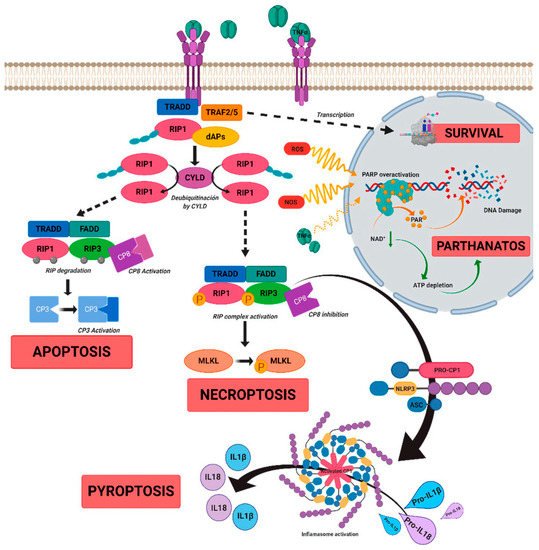
The involvement of inflammation across different types of IRDs is difficult to generalize, as there is a wide range of inflammatory responses involved in each condition. The role of inflammation in the case of RP, Stargardt macular dystrophy, and Leber congenital amaurosis is discussed in detail in the following sections. The impact of inflammatory responses in the case of IRDs is often due to chronic excessive reaction of the cells and cellular products involved, leading to cell degeneration and apoptosis in the retina [89,90,91,92,93][71][72][73][74][75]. Activated microglial cells and macrophages of the immune system secrete cytokines, chemokines, and pro-inflammatory mediators such as TNFα in response to harmful stimuli, tissue disruption, or the presence of free radicals. TNFα regulates various signaling pathways of cell death and survival, which are represented in Figure 1 [23][4]. The most common cell-signaling pathways that are activated under such circumstances are Janus kinase/signal transducer and activator transcription (JAK-STAT), NF-κB, and the mitogen-activated protein kinase (MAPK) pathways, which then lead to the generation and release of pro-inflammatory interleukins such as IL-1β, IL-6, IL-8, and IL-12 [94,95,96][76][77][78].
Figure 1. A schematic diagram to show the role of tumor necrosis factor alpha (TNFα)-signaling in inherited retinal dystrophies. TNFα binds to its receptor TNFR1, which leads to the recruitment of death-domain containing adaptor protein (TRADD). TRADD further recruits TNF receptor-associated factor 2 (TRAF2) and receptor-interacting protein kinase 1 (RIPK1) to form complex 1, which is needed for NF-κB activation. Complex 1 dissociates from TNFR1 and associates with Fas-associated protein with death domain (FADD) and pro-caspase 8 to form complex 2. The FADD/caspase 8 association depends on complexes containing unubiquitinated RIPK1 as a scaffold. Activated caspase 8 further induces caspase 3 and apoptosis. TNFα signaling also regulates necroptosis when caspase 8 is not active. RIPK1 recruits RIPK3 to form the necrosome complex. RIPK3 phosphorylates the pseudokinase kinase-like domain of mixed-lineage kinase domain-like (MLKL), leading to its oligomerization. Thus, MLKL recruitment to the plasma membrane induces necroptosis by triggering Ca+ and Na2+ influx into the cell. RIPK3 also promotes the NLRP3 inflammasome formation and interleukin (IL)-1β activity. TNFα or oxidative stress activates parthanatos through the overactivation of poly [ADP-ribose] polymerase 1 (PARP1). Overactivation of PARP1 leads to decrease in cellular ATP and NAD+ storage, and ultimately to bioenergetic collapse and cell death. Adapted from Olivares-González et al. [23][4].

References

  1. Singh, M.; Tyagi, S.C. Genes and genetics in eye diseases: A genomic medicine approach for investigating hereditary and inflammatory ocular disorders. Int. J. Ophthalmol. 2018, 11, 117–134.
  2. Melrose, M.A.; Magargal, L.E.; Lucier, A.C. Identical twins with subretinal neovascularization complicating senile macular degeneration. Ophthalmic Surg. Lasers Imaging Retin. 1985, 16, 648–651.
  3. Ahmed, A.U.; Williams, B.R.; Hannigan, G.E. Transcriptional activation of inflammatory genes: Mechanistic insight into selectivity and diversity. Biomolecules 2015, 5, 3087–3111.
  4. Olivares-González, L.; Velasco, S.; Campillo, I.; Rodrigo, R. Retinal inflammation, cell death and inherited retinal dystrophies. Int. J. Mol. Sci. 2021, 22, 2096.
  5. Choudhury, S.R.; Bhootada, Y.; Gorbatyuk, M.S. Caspase-7 ablation modulates UPR, reprograms TRAF2-JNK apoptosis and protects T17M rhodopsin mice from severe retinal degeneration. Cell Death. Dis. 2013, 4, e528.
  6. Comitato, A.; Sanges, D.; Rossi, A.; Humphries, M.M.; Marigo, V. Activation of Bax in Three Models of Retinitis Pigmentosa. Investig. Ophthalmol. Vis. Sci. 2014, 55, 3555–3561.
  7. Kunte, M.M.; Choudhury, S.; Manheim, J.F.; Shinde, V.M.; Miura, M.; Chiodo, V.A.; Hauswirth, W.W.; Gorbatyuk, O.S.; Gorbatyuk, M.S. ER Stress Is Involved in T17M Rhodopsin-Induced Retinal Degeneration. Investig. Ophthalmol. Vis. Sci. 2012, 53, 3792–3800.
  8. Chen, Y.; Yang, M.; Wang, Z.-J. (Z)-7,4′-Dimethoxy-6-hydroxy-aurone-4-O-β-glucopyranoside mitigates retinal degeneration in Rd10 mouse model through inhibiting oxidative stress and inflammatory responses. Cutan. Ocul. Toxicol. 2020, 39, 36–42.
  9. Murakami, Y.; Matsumoto, H.; Roh, M.; Suzuki, J.; Hisatomi, T.; Ikeda, Y.; Miller, J.W.; Vavvas, D.G. Receptor interacting protein kinase mediates necrotic cone but not rod cell death in a mouse model of inherited degeneration. Proc. Natl. Acad. Sci. USA 2012, 109, 14598–14603.
  10. Olivares-González, L.; Velasco, S.; Millán, J.M.; Rodrigo, R. Intravitreal administration of adalimumab delays retinal degeneration in rd10 mice. FASEB J. 2020, 34, 13839–13861.
  11. Malsy, J.; Alvarado, A.C.; Lamontagne, J.O.; Strittmatter, K.; Marneros, A.G. Distinct effects of complement and of NLRP3-and non-NLRP3 inflammasomes for choroidal neovascularization. Elife 2020, 9, e60194.
  12. Yerramothu, P.; Vijay, A.K.; Willcox, M.D. Inflammasomes, the eye and anti-inflammasome therapy. Eye 2018, 32, 491–505.
  13. Celkova, L.; Doyle, S.L.; Campbell, M. NLRP3 inflammasome and pathobiology in AMD. J. Clin. Med. 2015, 4, 172–192.
  14. Gora, I.M.; Ciechanowska, A.; Ladyzynski, P. NLRP3 Inflammasome at the Interface of Inflammation, Endothelial Dysfunction, and Type 2 Diabetes. Cells 2021, 10, 314.
  15. Wooff, Y.; Man, S.M.; Aggio-Bruce, R.; Natoli, R.; Fernando, N. IL-1 Family Members Mediate Cell Death, Inflammation and Angiogenesis in Retinal Degenerative Diseases. Front. Immunol. 2019, 10, 1618.
  16. Eandi, C.M.; Messance, H.C.; Augustin, S.; Dominguez, E.; Lavalette, S.; Forster, V.; Hu, S.J.; Siquieros, L.; Craft, C.M.; Sahel, J.A.; et al. Subretinal mononuclear phagocytes induce cone segment loss via IL-1β. Elife 2016, 5, e16490.
  17. Altmann, C.; Schmidt, M.H. The role of microglia in diabetic retinopathy: Inflammation, microvasculature defects and neurodegeneration. Int. J. Mol. Sci. 2018, 19, 110.
  18. Blank, T.; Goldmann, T.; Koch, M.; Amann, L.; Schön, C.; Bonin, M.; Pang, S.; Prinz, M.; Burnet, M.; Wagner, J.E.; et al. Early microglia activation precedes photoreceptor degeneration in a mouse model of CNGB1-linked retinitis pigmentosa. Front. Immunol. 2018, 8, 1930.
  19. Zeng, H.L.; Shi, J.M. The role of microglia in the progression of glaucomatous neurodegeneration—A review. Int. J. Ophthalmol. 2018, 11, 143–149.
  20. Qian, Y.; Zhang, M. The functional roles of IL-33/ST2 axis in ocular diseases. Mediat. Inflamm. 2020, 2020, 5230716.
  21. Augustine, J.; Pavlou, S.; Ali, I.; Harkin, K.; Ozaki, E.; Campbell, M.; Stitt, A.W.; Xu, H.; Chen, M. IL-33 deficiency causes persistent inflammation and severe neurodegeneration in retinal detachment. J. Neuroinflamm. 2019, 16, 251.
  22. Wong, E.K.; Hallam, T.M.; Brocklebank, V.; Walsh, P.R.; Smith-Jackson, K.; Shuttleworth, V.G.; Cox, T.E.; Anderson, H.E.; Barlow, P.N.; Marchbank, K.J.; et al. Functional characterization of rare genetic variants in the N-terminus of complement Factor H in aHUS, C3G, and AMD. Front. Immunol. 2021, 11, 602284.
  23. Roshanipour, N.; Bonyadi, M.; Bonyadi, M.H.; Soheilian, M. The effect of complement factor B gene variation on age-related macular degeneration in Iranian patients. J. Curr. Ophthalmol. 2019, 31, 292–297.
  24. McKay, G.J.; Patterson, C.C.; Chakravarthy, U.; Dasari, S.; Klaver, C.C.; Vingerling, J.R.; Ho, L.; de Jong, P.T.; Fletcher, A.E.; Young, I.S.; et al. Evidence of association of APOE with age-related macular degeneration-a pooled analysis of 15 studies. Hum. Mutat. 2011, 32, 1407–1416.
  25. Fritsche, L.G.; Fariss, R.N.; Stambolian, D.; Abecasis, G.R.; Curcio, C.A.; Swaroop, A. Age-related macular degeneration: Genetics and biology coming together. Annu. Rev. Genom. Hum. Genet. 2014, 15, 151–171.
  26. Geerlings, M.J.; de Jong, E.K.; den Hollander, A.I. The complement system in age-related macular degeneration: A review of rare genetic variants and implications for personalized treatment. Mol. Immunol. 2017, 84, 65–76.
  27. Sergejeva, O.; Botov, R.; Liutkevičienė, R.; Kriaučiūnienė, L. Genetic factors associated with the development of age-related macular degeneration. Medicina 2016, 52, 79–88.
  28. Edwards, A.O.; Ritter, R.; Abel, K.J.; Manning, A.; Panhuysen, C.; Farrer, L.A. Complement factor H polymorphism and age-related macular degeneration. Science 2005, 308, 421–424.
  29. Jakobsdottir, J.; Conley, Y.P.; Weeks, D.E.; Mah, T.S.; Ferrell, R.E.; Gorin, M.B. Susceptibility genes for age related maculopathy on chromosome 10q26. Am. J. Hum. Genet. 2005, 77, 389–407.
  30. Genini, S.; Guziewicz, K.E.; Beltran, W.A.; Aguirre, G.D. Altered miRNA expression in canine retinas during normal development and in models of retinal degeneration. BMC Genom. 2014, 15, 172.
  31. Jablonski, K.A.; Gaudet, A.D.; Amici, S.A.; Popovich, P.G.; Guerau-de-Arellano, M. Control of the Inflammatory Macrophage Transcriptional Signature by miR-155. PLoS ONE 2016, 11, e0159724.
  32. Woo, S.J.; Ahn, J.; Morrison, M.A.; Ahn, S.Y.; Lee, J.; Kim, K.W.; Park, K.H. Analysis of genetic and environmental risk factors and their interactions in Korean patients with age-related macular degeneration. PLoS ONE 2015, 10, e0132771.
  33. Ong, S.R.; Crowston, J.G.; Loprinzi, P.D.; Ramulu, P.Y. Physical activity, visual impairment, and eye disease. Eye 2018, 32, 1296–12303.
  34. Lambert, N.G.; ElShelmani, H.; Singh, M.K.; Mansergh, F.C.; Wride, M.A.; Padilla, M.; Keegan, D.; Hogg, R.E.; Ambati, B.K. Risk factors and biomarkers of age-related macular degeneration. Prog. Retin. Eye Res. 2016, 54, 64–102.
  35. Heesterbeek, T.J.; Lorés-Motta, L.; Hoyng, C.B.; Lechanteur, Y.T.; den Hollander, A.I. Risk factors for progression of age-related macular degeneration. Ophthalmic Physiol. Opt. 2020, 40, 140–170.
  36. Bomotti, S.; Lau, B.; Klein, B.E.K.; Lee, K.E.; Klein, R.; Duggal, P.; Klein, A.P. Refraction and Change in Refraction Over a 20-Year Period in the Beaver Dam Eye Study. Investig. Ophthalmol. Vis. Sci. 2018, 59, 4518–4524.
  37. Knudtson, M.D.; Klein, R.; Klein, B.E. Physical activity and the 15-year cumulative incidence of age-related macular degeneration: The Beaver Dam Eye Study. Br. J. Ophthalmol. 2006, 90, 1461–1463.
  38. Hammond, B.R., Jr.; Wooten, B.R.; Snodderly, D.M. Cigarette smoking and retinal carotenoids: Implications for age-relatedmacular degeneration. Vis. Res. 1996, 36, 3003–3009.
  39. Sastry, B.V.; Hemontolor, M.E. Influence of nicotine and cotinine on retinal phospholipaseA2 and its significance to macular function. J. Ocul. Pharmacol. Ther. 1998, 14, 447–1458.
  40. Espinosa-Heidmann, D.G.; Suner, I.J.; Catanuto, P.; Hernandez, E.P.; Marin-Castano, M.E.; Cousins, S.W. Cigarette smoke-related oxidants and the development of sub-RPE deposits in an experimental animal model of dry age-related macular degeneration. Investig. Ophthalmol. Vis. Sci. 2006, 47, 729–737.
  41. Shanmugam, N.; Figarola, J.L.; Li, Y.; Swiderski, P.M.; Rahbar, S.; Natarajan, R. Proinflammatory effects of advanced lipoxidation end products in monocytes. Diabetes 2008, 57, 879–888.
  42. Moldogazieva, N.T.; Mokhosoev, I.M.; Mel’nikova, T.I.; Porozov, Y.B.; Terentiev, A.A. Oxidative stress and advanced lipoxidation and glycation end products (ALEs and AGEs) in aging and age-related diseases. Oxid. Med. Cell. Longev. 2019, 2019, 3085756.
  43. Kauppinen, A.; Paterno, J.J.; Blasiak, J.; Salminen, A.; Kaarniranta, K. Inflammation and its role in age-related macular degeneration. Cell. Mol. Life Sci. 2016, 73, 1765–1786.
  44. Copland, D.A.; Theodoropoulou, S.; Liu, J.; Dick, A.D. A perspective of AMD through the eyes of immunology. Investig. Ophthalmol. Vis. Sci. 2018, 59, AMD83–AMD92.
  45. Handa, J.T.; Bowes Rickman, C.; Dick, A.D.; Gorin, M.B.; Miller, J.W.; Toth, C.A.; Ueffing, M.; Zarbin, M.; Farrer, L.A. A systems biology approach towards understanding and treating non-neovascular age-related macular degeneration. Nat. Commun. 2019, 10, 3347.
  46. Ambati, J.; Atkinson, J.P.; Gelfand, B.D. Immunology of age-related macular degeneration. Nat. Rev. Immunol. 2013, 13, 438–451.
  47. de Jong, E.K.; Geerlings, M.J.; den Hollander, A.I. Age-related macular degeneration. In Genetics and Genomics of Eye Disease. Advancing to Precision Medicine; Academic Press, Elsevier: Amsterdam, The Netherlands, 2020; pp. 155–180.
  48. Sarks, S.H.; Arnold, J.J.; Killingsworth, M.C.; Sarks, J.P. Early drusen formation in the normal and aging eye and their relation to age related maculopathy: A clinicopathological study. Br. J. Ophthalmol. 1999, 83, 358–368.
  49. Toomey, C.B.; Kelly, U.; Saban, D.R.; Bowes, R.C. Regulation of age-related macular degeneration-like pathology by complement factor H. Proc. Natl. Acad. Sci. USA 2015, 112, E3040–E3049.
  50. Rashid, K.; Akhtar-Schaefer, I.; Langmann, T. Microglia in retinal degeneration. Front. Immunol. 2019, 10, 1975.
  51. Alves, C.H.; Fernandes, R.; Santiago, A.R.; Ambrósio, A.F. Microglia contribution to the regulation of the retinal and choroidal vasculature in age-related macular degeneration. Cells 2020, 9, 1217.
  52. Vessey, K.A.; Waugh, M.; Jobling, A.I.; Phipps, J.A.; Ho, T.; Trogrlic, L.; Greferath, U.; Fletcher, E.L. Assessment of retinal function and morphology in aging Ccl2 knockout mice. Investig. Ophthalmol. Vis. Sci. 2015, 56, 1238–1252.
  53. Chinnery, H.R.; McLenachan, S.; Humphries, T.; Kezic, J.M.; Chen, X.; Ruitenberg, M.J.; McMenamin, P.G. Accumulation of murine subretinal macrophages: Effects of age, pigmentation and CX3CR1. Neurobiol. Aging 2012, 33, 1769–1776.
  54. Ronning, K.E.; Karlen, S.J.; Miller, E.B.; Burns, M.E. Molecular profiling of resident and infiltrating mononuclear phagocytes during rapid adult retinal degeneration using single cell. RNA sequencing. Sci. Rep. 2019, 9, 4858.
  55. Levy, O.; Calippe, B.; Lavalette, S.; Hu, S.J.; Raoul, W.; Dominguez, E.; Housset, M.; Paques, M.; Sahel, J.A.; Bemelmans, A.P.; et al. Apolipoprotein E promotes subretinal mononuclear phagocyte survival and chronic inflammation in age-related macular degeneration. EMBO Mol. Med. 2015, 7, 211–226.
  56. Sennlaub, F.; Auvynet, C.; Calippe, B.; Lavalette, S.; Poupel, L.; Hu, S.J.; Dominguez, E.; Camelo, S.; Levy, O.; Guyon, E.; et al. CCR2(+) monocytes infiltrate atrophic lesions in age-related macular disease and mediate photoreceptor degeneration in experimental subretinal inflammation in Cx3cr1 deficient mice. EMBO Mol. Med. 2013, 5, 1775–1793.
  57. Calippe, B.; Augustin, S.; Beguier, F.; Charles-Messance, H.; Poupel, L.; Conart, J.B.; Hu, S.J.; Lavalette, S.; Fauvet, A.; Rayes, J.; et al. Complement Factor H Inhibits CD47-Mediated Resolution of Inflammation. Immunity 2017, 46, 261–272.
  58. Ding, X.; Patel, M.; Chan, C.C. Molecular pathology of age-related macular degeneration. Prog. Retin. Eye Res. 2009, 28, 1–18.
  59. Kuzmich, N.N.; Sivak, K.V.; Chubarev, V.N.; Porozov, Y.B.; Savateeva-Lyubimova, T.N.; Peri, F. TLR4 signaling pathway modulators as potential therapeutics in inflammation and sepsis. Vaccines 2017, 5, 34.
  60. Akira, S.; Takeda, K. Toll-like receptor signalling. Nat. Rev. Immunol. 2004, 4, 499–511.
  61. Zareparsi, S.; Buraczynska, M.; Branham, K.E.; Shah, S.; Eng, D.; Li, M.; Pawar, H.; Yashar, B.M.; Moroi, S.E.; Lichter, P.R.; et al. Toll-like receptor 4 variant D299G is associated with susceptibility to age-related macular degeneration. Hum. Mol. Genet. 2005, 14, 1449–1455.
  62. Goverdhan, S.V.; Ennis, S.; Hannan, S.R.; Madhusudhana, K.C.; Cree, A.J.; Luff, A.J.; Lotery, A.J. Interleukin-8 promoter polymorphism -251A/T is a risk factor for age-related macular degeneration. Br. J. Ophthalmol. 2008, 92, 537–540.
  63. Touhami, S.; Beguier, F.; Augustin, S.; Charles-Messance, H.; Vignaud, L.; Nandrot, E.F.; Reichman, S.; Forster, V.; Mathis, T.; Sahel, J.A.; et al. Chronic exposure to tumor necrosis factor alpha induces retinal pigment epithelium cell dedifferentiation. J. Neuroinflamm. 2018, 15, 85.
  64. Nielsen, M.K.; Subhi, Y.; Molbech, C.R.; Falk, M.K.; Nissen, M.H.; Sørensen, T.L. Systemic levels of interleukin-6 correlate with progression rate of geographic atrophy secondary to age-related macular degeneration. Investig. Ophthalmol. Vis. Sci. 2019, 60, 202–208.
  65. Seddon, J.M.; Gensler, G.; Milton, R.C.; Klein, M.L.; Rifai, N. Association between C-reactive protein and age-related macular degeneration. JAMA 2004, 291, 704–710.
  66. Nassar, K.; Grisanti, S.; Elfar, E.; Lüke, J.; Lüke, M.; Grisanti, S. Serum cytokines as biomarkers for age-related macular degeneration. Graefe’s Arch. Clin. Exp. Ophthalmol. 2015, 253, 699–704.
  67. Miller, A.M.; Xu, D.; Asquith, D.L.; Denby, L.; Li, Y.; Sattar, N.; Baker, A.H.; Mclnnes, I.B.; Liew, F.Y. IL-33 reduces the development of atherosclerosis. J. Exp. Med. 2008, 205, 339–346.
  68. Gallenga, C.E.; Lonardi, M.; Pacetti, S.; Violanti, S.S.; Tassinari, P.; Di Virgilio, F.; Perri, P. Molecular Mechanisms Related to Oxidative Stress in Retinitis Pigmentosa. Antioxidants 2021, 10, 848.
  69. Hartong, D.T.; Berson, E.L.; Dryja, T.P. Retinitis pigmentosa. Lancet 2006, 368, 1795–1809.
  70. Broadgate, S.; Yu, J.; Downes, S.M.; Halford, S. Unravelling the genetics of inherited retinal dystrophies: Past, present and future. Prog. Retin. Eye Res. 2017, 59, 53–96.
  71. Chen, L.; Deng, H.; Cui, H.; Fang, J.; Zuo, Z.; Deng, J.; Li, Y.; Wang, X.; Zhao, L. Inflammatory responses and inflammation-associated diseases in organs. Oncotarget 2017, 9, 7204–7218.
  72. Jiao, H.; Natoli, R.; Valter, K.; Provis, J.M.; Rutar, M. Spatiotemporal Cadence of Macrophage Polarisation in a Model of Light-Induced Retinal Degeneration. PLoS ONE 2015, 10, e0143952.
  73. McMenamin, P.G.; Saban, D.R.; Dando, S.J. Immune cells in the retina and choroid: Two different tissue environments that require different defenses and surveillance. Prog. Retin. Eye Res. 2019, 70, 85–98.
  74. Streit, W.J.; Mrak, R.E.; Griffin, W.S. Microglia and neuroinflammation: A pathological perspective. J. Neuroinflamm. 2004, 1, 14.
  75. Karlstetter, M.; Scholz, R.; Rutar, M.; Wong, W.T.; Provis, J.M.; Langmann, T. Retinal microglia: Just bystander or target for therapy? Prog. Retin. Eye Res. 2015, 45, 30–57.
  76. Noailles, A.; Fernández-Sánchez, L.; Lax, P.; Cuenca, N. Microglia activation in a model of retinal degeneration and TUDCA neuroprotective effects. J. Neuroinflamm. 2014, 11, 186.
  77. Arroba, A.I.; Valverde, Á.M. Modulation of microglia in the retina: New insights into diabetic retinopathy. Acta Diabetol. 2017, 54, 527–533.
  78. Morizane, Y.; Morimoto, N.; Fujiwara, A.; Kawasaki, R.; Yamashita, H.; Ogura, Y.; Shiraga, F. Incidence and causes of visual impairment in Japan: The first nation-wide complete enumeration survey of newly certified visually impaired individuals. Jpn. J. Ophthalmol. 2019, 63, 26–33.
More
Academic Video Service