
Parkinson’s disease (PD) is one of the most prevalent and debilitating neurodegenerative conditions, and is currently on the rise. Several dysregulated pathways are behind the pathogenesis of PD; however, the critical targets remain unclear. Accordingly, there is an urgent need to reveal the key dysregulated pathways in PD. Prevailing reports have highlighted the importance of mitochondrial and cross-talked mediators in neurological disorders, genetic changes, and related complications of PD. Multiple pathophysiological mechanisms of PD, as well as the low efficacy and side effects of conventional neuroprotective therapies, drive the need for finding novel alternative agents. Recently, much attention has been paid to using plant secondary metabolites (e.g., flavonoids/phenolic compounds, alkaloids, and terpenoids) in the modulation of PD-associated manifestations by targeting mitochondria. In this line, plant secondary metabolites have shown promising potential for the simultaneous modulation of mitochondrial apoptosis and reactive oxygen species.
- neurodegenerative disease
- Parkinson’s disease
- secondary metabolites
- phytochemicals
- mitochondria
- signaling pathway
1. Introduction
2. Modulation of PD by Phytochemicals through Targeting Mitochondria
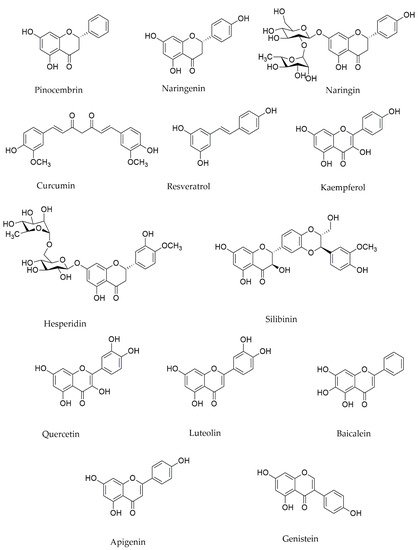
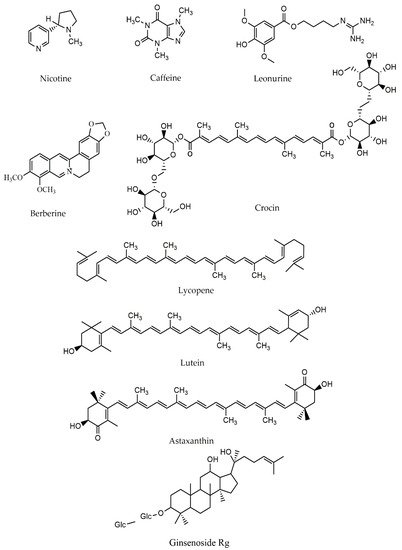
Secondary metabolites have shown promising effects on neurodegenerative diseases, specifically on PD, by targeting the mitochondria [19][22][23][19,25,34]. PD is a complex neurodegenerative disease characterized by mitochondrial dysfunction, oxidative stress, and neuroinflammation. In this line, the effects of polyphenols, terpene/terpenoids, and alkaloids are highlighted on the mitochondria in PD through various mechanisms.2.1. Polyphenols Effects on Mitochondria in PD
2.2. Alkaloids and Mitochondria in PD
2.3. Terpenes and Mitochondria in PD
| Compound(s) | Class | In Vivo/In Vitro Models | Mechanisms and Outcomes | Reference |
|---|---|---|---|---|
| Pinocembrin | Flavonoid | In vitro: SH-SY5Y cells | Blocking ERK1/2 or silencing of Nrf2 | [49][58] |
| Naringin | In vivo: adult male Wistar albino rats | ↓Rotenone-induced dopaminergic toxicity, ↓mitochondrial function, stability, and bioenergetics in the animals’ SNpc via a Nrf2-mediated path | [45][54] | |
| Naringenin | In vivo/ In vitro: brains’s neurons of Sprague Dawley rats | ↑MMP, ↓ROS via affecting the Nrf2/ARE pathway | [39][50] | |
| In vitro: SH-SY5Y cells | ↓Mitochondria-related bioenergetics and redox dysfunctions via the Nrf2/GSH pathways | [42][53] | ||
| Hesperidin | In vivo: Mice | Attenuation of mitochondrial complex I, IV, V activity | [53][62] | |
| Isoliquiritigenin | In vitro: dopaminergic neuronal SN4741 cells | ↓Production of ROS as well as the dissipation of MMP and the presence of cytochrome c in the cytoplasm | [42][53] | |
| In vitro: dopaminergic neuronal SN4741 cells | ↓ROS, ↓NO, ↓JNK and p38 MAPK, ↑Bcl-2/Bax ratio, ↑MMP, ↑BDNF, ↓ cytochrome c, ↓caspase 3 and modulating PI3K/Akt |
[92][101] | ||
| Luteolin | In vitro: SH-SY5Y cells | Preventive effect on ROS production and keep the activity of mitochondria in a normal way | [35][51][46,60] | |
| Baicalein | Flavone |
In vivo/ in vitro: mice/ rat/ SH-SY5Y cells | ↓Mitochondrial malfunction in 6-OHDA-induced | [25][36] |
| In vitro: PC12 cells | Modulating ROS production, ↓rotenone-induced apoptotic in PC12 cells via ameliorating the mitochondrial dysfunction | [27][38] | ||
| Apigenin | In vivo: Rat | ↑Performance of mitochondrial enzyme | [93][102] | |
| Chrysoeriol | In vitro: SH-SY5Y cells | ↓Toxicity of MPP+—induced via PI3K/Akt | [94][22] | |
| Puerarin | Isoflavone | In vitro: PC12 neuronal cells | ↓Toxicity of MPP+—induced | [25][36] |
| In vitro: PC12 cells and primary rat midbrain neurons | Regulation of NO-mediated mitochondrial dysfunction | [28][39] | ||
| In vitro: SH-SY5Y cells | ↓Caspase-3 in MPP+-induced through modulating the activity of the ubiquitin proteasome system | [29][40] | ||
| Genistein | In vivo: ovariectomized rats | ↓Activity of ROS-induced NF-κB/ recovered the production of Bcl-2 mRNA | [18] | |
| Hyperoside | Flavonol glycoside |
In vitro: PC12 neuronal cells | ↓Mitochondrial apoptotic pathway | [93][102] |
| In vitro: PC12 neuronal cells | ↓Mitochondrial apoptotic signaling | [37][48] | ||
| Schisandrin | Lignan | In vivo: Rat cortical cells | ↓Ca2+, ↓ROS, ↓cytochrome C | [22][25] |
| Ellagic acid | Phenolic acid |
In vitro: Rat cortical neurons | Modulating ROS production, ↑Bcl-2/Bax | [44][32] |
| Ferulic acid | In vivo: Mice | Modulating ROS production by blocking p38MAPK,caspase-3, and COX-2, ↓Bax/Bcl2 | [44][32] | |
| Protocatechuic aldehyde | In vivo/ In vitro: Male C57BL/6 mice/ SH-SY5Y cells | ↓ROS, Modulating complex I’s activity in PLK2/p-GSK-3β/Nrf2 pathway | [15] | |
| Caffeic acid | In vitro: SH-SY5Y cells | ↓ROS production and keep the mitochondrial activity normal | [45][54] | |
| In vivo: male C57BL/6 mice | ↓Dopaminergic neurodegeneration and dopamine loss | [46][55] | ||
| Curcumin | Polyphenol | In vivo/ In vitro: mice / PC12 neuronal cell line | ↓MPP+ toxicity and ROS production | [25][31][50][36,42,59] |
| Tea polyphenols | In vitro: Human HEK293T and SH-SY5Y cells | Preserving DA neurons via inhibiting DA oxidation, conjugating with DA quinones (DAQ), scavenging ROS, and modulating Nrf2-Keap1 and PGC-1α | [48][57] | |
| Oleuropein | Secoiridoid | In vitro: PC12 neuronal cell line cells | ↓Superoxide anion, ↓complexes I, II, and IV activity, defensive function against MPP+ | [6] |
| Hydroxytyrosol | Phenolic compound | In vitro: dopaminergic SH-SY5Y cells | ↓Complexes I, II, and IV activity, defensive function against MPP+ | [6] |
| Quercetin | Flavonoid | In vivo/ In vitro: aged rats/ mice | ↓Apoptosis by downregulation of PI3K/Akt pathway, ↓mitochondrial fission | [31][42] |
| In vitro: SH-SY5Y cells | ↓Mitochondrial damage, ↑tyrosine hydroxylase, and mitochondrial controlling proteins | [32][43] | ||
| In vitro: PC12 cells | ↑Mitochondrial quality control, ↓ oxidative stress, ↑mitophagy markers | [33][44] | ||
| In vivo: adult Sprague-Dawley rats | Repair mitochondrial electron transport abnormalities | [34][45] | ||
| Silibinin | Flavonolig-nan | In vivo: mice | Modulating MMP and mitochondrial activity | [36][47] |
| In vivo: | ↓Mitochondrial damage, and strengthening of the oxidative defense system | [37][48] | ||
| In vivo: Male C57B/6 mice | ↓Motor impairment and dopaminergic neuronal degeneration, ↑stability of MMP | [38][49] | ||
| Resveratrol | Stilbene | In vivo/ In vitro: aged rats/ mice | ↓Apoptosis by downregulation of PI3K/Akt pathway | [20] |
| In vitro: SH-SY5Y cells | ↑MMP, ↑mitochondrial dynamics, elongated fragmented mitochondria | [30][41] | ||
| Vanillin | Phenolic aldehyde |
In vitro: SH-SY5Y | ↓ROS production | [45][54] |
| α-Mangostin | Phenolic xanthone |
In vitro: SH-SY5Y | Recovered mitochondrial membrane potential and cellular ATP | [93][102] |
| Nicotine | Alkaloid | In vivo/ In vitro: rats | ↓complex I activity, ↓ROS, Attenuating mitochondrial apoptosis pathway | [44][56][32,65] |
| In vitro: SH-SY5Y cells | ↓MPP+ and Ca2+-induced mitochondrial high amplitude swelling, ↓cytochrome c release from intact mitochondria | [57][66] | ||
| In vitro: cultured hippocampal neurons | Mediating mitochondrial dynamics, ↑ IP3 receptor clustering, modulating mitochondria-endoplasmic reticulum communications | [58][67] | ||
| In vivo/ In vitro: rats | Maintain mitochondrial function | [59][68] | ||
| In vivo/in vitro: C57BL/6 mouse | ↓H2O2-induced astrocyte apoptosis through the mitochondrial route and α7-nAChRs | [60][69] | ||
| Caffeine | In vivo/ In vitro: mice/ dopaminergic neurons | ↓ROS production, ↑mitochondrial formation by stimulating Nrf2-keap1 and PGC-1α pathway | [61][70] | |
| Leonurine | In vivo: mice | Modulating mitochondrial activity | [69][78] | |
| Berberine | In vitro: SH-SY5Y cells/ mice | ↓6-OHDA-induced cell death, ↓MPTP-induced PD-like behavior, ↓dopaminergic neuron loss | [63][72] | |
| Embelin | In vitro: Rat dopaminergic cell line, N27 | ↑pAMPK, ↑SIRT1, ↑PGC-1α, ↑mitochondrial biogenesis | [66][75] | |
| Isorhynchophylline | In vitro: PC12 cells | ↓MPP+-induced apoptotic cell death, ↓endoplasmic reticulum stress responses | [68][77] | |
| Lycopene | Carotenoid | In vivo: small mammals | Improving mitochondrial structural membrane ability, ↓Bax | [44][71][32,80] |
| In vitro: SH-SY5Y cells | ↓MPP+-induced mitochondrial ROS generation, ↓MPP+-induced opening of the mitochondrial permeability transition pore | [72][81] | ||
| In vivo: Adult male Wistar rats | ↓cytochrome c from mitochondria | [73][82] | ||
| Crocin | In vivo: an idiopathic Drosophila | ↓complex I_III activity | [95][103] | |
| Astaxanthin | In vivo/ In vitro: Rat/ SH-SY5Y | ↓Production of ROS | [74][83] | |
| Docosahexaenoic acid-acylated astaxanthin ester | Regulating dopaminergic neuron death in the brain through the mitochondria-mediated route and JNK and p38 MAPK pathways. | [75][84] | ||
| Asiatic acid | Pentacyclic triterpenoid | In vitro: SH-SY5Y cells/ mice | ↑Bcl-xL, ↓Bax, ↓H2O2 and rotenone adverse effects | [76][85] |
| In vitro: SH-SY5Y cells | ↓ROS, ↓cytochrome c, ↑MMP, preserving membrane integrity and ATP generation | [77][86] | ||
| Catalpol | Iridoid glucoside |
In vivo: mouse | ↓Mitochondria malfunction via decreasing ATP | [85][86][94,95] |
| Ginsenosides-Rg1 | Triterpenoid | In vivo: mice | ↓Oxidative stress | [87][88][96,97] |
| Bacosides and Bacopasides |
Triterpenoid saponin | in vivo/ in vitro: Drosophila /SH-SY5Y cells | ↓Mitochondrial malfunction and oxidative stress, Modulating complex I activity | [96][97][104,105] |
| Andrografolide | Diterpenoid lactone | In vivo/ In vitro: mice brain, N9 mouse microglia (RRID CVCL_0452) cell line | ↓ROS, balancing the level of ATP, ↑deletion of depolarized mitochondria via parkin dependent pathway | [78][87] |
| Alleviating behavioral impairments, ↓dopaminergic neuron loss and preventing excessive mitochondrial fission | [79][88] | |||
| Carnosic acid | Diterpene | In vitro: Human SH-SY5Y cells | ↑Fusion protein in mitochondria, ↓fission protein activity, ↑OPA1 protein production by parkin in IKK/NF-κB pathway | [80][89] |
| In vitro: SH-SY5Y cells | ↓ROS, ↓RNS, ↑Nrf2 via modulating the PI3K/Akt pathway, ↑GSH | [81][90] | ||
| In vitro: SH-SY5Y cells | ↑VDAC1, ↓cytosolic cytochrome c, ↑ PINK1/parkin-mediated mitophagy | [82][91] | ||
| Tormentic acid | Triterpene | In vitro: SH-SY5Y cells | ↓ROS, ↓Bax/Bcl-2 ratio through stimulation of the PI3K/Akt/GSK-3β signaling pathway | [84][93] |
| Boswellic acids | Pentacyclic triterpene | In vivo: Rats | ↓Rotenone-induced mitochondrial malfunction by inhibiting the IL-6/STAT3/NF-κB signaling pathways | [83][92] |
| Ginsenosides-Rg | Ginsenoside | In vivo: SN of MPTP-treated mice | Reducing iron-staining cells | [87][96] |
| Ginsenoside Rb1 | In vivo: mice primary cultured dopaminergic neuron | Recovering MMP and lessening Ca2+ over-influx into the mitochondria | [91][100] | |
| Ginsenoside Re | In vitro: PINK1-null dopaminergic cell line | Repair and offset particular mitochondrial complex IV deficiencies | ||
| Notoginsenoside R2 | In vitro: SH-SY5Y cells | ↓Mitochondrial death via the MEK1/2–ERK1/2 pathways | ||
| P-ginseng | In vitro: SH-SY5Y cells | ↓ROS excessive synthesis and inhibiting the mitochondria-dependent apoptotic pathway |