
Overexploitation of resources makes the reutilization of waste a focal topic of modern society, and the question of the kind of wastes that can be used is continuously raised. Sewage sludge (SS) is derived from the wastewater treatment plants, considered important underused biomass, and can be used as a biofertilizer when properly stabilized due to the high content of inorganic matter, nitrate, and phosphorus. However, a wide range of pollutants can be present in these biosolids, limiting or prohibiting their use as biofertilizer, depending on the type and origin of industrial waste and household products. Long-term applications of these biosolids could substantially increase the concentration of contaminants, causing detrimental effects on the environment and induce hyperaccumulation or phytotoxicity in the produced crops.
- by-products
- biosolids
- organic compounds
- circular economy
- total lifecycle assessment
- biomass effect
1. Introduction
Nowadays, water and sewage treatments plants, coupled with the high-performance technological methods, enhance the separation of the organic residue waste, efficiently producing sludges. Due to the physical-chemical processes involved in the treatment, the sludge tends to concentrate heavy metals and poorly biodegradable trace organic compounds, as well as potentially pathogenic organisms present in wastewaters. After the proper treatment, the sludge becomes a biosolid, which is envisioned as a valuable biological resource
. For example, chemical purification processes of drinking water include the addition of nontoxic aluminum (Al) or iron (Fe) which chelates several contaminants, settling in the bottom, forming a sludge. When previously treated, for instance, with Fe/Mn (manganese) or phosphorous (P), which already has been tested in soils rich in copper (Cu) and lead (Pb), to reduce plant bioaccumulation, could introduce several agronomic benefits into the soil
. Treated sludge is defined as having undergone “biological, chemical or heat treatment, long-term storage or any other appropriate process so as significantly to reduce its fermentability and the health hazards resulting from its use”
. Sewage sludge (SS) or biosolids are a major by-product of the wastewater treatment process, and they can be a source of organic matter and nutrient replenishment for the regeneration of eroded soils and improvement of soil productivity potential
.
Sewage wastewater (SW) is normally subjected to three stages (see
), namely preliminary treatment, primary, and secondary treatments
. The preliminary treatment is necessary to remove objects with a diameter superior to 2 cm and heavy solids, which are not included in the biosolids. The primary treatment physically removes suspended solids and scum from wastewater, which are brought together to form a primary sludge, through a two-stage process, using pre-aeration and sedimentation, additionally providing dissolved oxygen to support microorganisms in a later stage
. The secondary biological treatment decreases the existing biodegradable material, using microorganisms to consume dissolved and suspended organic matter, obtaining a secondary sludge, that is separated by the density difference, due to increasing number of developed microorganisms
. Both primary and secondary treatments produce a sludge that is mixed to obtain a biosolid
. The agronomic use of biosolids is widely analyzed as one of the most useful applications for several reasons, including the incorporation of organic matter, nitrogen (N), and P in the soil, improving its physicochemical, microbial, and enzymatic properties, and thus soil fertility
. The use of biosolids, for instance, allows the recovery of P from domestic waste streams, which could replace, to some extent, the global demand for phosphate rock, a non-renewable resource
. These biosolids are often stabilized through dehydration to reduce the presence of pathogens, such as
spp.
,
, and
which could cause severe health concerns. Other more technological stabilization processes, such as thermophilic anaerobic digestion, could reduce the concentration of organic compounds and heavy metals in the biosolids, derived from the multiplicity of products used in industry, housekeeping, and other daily life activities, converting this resource into a more valuable and safe usable biomass
.
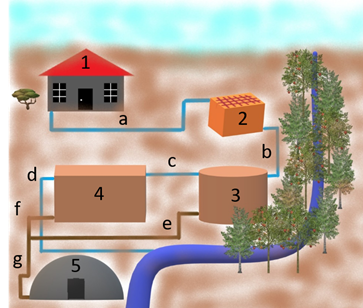
Figure 1. Wastewater treatment facility diagram (adapted from Demirbas et al. [5]). 1—treatment facility, 2—preliminary treatment, 3—primary treatment, 4—secondary treatment, 5—sludge dehydration, a—wastewater, b—sifted wastewater, c—wastewater without sediment, d—treated wastewater for stream discharge, e—primary sludge, f—secondary sludge, g—mixed sludges.
A wide range of contaminants can be present in these biosolids, which may limit or prohibit their use as biofertilizers, such as polynuclear aromatic hydrocarbons (PAHs), polychlorinated biphenyls (PCBs), polychlorinated naphthalene (PCN), perfluoroalkyl substances (PFASs), halogenated flame retardants (HFRs), polychlorinated n-alkanes, organochlorine pesticides, synthetic musk’s, antibiotics, pharmaceuticals, and heavy metals
. Food and Agriculture Organization (FAO) guidelines
and the European Directive 86/278/EEC
describe the maximum permissible concentration of potentially toxic elements in the soil after application of SS and maximum annual rates of addition. The previously-mentioned European directive regulates the upper values of heavy metals in soils and SS, when agricultural use is foreseen, which includes cadmium (Cd), nickel (Ni), zinc (Zn), mercury (Hg), Cu, and Pb. However, some of these values are pH dependent due to the higher mobility, resulting in a higher bioavailability to the crops. A previous systematic review which included a meta-analysis, concluded that exposure to heavy metals such as arsenic (As), Cd, Pb and Hg are positively associated with metabolic syndrome in humans, which represents an array of metabolic disorders such as hyperglycemia, high blood pressure, abdominal obesity and dyslipidemia
. Due to the health concerns regarding the agronomic use of SS application, which introduces heavy metals into the soils, several methods were developed to reduce this hazard. One of the early studies analyzed the use of organic acids as an extractant, such as oxalic and citric acids with two main advantages, operate at mild pH conditions (pH 3–5) and biodegradable
. Other processes were further developed at a laboratorial level to efficiently extract heavy metals from SS which includes supercritical fluid extraction, chemical agent treatment, plant-based washing agents, ion-exchange extraction, advanced oxidation, bioleaching, and electrokinetic processes, which are the latest to have already been tested at a pilot scale level
. To reduce the environmental and health risks of agricultural use of biosolids, the application of stabilization methods has been studied over the years, including composting
, vermicomposting
, incineration
, adding fly ash and/or lime
, modified clay minerals from the smectite group such as montmorillonite
, aerobic and anaerobic digestion
, and mixing with steelmaking slag
. Nevertheless, successive long-term applications of these biosolids could substantially increase the concentration of heavy metals, causing harmful effects to the environment, plant hyperaccumulation, and induction of phytotoxicity in the produced crops
.
The application of biosolids for land reclamation and the recovery of degraded land to produce energy crops has also been exploited over the years. To maintain energy security and be prepared for the inevitable climatic changes, several plant species are tested for this purpose, among others
,
,
, and
. Research involving energy crops evaluates their calorific value and carbon content, which are indicators of its potentiality as an energy crop
, and also determine its potential as a bio-accumulator when considering sustainable phytoremediation in contaminated land
. Several other reviews have been published over the years, systemizing important information that could help decide the safest and economically feasible application of sewage sludge and biosolids, evidencing the future of this biomass. Sewage sludge characterization, crop and soil effects, heavy metals accumulation, and possible risks and recommendations are often considered
. Other review works also include critical comparisons concerning heavy metals content between composted municipal waste and sewage sludge from several countries, metal extractability analysis, bioavailability to crops and soil microbial activity and fertility
. Still, more concerns related to organic contaminants and pharmaceuticals, risks to groundwater, relationship between organic matter and heavy metals availability, effect on soil salinity, eutrophication, and pathogenic organisms are also reviewed
. A recent work discusses some of the previous mention topics and permissible heavy metals and organic pollutants limits in composts regarding distinct countries, global production of solid wastes and biosolids, and also relates biosolids and omics study
. Our review complements the effort by focusing on heavy metals content, summarizing several additional reported works, concerning SS and biosolids, soil and crop analysis, discriminating individual results from distinct publications. Regarding SS and biosolids, 13 distinct cities are included and 12 for soil analysis. For food products, 18 crops, including similar species, are reviewed in their heavy metal concentration on seeds (n = 10), leaves (n = 4), and fruits (n = 3). In comparison with previous review works, we believe that discriminating individual reports and focusing only on heavy metals, provides a more thorough analysis regarding this contamination. Also, the systemization of the technical benefits and difficulties when fertilizing with SS or biosolids for crop production, evidencing current legislation and guidelines, increases awareness on the subject. Including reports on phytoremediation and bioenergetics, we intend to complement this work, providing alternatives for food crop production when using contaminated soil or consecutive fertilization with SS or biosolids occurs, elevating soil heavy metal concentration, surpassing the current legislation upper limit.
2. Sewage Sludge and Biosolids Analysis
Sewage sludge and biosolids could be considered a double-edged sword. On one hand, it represents a potential source of nutrients for plant growth and a material that can be used to improve the physical properties of the soil. However, on the other hand, it may also contain a range of potentially toxic metals, which could be dangerous for human health, primarily through the consumption of plants grown in sludge-enriched soils. Industrial effluents are a significant source of heavy metals in SS and biosolids because the concentration of some of those elements is usually extremely high in industrial sludges. Most organic contaminants and pharmaceutical products in SS are concentrated after wastewater treatments, by particle precipitation. There is a wide variation of heavy metals limit values, even between similar geographical areas, type of amendment, and applied concentration of biosolids. The pH values, the amounts of NPK nutrients, heavy metals in SS from several studies, and different locations are presented in Table 2. These values were compared and discussed according to the Council Directive No. 86/278/EEC [3] due to the limiting regulations that control the contaminants in SS for agriculture purposes. The outliers were underlined and marked in bold.
According to the compilation of the results, most applied SS have values of pH, NPK, and heavy metals within the range stipulated in Directive No. 86/278/EEC
. In the case of Kong et al.
in Hebei (China), low pH values that were marginally lower than 6 were observed. According to article 8 of the Directive, when pH values are below 6, it is necessary to take into account the increased mobility and availability of heavy metals to the crop. The authors’ main objective was to use a metabolomic strategy to evaluate the phytotoxicity of SS biochar. The results revealed that the biosolid pyrolysis into biochar altered the properties, reduced the toxicity towards wheat, and promoted the species growth.
A pot experiment was conducted using the amendment ratios for agricultural soil in India, by mixing 20% and 40% (
/
) of SS to study the use of SS amendment and the consequent contamination of palak (
var. Allgreen H-1) by heavy metal for a leafy vegetable
. The biosolids amendment led to a significant increase in the concentrations of Pb, Cr, Cd, Cu, Zn, and Ni in the soil
. The concentration of Cd in soil was found to be above the Indian legal limits according to Characterization Of MSW Compost and its Application in Agriculture (Central Pollution Control Board—CUPS/59/2005-06 from 2006), and the values described in Directive No. 86/278/EEC
for both the amendment ratios. Limit values of the Directive range from 20 to 40 mg of Cd per kg of biosolids and in Singh and Agrawal’s
work, this element showed values of 154.5 ± 2.52 mg of Cd per kg of sewage sludge.
It is important to highlight works that present values that are significantly below the limits according to the directive
. For example, in the case of Seleiman et al.
from Helsinki (Finland), they observed that the mixture of SS with peat improved the characteristics of the SS as a fertilizer. This observation was due to an increase in leaf area and accumulation of biomass of sludge–peat mixture fertilized in bioenergy crops, compared to plain sewage sludge. Still, Cd had a value of 0.4 (limits 20 to 40 mg kg
), Cu was 270 (1000 to 1750 mg kg
), and Zn was 30 (2500 to 4000 mg kg
) (
). Moreover, the authors proposed that the heavy metal stress imposed by the pollutants on sludge can be ameliorated by mixing the sludge with the peat.
Sewage sludge improved the morphological and ecophysiological parameters of sunflower (
L.) seedlings, as well as the soil chemical characteristics in Meknès-Saïs, Morocco, according to Mohamed et al.
. In this study, Hg had a value of 0.44 ± 0.1 (limit 16 to 25 mg kg
), and Pb was 81 ± 4.5 (limits are 750 to 1200 mg kg
) (
).
In summary, these works evidence that pyrolysis could be applied to biosolids to reduce toxicity to the cultivated crops. Also, mixing SS with other materials (such as peat) could improve sewage sludge fertilization characteristics and still ameliorate the stress imposed by the heavy metals. Nonetheless, sewage sludge could improve the morphological and ecophysiological parameters in seedlings (such as sunflower plants) and soil chemical characteristics.
Sewage sludge analysis.
| pH | N | P | K | Cd | Cr | Cu | Hg | Ni | Pb | Zn | Ref. | ||||||||||
|---|---|---|---|---|---|---|---|---|---|---|---|---|---|---|---|---|---|---|---|---|---|
| Country/City | g kg−1 DW | mg kg−1 DW | |||||||||||||||||||
| Argentina/Buenos Aires | - | 2.7 ± 0.47 | 7.7 ± 1.4 | 1.4 ± 0.3 | 3.9 ± 1.9 | 155.6 ± 51.8 | 360.3 ± 80.9 | - | 85.5 ± 76.1 | 322.7± 151.6 | 1526 ± 523 | [40] | |||||||||
| Australia/Brisbane | - | - | - | - | 1.8 | 16.7 ± 0.3 | 447.7 ± 1.5 | - | 19.8 ± 0.2 | 41.7 ± 0.3 | 830.6 ± 4.2 | [41] | |||||||||
| Brazil/Jaboticabal | - | 34.08 | 21.62 | 1.9 | 11 | 808 | 722 | - | 231 | 186 | 2159 | [42] | |||||||||
| China/Hebei | 5.8 | 56.6 | 9.8 | - | 0.3 | 83.51 | 221.9 | - | 32.62 | 73.31 | [22] | ||||||||||
| China/Taiyuan | - | - | - | - | 22.1 | 245.8 | 1122 | 20.6 * | - | 118.5 | 3059 | 1.62 ± 0.13 | 1.47 ± 0.15 | 2.22 ± 0.22 | 5.67 ± 0.51 | 3.47 ± 0.35 | 22.07 ± 1.08 | 120 ton ha−1[43] | |||
| Varanasi/India | [ | 60 | ] | Denmark/Copenhagen | |||||||||||||||||
| Brassica rapa | 7.7 | /Leaves47 | -33 | - | 1.4 | 98 | 244 | - | 31 | 178 | 1041 | [44] | |||||||||
| - | 21.9 | - | - | 23.8 | 150 ton ha | −1 | compost (2:1, wood waste:SS) | Taiyuan/China | [43] | Finland/Helsinki | 7.2 | 0.031 | 0.026 | 0.002 | 0.4 | 30 | 270 | ||||
| Lactuca sativa/ | - | 20 | 20 | 470 | Leaves | [ | 39 | 1.2] | |||||||||||||
| - | 12.3 | 28 | - | 202 | 80 ton ha | −1 | Murcia/Spain | [ | 55] | India/New Delhi | 6.4 | 18 | 16.1 | 1.83 | - | - | 173 | - | - | 78 | 1853 |
| Zea mays/Seeds | - | - | [ | 1.8 ± 0.6 | 280 ± 50 | - | 45 | ] | |||||||||||||
| 17.5 ± 0.8 | 25.4 ton ha | −1 | year | −1 | Girona/Spain | [ | 1 | ] | India/Uttarakhand | 9.0 | - | 0.216 ± 0.002# | - | 10.24 ± 0.14 | 8.63 ± 1.06 | 18.96 ± 1.09 | - | - | 9.33 ± 1.01 | 11.25 ± 1.00 | [46] |
| Zea mays/Seeds | 0.06 | 10.55 | 5.6 | 0.98 | - | 85.8 | Pots with 2.66 kg of SS on top + 13.33 kg of Soil | Helsinki/Finland | [39] | India/Varanasi | 7.0 | 17.3 ± 0.2 | 0.717 ± 0.06 | 0.209 ± 0.002 | 154.5 ± 2.52 | 35.5 ± 0.76 | 317.7 ± 1.92 | - | 18.9 ± 0.09 | 60 ± 5.77 | 785.3 ± 16.69 |
| Zea mays/Seeds | - | - | - | 2.65 | - | - | 67.5 ton ha−1 | [ | 38 | ] | |||||||||||
| Jaboticabal/Brazil | [ | 42 | ] | Morocco/Meknès-Saïs | 6.1 | 52.2 ± 2 | 0.586 ± 0.018 # | 0.920 ± 0.021 | 1.15 ± 0.2 | 32.8 ± 2.4 | |||||||||||
| Brassica oleracea | 17.9 ± 1.2 | cv. Blue Vantage/Leaves | 0.44 ± 0.1 | 0 | 20.9 ± 1.7 | 81 ± 4.5 | 215 ± 12.4 | [6] | |||||||||||||
| 0.04 | 2 | 0.36 | 0.06 | 7.5 | 2.69 ton ha | −1 | Kentucky/USA | [ | 61] | Pakistan/Multan | 6.9 | 14.6 | 13.38 | - | 5.5 | - | 145 | ||||
| Brassica oleracea | - | cv. Packman/heads | 35 | 0 | 0.05 | 3 | 0.475 | 20 | 0.1 | 18- | [ | 0.67 ton ha−147] | |||||||||
| Kentucky/USA | [ | 61 | ] | Pakistan/Multan | 7.6 | 6 | 13 | 13 | 26 | - | - | - | 160 | 13 | - | ||||||
| Abelmoschus esculentus/Fruit | [ | 48 | ] | ||||||||||||||||||
| 21 | 1.1 | 9.4 | 7.3 | 4.3 | 34.3 | 40% ( | w/w) | Varanasi/India | [62] | Spain/Alicante | 6.5 | 2.48 | 5.62 | 7.89 | 1.6 | 16.6 | 157 | n.d. | n.d. | ||
| Brassica napus/Seeds | 0.05 | 0.12 | 2.5 | 0.22 | 40.8 | - | 19.5 | Pots with 2.66 kg of SS on top + 13.33 kg of Soil | Helsinki/Finland | [39470 | [20] | ||||||||||
| ] | |||||||||
| Oryza sativa | |||||||||
| /Seeds | |||||||||
| 2.28 ± 0.03 | |||||||||
| 6.37 ± 0.13 | |||||||||
| - | |||||||||
| 11.68 ± 0.49 | |||||||||
| 0.85 ± 0.08 | |||||||||
| 22.59 ± 2.73 | 40 ton ha | −1 | Varanasi/India | [ | 63 | ] | |||
| Beta vulgaris/Leaves | 25a | 3a | 22a | 5a | 2a | 75a | 40% (w/w) | Varanasi/India | [38] |
| Triticum aestivum/Seeds | 1.09 ± 0.02 | 0.49 ± 0.03 | - | 2.32 ± 0.23 | n.d. | 52.44 ± 0.84 | 40 ton ha−1 | Varanasi/India | [63] |
| Triticum vulgare/Seeds | 0.15 ± 0.05 | - | 8.333 ± 0.775 | - | 4.800 ± 0.087 | 16.202 ± 0.368 | 75% (w/w) | Sohag/Egypt | [54] |
| pH | N | P | K | Cd | Cr | Cu | Hg | Ni | Pb | Zn | Ref. | |
|---|---|---|---|---|---|---|---|---|---|---|---|---|
| Country/City | g kg−1 DW | mg kg−1 DW | ||||||||||
| Argentina/Buenos Aires | - | 2.7 ± 0.47 | 7.7 ± 1.4 | 1.4 ± 0.3 | 3.9 ± 1.9 | 155.6 ± 51.8 | 360.3 ± 80.9 | - | 85.5 ± 76.1 | 322.7± 151.6 | 1526 ± 523 | [40] |
| Australia/Brisbane | - | - | - | - | 1.8 | 16.7 ± 0.3 | 447.7 ± 1.5 | - | 19.8 ± 0.2 | 41.7 ± 0.3 | 830.6 ± 4.2 | [41] |
| Brazil/Jaboticabal | - | 34.08 | 21.62 | 1.9 | 11 | 808 | 722 | - | 231 | 186 | 2159 | [42] |
| China/Hebei | 5.8 | 56.6 | 9.8 | - | 0.3 | 83.51 | 221.9 | - | 32.62 | 73.31 | [22] | |
| China/Taiyuan | - | - | - | - | 22.1 | 245.8 | 1122 | 20.6 * | - | 118.5 | 3059 | [43] |
| Denmark/Copenhagen | 7.7 | 47 | 33 | - | 1.4 | 98 | 244 | - | 31 | 178 | 1041 | [44] |
| Finland/Helsinki | 7.2 | 0.031 | 0.026 | 0.002 | 0.4 | 30 | 270 | - | 20 | 20 | 470 | [39] |
| India/New Delhi | 6.4 | 18 | 16.1 | 1.83 | - | - | 173 | - | - | 78 | 1853 | [45] |
| India/Uttarakhand | 9.0 | - | 0.216 ± 0.002# | - | 10.24 ± 0.14 | 8.63 ± 1.06 | 18.96 ± 1.09 | - | - | 9.33 ± 1.01 | 11.25 ± 1.00 | [46] |
| India/Varanasi | 7.0 | 17.3 ± 0.2 | 0.717 ± 0.06 | 0.209 ± 0.002 | 154.5 ± 2.52 | 35.5 ± 0.76 | 317.7 ± 1.92 | - | 18.9 ± 0.09 | 60 ± 5.77 | 785.3 ± 16.69 | [38] |
| Morocco/Meknès-Saïs | 6.1 | 52.2 ± 2 | 0.586 ± 0.018 # | 0.920 ± 0.021 | 1.15 ± 0.2 | 32.8 ± 2.4 | 17.9 ± 1.2 | 0.44 ± 0.1 | 20.9 ± 1.7 | 81 ± 4.5 | 215 ± 12.4 | [6] |
| Pakistan/Multan | 6.9 | 14.6 | 13.38 | - | 5.5 | - | 145 | - | 35 | 20 | - | [47] |
| Pakistan/Multan | 7.6 | 6 | 13 | 13 | 26 | - | - | - | 160 | 13 | - | [48] |
| Spain/Alicante | 6.5 | 2.48 | 5.62 | 7.89 | 1.6 | 16.6 | 157 | n.d. | n.d. | 40.8 | 470 | [20] |
Underlined and in bold are the values that exceed the maximum allowable concentrations for heavy metals according to the Council Directive 86/278/EEC of June 12, 1986 [3]. n.d.—not determined. *—ppb (parts per billion). #—Extractable phosphorus—Olsen Method. Ref.—References.
3. Soil Analyses
The agricultural use of SS and biosolids is a worldwide effective sludge disposal technique. However, its application in agricultural soils must be well thought out, regarding human food consumption. Soil amendments with these resources have been reportedly useful in increasing the number of agro-morphological attributes and yields in different crop species [49], but it is common knowledge that this kind of biomass often contains heavy metals and toxic organic residues. Its indiscriminate use can be detrimental to soil productivity and cause harm to the food chain [37]. Further, dietary intake of heavy metal-contaminated plant food can affect human health in the long term by damaging the nervous, pulmonary, and renal systems [50]. There is a wide variation in limit values for heavy metals, even between similar geographical areas, and depends on the food crops species and the kind of amendment and applied ratios. The extent of heavy metal uptake by plants grown in soil amended with sludge/compost has been evaluated in different locations, as indicated in Table 2. The Codex Alimentarius Commission developed in a joint FAO and WHO [51] effort together with the European Union Commission Regulation No. 1881/2006 of December 19, 2006 [52] which regulates the maximum levels of contaminants in foods. Unfortunately, these could not be compared with the values in Table 2, due to the discrepancy between fresh and dry weight values present in the current legislation and revised works, respectively, without the water content information.
Table 2. Soil analysis.
| pH
pH |
EC
EC |
Organic Matter
Organic Matter |
N
N |
P
P |
K
K |
Cd
Cd |
Cr
Cr |
Cu
Cu |
Hg
Hg |
Ni
Ni |
Pb
Pb |
Zn
Zn |
Ref.
Ref. |
|
|---|---|---|---|---|---|---|---|---|---|---|---|---|---|---|
| Country/City
Country/City |
dS m−1
dS m−1 |
g kg−1 DW
g kg−1 DW |
mg kg−1 DW
mg kg−1 DW |
|||||||||||
| China/Taiyuan
China/Taiyuan |
7.2
7.2 |
-
- |
-
- |
1.2
1.2 |
-
- |
-
- |
38
38 |
112.5
112.5 |
34.6
34.6 |
-
- |
-
- |
87.7
87.7 |
81.2
81.2 |
[43] |
| Egypt/Sohag
Egypt/Sohag |
7.9
7.9 |
0.61
0.61 |
2
2 |
0.053
0.053 |
0.003
0.003 |
0.077
0.077 |
0.5
0.5 |
-
- |
11
11 |
-
- |
-
- |
7
7 |
32
32 |
[53] |
| India/New Delhi
India/New Delhi |
8.4
8.4 |
0.19
0.19 |
-
- |
0.0116
0.0116 |
2.65
2.65 |
141.5
141.5 |
-
- |
-
- |
2.07
2.07 |
-
- |
-
- |
0.056
0.056 |
3.76
3.76 |
[45] |
| India/Uttarakhand
India/Uttarakhand |
7.4
7.4 |
2.63
2.63 |
-
- |
-
- |
-
- |
-
- |
0.09
0.09 |
0.18
0.18 |
2.42
2.42 |
-
- |
-
- |
0.12
0.12 |
0.88
0.88 |
[46] |
| India/Varanasi
India/Varanasi |
8.2
8.2 |
0.24
0.24 |
-
- |
1.8
1.8 |
0.054
0.054 |
-
- |
1.51
1.51 |
0.34
0.34 |
3.51
3.51 |
-
- |
4.95
4.95 |
2.83
2.83 |
2.11
2.11 |
[38] |
| Morocco/Meknès-Saïs
Morocco/Meknès-Saïs |
8.2
8.2 |
0.1
0.1 |
9.8
9.8 |
0.7
0.7 |
-
- |
0.271
0.271 |
0.22
0.22 |
57.5
57.5 |
1.6
1.6 |
<0.1
<0.1 |
21.5
21.5 |
16.2
16.2 |
3.1
3.1 |
[6] |
| Poland/Silesia
Poland/Silesia |
7.9
7.9 |
-
- |
-
- |
0.481
0.481 |
0.015
0.015 |
-
- |
2.3
2.3 |
26.32
26.32 |
29.44
29.44 |
-
- |
28.99
28.99 |
46.57
46.57 |
112
112 |
[31] |
| Spain/Alicante
Spain/Alicante |
7.9
7.9 |
1.64
1.64 |
1.29
1.29 |
0.0125
0.0125 |
0.007
0.007 |
0.3
0.3 |
0.15
0.15 |
14.7
14.7 |
0.94
0.94 |
n.d.
n.d. |
n.d.
n.d. |
0.21
0.21 |
0.59
0.59 |
[20] |
| Spain/Murcia
Spain/Murcia |
8.5
8.5 |
0.16
0.16 |
6.71
6.71 |
0.66
0.66 |
0.32
0.32 |
4.76
4.76 |
0.1
0.1 |
-
- |
7.3
7.3 |
-
- |
14.3
14.3 |
-
- |
24.3
24.3 |
[54] |
| Spain/Santiago de Compostela
Spain/Santiago de Compostela |
4.8
4.8 |
-
- |
-
- |
5
5 |
-
- |
-
- |
-
- |
30
30 |
12
12 |
-
- |
20
20 |
36
36 |
78
78 |
[55] |
| Tunisia/Tunes
Tunisia/Tunes |
8.0
8.0 |
0.263
0.263 |
-
- |
1.1
1.1 |
-
- |
-
- |
-
- |
-
- |
32
32 |
-
- |
50
50 |
22
22 |
70
70 |
[56] |
| U.K./Reading
U.K./Reading |
5.6
5.6 |
-
- |
77
77 |
-
- |
1.208
1.208 |
-
- |
1.2
1.2 |
35
35 |
38
38 |
0.2
0.2 |
12
12 |
34
34 |
71
71 |
[57] |
Underlined and in bold are the values that exceed the maximum allowable concentrations for heavy metals according to the Council Directive 86/278/EEC of June 12, 1986 [3], or/and for FAO—wastewater treatment and use in agriculture [16], or/and WHO human health-related chemical guidelines for reclaimed waster and SS applications in agriculture [39]. n.d.—not determined. Ref.—References.
Regarding the document of wastewater treatment and use in agriculture from the Food and Agriculture Organization of the United Nation (FAO), in
(Agricultural use of Sewage Sludge), point 6.2 (Sludge Application), the authors present maximum permissible concentrations of potentially toxic elements (PTE) in the soil after application of SS
. When considering the pH of 5.0 < 5.5, values of Cd are set in 3, Zi in 200, and Pb in 300 mg kg
dry solids, for example. Depending on the element, this value can change with the increasement of pH (e.g., Zi is set on 200 for pH 5.0 < 5.5, 250 for pH of 5.5 < 6.0, and up to 450 for pH > 7.0). Parameters such as Mo, Se, F, and As, are not subject to the provisions of Directive 86/278/EEC
.
Sewage sludge can be used for soil amendment at the rate of 40% by maintaining the soil health and maximum yield of French bean (
L.) in Uttarakhand, India
. The initial soil values presented in
for this work were 0.09 mg for Cd (limits are 1 to 3 mg kg
), 0.12 mg for Pb (limits are 50 to 300 mg kg
), and 0.88 mg for Zn (limits are 150 to 200 mg kg
). Values were also below permissible limits for FAO and WHO limits. In Taiyuan (China), Cd values higher than the Directive rules for rapeseed germination and plumelet development, barley, and Chinese cabbage yields
were observed. Posterior application of composted SS did not affect the rapeseed germination, and was beneficial for the plumelet development at lower application rates (<150 ton ha
). Also, it generated positive yield responses for barley and Chinese cabbage. However, SS increased the concentrations of Cu and Zn in 0–20 cm of soil and had little effect on those metals in the deeper soil (>20 cm). The limit values in Directive No. 86/278/EEC
range from 1 to 3 mg, and the soil values presented in this work were 38 mg kg
. This also corroborates the limits for Cd in the Chinese legislation (20 mg kg
DW for alkaline or neutral soils), which holds as the standard regulation related to sludge, the Control Standards of Pollutants in Sludges from Agricultural Use (GB 4284-84), that was promulgated in 1984 but never been amended. Further, it was also high for FAO (3 mg kg
dry solids)
and WHO limits
(4 mg kg
). Also, in this work, Pb was slightly higher (87.7 mg kg
DW) than the permissible limit only for WHO parameters (84 mg kg
), but not higher than the permissible limits in the Chinese legislation (GB 4284-84). Kidd et al.
also analyzed the soil from Santiago de Compostela, Spain, in which some values were borderline according to the Directive
(
), namely Ni and Pb. Compared with FAO
and WHO
guidelines, the values were below the permissible limits for all analyzed heavy metals. Additionally, the pH presented a lower value (4.8) than the limits according to the Council Directive No. 86/278/EEC
(from 6 to 7), which could increase the bioavailability of the heavy metals to the produced crops. Even despite existing global guidelines (e.g., FAO and WHO), that can indicate the limit values for most heavy metals, and even existing continental information, such as EU directives, the importance of local decree is of the essence. Among different motives, is possible to highlight the materials that compose the SS, the treatments to neutralize possible harmful agents and type of application and purpose of use. Additionally, updating and amending the already existing directives are essential to boost the SS utilization, dimmish social prejudice, and to meet the goals related to the adequate standardization of this residue and application according to the present day.
4. Food Crops
| Specie/Plant Organ * | Cd | Cr | Cu | Ni | Pb | Zn | Sewage Sludge/Compost Application | City/Country | Ref. |
|---|---|---|---|---|---|---|---|---|---|
| g kg−1 DW | |||||||||
| Hordeum vulgare/Seeds | - | - | 5.4 ± 0.5 | 0.060 ± 0.010 | - | 20 ± 3 | 22.3 ton ha−1 year−1 | Girona/Spain | [1] |
| Hordeum vulgare/Seeds | - | - | 2.8 | - | - | 15.3 | 150 ton ha−1 compost (2:1, wood waste:SS) | Taiyuan/China | [43] |
| Hordeum vulgare/Seeds | 0.038 | - | 11.2 | 1.29 | - | 61.7 | 80 ton ha−1 | Murcia/Spain | [59] |
| Phaseolus vulgaris/Fruit | 2a | 0.4a | 0.8a | - | 0.02a | 5a | 100% | Haridwar/India | [46] |
| Vigna radiata/Fruit | |||||||||
7. Phytoremediation and Bioenergetics
For over three hundred years, phytoremediation has been a cost-effective plant-based technology for carbon sequestration and clean metal-contaminated ecosystems. Byproducts of industrial and other man-made activities incorporate heavy metals and metalloids in the environment, such as Pb, Cd, Zn, Cu, Co, As, Ni, Fe, Cr, and Se
. The phytoremediation strategies depend on the nature and concentration of the metal-contaminant, ecosystem physicochemical properties, and plants
. The model of plants to be used as ideal phytoextractors must have the ability to accumulate a range of heavy metals in their harvestable parts and also to have high biomass and fast growth rates for bioenergy purposes
.
Currently, the use of bioenergy perennial non-edible crops, such as trees, grasses, and herbs, has been considered a sustainable approach for phytoremediation with economic returns
. The application of SS and biosolids could support the phytoremediation process of metal-contaminated soils, with the breakdown and leaching of organic matter leading to an increase in the plant biomass phytoremediators and improvement of soil microorganisms
. An eco-friendly bioenergy option for a source of renewable energy source in agricultural, industrial, transportation, and household sectors, is the remediation of contaminated lands with energy crops
.
The selection of perennial non-edible crops for phytoremediation and biomass production has to consider their specificity, transport, accumulation, and tolerance mechanisms for different metals. Plants use up to five types of phytoremediation strategies to cope with metalliferous environments
. They can use the phytoextraction (or phytoaccumulation) as a high metal translocation rate between plant roots and upper organs, with high contaminant concentration factor in aboveground organs
. Phytostabilization is the use of vegetation to restrict the metal-bioavailability in soil and water, aiming for the stabilization of the metals (Cr, Cd, As, Hg, Cu, and Zn)
. Phytodegradation (or phytotransformation) is a decontamination process that uses enzymes in the rhizosphere or even in the plant root system, to breakdown the contaminants into less-toxic products
. The rhizofiltration (or phytofiltration) is used by aquatic or land plants to decontaminate aquatic ecosystems. It is a method with a low chance of atmospheric contamination because of the concentration of the metal-contaminant concentration in the roots until the saturation point, without any translocation to the shoots
. Finally, the phytovolatilization is a form of plants to extract pollutants (such as Hg, Se) from the soil, water, and sediments. The contaminants are absorbed by roots, converted into less-toxic compounds, and subsequently released into the atmosphere through leaf evapotranspiration, which could disturb the natural equilibrium of the atmosphere
.
However, plants that naturally grow in metalliferous environments are considered excluders or hyperaccumulators. Excluders repel metal ions present in the soil as a survival strategy or, if the uptake occurs, the toxic effect is restrained and detoxified in the roots, with the aboveground organs being less affected. Meanwhile, the hyperaccumulators can accumulate up to a 1000-fold higher level of heavy metals in their tissues than for non-hyperaccumulating species under the same metal-contaminated matrix conditions
. The hyperaccumulation process starts with the metal-uptake detoxification in the root system through a metallocomplex formation, using ZIP proteins. It allows a further translocation via the apoplast or symplast, from plant underground to aboveground organs, through the sequestration, distribution, and accumulation of metals at less metabolically active cells inside the plant tissues
. For example, the alpine penny grass (
J. & C. Presl.) is a Cd-hyperaccumulator, known for its great capability and efficiency in phytoremediation. The root membranes have a specific Cd transporter that improves Cd root uptake and leads to high root proliferation, when in the presence of a high Cd level. The use of alpine penny grass assists the phytoextraction of Cd in industrial soils and agricultural fields. With SS added, an increment of biomass production and the metal extraction capacity is observed, with a higher shoot area that improves the metal retention capacity
. Their successive growth and harvest cycles can lead to a positive outcome on reducing the risk of contamination of the food chain by Cd by lowering the transference of this toxic metal from the soil to another following edible plant crop, like lettuce (
L.)
. The reed canary grass (
L.) is another fascinating species for phytostabilization of metal-contaminated soil, with roots having a higher accumulation of Co and Cd and leaves with Zn and Pb. The reed canary grass was also indicated for Co and Zn environmental biomonitoring (e.g., agricultural fields, cities with high traffic contamination), with a direct and significant correlation of heavy metals organ accumulation with the levels of these elements in the environment
.
Water hyacinth (
(Mart.) Solms) and other floating aquatic weed plants, such as water lettuce (
L.) and duckweed (
L.), are noticeable bioremediators of water polluted by heavy metals
. The water hyacinth has a good potential for Cd remediation, showing a phytotoxic tolerance to Cd up to 15 mg l
, accumulating it efficiently in the aboveground tissues
. This effective phytoremediation process in water hyacinth absorption of Cd from contaminated water could be due to a mutualistic symbiosis between the roots and arbuscular mycorrhizal fungi
.
Both processes of contaminated ecosystems phytoremediation and the use of biosolids/compost as a waste management strategy for soil fertilization generate significant biomass for industrial purposes
. For example, Çelebi et al.
tested hydroponically the growth of native grass known as sunburst switchgrass (
L.) in four distinct Pb-treated solutions and observed good Pb accumulation with no growth delay, considering it a good phytoremediator and fuel producer. Willow (
L.) is a phytoextractor, known as a fast-growing deep-rooting woody species, with high transport of these heavy metals to shoots, specifically for Cd, Zn, and Cu. Willow can remove up to 61 g of Cd ha
year
. The stems from Willow clones are relevant for bioenergy production in the Swedish region, but as a counterpart, the ashes contain high concentration in Cd. To be used as a field fertilizer, the ashes undergo a purification step by removing Cd from the ash during the combustion process
. The Cd and Zn are preferably accumulated in the Willow leaves, allowing the removal of soil heavy metals with the continuous stem harvest
. Giant reed (
L.) has shown an extensive and profound root system and high-quality biomass production in both polluted water and soil environments, with culms presenting high cellulose content, commonly used for the production of fiber, paper, biopolymers, and energy (second-generation ethanol, and biodiesel). Giant reed plants have proper support for the phytoextraction process by showing high translocation factor for Cd, Co, Pb, Fe, and Ni, with the last being the metal with the most concentration in the leaves. Additionally, it has a lower translocation factor for Zn and Cr, with a higher concentration in the root organ
.
spp. trees are also relevant in wood biomass production to generate firewood, boards, charcoal, pulp, and paper
. With the application of SS,
W. Hill registered an increment of 86% in biomass content, equivalent to approximately 80 ton ha
, and improved the
Dehnh development, with no negative effects on trees’ health
. Likewise, the application of biosolids compost in Cardoon (
L.) led to an increase in energy yield, enhancing the oil production for biofuel for the Mediterranean region
. However, the biomass harvested from metal-contaminated sites for industrial application needs an ecotoxicological risk assessment before use. The utmost ecologically safe solution is to use the energy production for combustion or pyro-gasification, followed by metal recovery from the fly ash, using hydrometallurgical paths
. Also, the contaminated unharvested material should be phytostabilized by covering the remediated area with hardy vegetation, to counteract the transference and metal accumulation in the topsoil through leaf decomposition
.
References
- Iglesias, M.; Marguí, E.; Camps, F.; Hidalgo, M. Extractability and crop transfer of potentially toxic elements from mediterranean agricultural soils following long-term sewage sludge applications as a fertilizer replacement to barley and maize crops. Waste Manag. 2018, 75, 312–318.
- Wang, Q.; Shaheen, S.M.; Jiang, Y.; Li, R.; Slaný, M.; Abdelrahman, H.; Kwon, E.; Bolan, N.; Rinklebe, J.; Zhang, Z. Fe/Mn- and P-modified drinking water treatment residuals reduced Cu and Pb phytoavailability and uptake in a mining soil. J. Hazard Mater. 2021, 403.
- European Commission. Protection of the Environment, and in particular of the soil, when sewage sludge is used in agriculture. Off. J. Eur. Communities 1986, 4, 6–12.
- Burducea, M.; Zheljazkov, V.D.; Lobiuc, A.; Pintilie, C.A.; Virgolici, M.; Silion, M.; Asandulesa, M.; Burducea, I.; Zamfirache, M.M. Biosolids application improves mineral composition and phenolic profile of basil cultivated on eroded soil. Sci. Hortic. 2019, 249, 407–418.
- Demirbas, A.; Edris, G.; Alalayah, W.M. Sludge production from municipal wastewater treatment in sewage treatment plant. Energy Sources Part. A Recover. Util. Environ. Eff. 2017, 39, 999–1006.
- Mohamed, B.; Mounia, K.; Aziz, A.; Ahmed, H.; Rachid, B.; Lotfi, A. Sewage sludge used as organic manure in Moroccan sunflower culture: Effects on certain soil properties, growth and yield components. Sci. Total Environ. 2018, 627, 681–688.
- Yuan, Z.; Pratt, S.; Batstone, D.J. Phosphorus recovery from wastewater through microbial processes. Curr. Opin. Biotechnol. 2012, 23, 878–883.
- Krzyzanowski, F.; de Souza Lauretto, M.; Nardocci, A.C.; Sato, M.I.Z.; Razzolini, M.T.P. Assessing the probability of infection by Salmonella due to sewage sludge use in agriculture under several exposure scenarios for crops and soil ingestion. Sci. Total Environ. 2016, 568, 66–74.
- Lloret, E.; Pastor, L.; Pradas, P.; Pascual, J.A. Semi full-scale thermophilic anaerobic digestion (TAnD) for advanced treatment of sewage sludge: Stabilization process and pathogen reduction. Chem. Eng. J. 2013, 232, 42–50.
- Dabrowska, L.; Rosińska, A. Change of PCBs and forms of heavy metals in sewage sludge during thermophilic anaerobic digestion. Chemosphere 2012, 88, 168–173.
- Yang, L.; Liu, W.; Zhu, D.; Hou, J.; Ma, T.; Wu, L.; Zhu, Y.; Christie, P. Application of biosolids drives the diversity of antibiotic resistance genes in soil and lettuce at harvest. Soil Biol. Biochem. 2018, 122, 131–140.
- García-Santiago, X.; Franco-Uría, A.; Omil, F.; Lema, J.M. Risk assessment of persistent pharmaceuticals in biosolids: Dealing with uncertainty. J. Hazard. Mater. 2016, 302, 72–81.
- Shamuyarira, K.K.; Gumbo, J.R. Assessment of heavy metals in municipal sewage sludge: A case study of Limpopo Province, South Africa. Int. J. Environ. Res. Public Health 2014, 11, 2569–2579.
- Stevens, J.L.; Northcott, G.L.; Stern, G.A.; Tomy, G.T.; Jones, K.C. PAHs, PCBs, PCNs, organochlorine pesticides, synthetic musks, and polychlorinated n-alkanes in U.K. sewage sludge: Survey results and implications. Environ. Sci. Technol. 2003, 37, 462–467.
- Navarro, I.; de la Torre, A.; Sanz, P.; Fernández, C.; Carbonell, G.; Martínez, M. de los Á. Environmental risk assessment of perfluoroalkyl substances and halogenated flame retardants released from biosolids-amended soils. Chemosphere 2018, 210, 147–155.
- FAO. Agricultural Use of Sewage. In Waste Water Treatment and Use in Agriculture, FAO Irrigation and Drawing Paper 47; Food and Agriculture Organization of the United Nations: Rome, Italy, 1992.
- Xu, P.; Liu, A.; Li, F.; Tinkov, A.A.; Liu, L.; Zhou, J.C. Associations between Metabolic Syndrome and Four Heavy Metals: A Systematic Review and Meta-Analysis. Environ. Pollut. 2021, 273, 116480.
- Veeken, A.H.M.; Hamelers, H.V.M. Removal of heavy metals from sewage sludge by extraction with organic acids. Water Sci. Technol. 1999, 40, 129–136.
- Geng, H.; Xu, Y.; Zheng, L.; Gong, H.; Dai, L.; Dai, X. An overview of removing heavy metals from sewage sludge: Achievements and perspectives. Environ. Pollut. 2020, 266, 115375.
- Casado-Vela, J.; Sellés, S.; Díaz-Crespo, C.; Navarro-Pedreño, J.; Mataix-Beneyto, J.; Gómez, I. Effect of composted sewage sludge application to soil on sweet pepper crop (Capsicum annuum var. annuum) grown under two exploitation regimes. Waste Manag. 2007, 27, 1509–1518.
- Suthar, S. Pilot-scale vermireactors for sewage sludge stabilization and metal remediation process: Comparison with small-scale vermireactors. Ecol. Eng. 2010, 36, 703–712.
- Kong, L.; Liu, J.; Han, Q.; Zhou, Q.; He, J. Integrating metabolomics and physiological analysis to investigate the toxicological mechanisms of sewage sludge-derived biochars to wheat. Ecotoxicol. Environ. Saf. 2019, 185, 109664.
- Samaras, P.; Papadimitriou, C.A.; Haritou, I.; Zouboulis, A.I. Investigation of sewage sludge stabilization potential by the addition of fly ash and lime. J. Hazard. Mater. 2008, 154, 1052–1059.
- Slaný M, Jankovič L, Madejová, J. Structural characterization of organo-montmorillonites prepared from a series of primary alkylamines salts: Mid-IR and near-IR study. Appl. Clay. Sci. 2019, 176, 11–20.
- Martín, J.; Santos, J.L.; Aparicio, I.; Alonso, E. Pharmaceutically active compounds in sludge stabilization treatments: Anaerobic and aerobic digestion, wastewater stabilization ponds and composting. Sci. Total Environ. 2015, 503–504, 97–104.
- Samara, E.; Matsi, T.; Balidakis, A. Soil application of sewage sludge stabilized with steelmaking slag and its effect on soil properties and wheat growth. Waste Manag. 2017, 68, 378–387.
- Wu, L.; Cheng, M.; Li, Z.; Ren, J.; Shen, L.; Wang, S.; Luo, Y.; Christie, P. Major nutrients, heavy metals and PBDEs in soils after long-term sewage sludge application. J. Soils Sediments 2012, 12, 531–541.
- Elmi, A.; Al-Khaldy, A.; AlOlayan, M. Sewage sludge land application: Balancing act between agronomic benefits and environmental concerns. J. Clean. Prod. 2020, 250, 119512.
- Guoqing, X.; Xiuqin, C.; Liping, B.; Hongtao, Q.; Haibo, L. Absorption, accumulation and distribution of metals and nutrient elements in poplars planted in land amended with composted sewage sludge: A field trial. Ecotoxicol. Environ. Saf. 2019, 182, 109360.
- Lag-Brotons, A.; Gómez, I.; Navarro-Pedreño, J.; Mayoral, A.M.; Curt, M.D. Sewage sludge compost use in bioenergy production—A case study on the effects on Cynara cardunculus L energy crop. J. Clean. Prod. 2014, 79, 32–40.
- Fijalkowski, K.; Rosikon, K.; Grobelak, A.; Hutchison, D.; Kacprzak, M.J. Modification of properties of energy crops under Polish condition as an effect of sewage sludge application onto degraded soil. J. Environ. Manage. 2018, 217, 509–519.
- Kumar, A.; Kumar, N.; Baredar, P.; Shukla, A. A review on biomass energy resources, potential, conversion and policy in India. Renew. Sustain. Energy Rev. 2015, 45, 530–539.
- Pandey, V.C.; Bajpai, O.; Singh, N. Energy crops in sustainable phytoremediation. Renew. Sustain. Energy Rev. 2016, 54, 58–73.
- Singh, R.P.; Agrawal, M. Potential benefits and risks of land application of sewage sludge. Waste Manag. 2008, 28, 347–358.
- Smith, S.R. A critical review of the bioavailability and impacts of heavy metals in municipal solid waste composts compared to sewage sludge. Environ. Int. 2009, 35, 142–156.
- Liu, H. Achilles heel of environmental risk from recycling of sludge to soil as amendment: A summary in recent ten years (2007–2016). Waste Manag. 2016, 56, 575–583.
- Sharma, B.; Sarkar, A.; Singh, P.; Singh, R.P. Agricultural utilization of biosolids: A review on potential effects on soil and plant grown. Waste Manag. 2017, 64, 117–132.
- Singh, R.P.; Agrawal, M. Effects of sewage sludge amendment on heavy metal accumulation and consequent responses of Beta vulgaris plants. Chemosphere 2007, 67, 2229–2240.
- Seleiman, M.F.; Santanen, A.; Stoddard, F.L.; Mäkelä, P. Feedstock quality and growth of bioenergy crops fertilized with sewage sludge. Chemosphere 2012, 89, 1211–1217.
- Lavado, R.S. Effects of sewage-sludge application on soils and sunflower yield: Quality and toxic element accumulation. J. Plant. Nutr. 2006, 29, 975–984.
- Farrell, M.; Rangott, G.; Krull, E. Difficulties in using soil-based methods to assess plant availability of potentially toxic elements in biochars and their feedstocks. J. Hazard. Mater. 2013, 250–251, 29–36.
- de Melo, W.J.; de Stéfani Aguiar, P.; Maurício Peruca de Melo, G.; Peruca de Melo, V. Nickel in a tropical soil treated with sewage sludge and cropped with maize in a long-term field study. Soil Biol. Biochem. 2007, 39, 1341–1347.
- Wei, Y.; Liu, Y. Effects of sewage sludge compost application on crops and cropland in a 3-year field study. Chemosphere 2005, 59, 1257–1265.
- Lemming, C.; Oberson, A.; Hund, A.; Jensen, L.S.; Magid, J. Opportunity costs for maize associated with localised application of sewage sludge derived fertilisers, as indicated by early root and phosphorus uptake responses. Plant. Soil 2016, 406, 201–217.
- Mondal, S.; Singh, R.D.; Patra, A.K.; Dwivedi, B.S. Changes in soil quality in response to short-term application of municipal sewage sludge in a typic haplustept under cowpea-wheat cropping system. Environ. Nanotechnology, Monit. Manag. 2015, 4, 37–41.
- Kumar, V.; Chopra, A.K. Accumulation and translocation of metals in soil and different parts of french bean (Phaseolus vulgaris L.) amended with sewage sludge. Bull. Environ. Contam. Toxicol. 2014, 92, 103–108.
- Rehman, R.A.; Rizwan, M.; Qayyum, M.F.; Ali, S.; Zia-ur-Rehman, M.; Zafar-ul-Hye, M.; Hafeez, F.; Iqbal, M.F. Efficiency of various sewage sludges and their biochars in improving selected soil properties and growth of wheat (Triticum aestivum). J. Environ. Manage. 2018, 223, 607–613.
- Rehman, R.A.; Qayyum, M.F. Co-composts of sewage sludge, farm manure and rock phosphate can substitute phosphorus fertilizers in rice-wheat cropping system. J. Environ. Manage. 2020, 259, 109700.
- Delibacak, S.; Voronina, L.; Morachevskaya, E.; Ongun, A.R. Use of sewage sludge in agricultural soils: Useful or harmful. Eurasian J. Soil Sci. 2020, 9, 126–139.
- Aoshima, K.; Fan, J.; Cai, Y.; Katoh, T.; Teranishi, H.; Kasuya, M. Assessment of bone metabolism in cadmium-induced renal tubular dysfunction by measurements of biochemical markers. Toxicol. Lett. 2003, 136, 183–192.
- FAO/WHO. Information and use in discussion related to contaminants and toxins in the GSCTFF. Jt. FAO/WHO Food Stand. Program. Codex Comm. Contam. Foods 2011, 1–90.
- Commission Regulation (EC) No 1881/2006 of 19 December 2006 Setting Maximum Levels for Certain Contaminants in Foodstuffs. In Text with EEA relevance; European Commission: Bruxelles, Belgium, 2006.
- Mazen, A.; Faheed, F.A.; Ahmed, A.F. Study of potential impacts of using sewage sludge in the amendment of desert reclaimed soil on wheat and jews mallow plants. Brazilian Arch. Biol. Technol. 2010, 53, 917–930.
- Moreno, J.L.; García, C.; Hernández, T.; Ayuso, M. Application of composted sewage sludges contaminated with heavy metals to an agricultural soil: Effect on lettuce growth. Soil Sci. Plant. Nutr. 1997, 43, 565–573.
- Kidd, P.S.; Domínguez-Rodríguez, M.J.; Díez, J.; Monterroso, C. Bioavailability and plant accumulation of heavy metals and phosphorus in agricultural soils amended by long-term application of sewage sludge. Chemosphere 2007, 66, 1458–1467.
- Lakhdar, A.; Iannelli, M.A.; Debez, A.; Massacci, A.; Jedidi, N.; Abdelly, C. Effect of municipal solid waste compost and sewage sludge use on wheat (Triticum durum): Growth, heavy metal accumulation, and antioxidant activity. J. Sci. Food Agric. 2010, 90, 965–971.
- Moffat, A.J.; Armstrong, A.T.; Ockleston, J. The optimization of sewage sludge and effluent disposal on energy crops of short rotation hybrid poplar. Biomass Bioenergy 2001, 20, 161–169.
- Chang, A.C., Page. Developing Human Health-Related Chemical Guidelines for Reclaimed Waster and Sewage Sludge Applications in Agriculture; World Health Organization: Geneva, Switzerland, 2002; p. 105.
- Moreno, J.L.; García, C.; Hernández, T.; Pascual, J.A. Transference of heavy metals from a calcareous soil amended with sewage-sludge compost to barley plants. Bioresour. Technol. 1996, 55, 251–258.
- Singh, R.P.; Agrawal, M. Effect of different sewage sludge applications on growth and yield of Vigna radiata L. field crop: Metal uptake by plant. Ecol. Eng. 2010, 36, 969–972.
- Antonious, G.F.; Kochhar, T.S.; Coolong, T. Yield, quality, and concentration of seven heavy metals in cabbage and broccoli grown in sewage sludge and chicken manure amended soil. J. Environ. Sci. Heal. Part. A Toxic/Hazardous Subst. Environ. Eng. 2012, 47, 1955–1965.
- Singh, R.P.; Agrawal, M. Use of sewage sludge as fertiliser supplement for Abelmoschus esculentus plants: Physiological, biochemical and growth responses. Int. J. Environ. Waste Manag. 2009, 3, 91–106.
- Latare, A.M.; Kumar, O.; Singh, S.K.; Gupta, A. Direct and residual effect of sewage sludge on yield, heavy metals content and soil fertility under rice-wheat system. Ecol. Eng. 2014, 69, 17–24.
- Düring, R.A.; Hoß, T.; Gäth, S. Depth distribution and bioavailability of pollutants in long-term differently tilled soils. Soil Tillage Res. 2002, 66, 183–195.
- Zhou, H.; Yang, W.T.; Zhou, X.; Liu, L.; Gu, J.F.; Wang, W.L.; Zou, J.L.; Tian, T.; Peng, P.Q.; Liao, B.H. Accumulation of heavy metals in vegetable species planted in contaminated soils and the health risk assessment. Int. J. Environ. Res. Public Health 2016, 13.
- Zhu, Y.; Yu, H.; Wang, J.; Fang, W.; Yuan, J.; Yang, Z. Heavy metal accumulations of 24 asparagus bean cultivars grown in soil contaminated with Cd alone and with multiple metals (Cd, Pb, and Zn). J. Agric. Food Chem. 2007, 55, 1045–1052.
- Rai, P.K.; Lee, S.S.; Zhang, M.; Tsang, Y.F.; Kim, K.H. Heavy metals in food crops: Health risks, fate, mechanisms, and management. Environ. Int. 2019, 125, 365–385.
- Krzesłowska, M. The cell wall in plant cell response to trace metals: Polysaccharide remodeling and its role in defense strategy. Acta Physiol. Plant. 2011, 33, 35–51.
- Probst, A.; Liu, H.; Fanjul, M.; Liao, B.; Hollande, E. Response of Vicia faba L. to metal toxicity on mine tailing substrate: Geochemical and morphological changes in leaf and root. Environ. Exp. Bot. 2009, 66, 297–308.
- Zhuang, P.; McBride, M.B.; Xia, H.; Li, N.; Li, Z. Health risk from heavy metals via consumption of food crops in the vicinity of Dabaoshan mine, South China. Sci. Total Environ. 2009, 407, 1551–1561.
- Loutfy, N.; Fuerhacker, M.; Tundo, P.; Raccanelli, S.; El Dien, A.G.; Ahmed, M.T. Dietary intake of dioxins and dioxin-like PCBs, due to the consumption of dairy products, fish/seafood and meat from Ismailia city, Egypt. Sci. Total Environ. 2006, 370, 1–8.
- Real, M.I.H.; Azam, H.M.; Majed, N. Consumption of heavy metal contaminated foods and associated risks in Bangladesh. Environ. Monit. Assess. 2017, 189.
- Türkdogan, M.K.; Fevzi, K.; Kazim, K.; Ilyas, T.; Ismail, U. Heavy metals in soil, vegetables and fruits in the endemic upper gastrointestinal cancer region of Turkey. Environ. Toxicol. Pharmacol. 2002, 13, 175–179.
- Lentini, P.; Zanoli, L.; de Cal, M.; Granata, A.; Dell’Aquila, R. Lead and Heavy Metals and the Kidney, 3rd ed.2019; ISBN 9780323449427.
- Al-Saleh, I.; Al-Rouqi, R.; Elkhatib, R.; Abduljabbar, M.; Al-Rajudi, T. Risk assessment of environmental exposure to heavy metals in mothers and their respective infants. Int. J. Hyg. Environ. Health 2017, 220, 1252–1278.
- Navas-Acien, A.; Guallar, E.; Silbergeld, E.K.; Rothenberg, S.J. Lead exposure and cardiovascular disease—A systematic review. Environ. Health Perspect. 2007, 115, 472–482.
- Weisskopf, M.G.; Weuve, J.; Nie, H.; Saint-Hilaire, M.H.; Sudarsky, L.; Simon, D.K.; Hersh, B.; Schwartz, J.; Wright, R.O.; Hu, H. Association of cumulative lead exposure with Parkinson’s disease. Environ. Health Perspect. 2010, 118, 1609–1613.
- Mossa, A.W.; Bailey, E.H.; Usman, A.; Young, S.D.; Crout, N.M.J. The impact of long-term biosolids application (>100 years) on soil metal dynamics. Sci. Total Environ. 2020, 720.
- Hosseini Koupaie, E.; Eskicioglu, C. Health risk assessment of heavy metals through the consumption of food crops fertilized by biosolids: A probabilistic-based analysis. J. Hazard. Mater. 2015, 300, 855–865.
- Salem, H.M.; Abdel-Salam, A.; Abdel-Salam, M.A.; Seleiman, M.F. Phytoremediation of metal and metalloids from contaminated soil. In Plants Under Metal and Metalloid Stress: Responses, Tolerance and Remediation; Springer Nature Singapure: Berlin/Heidelberg, Germany, 2018; ISBN 9789811322426.
- Edelstein, M.; Ben-Hur, M. Heavy metals and metalloids: Sources, risks and strategies to reduce their accumulation in horticultural crops. Sci. Hortic. 2018, 234, 431–444.
- Pandey, V.C.; Bajpai, O. Phytoremediation: From Theory Toward Practice; Elsevier Inc.: Amsterdam, The Netherlands, 2019; ISBN 9780128139134.
- Polechońska, L.; Klink, A. Trace metal bioindication and phytoremediation potentialities of Phalaris arundinacea L. (reed canary grass). J. Geochemical Explor. 2014, 146, 27–33.
- Placek, A.; Grobelak, A.; Kacprzak, M. Improving the phytoremediation of heavy metals contaminated soil by use of sewage sludge. Int. J. Phytoremediation. 2016, 18, 605–618.
- Greger, M.; Landberg, T. Use of willow in phytoextraction. Int. J. Phytoremediation 1999, 1, 115–123.
- Schwartz, C.; Echevarria, G.; Morel, J.L. Phytoextraction of cadmium with Thlaspi caerulescens. Plant. Soil 2003, 249, 27–35.
- Fernando, A.L.; Barbosa, B.; Costa, J.; Papazoglou, E.G. Giant Reed (Arundo Donax l.): A Multipurpose Crop Bridging Phytoremediation with Sustainable Bioeconomy; Elsevier Inc.: Amsterdam, The Netherlands, 2016; ISBN 9780128028728.
- Suman, J.; Uhlik, O.; Viktorova, J.; Macek, T. Phytoextraction of heavy metals: A promising tool for clean-up of polluted environment? Front. Plant. Sci. 2018, 871, 1–15.
- Guerinot, M. Lou The ZIP family of metal transporters. Biochim. Biophys. Acta 2000, 1465, 190–198.
- Ali, S.; Abbas, Z.; Rizwan, M.; Zaheer, I.E.; Yavas, I.; Ünay, A.; Abdel-Daim, M.M.; Bin-Jumah, M.; Hasanuzzaman, M.; Kalderis, D. Application of floating aquatic plants in phytoremediation of heavy metals polluted water: A review. Sustainability 2020, 12, 1927.
- Bais, S.S.; Lawrence, K.; Pandey, A.K. Phytoremediation Potential of Eichhornia crassipes (Mart.) Solms. Int. J. Environ. Agric. Biotechnol. 2016, 1, 210–217.
- Das, S.; Goswami, S.; Das Talukdar, A. Physiological responses of water hyacinth, eichhornia crassipes (Mart.) solms, to cadmium and its phytoremediation potential. Turkish J. Biol. 2016, 40, 84–94.
- Gunathilakae, N.; Yapa, N.; Hettiarachchi, R. Effect of arbuscular mycorrhizal fungi on the cadmium phytoremediation potential of Eichhornia crassipes (Mart.) Solms. Groundw. Sustain. Dev. 2018, 7, 477–482.
- Çelebi, Ş.Z.; Ekin, Z.; Zorer, Ö.S. Accumulation and tolerance of Pb in some bioenergy crops. Polish J. Environ. Stud. 2018, 27, 591–596.
- Klang-Westin, E.; Eriksson, J. Potential of Salix as phytoextractor for Cd on moderately contaminated soils. Plant. Soil 2003, 249, 127–137.
- da Silva, P.H.M.; Poggiani, F.; Laclau, J.P. Applying Sewage Sludge to Eucalyptus grandis Plantations: Effects on Biomass Production and Nutrient Cycling through Litterfall. Appl. Environ. Soil Sci. 2011, 2011, 1–11.
- Leila, S.; Mhamed, M.; Heilmeier, H.; Kharytonov, M.; Wiche, O.; Moschner, C.; Onyshchenko, E.; Nadia, B. Fertilization value of municipal sewage sludge for Eucalyptus camaldulensis plants. Biotechnol. Reports 2017, 13, 8–12.
- Unterbrunner, R.; Puschenreiter, M.; Sommer, P.; Wieshammer, G.; Tlustoš, P.; Zupan, M.; Wenzel, W.W. Heavy metal accumulation in trees growing on contaminated sites in Central Europe. Environ. Pollut. 2007, 148, 107–114.