Artificial-intelligence-enabled agri-food entrepreneurship is the creation of new ventures and the entrepreneurial renewal of existing firms, whose value propositions and business models are built around learning-based computational systems applied across the food value chain, from primary production and processing to distribution, consumption, and the recovery of losses and by-products. The core enabling technologies are machine learning and computer vision, generative artificial intelligence (AI) and large language models, and AI-enabled robotics and predictive analytics, deployed with complementary digital infrastructure such as the Internet of Things, big data, cloud and edge computing, blockchain, and digital twins. The concept is broader than technology adoption because its subject is the entrepreneur: how opportunities are recognised or created, how business models convert them into revenue, and why so few technically capable solutions become durable businesses. This entry makes four contributions: It specifies a mechanism—because AI lowers the cost of prediction but not of judgement, opportunities concentrate in decisions that are prediction-intensive, recurrent, and attached to an outcome that the customer already measures. It provides a taxonomy of business-model archetypes that separates value creation from value capture. It establishes the boundary conditions under which digital-entrepreneurship theory transfers to food systems—seasonality, fixed adoption costs, contested data governance, and liability. Finally, it converts the synthesis into seven testable propositions and an evidence calibration separating controlled benchmarks, field pilots, and commercial deployment.
The agri-food sector—agriculture, fisheries, food processing, distribution, and retail—faces intensifying pressures to feed a growing population, adapt to climate change, use scarce resources efficiently, and meet demands for quality, transparency, and sustainability
[1][2][1,2]. These coincide with the maturation of digital technologies: successive waves described as precision agriculture, digital agriculture, and Agriculture 4.0 have integrated sensing, connectivity, analytics, and automation across the chain
[1][3][4][1,3,4]. Within this digitalisation, artificial intelligence (AI) denotes computational methods—most prominently machine learning (ML) and deep learning—that learn patterns from data to generate predictions or decisions
[5][6][5,6]. AI has become an increasingly important capability, and the public release of generative AI and large language models (LLMs), beginning in late 2022, extended its reach towards content generation and natural-language interaction
[7][8][7,8].
The Gap: Three research streams meet here and have matured largely in isolation. Digital transformation and digital entrepreneurship explain how digital technologies reshape opportunity, organisation, and value creation
[9][10][11][12][9,10,11,12], but the account is sector-agnostic and its canonical settings—software, platforms, consumer services—combine near-zero marginal cost, rapid iteration, and short validation cycles, none of which holds in food production. Work on AI in agriculture and food is technically rich but takes the model, the field, or the farm as its unit of analysis, treating the venture that supplies the technology as background
[5][6][13][14][15][5,6,13,14,15]. Research on AgriFoodTech start-ups is recent and explicitly incomplete: a state-of-the-art review finds the evidence thin, geographically concentrated, and directed at the roles start-ups play in innovation systems rather than at how they create and capture value
[16], and a structured review of AI and agricultural business models reaches the same conclusion, identifying only 37 relevant contributions
[17]. What falls between the three is the entrepreneurial question itself: not whether a model performs or a farm adopts, but how an opportunity is recognised or created, by whom, through which business model, and why so few capable technologies become durable businesses.
Aim and Contribution: This entry organises that knowledge into a single account and makes the three streams speak to one another. It reports no new empirical data and claims no novel phenomenon, but makes four contributions. First,
it specifies a mechanism: AI reduces the cost of prediction while leaving the cost of judgement—determining the payoff associated with each action and accepting responsibility for the consequences—largely unchanged
[18], an asymmetry that explains where opportunities concentrate and where they dissipate. Second,
it provides constructs: a taxonomy of business-model archetypes that separates value creation from value capture, and an evidence calibration separating controlled benchmarks, field pilots, and commercial deployment. Third,
it establishes boundary conditions on the transfer of general digital-entrepreneurship theory to food: biological seasonality, fixed adoption costs that do not scale with output, contested data governance, and liability for agronomic advice. Fourth,
it challenges an implicit mechanism: applied work commonly assumes a chain from technical performance to adoption to value, whereas the chain breaks at two transitions, and the breaks—not the performance—are where entrepreneurial action lies. These are stated as seven propositions (Propositions 1–7) so that others can test, refute, or bound them.
Scope and Approach: This is a narrative, encyclopaedic synthesis rather than a systematic review, drawing primarily on peer-reviewed literature, with policy documents used for legislation, industry reports for market statistics only, and company or company-derived sources only for specific products or firm claims, labelled as such. Complementary technologies (the Internet of Things (IoT), cloud and edge computing, blockchain, digital twins) are treated only where they support AI-enabled value propositions; mechanical automation without learning and biotechnology not involving AI are excluded. Because the subject is entrepreneurship, sustainability, governance, and responsible AI enter as boundary conditions on what a venture can legitimately claim, capture, and retain rather than as parallel topics. Controlled benchmarks, field pilots, and commercial-scale evidence are distinguished throughout, and investment figures are treated as indicators of investor attention, not of adoption, performance, or impact.
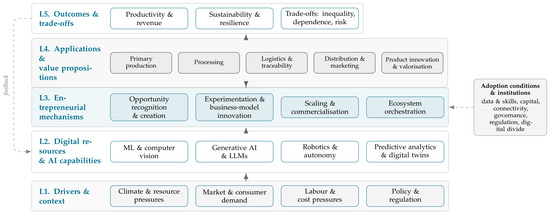
Figure 1 presents the organising framework,
Section 2 explains its construction,
Section 3,
Section 4,
Section 5 and
Section 6 develop its levels,
Section 7 converts the propositions into an empirical agenda, and
Section 8 states what follows. Each substantive section closes with a summary of what is established, what is changing, and what remains unknown.
Figure 1. Integrative framework for AI-enabled agri-food entrepreneurship. Contextual drivers (L1) motivate the mobilisation of digital resources and AI capabilities (L2), which entrepreneurs convert—through opportunity recognition and creation, business-model innovation, scaling, and ecosystem orchestration (L3)—into applications and value propositions across the chain (L4), producing outcomes and trade-offs (L5); adoption conditions and institutions moderate the process, with feedback from outcomes to resources. Constructed by mapping three literature streams onto the TOE framework and the dynamic-capabilities view, as explained in
Section 2 (authors’ elaboration).