Your browser does not fully support modern features. Please upgrade for a smoother experience.

Please note this is a comparison between Version 2 by Catherine Yang and Version 1 by Ana María Ibáñez Sánchez.
The term “Biofertilizer”, also named as bioinoculants or bioformulations, encompasses organic products comprising beneficial microorganisms, either in their active or inactive forms, able to colonize the rhizosphere or the internal tissues of plants. These microorganisms enhance a plant’s ability to uptake essential nutrients such as nitrogen, phosphorus, and potassium, promoting nutrient availability and uptake capacity, which results in increased crop yields. Thus, biofertilizers have been suggested as a safe and eco-friendly alternative to chemical fertilizers. Legal regulations and social environmental concerns are converging towards the promotion of more sustainable agriculture based on organic compounds and soil preservation.
- biofertilizers
- foliar application
- mulch
- spray application
1. Introduction
A milestone in human development was achieved on 15 November 2022, when the world’s population reached 8.0 billion people, as reported by the United Nations (https://www.un.org/en/global-issues/population, accessed on 13 February 2026). In less than a century, the world population has grown from approximately 2.5 billion in 1950 to a projected 9 billion by 2037, with the last billion expected to be added in just 15 years. This exponential and relentless population growth has led to an ongoing search for higher crop productivity within shorter timeframes. Hence, the worldwide production of primary crop commodities in 2021 reached 9.5 billion tonnes, marking a 54% increase since 2000 and a 2% increment since 2020, as FAO (Food and Agriculture Organization of the United Nations) stated in 2022 [1]. Accordingly, agricultural production has become strongly dependent on the use of energy and chemical inputs, as well as the development of heavy machinery. However, in recent years, concepts such as “soil health” have gained significance, understanding soil as an ecosystem that must maintain an equilibrium to ensure plant yield. Moreover, the One Health concept, which unifies the health of people, animals, and ecosystems, also fits the current trends in soil preservation (FAO, https://www.fao.org/one-health/en; accessed on 12 Februaty 2026). Based on this philosophy, a decrease in the use of chemical pesticides and fertilizers is mandatory at a universal scale due to their negative impacts on soil fertility (e.g., loss of biodiversity, disturbance in biogeochemical cycles), their negative effects on environmental pollution, soil degradation, and also human health-associated risks [2,3,4][2][3][4].
In addition, climate change is appearing as an ecological challenge to the crop’s stability due to sudden temperature fluctuations, prolonged periods of both rainfall and drought, and the emergence or the geographical spreading of new pests [5].
Nowadays, biofertilizers rise as a promising alternative for sustainable crop production in the 21st century [3,4,6,7][3][4][6][7] and have been proposed as enhancers of the plant resilience and the rhizosphere against both biotic and abiotic stresses [5]. In fact, the biofertilizer market is projected to witness substantial growth, increasing from $2.8 billion in 2022 to an estimated $5.2 billion by 2028, according to the report published by the economic data supplier “Markets and Markets” (www.MarketsandMarkets.com; accessed on 13 February 2026) [3,8][3][8]. The Asia–Pacific region is expected to account for 34% of the total demand for biofertilizers, with Europe and Latin America also shifting their consumption patterns towards these products due to regulatory measures concerning chemical fertilizers [7].
The term “Biofertilizer”, also named as bioinoculants or bioformulations, encompasses organic products comprising beneficial microorganisms, either in their active or inactive forms, able to colonize the rhizosphere or the internal tissues of plants. These microorganisms enhance a plant’s ability to uptake essential nutrients such as nitrogen, phosphorus, and potassium, promoting nutrient availability and uptake capacity, which results in increased crop yields. Thus, biofertilizers have been suggested as a safe and eco-friendly alternative to chemical fertilizers [3,4,6,9][3][4][6][9].
2. New Possibilities in Biofertilizer Application Techniques
An aspect frequently overlooked in biofertilizers application is the on-field implementation. Thus, it would be advisable to ease farmers work by: i) developing straightforward applications, ii) adapting to diverse agricultural methodologies, and iii) allowing simple product storage [22][10]. These aspects often remain relatively unnoticed during the initial stages of research inquiries, thereby contributing to the inconsistent outcomes in biofertilizer use at the field level [128][11].
2.1. Biofertilizers: Inception
Despite laboratory-scale field and greenhouse experiments that involve the direct application of bacterial inoculum to the rhizosphere or soil, this method may encounter challenges in effectively enhancing crop growth due to environmental limitations such as the constrained shelf life of microorganisms. Consequently, initial attempts into the commercial utilization of biofertilizers primarily revolved around the use of solid carrier-based bioformulations (mainly powders or granules), directly applied as soil amendments. The term “carrier” denotes a medium with the capacity to support microbial growth and facilitate their delivery, to ensure microbial cell viability during storage and application [22,129,130,131][10][12][13][14]. This carrier must be nontoxic for plants and microbes, physically and chemically stable, cost-effective, biodegradable, able to maintain humidity, and ensure cell viability [132,133][15][16]. Peat-based inoculants have historically dominated the commercial biofertilizer market owing to the substantial surface area of peat, its excellent water retention properties, and the conducive environment it provides for metabolic activity and cell proliferation during storage. However, peat-based compounds can have adverse effects on the growth of specific microorganisms. Furthermore, due to their carbon dioxide trapping capacity, if peat is used as a carrier, its mitigation effect on climate change will be reversed when the captured CO2 is released again. In addition to their negative environmental impact on peat-rich ecosystems [131,132,134][14][15][17]. Thus, there has been a shift towards the development of new carriers from both organic materials (such as compost, biogas slurry, crushed corn cobs, biochar, peat, etc.) and inorganic substances (including zeolite, perlite, lignite, or vermiculite) [22,23,129,130,131][10][12][13][14][18].
However, despite being a cost-effective and easily producible approach, carrier-based biofertilizers come with inherent limitations, including a reduced shelf life, sensitivity to temperature fluctuations, and diminishing effectiveness at lower cell counts. Additionally, solid formulations are challenging for non-sporulating bacteria [22,130,133][10][13][16]. Thus, biofertilizer application methods have gradually evolved over time, culminating in the development of liquid biofertilizers, which dominate the market nowadays. Liquid formulations consist of microbial suspensions, preferably in their dormant state, in water, oils, or emulsions, supplemented with additives (e.g., starch, humic acid) to enhance their physical (e.g., viscosity and dispersion), chemical (e.g., stability), and nutritional properties. This advancement extends shelf life, improves suitability for farmers, allows microorganisms to quickly come into contact with plants and enhances their tolerance to adverse soil conditions [22,23,24,132,135][10][15][18][19][20].
The application of liquid biofertilizers typically is carried out through three different procedures: i) seed treatment, ii) seedling root dipping, and iii) soil application [23,130,135][13][18][20] (Figure 1). In the first scenario, seeds are uniformly coated, often with substances like Arabic gum and xanthan gum, and subsequently subjected to shade drying for field application. Examples of commercially available products for seed application include Quantum 4000® (CAS 68038-70-0, containing B. subtilis), Dagger-G® (Ecogen Inc.; Langhorne, PA, USA; containing P. fluorescens), and BlueCircle® (Stine Seed Farm; Adel, GA, USA; containing Pseudomonas cepacia) [143][21]. Seedling root dipping, as the second method, entails immersing the seedling roots in a water-based biofertilizer suspension for a specified duration, typically determined by the crop variety, prior to transplanting them into the soil. This technique is commonly employed for crops that involve a transplantation step, such as trees, grapes, or certain vegetables. In this context, products like GroTop Rhizobium (containing Rhizobium sp.) and PowerBoom (containing Azospirillum sp.), both produced by MD Biocoals (Haryana, India), can be applied either as seed treatment or for seedling root dipping. Last, direct soil application is reserved for plants that have reached maturity and are poised for flowering and fruiting, often requiring a substantial concentration of inoculum. As a result, various commercial products in the form of dry powder or wettable powder are available for direct soil treatment, including Serenade® Opti (Bayer Crop Science LP, Hawthorn, Australia; containing B. subtilis QST713), and FZB24® WG (ABiTEP GmbH, containing Bacillus amyloliquefaciens spp. plantarum) [23,24,130,144][13][18][19][22].
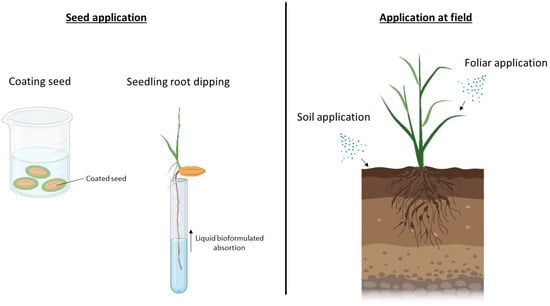
Figure 1. Main modes of biofertilizers application nowadays. Created by BioRender.com.
Indeed, some commercial biofertilizers offer adaptability in their mode of application to suit farmers preferences, such as NITROFIXTM-AC (Agri Life), which contains the nitrogen-fixing strain Azotobacter chroococcum MTCC 3853. When applied as a seed coating, it should be mixed with water and sugar. Conversely, if it is to be applied as a seedling root dip, water and manure are added to the mixture. Moreover, it can be blended with compost for use as a soil amendment, or it can be dissolved in irrigation water and directly incorporated into the soil during watering [143][21].
However, liquid biofertilizers are sensitive to contamination and still have a limited shelf life, which has led to the incorporation of carriers, dispersing agents and surfactants [131,132][14][15]. Thus, advanced technologies have recently emerged for the effective storage, transportation, and enhancement of bioformulation efficiency through the encapsulation of microorganisms.
2.2. Microencapsulation and Nanobiofertilizers
Encapsulation creates a protective capsule around the active compounds or cells, ensuring their viability and stability during storage and transportation, easing the application and field performance, as well as reducing the contamination risk [131,132,133][14][15][16]. Additionally, encapsulation enhances the success even under harsh environmental conditions, such as high salinity, extreme pH levels, temperature variations, or drought stress [132,143][15][21]. Initially, encapsulation mainly involved entrapping cells within polymeric structures of large dimensions (millimeters), referred to as macroencapsulates. One of the most commonly used polymers in encapsulation is alginate. For instance, the encapsulation of B. subtilis in alginate beads supplemented with humic acid has demonstrated positive effects on the germination and growth of lettuce seeds [145][23].
Due to their size, which is similar to that of most seeds, these biofertilizers can be conveniently mixed with seeds and directly applied to the soil during seedling growth. Thus, macroencapsulation remains a promising technology in the context of developing countries, as it obviates the need for specialized equipment during both the production and application. However, it should be noted that when macroencapsulated bioformulations are used, there is a likelihood that the released microorganisms may be distributed a few centimeters away from the plant, potentially reducing their effectiveness. Therefore, it is advisable to consider additional inoculation during the planting process when employing macroencapsulated formulations [131,132][14][15].
Subsequently, microencapsulation (up to 1 mm in diameter) has emerged as a promising alternative, since it seems to be able to overcome the main disadvantages of macroencapsulation, ensuring a higher survival rate and enhancing performance in the field. Typically, microencapsulation involves the use of hydrogels to encapsulate microbial cells or compounds. The coating materials commonly employed are either natural (such as starch, gelatine, or sucrose), or synthetic polymers (like polyurethane foam or polypropylene), although alginate stands out as the most frequently used biomaterial for encapsulation, mainly due to its non-detrimental impact on microbial survival and its resilience for storage and transportation purposes [24,131,133,143][14][16][19][21]. As a result, different PGPR (Plant Growth-Promoting Rhizobacteria) strains have been encapsulated using alginate supplemented with diverse additives. For instance, B. subtilis has been encapsulated for the biocontrol of Rhizoctonia solani in beans [146][24], whereas Pseudomonas sp. has been used for the biocontrol of Sclerotium rolfsii in Oryza sativa [147][25]. However, the challenge arose when attempting to coat seeds with alginate-containing bacterial bioformulations, since seeds require a dry environment to prevent germination, whereas bacteria need higher moisture levels for survival. A double water-in-oil-in-water emulsion formed in an aqueous solution of gelatine cross-linked with glutaraldehyde has been the solution [148][26].
Microcapsules can be conveniently applied directly to the soil, during seedling, or as seed coatings, and they exhibit the flexibility to be applied immediately or stored for extended periods at either low or ambient temperatures, which is the most common protective method nowadays [132][15].
Finally, nanotechnology is an emergent trend for agriculture, where nano-fertilizers and nano-pesticides present several advantages resulting in an enhanced efficacy, such as: i) substantial surface area, ii) increased active sites, and iii) controlled release. Nanofertilizers are nanoparticles ranging in size from 1 to 100 nanometers (at least in one dimension) [24,149,150,151][19][27][28][29]. They use different mechanisms to improve plants’ growth, such as: i) silicon nanoparticles to enhance metabolite production and plant growth, ii) zinc or copper nanoparticles for plant development and resistance to abiotic stress conditions, or iii) iron nanoparticles, as enzymatic co-factors (respiration, photosynthesis) [151][29]. However, bacterial, fungal, and eukaryotic cell sizes (>1 μm) are a limiting drawback since their reduction is not feasible. Hence, the nanobiofertilizers development seems unlikely in such a context, but the prefix “bio” pointing to some compound from biological origin aiming to provide essential macronutrients and enhance crop development can be considered in the nanobiofertilizer concept.
2.3. Sprays and Foliar Application
The use of sprays for foliar application has been a key technique in recent years, particularly for the application of nanoparticles. This is due to the rapid absorption of compounds through the leaf stomata, making it especially useful for foliar biocontrol (biofungicides, biobactericides, or bioinsecticides) [152,153][30][31]. An advantage of foliar application is that it can be performed throughout the entire growing season. However, the effectiveness of foliar application depends on various factors, including dosage, particle size, humidity, temperature, plant species, growth stage, and physiological properties, among others [153,154][31][32]. Consequently, discrepancies in the results have occasionally been reported, which may be attributed to suboptimal application timing (environmental conditions or crop stage) [85,155][33][34]. For instance, it has been observed that foliar application of certain biostimulants during periods of plant stress is more effective and elicits a quicker response compared to soil treatment, although the latter exerts a longer-term effect [13][35]. However, in some cases, a synergistic effect has been reported when both application techniques are combined, resulting in an even more pronounced impact [156][36]. Thus, a recommended practice entails conducting foliar spraying during the morning when stomata are naturally open, and when environmental conditions, such as high humidity, are favorable. Such conditions tend to augment the permeability and absorption rate.
Microalgae have garnered significant attention concerning foliar application [13][35]. Compared to macroalgae, which have been extensively exploited for their plant growth stimulant potential since the early 1980s, microalgae have received comparatively less exploration in the realm of agricultural applications. Nevertheless, both macroalgae and microalgae-based biostimulants appear to exhibit similar activities [13][35]. For example, Oancea and co-workers reported that the use of either microalgae or macroalgae biofertilizers yielded comparable fruit production in tomato plants [157][37].
Hence, it is likely that algae will revolutionize the biofertilizer market in the near future. In fact, there are already marine-based products on the market, such as Spirufert® (Tamanduá, Brasil), a commercially available foliar-applied biofertilizer containing the microalgae Arthrospira spp., which has shown promising results in crops like chickpea and eggplant [158,159][38][39].
Nonetheless, some of the flagship PGPR strains continue to play a leading role in the development of new application methods, including spray application. For example, it has been reported that foliar application of B. subtilis has a fungicidal effect on tomatoes [160[40][41],161], Azospirillum sp. enhances yield in wheat [162][42], and Azospirillum brasilense benefits maize production [163][43], among others [164][44]. Furthermore, Xanthomonas campestris is already commercially available for foliar application under the name CAMPERICO® in Japan. Another notable commercial success is BlueN®, originally launched in 2020 by Symborg (Murcia, Spain) and currently commercialized by Corteva Agriscience (https://www.corteva.com/es/productos-y-soluciones/proteccion-de-cultivos/BlueN.html; accessed on 13 February 2026). This biofertilizer is based on the endophytic bacterium Methylobacterium symbioticum, which, when applied foliarly, colonizes the phyllosphere and guarantees an effective and controlled supply of nitrogen to the plant because of the action of its nitrogenases.
2.4. Mulch Application
Mulch is defined as a protective covering (as of sawdust, compost, or paper) applied to the soil surface to reduce evaporation, maintain consistent soil temperature, prevent erosion, control weeds, enrich the soil, or keep fruit clean (https://www.merriam-webster.com/dictionary/mulch; accessed on 13 February 2026). It offers numerous benefits, including enhanced moisture retention, decreased soil compaction and erosion, temperature regulation, weed control, protection of seedlings and young plants, and improved plant establishment and growth [165,166][45][46]. Although the use of mulch to boost crop production has been documented since around 500 BC [167][47], its popularity surged with the advent of plastic materials in the late 1950s [165][45]. However, the large-scale production of plastic films has raised concerns about the massive accumulation of pollutants in the environment, leading to the formation of microplastics. Plastic removal from soil after crop harvesting involves several non-cost effective and challenging stages (washing, shredding, drying and pelletizing) due to the film thickness, which makes it economically unaffordable even though the bio-based materials are emerging as a sustainable alternative [165,166][45][46]. They are derived from renewable resources, often feature biodegradable properties, and boast a lower carbon footprint. They also offer environmentally friendly disposal options and are associated with reduced environmental toxicity [168][48].
The integration of biofertilizers with organic mulching techniques represents a novel approach to agriculture, reflecting a growing interest in sustainable farming practices. Correspondingly, a query in the NCBI database, using the terms “biodegradable” and “mulch” in the search field from 1968 to 2022, resulted in 476 documents (Figure 2). In fact, the world production of bio-based polymers has grown to reach 4.2 million tons by 2020 [169][49]. Hence, the biotic degradation is the process by which polymeric material is broken down into carbon dioxide, methane, water, inorganic compounds, or biomass. Predominantly, this process involves the enzymatic action of microorganisms [170][50], where several groups of bacteria play a crucial role in the biodegradation process, such as Bacillus, Pseudomonas, Klebsiella, or Streptomyces. In addition, mulching films degradation can also be carried out by soil fungi such as Penicillium, Sporotrichum, Talaromyces, or Candida, among others [165[45][51],171], which can be artificially introduced into the soil through the use of biofertilizers, as the combination of biofertilizers with organic mulch, like straw, has been reported to be compatible (and even synergistic) [172][52]. Therefore, the recent resurgence in the use of the age-old mulching technique should be accompanied by advancements in conjunction with the development of biofertilizers, aiming for a synergistic effect that enhances the benefits of both techniques.
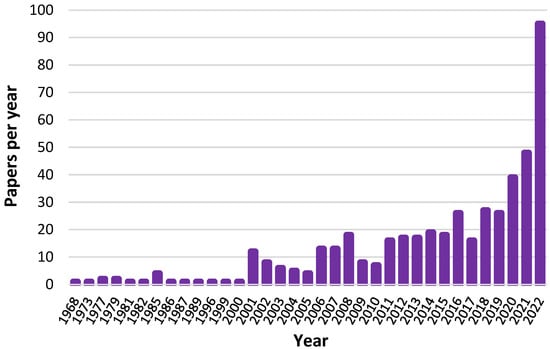
Figure 2. Number of papers published from 1968 to 2022 on biodegradable mulches. Source: NCBI, using the terms “biodegradable” and “mulch” from 1968 to 2022.
References
- Food and Agriculture Organization of the United Nations. Agricultural Production Statistics 2000–2021; Food and Agriculture Organization of the United Nations: Rome, Italy, 2022.
- Chaudhary, P.; Singh, S.; Chaudhary, A.; Sharma, A.; Kumar, G. Overview of Biofertilizers in Crop Production and Stress Management for Sustainable Agriculture. Front. Plant Sci. 2022, 13, 930340.
- Allouzi, M.M.A.; Allouzi, S.M.A.; Keng, Z.X.; Supramaniam, C.V.; Singh, A.; Chong, S. Liquid Biofertilizers as a Sustainable Solution for Agriculture. Heliyon 2022, 8, e12609.
- Nosheen, S.; Ajmal, I.; Song, Y. Microbes as Biofertilizers, a Potential Approach for Sustainable Crop Production. Sustainability 2021, 13, 1868.
- Ibáñez, A.; Garrido-Chamorro, S.; Barreiro, C. Microorganisms and Climate Change: A Not so Invisible Effect. Microbiol. Res. 2023, 14, 918–947.
- Adeyinka Fasusi, O.; Cruz, C.; Oluranti Babalola, O.; Agricultural, O.; Hasanuzzaman, M.; Ahmad Khan, E. Agricultural Sustainability: Microbial Biofertilizers in Rhizosphere Management. Agriculture 2021, 11, 163.
- Mahmud, A.A.; Upadhyay, S.K.; Srivastava, A.K.; Bhojiya, A.A. Biofertilizers: A Nexus between Soil Fertility and Crop Productivity under Abiotic Stress. Curr. Res. Environ. Sustain. 2021, 3, 100063.
- Mehra, A. Biofertilizers Market Worth $5.2 Billion by 2028; MarketsandMarkets: Pune, India, 2020.
- Pirttilä, A.M.; Tabas, H.M.P.; Baruah, N.; Koskimäki, J.J. Biofertilizers and Biocontrol Agents for Agriculture: How to Identify and Develop New Potent Microbial Strains and Traits. Microorganisms 2021, 9, 817.
- Mitter, E.K.; Tosi, M.; Obregón, D.; Dunfield, K.E.; Germida, J.J. Rethinking Crop Nutrition in Times of Modern Microbiology: Innovative Biofertilizer Technologies. Front. Sustain. Food Syst. 2021, 5, 606815.
- Pacheco-Aguirre, J.A.; Ruíz-Sánchez, E.; Ballina-Gómez, H.S.; Alvarado-López, C.J. Does Polymer-Based Encapsulation Enhance Performance of Plant Growth Promoting Microorganisms? A Meta-Analysis View. Agrociencia 2017, 51, 173–187.
- Sohaib, M.; Zahir, Z.A.; Khan, M.Y.; Ans, M.; Asghar, H.N.; Yasin, S.; Al-Barakah, F.N.I. Comparative Evaluation of Different Carrier-Based Multi-Strain Bacterial Formulations to Mitigate the Salt Stress in Wheat. Saudi J. Biol. Sci. 2020, 27, 777–787.
- Thomas, L.; Singh, I. Microbial Biofertilizers: Types and Applications. In Biofertilizers for Sustainable Agriculture and Environment; Springer: Berlin/Heidelberg, Germany, 2019; pp. 1–19.
- John, R.P.; Tyagi, R.D.; Brar, S.K.; Surampalli, R.Y.; Prévost, D. Bio-Encapsulation of Microbial Cells for Targeted Agricultural Delivery. Crit. Rev. Biotechnol. 2011, 31, 211–226.
- Balla, A.; Silini, A.; Cherif-Silini, H.; Chenari Bouket, A.; Alenezi, F.N.; Belbahri, L. Recent Advances in Encapsulation Techniques of Plant Growth-Promoting Microorganisms and Their Prospects in the Sustainable Agriculture. Appl. Sci. 2022, 12, 9020.
- Mącik, M.; Gryta, A.; Frąc, M. Biofertilizers in Agriculture: An Overview on Concepts, Strategies and Effects on Soil Microorganisms. In Advances in Agronomy; Springer: Berlin/Heidelberg, Germany, 2020; pp. 31–87.
- Gewin, V. How Peat Could Protect the Planet. Nature 2020, 578, 204–208.
- Dey, A. Liquid Biofertilizers and Their Applications: An Overview. In Environmental and Agricultural Microbiology; Wiley: Hoboken, NJ, USA, 2021; pp. 275–292.
- Patel, C.; Singh, J.; Karunakaran, A.; Ramakrishna, W. Evolution of Nano-Biofertilizer as a Green Technology for Agriculture. Agriculture 2023, 13, 1865.
- Singh, D.; Thapa, S.; Geat, N.; Mehriya, M.L.; Rajawat, M.V.S. Biofertilizers: Mechanisms and Application. In Biofertilizers; Elsevier: Amsterdam, The Netherlands, 2021; pp. 151–166.
- Singh, G.; Paithankar, I. Encapsulation of Biofertilizers, Biopesticides and Biocontrol Agents. In Sustainable Agriculture Reviews; Singh, N.K., Chattopadhyay, A., Lichtfouse, E., Eds.; Springer: Cham, Switzerland, 2023; pp. 121–150.
- Sudheer, S.; Bai, R.G.; Usmani, Z.; Sharma, M. Insights on Engineered Microbes in Sustainable Agriculture: Biotechnological Developments and Future Prospects. Curr. Genom. 2020, 21, 321–333.
- Young, C.; Rekha, P.D.; Lai, W.; Arun, A.B. Encapsulation of Plant Growth-promoting Bacteria in Alginate Beads Enriched with Humic Acid. Biotechnol. Bioeng. 2006, 95, 76–83.
- Saberi-Rise, R.; Moradi-Pour, M. The Effect of Bacillus subtilis Vru1 Encapsulated in Alginate—Bentonite Coating Enriched with Titanium Nanoparticles against Rhizoctonia solani on Bean. Int. J. Biol. Macromol. 2020, 152, 1089–1097.
- Panichikkal, J.; Prathap, G.; Nair, R.A.; Krishnankutty, R.E. Evaluation of Plant Probiotic Performance of Pseudomonas Sp. Encapsulated in Alginate Supplemented with Salicylic Acid and Zinc Oxide Nanoparticles. Int. J. Biol. Macromol. 2021, 166, 138–143.
- Amiet-Charpentier, C.; Gadille, P.; Benoit, J.P. Rhizobacteria Microencapsulation: Properties of Microparticles Obtained by Spray-Drying. J. Microencapsul. 1999, 16, 215–229.
- Thirugnanasambandan, T. Advances and Trends in Nano-Biofertilizers. SSRN Electron. J. 2018.
- Akhtar, N.; Ilyas, N.; Meraj, T.A.; Pour-Aboughadareh, A.; Sayyed, R.Z.; Mashwani, Z.-R.; Poczai, P. Improvement of Plant Responses by Nanobiofertilizer: A Step towards Sustainable Agriculture. Nanomaterials 2022, 12, 965.
- Garg, D.; Sridhar, K.; Stephen Inbaraj, B.; Chawla, P.; Tripathi, M.; Sharma, M. Nano-Biofertilizer Formulations for Agriculture: A Systematic Review on Recent Advances and Prospective Applications. Bioengineering 2023, 10, 1010.
- Li, C.-C.; Dang, F.; Li, M.; Zhu, M.; Zhong, H.; Hintelmann, H.; Zhou, D.-M. Effects of Exposure Pathways on the Accumulation and Phytotoxicity of Silver Nanoparticles in Soybean and Rice. Nanotoxicology 2017, 11, 699–709.
- Alshaal, T.; El-Ramady, H. Foliar Application: From Plant Nutrition to Biofortification. Environ. Biodivers. Soil Secur. 2017, 1, 71–83.
- Hong, J.; Wang, C.; Wagner, D.C.; Gardea-Torresdey, J.L.; He, F.; Rico, C.M. Foliar Application of Nanoparticles: Mechanisms of Absorption, Transfer, and Multiple Impacts. Environ. Sci. Nano 2021, 8, 1196–1210.
- Guedes, W.A.; Araújo, R.H.C.R.; Rocha, J.L.A.; de Lima, J.F.; Dias, G.A.; de Oliveira, Á.M.F.; de Lima, R.F.; Oliveira, L.M. Production of Papaya Seedlings Using Spirulina platensis as a Biostimulant Applied on Leaf and Root. J. Exp. Agric. Int. 2018, 28, 1–9.
- Paul, K.; Sorrentino, M.; Lucini, L.; Rouphael, Y.; Cardarelli, M.; Bonini, P.; Miras Moreno, M.B.; Reynaud, H.; Canaguier, R.; Trtílek, M.; et al. A Combined Phenotypic and Metabolomic Approach for Elucidating the Biostimulant Action of a Plant-Derived Protein Hydrolysate on Tomato Grown Under Limited Water Availability. Front. Plant Sci. 2019, 10, 493.
- Kapoore, R.V.; Wood, E.E.; Llewellyn, C.A. Algae Biostimulants: A Critical Look at Microalgal Biostimulants for Sustainable Agricultural Practices. Biotechnol. Adv. 2021, 49, 107754.
- Filipczak, J.; Żurawicz, E.; Paszt, L.S. Influence of Selected Biostimulants on the Growth and Yielding of “Elkat” Strawberry Plants. Zesz. Nauk. Inst. Ogrod. 2016, 24, 43–58.
- Oancea, F.; Velea, S.; Fatu, V.; Mincea, C.; Ilie, L. Micro-Algae Based Plant Biostimulant and Its Effect on Water Stressed Tomato Plants. Rom. J. Plant Prot. 2013, 6, 104–117.
- López-Padrón, I.; Martínez-González, L.; Pérez-Domínguez, G.; Cedeño-Rodríguez, L.; Reyes-Guerrero, Y.; Cárdenas-Travieso, R.M.; Núñez-Vázquez, M.; Cabrera-Rodríguez, J.A. Effects of Bioactive Products on Cicer arietinum L. Plants. Cultiv. Trop. 2021, 42, e06.
- Dias, G.A.; Rocha, R.H.C.; Araújo, J.L.; de Lima, J.F.; Guedes, W.A. Growth, Yield, And Postharvest Quality In Eggplant Produced Under Different Foliar Fertilizer (Spirulina platensis) Treatments. Semin. Cienc. Agrarias. Univ. Estadual De Londrina 2016, 37, 3893–3902.
- Abbasi, P.A.; Weselowski, B. Influence of Foliar Sprays of Bacillus subtilis QST 713 on Development of Early Blight Disease and Yield of Field Tomatoes in Ontario. Can. J. Plant Pathol. 2014, 36, 170–178.
- Abbasi, P.A.; Weselowski, B. Efficacy of Bacillus subtilis QST 713 Formulations, Copper Hydroxide, and Their Tank Mixes on Bacterial Spot of Tomato. Crop Prot. 2015, 74, 70–76.
- El Habbasha, E.S.; Mekhail Tawkik, M.; El Kramany, M.F. Comparative Efficacy of Different Bio-Chemical Foliar Applications on Growth, Yield and Yield Attributes of Some Wheat Cultivars. World J. Agric. Sci. 2013, 9, 345–353.
- Costa, R.R.G.F.; Quirino, G.D.S.F.; Naves, D.C.D.F.; Santos, C.B.; Rocha, A.F.D.S. Efficiency of Inoculant with Azospirillum brasilense on the Growth and Yield of Second-Harvest Maize. Pesqui. Agropecu. Trop. 2015, 45, 304–311.
- Preininger, C.; Sauer, U.; Bejarano, A.; Berninger, T. Concepts and Applications of Foliar Spray for Microbial Inoculants. Appl. Microbiol. Biotechnol. 2018, 102, 7265–7282.
- Abbate, C.; Scavo, A.; Pesce, G.R.; Fontanazza, S.; Restuccia, A.; Mauromicale, G. Soil Bioplastic Mulches for Agroecosystem Sustainability: A Comprehensive Review. Agriculture 2023, 13, 197.
- Huang, F.; Zhang, Q.; Wang, L.; Zhang, C.; Zhang, Y. Are Biodegradable Mulch Films a Sustainable Solution to Microplastic Mulch Film Pollution? A Biogeochemical Perspective. J. Hazard. Mater. 2023, 459, 132024.
- Lightfoot, D.R. Morphology and Ecology of Lithic-Mulch Agriculture. Geogr. Rev. 1994, 84, 172.
- Vinci, G.; Ruggieri, R.; Billi, A.; Pagnozzi, C.; Di Loreto, M.V.; Ruggeri, M. Sustainable Management of Organic Waste and Recycling for Bioplastics: A LCA Approach for the Italian Case Study. Sustainability 2021, 13, 6385.
- Skoczinski, P.; Carus, M.; de Guzman, D.; Käb, H.; Chinthapalli, R.; Ravenstijn, J.; Baltus, W.; Raschka, A. Bio-Based Building Blocks and Polymers—Global Capacities, Production and Trends 2020–2025; Language: Hürt, Germany, 2021.
- ASTM D5488-94DE1; Standard Terminology of Environmental Labeling of Packaging Materials and Packages. ASTM: West Conshohocken, PA, USA, 2002.
- Mansoor, Z.; Tchuenbou-Magaia, F.; Kowalczuk, M.; Adamus, G.; Manning, G.; Parati, M.; Radecka, I.; Khan, H. Polymers Use as Mulch Films in Agriculture—A Review of History, Problems and Current Trends. Polymers 2022, 14, 5062.
- Lasmini, S.A.; Idham; Pagiu, S.; Yusuf, R.; Hayati, N.; Yunus, M.; Pasaru, F.; Nasir, B.H.; Rosmini; Khasanah, N.; et al. Application of Mulch and Soil Microbes to Increase Growth and Yield of Chili Pepper. AIP Conf. Proc. 2023, 2606, 040001.
More