Neurodevelopmental disorders (NDDs) are neurobiological conditions that arise in childhood and affect the personal, social, academic, and occupational development of those who exhibit them. The aim of this study is to analyze scientific research on neurodevelopmental disorders and their relationship to accessibility in cultural heritage, to identify the methodological approaches that currently predominate, and to examine which types of NDD are most studied and which ones are currently overlooked in scientific research. Existing adaptations for people with autism spectrum disorder (ASD) and attention deficit hyperactivity disorder (ADHD) were used as a reference point for the analysis, given their high prevalence in the child population. This study was conducted following the DSM-5-TR criteria and the PRISMA 2020 protocol to select and analyze scientific articles published in the last decade, between 2015 and 2025, obtained from the Scopus database. The results show an increase in the dissemination of scientific literature on access to cultural heritage for people with NDDs, although in a very limited way. Furthermore, within the NDDs themselves, it is ASD that appears to be most represented, with an increase in applied techniques and inclusive experiences. Based on these findings, it is recommended that future research focus on finding educational tools and best practices that promote inclusion and accessibility to cultural heritage for people with other developmental disabilities, such as ADHD.
Neurodevelopmental disorders (NDDs) are characterized by a heterogeneous set of conditions that begin in childhood and affect the development of the central nervous system (CNS), significantly impacting executive, motor, social, and communication functions
[1]. According to the Diagnostic and Statistical Manual of Mental Disorders, Fifth Edition (DSM-5-TR), NDDs include autism spectrum disorder (ASD), attention deficit hyperactivity disorder (ADHD), specific learning disorders (including dyslexia and dyscalculia), communication disorders, and motor disorders, among others
[2]. Although these disorders are the subject of multiple studies in education and clinical settings, their relationship to access to cultural heritage has received less attention
[3][4][3,4]. Furthermore, according to the diagnostic criteria of both the DSM-5-TR and the International Classification of Diseases, Eleventh Revision (ICD-11), the conditions presented by people with NDDs, in addition to sharing a neurological basis, also have functional implications that persist throughout the life cycle, such that their relationship with their environment
[1][2][1,2] and, therefore, with cultural heritage.
On the other hand, access to culture is a fundamental right that is enshrined in the Convention on the Rights of Persons with Disabilities
[5] and advocates for the full and effective participation of all people in cultural life, regardless of their individual differences
[4][6][4,6]. In this context, as reflected in
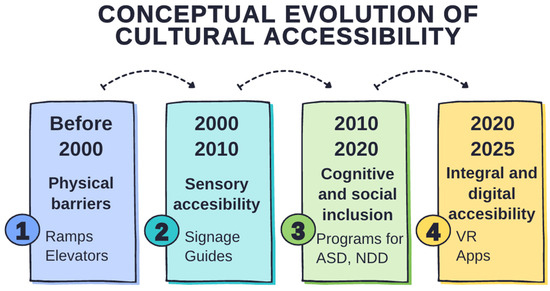
Figure 1, the concept of cultural accessibility has evolved over the years and has been broadened to consider all key access-related dimensions, not only physical and sensory, but also cognitive, social, symbolic, and communicative dimensions that affect neurodivergent people
[7]. In the museum context, identified as the predominant setting in the studies analyzed, prior to the 21st century, strategies primarily focused on removing physical barriers, such as ramps and elevators, in line with a rights-based approach centered on the principles of the Declaration of Human Rights
[8]. During the first decade of this century (2000–2010), the objective expanded to include sensory accessibility. The first adaptations appeared, such as tactile guides and signage, all based on major international frameworks such as the International Classification of Diseases (ICD-11)
[1], which recognizes NDD as conditions that affect communication, perception, and social interaction. Between 2010 and 2020, the focus shifted to cognitive and social inclusion, with the principles of the Convention on the Rights of Persons with Disabilities
[5] gaining momentum. In addition, evidence highlights the effectiveness of sensory adjustments and staff training in improving participation, autonomy, and social interaction, particularly among families with children with ASD in museums
[3], as well as inclusive leisure experiences that promote autonomy and social interaction
[6]. Finally, between 2020 and 2025, and based on the objectives set out in the 2030 Agenda for Sustainable Development
[9], accessibility is influenced by a comprehensive and digital perspective. This most recent stage is characterized by the incorporation of immersive technologies, which extend access beyond the physical space.
Figure 1. Conceptual evolution of cultural accessibility. Based on international frameworks and the literature reviewed.
Reinforcing this conceptual synthesis, the results shown in
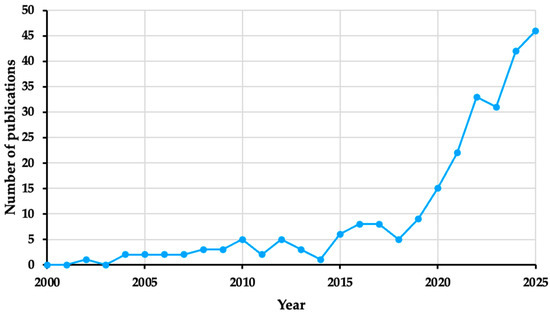
Figure 2 illustrate the evolution of scientific production on accessibility and NDD during the 21st century. According to Scopus data, there has been a steady increase in publications since 2000, with a significant rise since 2019. This growth is observed alongside the expansion of global policies aimed at cultural and educational inclusion
[5][9][5,9] and the consolidation of digital accessibility as a new axis of heritage innovation. Furthermore, the increase between 2020 and 2025 suggests a possible relationship between technological advances and research on cognitive and sensory inclusion.
Figure 2. Publication trends in accessibility and neurodevelopmental disorders research: a Scopus analysis (2000–2025). Data collected in November 2025.
However, despite this evolution in regulatory principles and research, people with NDDs continue to find obstacles and barriers in practice, making access to cultural heritage less than effective
[6][7][6,7]. These difficulties are not only physical or motor-related, as people with NDDs also encounter limitations in sensory, cognitive and communicative access, both in museums and in historical sites or libraries
[3][10][3,10]. To address these barriers, some studies show the effectiveness and positive impact of using technological tools
[11][12][11,12]. One example is Virtual Reality (VR) tours to improve the inclusion of people with NDD, specifically for children with ASD and their support groups
[11][13][14][11,13,14]. In addition, some museums have begun to incorporate sensory accessibility methodologies that are specifically aimed at people with ASD
[15], giving rise to innovative experiences and demonstrating a commitment to cultural inclusion
[16].
Collectively, these examples and the analysis of scientific literature on NDD suggest greater involvement and growth in cultural accessibility. Some adaptations appear to have positive effects in specific contexts, although limitations remain, particularly due to their focus on disabilities in general. This pattern reflects a stronger emphasis on inclusion strategies for people with ASD and their families in museums, libraries, and digital environments
[6][17][6,17]. By contrast, other neurodevelopmental disorders receive less attention. In the case of ADHD, where executive functions such as sustained attention and self-control are affected, representation in inclusive cultural initiatives remains limited. This gap indicates underexplored areas in heritage accessibility research and may hinder a comprehensive understanding of neurodevelopmental diversity and the development of inclusive cultural accessibility policies.
In terms of context, the most recent research shows how museums are excelling in more inclusive approaches with interventions to promote predictable, safe, and more sensory-regulated environments
[7][18][7,18]. Furthermore, participation in different cultural activities can help improve self-esteem, emotional well-being, and social skills in people with NDDs
[16].
Given this scenario, the objective of this systematic review is to study the scientific literature on neurodevelopmental disorders and their relationship with accessibility to cultural heritage, to explore the methods currently in use, as well as to analyze which types of NDDs are most studied and which ones are currently lacking in scientific interest. To achieve this objective, the following research questions have been formulated:
-
RQ1. What type of intervention and methodology is used in access to cultural heritage for people with NDDs and what results do they reflect in terms of accessibility and participation?
-
RQ2. How has scientific production descriptively evolved (type of NDD, heritage context, volume, etc.)?
-
RQ3. What gaps remain in research on access to heritage for people with NDDs?