
Kazakhstan has rich drinking water resources, but its uneven distribution and quality is an acute problem that needs to be solved. This article presents the current state of drinking water in the country, especially in its northern region - Akmola region, as based on statistical data, it has the worst indicators of drinking water and the reasons for such values are clarified. The only solution to this situation is a complete modernization of the water supply system through strict control of design and estimate documentation and proper planning of construction.
- drinking water
- sanitary-chemical indicators
- sanitary-epidemiological norms
- maximum permissible concentration
- centralized water supply
- decentralized water supply
- Water Legislation of the Republic of Kazakhstan
- Akmola region
- wear and tear of pipelines
1. Introduction
- Introduction
Kazakhstan is known in the world as a country with large reserves of natural resources [1]. At the same time, the volumes of one of the types of natural resources, namely water resources, are limited in Kazakhstan [2]. Based on average per capita indicators, Kazakhstan cannot be referred to as a country with an acute water resources deficit. However, the uneven distribution of water sources over the territory of the country, as well as their irrational use, significantly complicate the solution of problems of providing the population and economic complex with water in the required volume and guaranteed quality [3][4].
According to the International Green Growth Institute, only 1% of drinking water in Kazakhstan meets the accepted standards [5]. This is mainly due to the poor condition of the water supply network infrastructure and excessive chlorination. At the same time, publicly available sources do not provide data on the quality of drinking water to the general public.
The water supply system is 90% worn out and there is no centralized supply of drinking water in many settlements. According to the Committee for Construction and Housing and Communal Services, most of the water supply networks are in unsatisfactory condition, based on their normative period of reliable operation. Therefore, due to ongoing corrosion, water supply networks are subject to wear and tear and overgrowth, which has led to a decrease in their capacity, an increase in the number of accidents, water losses and a deterioration in the quality of drinking water [6],[7],[8],[9],[10].
To find out the extent of the problem it is necessary to find out the quality of drinking water in all regions of the republic and in cases of its non-compliance with sanitary and hygienic standards to find out their causes.
The quality of water in water bodies of drinking water in centralized water supply systems is regulated by the requirements set out in the sanitary rules «Sanitary and epidemiological requirements for water sources, places of water intake for household and drinking purposes, household and drinking water supply and places of cultural and domestic water use and the safety of water bodies» [11]
Water legislation of the Republic of Kazakhstan is based on the Constitution of the Republic of Kazakhstan and consists of the Water Code and other normative legal acts of the Republic of Kazakhstan [12].
Since this article deals with drinking water quality and water supply systems, it is appropriate to describe the drinking water supply systems of settlements and the parameters by which the suitability of water consumption is assessed.
Thus, according to the Water Code (Article 92-2.)
- Drinking water supply systems of settlements are subdivided into centralized, non-centralized, differing by the type of water supply source and the composition of elements included in the systems.
- A centralized water supply system is a complex of engineering networks and facilities designed for the intake, preparation, storage, transportation and supply of drinking water to water consumers.
- Non-centralized water supply system is water intake and water treatment facilities designed for intake and preparation of drinking water without its transportation through pipelines [13].
An important parameter that determines the suitability of water for drinking is the permissible concentration of harmful substances. According to Article 1 (13-1), the permissible concentration of harmful substances is the value of the permissible content of harmful substances in the wastewater of a water user discharged into the wastewater disposal system [14].
According to the Sanitary and Epidemiological Requirements for the quality and safety of water of household and drinking water supply order № 26 of the Minister of Health of the Republic of Kazakhstan from February 20, 2023, to hygienic standards for microbiological parameters include: total microbial count (hereinafter - TMC), total coliform bacteria (hereinafter - TCB), total thermotolerant coliform bacteria (hereinafter - TTCB). Total coliform bacteria include the total number of mesophilic aerobic and facultatively anaerobic microorganisms. TCBs include gram-negative, oxidase-negative, and non-spore-forming bacilli [15].
According to Appendix 1 to the order of the Minister of Health of RK from 24.11.2022 to sanitary and chemical indicators include many chemical substances, elements and others [16]
The purpose of this article is to present the current state of drinking water in the regions of the republic for the last 3 years based on statistical data taken by RSE under REM “National Center for Public Health” of the Ministry of Health of the RK, in the Committee for Regulation, Protection and Use of Water Resources and Irrigation of the Ministry of Water Resources and Irrigation of the RK, in the Department of Sanitary and Epidemiological Control of the Ministry of Health of the RK, in RSD “Department of Sanitary and Epidemiological Control in Akmola region”.
2. Materials and Methods
- Materialsand Methods
This paper shows statistical data of water analysis by sanitary-chemical and microbiological indicators.
Table 1 summarizes and shows the names of both sanitary-chemical and microbiological indicators.
Table 1. Water indicators.
Table 1. Water indicators
|
Sanitary and chemical indicators |
Microbiological indicators |
|
Color, turbidity, taste, total hardness, dry residue, chlorides, ammonia, nitrates, iron, odor |
Total microbial count |
|
Total coliform bacteria |
|
|
Total thermotolerant coliform bacteria |
To provide a general picture, statistical data on water for the republic as a whole and by region over the past 5 years were first analyzed. The percentage of water samples that did not meet standards was calculated using the following formula:
W = abs.*number of non-compliant water samples / total abs.*number of tested water samples × 100%
Abs*. - absolute number
3. Results
- Results
Figure 1 shows the state of tap water in the republic from 2019 to 2023.
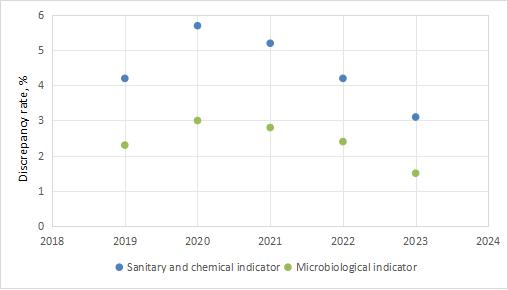
Figure 1. Non-compliance with quality standards for tap water in the republic for 2019-2023.
According to the graph, the greatest non-compliance with sanitary standards for sanitary and chemical indicators was recorded in 2020, which is 5.7%, in the same year the greatest microbiological non-compliance was recorded in the RK - 3%.
Moreover, the values of microbiological indicators of water gradually improved from year to year. Perhaps this can be explained by the fact that the partial replacement of old water supply systems with new ones and the equipping of settlements with centralized water supply began.
To provide a complete picture of the state of water, the diagram shows a picture of water quality indicators by regions of the republic for the period from 2019 to 2023 (Figure 2).
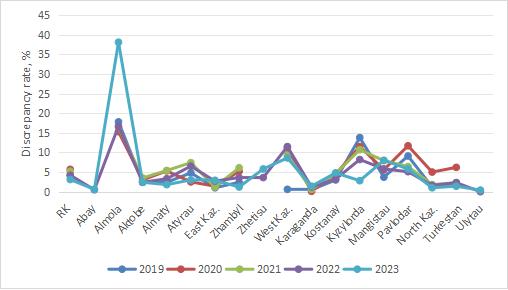
Figure 2. Non-compliance of tap water quality according to sanitary and chemical indicators for 2019-2023.
The highest maximum permissible concentration of harmful substances in water was recorded in 2023 in the Akmola region with a value of about 38% for sanitary and chemical indicators in comparison with the Abay and Ulytau regions with values of 0.6 and 0.4, respectively.
Compared to sanitary-chemical standards, microbiological indicators of water in the republic show greater dynamics among regions (Figure 3).
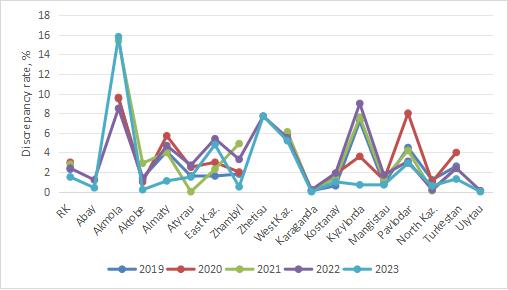
Figure 3. Non-compliance of tap water quality by microbiological indicators for 2019-2023.
Akmola region retains its position as an anti-leader in terms of non-compliance with microbiological indicators. Thus, in the same 2023, the percentage of non-compliance amounted to 16%, while in such regions as Karagandy and Ulytau water meets all sanitary and hygienic standards.
The reason for such indicators in the Akmola region is the inefficient operation of water supply facilities, as this system was built in the Soviet Union era [17].
In particular, in the city of Kokshetau, the treatment facilities have been inadequate for more than 20-30 years [18],[19].
From the epidemiological point of view, water quality is maintained by increasing chlorine doses, of course, within the sanitary requirements. Due to this, the water has less non-compliance in terms of bacterial indicators. However, this procedure, in addition to other negative factors, worsens such chemical indicators of water as total hardness, color, turbidity, dry residue and chlorides. Also, one of the reasons is the remoteness and pollution of water supply sources - these are the Sergeevskoye and Chaglin reservoirs. In the Sergeevskoye reservoir water is of good quality, but since it is located more than 200 km from Kokshetau, water changes its properties on the way of flow. In the Chaglin reservoir, in addition to its remoteness, bottom sediment cleaning is required. In terms of water quality, the worst indicators are recorded in Kokshetau, Zhaksyn, Zharkain and Shortandy districts. Since 2006 the project on reconstruction of the treatment facilities of Kokshetau has been developed, but since there was an increase in the cost of estimated design documentation, the project was adjusted three times. The issue is under the control of the Head of State [20].
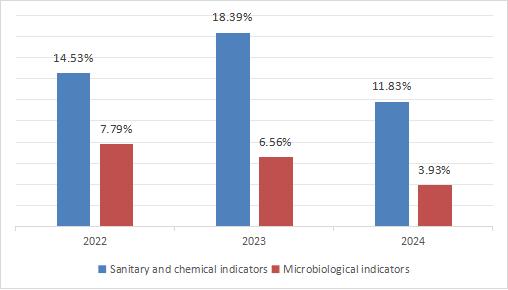
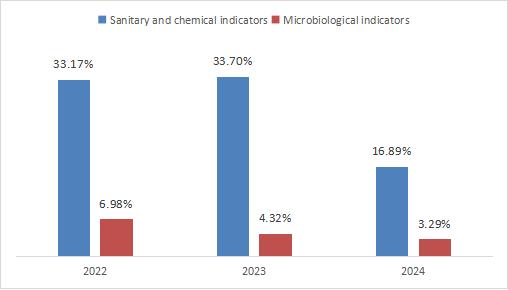
Since Akmola region is an anti-leader according to the results of sanitary-epidemiologic control it was reasonable to find out the reasons for such values. Analysis of statistical data showed that both centralized (Figure 4AFigure 4, A) and decentralized water supply (Figure 4BFigure 4, B) in this region have discrepancies with permissible concentration limit standards of water both on sanitary-chemical and microbiological indicators, and the former has the most discrepancies.
A
B
Figure 4. Current state of centralized (A) and decentralized (B) water supply in Akmola region
The peak of non-compliance with sanitary rules and hygienic standards was observed in 2023 with a value of about 20% of the centralized water supply system and a value of 33% of the decentralized water supply system. The performance gap between the two systems is insignificant 10 and 28 respectively.
The next step was to study water quality in the context of districts of Akmola region. The dynamics of water quality results in the section of districts of Akmola region vary differently, and, surprisingly, centralized water supply is characterized by impressive deviations from the standards. Figure 5 illustrates this picture. It is seen that the first in this list are the districts with values of non-compliance: Burabay - 43%, Shortandy - 35% and Yegindykolsky - 38%, while Birzhan Sal and Akkol districts have acceptable water composition.
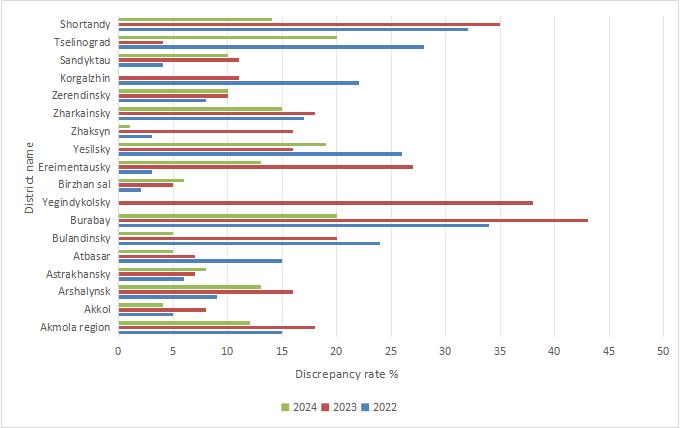
Figure 5. Non-compliance of centralized water supply with sanitary and chemical indicators.
According to the local Department of Sanitary Control for the Burabay district, water in the city of Shchuchinsk always has a natural overestimation of fluoride content, also in samples taken in the settlements of the area are positive for such indicators as iron, hardness, nitrates, fluoride, chlorides and chromaticity [21].
In the Shortandy district, especially in Damsa, Stepnoy and Nauchny settlements, natural water is rather hard and has a high percentage of dry residue. Residents of the area complain that they constantly have to change filters.
According to microbiological indicators of the same water supply system, a sharp contrast is shown by Yegindygolsky, Zharkainsky, and Zhaksyn districts with values respectively for the first - 37% in 2023 and 36% in 2022, for the second - 30% in 2023 and 26% in 2022, for the last - 26% in 2023 and 33% in 2022 (Figure 6).
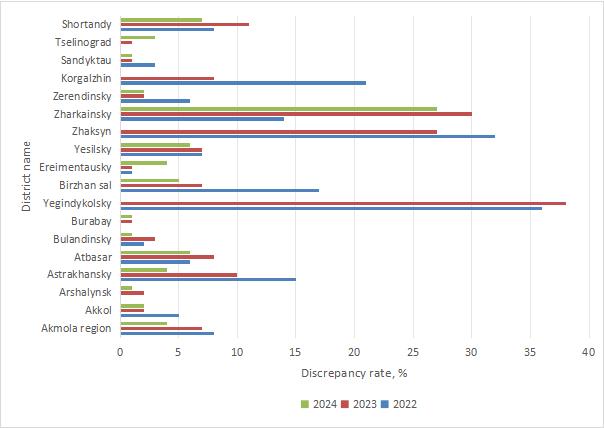
Figure 6. Non-compliance of centralized water supply with microbiological indicators.
For 5-6 years the issue of water supply has been acute in Zhaksyn district. Now the implementation of the project on connection of the water pipeline to the underground source has started there. It is supposed that in November 2024, the implementation of this project will be completed and residents of Zhaksy and Belagash will finally receive quality water.
High values in Zharkainsky district are explained by the fact that treatment facilities do not work. There are 18 units of water pipelines in the region, which should be checked. However, it should be added that chlorination of tap water is periodically carried out.
By the way, on the balance of the local akimat (local administration) is the third phase of construction of the water pipeline in the city of Derzhavinsk.
Decentralized supply shows rather moderate water indicators. The worst water quality was in 2022 in the Zhaksyn district, as its indicator is 100% non-compliance, also non-compliance is fixed in the Burabay district, and this position remained almost for three years (Figure 7).
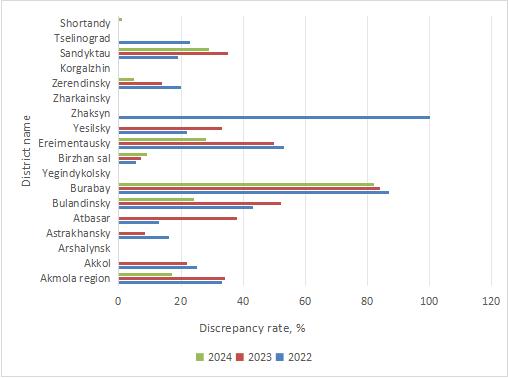
Figure 7. Non-compliance of decentralized water supply with sanitary and chemical indicators.
Water in the Zhaksyn district is analyzed once a quarter in all settlements, and sampling can also take place during meltwater. During sampling, sanitary control workers themselves note the presence of a certain taste and odor in local water. In the Burabay district, during the monitoring of open water bodies in 2023, excess dry residue (total mineralization) was recorded in lakes Bolshoye and Maloye Chebachye.
As for microbiological indicators of decentralized water supply in districts of the Akmola region, Korgalzhin district at a maximum of 100% shows non-compliance with sanitary standards, namely TMC and TCB have deviations from maximum permissible concentrations (Figure 8).
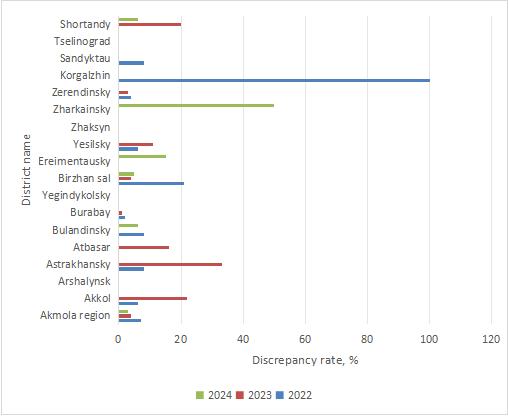
Figure 8. Non-compliance of decentralized water supply with microbiological indicators
Such a phenomenon in the Korgalzhin district can be explained by several reasons: 1) water intake wells do not meet sanitary standards, 2) inspection wells are flooded, 3) there are no gutters, 4) all water intake wells have hose water intake. Moreover, water samples may have been taken during the leash season.
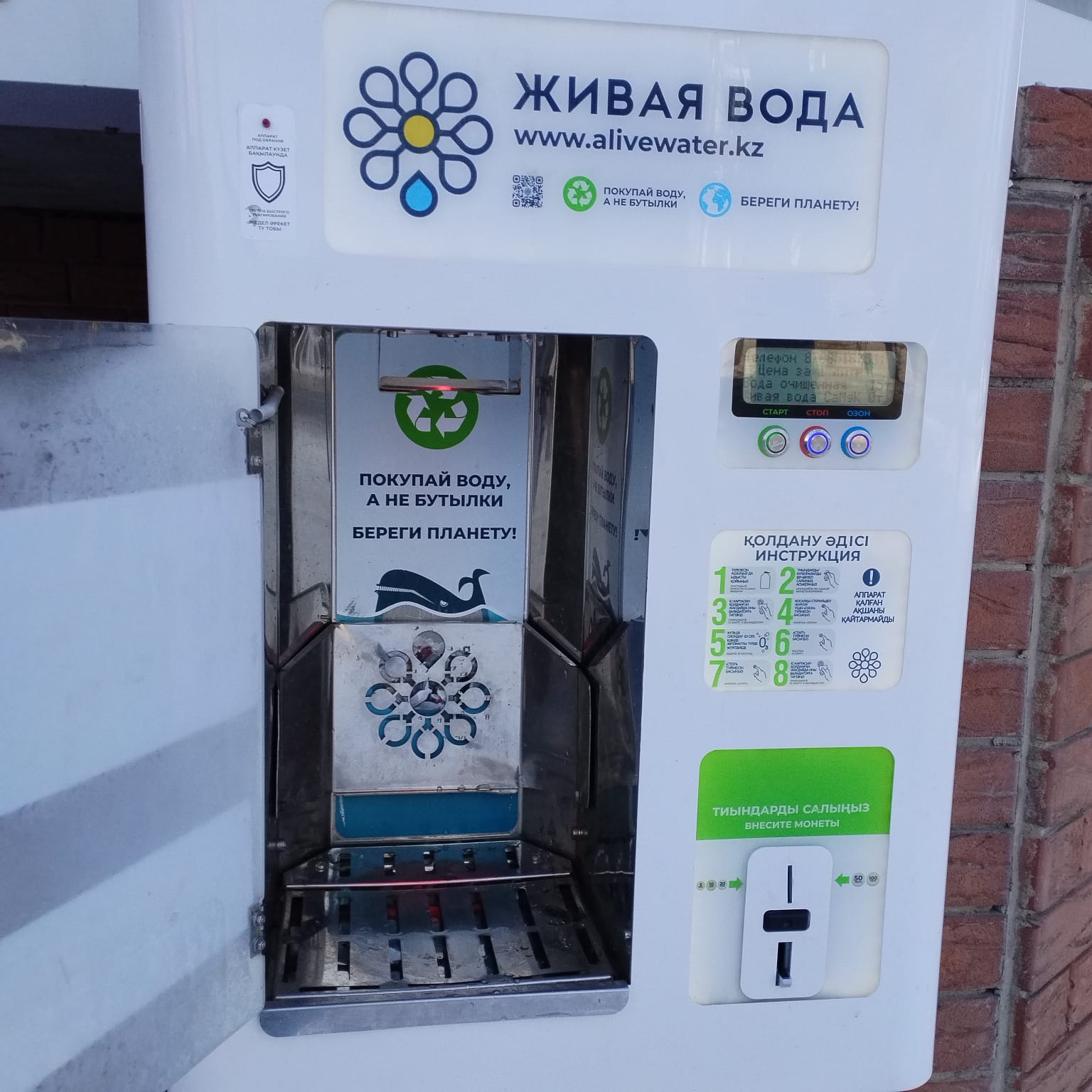
To present the picture of water condition in the Akmola region, we visually compared: 1) water taken from the tap and 2) water taken in «Zhivaya Voda» drinking water dispensers, which are now popular closed water purification systems in Kazakhstan (Picture 1 A, B).
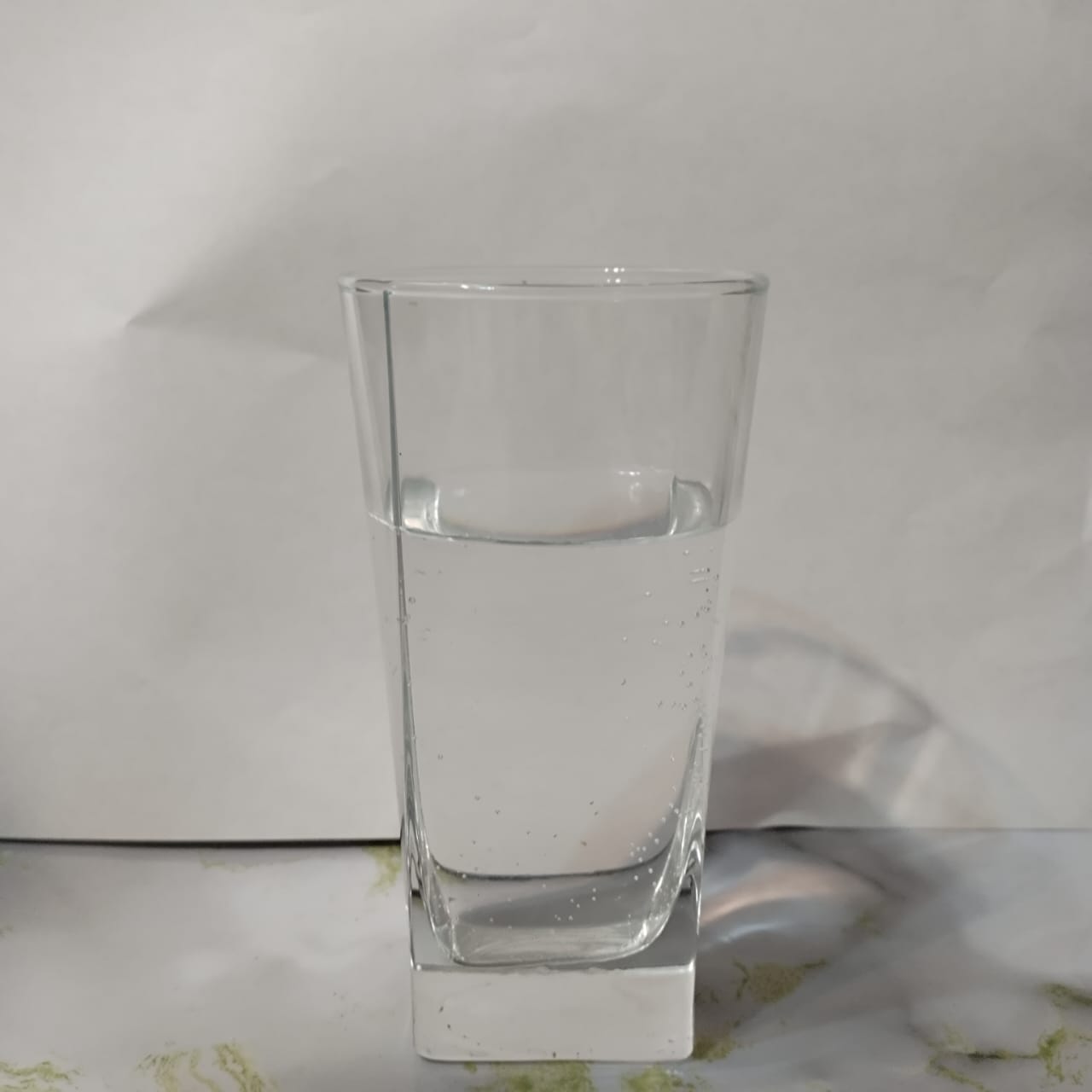
A. Filtered water
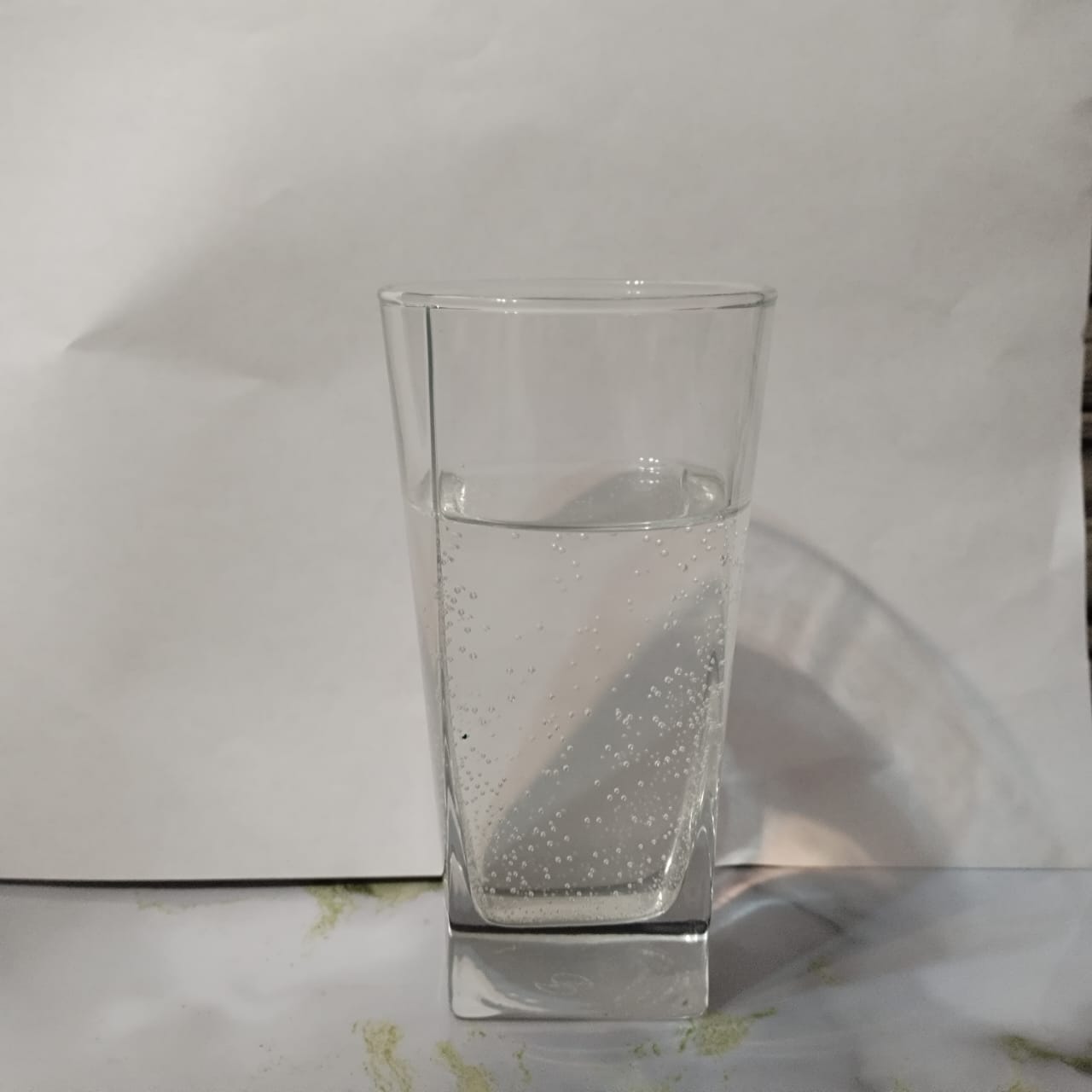
A. Tap water
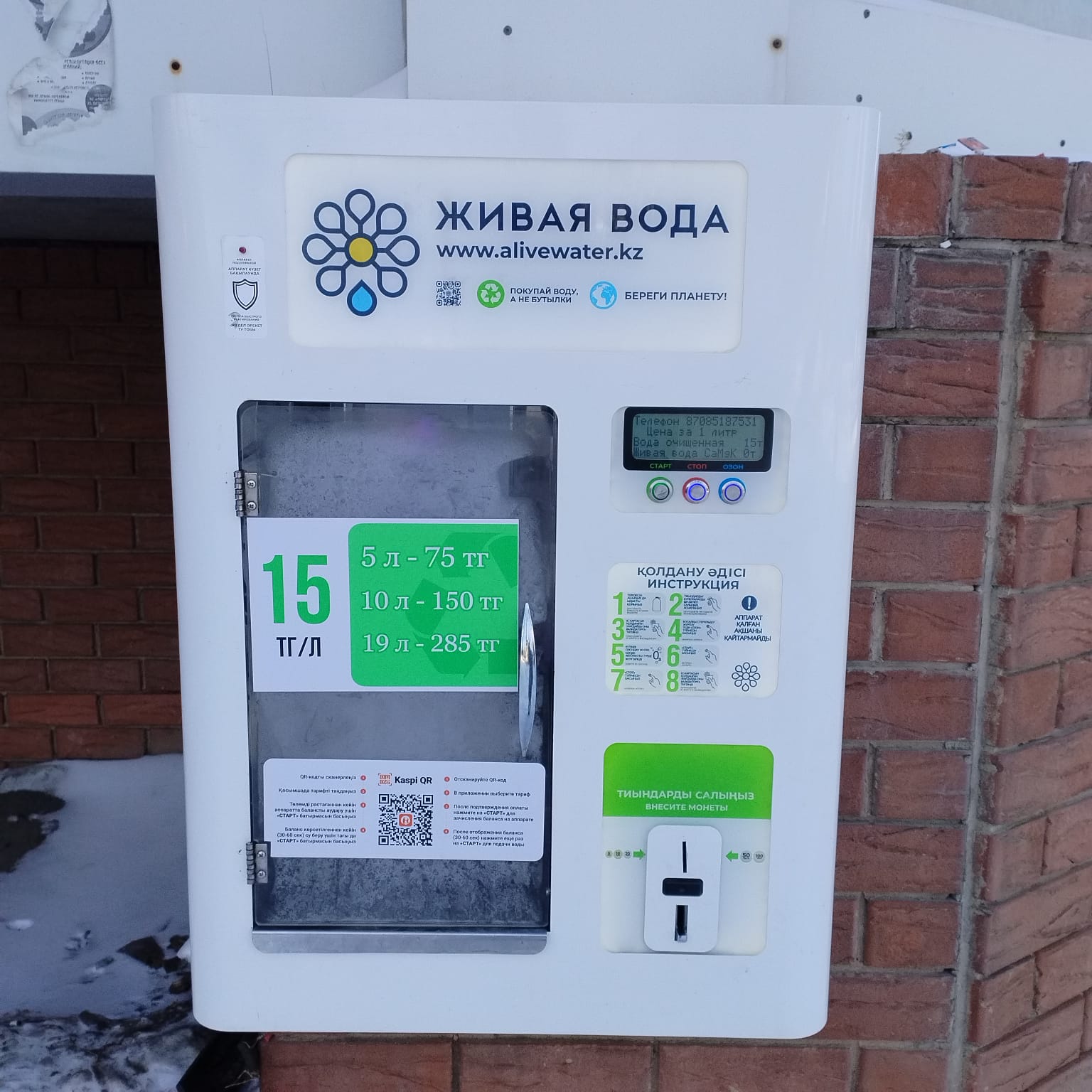 B
B
B
Picture 1. Comparisons of water samples (A) and «Zhivaya Voda» purification and vending machine (B).
You can see with the naked eye that unfiltered water (from the tap) retains a cloudy color even after one day of settling.
4. Discussion
Water as a vital source of our life should meet all sanitary and hygienic standards for the quality of life of the population. However, modern water analysis shows that the epidemiological condition of water in Kazakhstan currently needs to be improved. Water quality is affected by both the natural origin of water and the condition of the water supply systems through which it flows. The latter phenomenon strongly affects the organoleptic properties of water, namely color, turbidity, taste and odor. To solve this problem, it is necessary to fully finance the construction of new water supply systems, proper design and estimate documentation and strict control of the works.
In the districts of the Akmola region with a natural excess of the maximum permissible concentration of certain elements, it is necessary to install suitable complex water treatment systems: deironing filters, mechanical water purification filters, carbon filters, household reverse osmosis filters and deionization systems.
At the same time, it should be noted that there is always a possibility to improve water resources management mechanisms (use, regulation, ecological state), to develop and modernize water supply and sanitation, to improve the level of service provision to the population in these important issues of life support. First of all, it concerns expansion of population access to quality (healthy) drinking water.
Author Contributions: Conceptualization, K.A. and Sh.B.; methodology, K.B.; software, K.B.; validation, K.A.., Sh.B. and K.B; formal analysis, K.B., Sh.B.; investigation, K.B.; resources, K.B.; writing—original draft preparation, K.B.; writing—review and editing, K.B.; All authors have read and agreed to the published version of the manuscript.
Data Availability Statement
The data that support the findings of this study are available from the corresponding author upon reasonable request
Conflicts of Interest
The authors declare no conflict of interest.
Abbreviations
The following abbreviations are used in this manuscript:
|
TMC |
Total microbial count |
|
TCB |
Total coliform bacteria |
|
TCB |
Thermotolerant coliform bacteria |
|
RSE under REM |
Republican state enterprise under the right of economic management |
|
MH RK |
Ministry of Health of the Republic of Kazakhstan |
|
RK |
Republic of Kazakhstan |
|
RSD |
Republican State Department |
|
TMC |
Total microbial count |
|
TCB |
Total coliform bacteria |
|
TCB |
Thermotolerant coliform bacteria |
|
RSE under REM |
Republican state enterprise under the right of economic management |
|
MH RK |
Ministry of Health of the Republic of Kazakhstan |
|
RK |
Republic of Kazakhstan |
|
RSD |
Republican State Department |
Disclaimer/Publisher’s Note: The statements, opinions and data contained in all publications are solely those of the individual author(s) and contributor(s) and not of MDPI and/or the editor(s). MDPI and/or the editor(s) disclaim responsibility for any injury to people or property resulting from any ideas, methods, instructions or products referred to in the content.
References
- cvxcvdf. sdasd. sfdfe. 285, 54, 261-26 .
- Sailaukhanuly, Y; Popova, A.; Mansur T.; Bexeitova, K.; Azat S.; Toshtay K.; Tovassarov A.; Tasmagambetova A. Preliminary Study and Assessment of Drinking Water from Almaty, Kazakhstan. Eurasian Chem.-Technol.J. 2022, 24, 341‒350 .
- 218 billion tenge was allocated for water supply and sanitation systems in 2024. . Capital. Retrieved 2025-2-18
- Marat, K.; , Pedro, R.; , Zenaida, S.; D. Dennis, K.; , Nilay, S.; Michèle, C. The water-energy-food nexus in Kazakhstan: challenges and opportunities. Energy Procedia. 2017, 125, 63-70.
- About the State Program of Water Resources Management of Kazakhstan and making an addition to the Decree of the President of the Republic of Kazakhstan. On Approval of the List of State Programs. Retrieved 2025-2-18
- Сonventions and agreements. Kazakhstan - targets according to the protocol on water and health. 17.06.1999. Сonventions and agreements.. Retrieved 2025-2-18
- Zhanerke, B.; Kamshat, T.; Berik, T.; Kanat, S.; Kulyash, S.; Martin, S. Challenges of Access to WASH in Schools in Low- and Middle-Income Countries: Case Study from Rural Central Kazakhstan.. International Journal of Environmental Research and Public Health. 2021, 18, 9652.
- Yerbolat, S.; Azat, S.; Makhabbat, K.; Adylkhan, T.; Kainaubek, T.; Zhandos, T.; Lars, C.; Ronny, B. Health Risk Assessment of Nitrate in Drinking Water with Potential Source Identification: A Case Study in Almaty, Kazakhstan. . Int J Environ Res Public Health. 2023, 21, 55.
- United Nations . Environmental Performance Reviews—Kazakhstan: Third Review; Synopsis. United Nations, Geneva, Switzerland. 2019. Accessed on 20 June 2023. Available online: https://unece.org/DAM/env/epr/epr_studies/Synopsis/ECE.CEP.185_ENG_Synopsis.pdf. [Google Scholar]
- Kamshat, T.; Peder, H.; Ronny, B. Access to Drinking Water and Sanitation in Rural Kazakhstan. Int. J. Environ. Res. Public Health. 2016, 13, 1115.
- On Approval of Sanitary Rules “Sanitary and Epidemiological Requirements to Water Sources, Places of Water Intake for Domestic and Drinking Purposes, Domestic and Drinking Water Supply and Places of Cultural and Domestic Water Use and Safety of Water Bodies. Order № 26 of the Minister of Health of the Republic of Kazakhstan . 20.02.2023. https://adilet.zan.kz/rus/docs/V2300031934
- Water Code of the Republic of Kazakhstan. № 481. Information-legal system of normative legal acts of the Republic of Kazakhstan. 9.07.2003. //https://adilet.zan.kz/rus/docs/K030000481_
- Water Code of the Republic of Kazakhstan. № 481. Article 92-2. Drinking water supply systems of settlements. Information-legal system of normative legal acts of the Republic of Kazakhstan. 9.07.2003. https://adilet.zan.kz/rus/docs/K030000481_
- Water Code of the Republic of Kazakhstan. № 481. Article 92-2. Drinking water supply systems of settlements. Information-legal system of normative legal acts of the Republic of Kazakhstan. General Part. Section 1. General ProvisionsChapter 1. Basic Provisions. Article 1. Basic concepts used in this Code. 9.07.2003. https://adilet.zan.kz/eng/docs/K030000481
- On approval of Sanitary Rules “Sanitary and Epidemiological Requirements to Water Sources, Places of Water Intake for Domestic and Drinking Purposes, Domestic and Drinking Water Supply and Places of Cultural and Domestic Water Use and Safety of Water Bodies. Chapter 2: Paragraph 1. Order № 26 of the Minister of Health of the Republic of Kazakhstan. 20.02.2023. https://online.zakon.kz/
- On Approval of Hygienic Standards of Safety Indicators of Domestic and Cultural Water Use // Order of the Minister of Health of the Republic of Kazakhstan. DSM-138. № 30713. Тable 1. 24.11.2022. https://adilet.zan.kz/rus/docs/V2200030713
- Roberts, B.; Stickley, A.; Alexander, G.; Christian, H.; Martin, M. Changes in household access to water in countries of the former Soviet Union. Journal of Public Health. 2012, 34, 352 –359 .
- McKee, M.; Balabanova, D.; Akingbadea, K.; Pomerleau, J.; Stickley, A.; Rose, R.; Haerpfer, C. Access to water in the countries of the former Soviet Union. Publich health. 2006, 120, 364-372.
- Zakir, B.; Kamshat, T.; Ronny, B.; Nagima, Sh.; Kapar, A.; , Maral, Zh. Water Related Health Problems in Central Asia—A Review. Water. 2016, 8, 219.
- The reasons for poor quality of drinking water were named by the chief state sanitary doctor of Akmola region. Kazinform International News Agency. 15.08.2022https://www.inform.kz/ru/prichiny-plohogo-kachestva-pit-evoy-vody-nazvala-glavnyy-gossanvrach-akmolinskoy-oblasti_a3966679
- RSD Burabaysk District Department of Sanitary and Epidemiological Control of Akmola Region of the Committee for Sanitary and Epidemiological Control of the Ministry of Health of the Republic of Kazakhstan //https://www.gov.kz/memleket/entities/departament-kkbtu-akmolinsk?lang=en